Steaming is about as old as Chinese cooking gets. Bamboo baskets stacked over a wok have been turning out buns, dumplings, and whole fish for centuries, so it makes sense that a Chinese appliance giant would want that steam inside its air fryer. Midea’s new Humidity-Controlled Air Fryer does exactly that, pairing hot air with Smart Moisture Technology that can air fry, steam, or blend the two. The pitch is simple: crunch where you want crunch, juice where you want juice. Your bao and your chicken wings can finally share a counter spot, and nobody has to fight over the steamer.
Smeg’s steam air fryer and Xiaomi’s Mijia Pro Steam and Bake both bolted water tanks onto air fryers this year, and both leaned hard on the crispy wings pitch. Midea treats steaming as a full cooking mode, which tracks for a product designed around China’s multi-person households. The 8-liter (about 8.5-quart) cooker comes from Midea’s Shunde-based cooking division and won a 2026 Red Dot in the Design Concept competition’s Ready For Market category, reserved for designs that are nearly or fully developed but not yet on sale. Two transparent windows let you watch dinner without letting the steam out. There’s no price or US release date yet, which is my only complaint so far.
Designers: Peng Xi, Wang Jin, Ma Yufeng, Jo Jeongmin, Peng Yunyun & Chen Hailong (Midea)
Midea has been sneaking water into air fryers for a while now. Its European 7.5-liter model offers separate Moisture and Air Fry functions with automatic steam injection, and in China the 6-liter KZC6019D steam air fryer sells on JD for 308 yuan, roughly $43. The new design scales that idea up to 8 liters and hands humidity control to Smart Moisture Technology, which dynamically regulates moisture so the chamber can run wet, dry, or a mix of both in one cycle. In practice, that could mean steaming a batch of frozen dumplings until tender, then switching to dry heat so their bottoms crisp up, potsticker style. Your standalone steamer can finally retire.
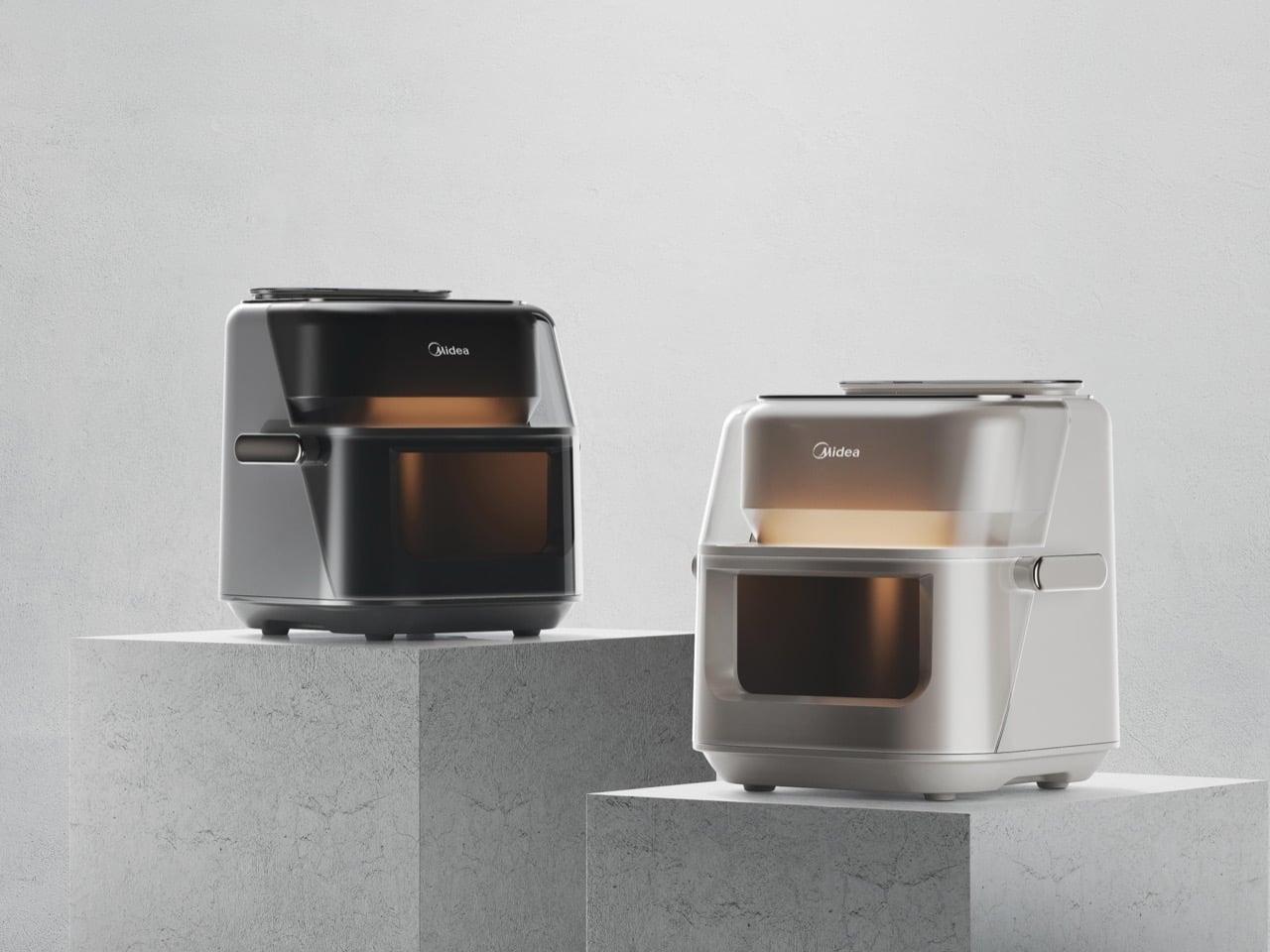
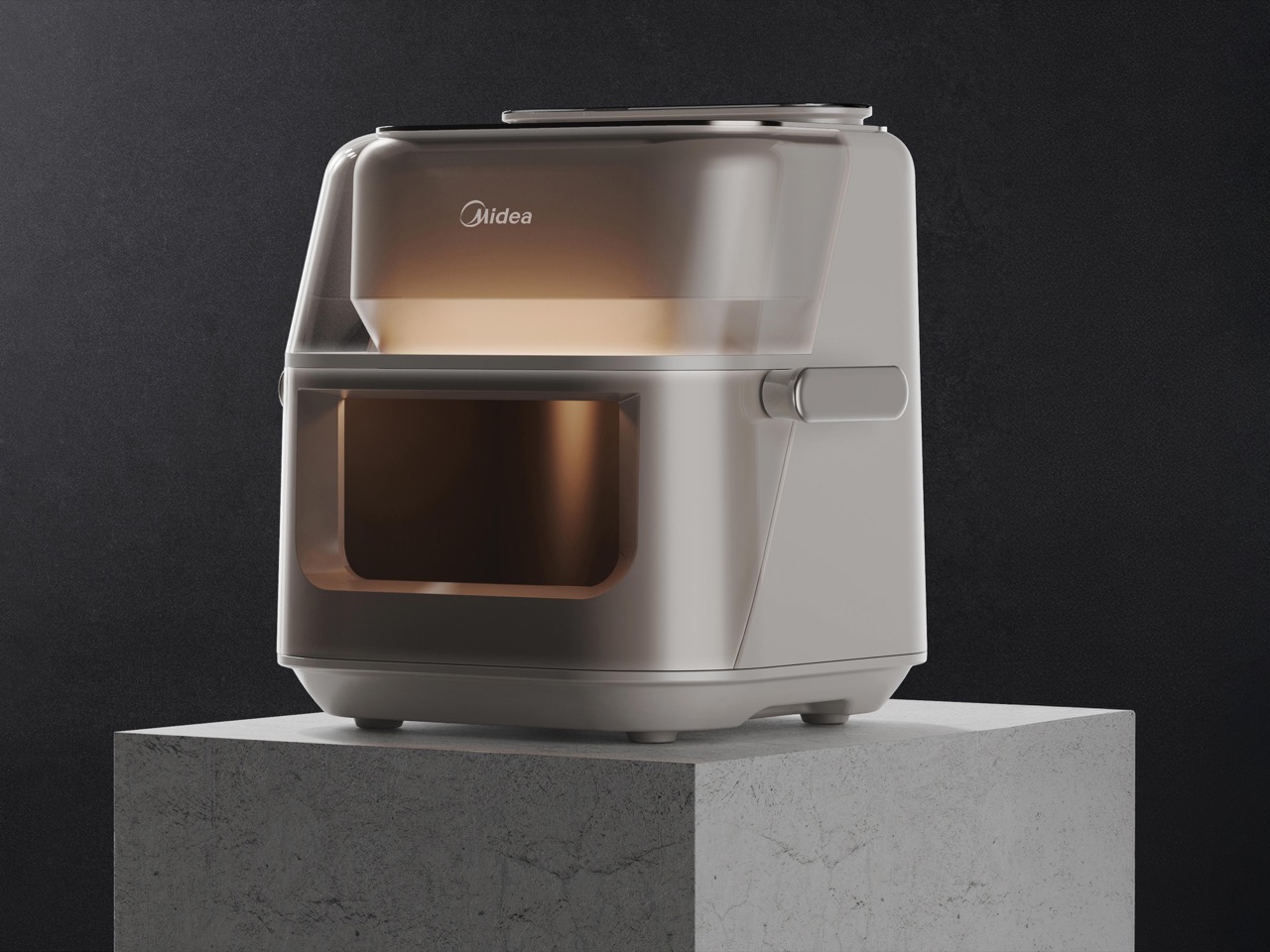
The two transparent windows do serious functional work on a steam cooker. Every time you yank open an air fryer basket to check on dinner, you dump the hot, humid air the machine just spent minutes building up. Midea’s lower window looks straight into the basket, so you can watch the browning happen without breaking the seal. Above it sits a tinted, translucent hood that gives a second view into the cavity, with a conical housing glowing amber behind it. Chronic basket-pullers like me finally get to keep our hands to ourselves, and the steam gets to stay put.
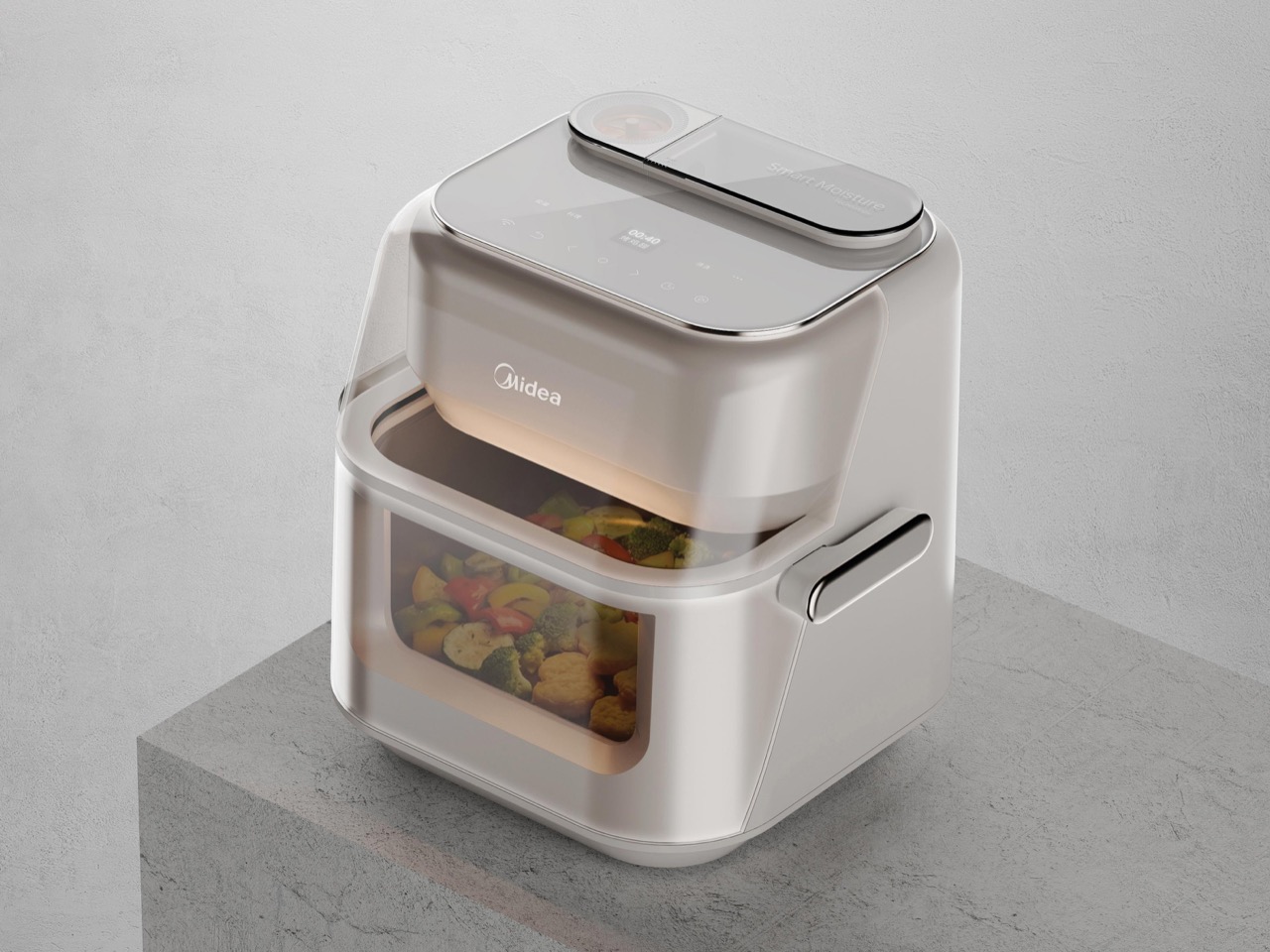
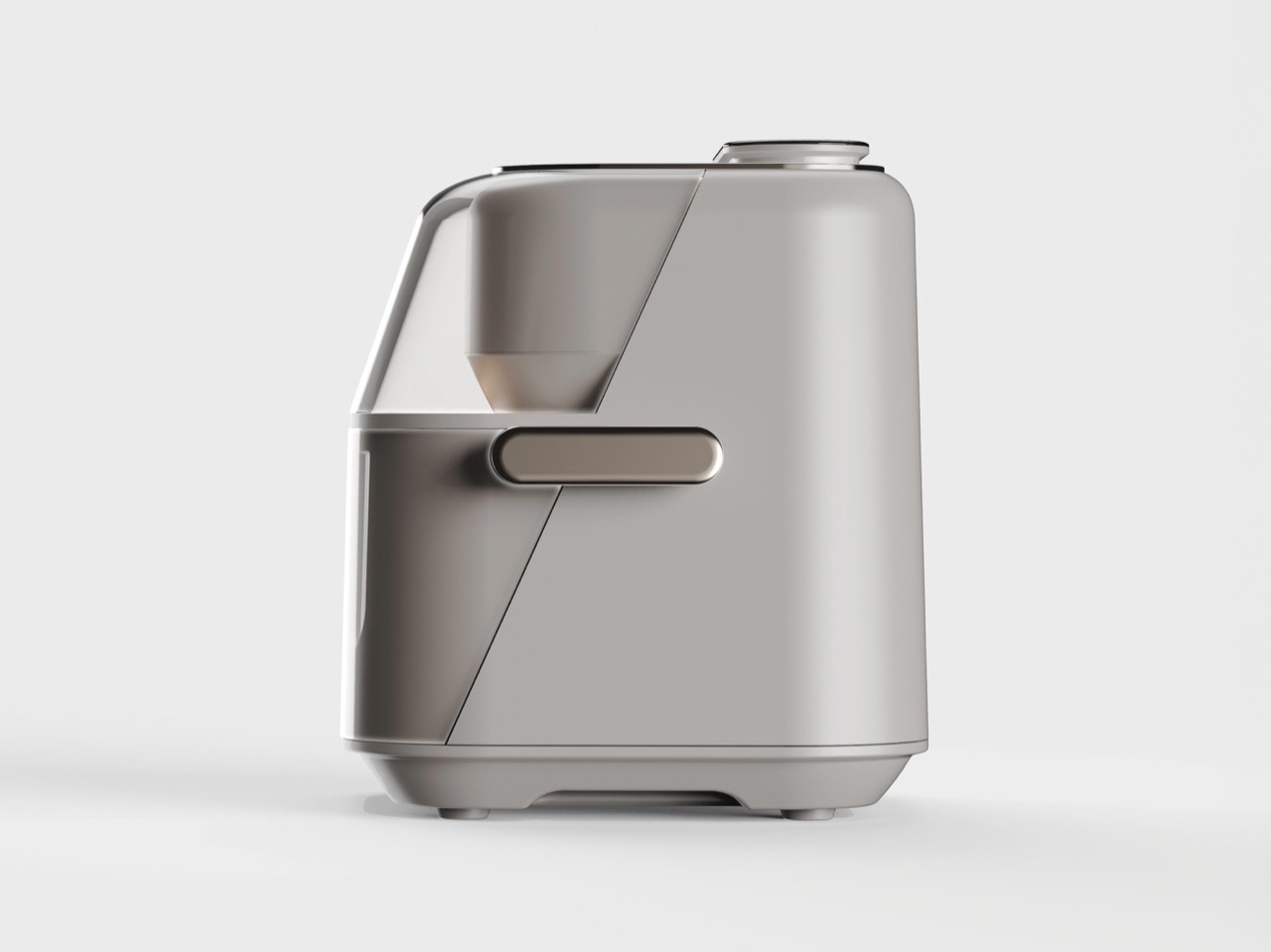
A sharp diagonal seam runs down each side, splitting the translucent upper hood from the solid lower body and giving it a forward lean, like it’s mid-stride toward your plate. The handle, a champagne-finished pill, sits on that seam at the center of the side panel. Centering it makes sense for an 8-liter basket loaded with a family dinner, since the weight stays balanced instead of tipping toward your wrist. On top, a glass deck carries touch controls and a timer display, with a Smart Moisture module and what looks like a water fill cap at the back. Midea renders it in warm white and dark gunmetal, a welcome break from the glossy black boxes crowding most counters.
The steam air fryer category now has three clear personalities. Xiaomi’s 6.5-liter Mijia Pro chases value after crowdfunding in China at 559 yuan, around $81, Smeg’s 7-liter AFC01 chases style at £199.95 in the UK, roughly $265, and Midea’s 8-liter design chases capacity and visibility. Midea already sells dual-zone air fryers in the US, though it hasn’t announced US plans for this one. Red Dot’s Ready For Market jurors judge whether a product can ship within about 12 months, and the China-first brief hints at where it lands first. Somewhere, a bamboo steamer is watching all this with mild amusement, having figured out wet heat centuries before anyone plugged it in.