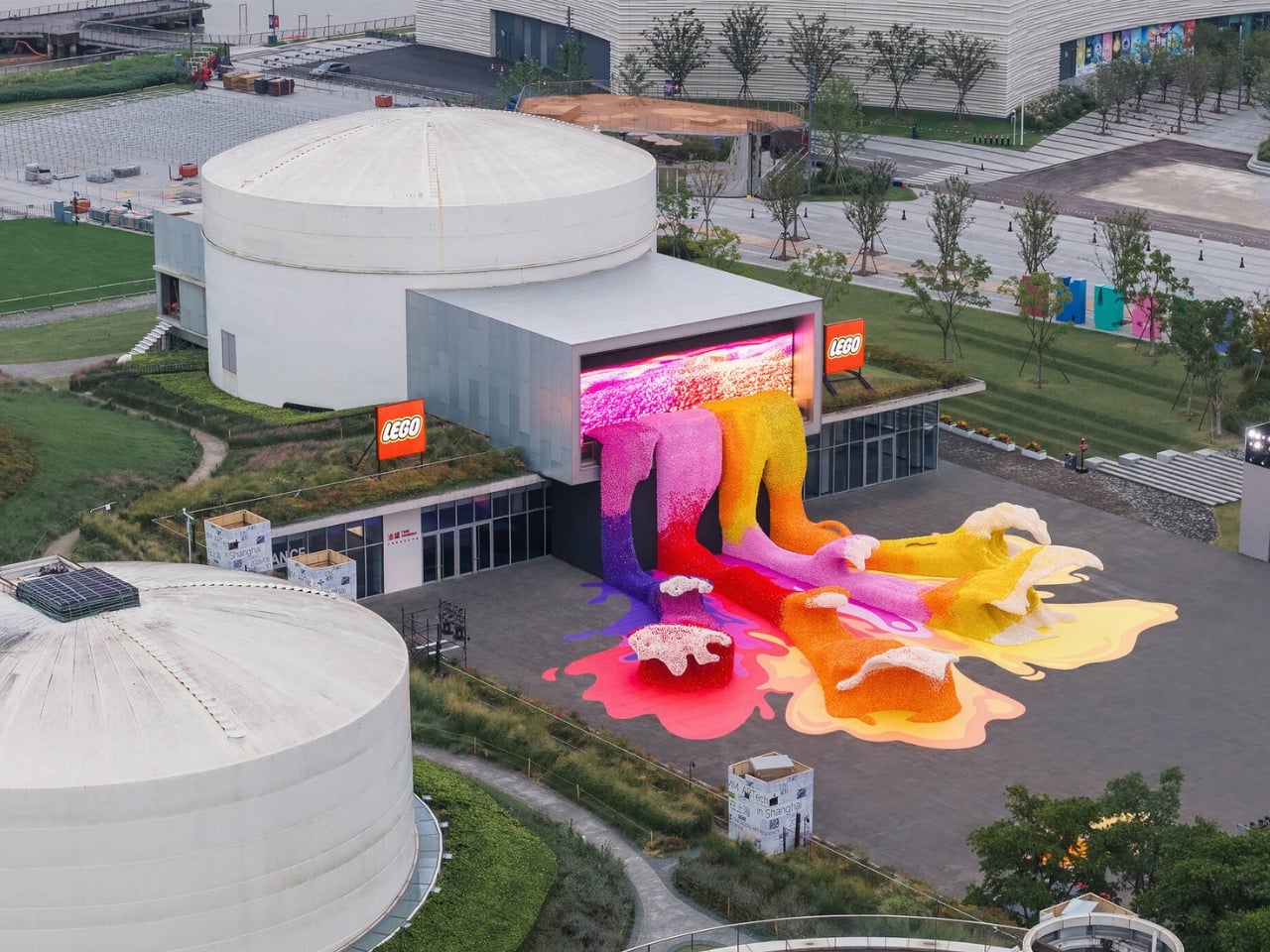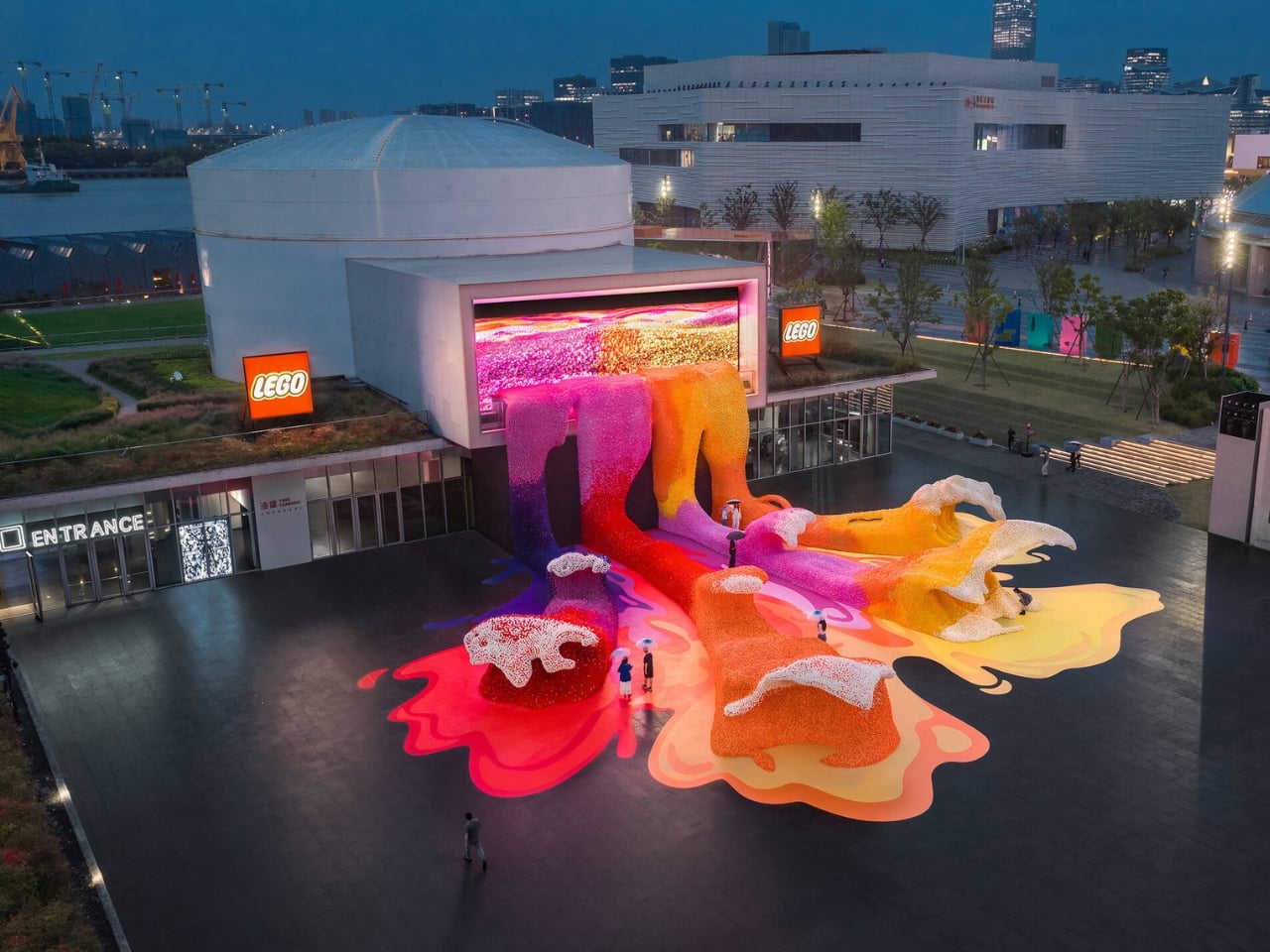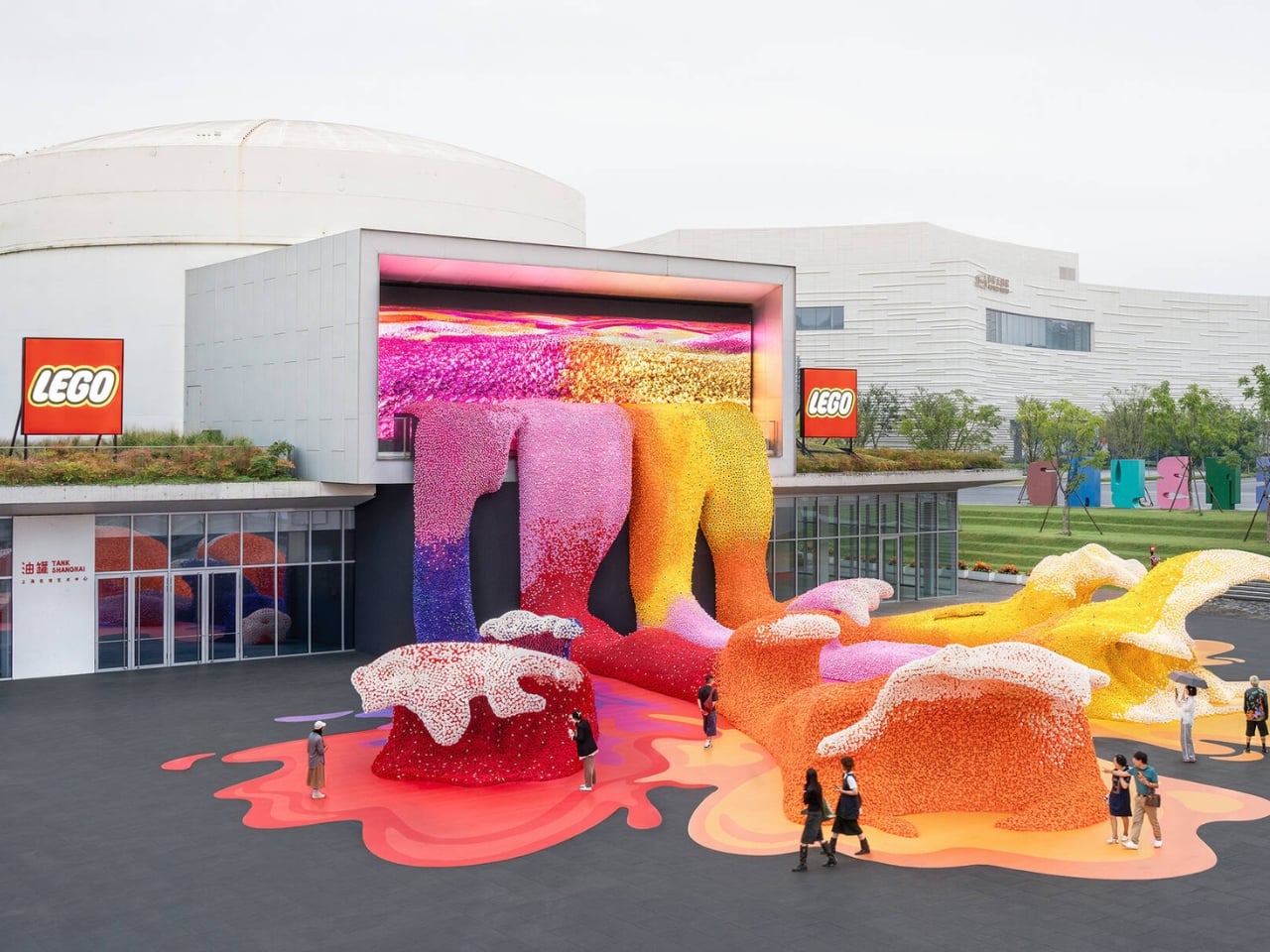
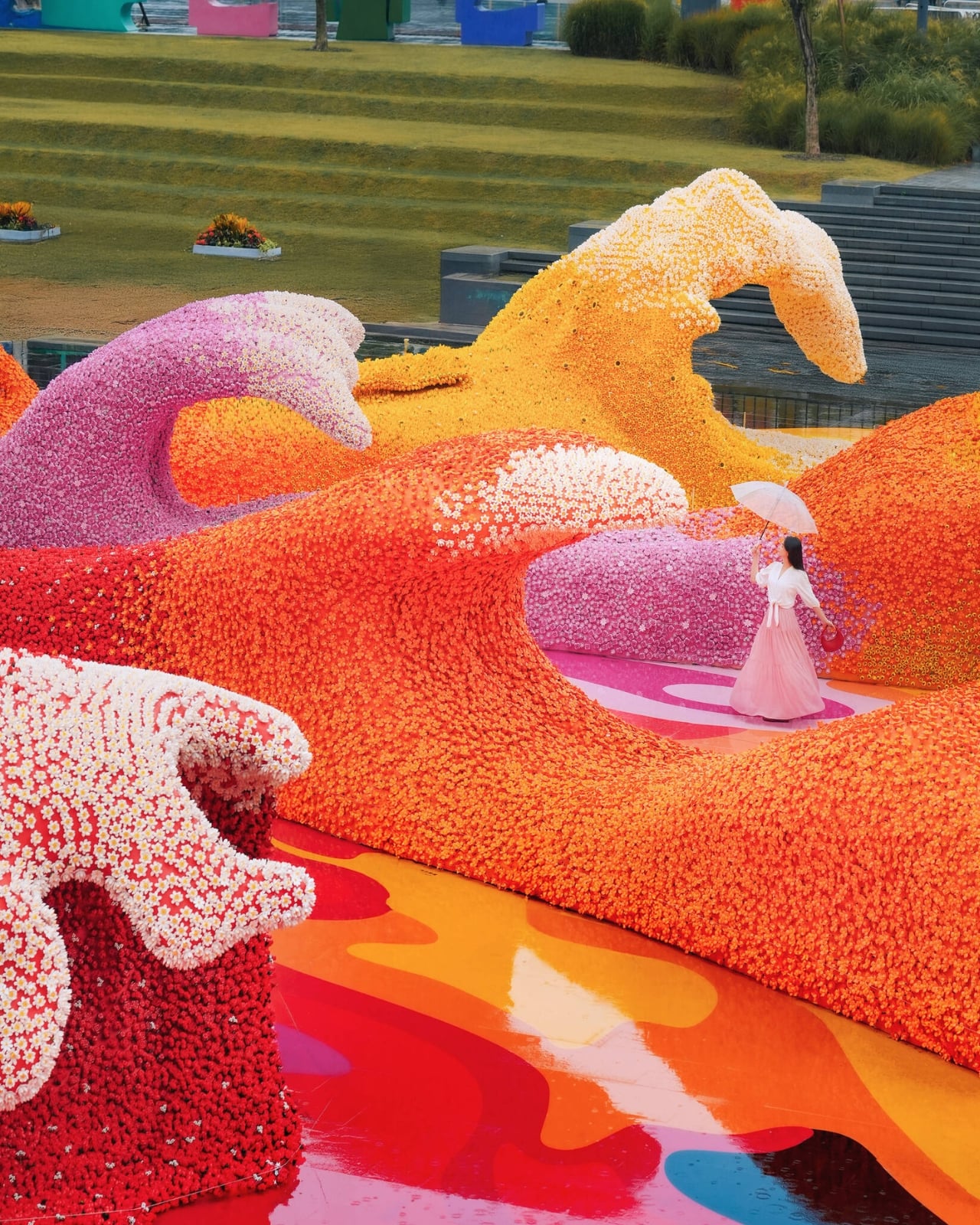
An old oil tank makes an absurdly good vase when the flowers arrive by the hundred thousand. At TANK Shanghai, LEGO Botanical Wave sends more than 380,000 brick-built blooms spilling out of a former oil tank and across the plaza. Created by LEGO as part of its Bloom Exhibition, the installation gives an industrial structure the improbable appearance of having sprung a very colorful leak.
Looking at a spectacular installation and feeling creative yourself are two different things. That gap is the problem this exhibition tackles: it gives visitors something to make, rather than only something to photograph. Alongside the outdoor wave, an indoor experience invites people to build their own LEGO flowers. I like that the invitation doesn’t depend on arriving with an artist’s confidence.
Designer: LEGO
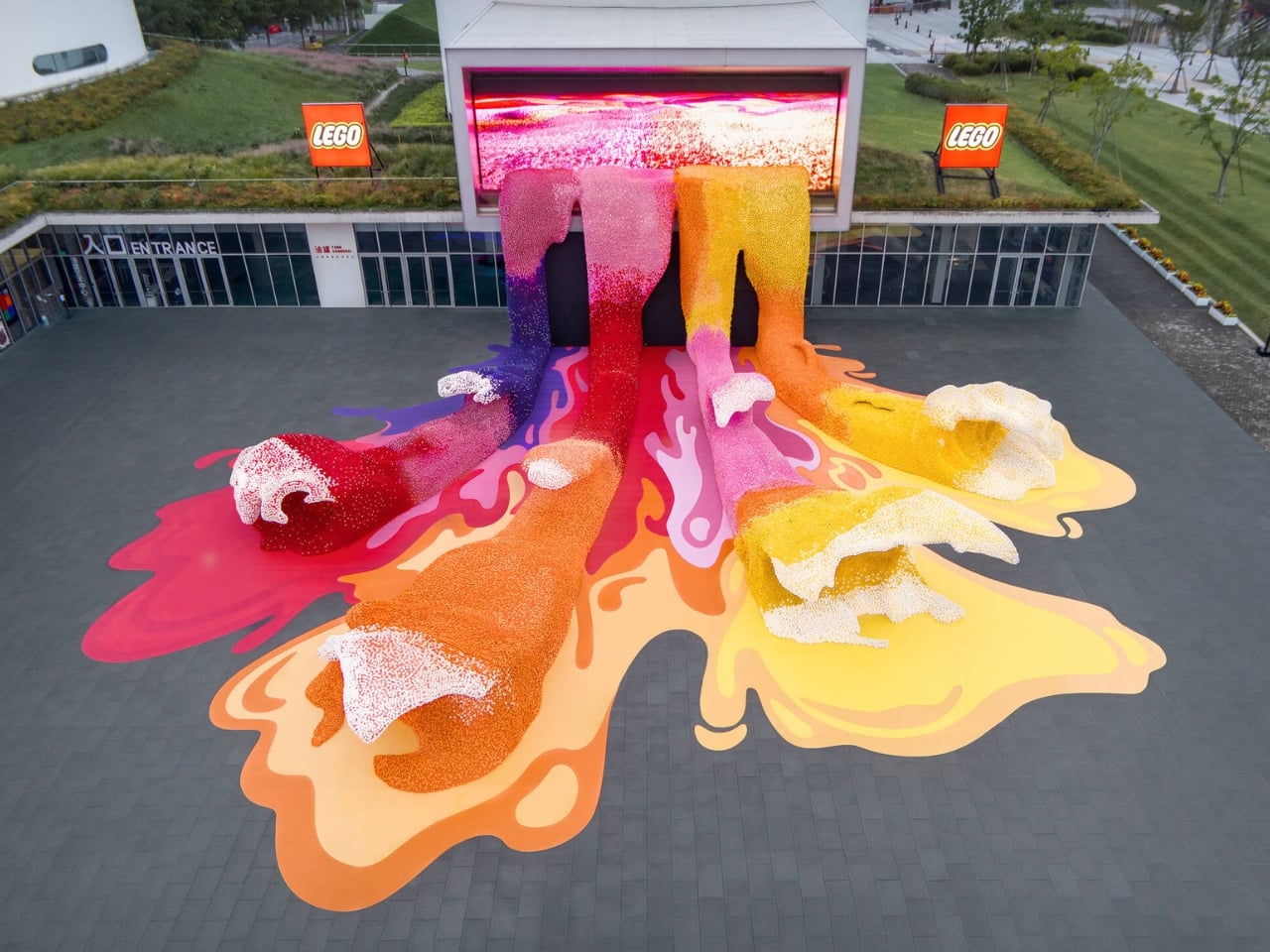
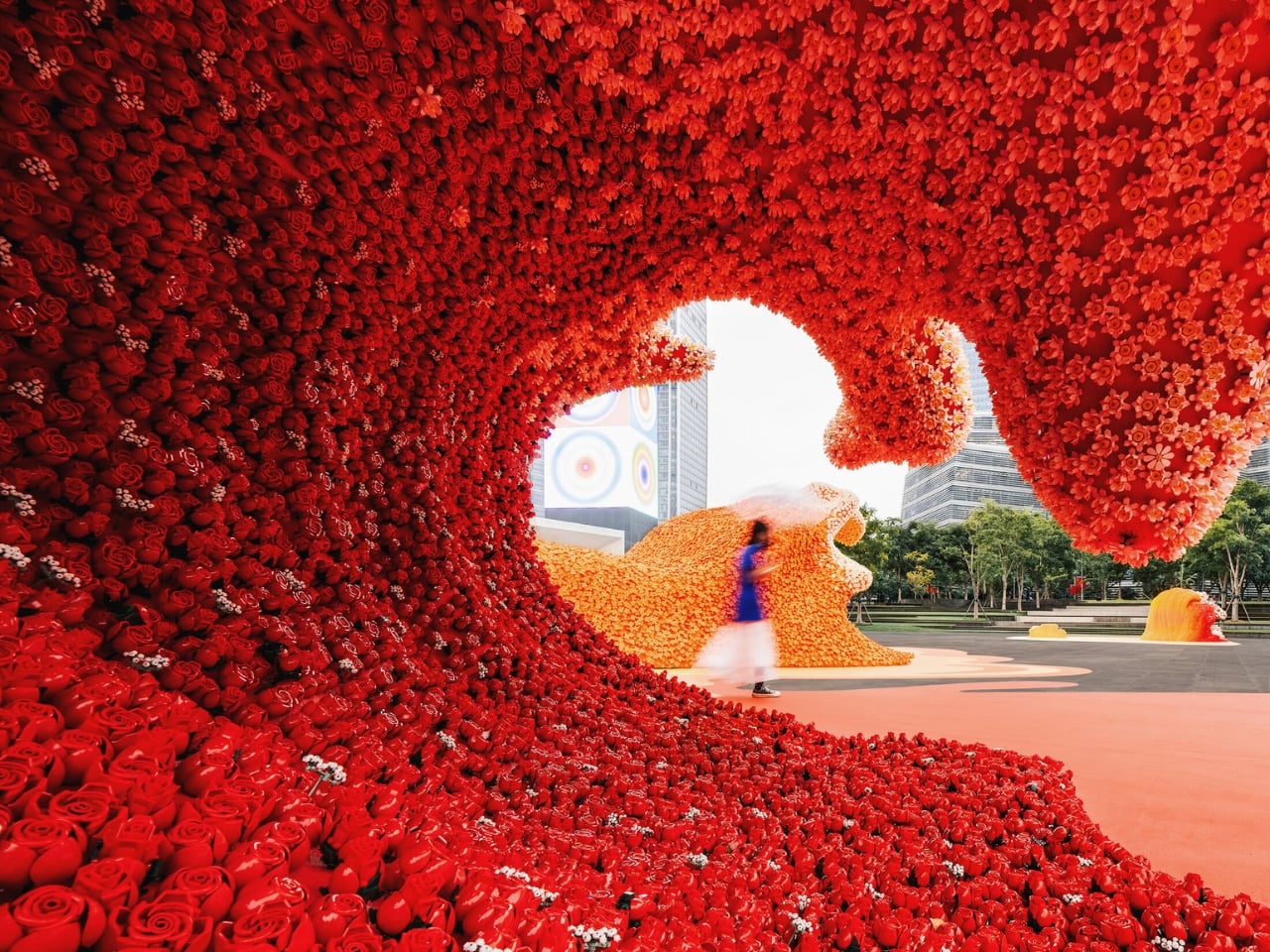
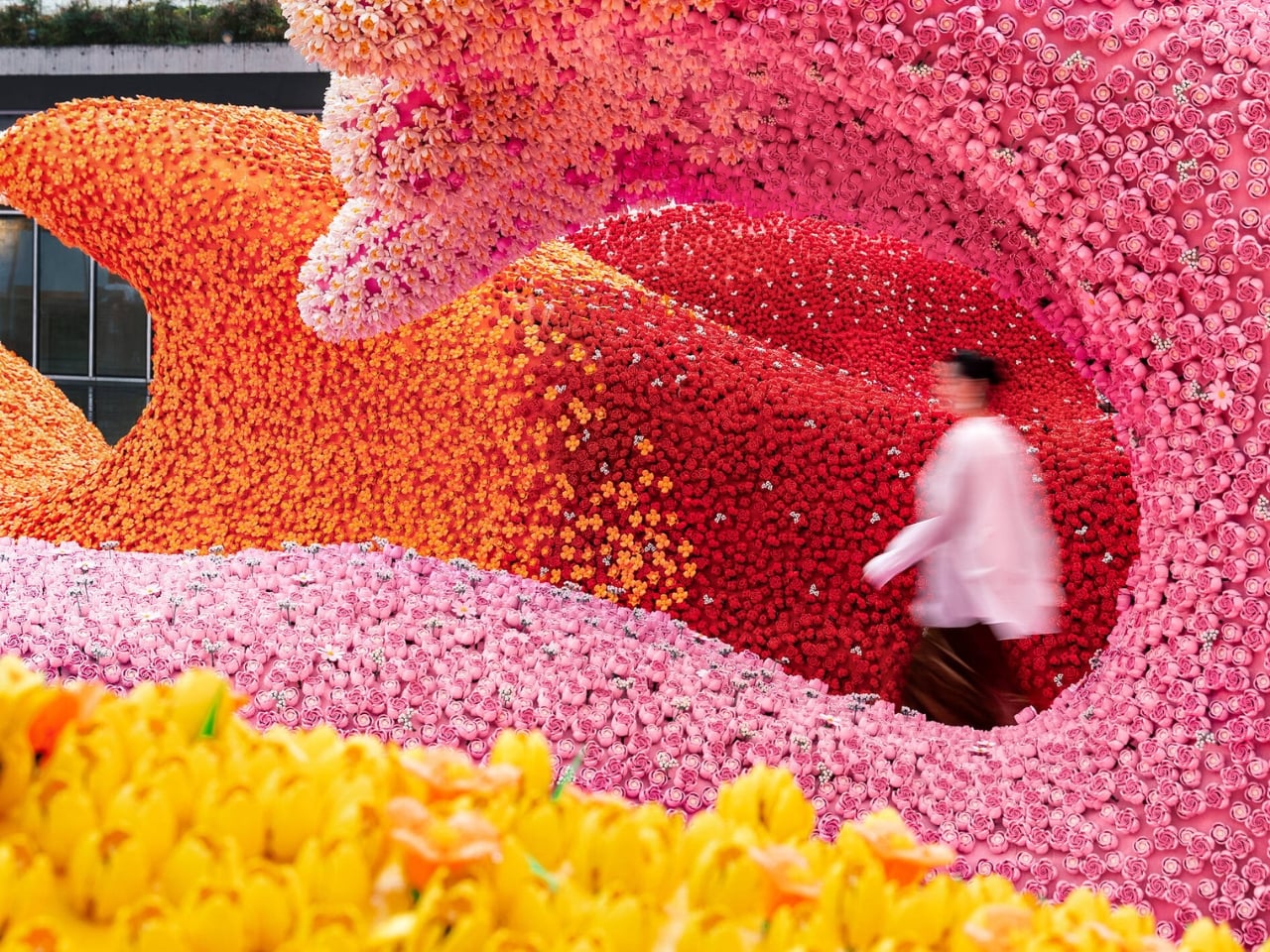
The wave stretches roughly 98 feet and covers about 8,600 square feet. In the exhibition photographs, ribbons of purple, pink, red, orange, and yellow descend from the building before curling into crests across the ground. White blooms gather along the edges like foam. The name feels well earned: the flowers follow the movement of water, with upright falls at the back and breaking waves out front.
That decision does more for the design than the enormous flower count. A flat carpet of blooms could have delivered plenty of color, but the raised forms give the installation a shape you can read from a distance. Close-up photographs reveal recognizable roses and other individual flowers packed across those surfaces. The pleasure, for me, is that shift in scale, from a broad sweep of color to hundreds of small constructions.

I also appreciate that the tank remains plainly visible. Its pale shell and the straight edges of its facade make the curving flowers look even more exuberant. Covering the whole building would have lost that relationship. Here, the suggestion of an overflow gives the structure a role in the composition. It’s a much more playful use of an old tank than simply treating it as a backdrop.
Inside, the exhibition expands beyond that single visual joke. Where Blooms Begin includes 18 artist installations combining LEGO botanical elements with materials including metal, textiles, and mirrors. One kinetic work, created by Ian Douglas-Jones and designed and produced by Atelier INDJ, pairs moving LEGO bouquets with a mirrored framework. It’s a useful reminder that these familiar pieces can be a material for other designers, not just a finished arrangement.
The participatory area uses a 360-degree wraparound screen, and visitors can scan the flowers they’ve built into a shared digital floral display. I’m usually more interested in the physical making than the screen that follows it. Still, the connection makes sense here: a small contribution joins a larger composition, echoing the many individual flowers outside. The digital experience has a clear relationship to the thing people actually made.
Of course, this is also a brand exhibition. Bloom Gallery places 18 botanical arrangements in everyday settings, and a pop-up shop sells LEGO flower sets. The sales pitch isn’t difficult to spot. I don’t think that cancels the design’s appeal, although I’d rather see people leave wanting to make something than feeling they need to buy the exact display.
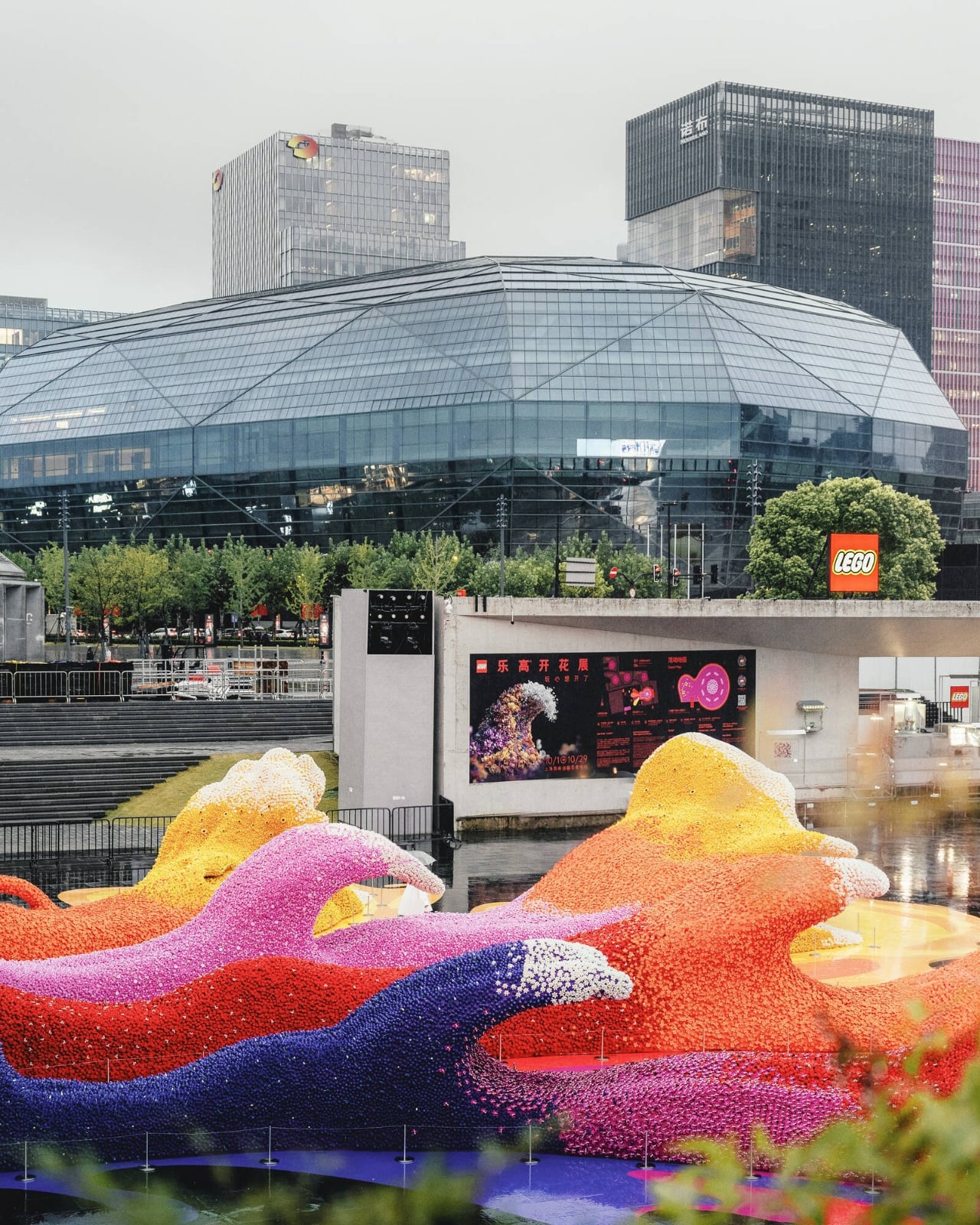
The Bloom Exhibition runs from October 1 through October 29, 2026. Outdoor areas don’t require reservations, while the indoor exhibition requires booking through LEGO’s WeChat mini program. That distinction matters because the activity that gives the spectacle its participatory side is inside. A photo of the flower wave tells only part of the story.
For me, the takeaway is refreshingly modest. Nobody needs 380,000 flowers in the living room. But the installation makes a persuasive case for giving a familiar object an unfamiliar job, then letting people try the idea at their own scale. An oil tank becomes a vase. A handful of bricks becomes an afternoon’s project.