Tupi’s oversized wooden beak looks like the kind of detail you’d add simply to make a lamp adorable. It also does the practical work. Beneath that dark, curved projection sits the light source, tucked away so the glow travels down the body rather than pointing straight toward your eyes. For a bedside table that needs softer lighting without another bulky shade, that’s a thoughtful place to start.
Designed by Gustavo Rodríguez and Estefanía Agudelo of Estudio Gris in Medellín, Colombia, Tupi is a made-to-order table lamp built around a bird at rest. Its other job is visual: offering some personality without loading an already crowded surface with decorative extras. I like the idea of a useful object earning its space through both function and character, especially beside a bed.
Designers: Gustavo Rodríguez & Estefanía Agudelo
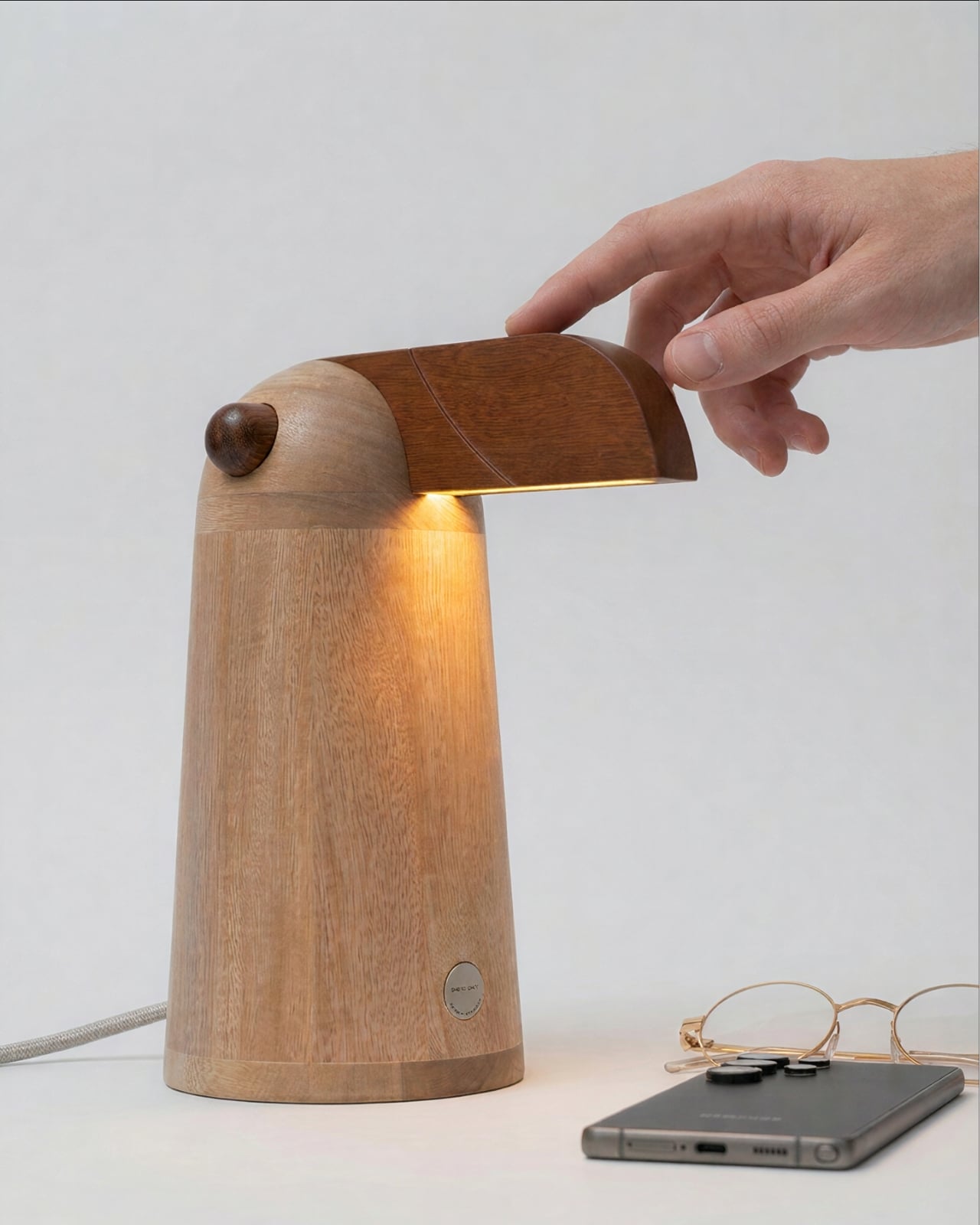
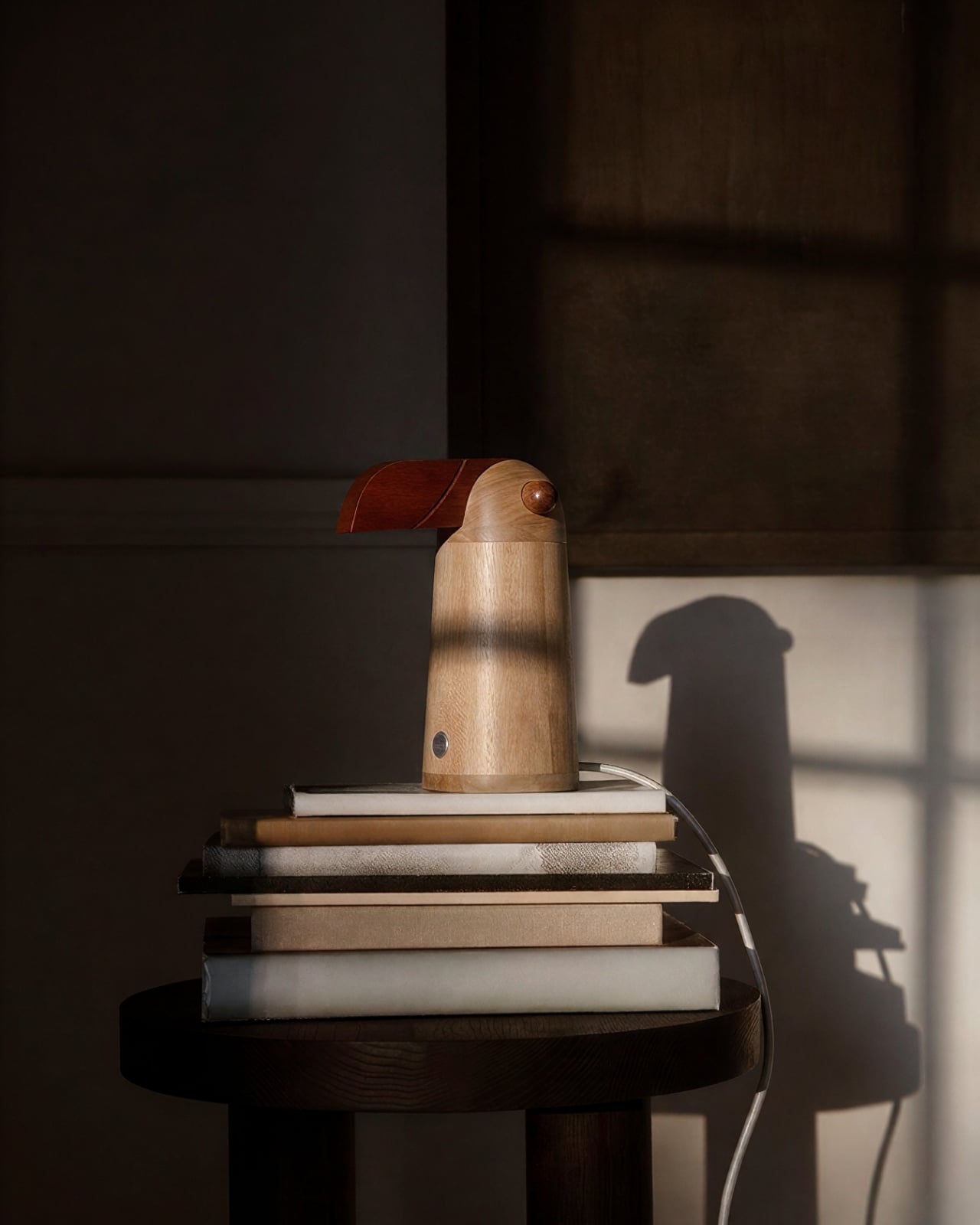
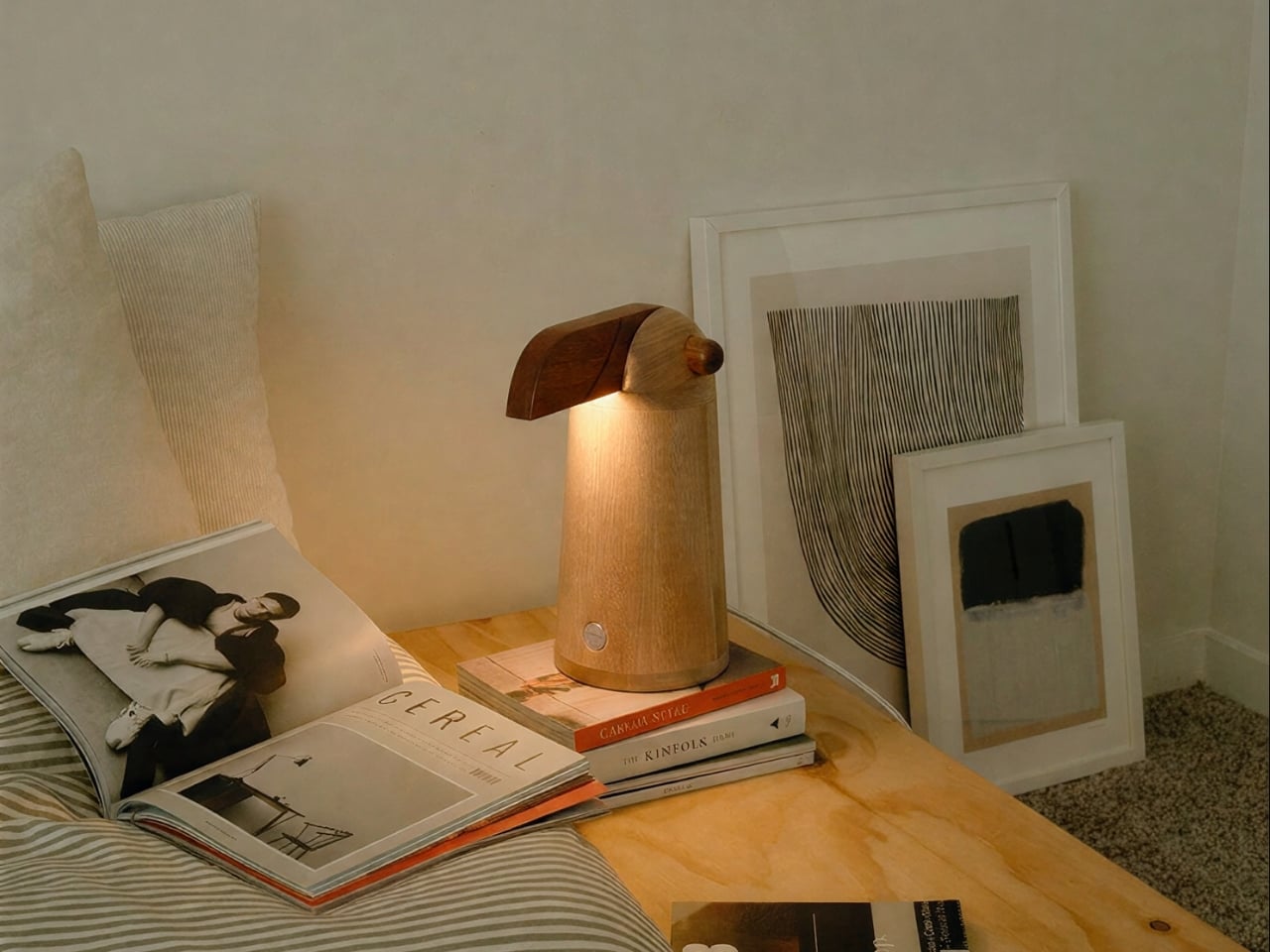
The silhouette is simple enough to describe in a sentence: a tapered oak body, a rounded head, a projecting beak, and a small wooden eye. Yet the proportions give it a surprisingly specific expression. That broad beak and slightly protruding eye read as watchful rather than cartoonishly cheerful. To me, it looks like a bird content to sit still, which feels appropriate for something intended to live on a nightstand.
At approximately 10 by 6 by 6 inches, and weighing about 2.2 pounds, it’s a compact object rather than a miniature sculpture that requires its own pedestal. I’d picture it beside a stack of paperbacks or on a shelf where a conventional lampshade might feel oversized. The upright body keeps most of the visual mass close to its base, while the beak gives it a clear direction.
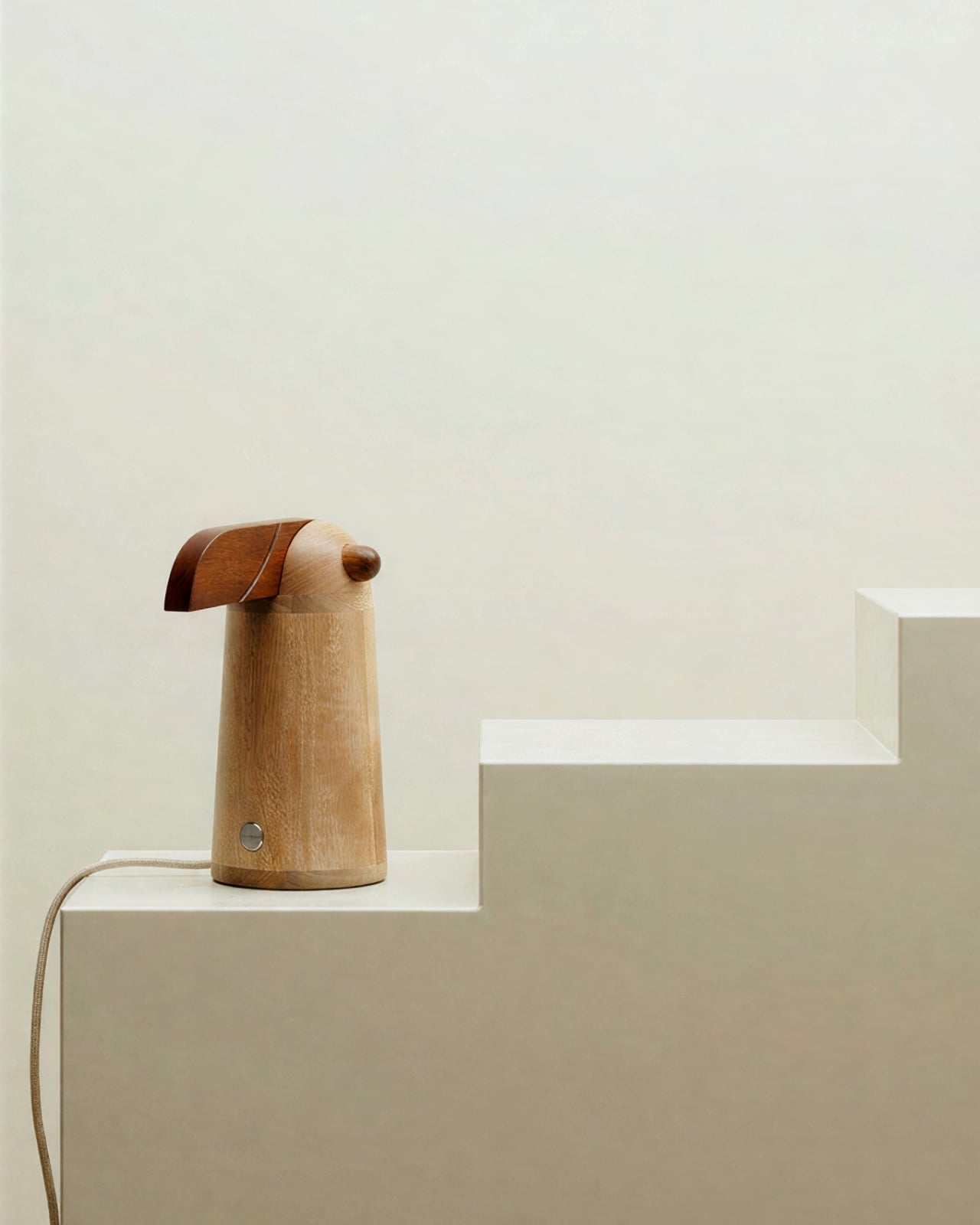
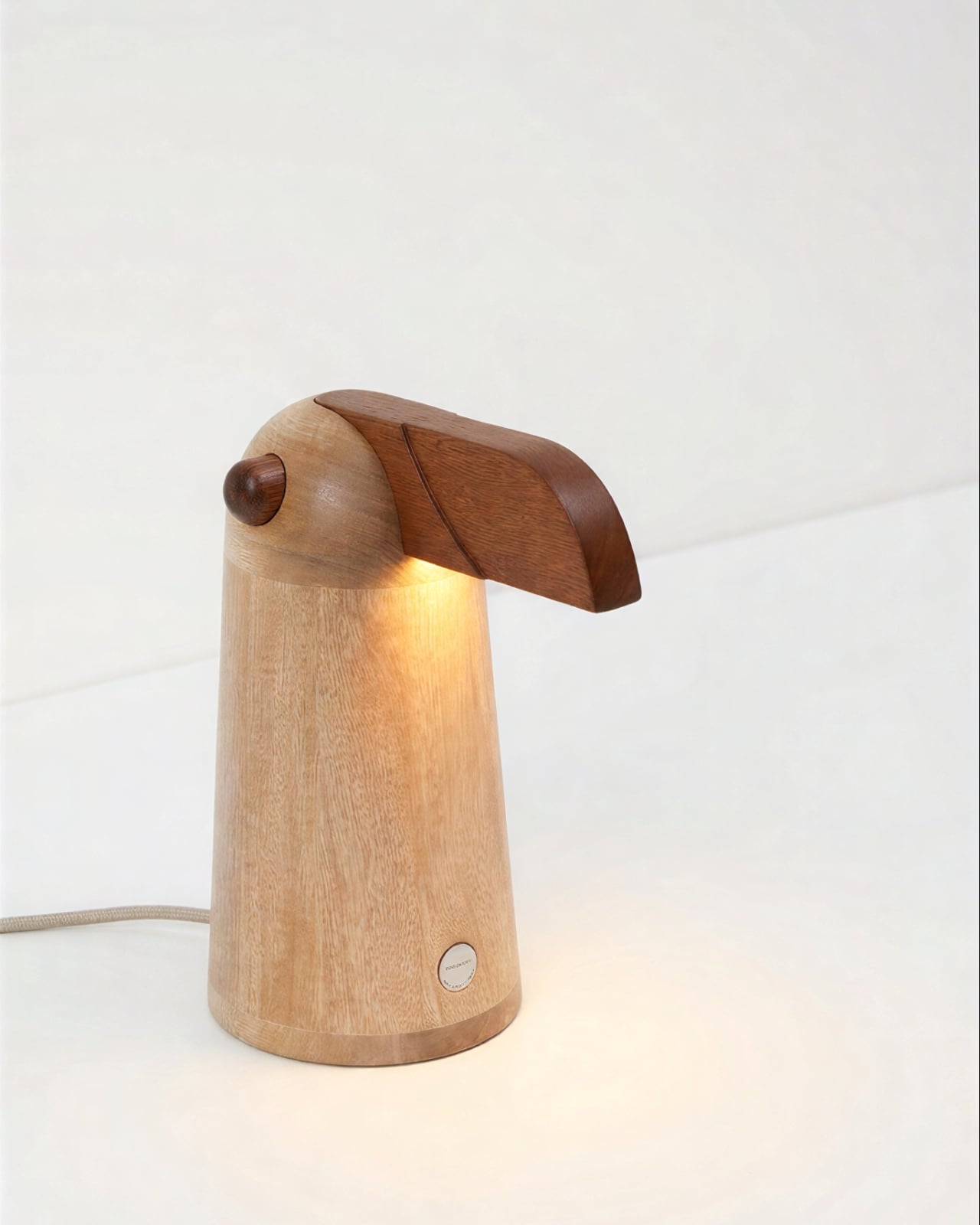
That direction matters when the light comes on. The beak doubles as the shade, concealing the source from above and sending warm light down the oak. In the supplied photographs, the illuminated grain becomes more pronounced, and a small pool of light reaches the surrounding surface. I’d treat Tupi as an atmospheric companion, though, rather than assume it can replace a dedicated reading or work lamp.
The materials help keep the bird reference from feeling like a novelty. The solid oak body is turned and assembled by hand in a local Medellín workshop, with darker contrasting wood used for the beak and eye. The pale body and reddish-brown beak provide enough contrast to define the form without painted markings. A curved groove across the beak adds another small detail without making the surface busy.
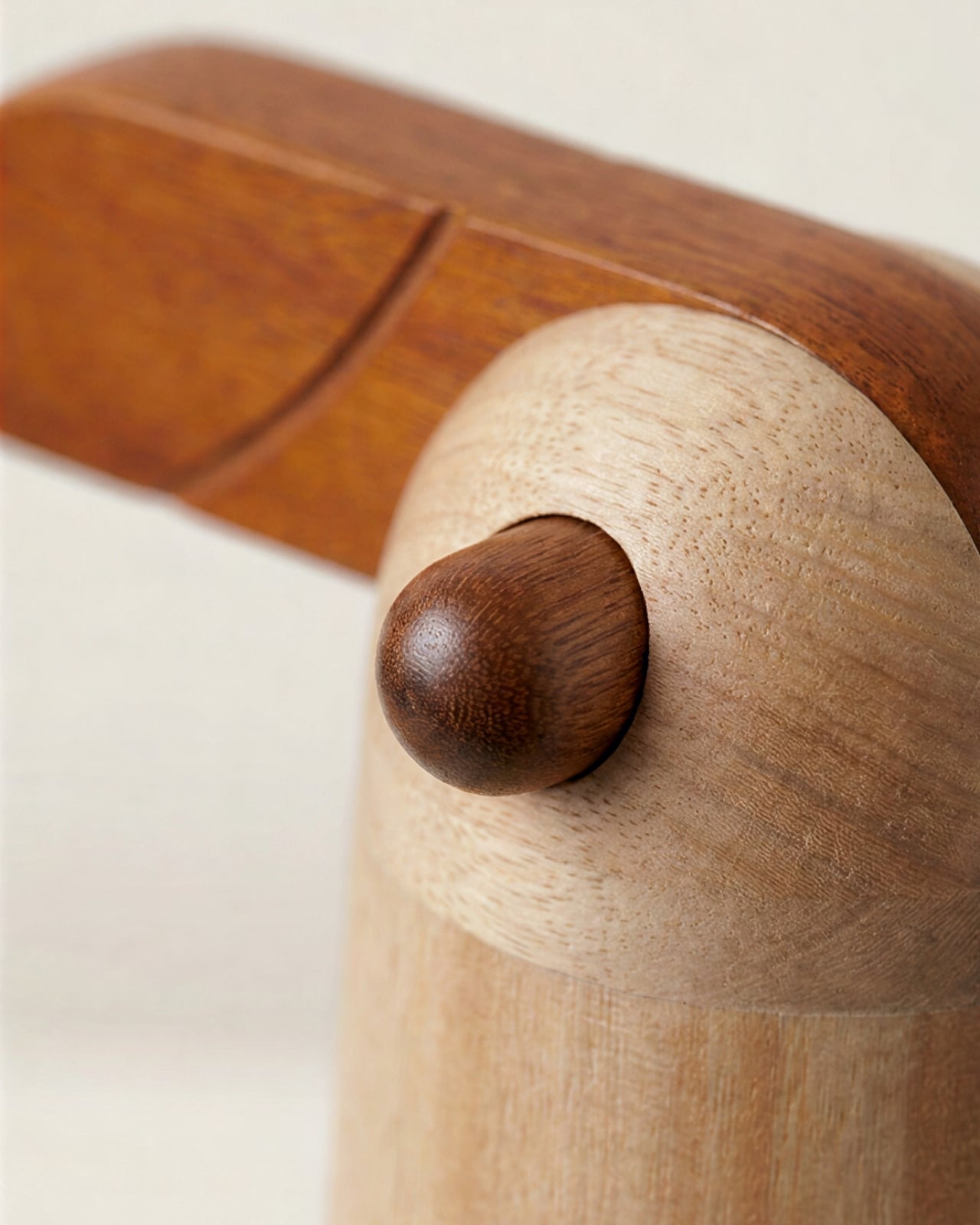
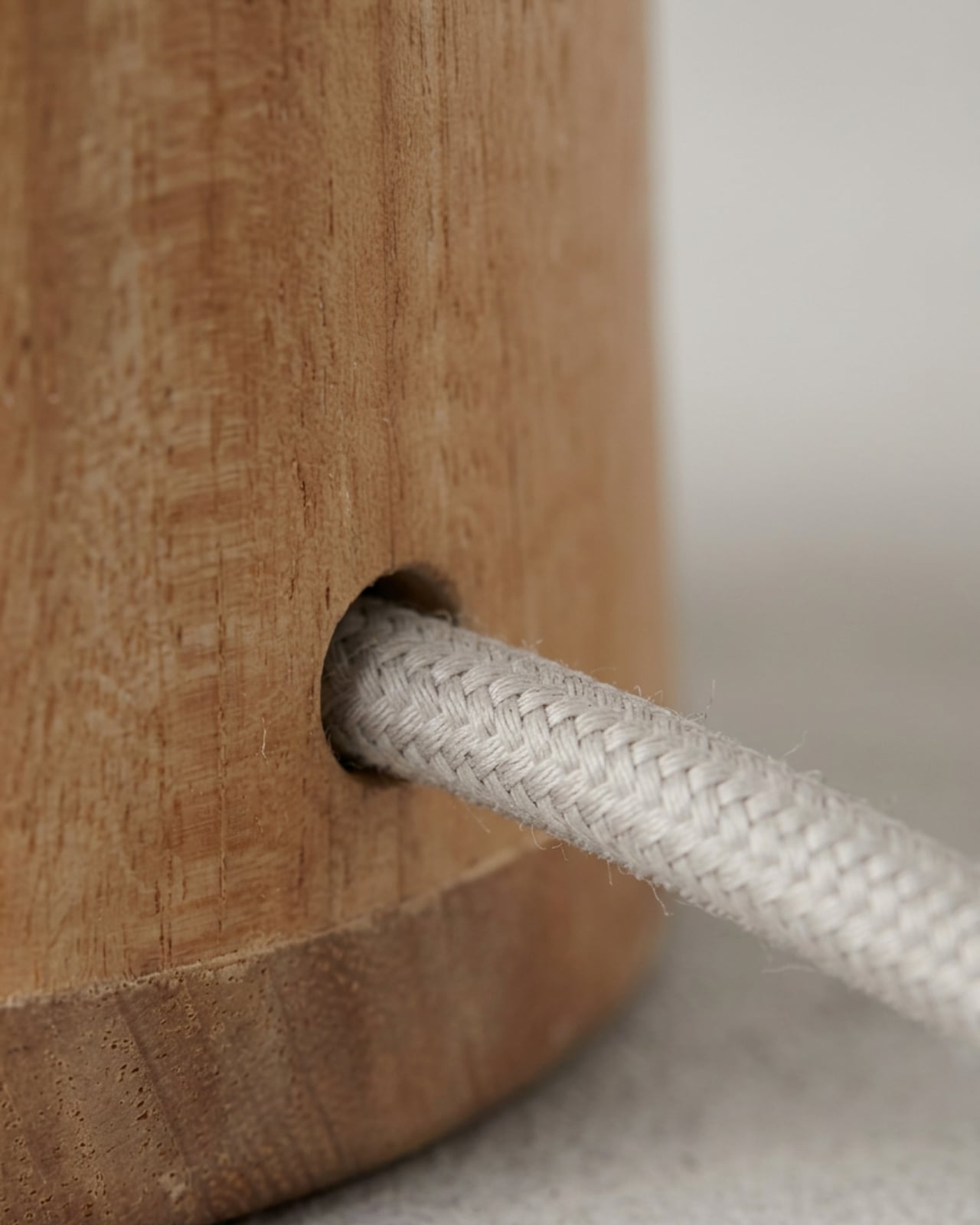
Each lamp is made to order, and natural differences in grain and tone mean the wood won’t look identical from piece to piece. That’s an appealing quality in a design this restrained. With so few components competing for attention, the grain has room to matter. I’d rather see those variations than have every bird arrive with precisely the same pattern, especially when the light is directed across that surface.
Estudio Gris describes its approach as “introverted design,” meaning objects that don’t compete for attention and reveal themselves gradually. Tupi has enough character that I wouldn’t call it anonymous. The distinction, for me, is that its personality comes from its construction. The beak isn’t a decorative attachment unrelated to the lamp’s purpose. It shades the light, so the most recognizable feature is also the most useful.
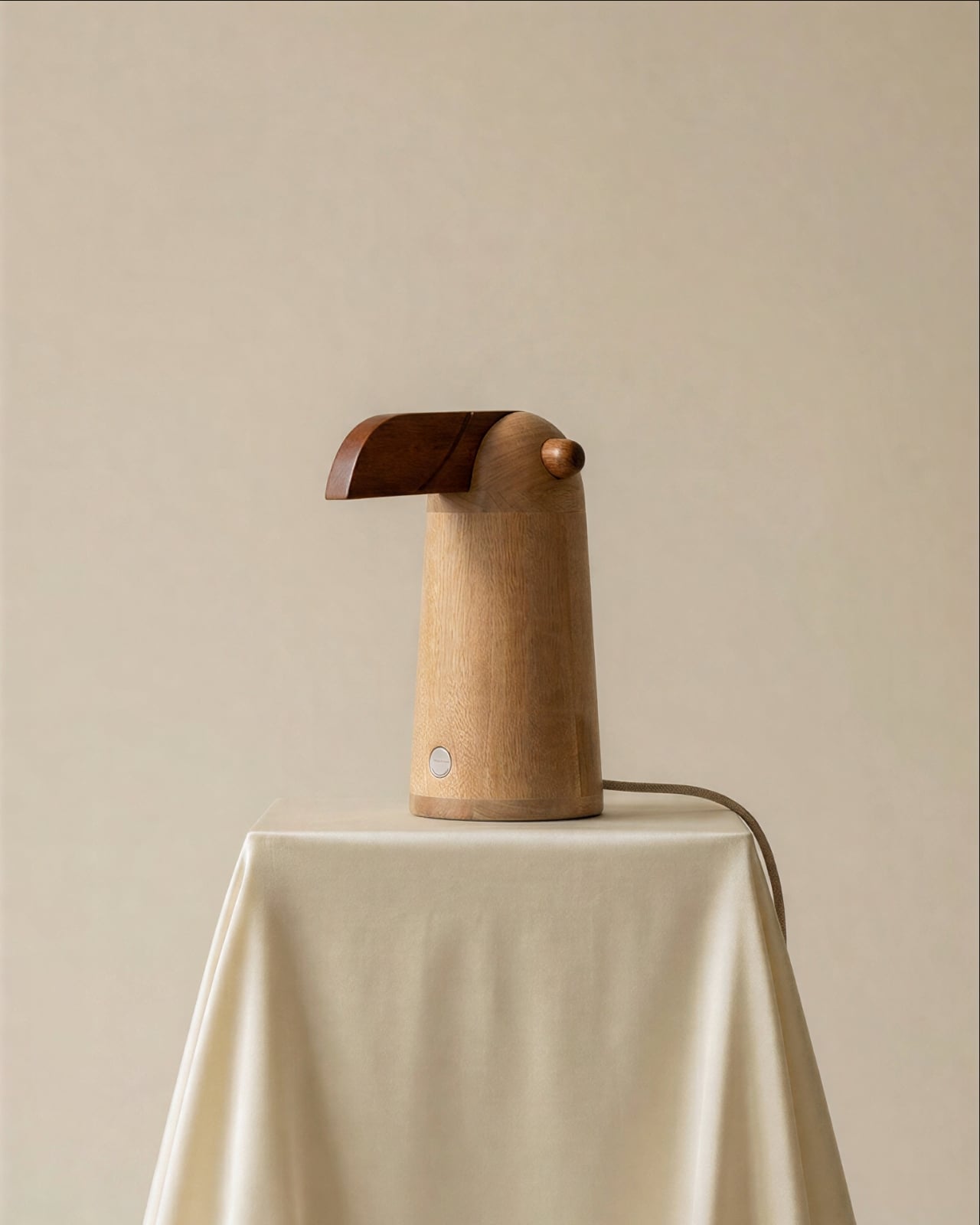
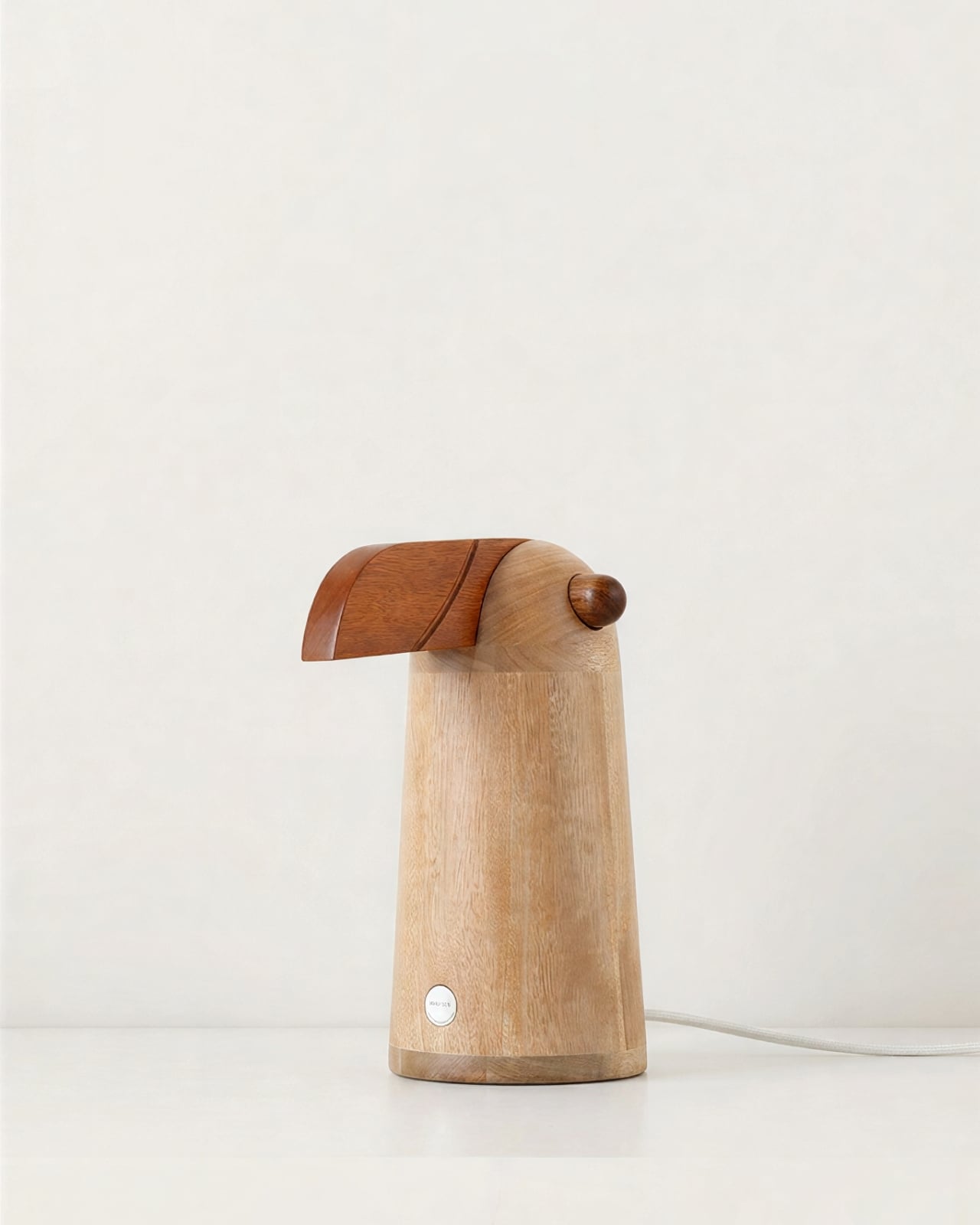
The smaller details follow that logic. A flush switch near the base leaves the outline largely uninterrupted, while a beige fabric-covered cable continues the natural palette. The cord is still visible, as it should be in any realistic assessment of the design. I appreciate that it has been considered as part of the object instead of treated as an unfortunate necessity trailing behind it.
Before ordering, I’d want to know the brightness, whether the light source can be replaced, and the plug and voltage options. Those practical details aren’t included in the supplied specifications. Still, Tupi makes a persuasive design choice: its birdlike shape actually helps manage the light. That gives the charm a reason to be there, and gives the lamp something to offer even when it’s switched off.