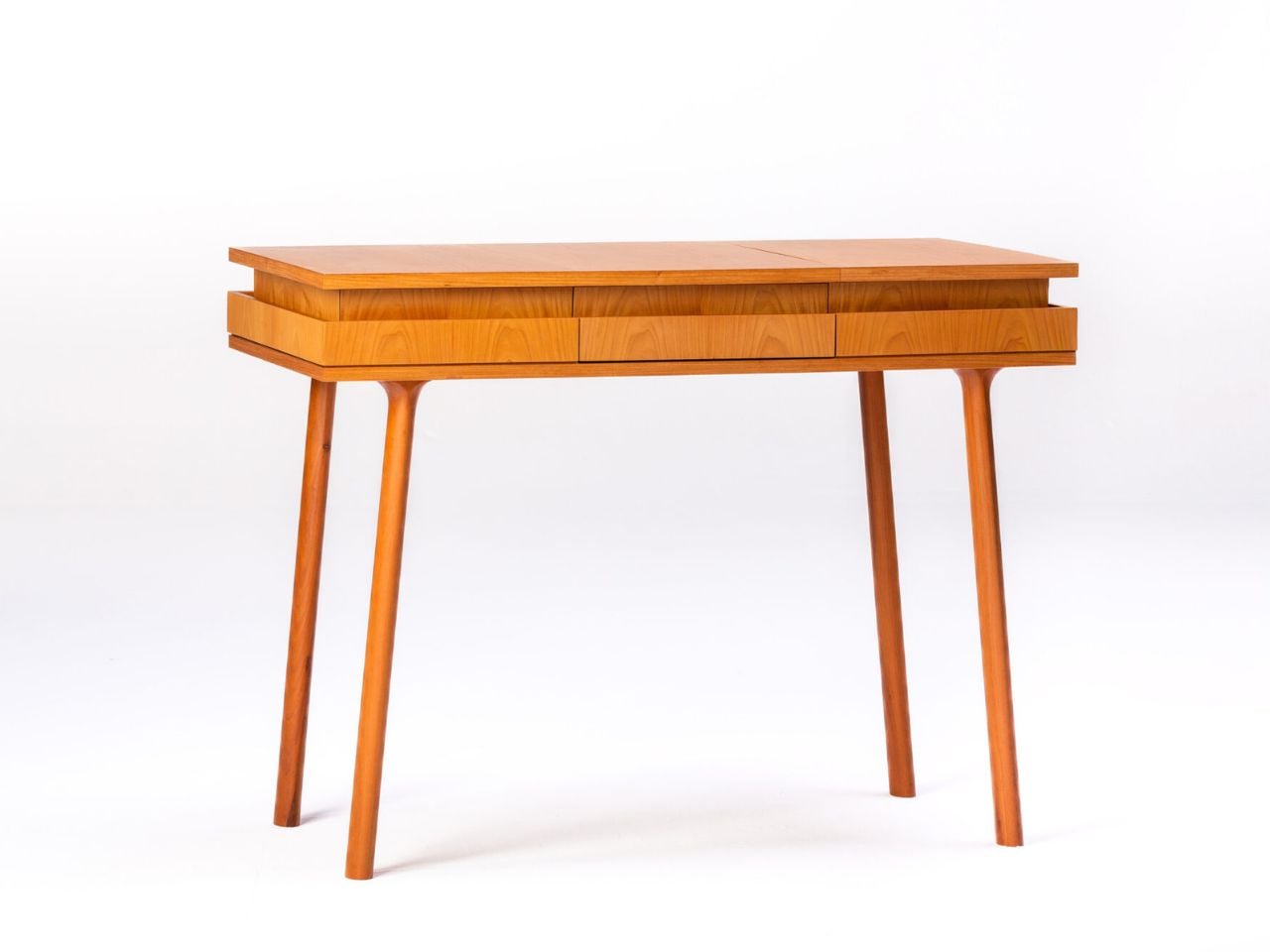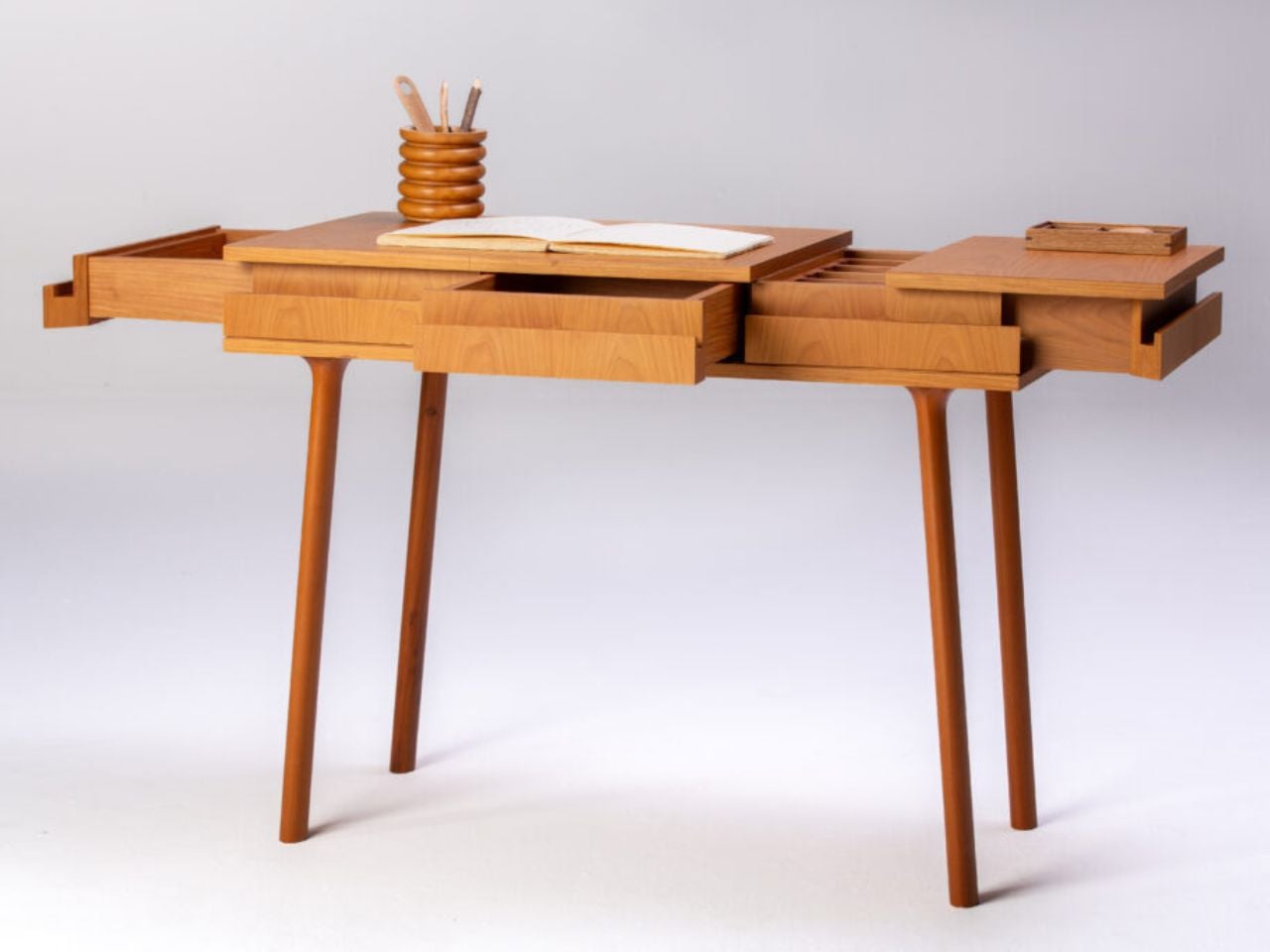
A desk is usually understood as a fixed surface, a place where work happens, and objects accumulate. Brazilian architect and designer Lia Siqueira approaches this familiar piece of furniture with a different proposition. Her Open Sesame Desk is conceived as an object that changes with its user, expanding through a series of openings to reveal surfaces, drawers, and concealed compartments. What initially appears to be a compact wooden desk gradually unfolds into a more elaborate workspace, where the simple gesture of opening becomes an experience of its own.
Designed in 2025 for Brazilian furniture brand ETEL, the desk takes its name from the famous expression in the tale of Ali Baba and the Forty Thieves. In the story, the words “Open Sesame” unlock a cave filled with hidden treasures. Siqueira translates this familiar moment of discovery into furniture design, replacing the mysterious cave with a carefully organized wooden structure. Its contents remain protected and concealed until the user chooses to reveal them. The reference lends the piece a playful character, while the design itself remains grounded in the practical needs of a working environment.
Designer: Lia Siqueira
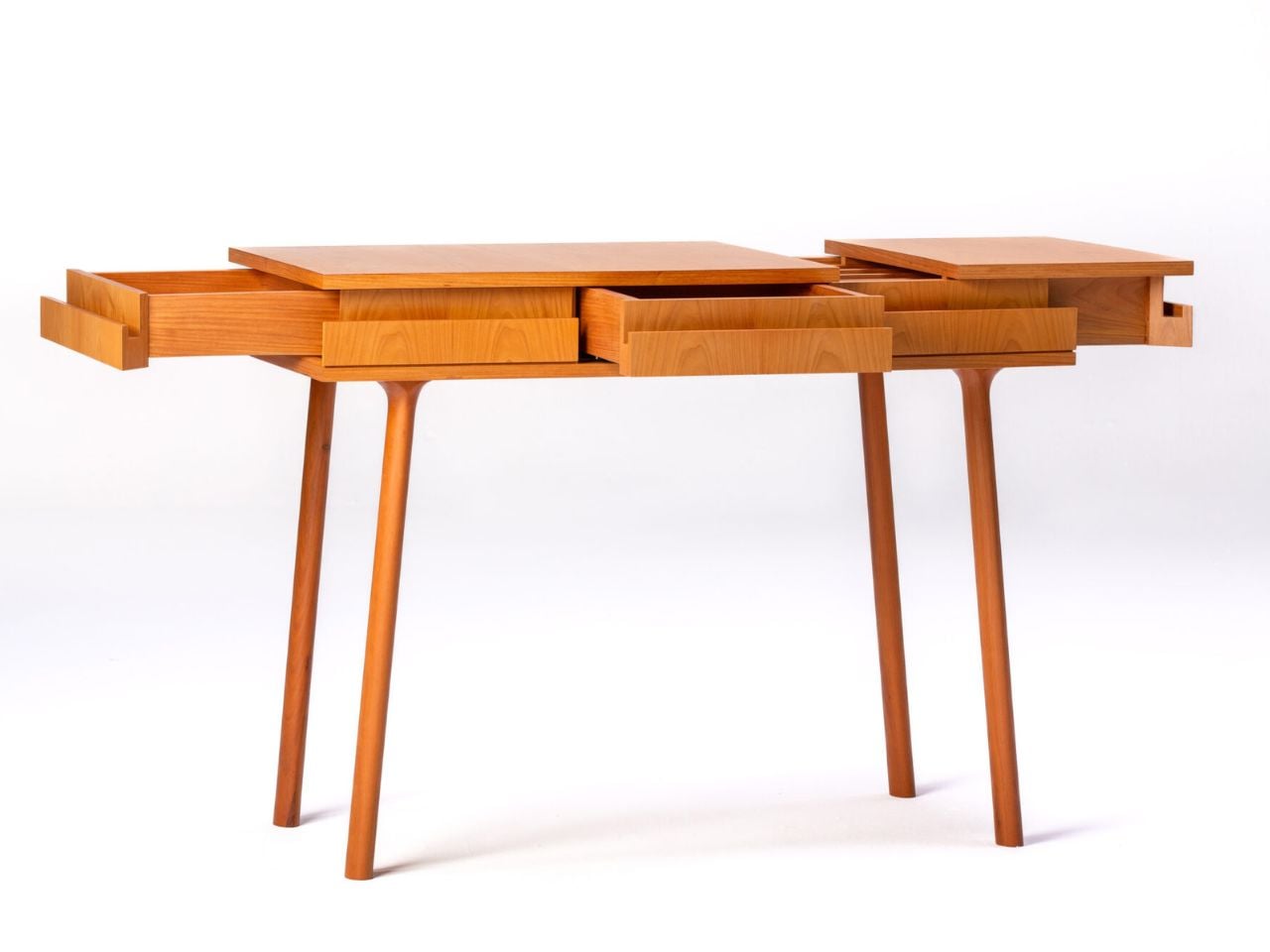
The desk’s most distinctive quality lies in the contrast between its two configurations. When closed, it maintains a restrained profile, containing its various functions within a discreet volume. Opening the piece introduces an entirely different spatial arrangement. Previously hidden drawers and compartments become accessible, while additional surfaces extend the available working area. Each opening reveals another layer of utility, allowing a single piece of furniture to accommodate activities that might otherwise require several separate storage solutions.
This transformation is particularly relevant to the way contemporary workspaces are occupied. A desk rarely serves one purpose throughout the day. It may hold a laptop in the morning, become a writing surface in the afternoon, or accommodate drawings, documents, and personal belongings as different tasks unfold. Open Sesame responds to these changing requirements through its physical adaptability. Rather than permanently exposing every storage space and working surface, the furniture allows them to be accessed when needed and concealed afterward.
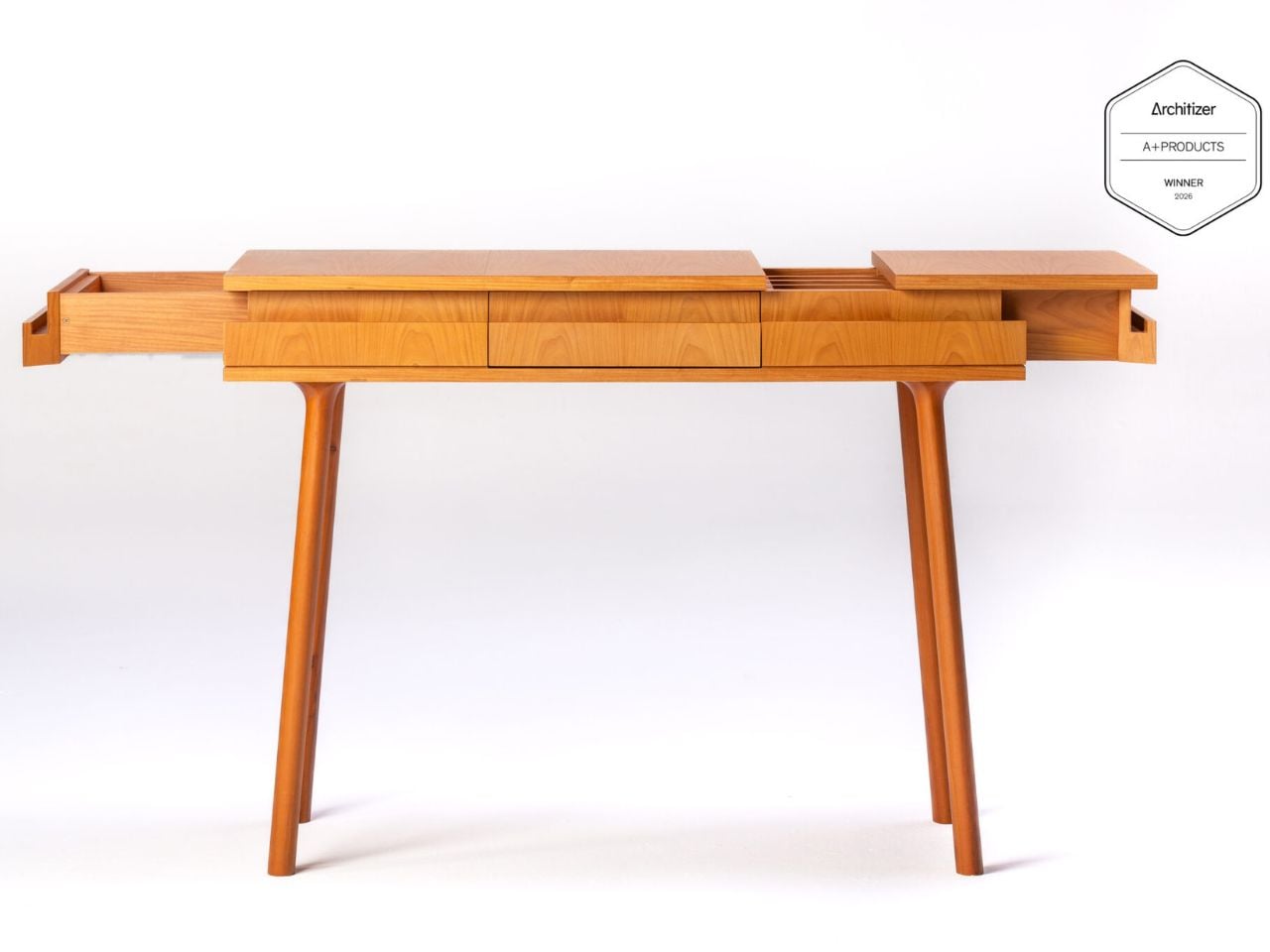
Measuring 100 by 50 by 76 centimeters, approximately 39.4 inches wide, 19.7 inches deep, and 29.9 inches high, the wooden desk maintains a relatively compact footprint. Its dimensions make the internal arrangement especially significant, as the design creates additional usable space through movement rather than a permanently larger structure. The expansion is integrated into the furniture itself, preserving the relationship between its proportions and functional capacity.
There is also an interesting consideration of visibility within the design. Conventional desks often leave their contents exposed, with organization dependent on external accessories or separate furniture. Siqueira builds that organization into the object, giving each stored item the possibility of remaining out of sight until required. Papers, tools, and everyday essentials can occupy the internal compartments without constantly sharing the main working surface. The user decides when the desk should reveal its contents and when it should return to its quieter, closed state.
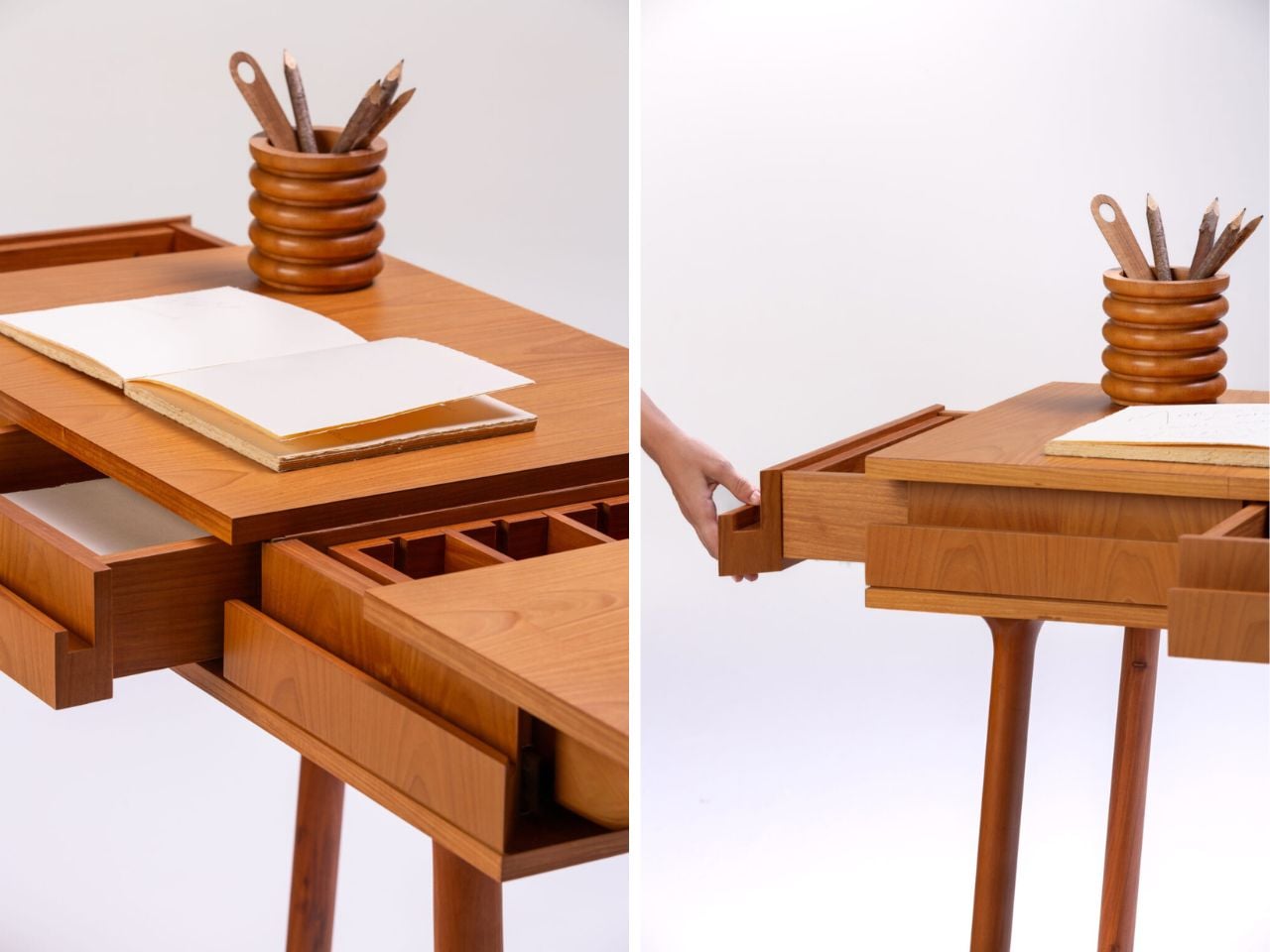
Perhaps the most engaging aspect of Open Sesame is the importance it places on physical interaction. The furniture encourages a sequence of gestures that makes accessing its contents feel deliberate. Opening a section changes the arrangement of the desk, introduces new possibilities, and invites the user to explore its construction. This relationship between movement and discovery gives the piece a character that extends beyond its functional specifications. Its transformation becomes part of the daily routine rather than an occasional feature.
The desk also reflects an approach to furniture in which storage is treated as an architectural element. Its compartments are concealed within the overall composition, and their gradual revelation changes how the object is perceived. The distinction between the exterior and interior becomes essential to its identity. From the outside, the desk communicates restraint; from within, it offers a more intricate arrangement of surfaces and spaces. These contrasting qualities allow it to balance visual simplicity with an unexpectedly generous range of uses. Its appeal comes from the experience of using it as much as from its appearance. Siqueira gives the act of opening a meaningful role, turning an ordinary interaction with furniture into a small moment of anticipation. Like the story that inspired its name, the desk suggests that what is hidden can be just as intriguing as what is immediately visible.