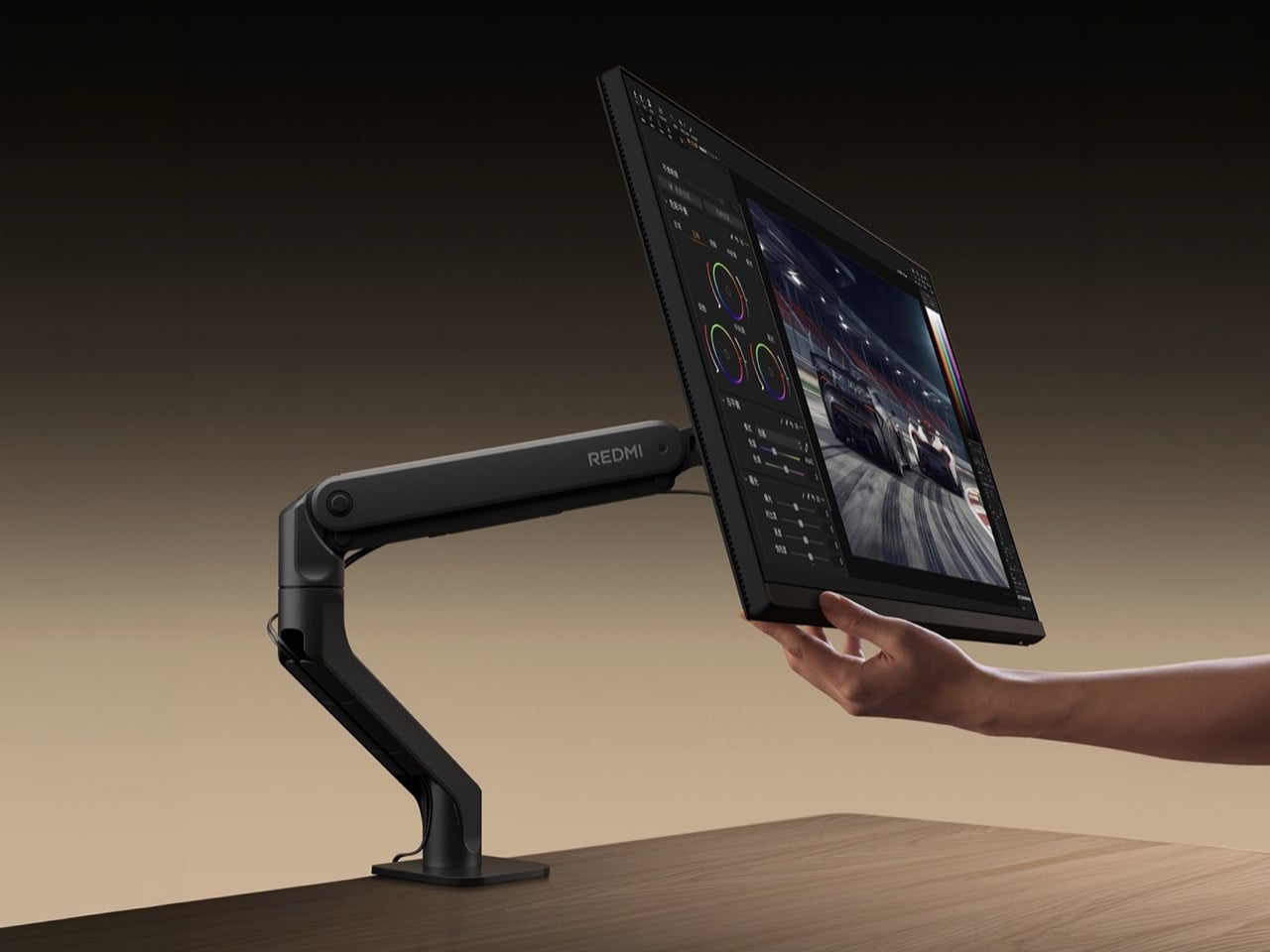
Xiaomi is assembling your desk one cheap piece at a time. First came the monitors, from 24-inch office panels to 4K gaming screens. In July, the Mijia Monitor Light Bar 2 arrived to perch on top of them for about $39. Now Redmi, Xiaomi’s budget sub-brand, has launched the piece that holds the whole thing up, a monitor arm with a hidden cable channel for roughly $42. At this rate, a Xiaomi standing desk is probably already sitting in a spreadsheet somewhere.
The Redmi Monitor Arm went on sale October 12 on Xiaomi Youpin for ¥299 (about $42), and Xiaomi has not announced a US release. It holds screens up to 34 inches, and the body is 3mm aluminum alloy. Xiaomi’s pitch is that cables tuck inside the arm, so your desk shows a single post. A five-year replacement guarantee comes along for the ride, which is a lot of faith at this price. If you have ever fought a monitor arm and zip ties in the same evening, you can see the appeal.
A load range that starts at 4.2 pounds

Redmi rates the arm for 4.2 to 19.8 pounds (1.9 to 9 kg), and the low end is the interesting part. An arm tuned for a heavy screen will push a light one skyward, so a 1.9 kg floor suits the featherweight office panels Xiaomi itself sells. At the other end, 17173 notes a loaded 34-inch ultrawide lands around 8 kg, so the 9 kg ceiling has room. Anything heavier, or anything past 34 inches, needs a different arm. Check your panel’s spec sheet before you click buy.
The lift comes from a dual-spring design, with springs on both sides firing together so the force stays even through the whole 11.8 inches (30 cm) of height travel. Xiaomi says it survived 30,000 test cycles. Chinese outlet Kuai Keji worked that out to about 20 years of use at four adjustments a day, which is a lot of standing up and sitting down. The listing cites a Chinese utility model patent, a lighter registration than a full invention patent. Redmi adds a separate tilt-force adjustment at the VESA head to go after screen sag
Cable routing that hides the mess, mostly
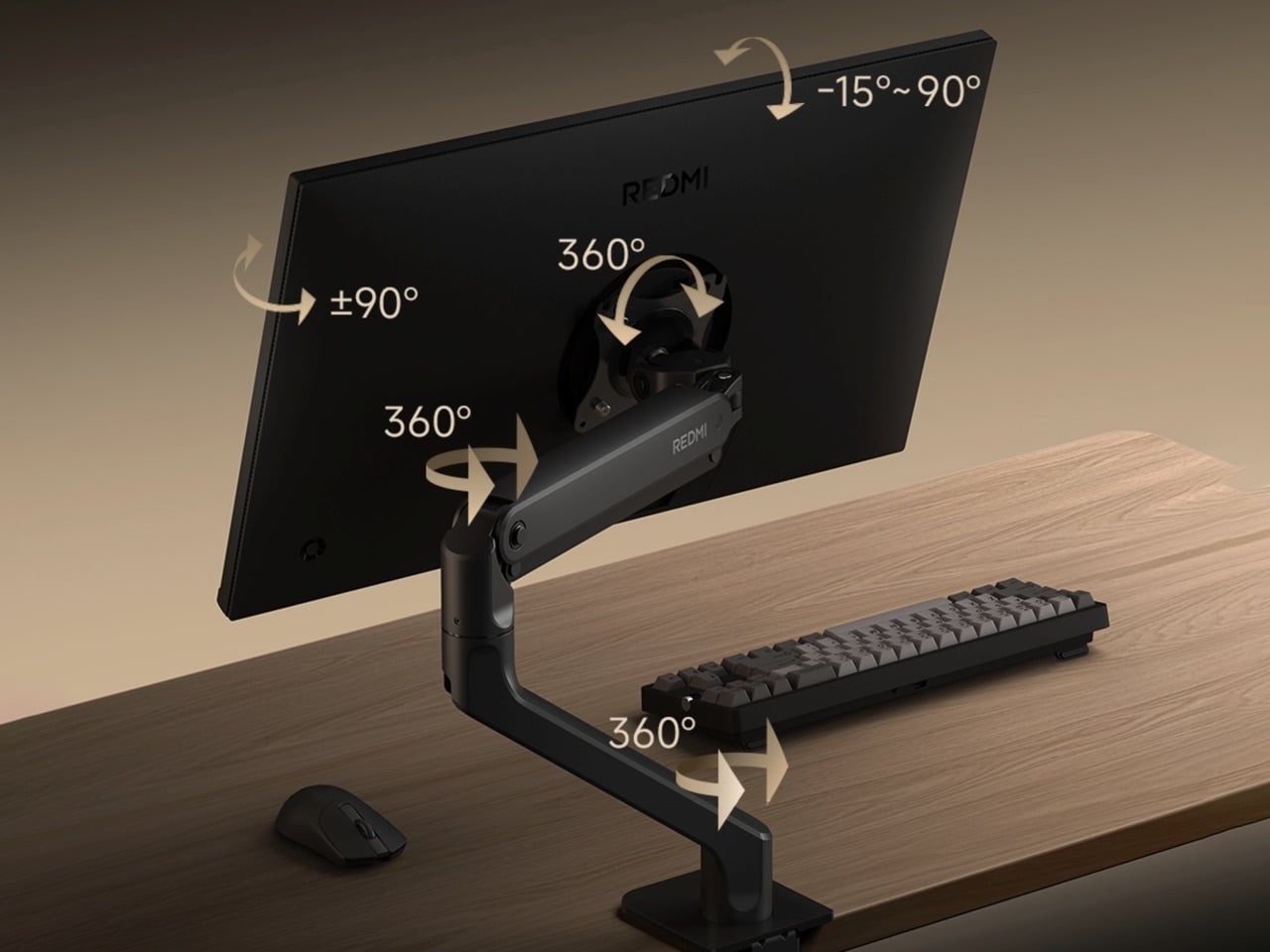
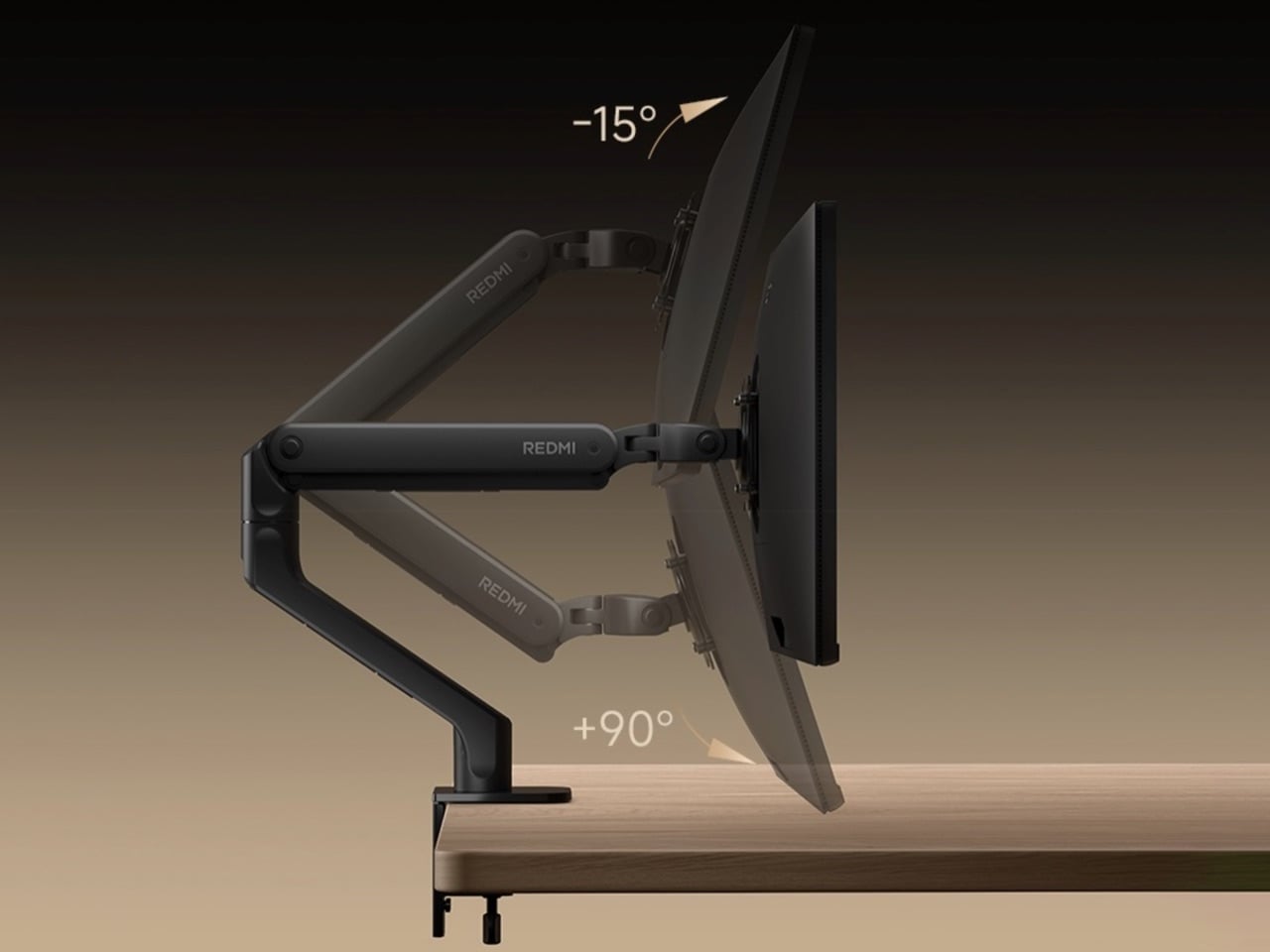
Redmi’s renders show cables running through a channel beneath the arm and down the riser. Only the clamp stays visible on the desk. It echoes the trick behind Calvin Lien’s Console Desk concept, which hid its cabling inside the desk’s spine so the surface stayed clean. The arm adds reach to that job, with 17.1 inches (43.5 cm) of front-to-back travel and a 360-degree screen rotation. The promo shots still show a little cable curling out near the VESA plate, which is fair, because a moving screen needs slack somewhere.
Six years ago, Redmi’s first PC monitor, the Display 1A, launched with nothing to hide its cables, a gap a Polish review called out at the time. Concealed routing is now a headline feature on the company’s own product page. That tells you where desk setups have gone. A channel in the arm means the monitor’s cables follow one path instead of dangling in every direction. Redmi’s version is far simpler than a full desk rebuild, and it only has to live inside one arm.
The ¥299 price and China-only availability
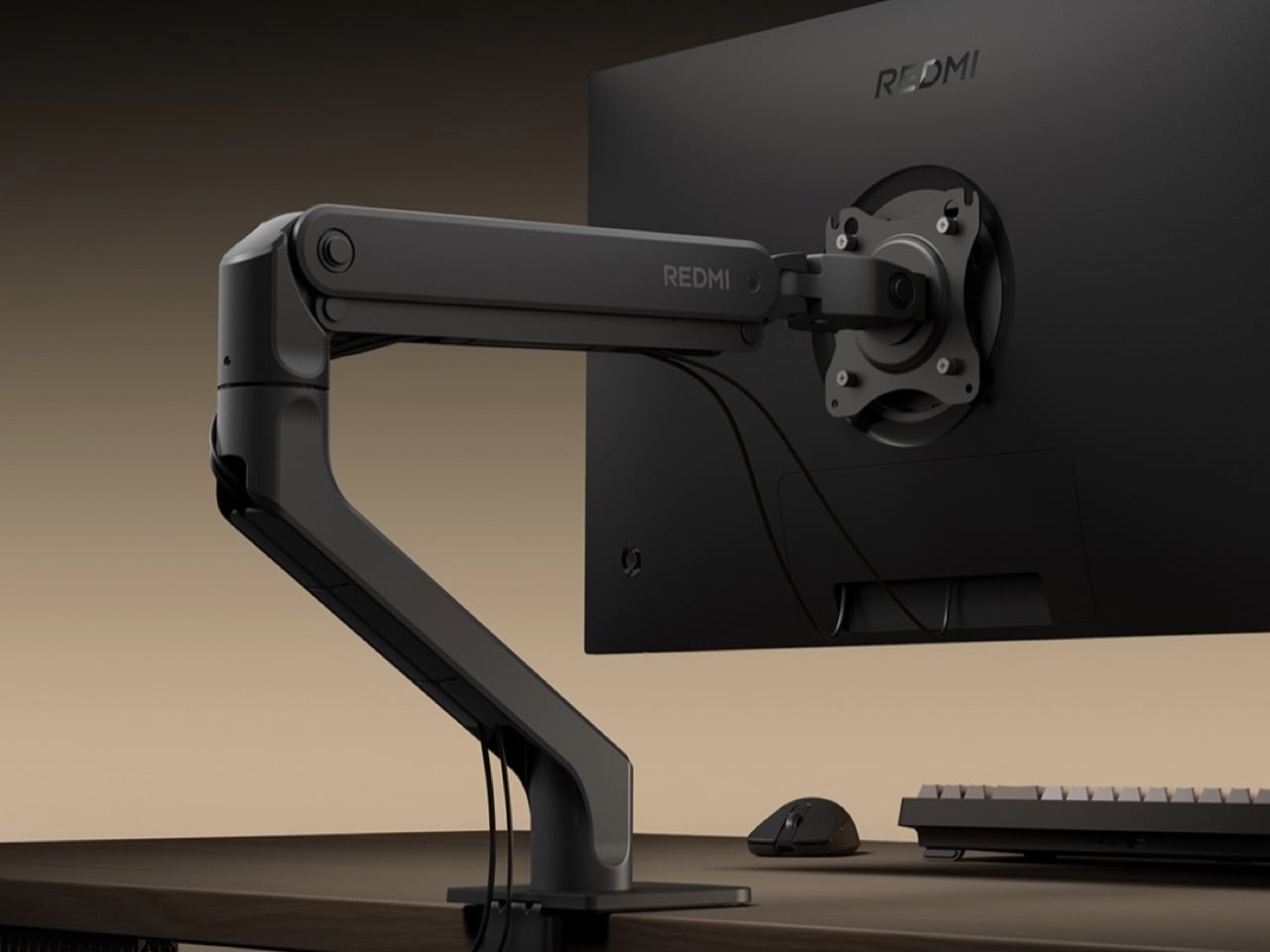
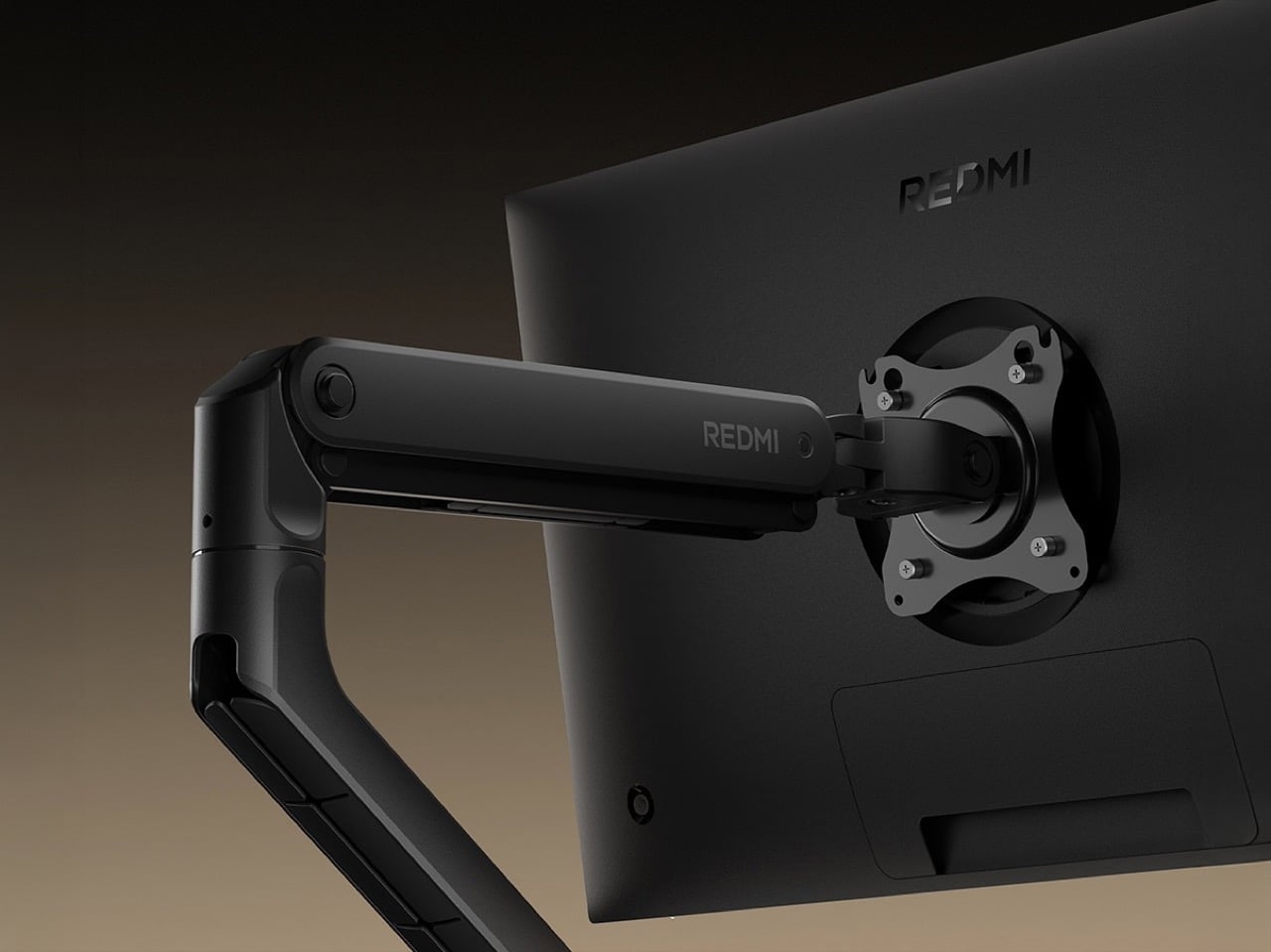
The arm costs ¥299 in China (about $42) and went on sale October 12 through Xiaomi Youpin. The listing shows a struck-through ¥499, but Youpin’s fine print calls that a reference price, so read ¥299 as a launch price rather than a markdown. Notebookcheck points out that pricier ergonomic arms can run up to $350 in the US, which makes $42 look like a typo. A five-year replace-instead-of-repair guarantee comes with it, though the full terms are not spelled out on the page. The currency conversion is approximate.
Compatibility looks friendly, since the VESA plate takes the 75x75mm and 100x100mm patterns that most monitors use. That is the same pair CORSAIR’s Platform:6 desk specs for the arms it ships with, so most panels should line up. Xiaomi has not published a clamp thickness range, so measure your desk edge before you get excited. There is no word on a global release, but Xiaomi often sends its accessories abroad later, sometimes wearing the Xiaomi name. The part holding your screen up has never been the exciting purchase, which is exactly why a $42 version is worth watching.