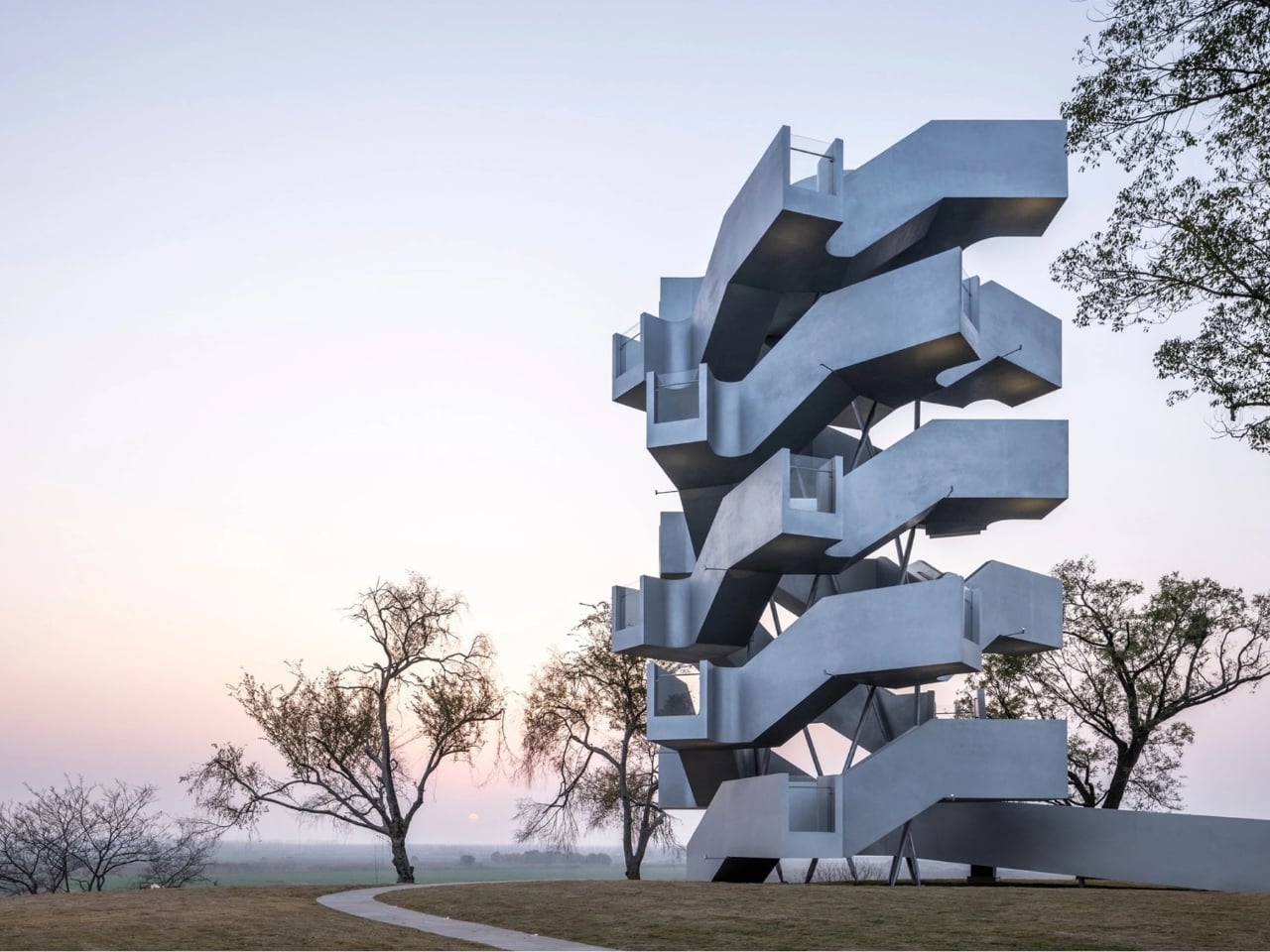
Most observation towers share the same quiet philosophy: get people up high, give them a view, and then get out of the way. The architecture fades into background noise, and the landscape takes all the credit. Xiang Architects clearly had other ideas when they designed the Chenhu Migratory Bird Observation Tower, and I think they made exactly the right call.
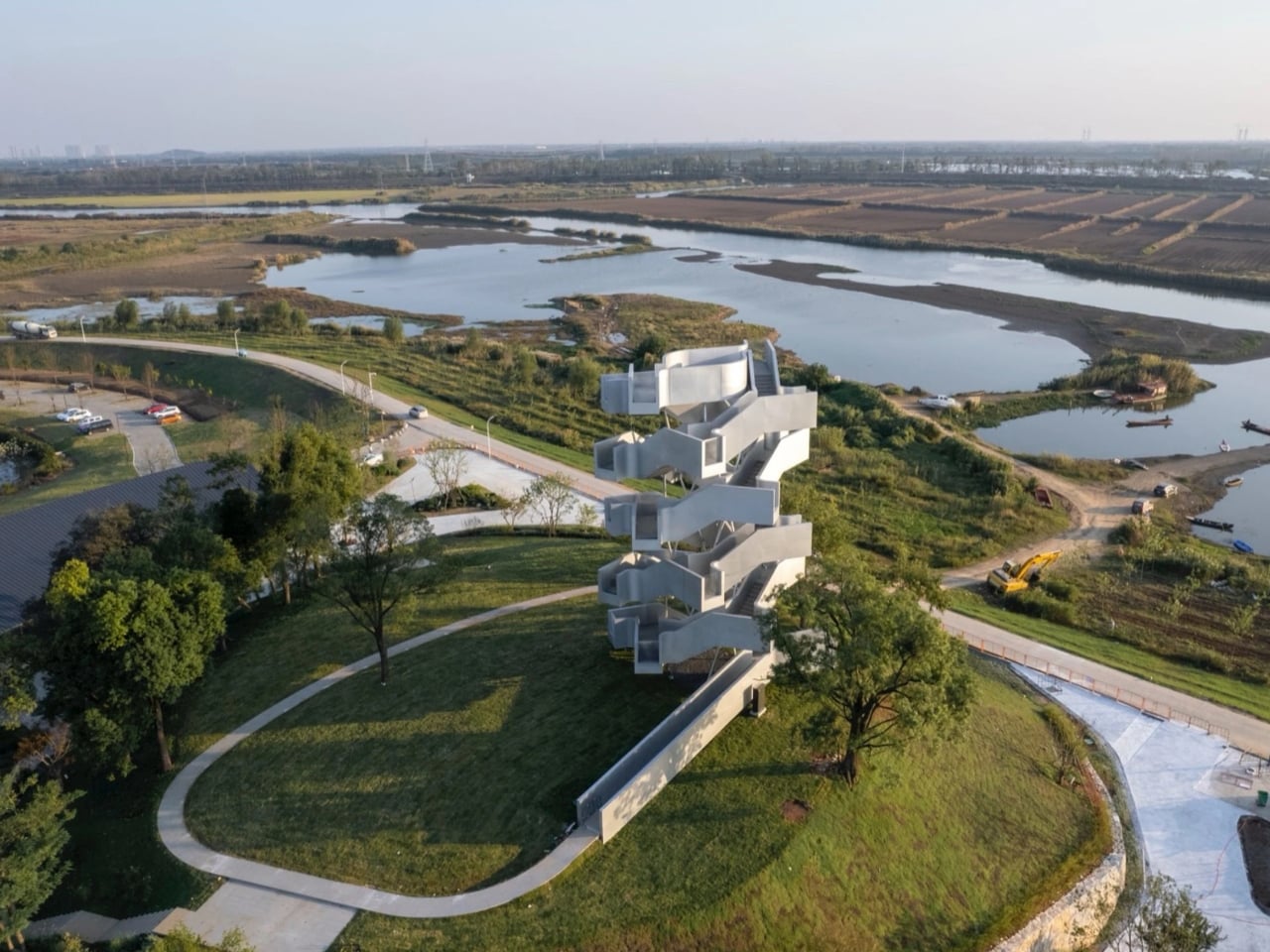
Perched on a natural promontory called Xianglushan within Wuhan’s Chenhu Wetland, the tower rises nearly 20 meters above a marshland that hosts over 100,000 migratory birds every winter. That’s not a typo. One hundred thousand birds descend on this sanctuary between October and March, turning the wetland into one of China’s most vital ecological stopover points. The site itself is already extraordinary. The Shanghai-based studio could have played it safe, delivered something modest and functional, and no one would have complained. Instead, they built a steel double helix that rises above the reeds like something from a different century entirely.
Designer: Xiang Architects
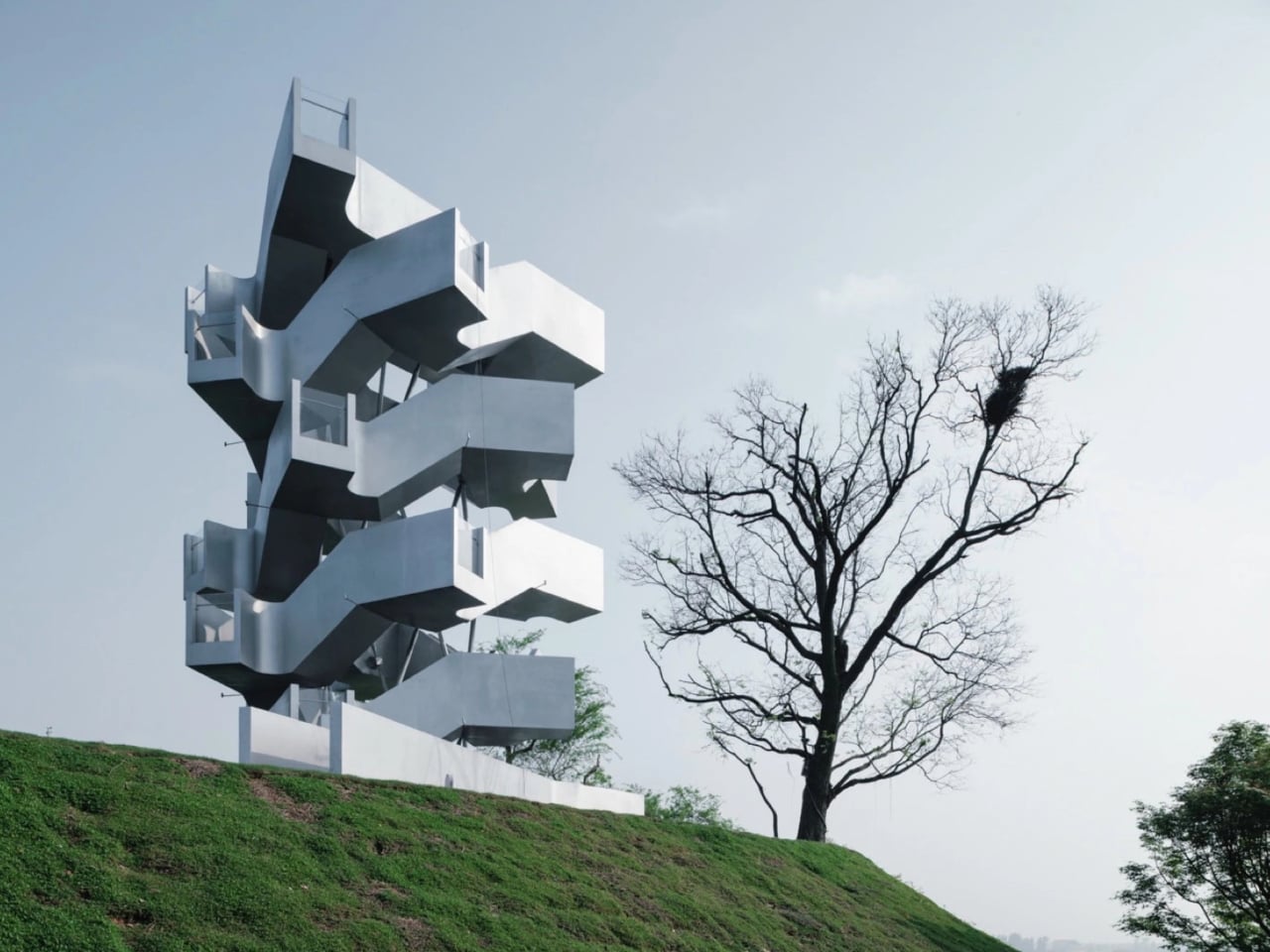
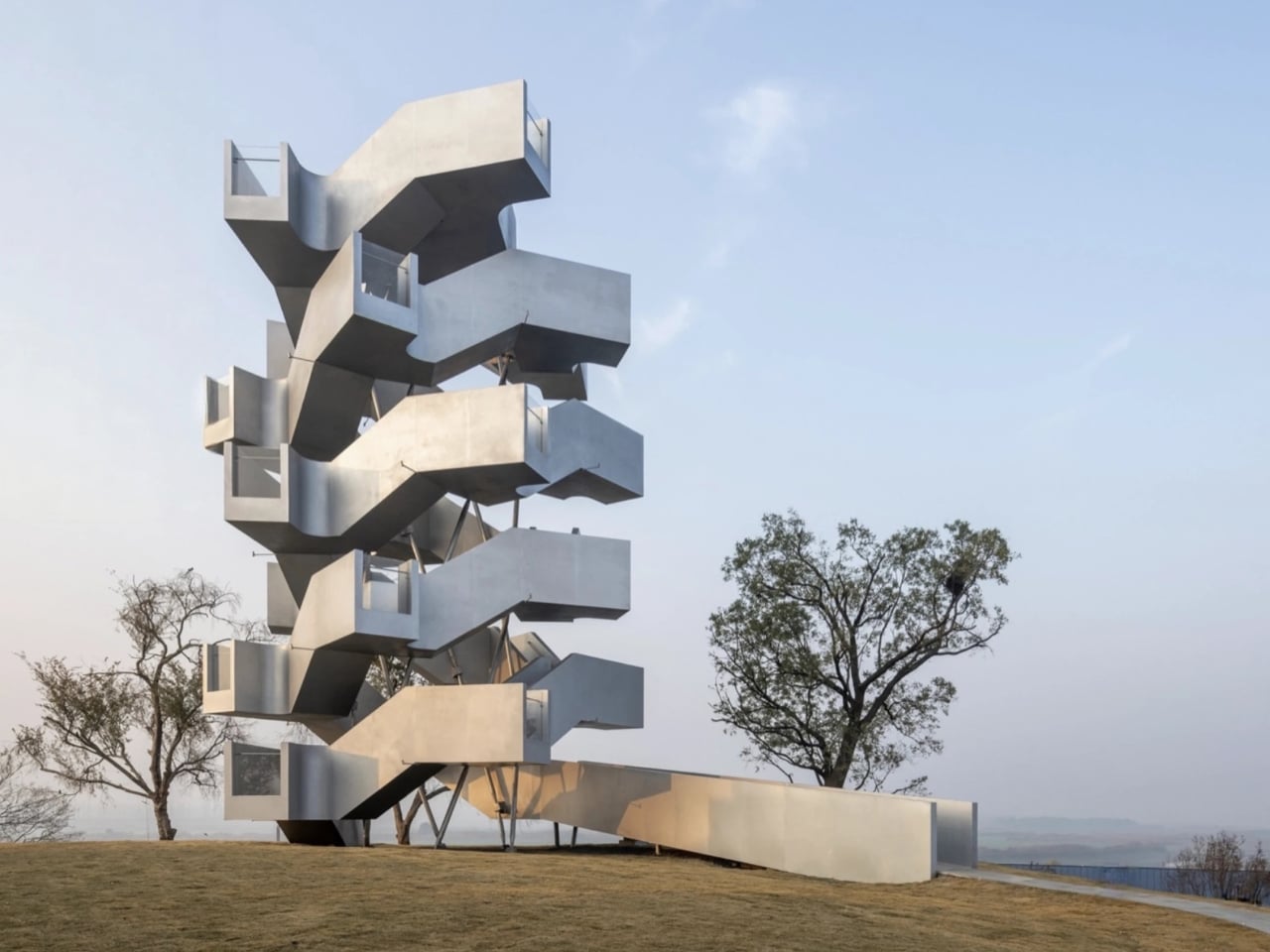
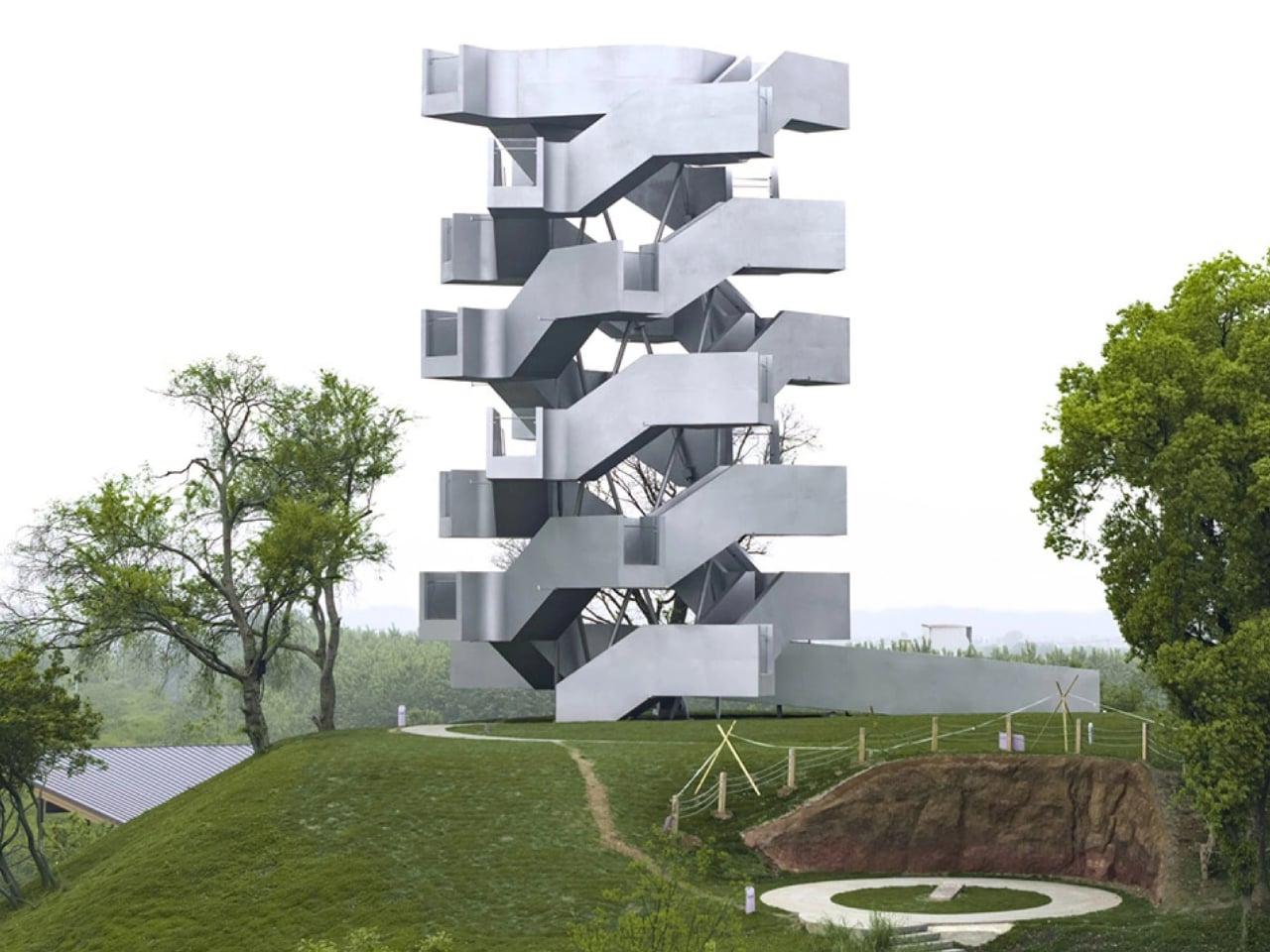
The structure is constructed from 24 prefabricated steel sections, with counter-rotating staircases wound around each other to form two completely independent routes up and down the tower. There is no central column. The staircases themselves carry the structural load. That’s a quietly radical engineering decision, and it tends to get overshadowed by how striking the exterior looks. Calling the Chenhu tower polarizing is accurate, and I say that as a genuine compliment. Architecture that makes you stop and argue with yourself about what you’re looking at is doing its job.
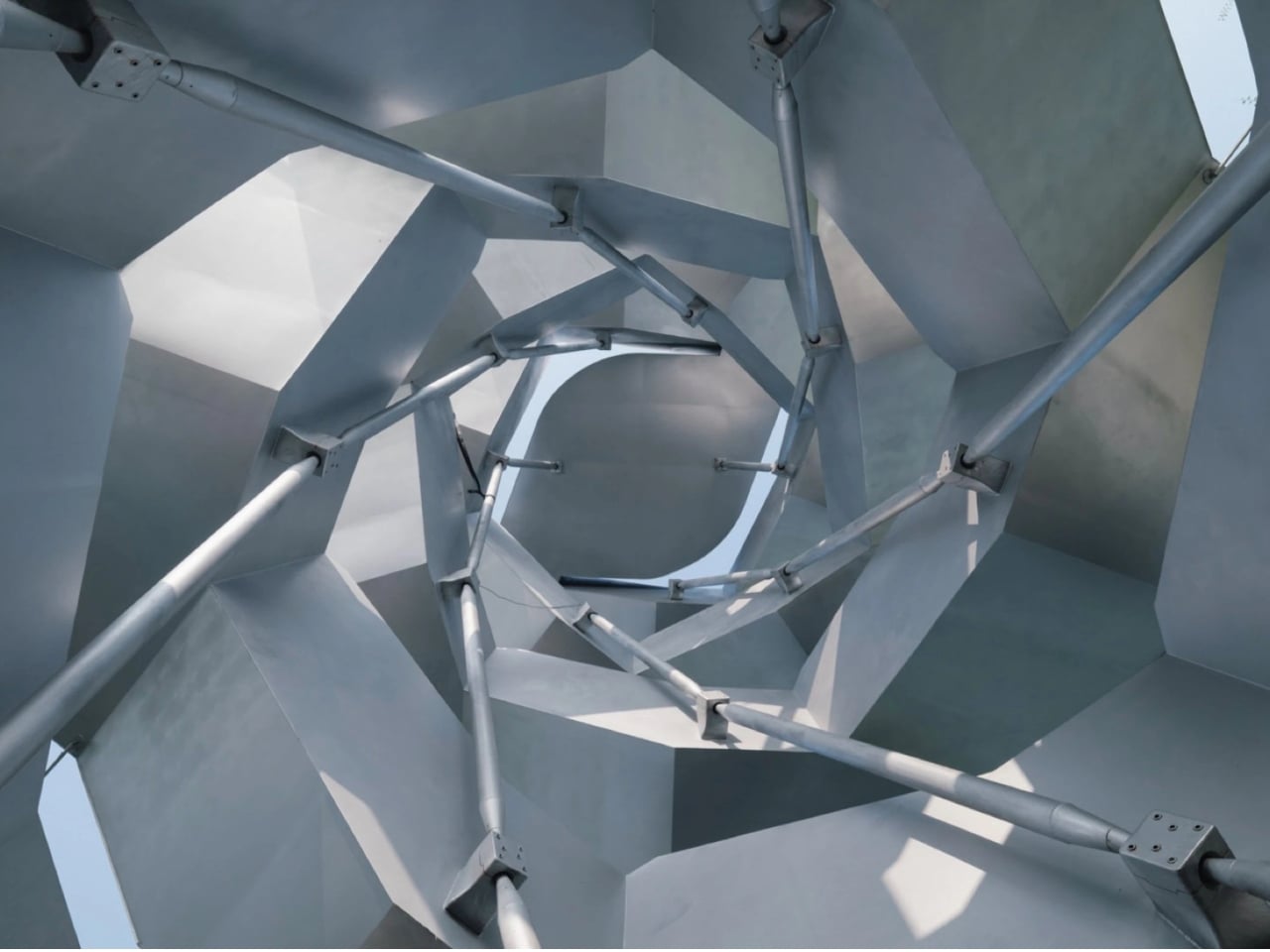
Twenty-four glazed viewing platforms are staggered along the climb, each offering a slightly different angle on the wetland below. Xiang Architects describes the experience as one where “the stairs establish a steady physical rhythm, while the platforms provide moments of pause and reflection.” That’s architectural language, but it’s actually true to what the design achieves. You’re not just going up to look at birds. You’re moving through a choreographed sequence of perspectives, with the landscape rearranging itself around you as you ascend.
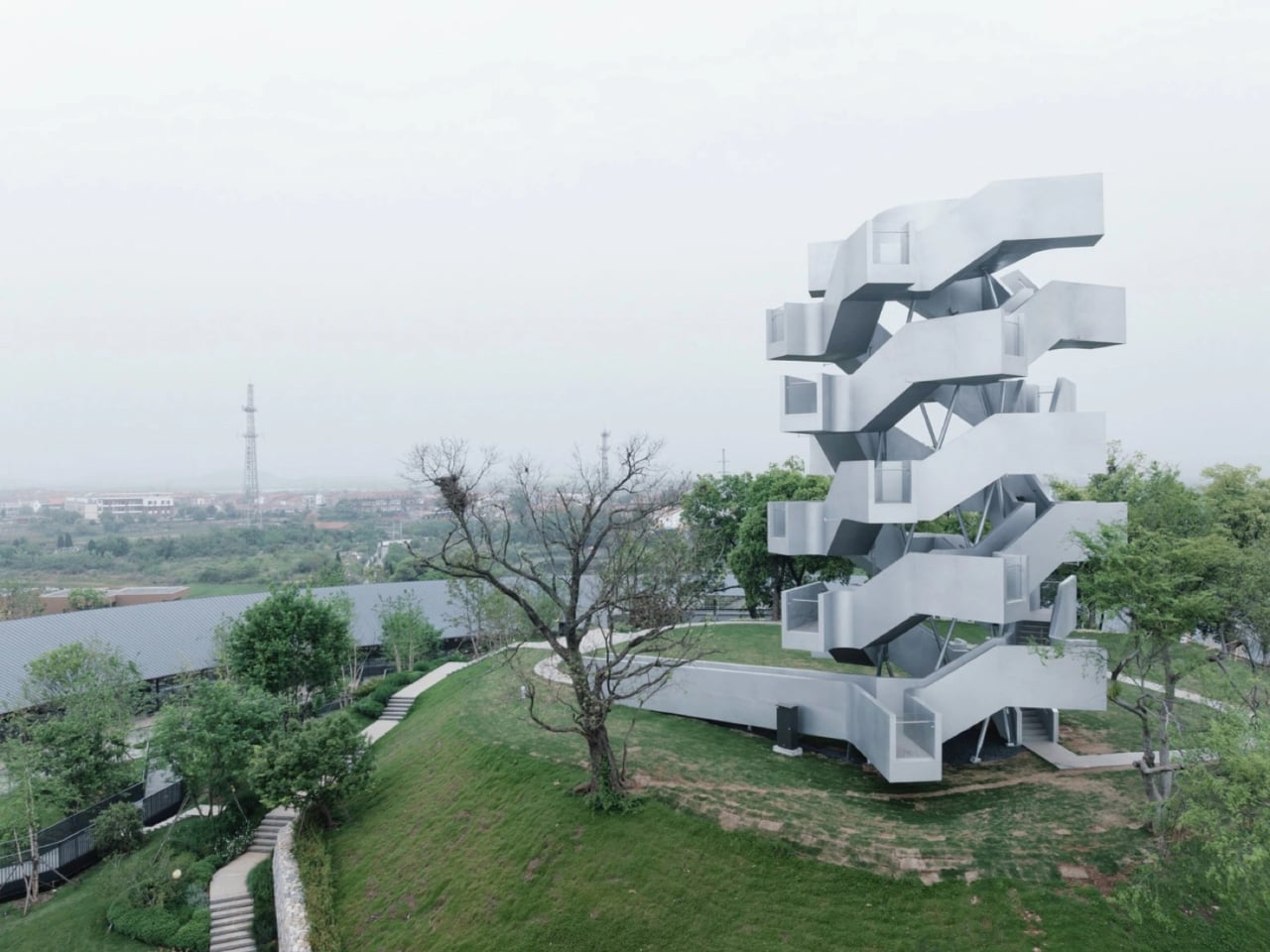
The steel exterior was a deliberate decision, and it’s the one I keep turning over. The tower makes no attempt to camouflage itself among the reeds and waterways. It gleams. It angles. It reflects light in ways that feel almost confrontational against the soft horizontality of the wetland. Some people will read that as arrogance, a manmade object insisting on its own importance in a space that belongs to birds. I see it differently. The boldness of the form draws attention to the landscape it inhabits rather than competing with it. A structure that tried to disappear would, paradoxically, give people less reason to make the journey in the first place.
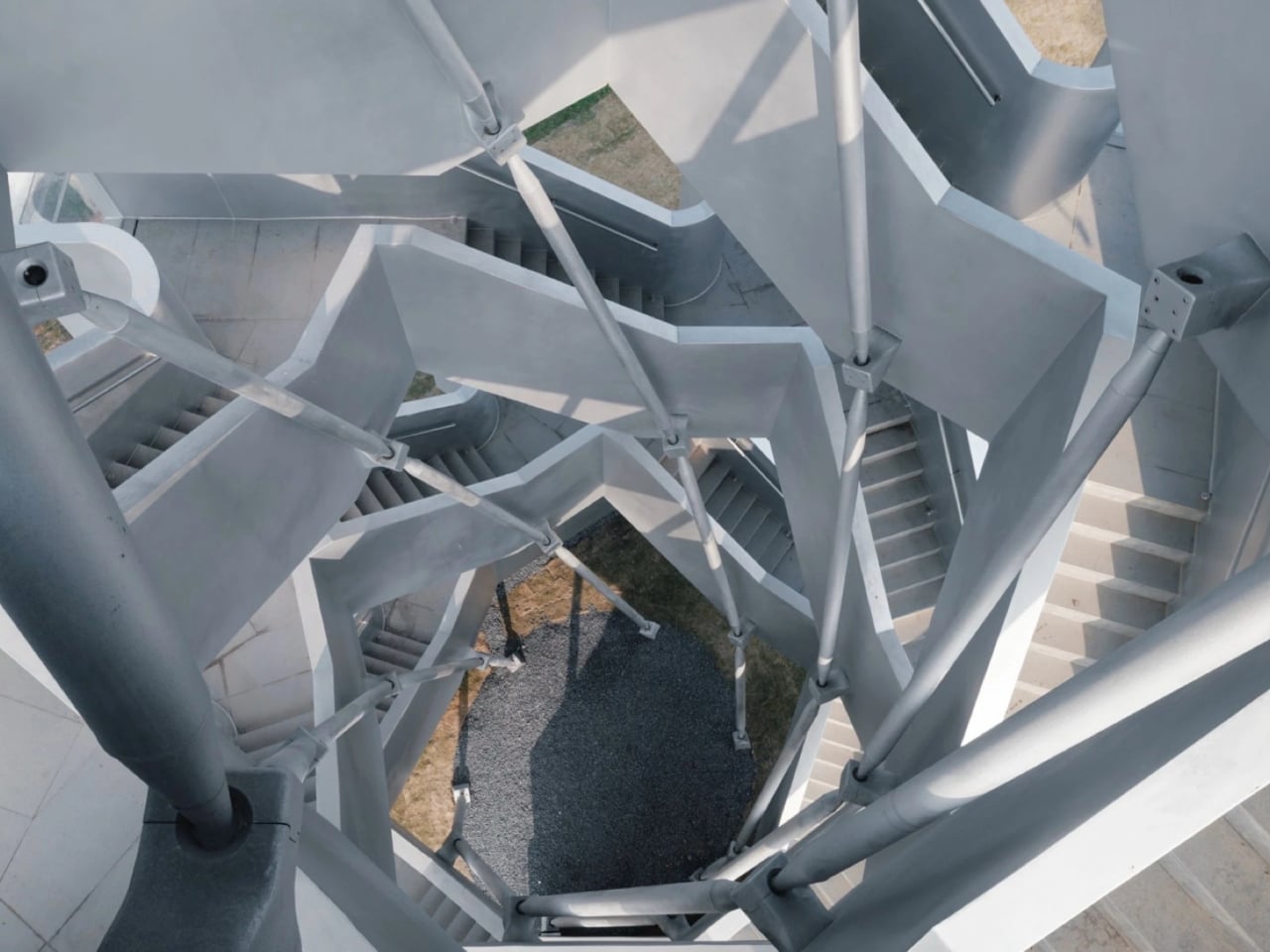
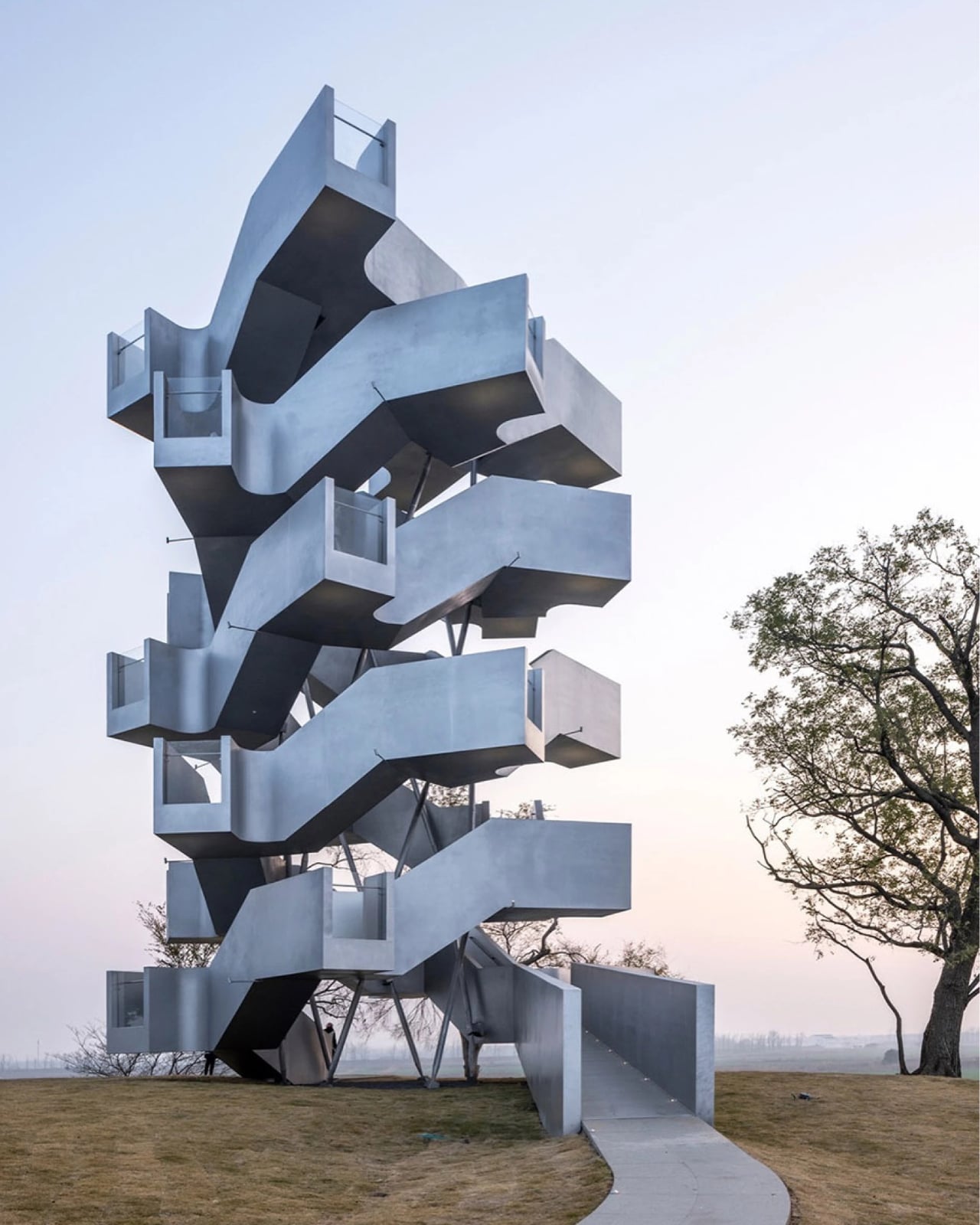
The double-helix form also deserves more attention than it sometimes receives. DNA-inspired shapes have appeared in architecture before, sometimes elegantly, sometimes as pure novelty with no structural logic to back them up. Here, the choice is functional. The counter-rotating staircases mean ascending and descending visitors never have to negotiate the same narrow passage at the same time. It’s a practical fix, but it carries a more interesting implication: two people climbing the same tower simultaneously could have entirely different experiences depending on which staircase they choose. That’s the kind of embedded design thinking that photographs don’t always capture but lands immediately when you’re actually moving through a space.
Observation towers occupy a curious position between utility and spectacle, and the best ones understand that the climb itself is part of what they’re offering. People don’t go to platforms like this purely to look at birds. They go to step outside the pace they’ve been living at, to be reminded that the natural world runs on a completely different schedule than anything with a notification badge. The Chenhu tower understands that. It just also happens to look extraordinary while doing it.