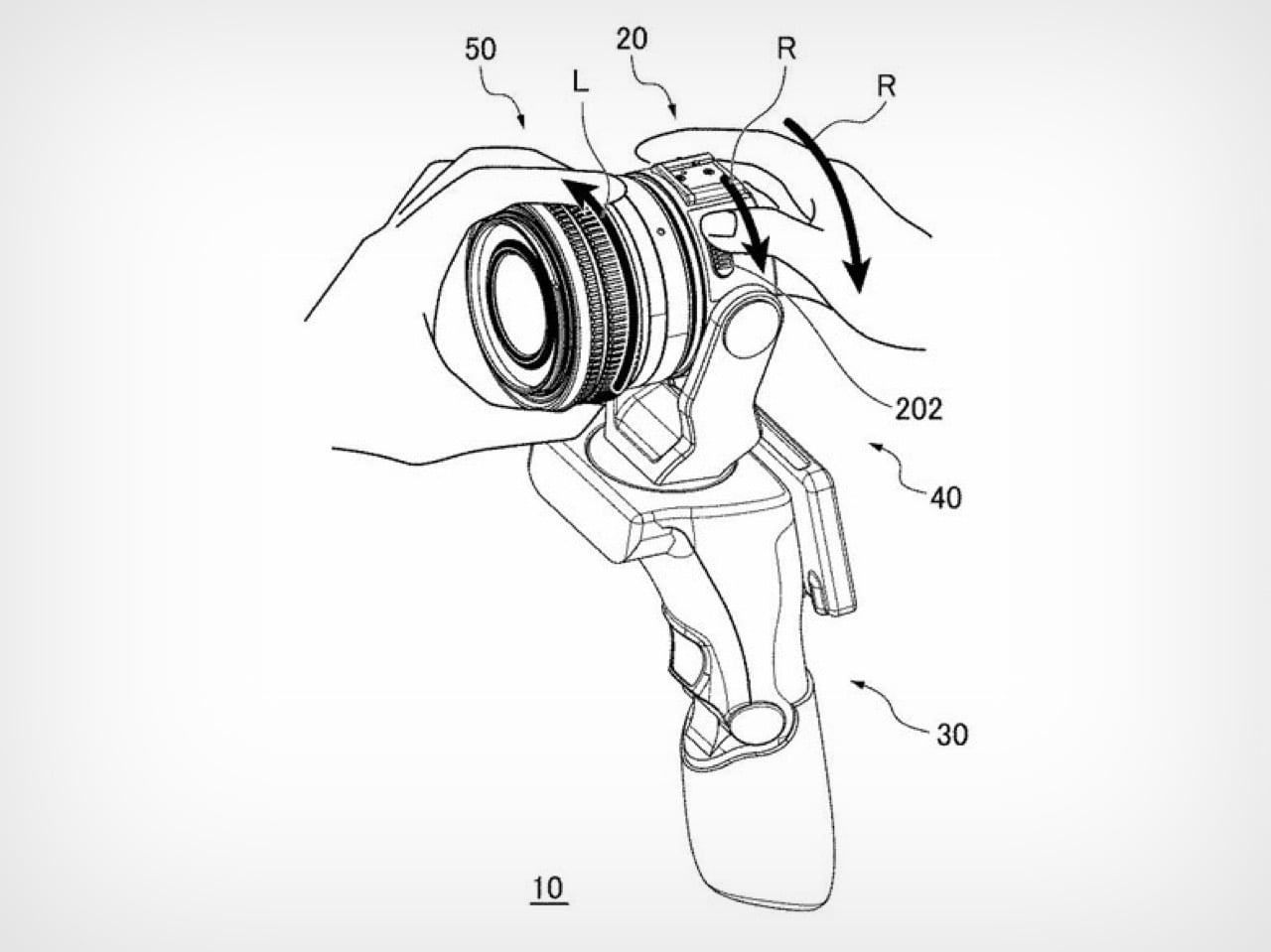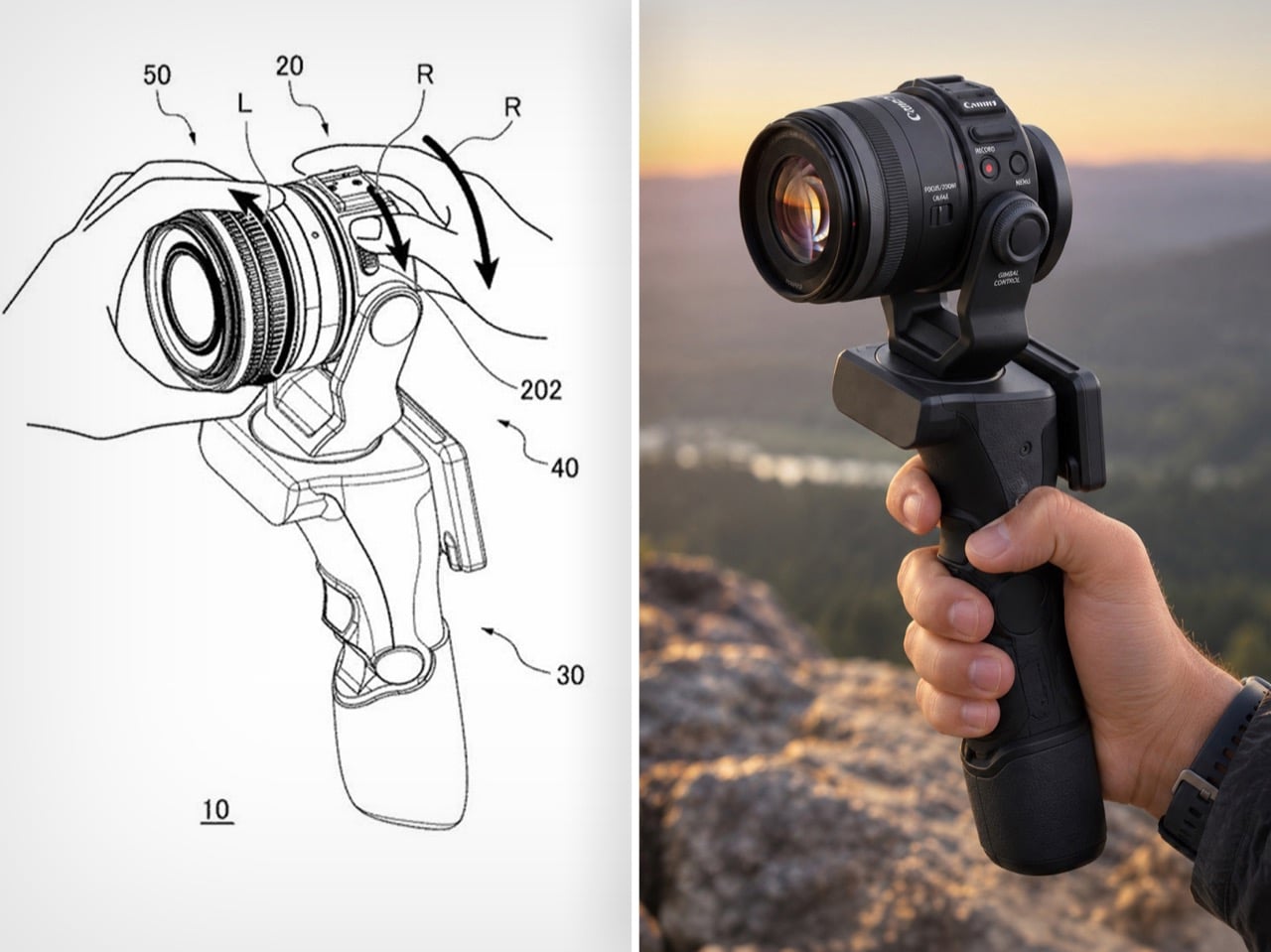
Canon has filed three separate patents chasing a handheld vlogging camera, five years apart, and each one solved a completely different problem than the one before it. The version everyone read about this spring is a fixed lens gimbal with a smart shutdown sequence, built to compete with the Osmo Pocket 4, and it traces cleanly back to a 2024 filing. Its real ancestor sits further back, in a December 2020 patent that rarely gets mentioned in the same breath, and it deserved better than being forgotten. That filing wasn’t a gimbal camera at all, despite early reports calling it exactly that. It was a pistol grip built around an interchangeable lens mount and a motorized head that only pans and tilts, aimed at creators who wanted a real sensor and real glass in something you could frame with one hand. Had Canon actually built it, this would have been the most ambitious vlogging camera the company ever attempted, not the fixed lens compromise it eventually shipped toward instead.
DPReview had to rewrite its own coverage once it worked through the Japanese documents, since the initial assumption of Osmo style stabilization didn’t hold up against what the patent actually claimed. Control came from a rear touchpad and a front trigger for preset framing points, with the display flipping automatically depending on lens orientation. Canon even filed a follow up patent for a lock to stop the lens twisting free mid motion, evidence of how much engineering went into a product that never left the drawing board. The mount in the drawings lines up with EF-M, a system Canon has since confirmed is finished, lenses gone and shipments halted for good. Comparing that abandoned idea to this year’s fixed lens gimbal makes one thing obvious, Canon already had its most ambitious vlogging camera worked out on paper years ago, and simply never pulled the trigger.
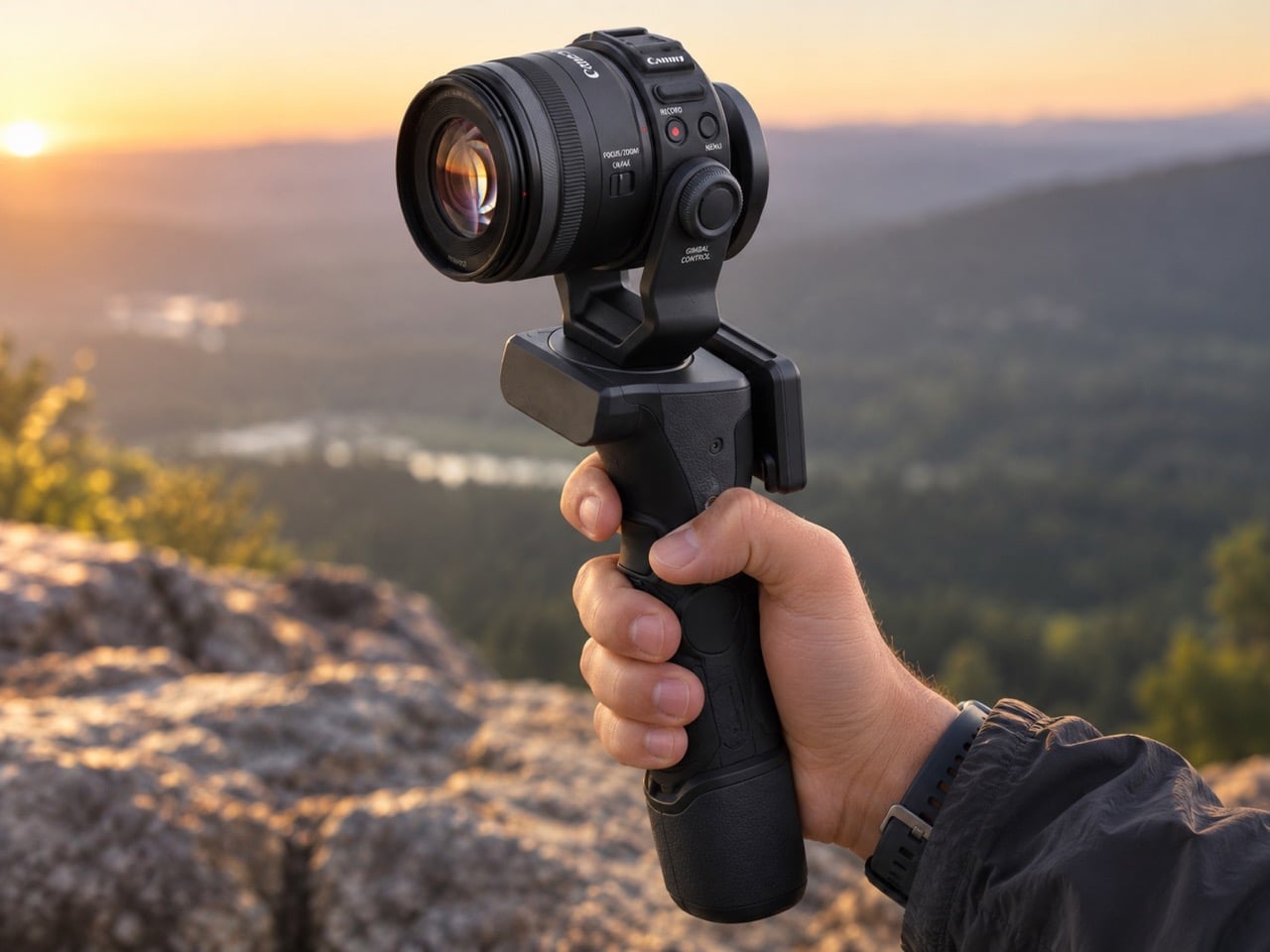
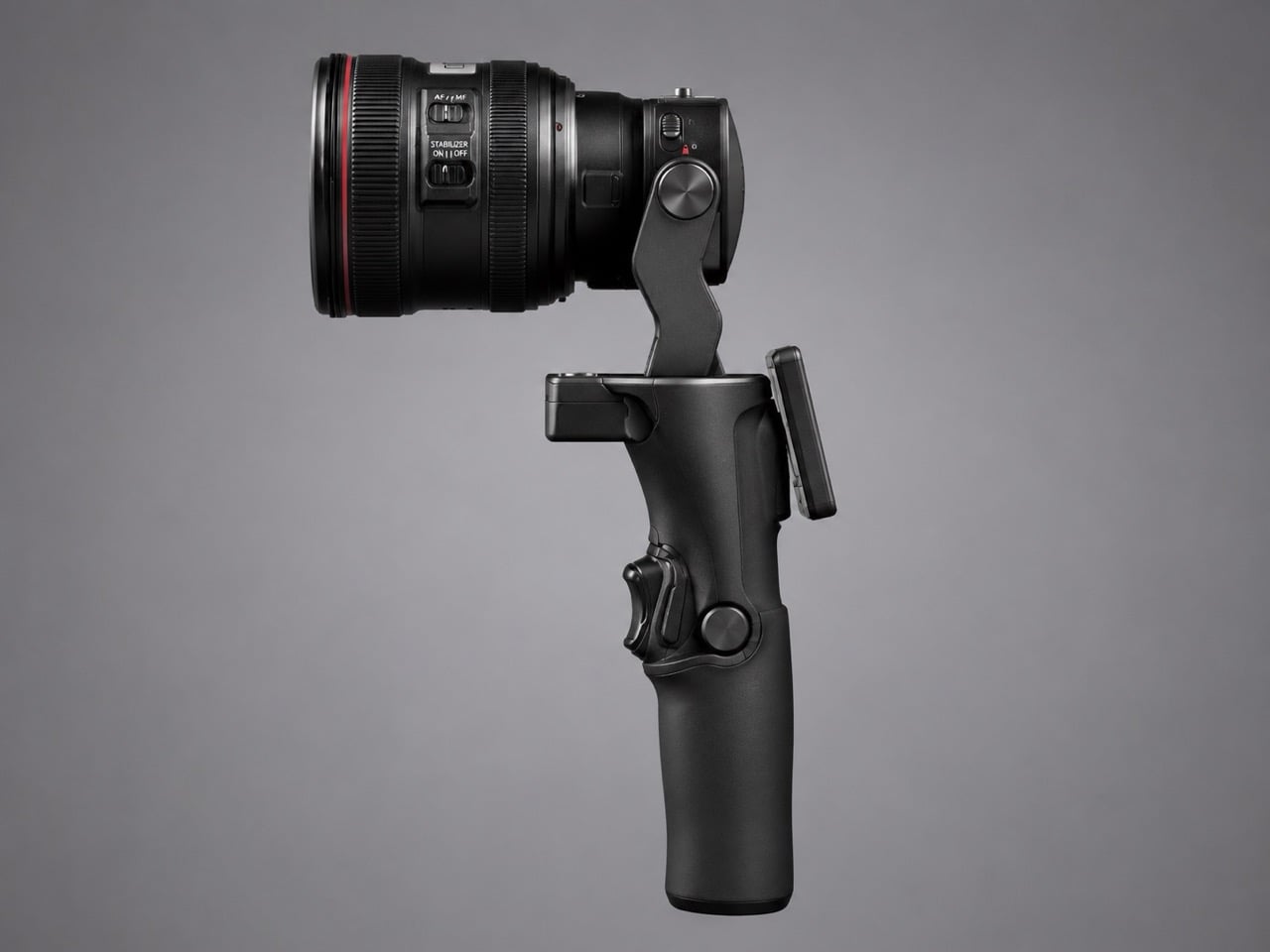
A 360 degree pan and roughly 270 degrees of tilt let the lens swing from a landscape shot to a selfie without repositioning the grip. A rear touchpad aimed the head, a front trigger locked preset framing points, and two buttons handled recording and playback. The camera also read its own orientation, flipping the display when the lens rotated backward and switching to vertical when the grip turned ninety degrees. A hot shoe up top took a mic or a light. None of it needed a phone paired over Bluetooth, unlike most gimbal cameras built since.
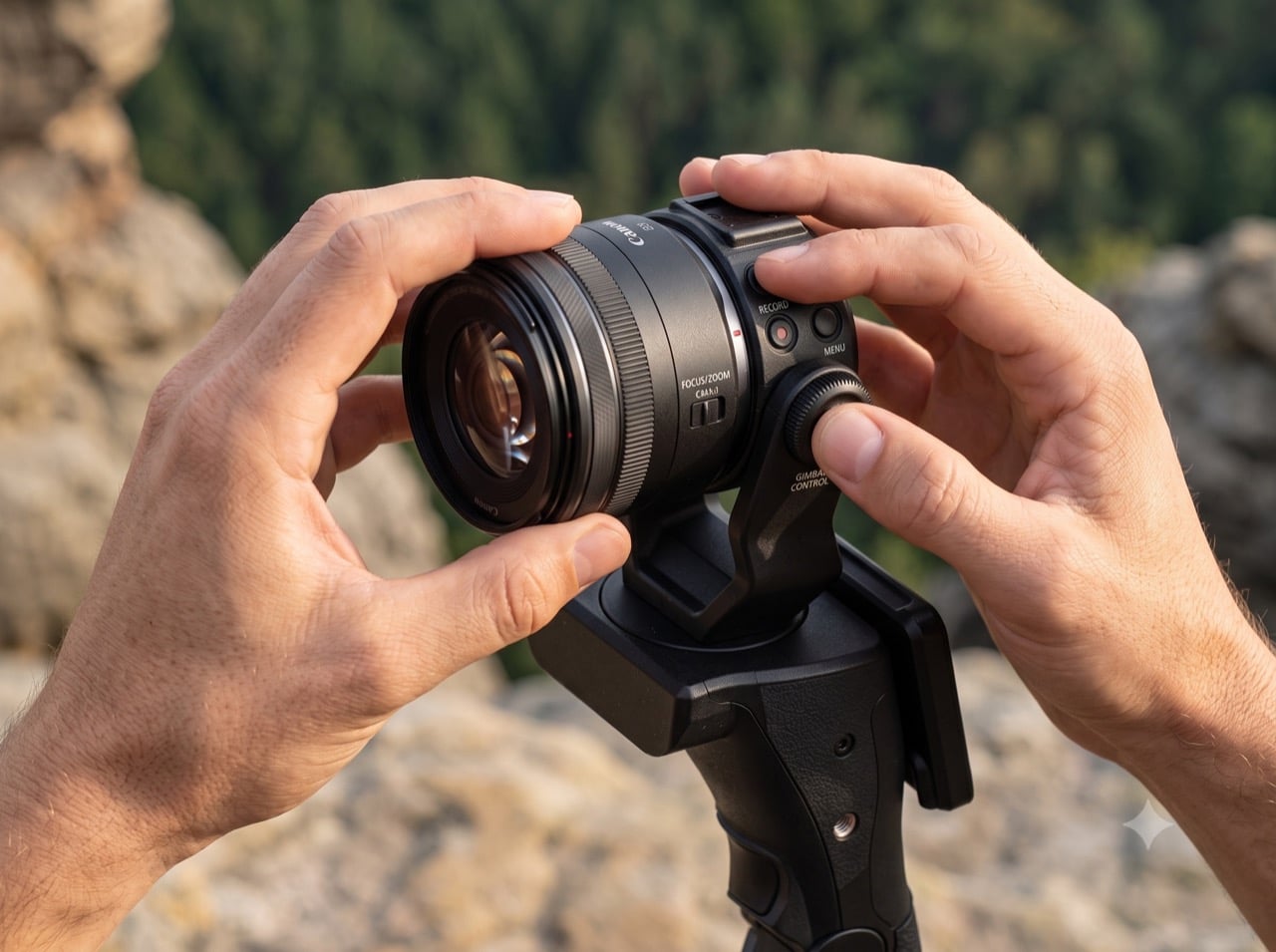
Patent application 2021-004930 would have added a lock to stop the lens releasing by accident, since a lens on a motorized head has nothing solid to brace against while you twist it free. CanonNews and DPReview both read the mount as EF-M based on the tab position in the drawings, backed by a separate filing for an add on grip and adapter meant for larger lenses. Canon’s own documents admit the tradeoff, since a bigger adapted lens would have limited the head’s pan and tilt range, while a compact EF-M prime would have kept full motion. It is a rare case of a patent documenting its own compromise instead of pretending the idea scales cleanly. EF-M is gone now, with Canon USA confirming shipments in the region have ended, so this camera never got the chance to grow into a second generation of lenses.
Canon’s April patent takes the opposite bet, a fixed lens gimbal with a folding head and a shutdown sequence smart enough to know when nobody is holding it. That is a sensible answer to the Osmo Pocket 4, though a smaller idea than the one Canon shelved earlier, since a fixed lens will never accept a wider prime the way an EF-M mount could have. Canon spent five years learning that practicality sells better than ambition, and this year’s patent proves the lesson stuck. Somewhere in Tokyo sits the version of this camera that would have actually mattered to people who own lenses, and Canon decided it was too complicated to build. Whatever ships next will be more reliable than the 2021 concept, but it will also be the safer camera, worth remembering next time Canon calls something a first for creators.