The most interesting interface ideas often begin where conventional gadgets start to fail. Voice assistants want you to speak up, microphones capture the whole room, and public dictation still feels awkward in the age of AI. Augmental’s latest product, Vox, approaches that problem from a very different angle, placing a speech interface on the chest where it can listen closely to the wearer and stay nearly invisible under a shirt.
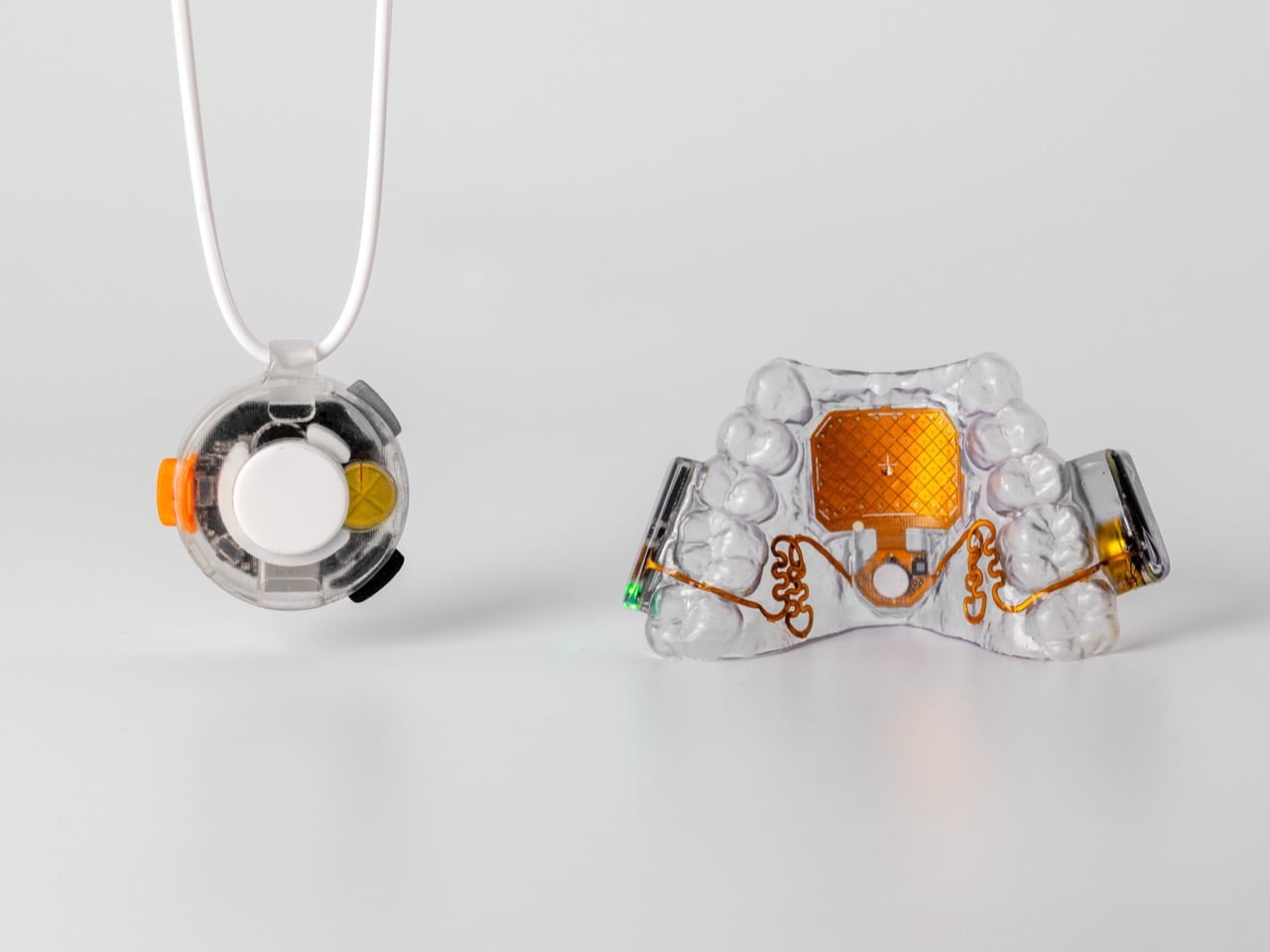
When Augmental introduced MouthPad, it showed how assistive technology could evolve into something far more refined than a visible workaround. The in-mouth interface gave users hands-free cursor control through a custom dental form factor, and now together, MouthPad and Vox begin to outline a new computing language built around the body. One handles navigation through subtle tongue gestures, the other captures quiet speech for dictation and commands, recreating the familiar logic of mouse and keyboard in a wearable, deeply personal form.
Designer: Augmental
Tomás Vega sat down with Yanko Design to show us Vox, but he started by talking about the success of MouthPad. Over a hundred users now rely on it for daily computing, with some logging up to 16 hours of use in a single day. One user, he mentioned, started her undergraduate degree with the device and is now finishing her studies in mathematics. Another told him how it freed him from his wheelchair-anchored setup, letting him work from the comfort of his bed. These stories ground Augmental’s work in real human impact, which makes the arrival of Vox feel like a natural next chapter.
The core problem Vox tackles is that voice technology assumes everyone has a strong, clear voice and is comfortable speaking aloud. That isn’t always true. For users with speech impediments, weakened voices, or lost lung function, standard microphones just don’t work well. Even for those who can speak clearly, privacy is a real concern; private computer access is a right everyone should have. Vox was built for these constraints, but the solution ends up having much broader appeal. It even helps people who stutter, including Tomás himself, because whispering can reduce stuttering and make voice AI more accessible.
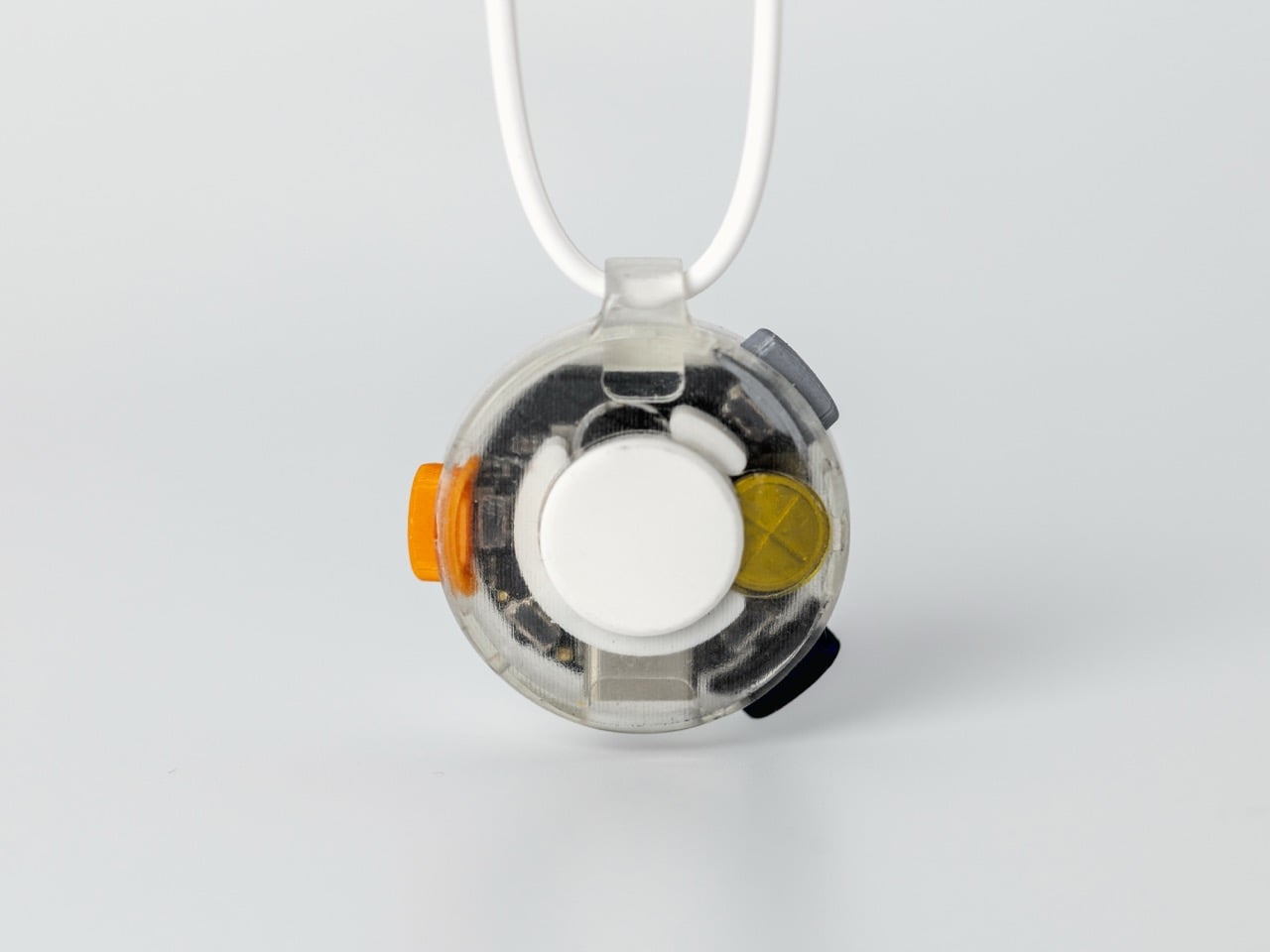
The logic behind Vox is pretty clever, drawing inspiration from a doctor’s stethoscope. It sits against the skin under your shirt and is optimized to capture the low-volume speech that travels through your body. An acoustic horn inside the device gathers the subtle vibrations and air displacement from your skin and channels them into a super-sensitive MEMS microphone that is tuned specifically for human speech. The raw audio sounds a bit like hearing someone talk underwater, but Augmental’s signal processing cleans it up to isolate exactly what the speech-to-text model needs. Because the mic is facing your body instead of the room, it’s a personal microphone designed for you and only you.
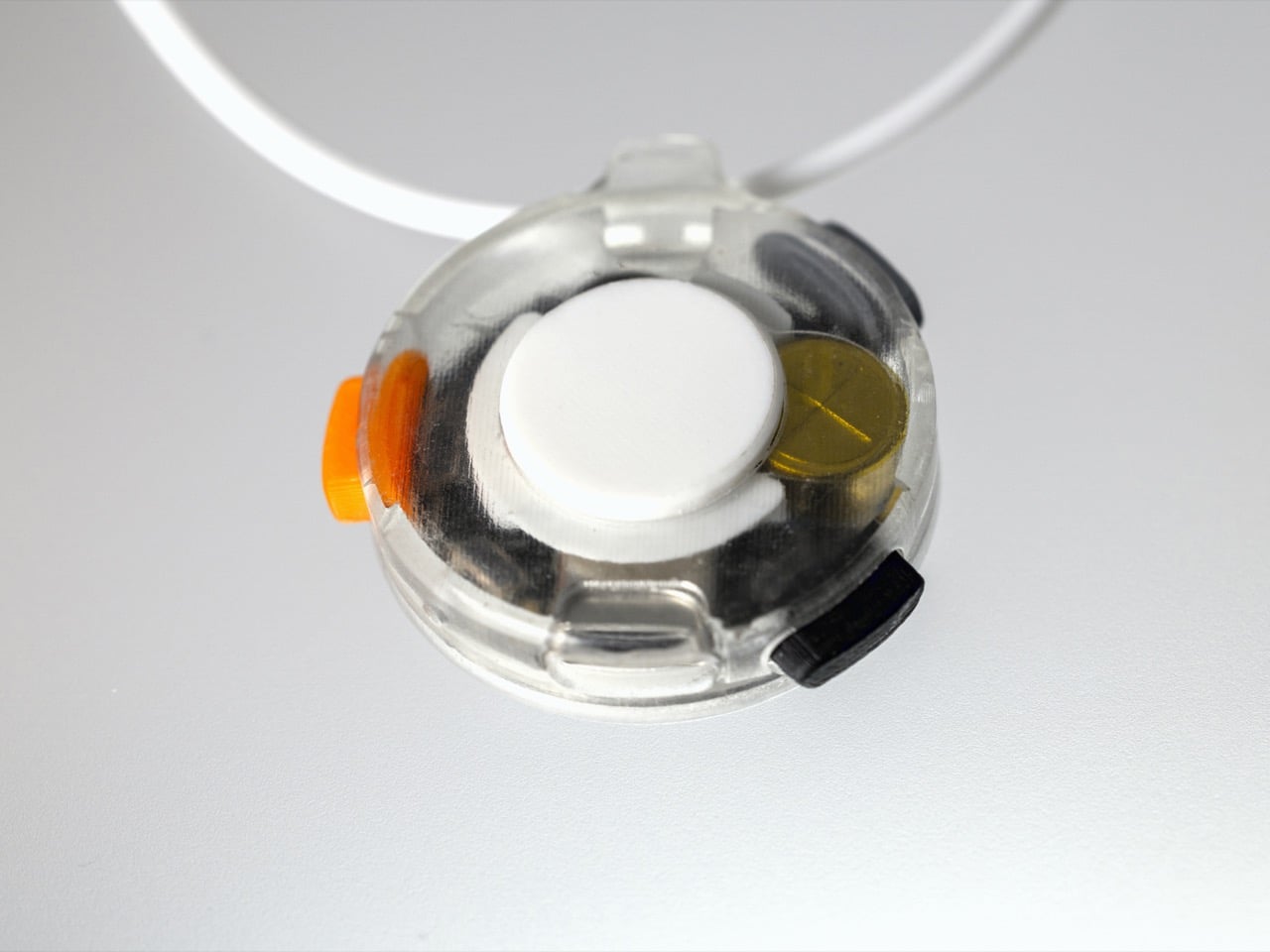
The relationship between the two products is what makes the whole system click. As Tomás puts it, MouthPad is the mouse, and Vox is the keyboard. Together, they offer full computer control that is both private and hands-free. MouthPad handles all the navigation with tongue gestures on its trackpad, and its radial menu turns complex actions like copy-and-paste into a single, simple gesture. Vox then adds the speech layer, which can be activated with a button press or through the MouthPad itself. The idea is that you put it on in the morning and forget it’s there, always available but almost entirely invisible.
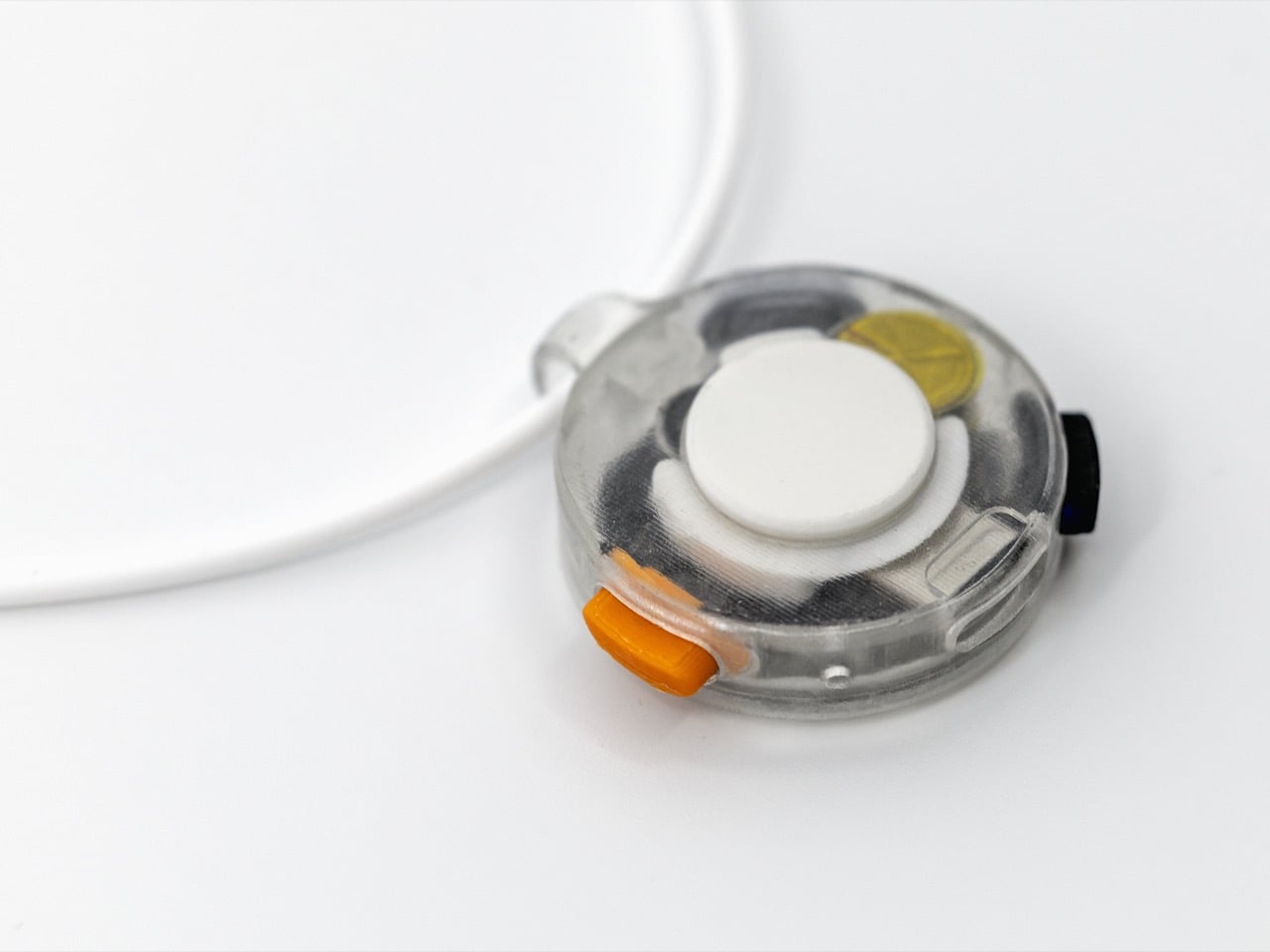
Looking at it next to the MouthPad, you can immediately see the family resemblance. Vox is a circular, transparent pendant on a simple white cord, with its internals visible enough to look engineered but not so much that it feels cold or clinical. The three colored buttons on the side, orange, black, and gray, can be remapped to do whatever you want, whether that’s firing up a specific AI agent, switching devices, or just controlling your music. The long-term vision is even more integrated, with Tomás imagining a future of “skinware” where these functions might one day live in a smart tooth or a small skin patch.
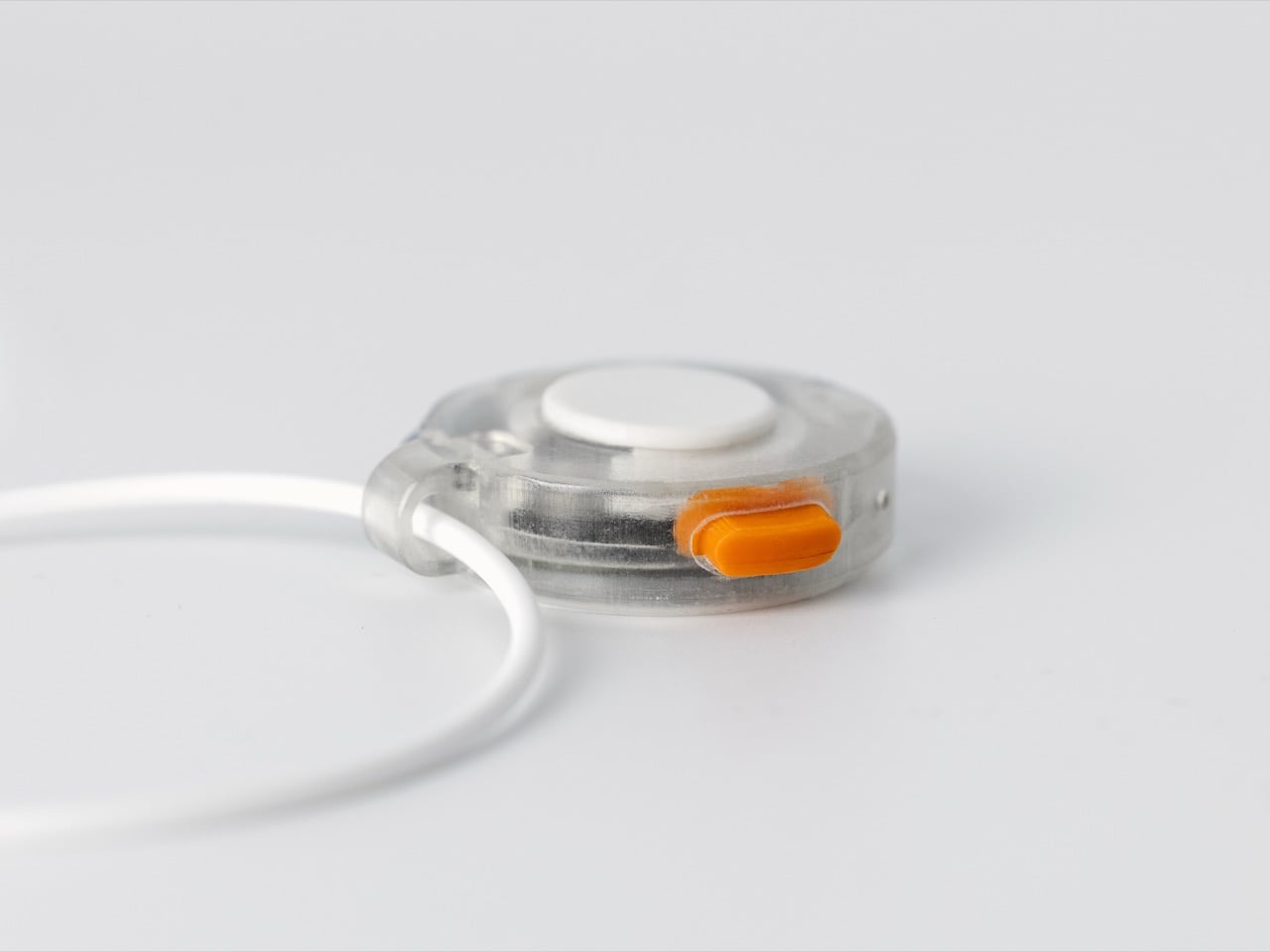
For now, Vox is launching as a beta, with the first wave limited to a few hundred units priced at $200. This is a deliberate choice to learn from early users before scaling up. The MouthPad, for comparison, is $1,400, a price that reflects the complex custom-fit process, which involves a 3D scan at one of Augmental’s hundreds of partner dental centers across the US. The Vox pendant has a battery that lasts about eight hours, with enough power for around two hours of straight transcription time, which is more than enough for a full day of dictation. You can learn more and get yours over at augmental.tech.