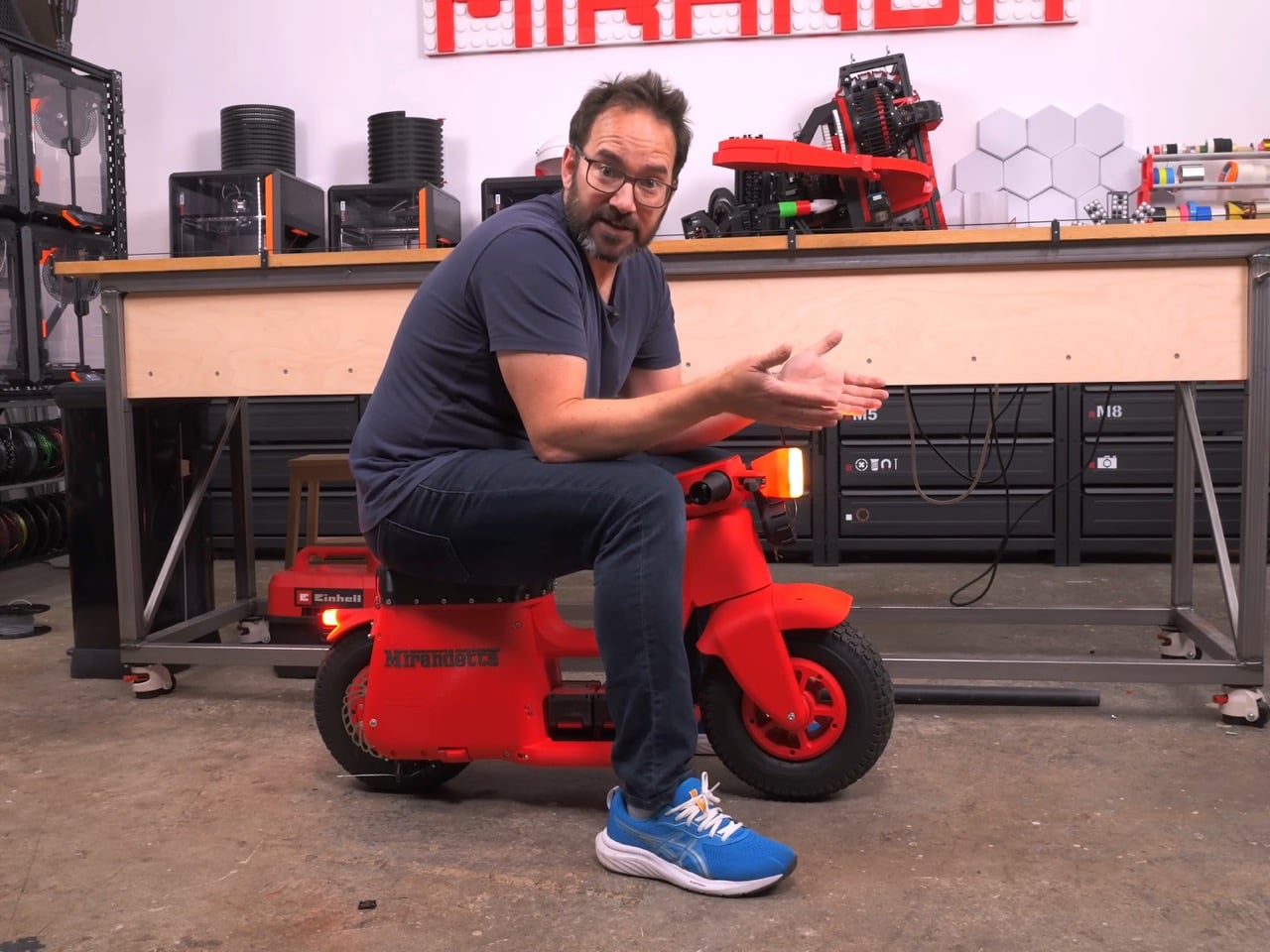
Print a phone case, sure. Print a desk organizer, fine. But print a scooter, one with wheels, brakes, a motor, and enough structural gumption to carry an actual adult human being down a street, and you have crossed into a different category of insane entirely. Ivan Miranda crossed that line without blinking, treating a 3D printer less like a hobbyist gadget and more like a small scale factory capable of manufacturing an entire vehicle from the ground up.
What makes it properly deranged is not just that the scooter exists. It is that the scooter fits in a suitcase. Every panel, every bracket, every printed part was designed to break down small enough to check onto a flight, then get reassembled on the other side into a machine that actually rides, brakes, and turns corners like it means it. Somewhere over Europe on the way to Prague, there was a scooter sitting quietly in cargo, waiting to become a scooter again the moment it landed.
Designer: Ivan Miranda
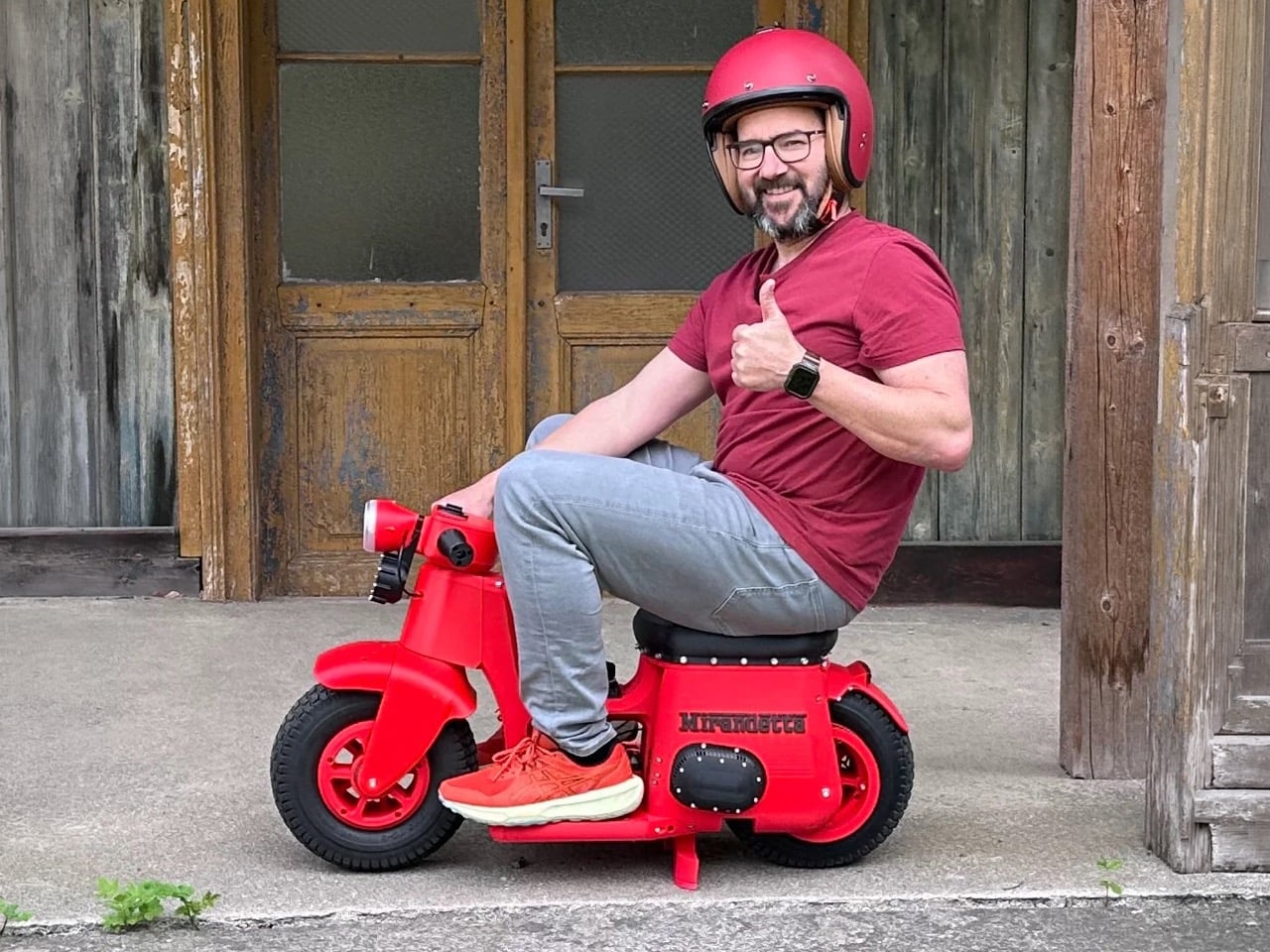
Miranda started by building his rims out of repurposed lawn mower tires, which are naturally too flat sided for anything that needs to lean into a corner. His fix was to print the rims narrower than usual, so the two internal rings sit closer together, which stops the tire sidewalls from bowing outward once inflated. The result rounds over just enough to behave like an actual motorbike tire rather than a garden tool accessory. It is a small trick, but it is the kind of trick that separates a scooter that rides from one that just sits there looking like a scooter.
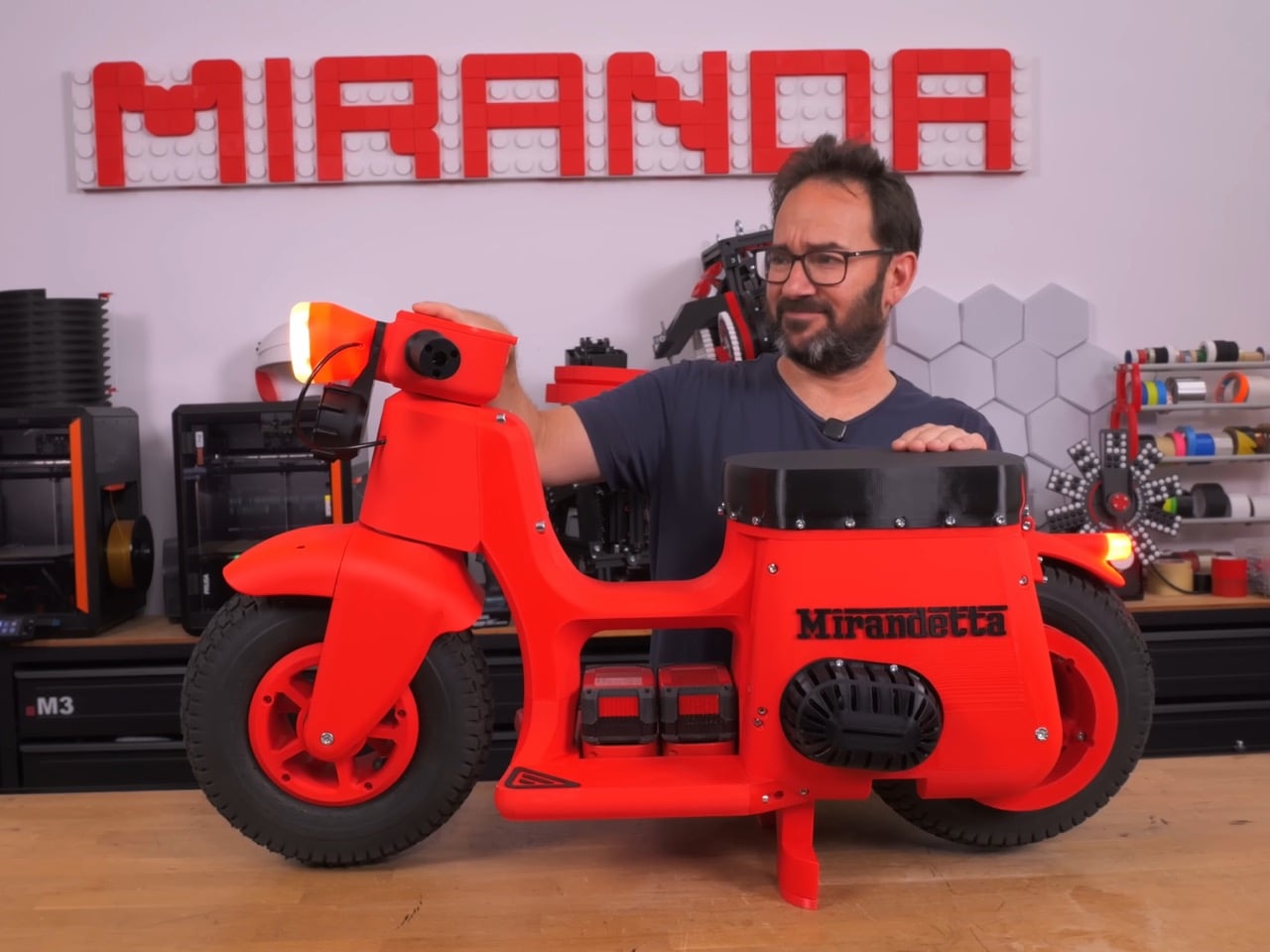
Power comes from two 36 volt tool batteries wired into a belt driven hub motor, stepped down through a DC to DC converter to run the lights and horn at 12 volts. An Arduino handles the accelerator signal, translated from a modified potentiometer hidden inside the right handlebar. The one part Miranda refused to trust to plastic was the front fork shaft, which carries the combined forces of his body weight, the bike’s size, and the stresses of actual riding. That piece was machined in aluminum instead, a rare concession from a builder otherwise committed to printing nearly everything else on the machine.
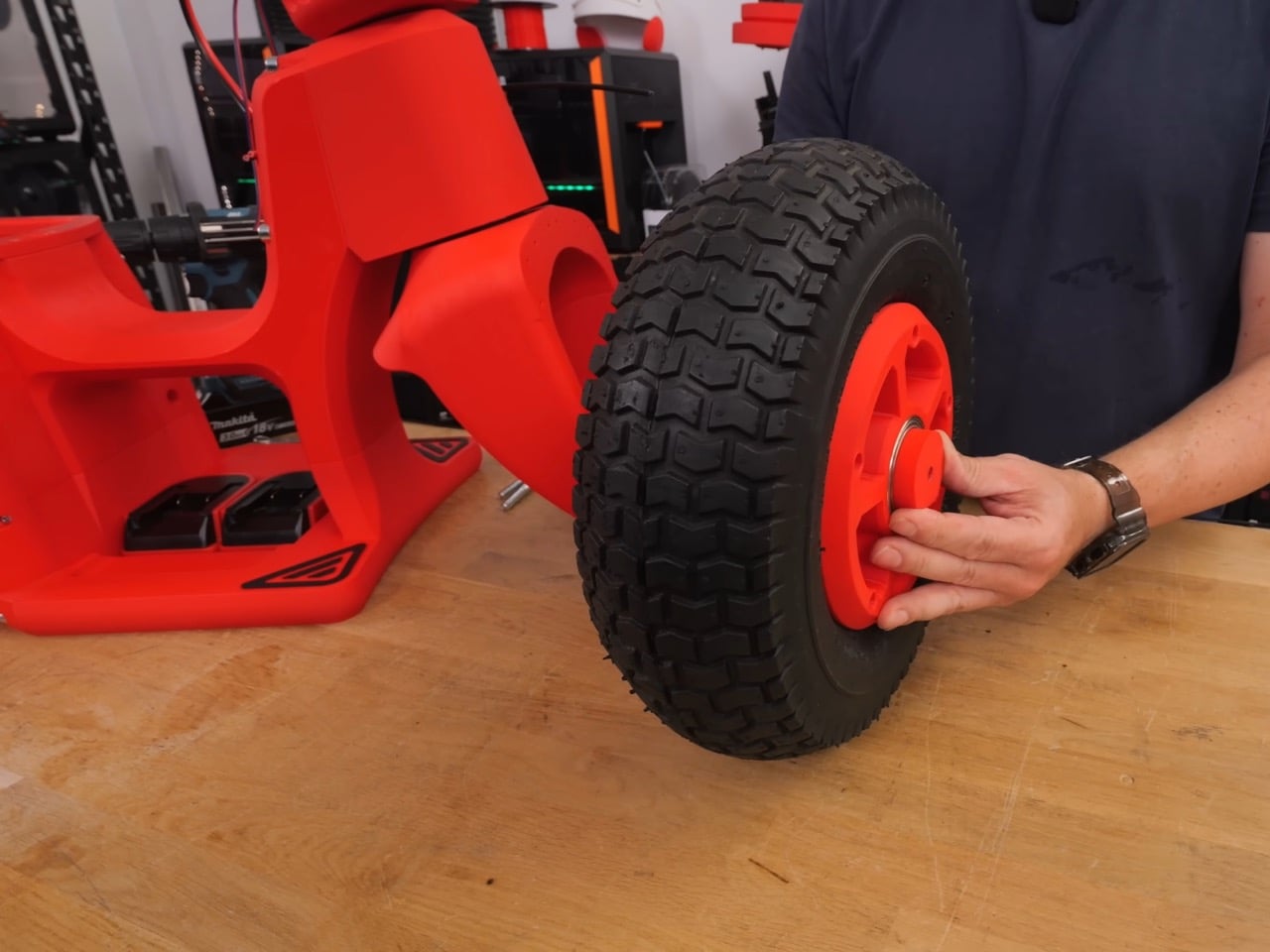
The kickstand uses a bi-stable mechanism, a bearing riding over a cam bump that snaps it firmly into either the stored or deployed position without any wobble. The seat, printed in flexible filament, sits on a hinge that doubles as hidden storage underneath. Braking comes from a modified bicycle disc setup, with the disc’s center hole enlarged to accept a printed axle, and the caliper mounted loosely enough to self-align during use. None of it reads like a shortcut. All of it reads like someone who genuinely enjoys solving problems most people would rather buy a solution for.
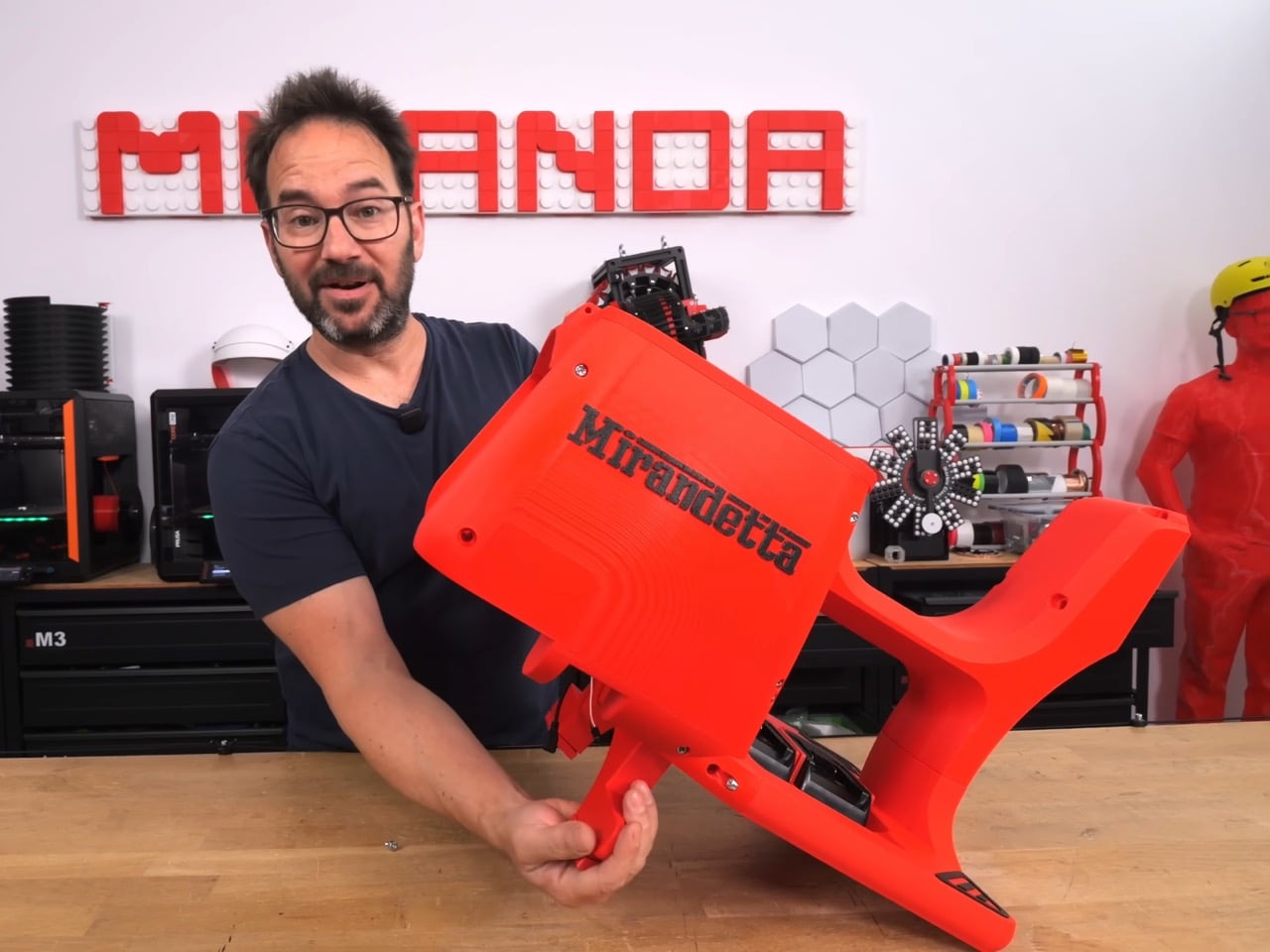
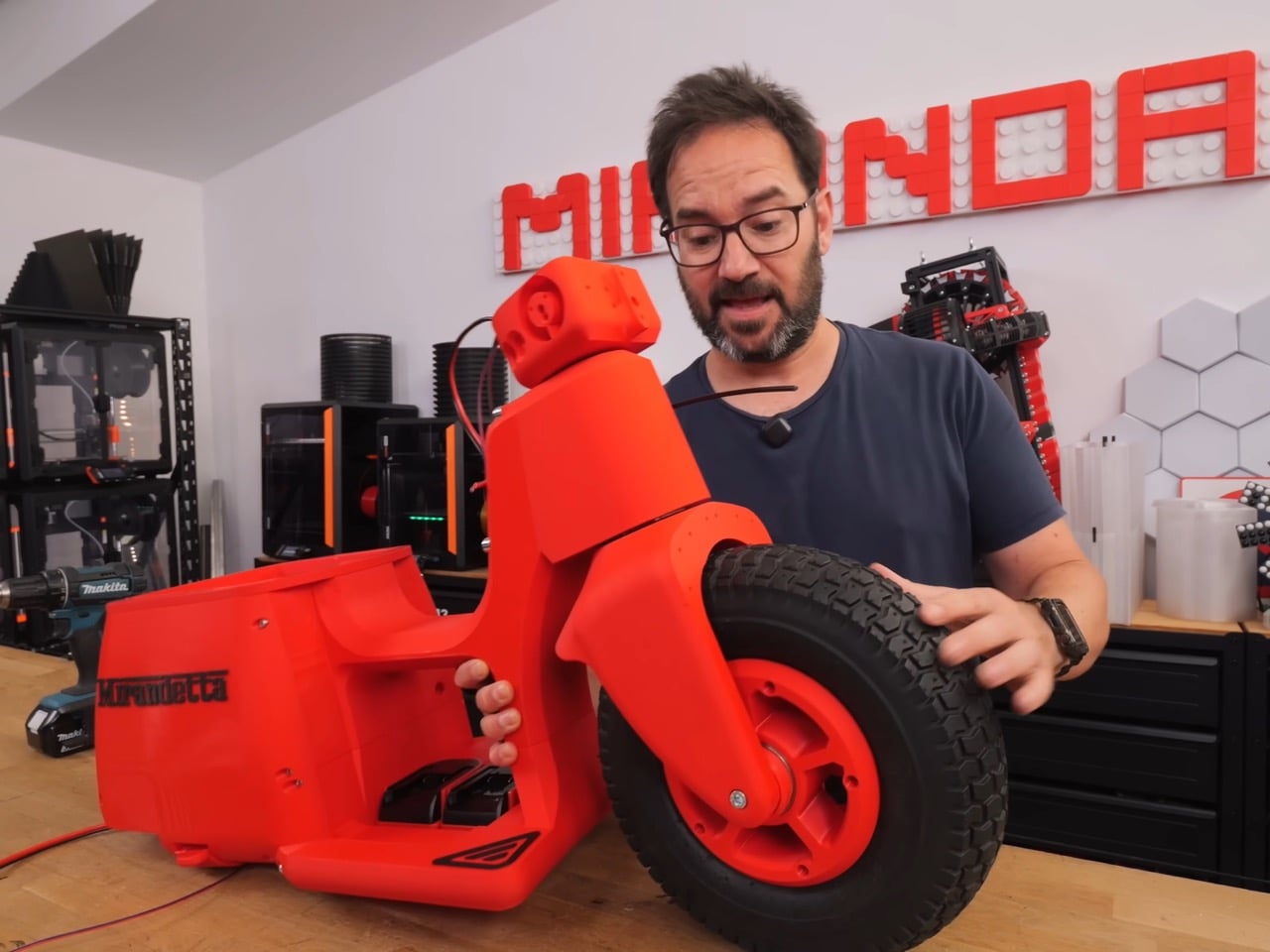
The whole point of the build was travel, and it delivered. Miranda flew the disassembled scooter to Maker Faire Prague, packed into an ordinary suitcase, and reassembled it on site well enough to win the event’s suitcase sized project contest. Hackaday picked up the story shortly after, noting that what Miranda calls a motorbike looks, by most definitions, closer to a scooter, a distinction that promptly spiraled into a comment section argument about vehicle taxonomy nobody asked for. The finished machine weighs a little over 14 kilograms without its batteries, light enough to make the whole suitcase premise plausible rather than theoretical.
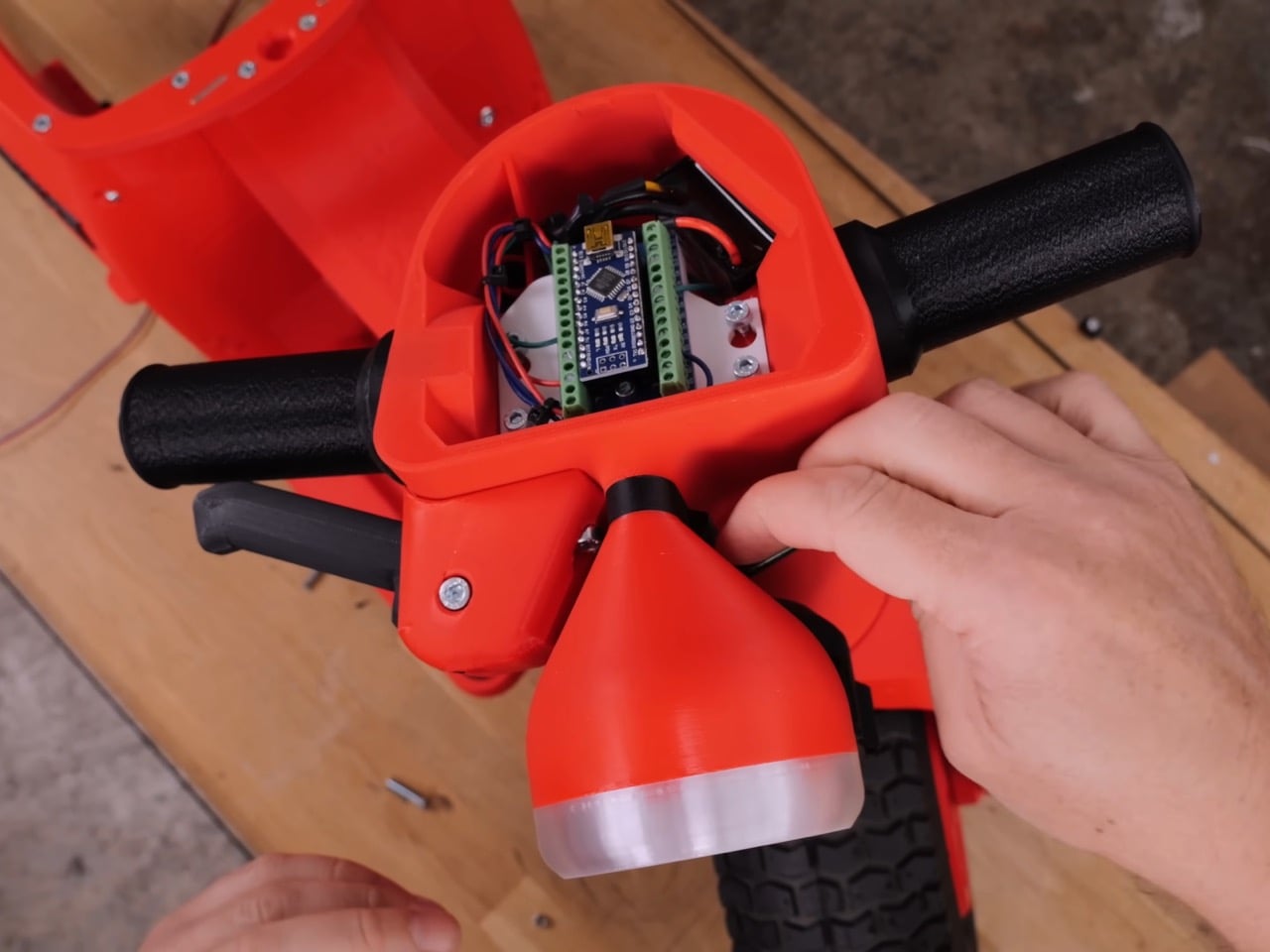
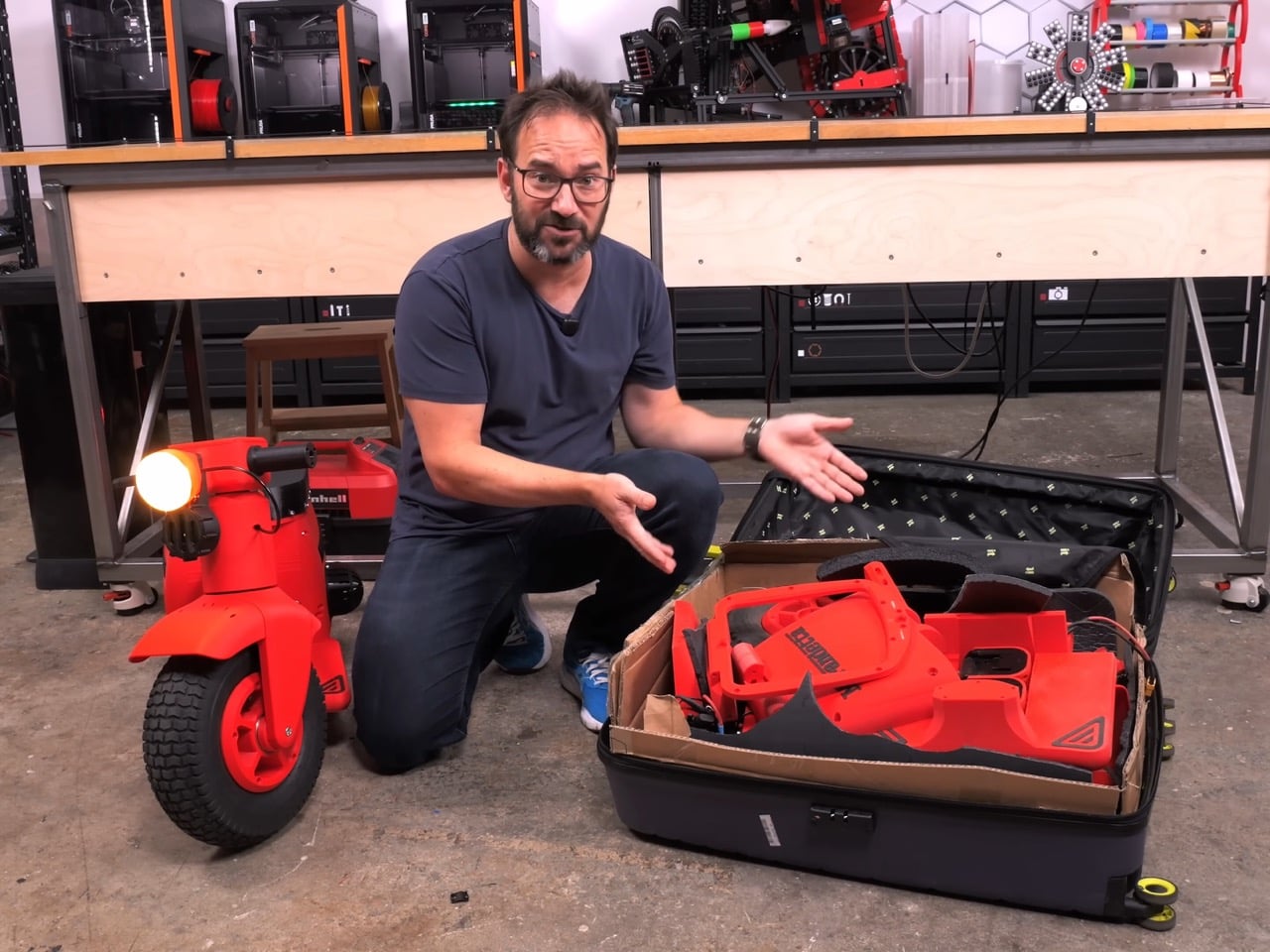
Miranda has since gone back and refined the design, swapping more of the metal components for printed equivalents and simplifying the hardware for anyone determined to attempt their own build. The updated files are now sold through his site, complete with a bill of materials and a heavy dose of legal disclaimers reminding buyers this is a hobby project, not a certified vehicle. Whether anyone else actually manages to pull a working scooter out of a suitcase remains to be seen, but the fact that Miranda proved it possible at all says something about where 3D printing has quietly ended up.