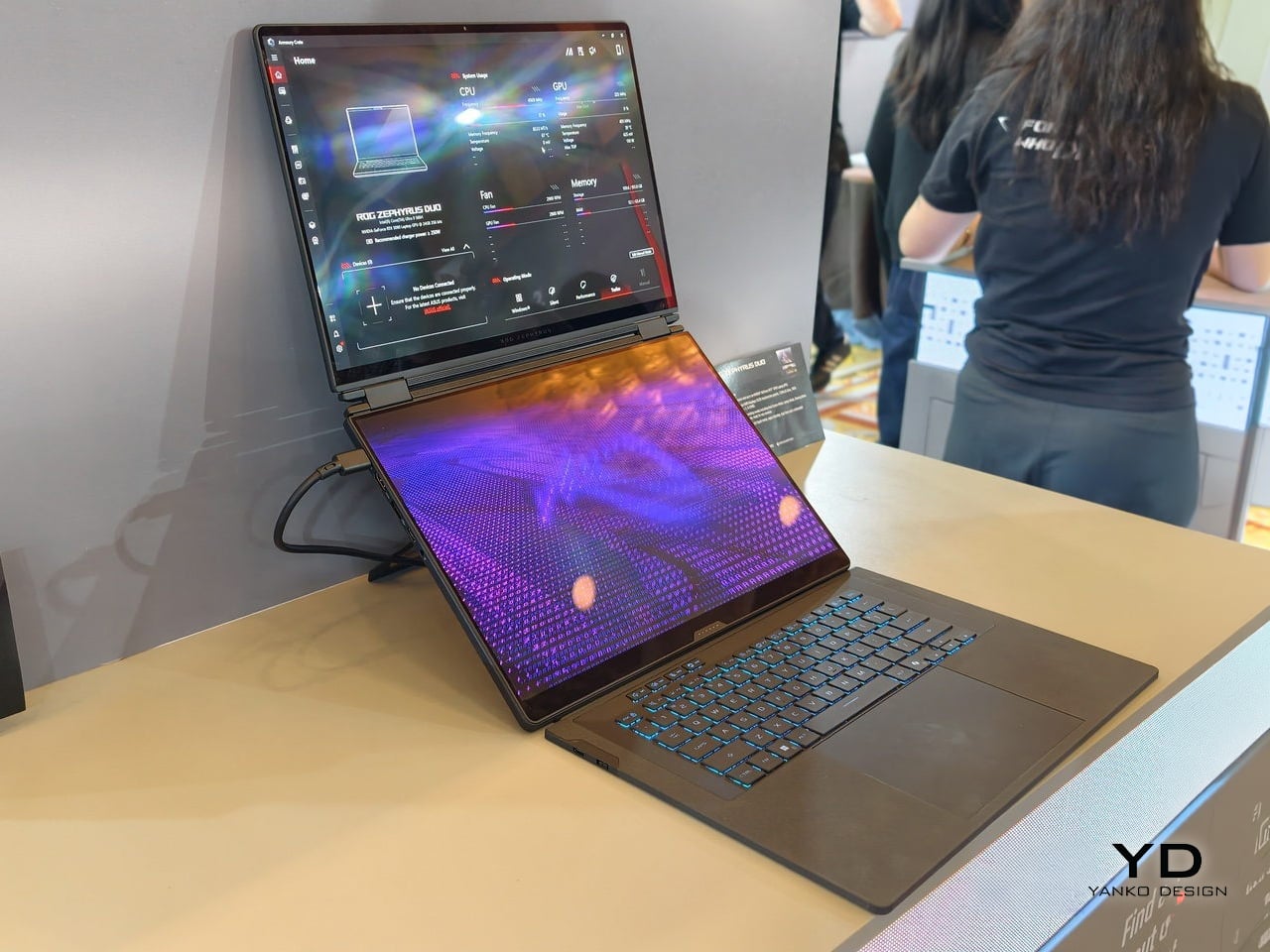
Dual-screen laptops have been ASUS’s long game. The Zenbook Duo spent several years proving that two displays could coexist for productivity users before the form factor felt genuinely mature. The ROG Zephyrus Duo carried that logic into gaming territory, though the 2022 original hedged its bets with a half-sized secondary panel perched above the keyboard. The 2026 GX651, which first appeared at CES earlier this year and got its US pricing confirmed at Computex this week, drops the hedge completely. Two full 16-inch OLED panels, same resolution, same refresh rate, same brightness ceiling.
The base configuration opens at $4,499, and the Computex backdrop gives that number useful framing. Nvidia and Microsoft were teasing ARM-based laptop chips a few booths over, and the rest of the gaming hall was running its annual RTX refresh cycle. None of that noise touched the Duo’s story, because its headline was a chassis decision rather than a silicon one. After six years and three generations, ASUS finally has a dual-screen gaming laptop that leads with the screens and lets everything else follow.
Brand: ASUS ROG
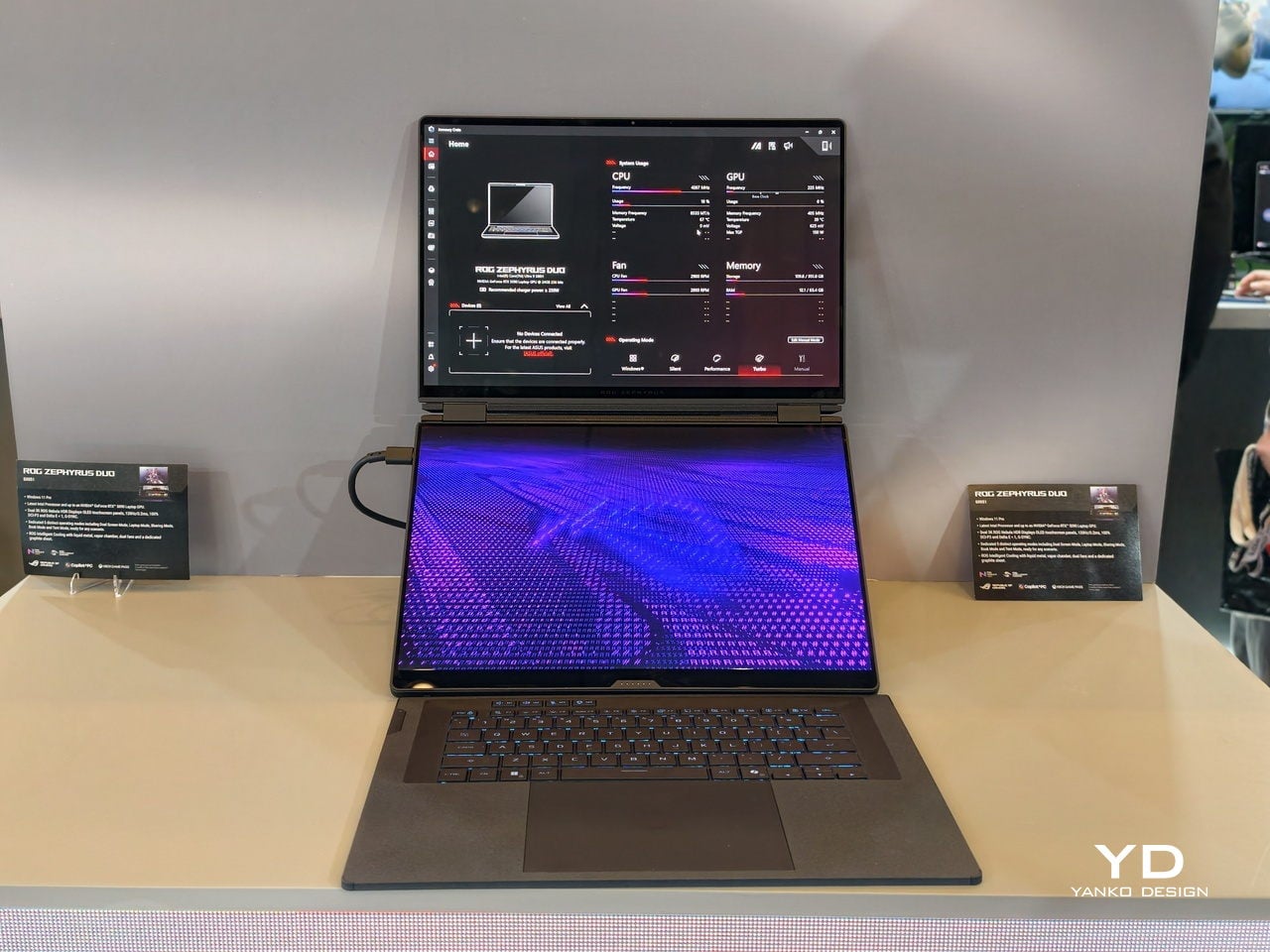
Matching the displays across both panels is the design decision that signals intent. Both screens deliver 3K resolution at 2880 x 1800 pixels, both run at 120Hz with variable refresh rate support, and both hit 1,100 nits peak brightness in HDR with full DCI-P3 color coverage. The top panel gets G-Sync compatibility because it handles gaming duties, but the bottom screen doesn’t get downgraded to compensate. Previous Zephyrus Duo models gave you a flagship display up top and a secondary utility screen below, a hierarchy that made sense when the bottom panel was physically smaller. The GX651 treats parity as the baseline, which changes the relationship between the two surfaces entirely. One screen runs your game, the other runs Discord, Spotify, streaming software, browser tabs, whatever parallel workflow gaming actually requires in 2026.
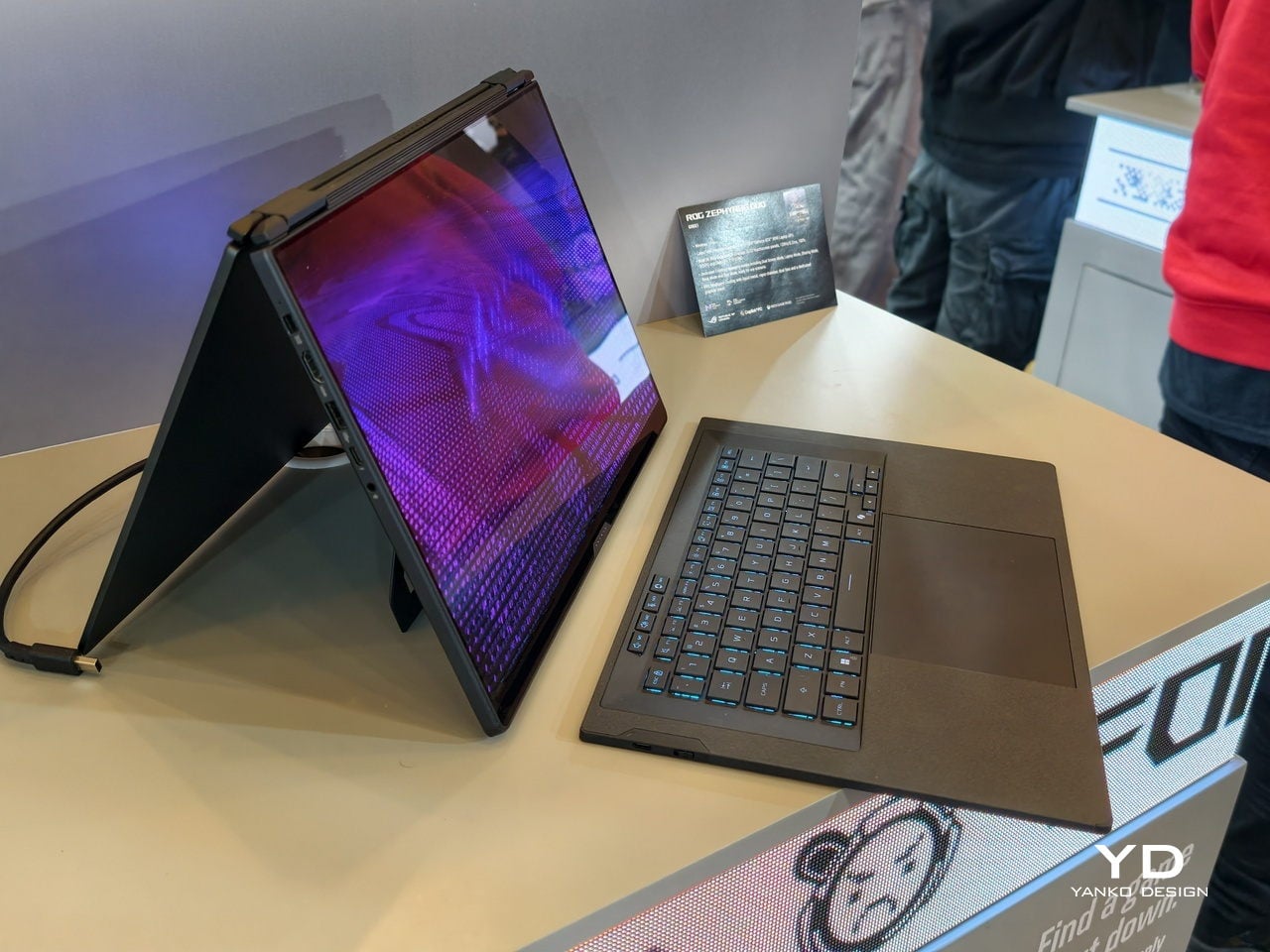
The keyboard detaches completely and connects over Bluetooth when separated from the chassis, continuing the design language ASUS refined with the Zenbook Duo line over the past few years. Magnets hold it in place when docked, covering the lower display for traditional laptop mode, but the machine was engineered to run with both screens exposed. Pull the keyboard free and set it wherever makes ergonomic sense, angled on a stand or flat on the desk beside the laptop itself. The trackpad lives on the keyboard folio, so input travel is part of the design assumption. ASUS isn’t treating detachment as a party trick or an edge case. The entire thermal layout, the hinge mechanism, and the port placement assume you will use this machine with the keyboard removed.
The silicon inside follows the screen-first brief rather than leading it. The base $4,499 configuration ships with an RTX 5070 Ti, while the top-end model pushes into RTX 5090 territory at a price ASUS hasn’t officially published yet but Gizmodo clocks at $5,500. Intel’s Panther Lake CPUs handle the processor side, with options ranging across the Core Ultra X series depending on configuration. All of that is competitive hardware in mid-2026 terms, but the specs themselves are table stakes. What matters is how ASUS packaged them. The cooling system has to manage thermals across a chassis that expects both displays to be running simultaneously under load, and the hinge assembly has to support the weight and structural integrity of two full glass OLED panels without compromising rigidity. Those are the engineering problems that define this product, and the GPU choice is downstream of solving them.
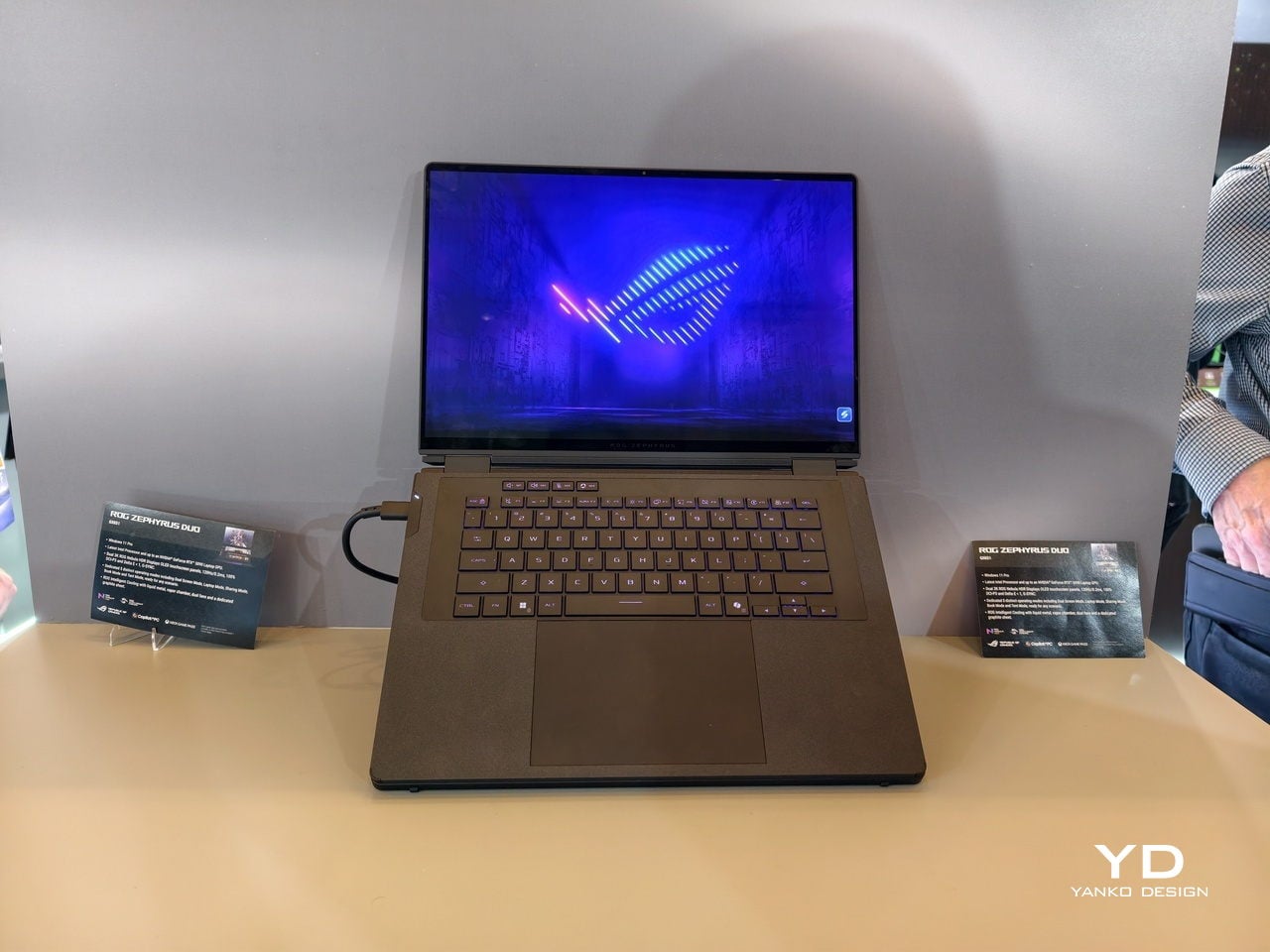
ASUS confirmed US availability at Computex after showing the hardware at CES in January, which means the company spent the better part of six months watching feedback, finalizing logistics, and preparing the supply chain for a machine that doesn’t fit neatly into any existing SKU category. At $4,499 the Zephyrus Duo GX651 costs meaningfully more than a conventional gaming laptop with identical silicon, and the delta is purely the dual-screen chassis. That premium is either justified or deal-breaking depending on whether you’ve spent the last several years wishing your gaming laptop had room for a second panel. ASUS is betting that enough buyers have been waiting for exactly this. Computex 2026 will be remembered for Nvidia’s ARM tease and the RTX 5090 mobile flood, but the Zephyrus Duo is the machine that asked a different question entirely and shipped with an answer.