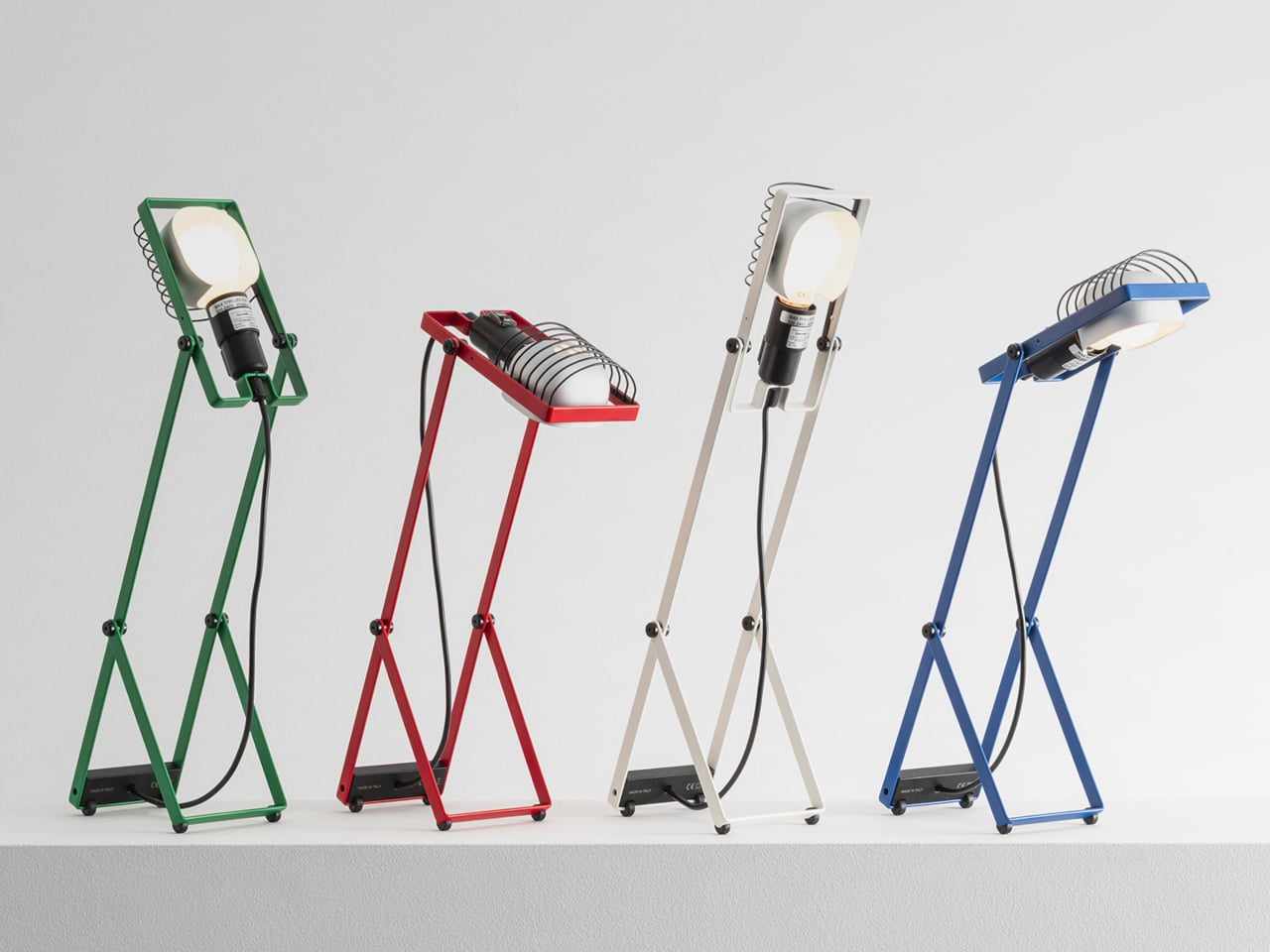
Artemide is celebrating its history, and Sintesi, introduced in 1975, was the first lamp signed by founder Ernesto Gismondi. His background was engineering and manufacturing, and he approached lighting like a system problem rather than a single object. The reissued Sintesi table lamp revisits that mindset, showing how a few bent-metal parts and a standard socket can still feel relevant in a world of sealed LED fixtures.
Sintesi was conceived as an intelligent system built around simple, shared components that could become table, floor, wall, or clamp versions. The new edition focuses on the table version, the core from which the rest of the family evolved. Its appeal lies in how a few bent-metal profiles and a standard E27 head can cover a surprising range of uses, from low reading light to taller task light, without complex joints or hidden mechanisms.
Designer: Ernesto Gismondi (Artemide)
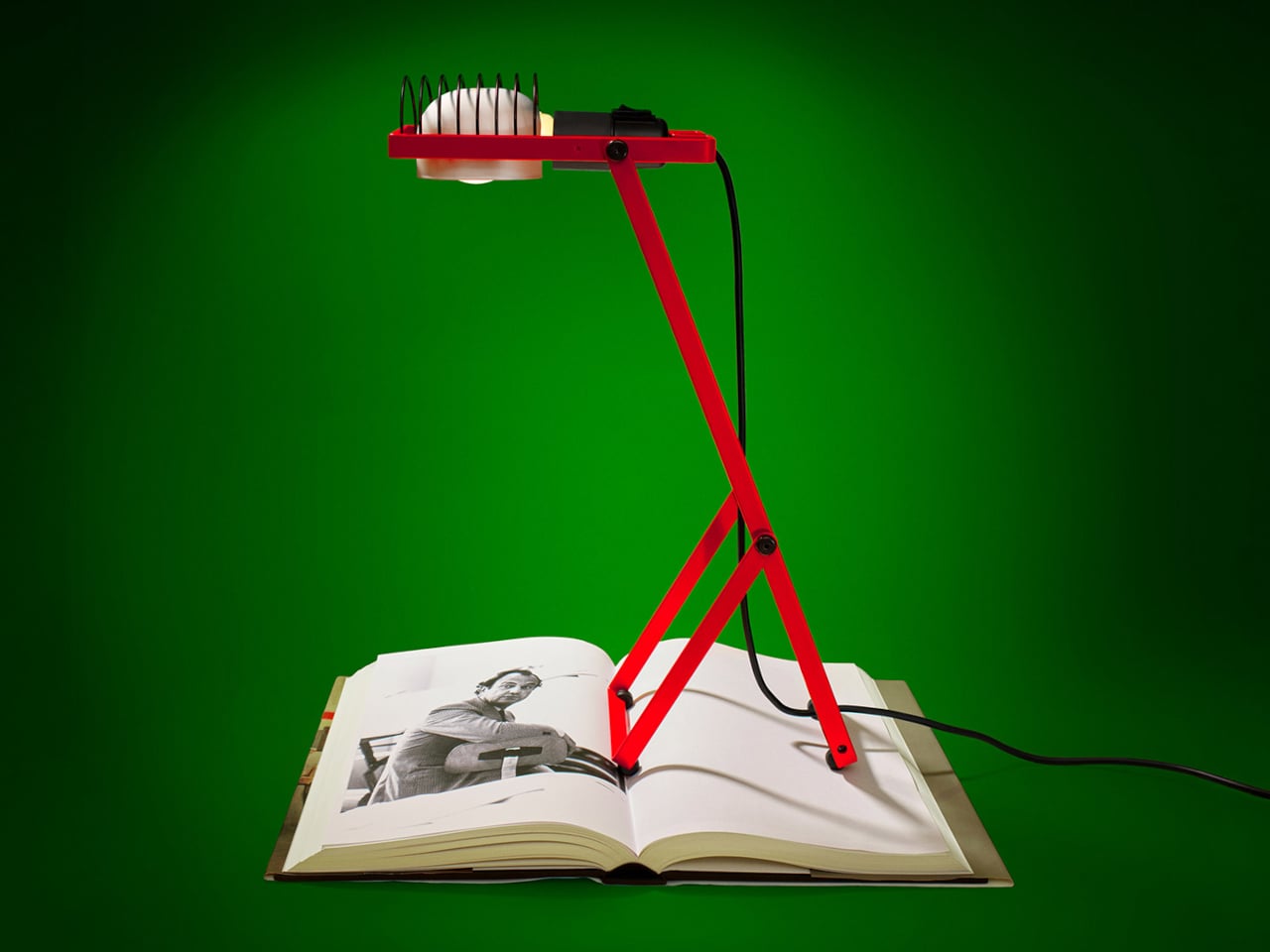
The structure is two C-shaped steel profiles of different lengths hinged together to form a Y-shaped support. Opening and closing that scissor-like frame raises or lowers the head and changes the angle in one motion. The geometry is minimal, yet it gives enough adjustment to move from a low, horizontal reading beam to a taller, more directional light without adding slides, springs, or counterweights.
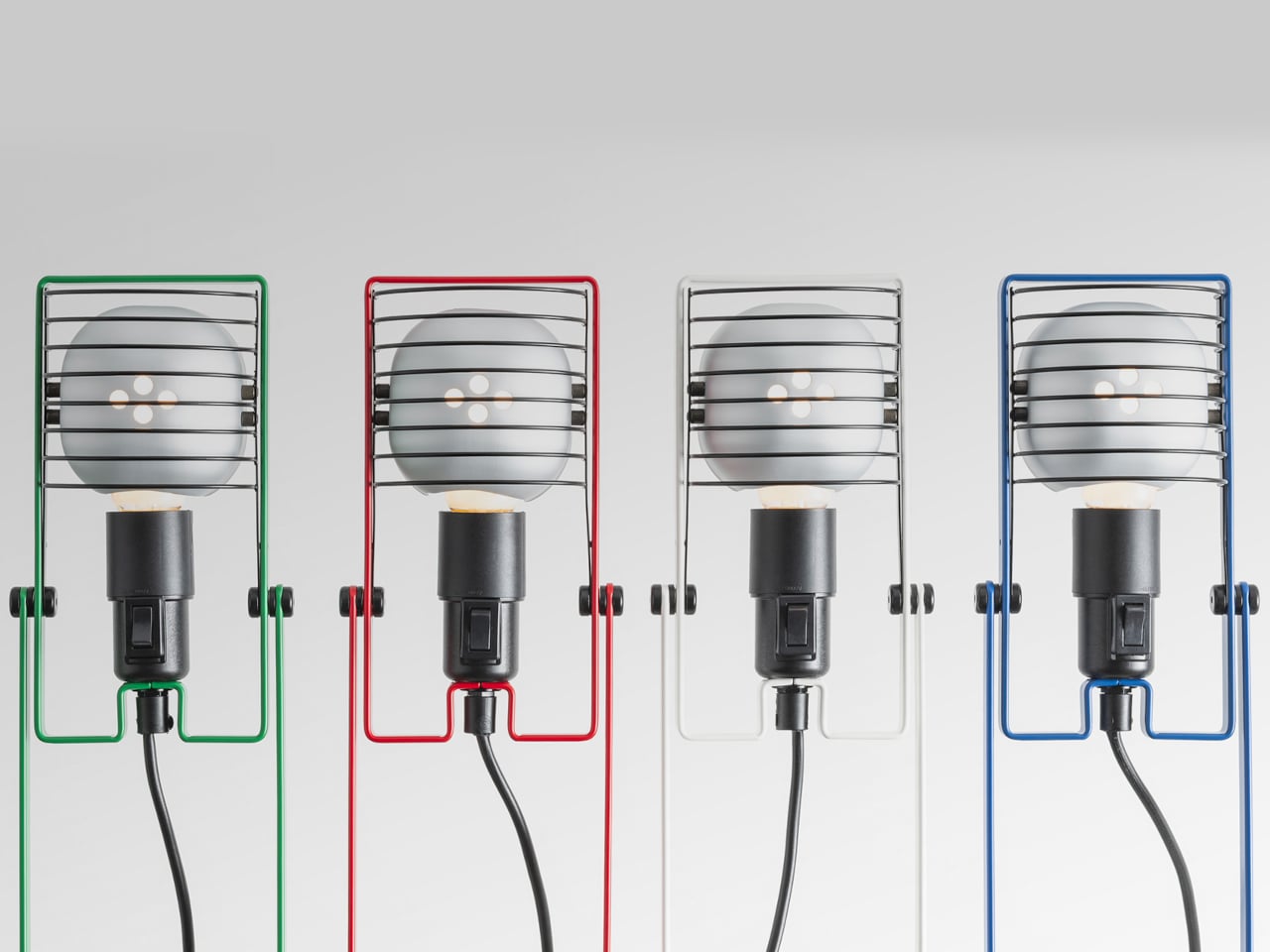
The head is a simple frame that holds an E27 socket, a reflector, and a protective grid. The standard socket means you can use different bulbs over time, from warm LED globes to smart lamps, keeping the lamp adaptable as light sources change. The reflector shapes the beam, while the grid protects the bulb and adds a technical, almost industrial character that fits the rest of the structure.
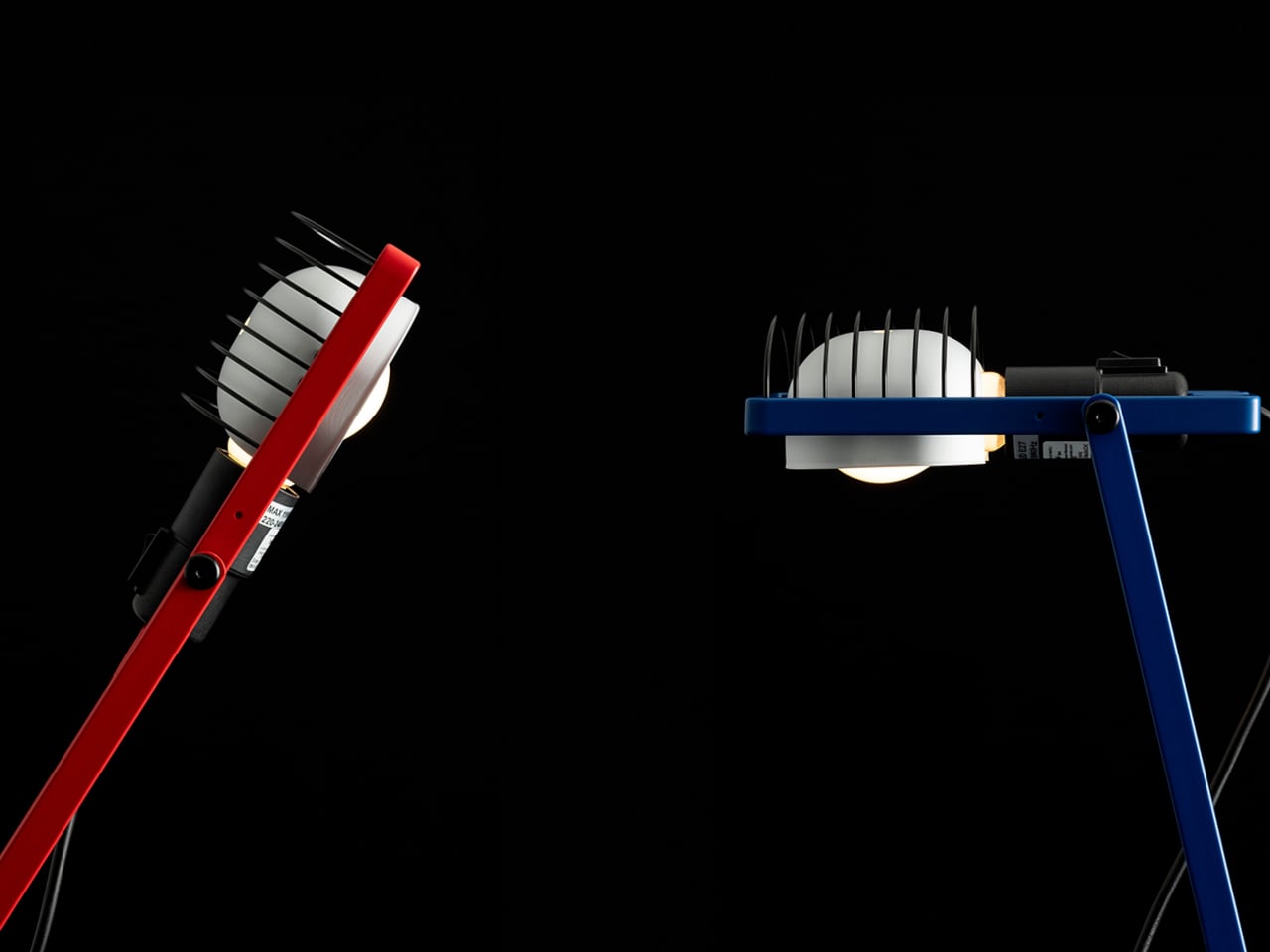
Sintesi can fold in on itself for compact packaging, the Y-frame collapsing so the lamp becomes a flat bundle of metal and a head. That foldability reflects Gismondi’s interest in production efficiency and logistics, making it easier to store, transport, and service the lamp, and aligning with contemporary concerns about material and shipping footprints that were less visible in 1975 but feel urgent now.
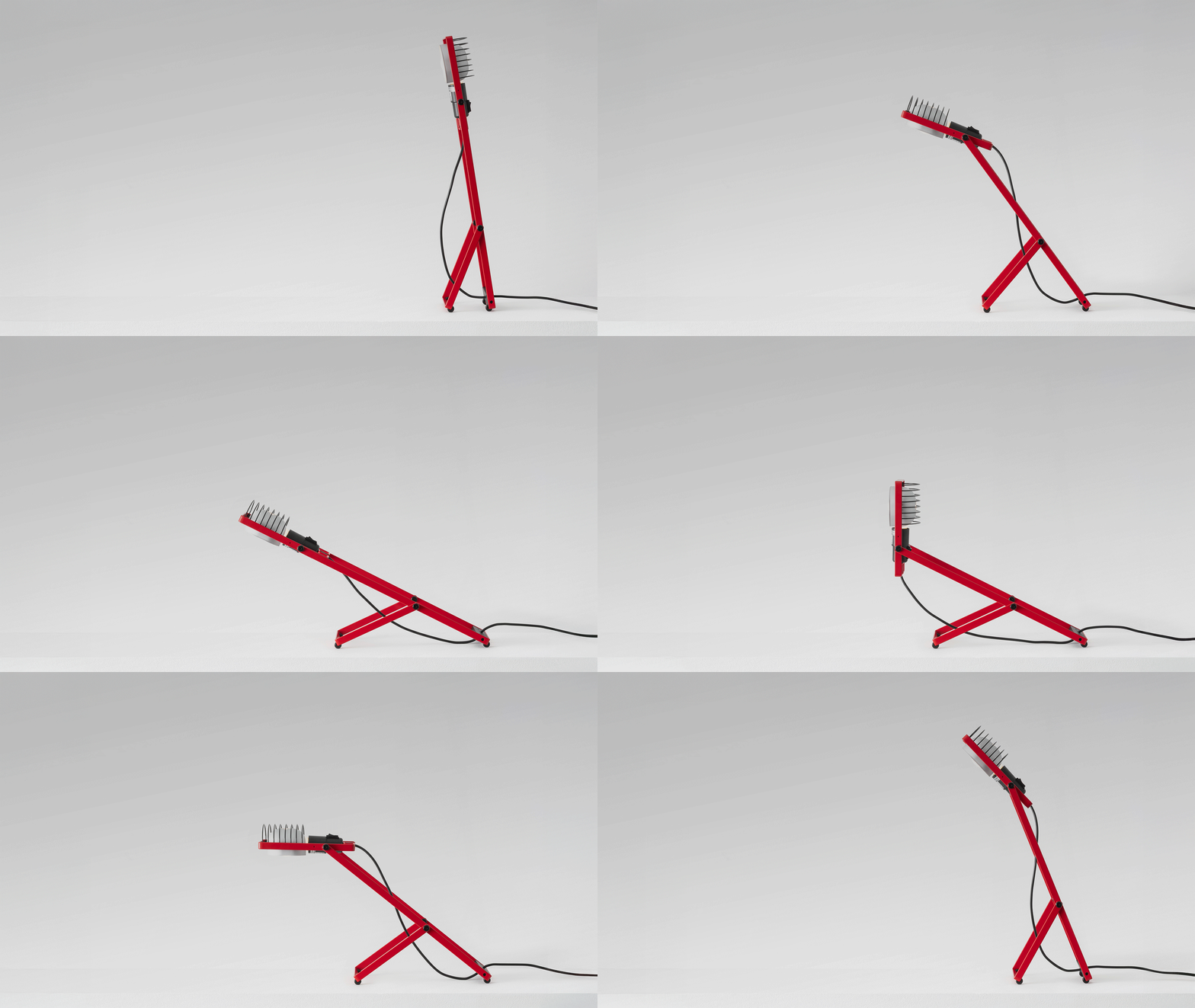
The reissue keeps the painted-steel structure and aluminium reflector, offered in colours like green, red, white, and blue. The exposed hinges, visible screws, and open cage around the bulb make no attempt to hide how the lamp works. It feels closer to a piece of technical equipment than a decorative object, which is exactly what makes it interesting on a desk or workbench where function matters more than mood lighting.
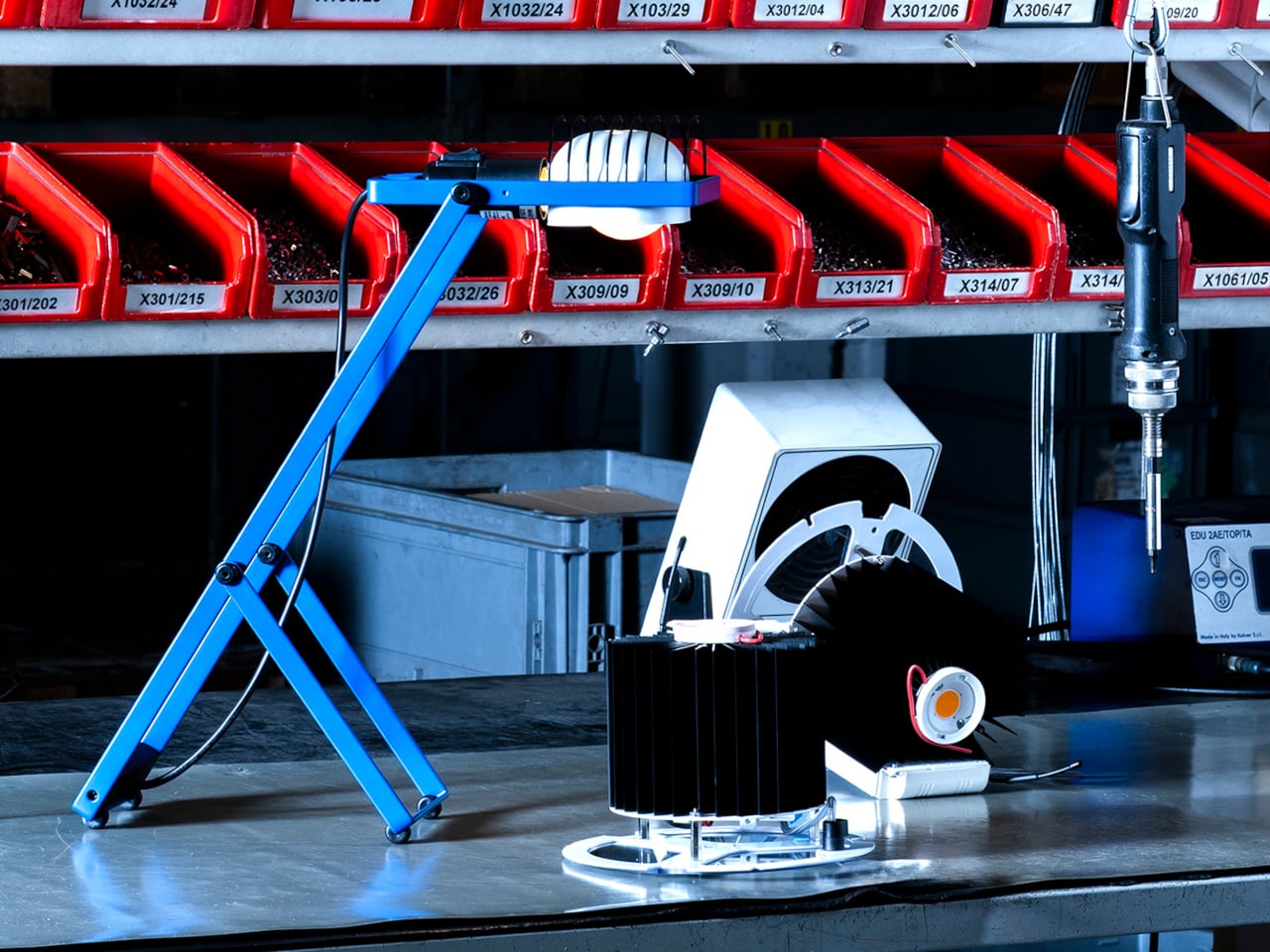
A 1975 design can sit comfortably next to laptops and LED strips today because Sintesi’s reliance on a standard socket, its adjustable geometry, and its foldable, efficient structure all speak to ideas that are even more relevant now: repairability, adaptability, and honest construction. The bent-metal tool lamp from Gismondi feels quietly timeless because it was never trying to chase fashion, only to solve a problem with the fewest parts and the most flexibility.
SHARE