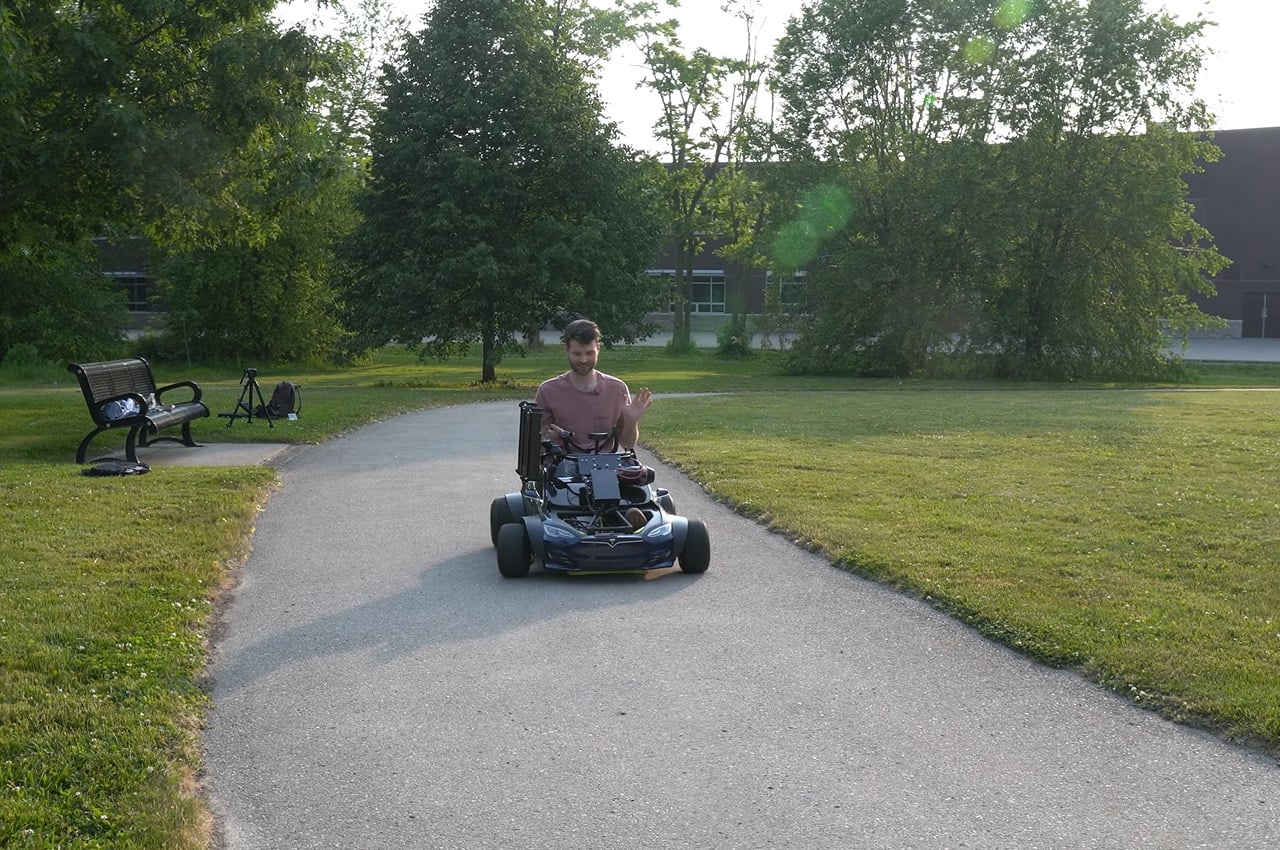
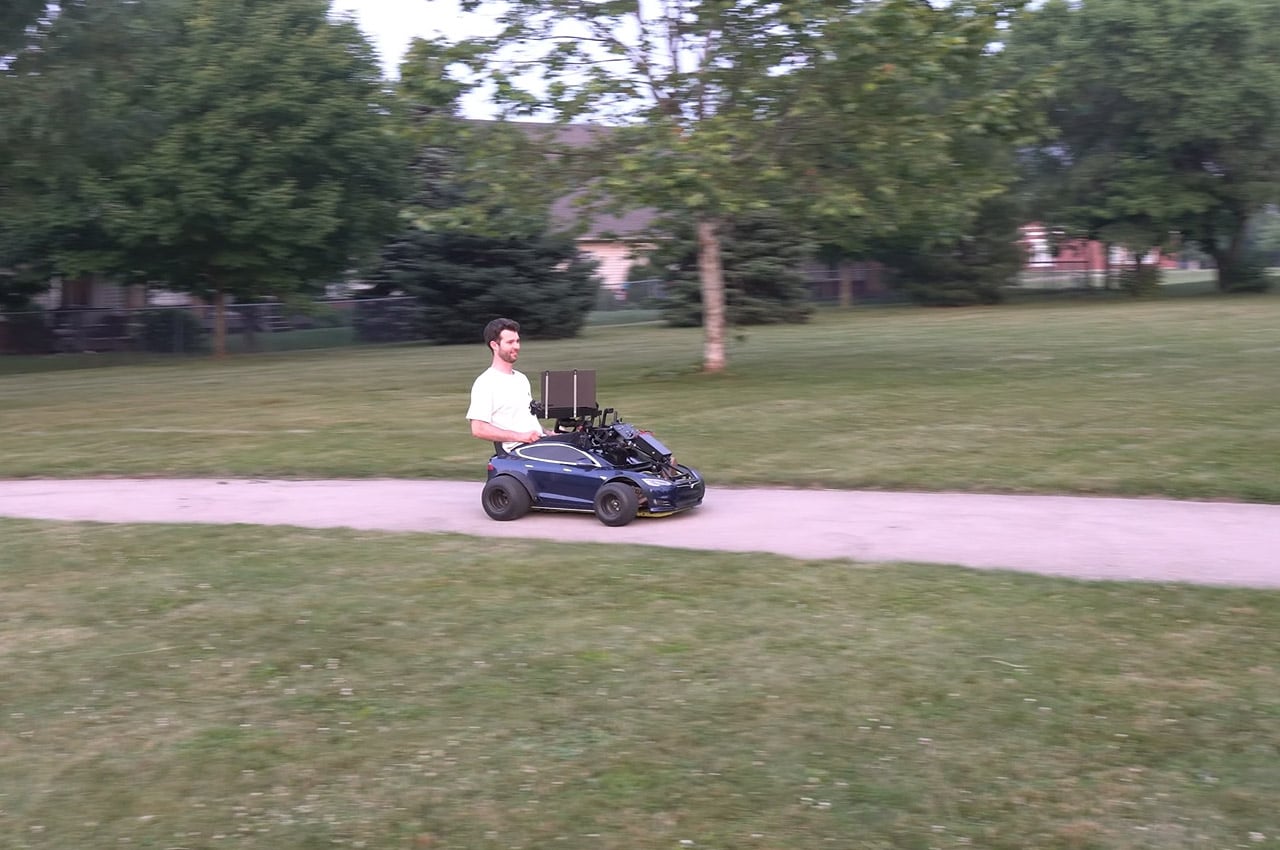
Materializing the idea of safe, self-driving cars is not an easy feat unless you’re Elon Musk. However, if you want to try your hand at building one, starting small is the next big leap. That’s exactly what Austin Blake did by embarking on a challenging project to create an autonomous Mini Tesla.
Built on a Radio Flyer Tesla Model S electric toy car he calls the Teskart, the self-driving go-kart employs three Logitech C920 webcams – on the right, center and left – to feed the machine learning software. The model is trained to mirror the behavior demonstrated with 48,000 image training sets of the walking path it is tested on.
Designer: Austin Blake
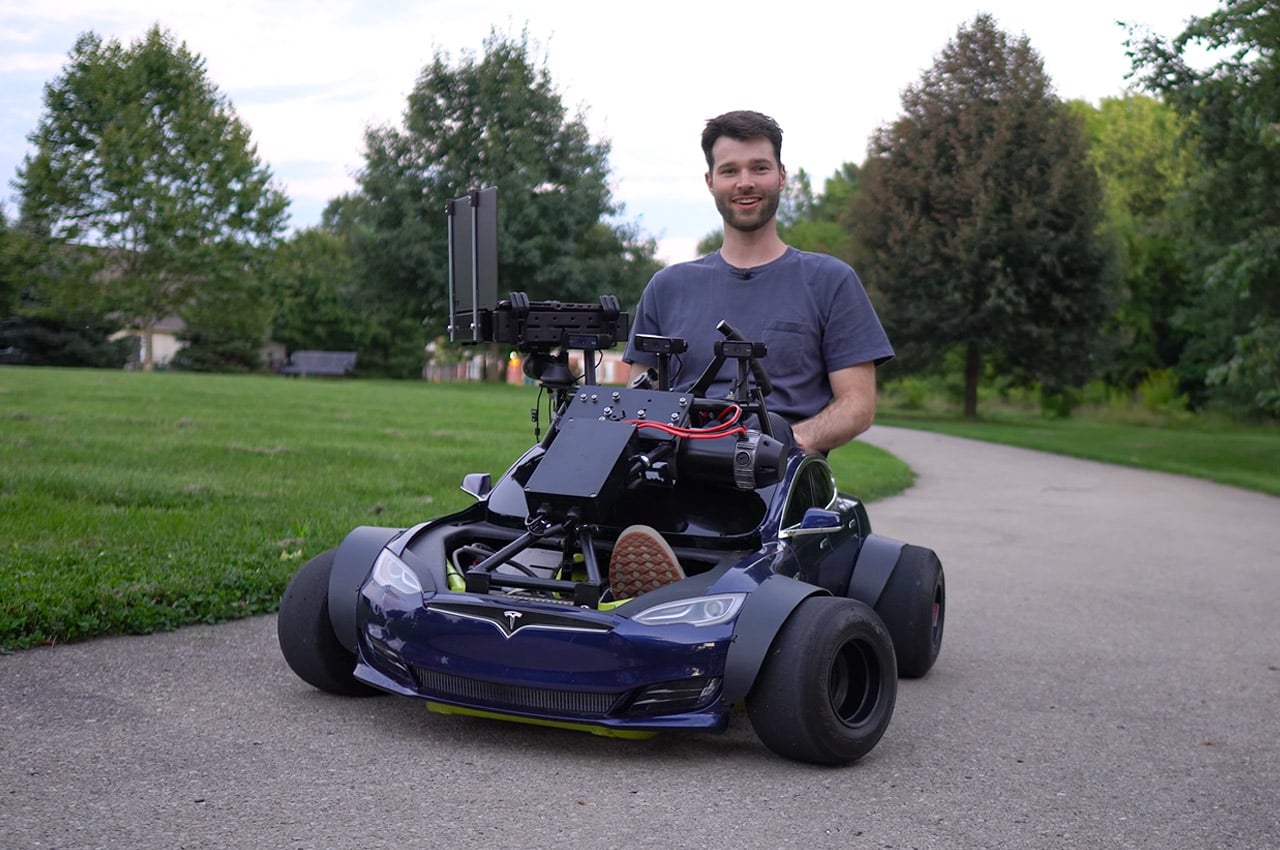
Initially, this semi-autonomous Teskart had a lot of close moments when it went off the designated track with just one webcam at work. Then Austin decided to add two more webcams to the equation and fixed a bug. This resulted in the go-cart frame fitted with the Radio Flyer Tesla going around the makeshift track without wearing off.
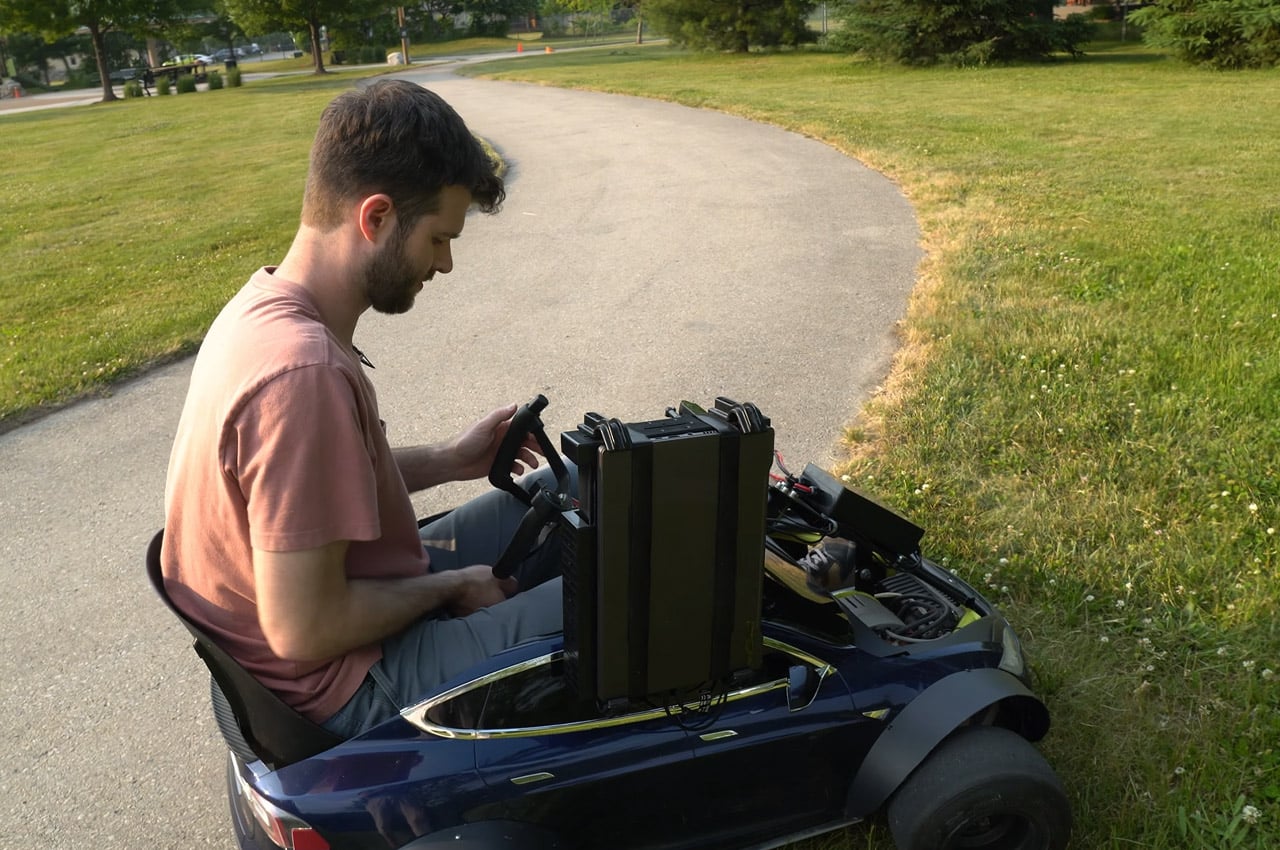
For the steering input, Austin created a bolt-on frame, holding the steering servo motor salvaged from an electric wheelchair in place. If you are wondering what happened to the on-board high-speed motor capable of reaching speeds of up to 6 mph? Well, he replaced it with the new Motenergy ME0907 brushless electric motor that pushes the tiny car to speeds of 45mph at 48V power. He plans to increase that top speed even more with a 72V version soon.
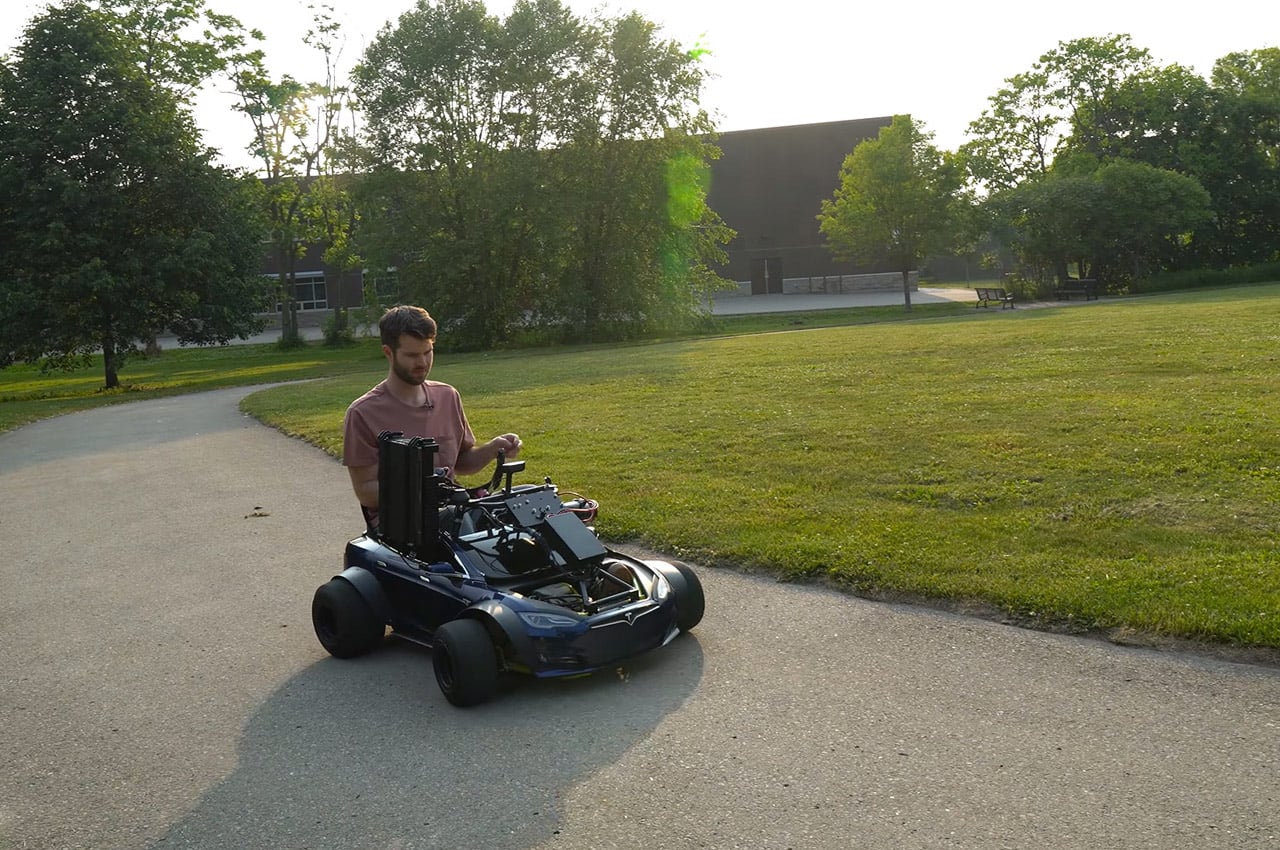
The existing motor can churn out 80 continuous amps and a peak of 220 amps for one minute spinning the rear axle loaded on a chain and deriving power from the DIY battery pack made from 224 individual 18650 lithium-ion cells separated into 16 modules with their own battery management system.
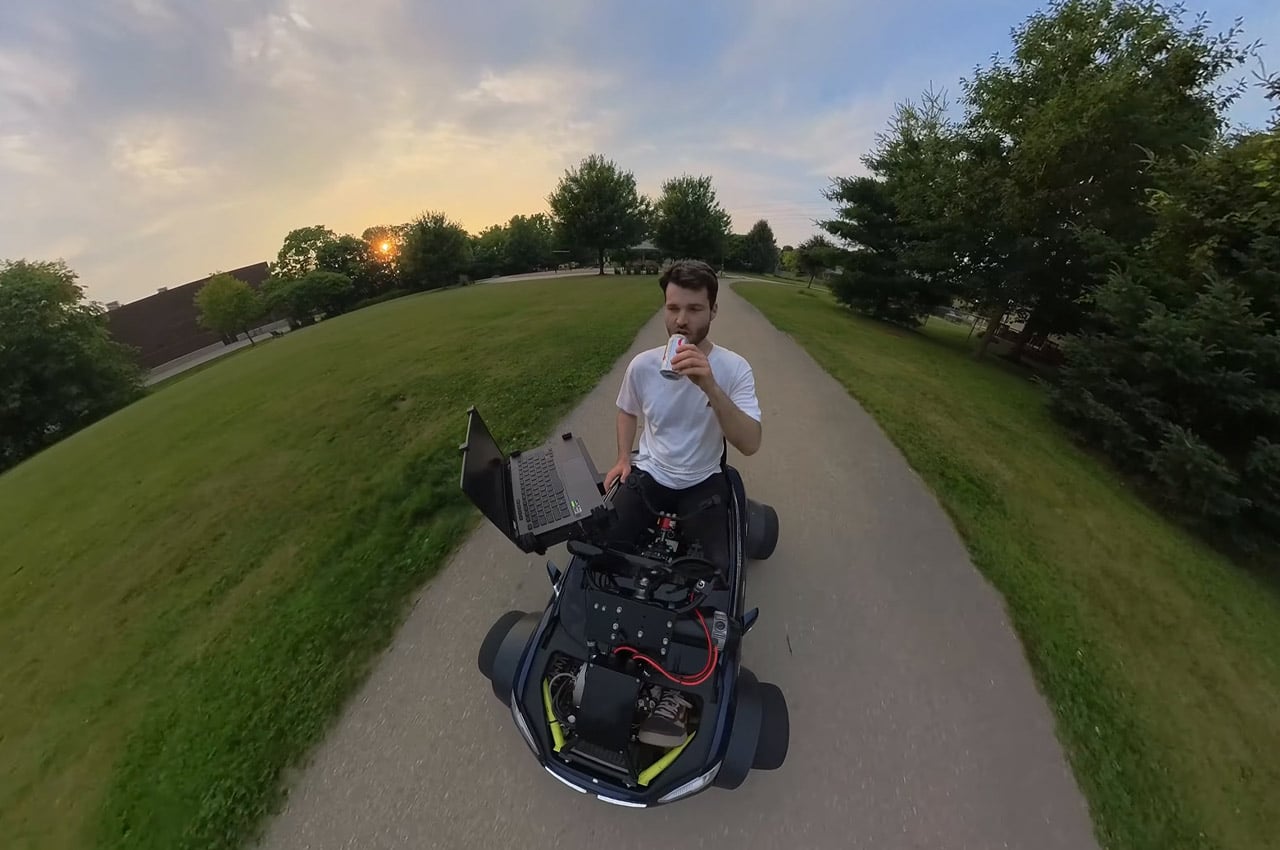
That said we would refrain from calling this DIY a pure self-driving build, as only the steering angle is controlled by the system and the throttle control is still manual. Maybe the inventive DIYer intends to employ the data from the behavioral cloning to add another Arduino-controlled component to control the throttle input too. Maybe then it’ll be just to call it a self-driving mini Tesla in the true sense!