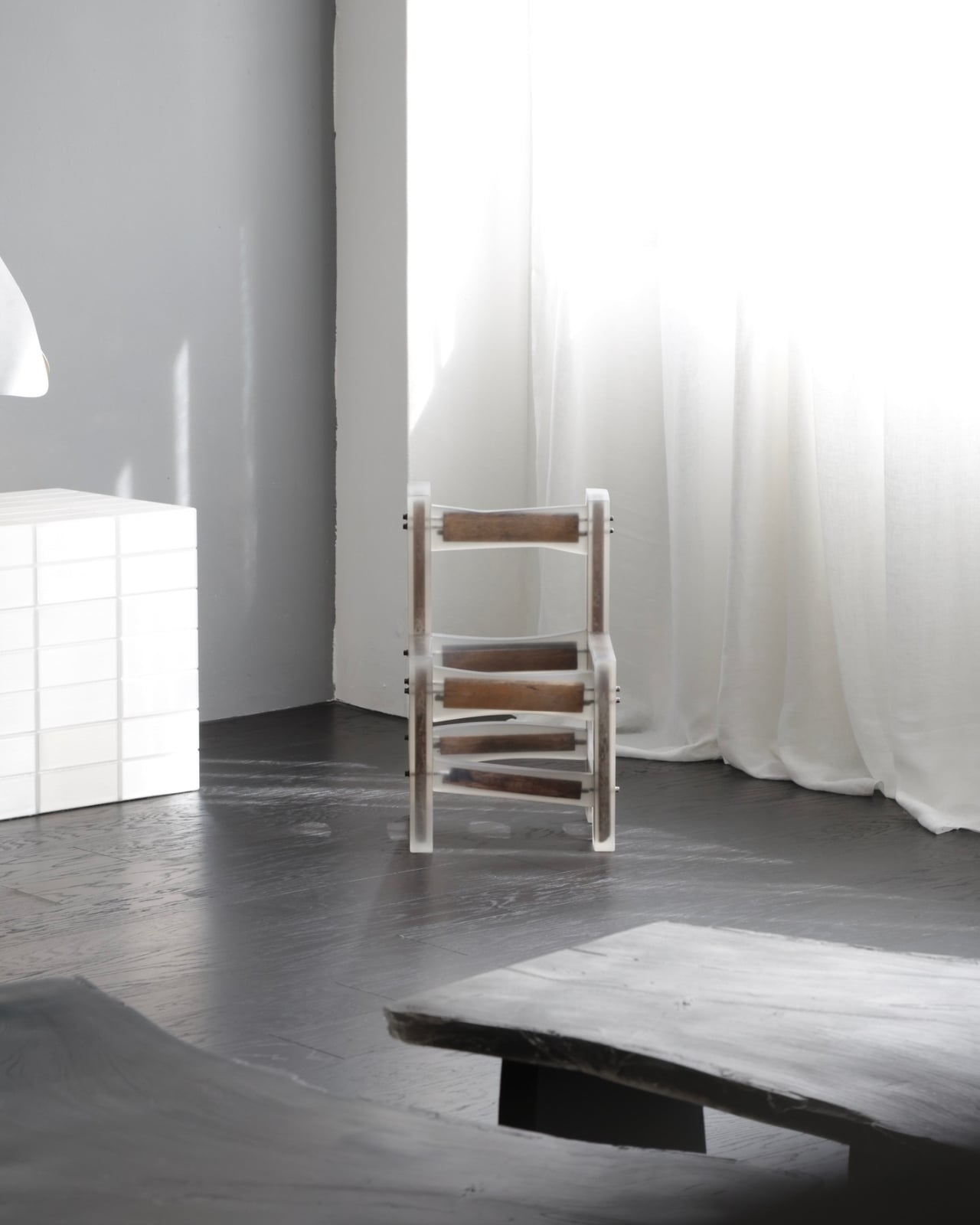
Darkened wood, uneven color, and exposed fasteners are hardly the usual ingredients of a furniture makeover. In Younghyun Lee’s The Youth, they’re the reason to look closer. The series takes on a familiar problem: old furniture can lose our interest long before its materials lose their character. Rather than erase the evidence of use, Lee gives discarded chairs and aged timber a different visual identity, with their earlier lives still visible.
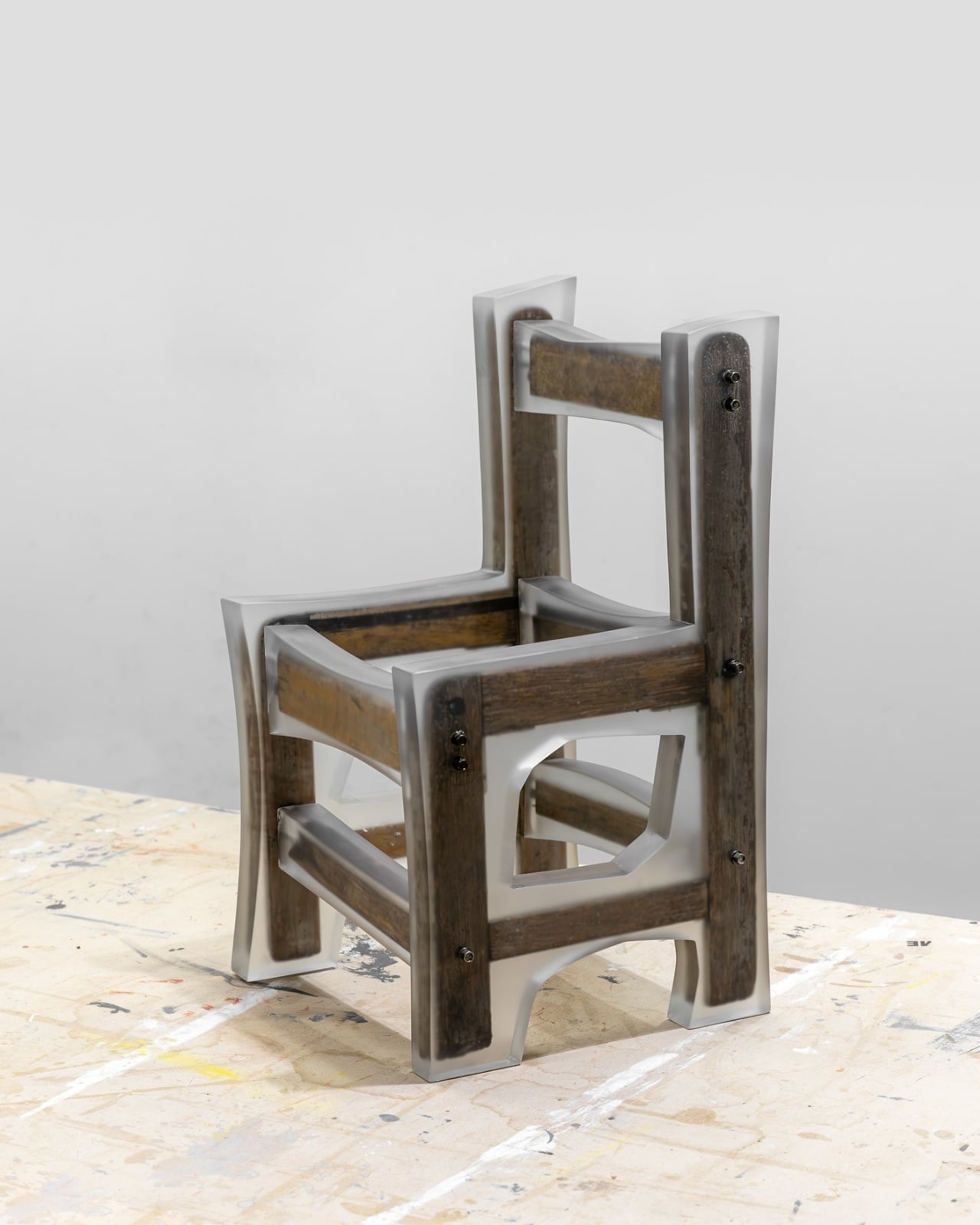
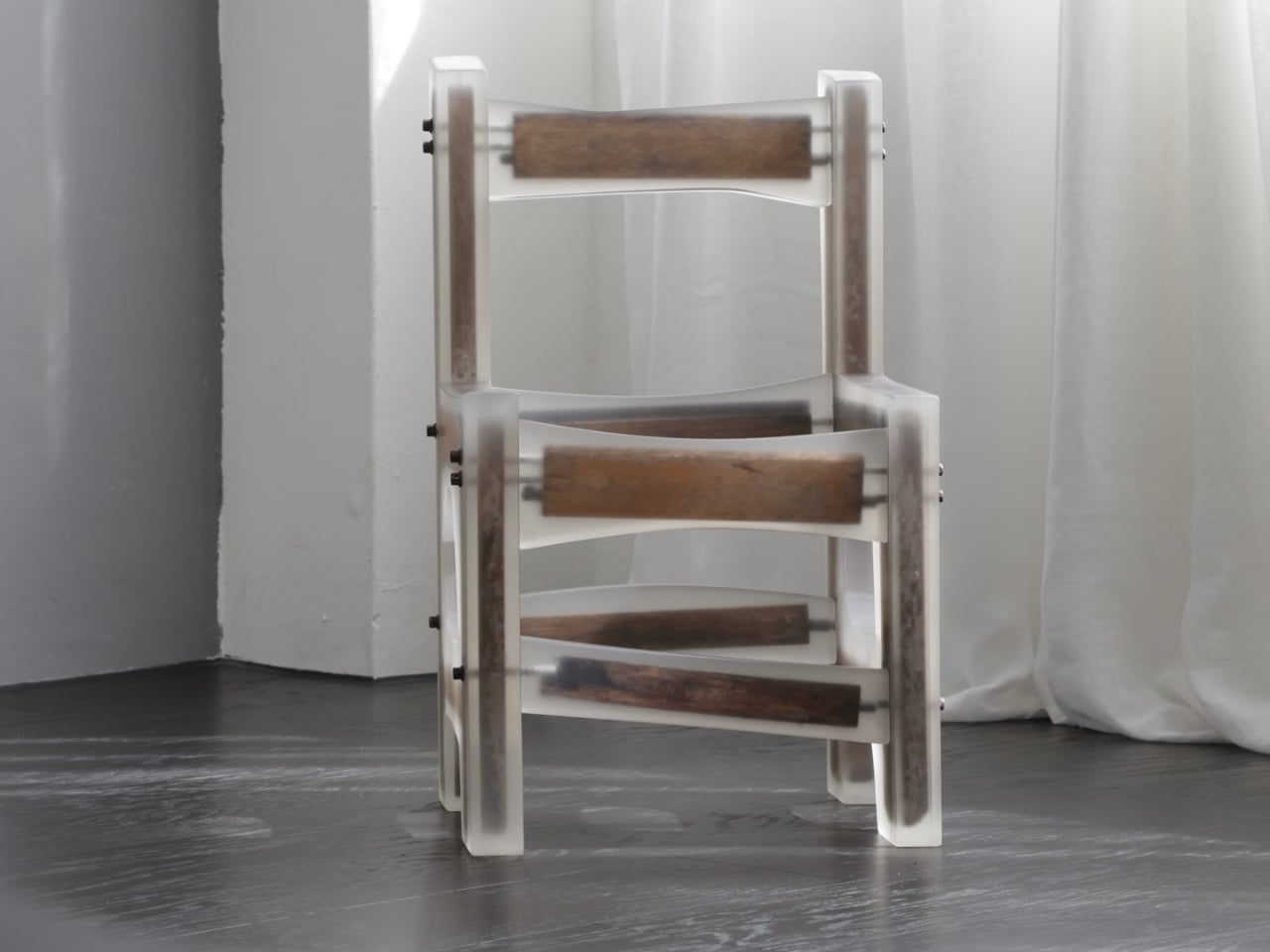
The intervention is resin, applied around the wooden components to create new forms and proportions. In the supplied photographs, cloudy, translucent edges surround the darker timber, making each piece look suspended inside a larger version of itself. These are exhibition works, not a practical repair kit for a wobbly dining chair. Their contribution is more specific: they make the material we might overlook worth examining again, without requiring it to look freshly manufactured.
Designer: Younghyun Lee
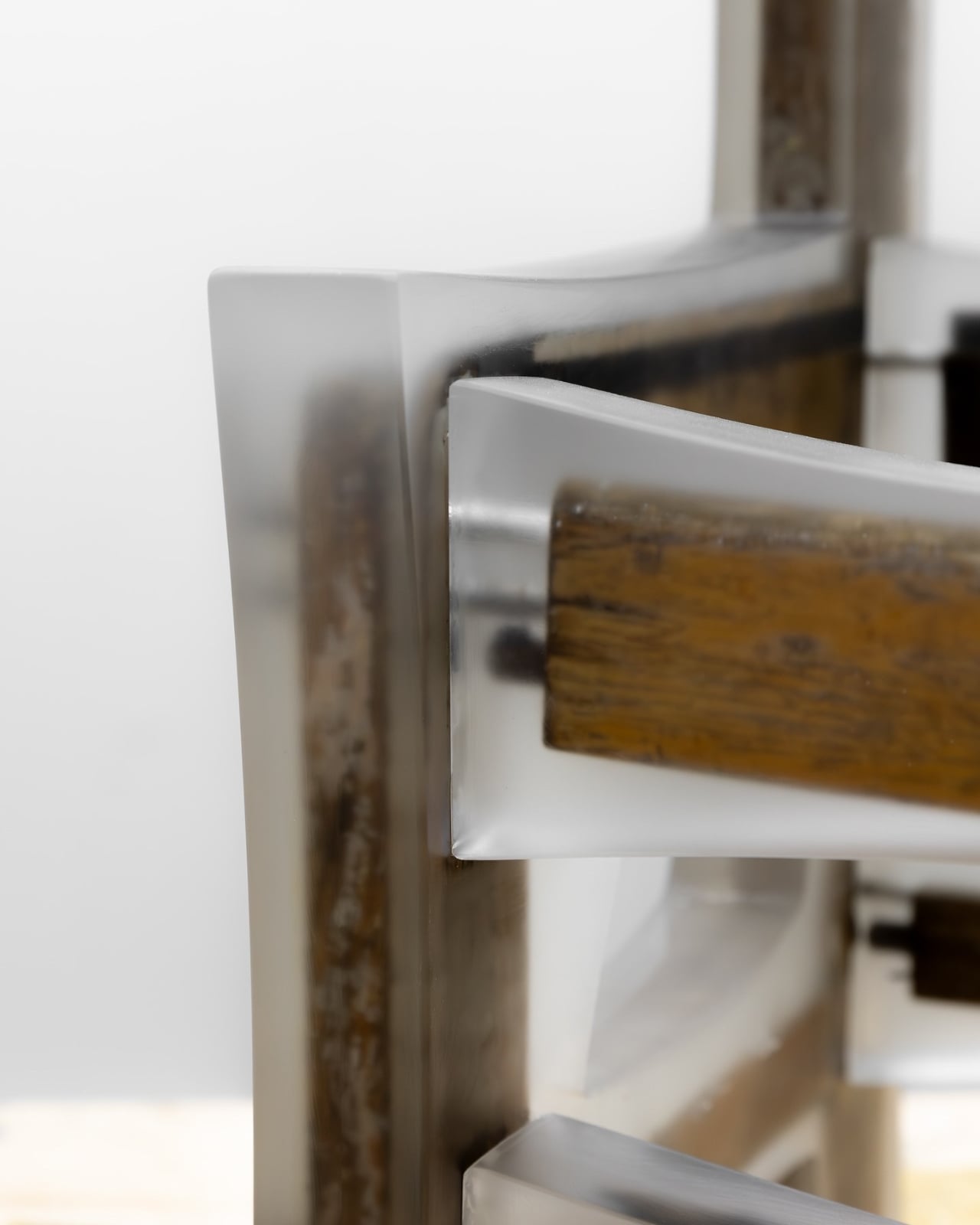
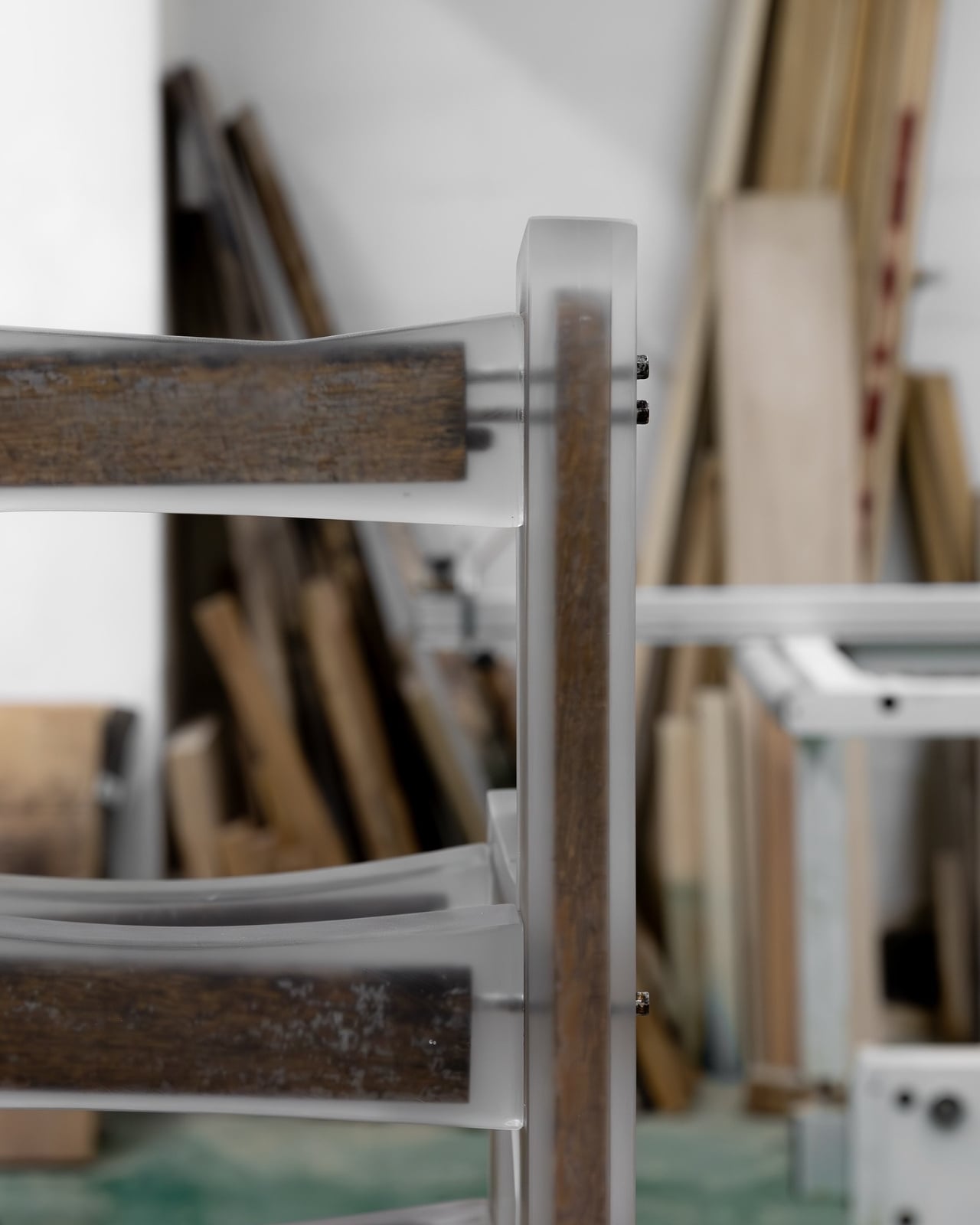
I like how much of the transformation happens at the edges. The resin extends beyond the wood, giving the uprights broader outlines and the horizontal rails gently dipping contours. From a distance, the chair has an almost frosted appearance. Closer views reveal the irregular wooden surfaces inside. That difference in viewing distance matters. You register the pale silhouette first, then discover that the brown structure within it looks considerably older and less orderly.
The hardware adds another layer of interest. Dark fasteners remain visible along the uprights, interrupting the pale resin borders. They give the object a slightly stubborn, workshop quality that keeps the treatment from becoming too precious. Cover those details completely and the wood might read as decorative filler. Leaving them legible lets the viewer recognize pieces of an actual assembly, with connections and wear that weren’t invented simply to make a photograph more appealing.
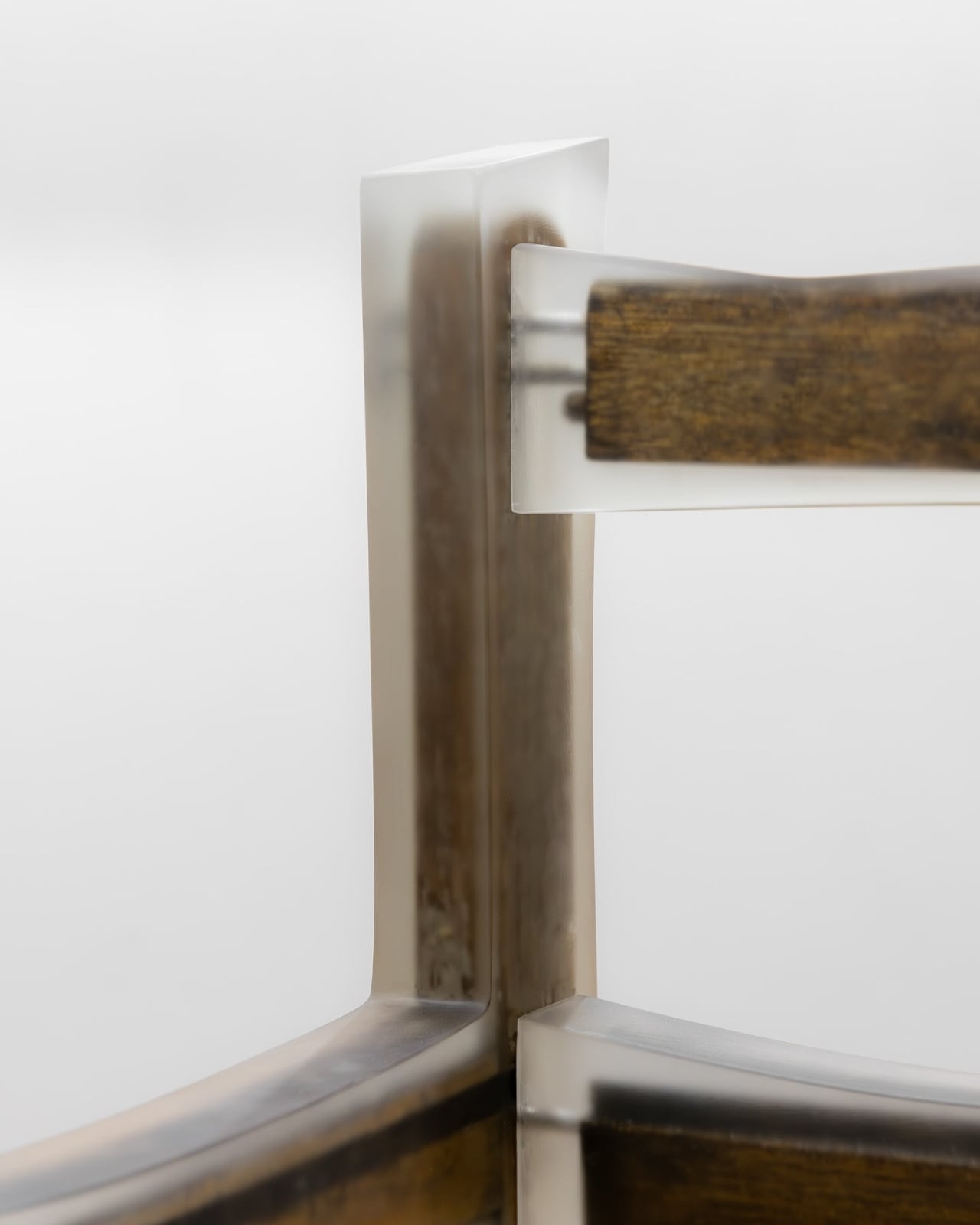
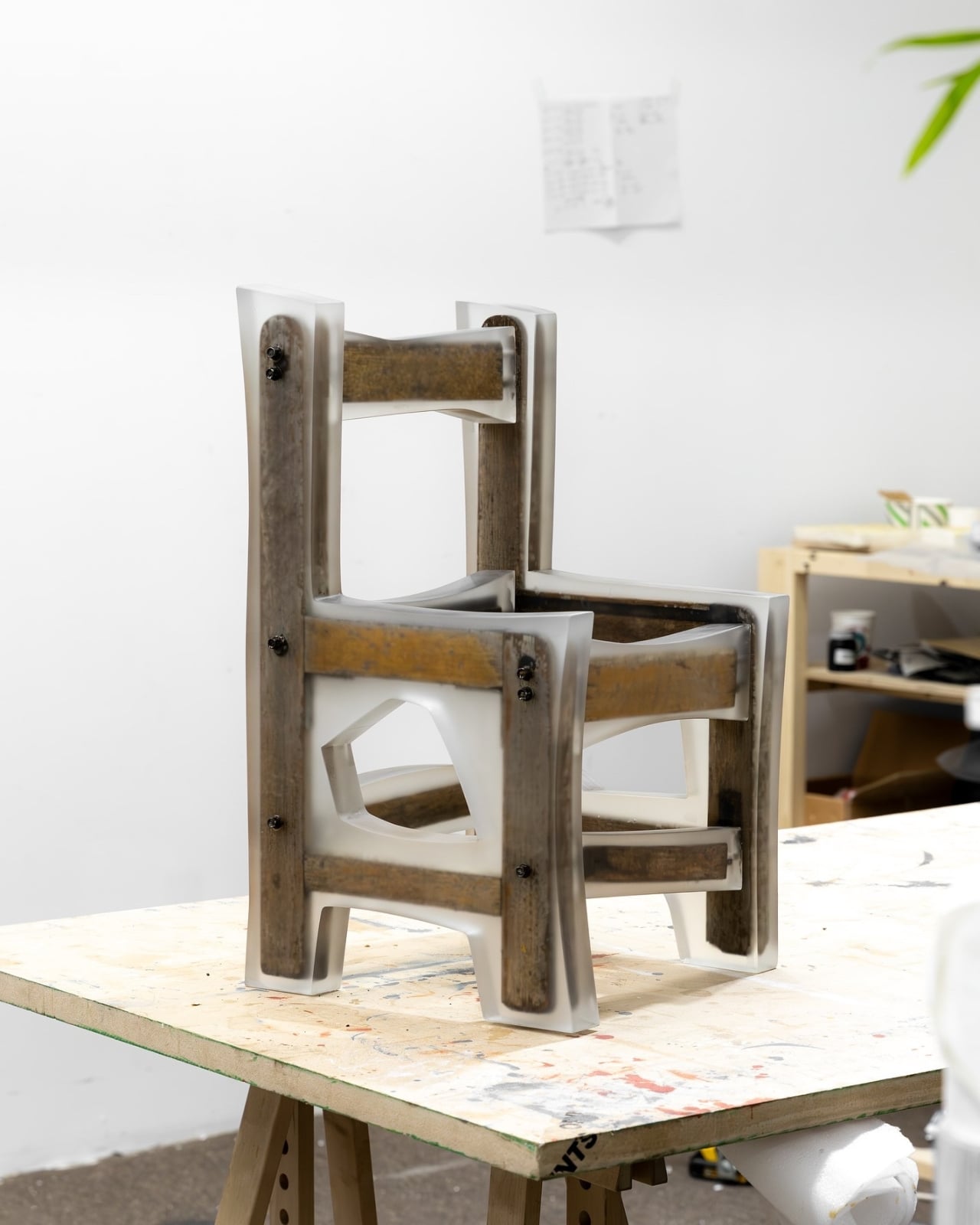
There’s an important catch in the photographed example: the seat area is open. I wouldn’t describe it as a replacement for the chair at your kitchen table. That absence changes the encounter, because the familiar outline invites recognition while the missing sitting surface interrupts the expected use. For me, it works better understood as a chair-based sculpture. You can consider its shape and construction without having to pretend the pictures establish anything about comfort.
The name, The Youth, feels particularly apt once you notice how much aging remains on display. Earlier coverage describes Lee’s project as an exploration of memories carried by old objects, including scratches and faded marks. My reading is that youth here has less to do with reversing time than with finding another possibility. The wood doesn’t become young again. Its changed surroundings give us a reason to pay attention to it differently.
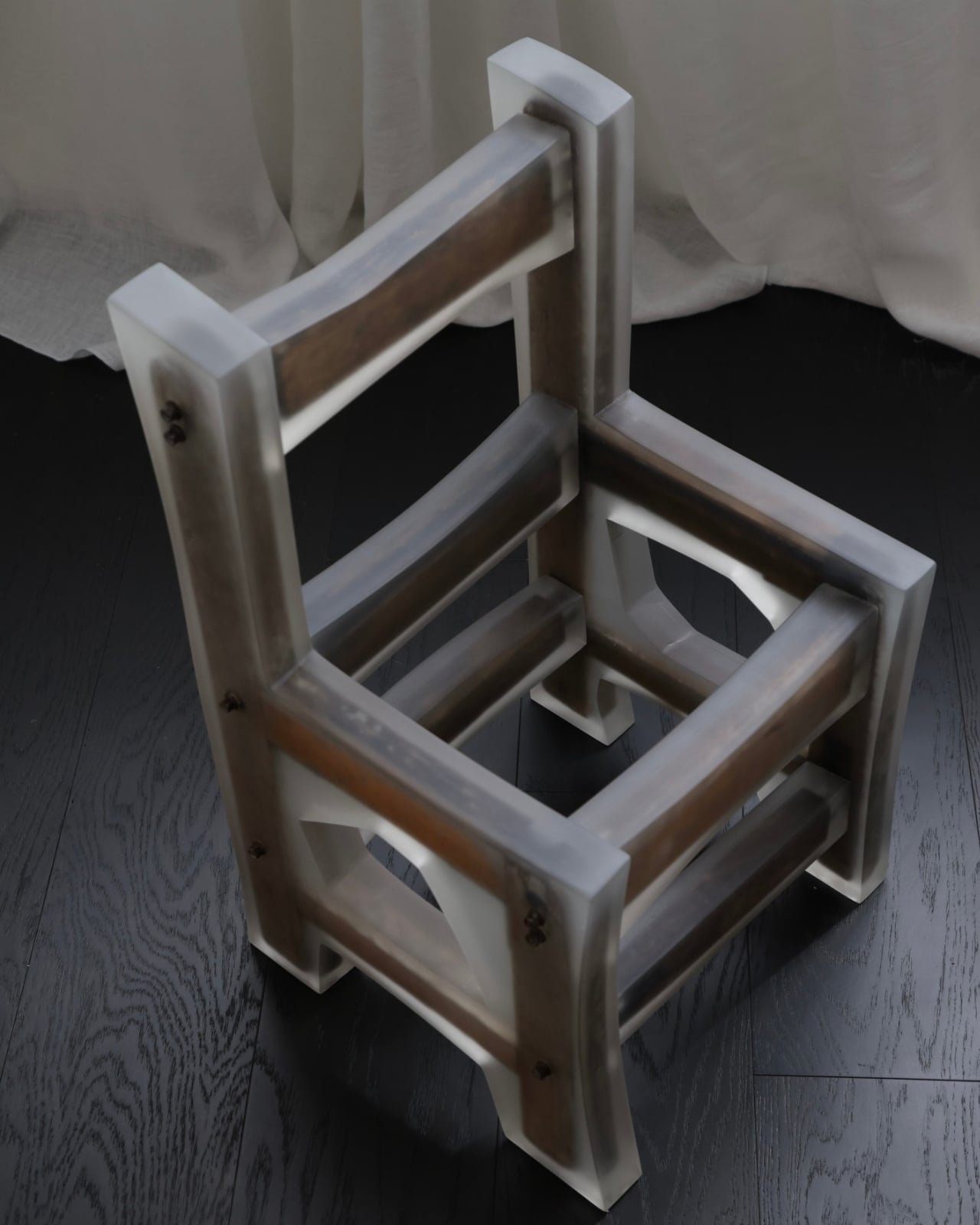
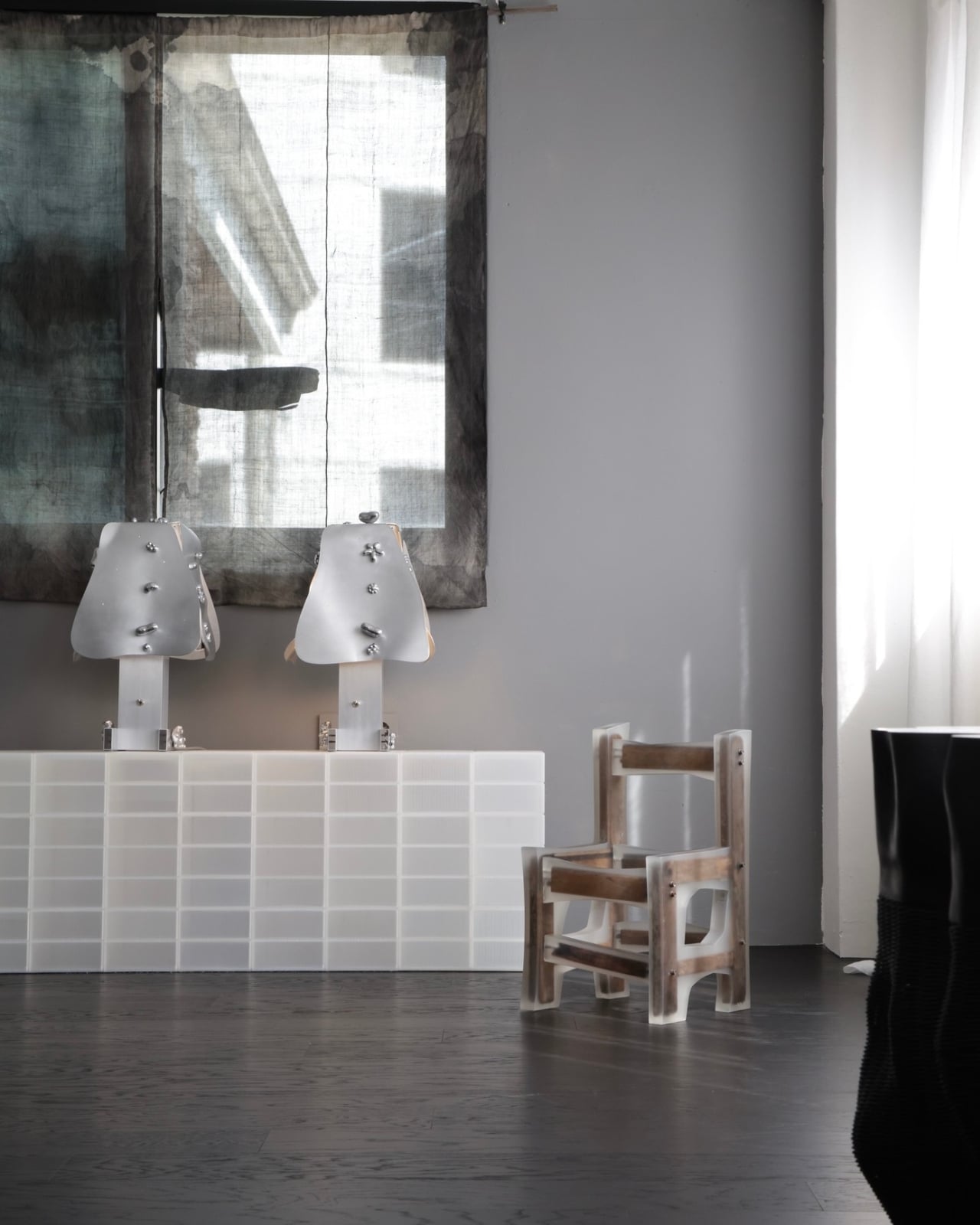
Presented as part of The Nuance, Lee’s solo exhibition at KiNN in Seoul, the series benefits from being encountered beyond the workbench. In the supplied installation photographs, the pale resin picks up the brightness of the surrounding room while the timber remains a darker presence within it. The effect makes the chair look a little ghostly, although its frame and visible hardware keep it from disappearing into atmosphere. It still looks like an object somebody assembled.
I’d be cautious about turning that appeal into an automatic sustainability claim. Reclaimed wood is part of the story, but I don’t need a sweeping environmental promise to appreciate this particular material decision. The more convincing achievement is visible: the resin changes the object substantially while allowing the original components to remain recognizable. That’s a more interesting relationship than treating old wood as anonymous raw material, stripped of everything that made this particular piece different.
My favorite detail is the uneven color still showing through the pale borders. It gives the eye somewhere to linger after the initial surprise of the resin wears off. I wouldn’t want every battered chair encased this way, but Lee makes a persuasive case for this one. The marks that might otherwise count against it are now precisely what I’d want to keep looking at.