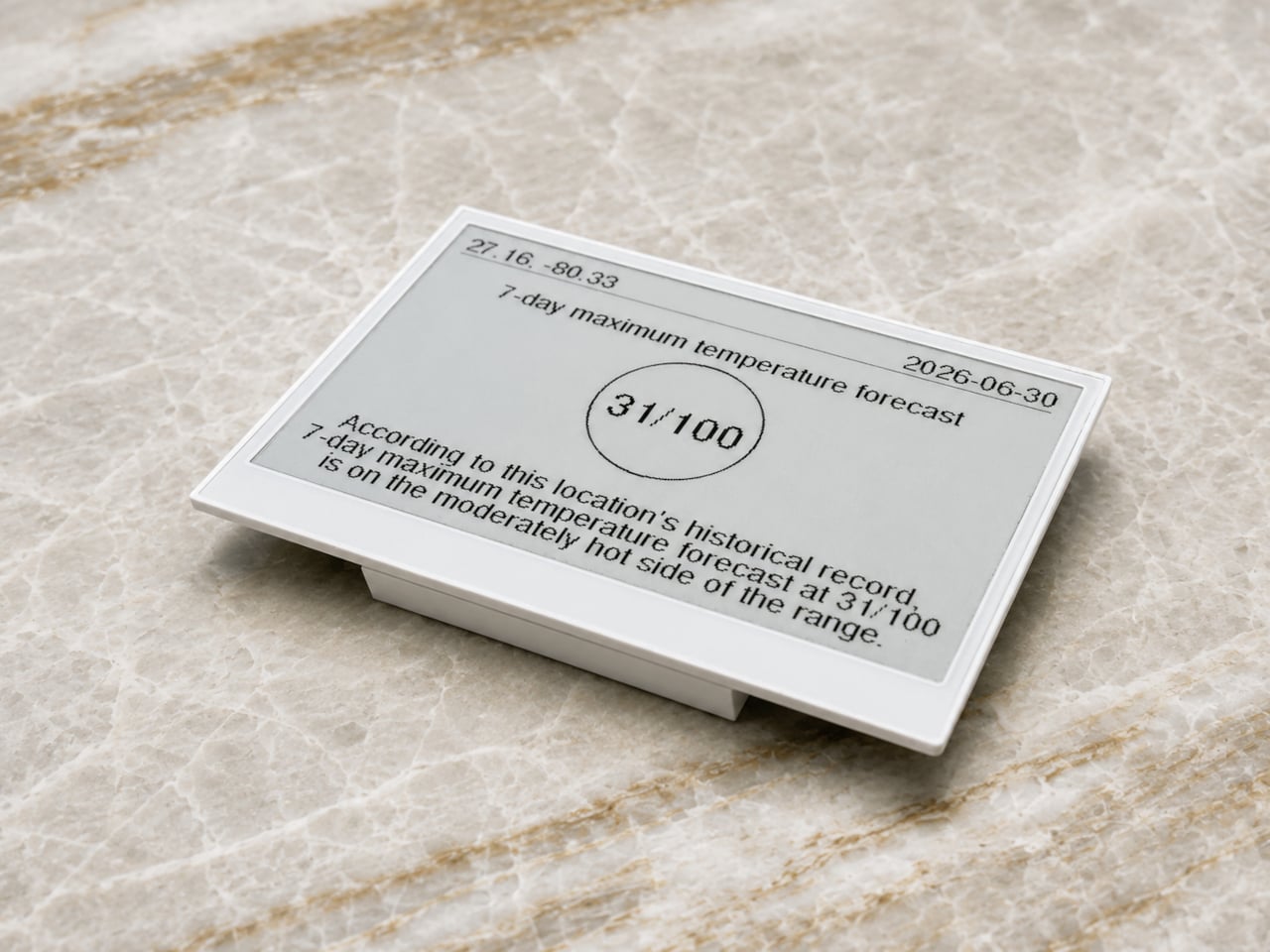
Weather forecasts can tell you how warm tomorrow will be, but a temperature alone doesn’t explain how unusual that warmth is for your neighborhood. Weather100 puts that missing context on a dedicated e-paper display, ranking local conditions against what the company describes as 100 years of weather history. This rather unusual range brings a little historical perspective to an ordinary daily check.
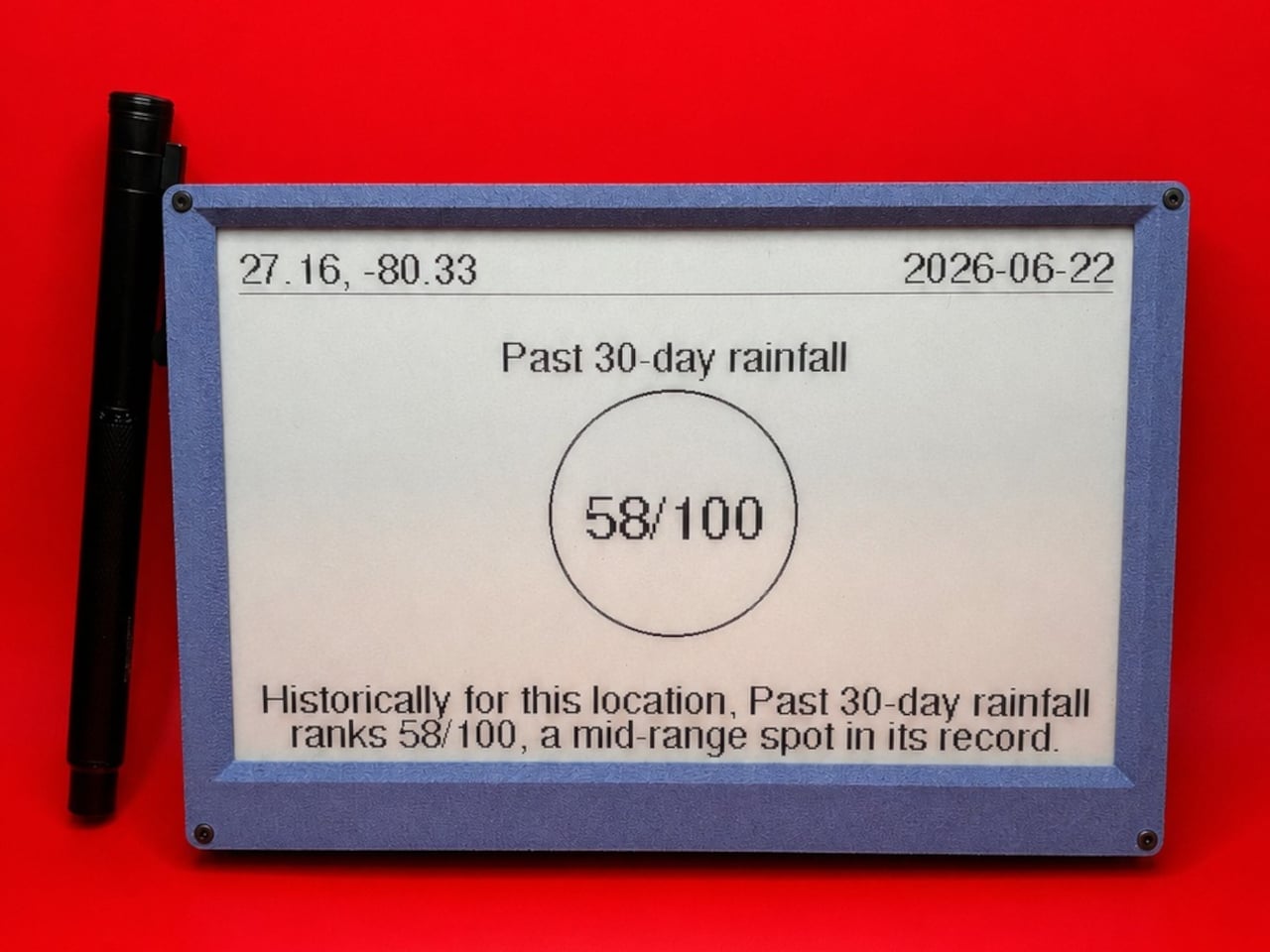
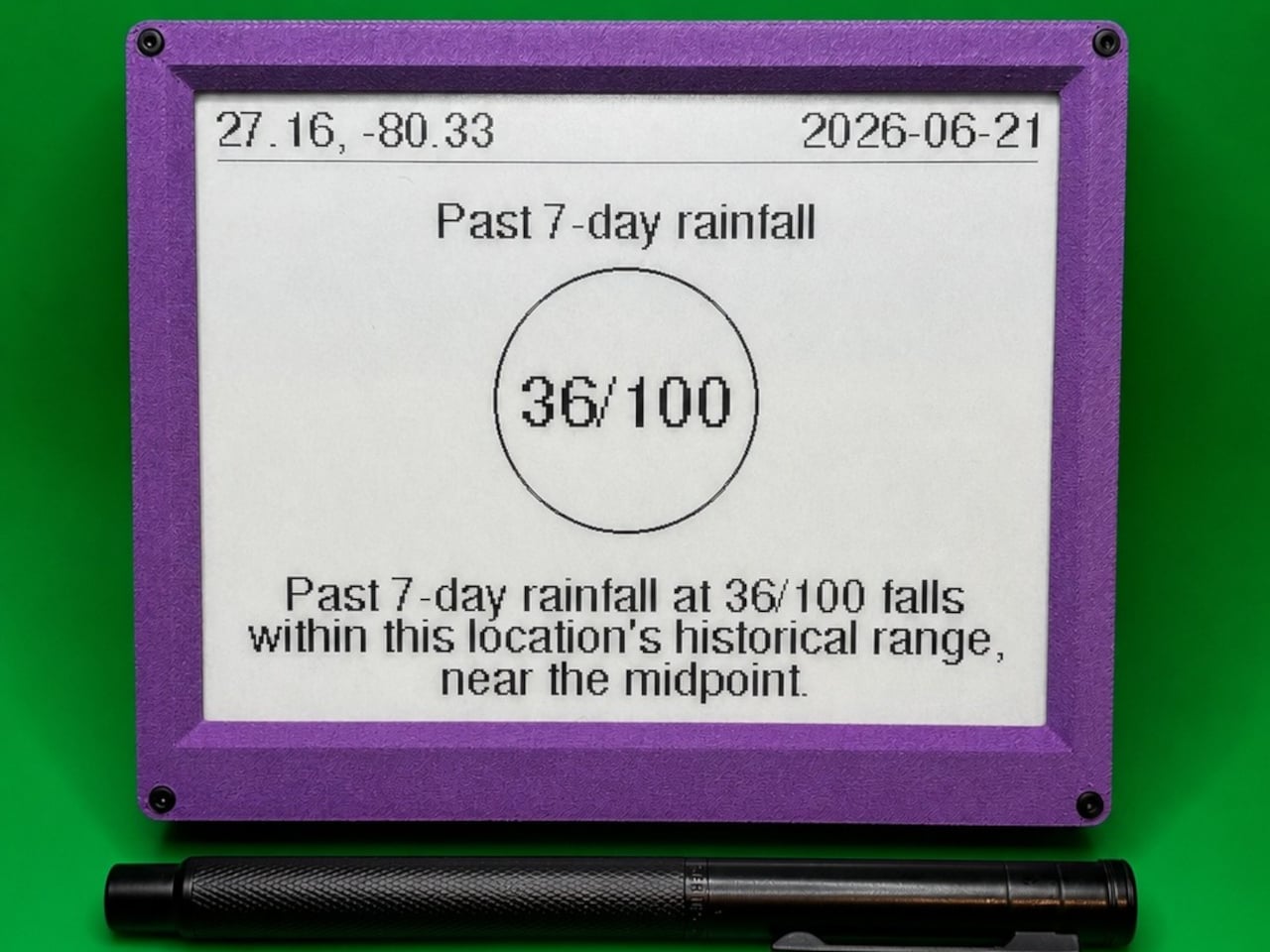
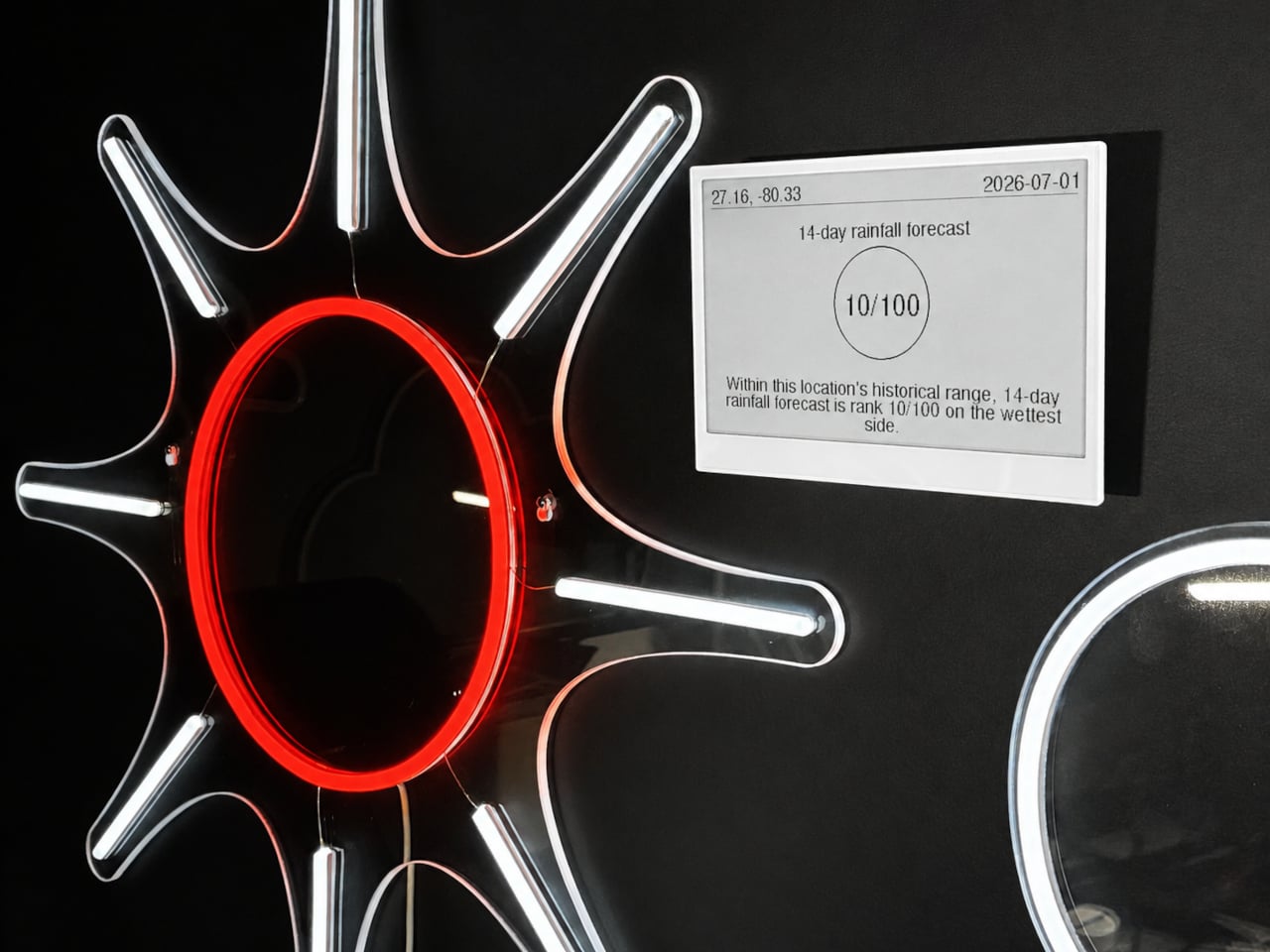
The layout is deliberately sparse, with a weather metric above a circled ranking and a short explanation underneath. Location coordinates and a date sit along the top, making clear where and when the comparison applies. Instead of filling the screen with competing graphs, Weather100 gives one number room to stand out, then explains why that number deserves a place beside your morning coffee.
Designer: Fergus Keatinge
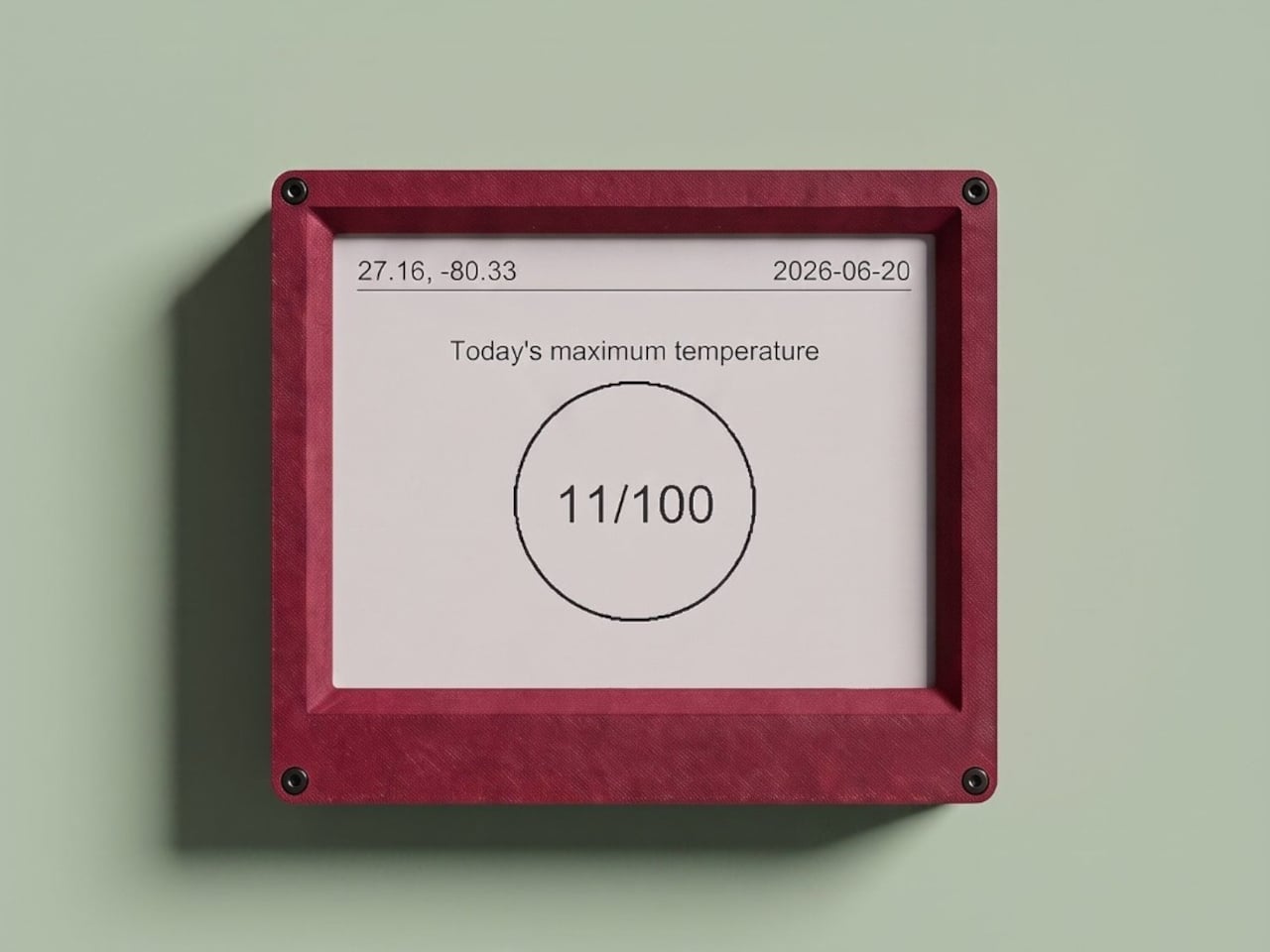
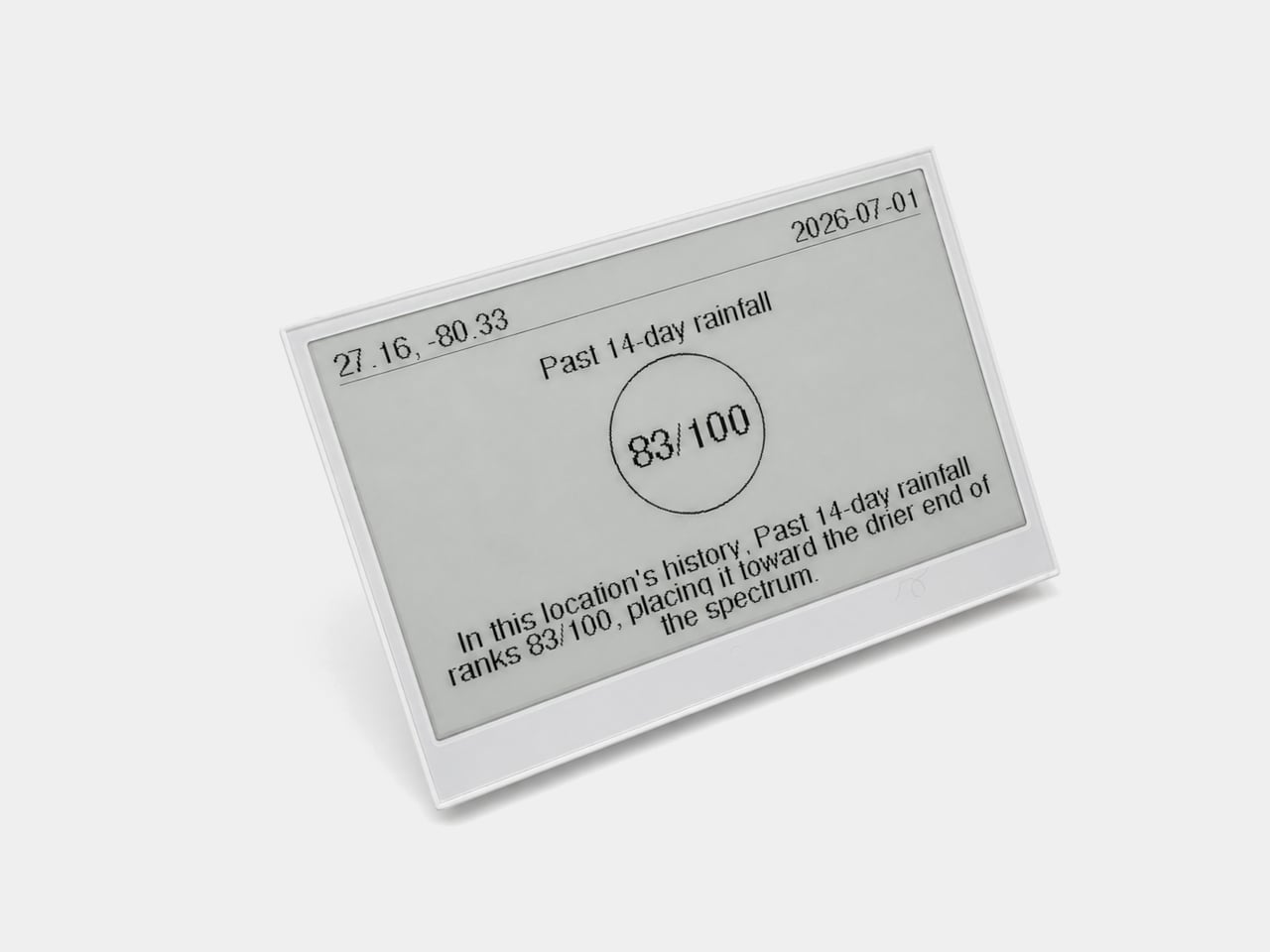
Of course, the ranking needs a little interpretation. According to Weather100, 1/100 for today’s maximum temperature means the hottest matching date in its century-long comparison, not the hottest day ever. Rainfall works toward the wettest end at low numbers and the driest at high ones. A middling result might be less exciting, but that’s rather the point when you’re judging whether conditions are ordinary.
The 10.2-inch Weather100 Pro gives that information a white metal frame, machined rather than molded in plastic. At $179.99, it comes with a desktop stand and supports wall or magnetic mounting. Its rectangular proportions are closer to a picture frame than a smart speaker, letting the weather occupy a shelf or refrigerator door without adding another glowing dashboard to the room.
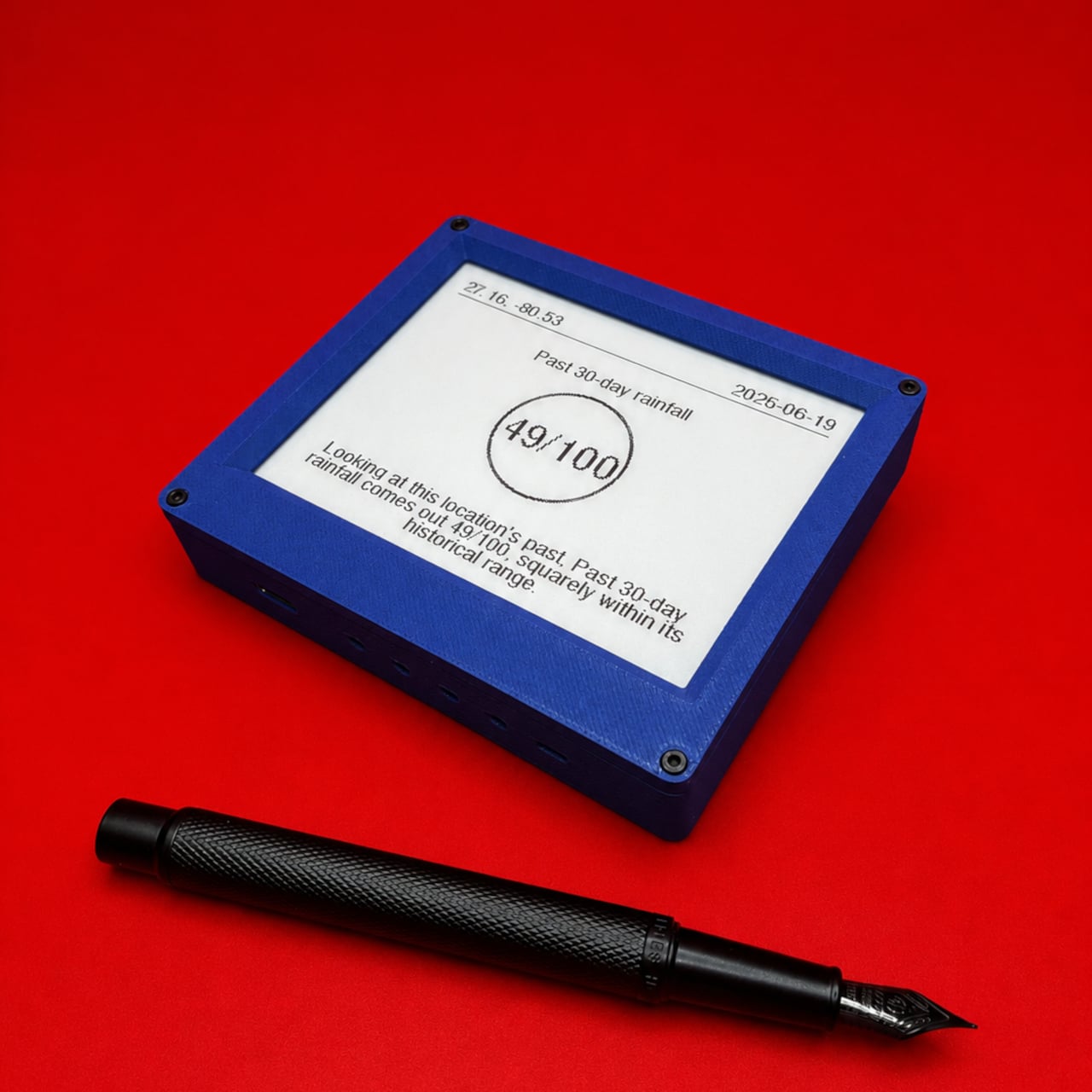
The smaller 4.2-inch Mini costs $79.99 and brings the same idea to tighter spaces, with colored enclosures offering something less formal than the Pro’s white border. E-paper suits the task because it reflects room light rather than relying on a backlight. A rechargeable battery also lets you place the display away from an outlet, rather than having another cord trailing across your kitchen counter.
Once connected to Wi-Fi, the display fetches fresh rankings each morning between 7 and 8 a.m. local time. The optional iOS and Android app lets you change locations and explore elsewhere, but isn’t required for setup. Physical controls can hide the explanatory text or rotate the screen, so you can choose a cleaner view without making every adjustment through your phone.
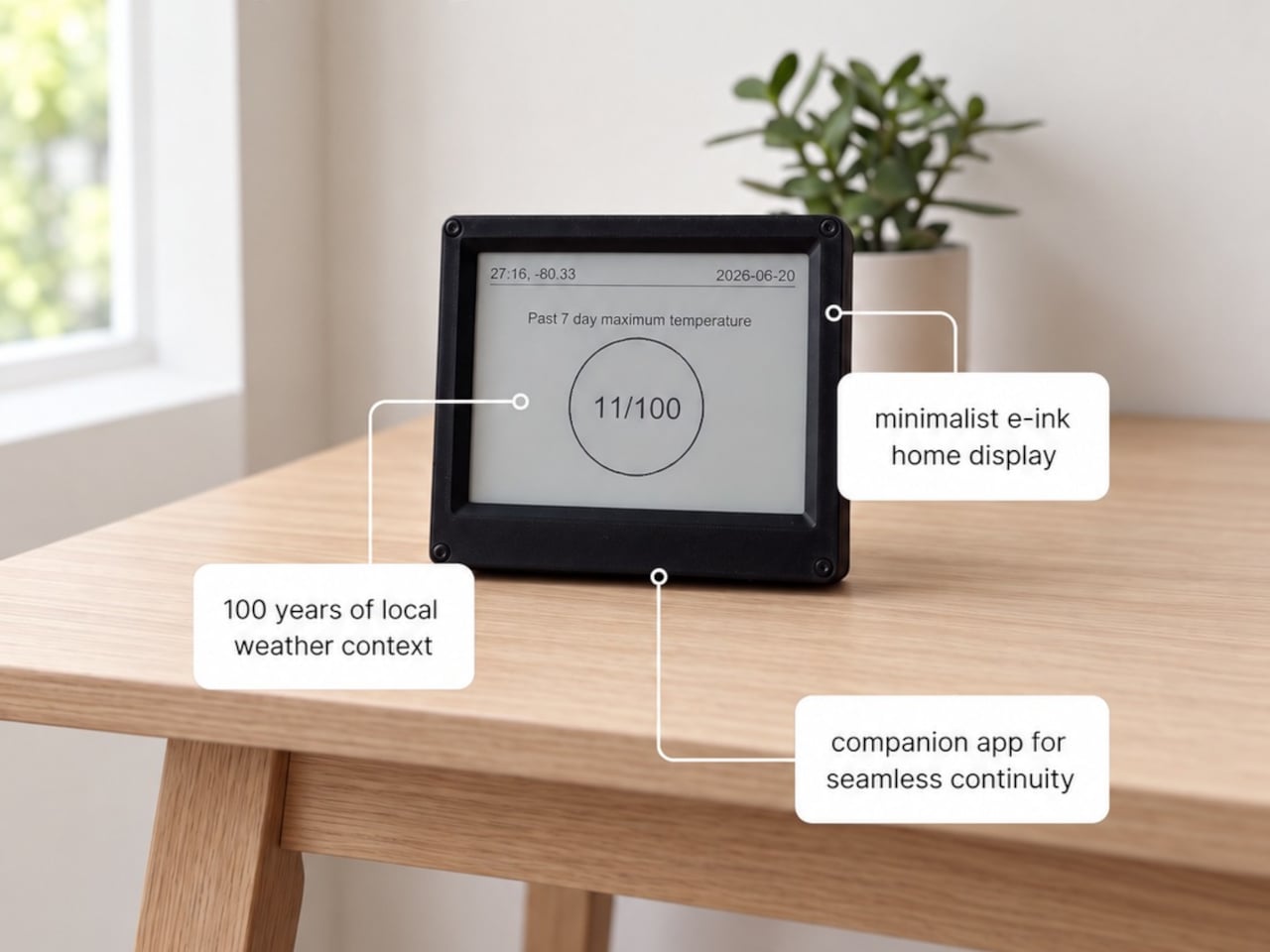
That daily rhythm makes more sense for noticing an unusually dry month than watching a storm approach. Forecast rankings still depend on forecasts, and the public documentation doesn’t identify the underlying historical datasets or explain gaps in local records. Treating the comparison as context is sensible; treating it as an official warning isn’t. The company’s own policies explicitly rule out that role.
There’s an ongoing cost behind that quiet screen, too. Weather100 includes the first year of data service, then charges $12 annually to keep the rankings updating. Without renewal, both the device and app show a renewal message instead of fresh comparisons. The display may resemble a framed page, but keeping that page relevant depends on maintaining a connection to the company’s paid service.