Most wellness architecture makes a promise it can’t keep. Retreat centers market themselves on words like “grounding” and “presence,” then wall you into a climate-controlled box with a playlist of ocean sounds piped through a speaker. The irony rarely gets mentioned: a space built to reconnect you with nature usually spends a lot of energy keeping nature firmly on the other side of the glass.
Pablo Luna Studio, a design firm based in Bali, seems to have gotten tired of that contradiction. Its newest project, the Lotus Yoga Shala in Ubud, doesn’t use air conditioning, doesn’t rely on walls in any conventional sense, and doesn’t try to insulate people from the climate they came halfway around the world to feel. Instead, the building works with the heat, the humidity, and the surrounding jungle rather than against them, which is a much harder design problem than it sounds.
Designer: Pablo Luna Studio
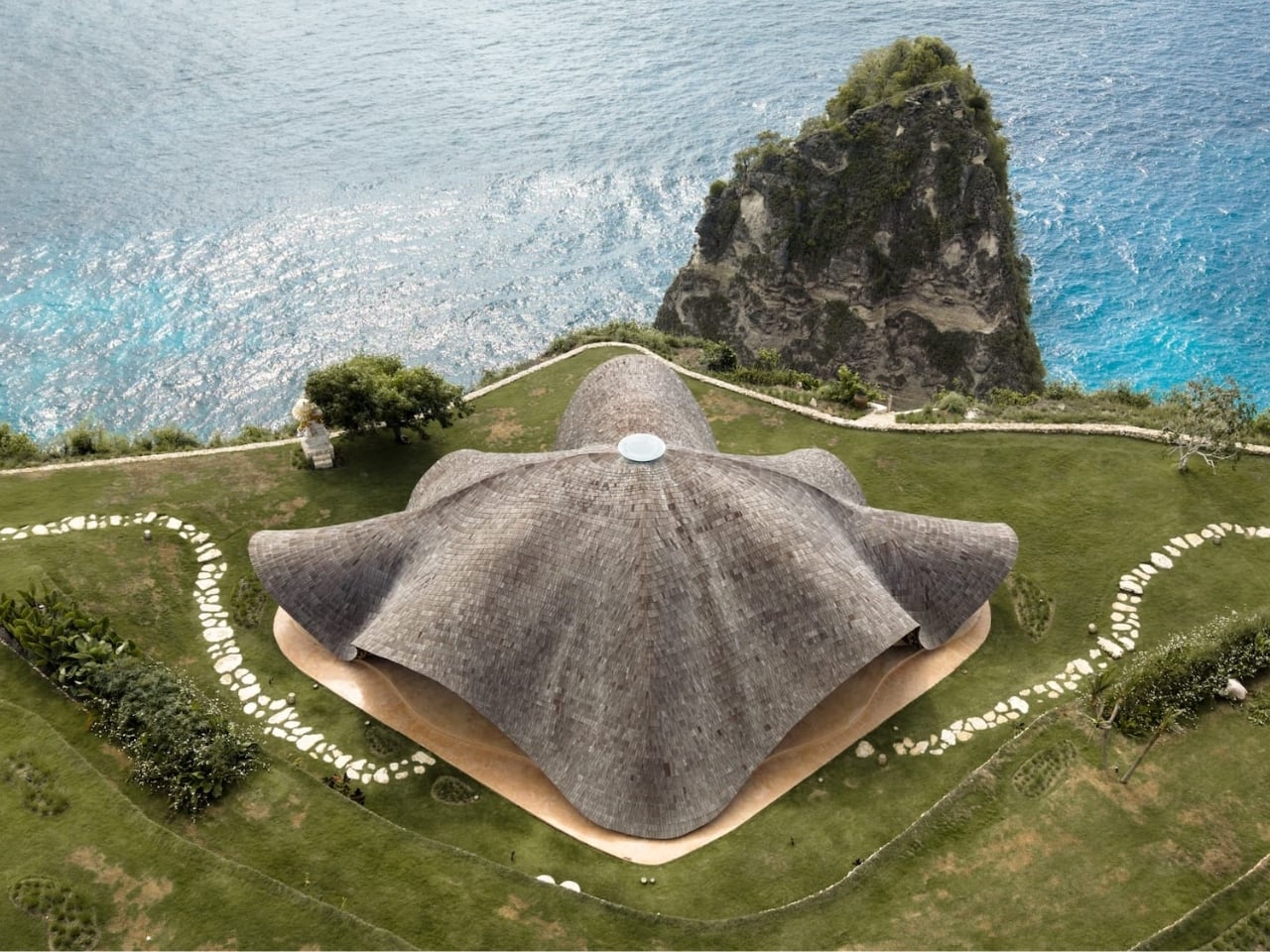
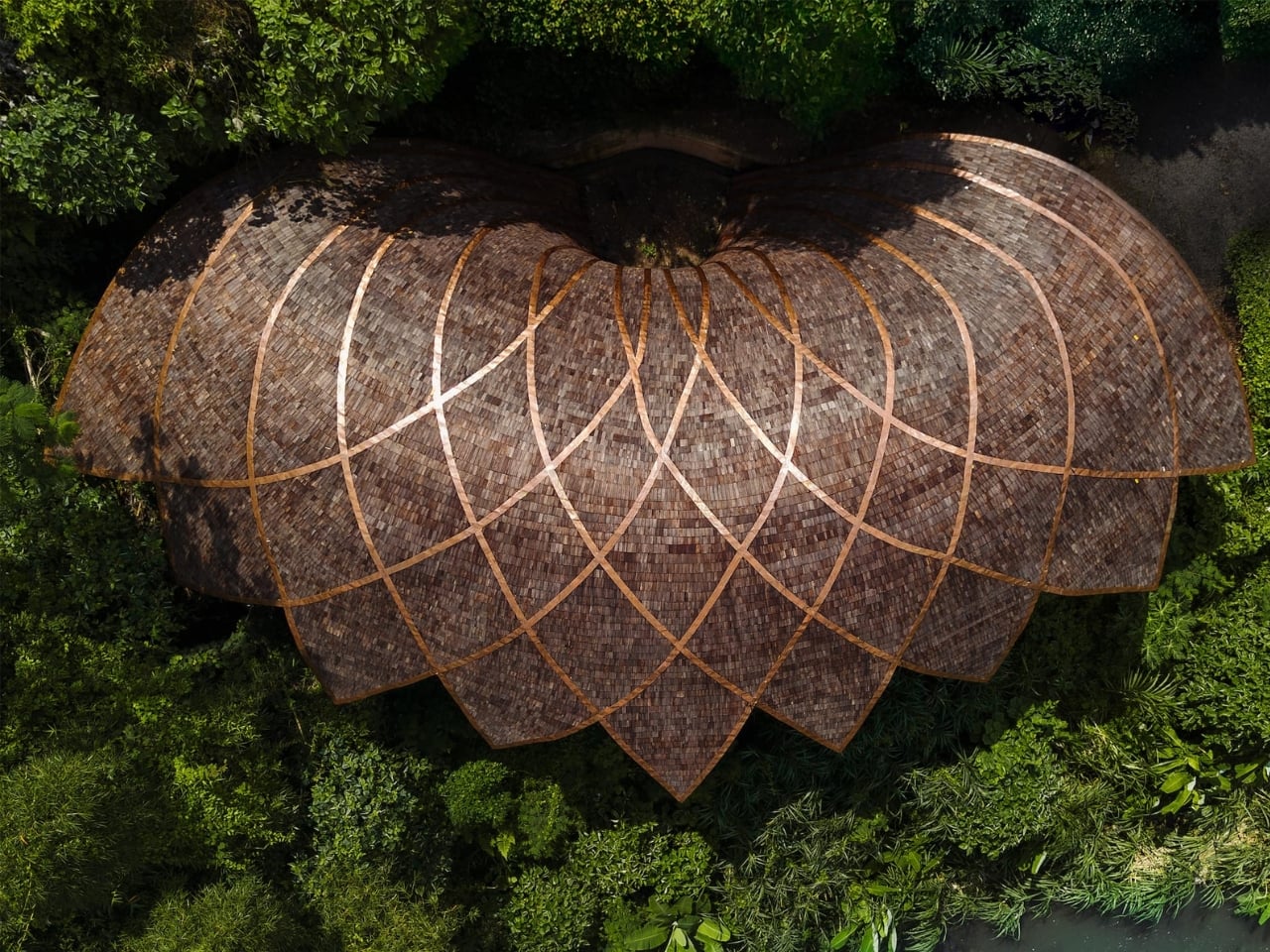
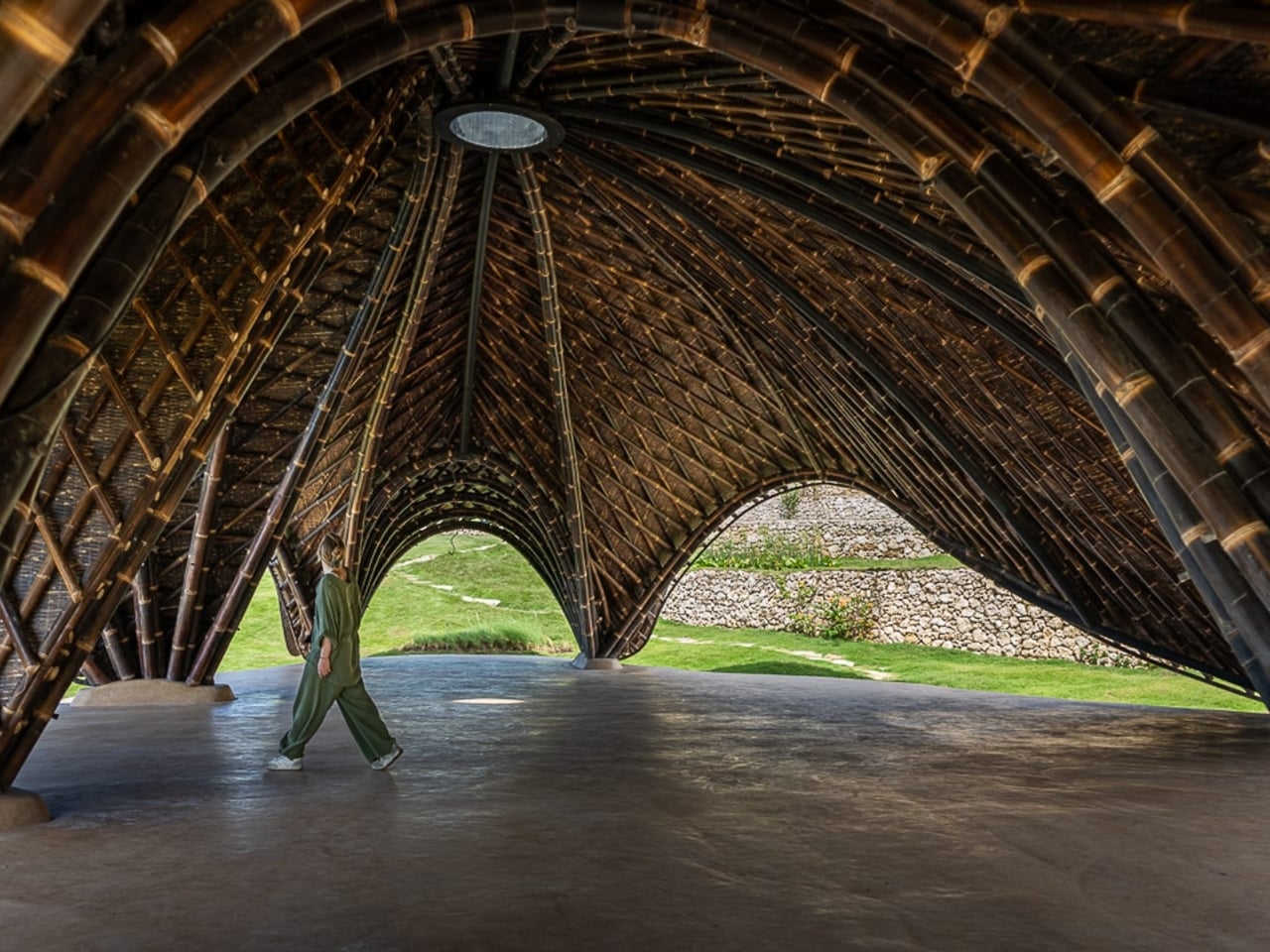
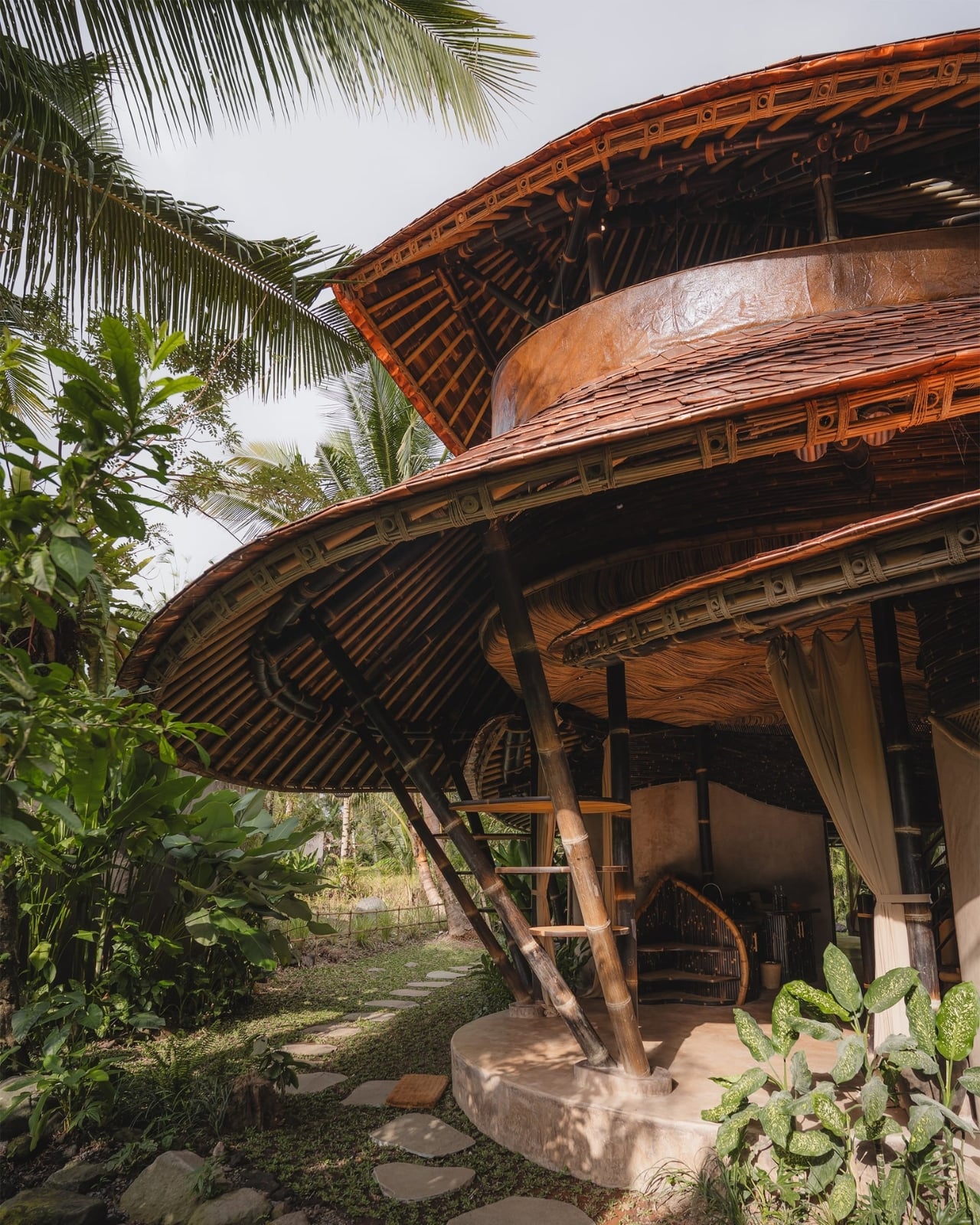
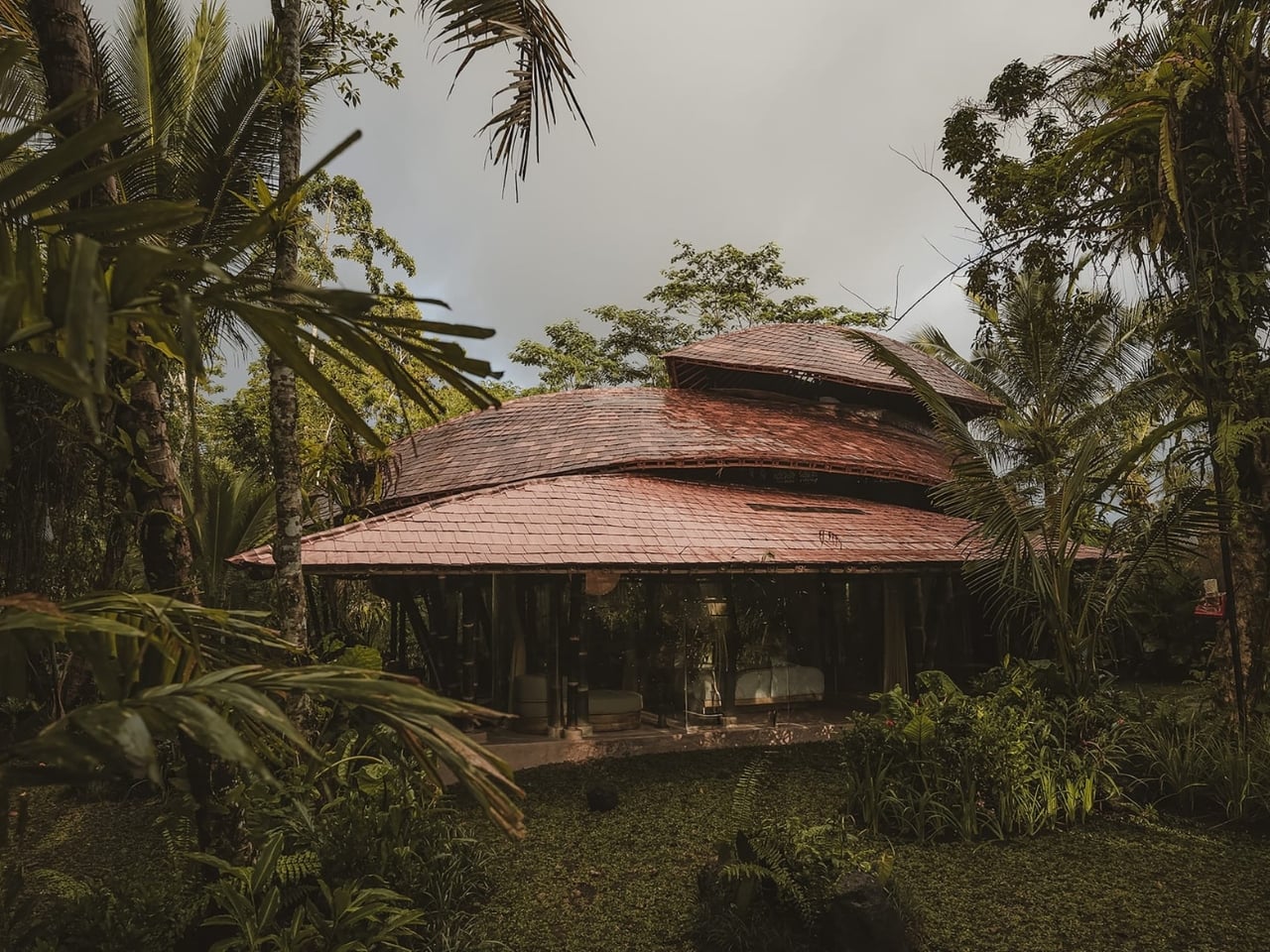
The shala takes its shape from an actual lotus flower, and not in a loose, “inspired by” way that architects sometimes use to justify a pretty rendering. Seen from above, the roof genuinely reads as a bloom, its petals spreading outward and overlapping like the plant it’s named for. The studio started developing the idea back in 2021, and the finished structure is one of the first times the firm has leaned this hard into biomimicry, letting a natural form dictate the actual engineering rather than just the mood board.
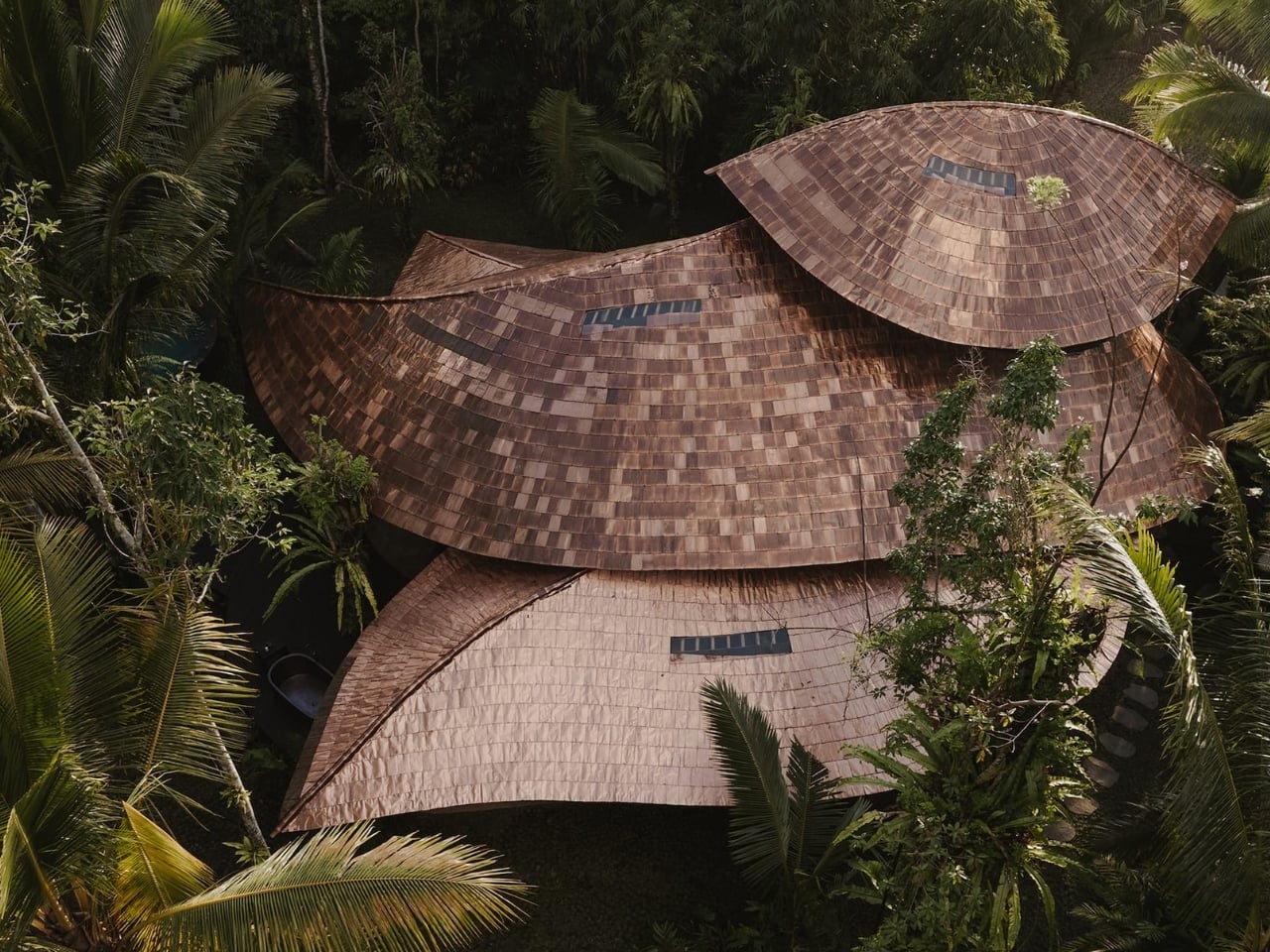
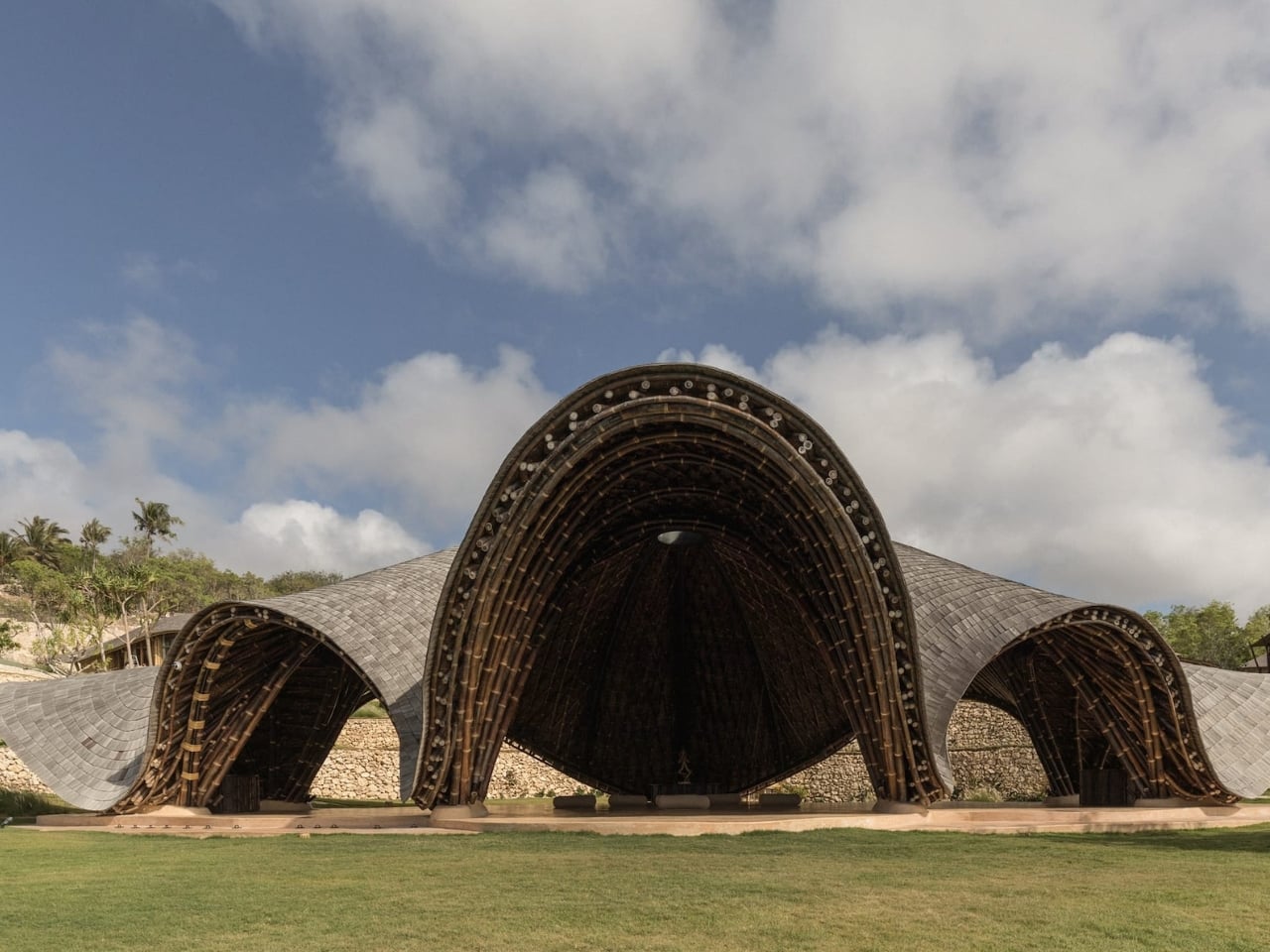
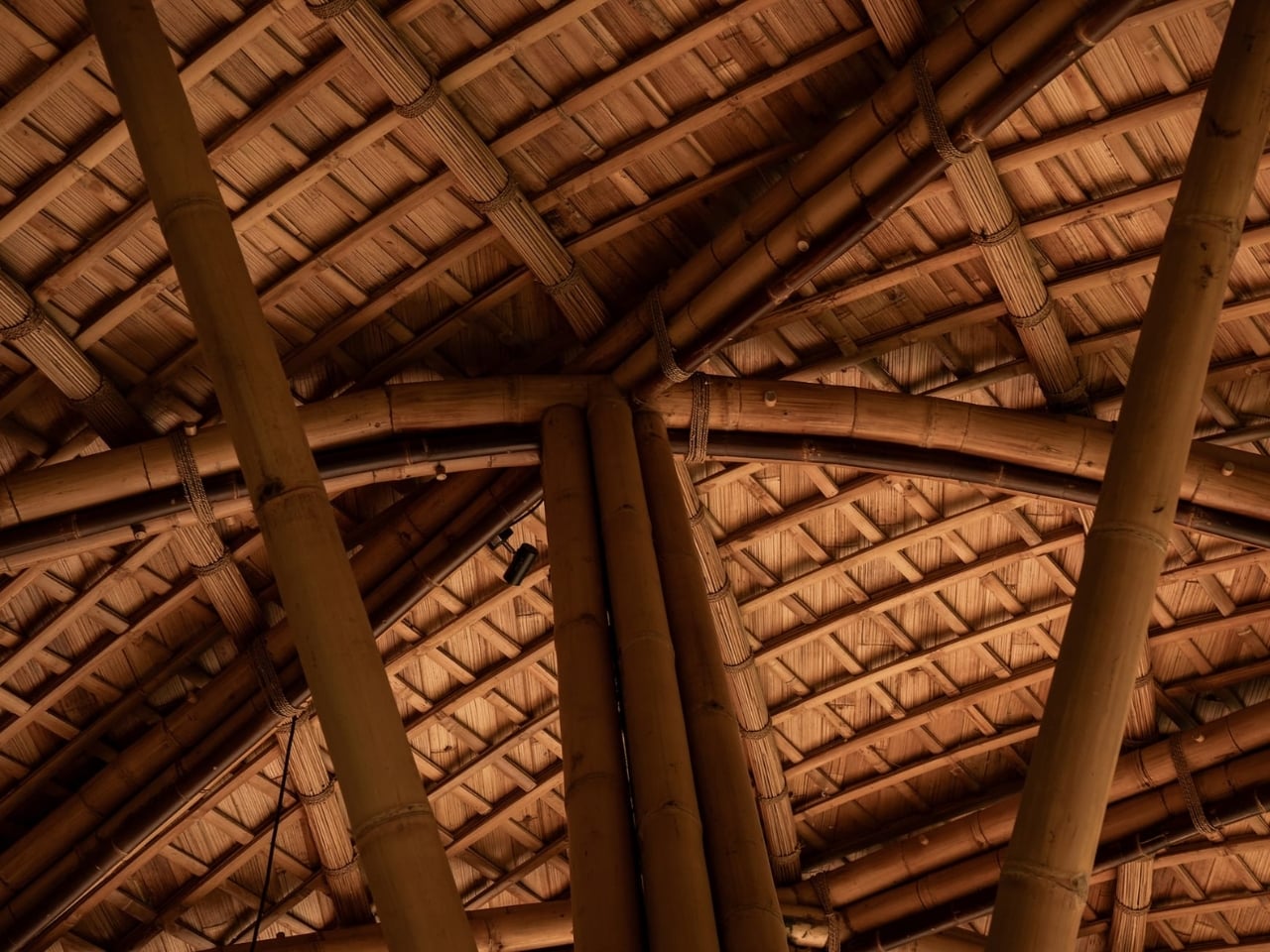
That engineering is where the project earns its credibility. Each petal grows out of a structural system of petung bamboo, with primary arches made by bundling three lengths together and split bamboo woven across them into a gridshell. At the edges, the load gathers into small clusters of three to five poles, which keeps the perimeter open and airy instead of propped up by a dense ring of columns. It’s a genuinely clever piece of structural logic, using a material that bends and flexes to do what steel and concrete would need far more mass to accomplish.
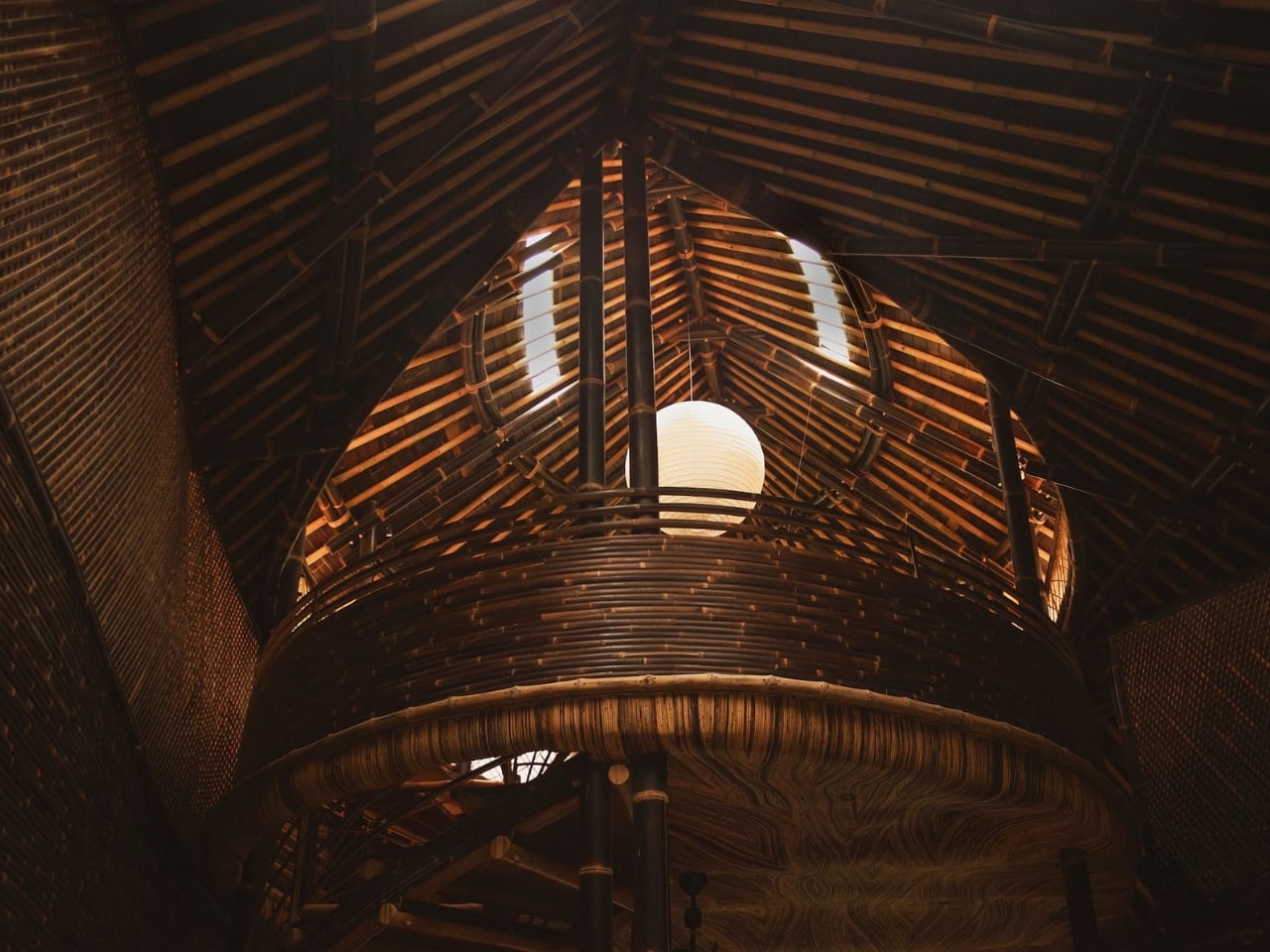
What I appreciate most is the restraint around the ground itself. Rather than flattening the hillside to make construction easier, the platform was raised and shaped to follow the existing contours, limiting how much of the site actually gets disturbed. It’s a small decision that says a lot about priorities. Plenty of developments treat topography as an inconvenience to be graded away. This one treats it as the whole point.
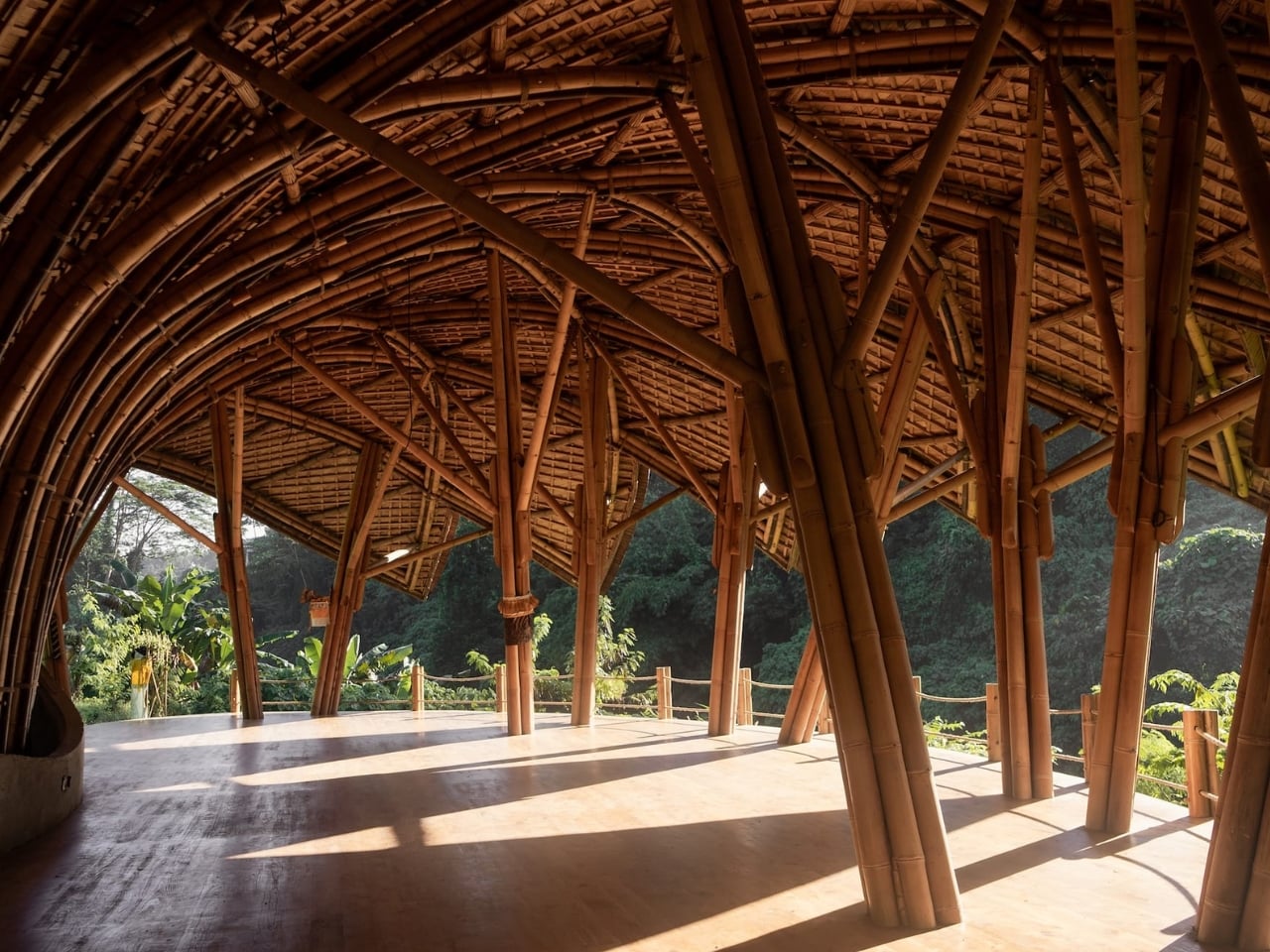
Without walls to define the space, the roof becomes the building’s only real boundary, and even that boundary is porous. Daylight and air move through freely, views stretch out toward the river and the vegetation beyond, and the practice space essentially becomes an extension of the landscape it sits in. For a yoga studio specifically, that openness does more for the experience than any amount of curated interior design could. You’re not looking at a mural of nature. You’re just in it.
There’s a broader lesson here for anyone paying attention to wellness spaces back home, where the trend has mostly meant adding a live-edge wood accent wall to an otherwise sealed, mechanically cooled room. Actual climate-responsive design asks harder questions about airflow, shade, and material, and it usually produces something that looks less like a spa and more like it grew out of the ground on purpose. Bamboo helps that case considerably. It grows fast, sequesters carbon while it’s alive, and requires none of the energy-intensive processing that concrete or steel demands, which matters more every year as the building industry gets pressed to account for its footprint.
None of this makes the Lotus Yoga Shala a universal template. Bamboo construction at this level requires serious craft, and a project this specific to its site can’t simply be copied onto a lot in Austin or Portland. But it does make a convincing argument that comfort and climate responsibility aren’t opposites, and that a building can refuse the easy fix of walls and refrigerant without asking anyone to sacrifice how good the space actually feels to be in.
SHARE