Perched above ancient stone walls in Nova Lima, Minas Gerais, the Xingu House reads less like a building and more like a geological event. Designed by Belo Horizonte–based studio Tetro Arquitetura — led by principal architects Carlos Maia, Débora Mendes, and Igor Macedo — the residence occupies an 8,000-square-meter plot that arrives with its own history, its own landscape, and its own set of demands.
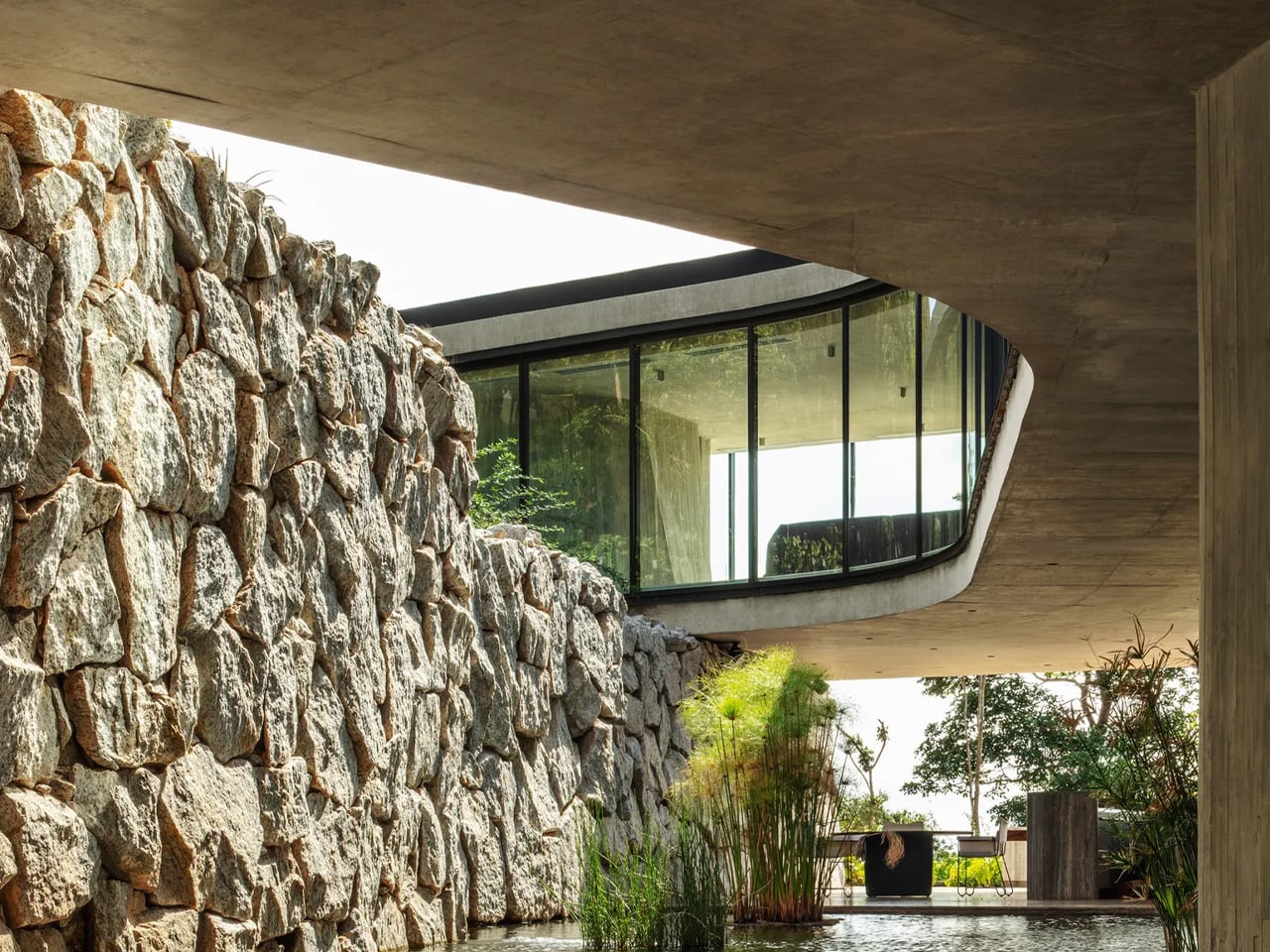
The site is layered in a way that most architects only dream about. Stone walls left over from a previous structure carve through the terrain, native forests press in from the edges, grassy plateaus open to sweeping mountain views, and somewhere beneath it all, a cave sits waiting — earmarked as the home’s future winery and cheese cellar. Tetro didn’t try to simplify any of it. The shape of the house is a direct answer to every peculiarity the land threw at the team.
Designer: Tetro Arquitetura
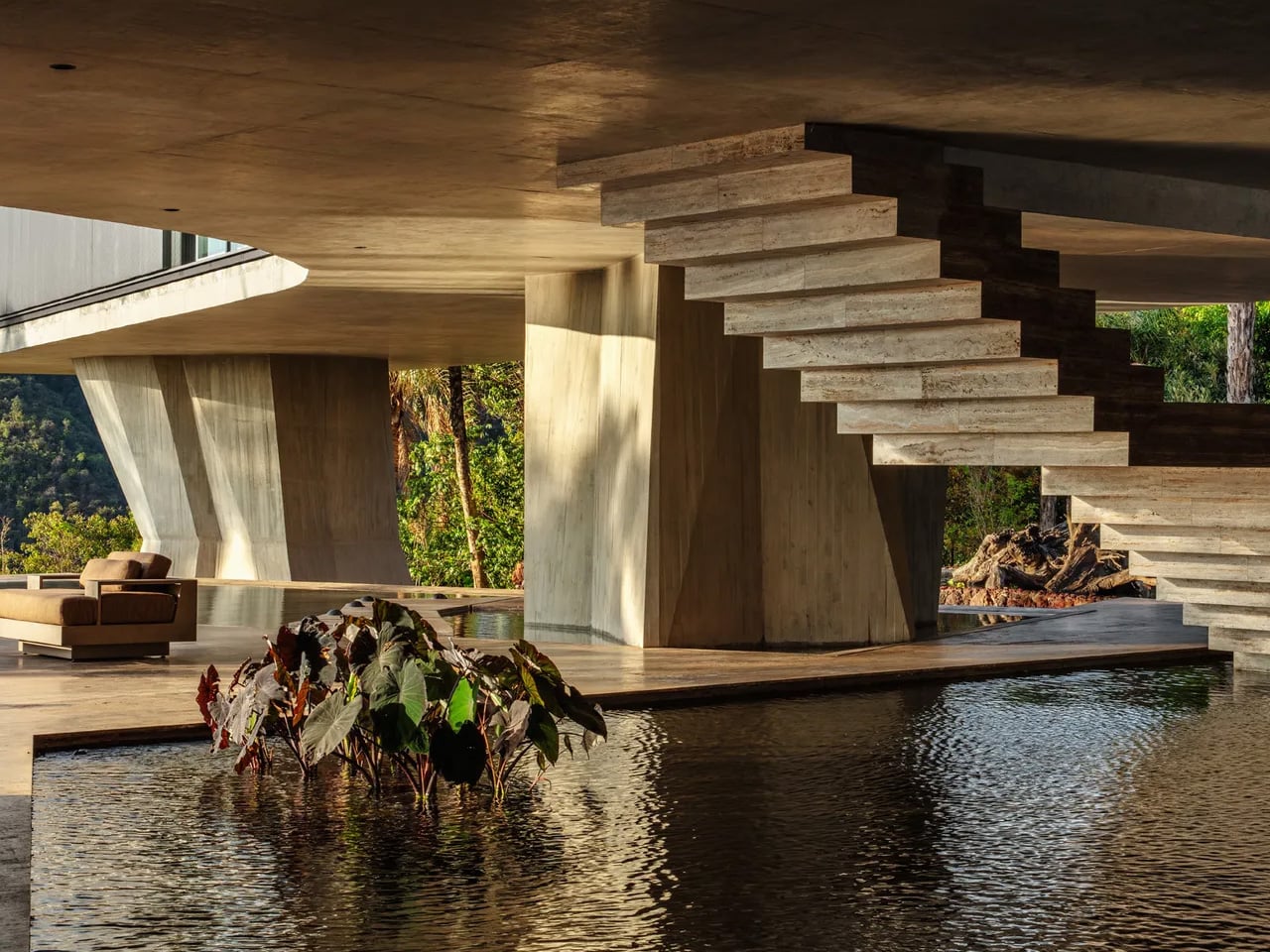
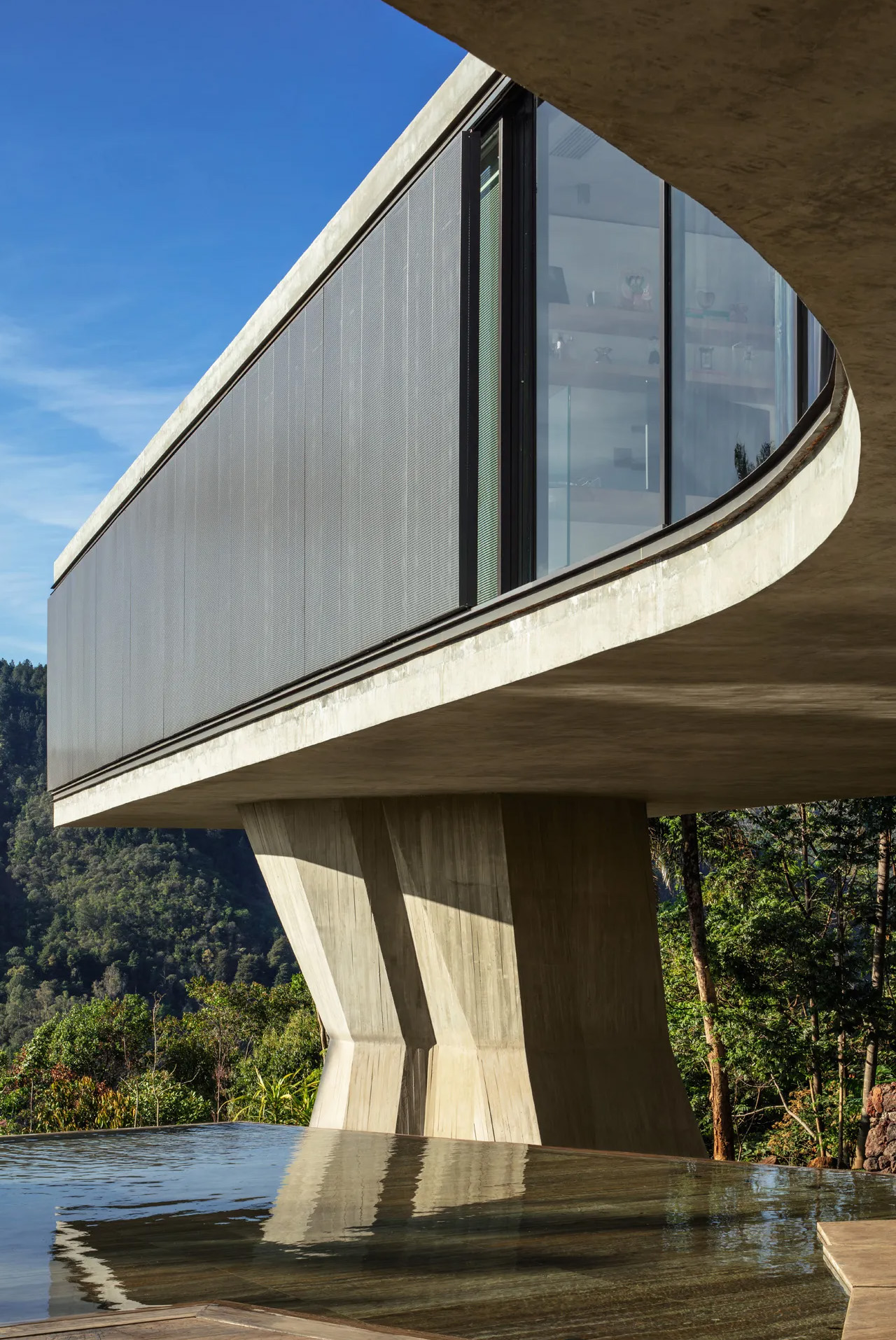
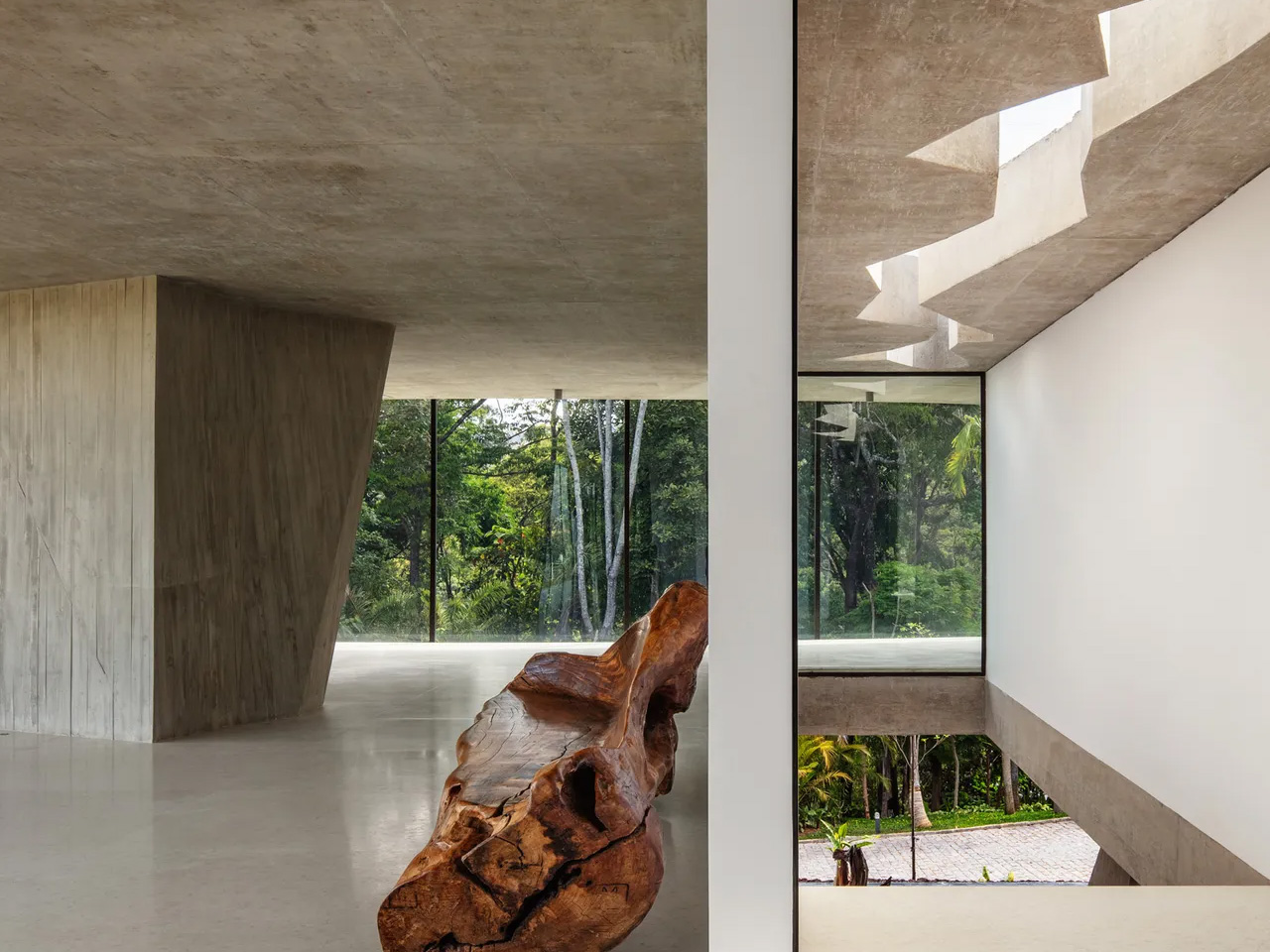
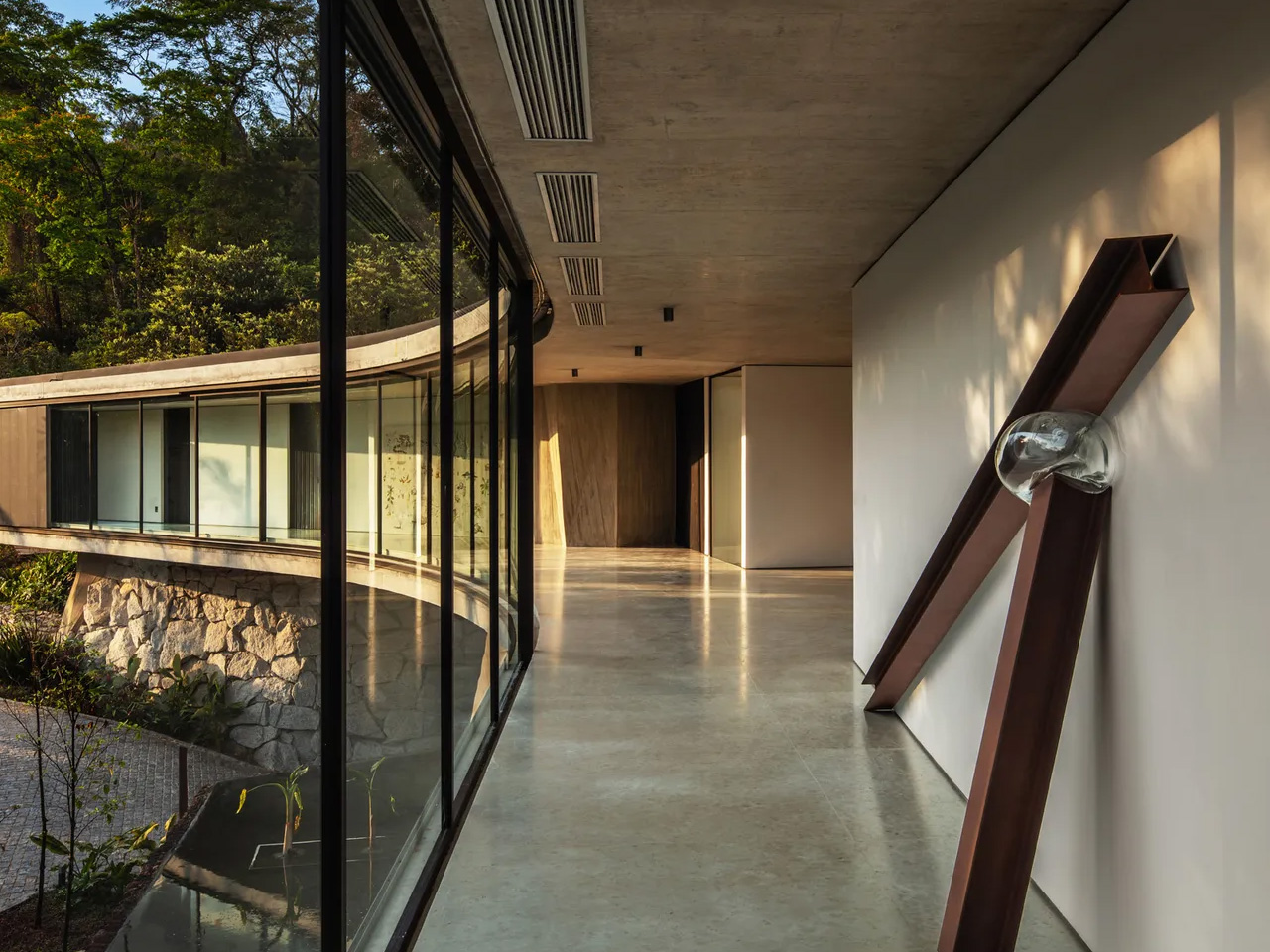
The studio’s starting point was straightforward: find the best view and push the residents toward nature at every opportunity. That intent shaped everything. The main volume of the house lifts six meters above the natural ground level, floating over the old stone walls and giving the two primary suites an uninterrupted panorama of the surrounding mountains. What makes this possible are the thick, irregularly-shaped concrete pillars rising from below — structural forms that pull double duty by housing bathrooms, the staircase, an elevator, and service areas within their mass.
The program is divided across three distinct sectors, referred to internally as “tips.” The elevated main volume holds the primary suites; the other two tips extend outward and settle onto the plateau created by the old stone walls, containing the guest accommodation. The result is a home that doesn’t sit on its land so much as reach across it — arms extended, each pointed toward a different fragment of the terrain.
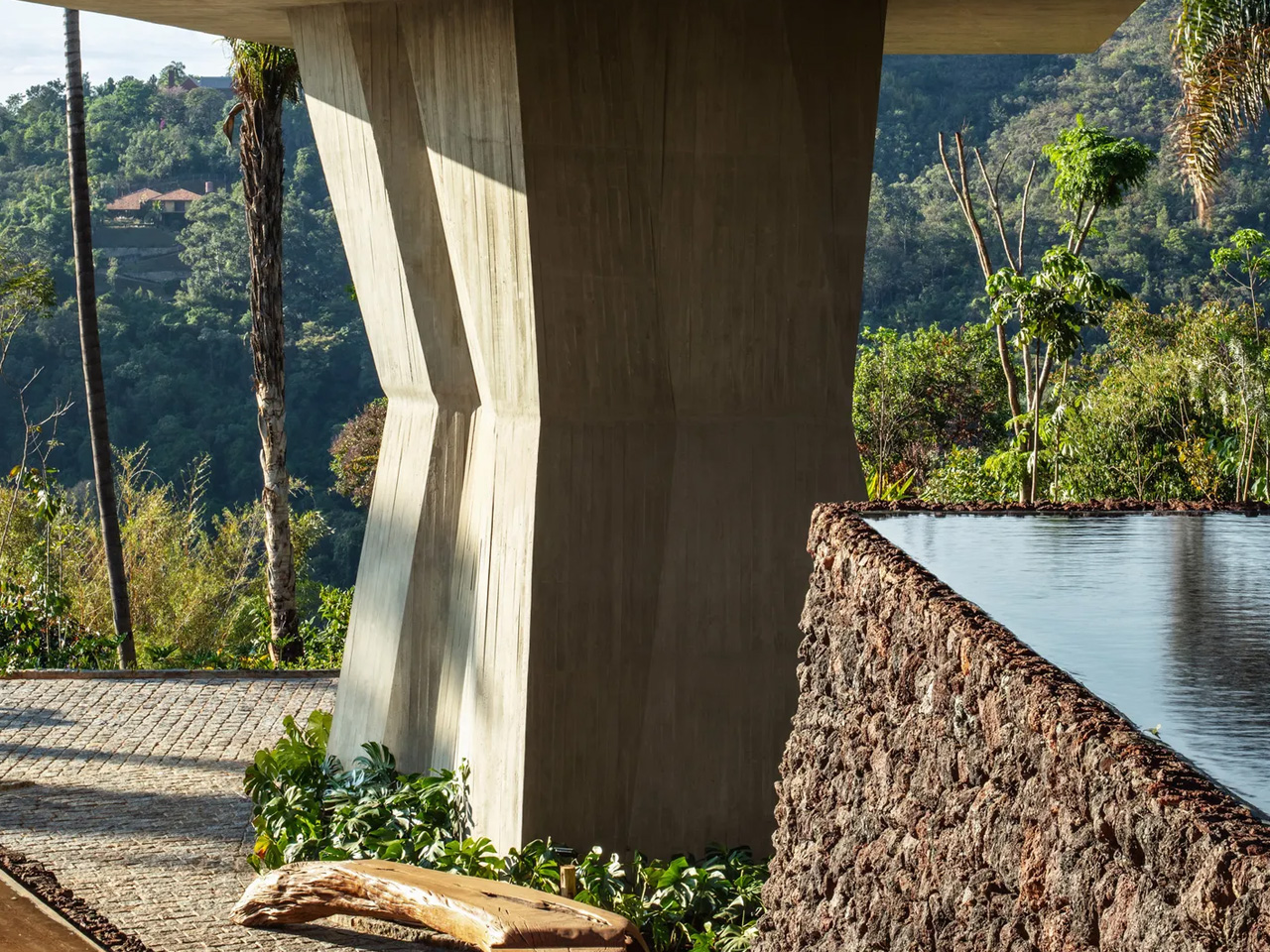
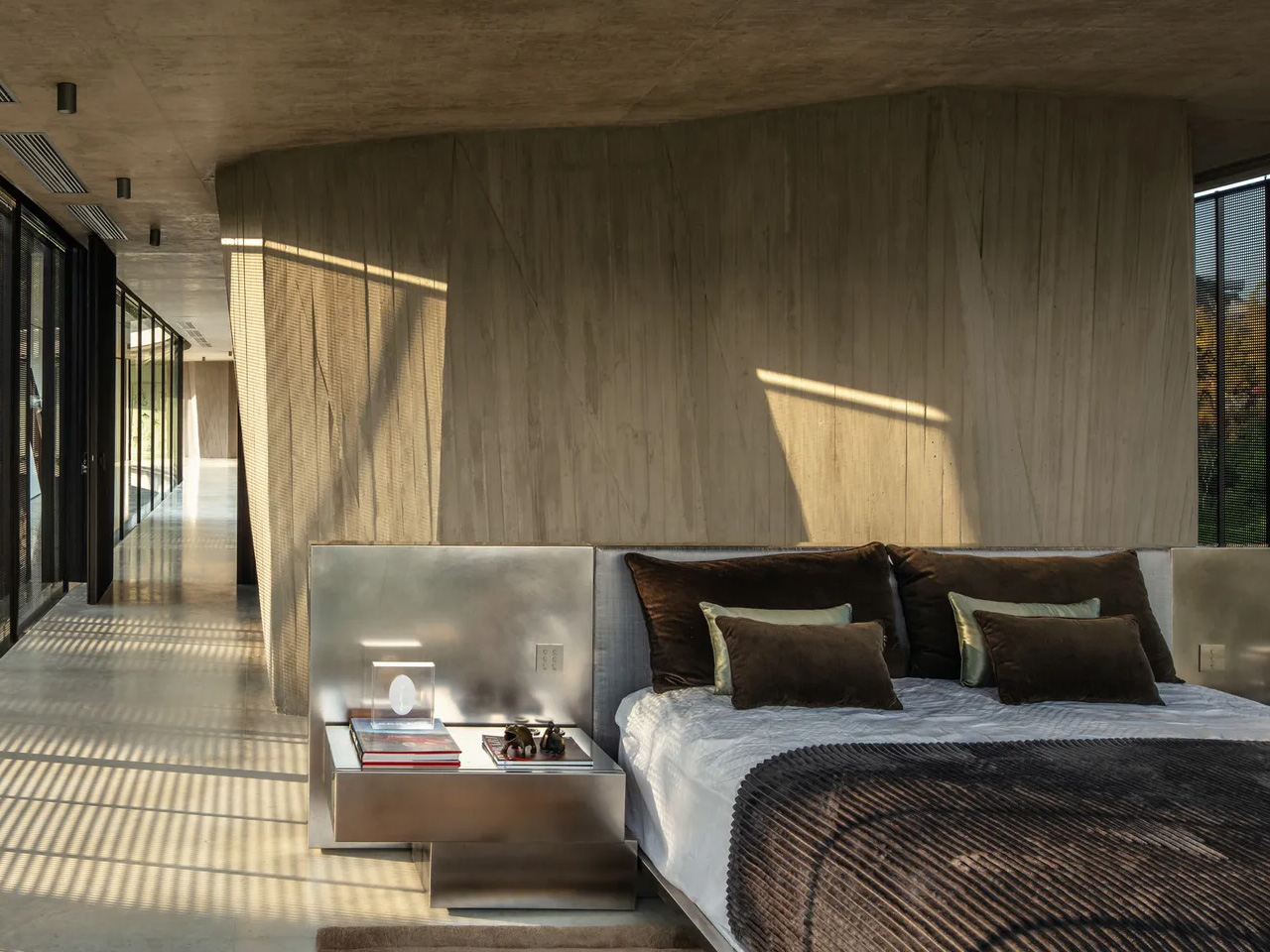
The relationship between structure and nature becomes even more deliberate at the spa. Rather than attach it to the main house, Tetro designed it as an entirely separate volume — one that threads itself between existing trees rather than displacing them. Inside, a sauna, changing rooms, a resting area, and a gym make up the program, all sheltered within a shape that responds to the forest rather than imposing on it.
At 1,500 square meters, the Xingu House carries the kind of complexity that can easily become noise. Tetro keeps it quiet — letting raw concrete, native landscape, and a clear sense of purpose do the talking.
SHARE