Statement lighting has a dirty secret. The taller and more sculptural a floor lamp gets, the heavier it usually becomes, and the harder it is to actually live with. Solid wood bases, cast metal armatures, thick glass shades: they look incredible in a showroom and then turn into a two-person moving job the second you decide the piece looks better by the window instead of next to the couch. For anyone who rents, moves apartments every couple of years, or just wants to rearrange a room without pulling a muscle, that’s the real cost of a lot of “sculptural” design.
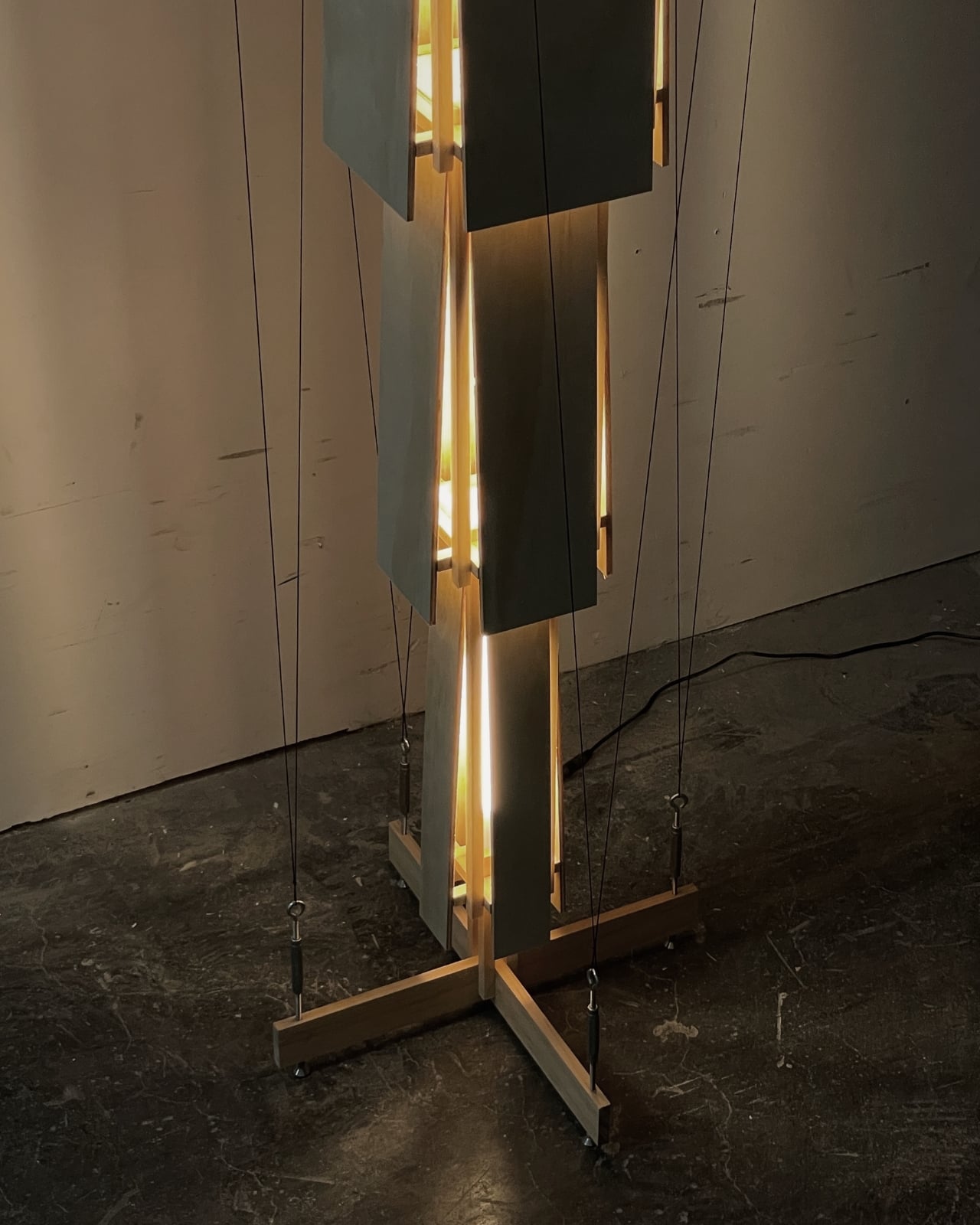
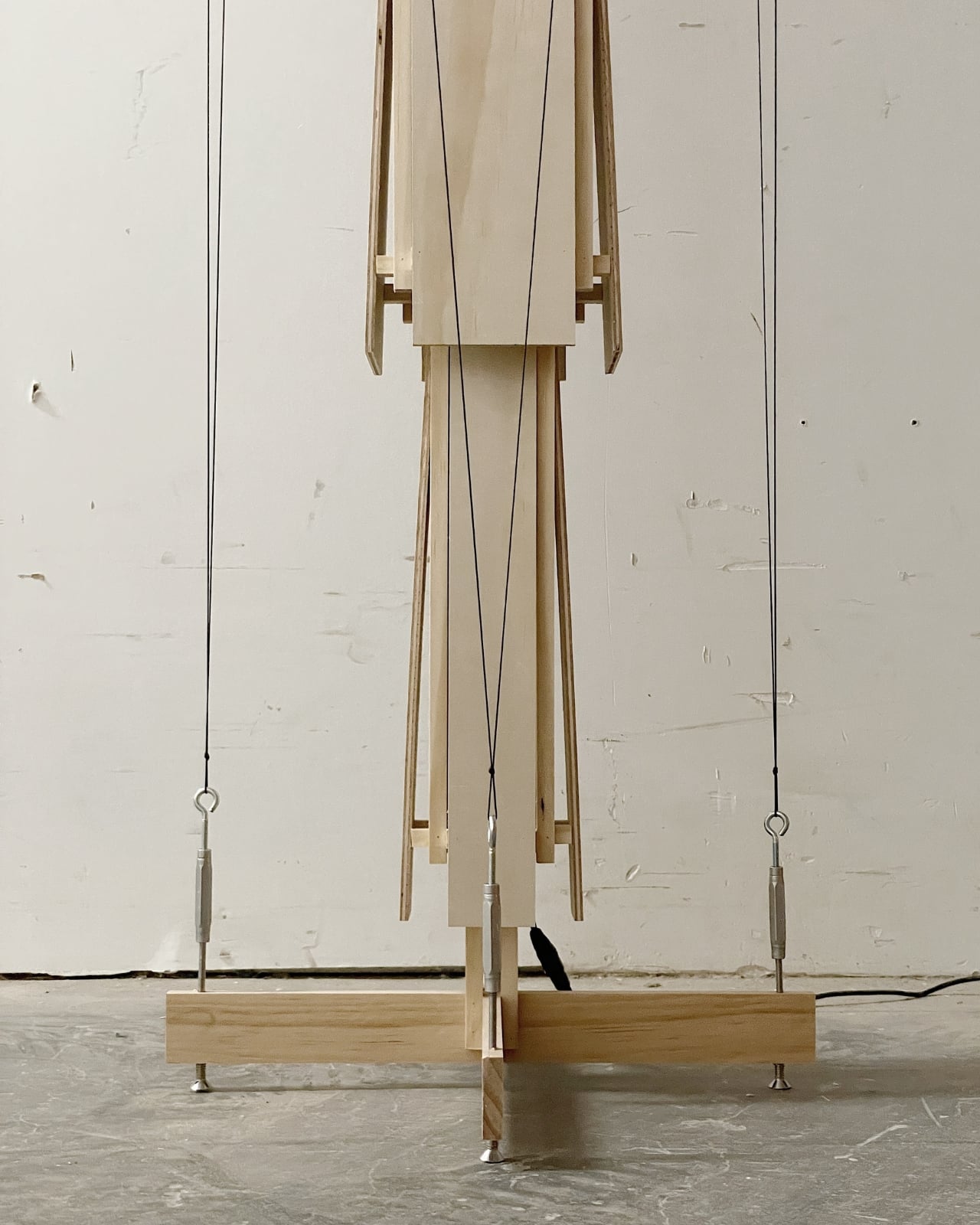
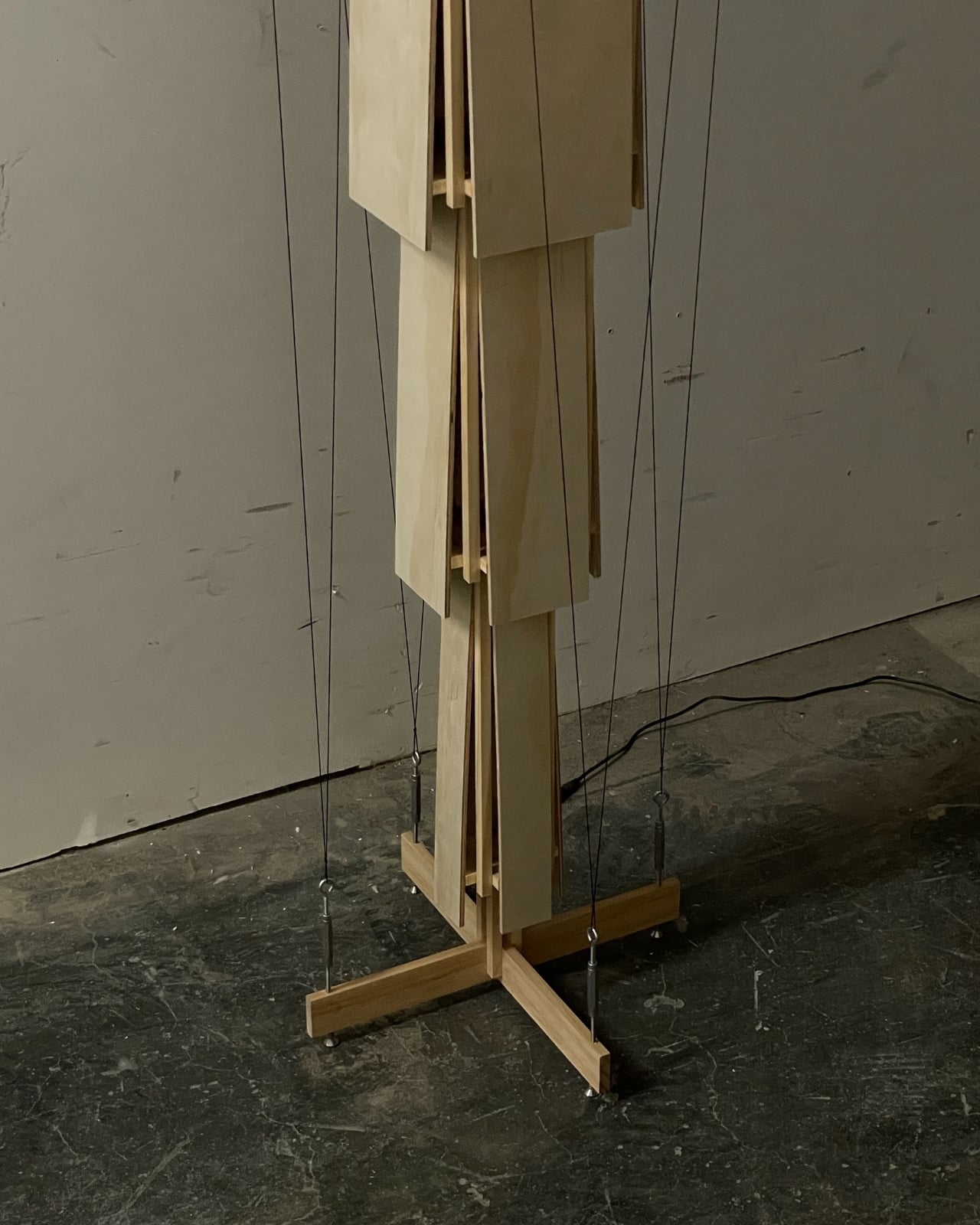
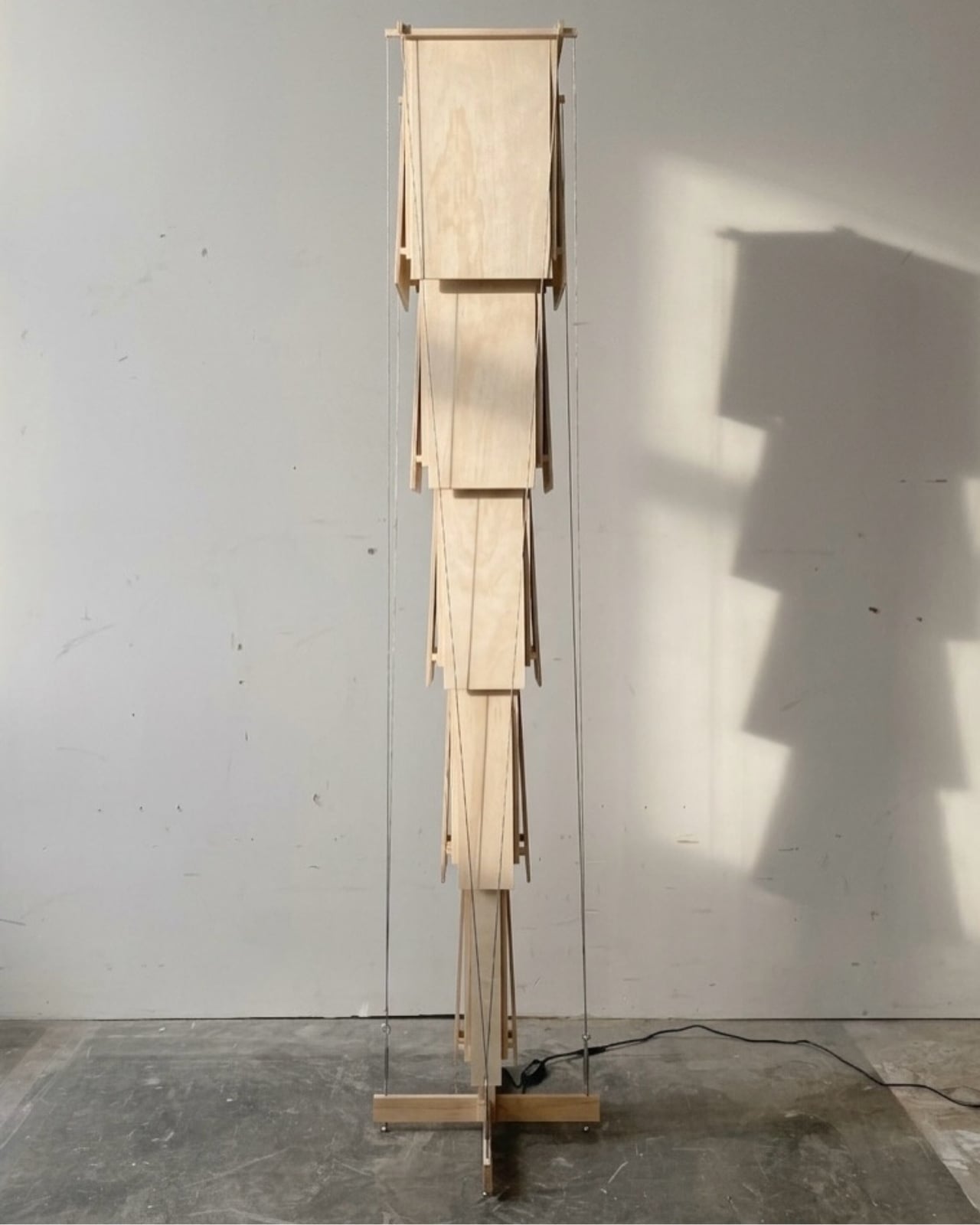
Christian Borger’s LP-11, the latest piece from his ongoing “Ultra-Light” series, is built around solving exactly that problem. It’s a floor lamp that stands well over five feet tall, stacked like a totem of tapering wooden shades, and it does all of that without the mass you’d expect from something that size. The whole structure is suspended on thin steel cables running through a wood base, so instead of stacking solid weight on solid weight, the panels essentially hang in tension. It’s closer to how a swing set holds a seat than how a lamp normally holds a shade.
Designer: Christian Borger
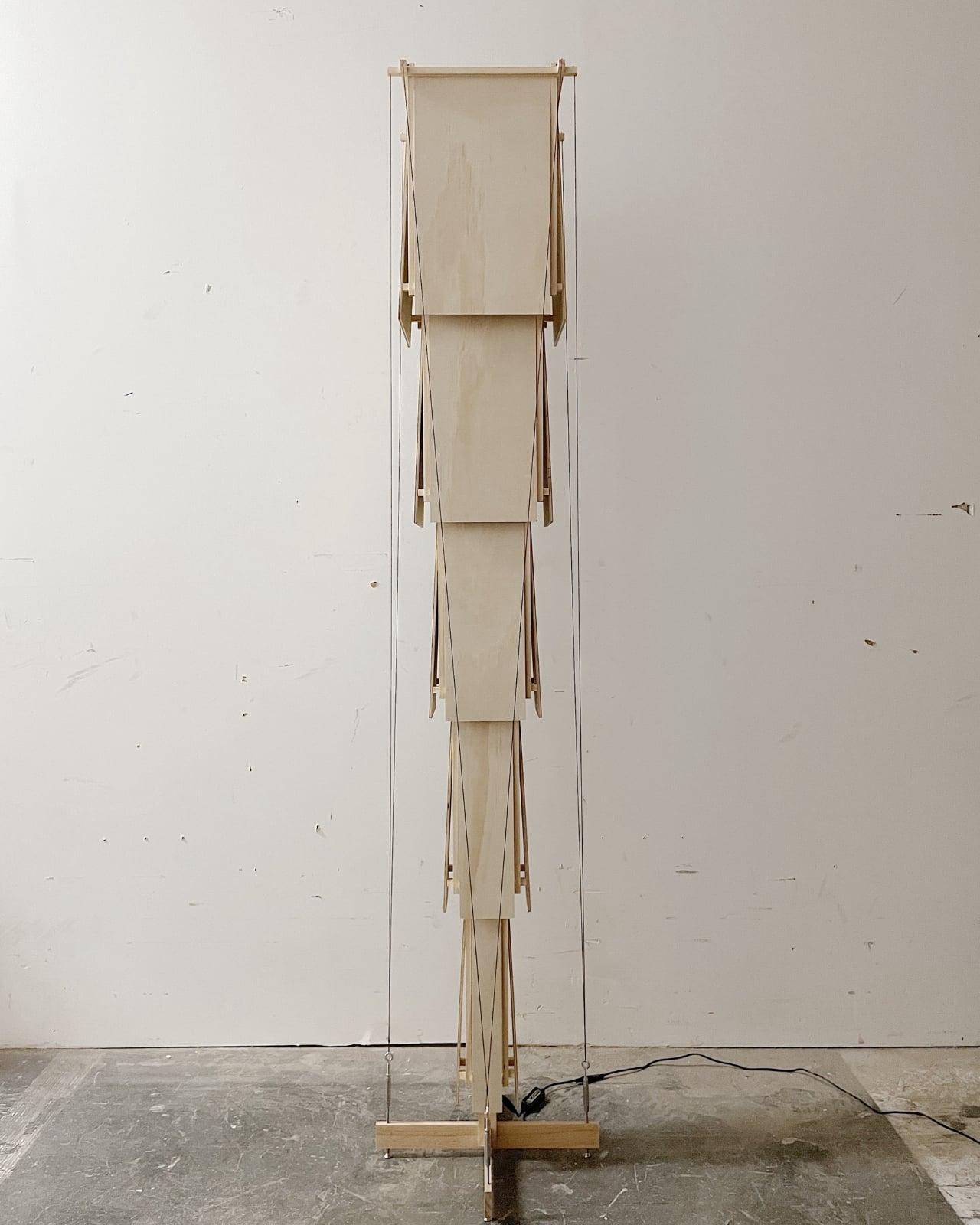
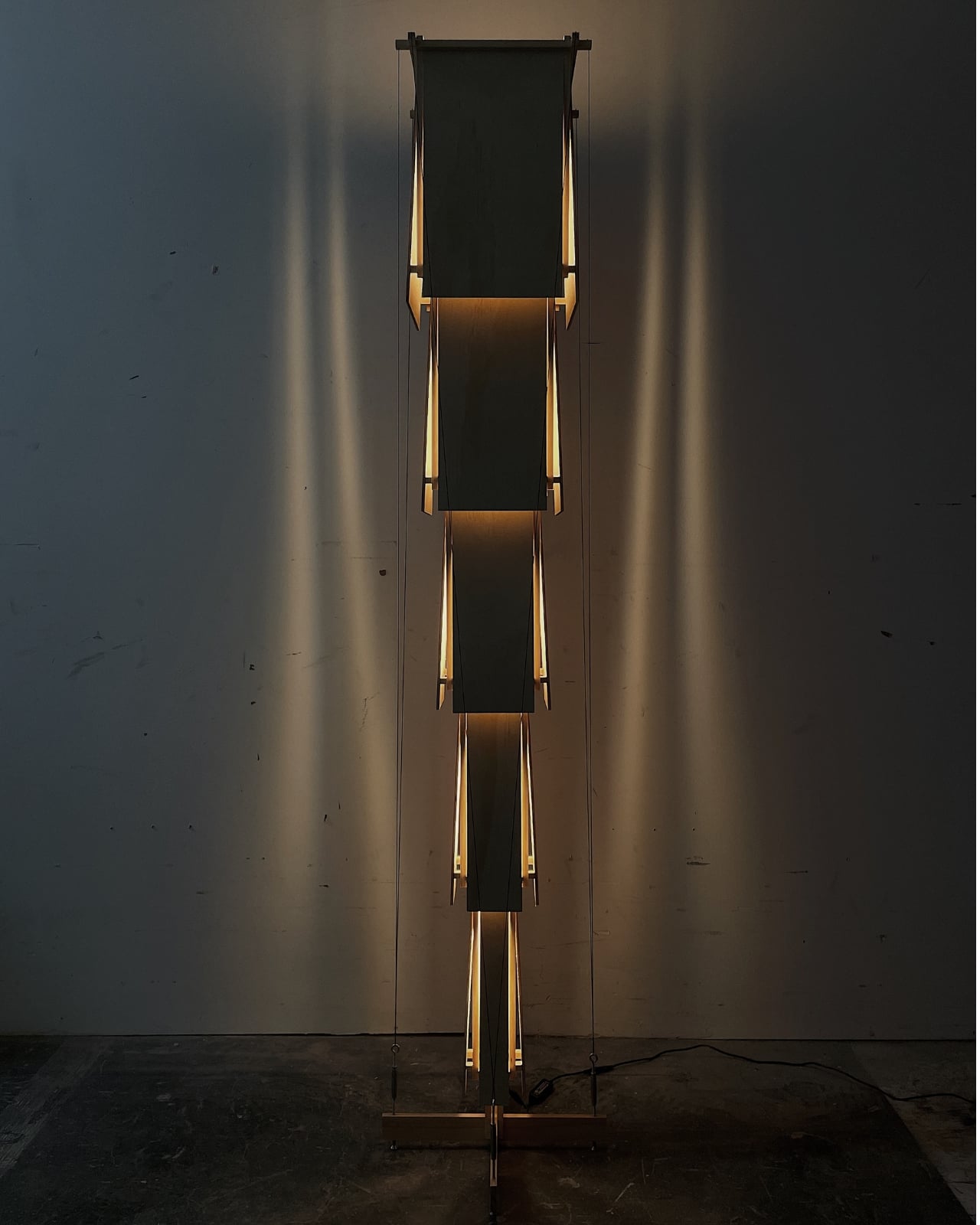
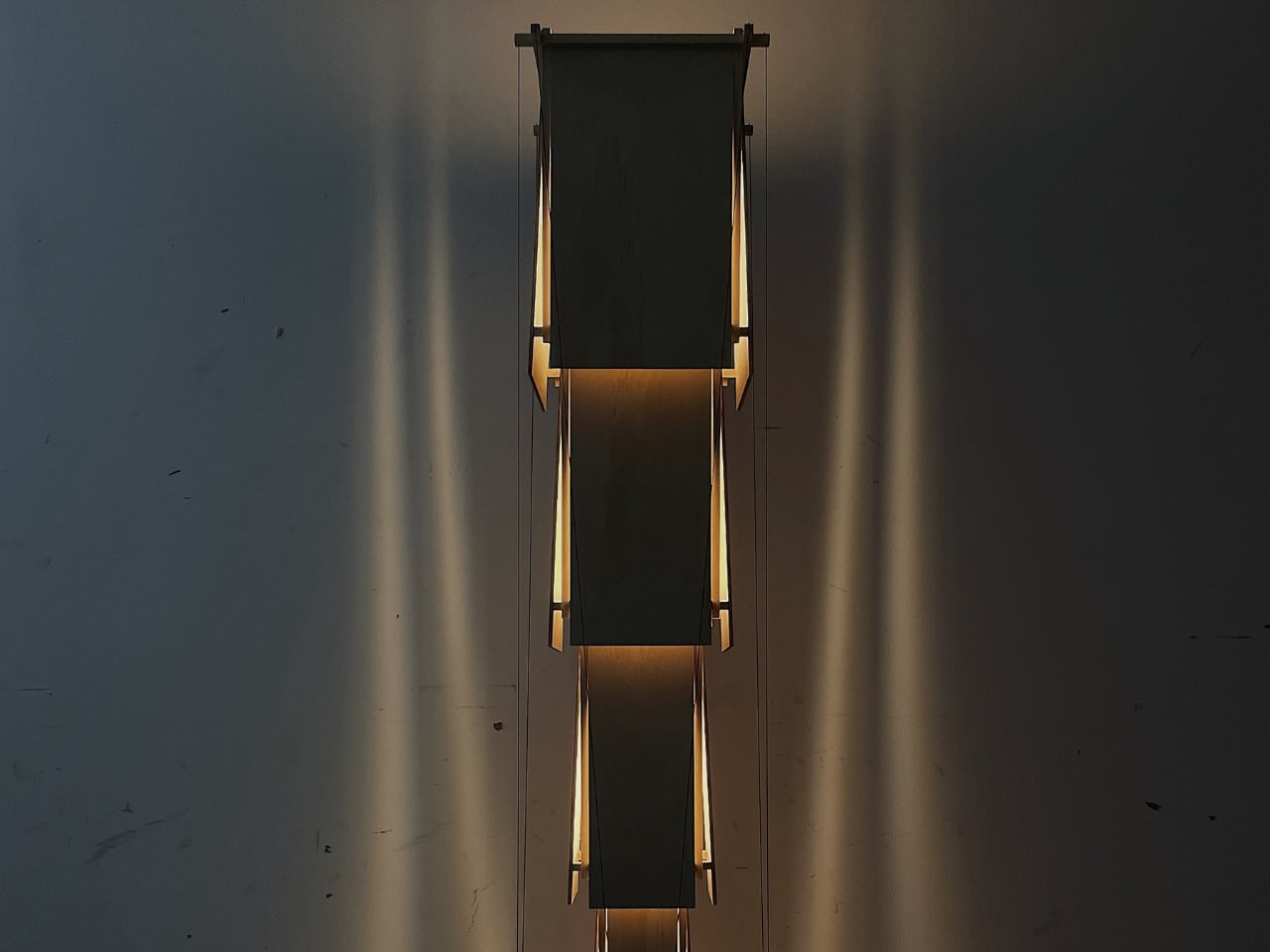
Visually, it reads like four or five lampshades collapsing into each other, each one smaller than the one above it, connected by nothing more than cable and a sliver of daylight between the panels. When the lamp is off, it looks like a piece of quiet, minimalist woodworking, almost architectural in the way it tapers toward the base. Turn it on, and the gaps between the panels become the whole point. Warm light spills out through the narrow slits at each joint, so the fixture doesn’t glow from one source, it glows in bands, stacked all the way up the form like a lighthouse built out of drawer fronts.
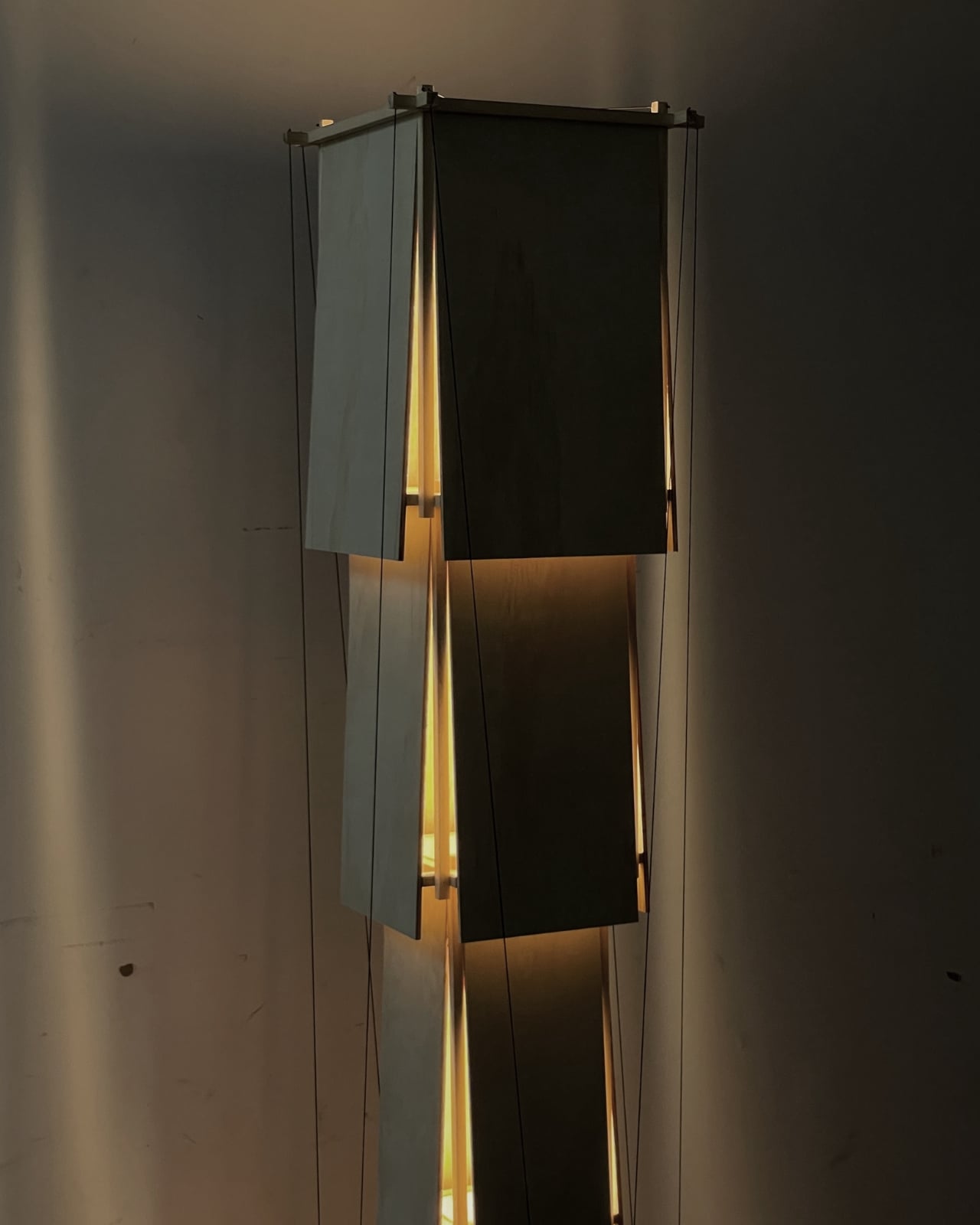
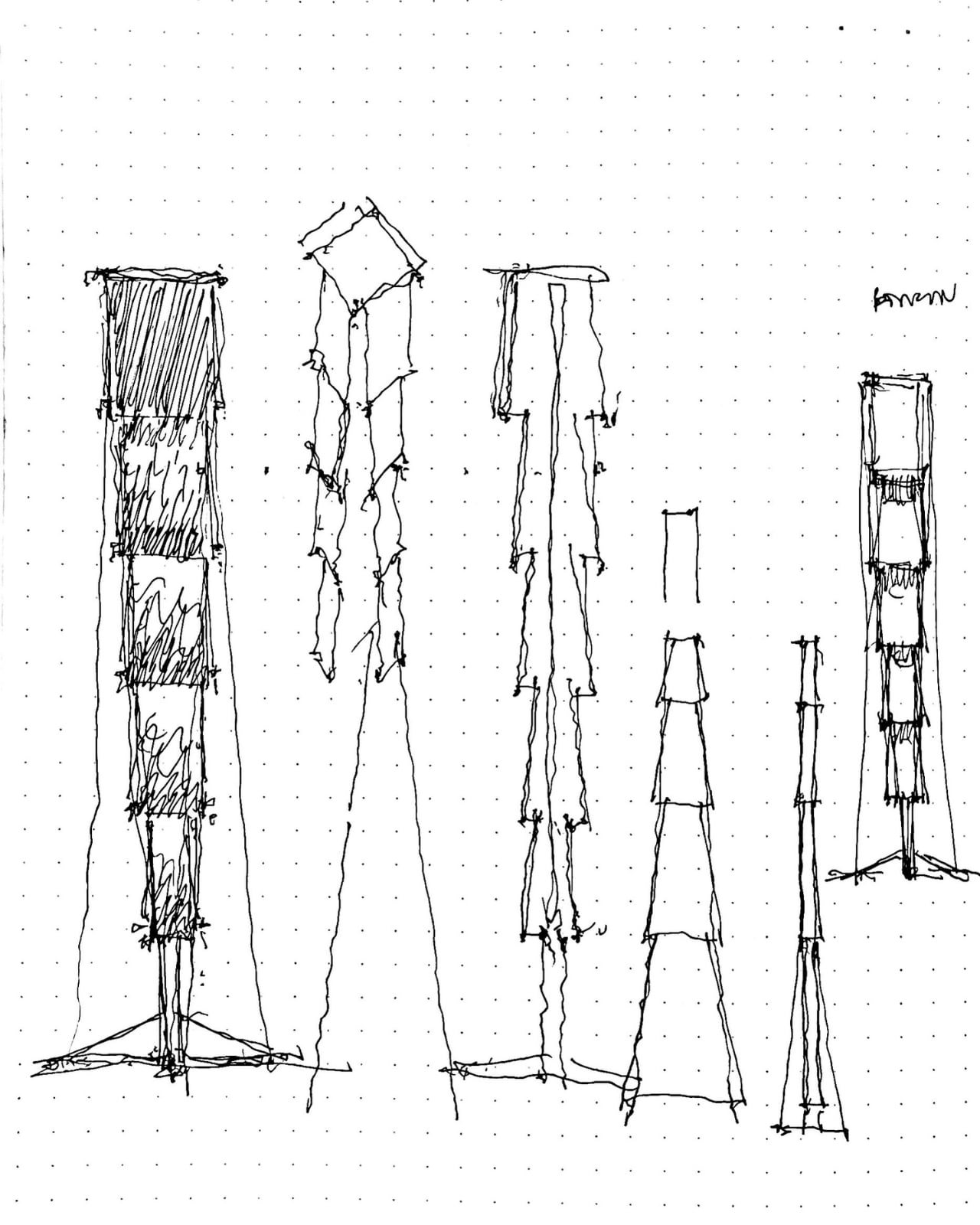
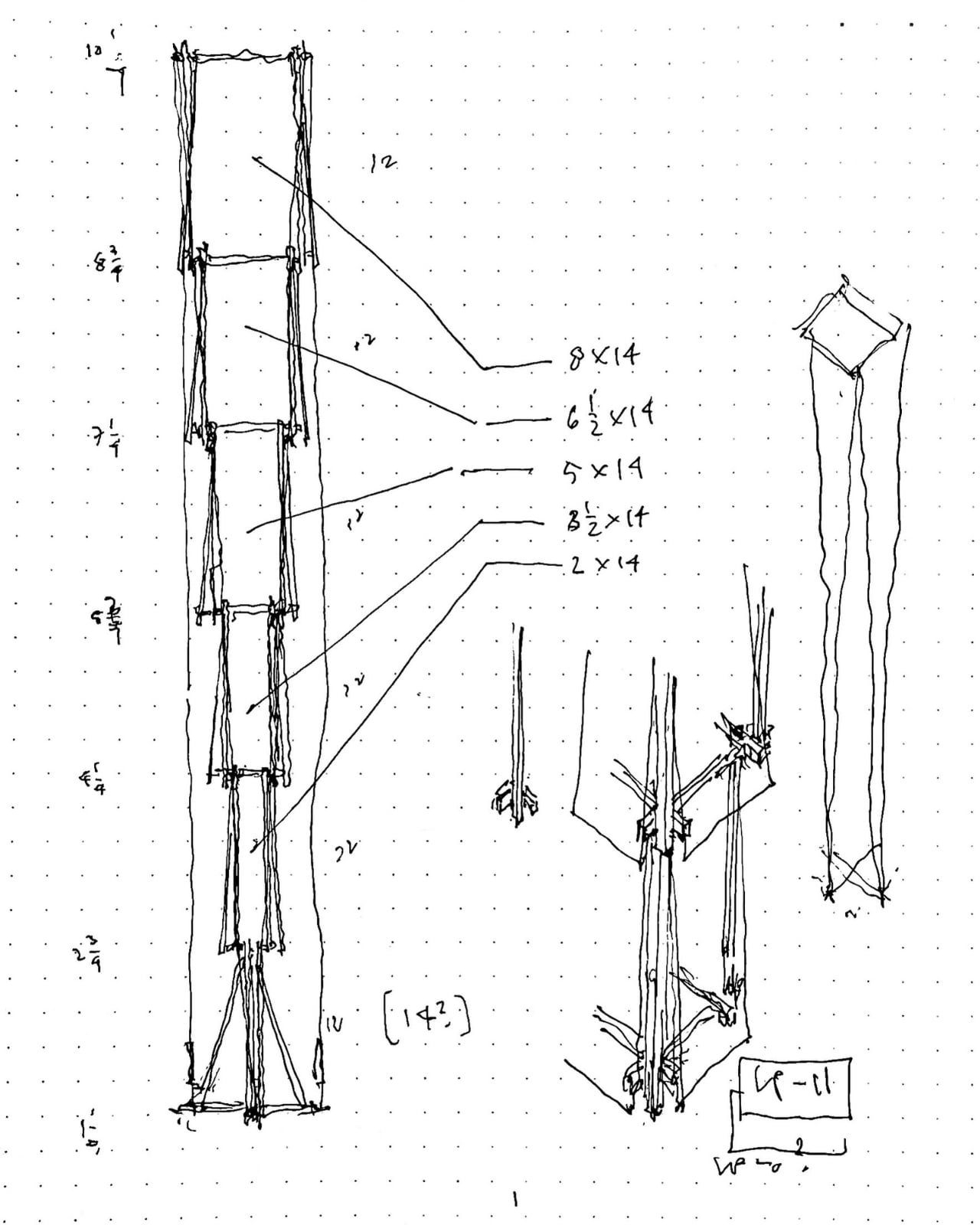
What makes this more than a lighting gimmick is the engineering underneath it. Borger’s sketches, the kind of graph-paper diagrams you’d expect from someone thinking in load paths rather than aesthetics, show measurements for every panel width tapering from bottom to top: 2 inches, then 3.5, then 5, then 6.5, then 8, each one wider than the last as the eye travels upward. That taper isn’t decorative. It’s what lets the cables do the structural work instead of a heavy internal frame, which is exactly how you get a six-foot object that a single person can lift with one hand.
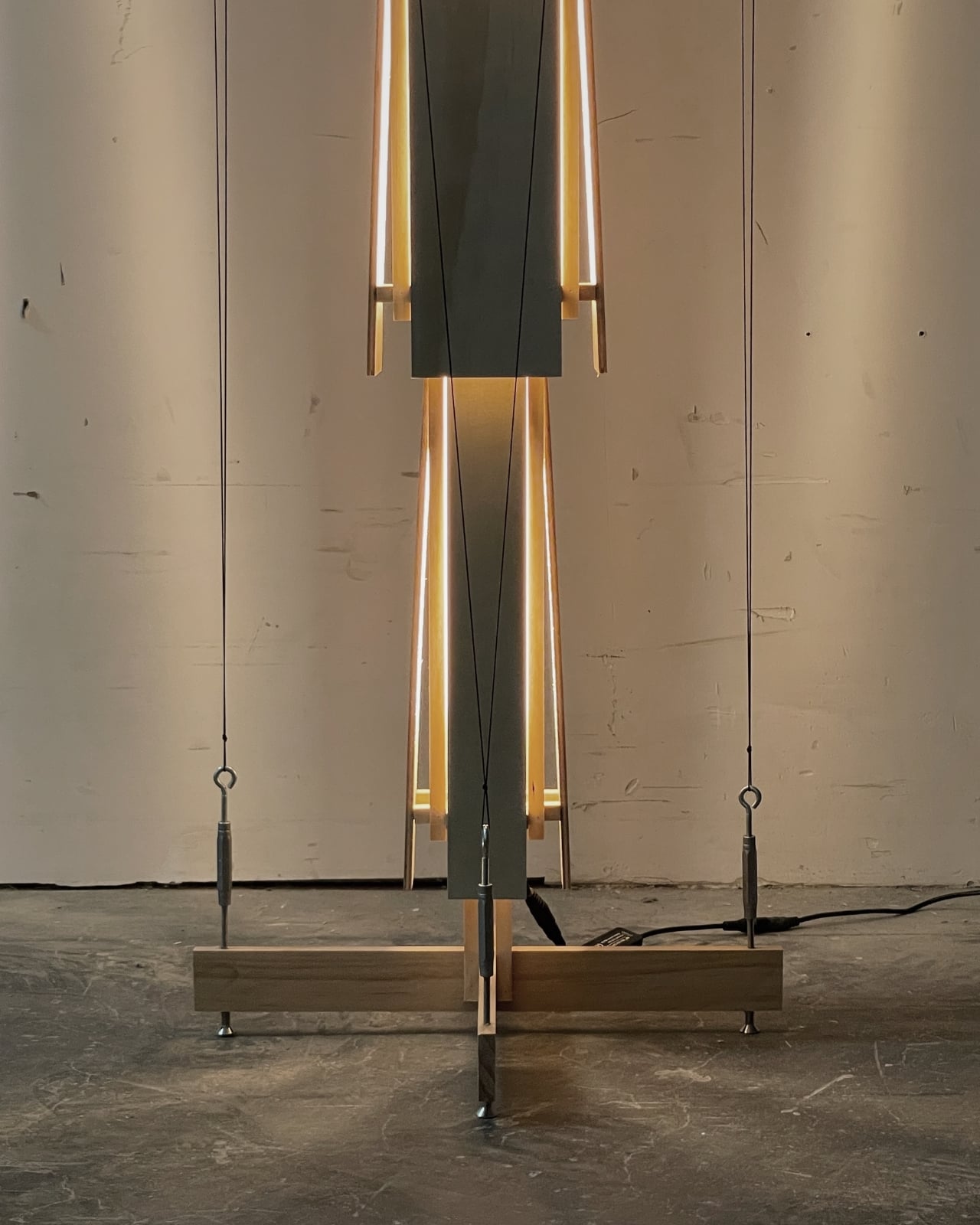
I like that this design doesn’t try to hide its own construction. A lot of lighting design wants to look effortless, like the glow just appears from nowhere. The LP-11 does the opposite. The turnbuckles, the exposed cable, the visible seams between panels: all of it is left in plain sight, almost like the lamp wants you to understand how it’s staying upright. That’s a different kind of confidence than hiding the hardware behind a shade. It treats the mechanism as part of the design language instead of something to apologize for.
There’s also something refreshingly analog about a piece like this showing up now, when so much of home design is chasing smart features and app controls. The LP-11 doesn’t need a companion app or a voice command. Its whole innovation is physical: a smarter way to distribute weight so a large object stops behaving like a large object. That’s a much older kind of design thinking, closer to tensile architecture or ship rigging than anything you’d find in a smart-home catalog, and it’s a welcome reminder that not every improvement in furniture needs a battery.
Borger runs his practice as Ultra-Light Research out of Brooklyn, and the name isn’t just branding. Across the series, from writing desks to chairs to lamps like this one, the throughline is the same question: how much material can you remove before an object stops working. The LP-11 answers that question in a way you can actually feel the moment you pick it up. It looks monumental and lifts like it’s hollow, which is precisely the point.
SHARE