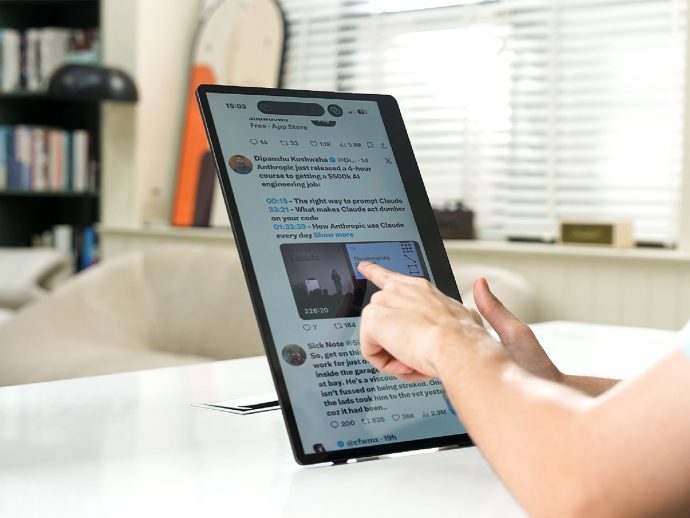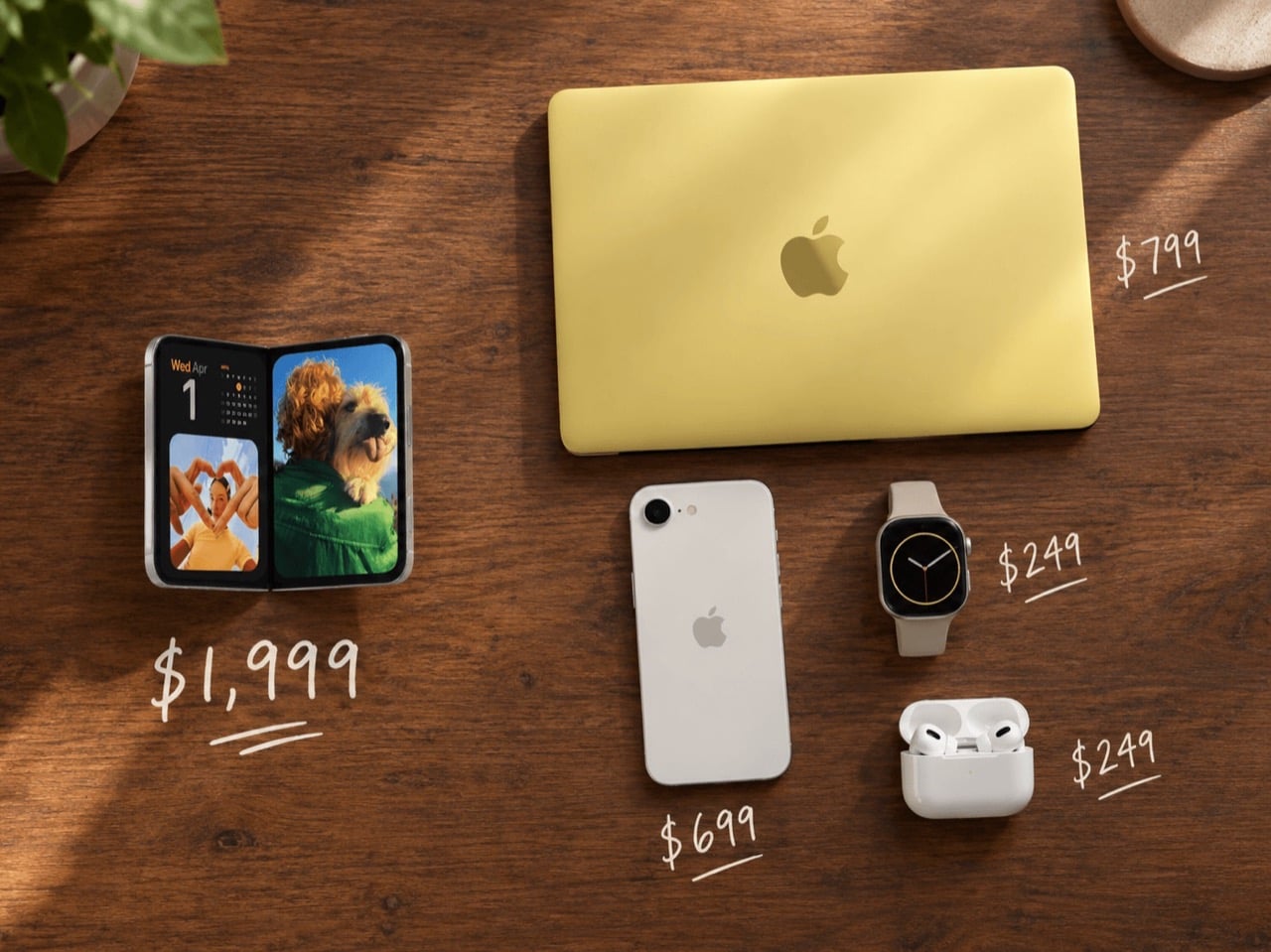
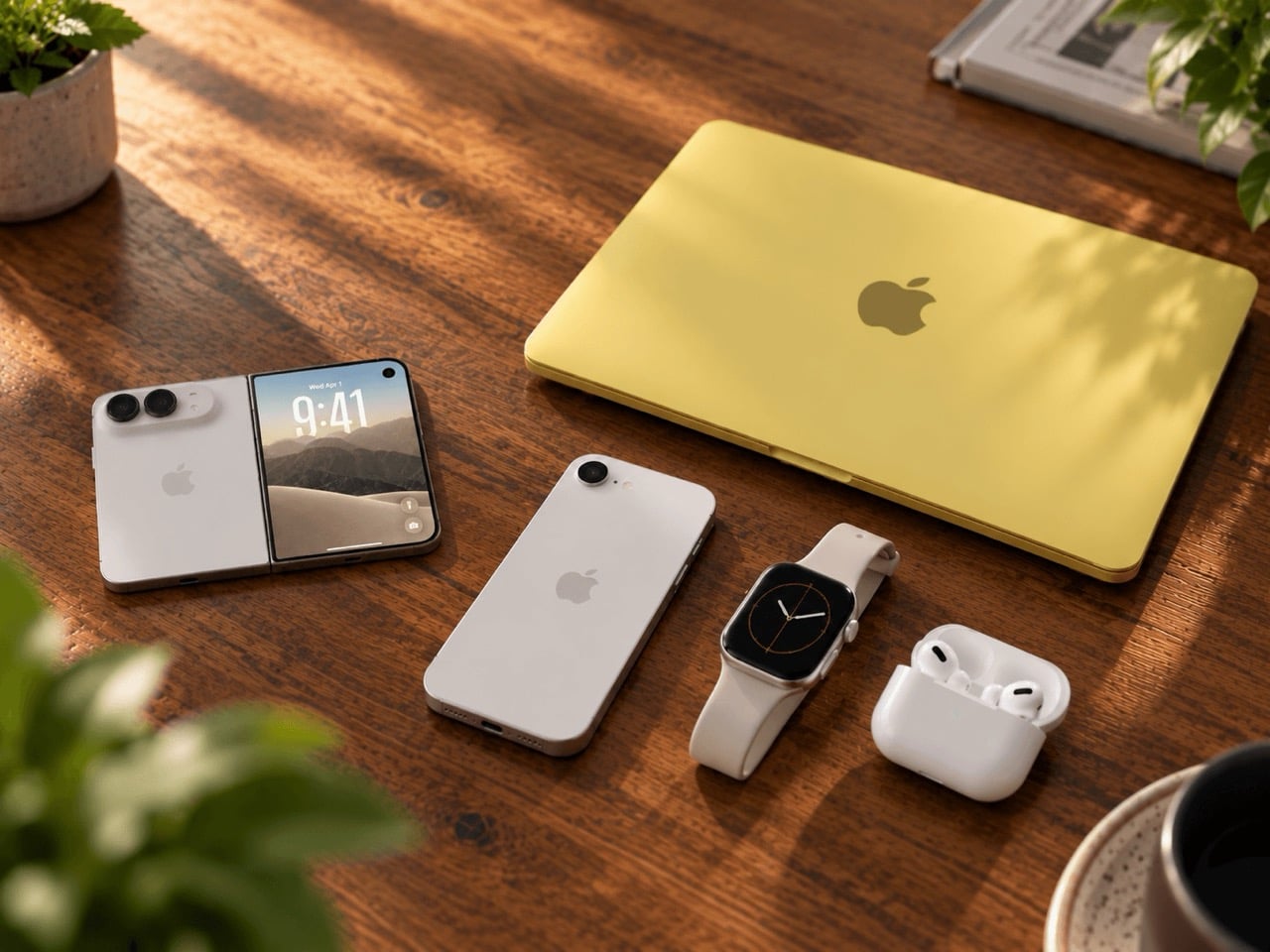
Apple’s first foldable, the iPhone Duo, costs $1,999 for 256GB. That same money also buys four other Apple products with change left over: a 512GB MacBook Neo at $799, an iPhone 17e at $699, an Apple Watch SE 3 at $249, and AirPods Pro 3 at $249. Add it up and you land on $1,996, which is three dollars short of one folding phone. I ran the numbers twice because it looked like a typo. It’s not a typo, it is Apple’s live price list as of September 2026, and the distance between the cheapest thing Apple makes and the most expensive thing Apple makes has never been this wide.
Nobody at Apple decided the phone should cost more than the computer. It happened the way most design inversions happen, one component at a time. Folding glass, a custom hinge, titanium, a second display and a 2nm A20 Pro stack up until you arrive at $1,999 and call it a flagship. Meanwhile the MacBook Neo shed Touch ID, MagSafe and a backlit keyboard to reach $599 in March, before creeping to $699 in June. One product was optimized upward until it became jewelry, the other was optimized downward until it became a school supply, and the two now sit in the same online store 1,300 dollars apart.
The Ladder Apple Built Backwards
For most of the iPhone’s history, the price ladder ran in a predictable direction. Laptops cost more than phones, because laptops did more work and carried more metal, glass and cooling hardware. The first MacBook launched in May 2006 at $1,099, which is roughly $1,750 today after inflation, while phones were largely carrier freebies bundled into two-year contracts. That relationship held, loosely, for two decades. It just quietly broke, and the break happened inside a single product lineup rather than across the industry.
What makes the inversion worth dwelling on is that Apple built both ends of it on purpose. The MacBook Neo was engineered down to a price, stripped of the backlit keyboard, fast charging and MagSafe that would normally be standard on a $700 laptop, so that Apple could compete with Chromebooks and entry Windows machines. The iPhone Duo was engineered up to a price, layered with every expensive material Apple had available, and our own coverage of the Duo’s launch called it the biggest redesign of the iPhone since the home button disappeared in 2017. The Apple Watch SE 3, meanwhile, is the one product in this stack that got frozen in place, launched alongside the Apple Watch Series 11 and Ultra 3 last September and left untouched at this year’s keynote entirely.
What $1,996 Actually Buys
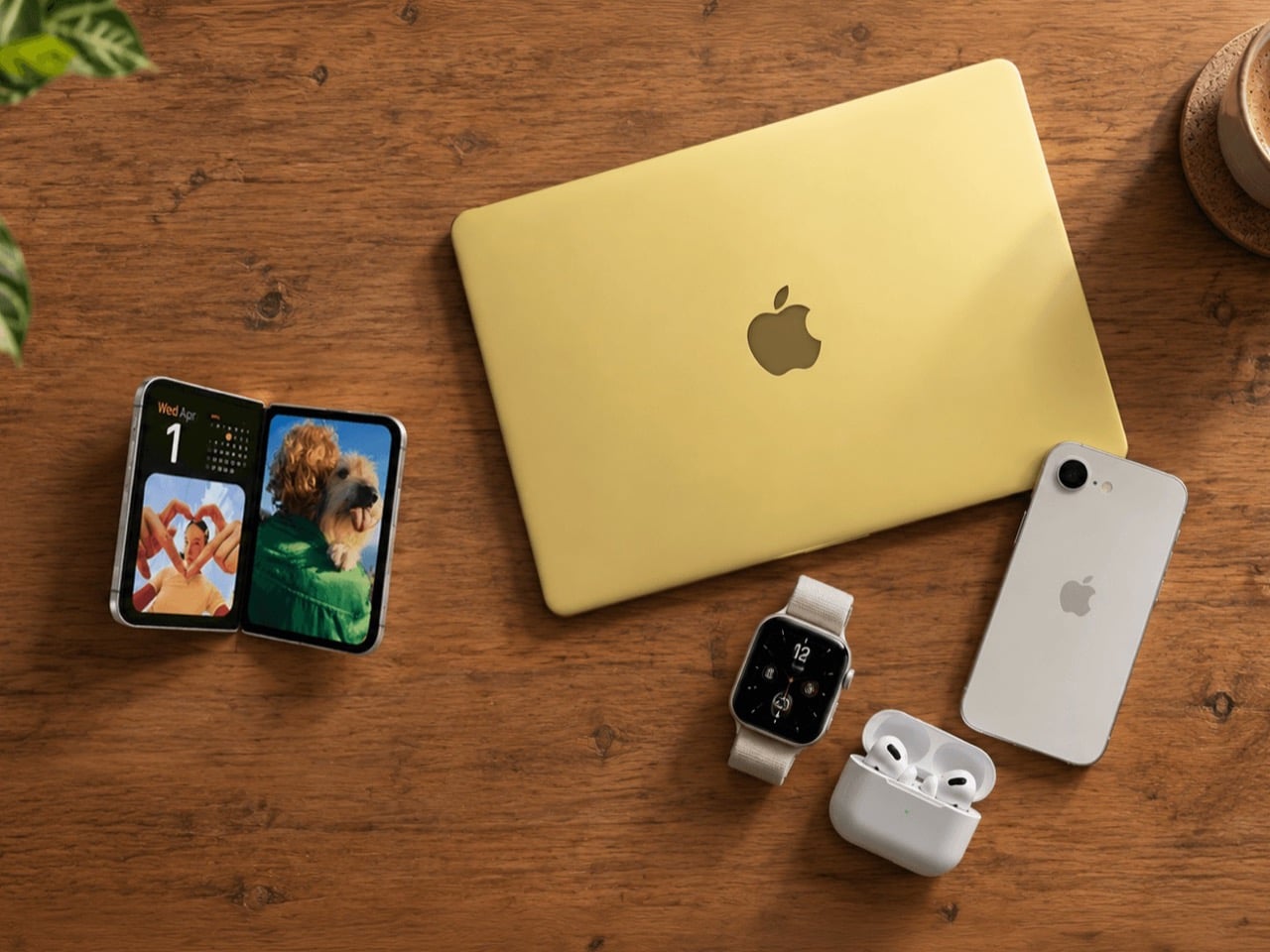
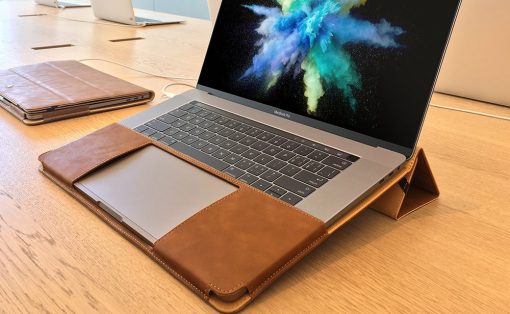
Run the alternative stack and it holds together as a genuinely complete kit rather than a novelty math exercise. The 512GB MacBook Neo gives you a 13-inch Liquid Retina display, an A18 Pro chip, and up to 16 hours of battery in a recycled aluminum shell, for $799. The iPhone 17e covers the phone slot at $699, currently the cheapest new iPhone Apple sells after the rest of the lineup went up $100 on September 9. The Apple Watch SE 3 adds a wrist device with an always-on display and 18-hour battery for $249, and AirPods Pro 3 close the loop at $249 with active noise cancellation, a custom heart rate sensor, and live translation built in.
That is a laptop, a phone, a watch and a pair of earbuds, touching every screen size Apple makes, for three dollars less than one folding phone. It is worth being honest about what that stack gives up. None of those four devices fold, none of them run the A20 Pro, and the SE 3 skips the electrocardiogram and blood oxygen sensors that the pricier Apple Watch Series 12 carries. But as a snapshot of how far Apple’s floor and ceiling have drifted apart, it is hard to beat, and it is proprietary math nobody else appears to have bothered running.
The Hinge Is Doing the Expensive Work
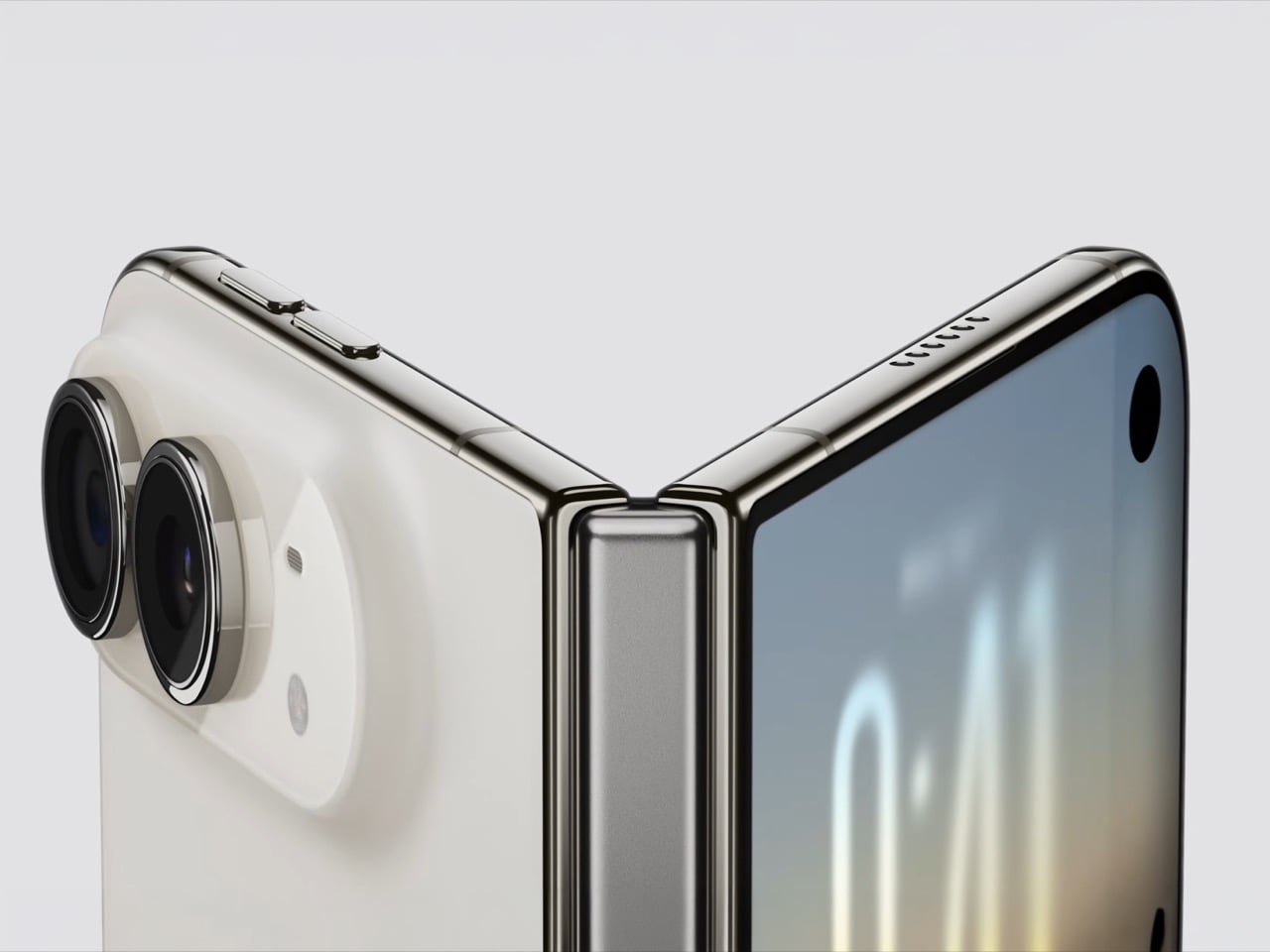
The thing actually driving the $1,999 sticker is not marketing, it is the hinge, and Apple spent real engineering years proving it. The folding display uses a scratch-resistant coating, a polymer cover layer Apple says is up to 40% stiffer than materials used for similar applications, multiple layers of high-strength glass, and a titanium plate underneath, all wrapped around a custom hinge designed to minimize the crease that plagues rival foldables. That is a lot of material science stacked into one seam, and it is the primary reason a Duo cannot be priced anywhere near a Neo.
Apple paired that hinge with an A20 Pro built on a 2-nanometer process, its first chip at that node, delivering what Apple claims is 35% higher sustained performance than the iPhone 17 Pro thanks to a new cooling system built for a thinner chassis. None of that is padding. A folding OLED stack with a titanium frame genuinely costs more to manufacture than a fixed aluminum body, and first-generation folding hardware from any brand has always carried a premium while yields improve. The fair comparison is not Duo versus cheap Apple gear, it is Duo versus other folding flagships, and our own breakdown of what the Duo got right that Samsung still hasn’t found it costing exactly $100 more than the Galaxy Z Fold8’s $1,899.
Nobody Asked For a Missing Middle
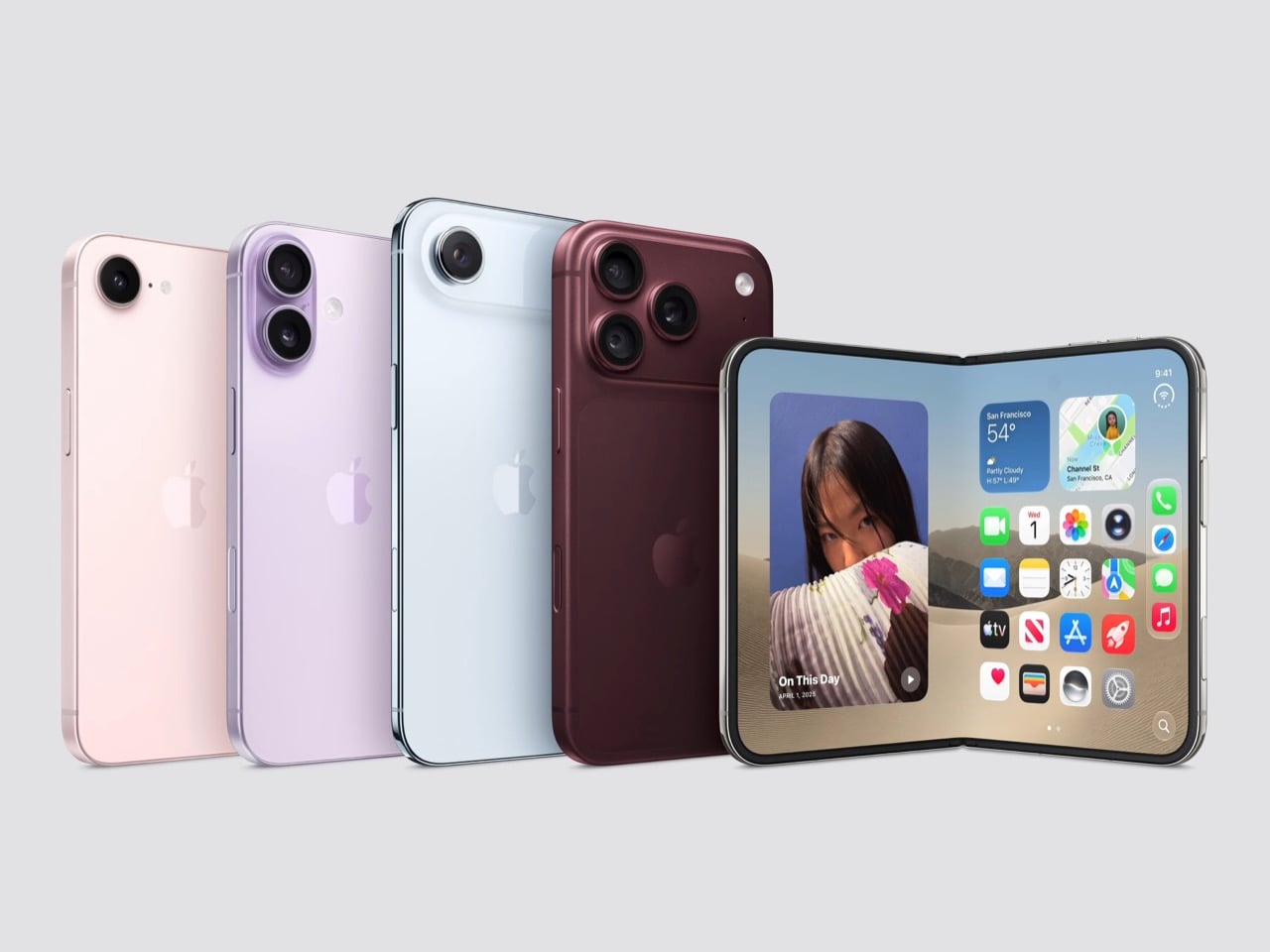
What turns this from an interesting price gap into a strange one is what Apple left out of the September 9 keynote entirely. There is no standard iPhone 18, no iPhone 18e, no iPhone Air 2, all reportedly pushed to spring 2027. Anyone who wants a new iPhone before then chooses between $1,199 for the Pro and $1,999 for the Duo, with nothing built to sit between those two numbers this year. Apple has effectively removed the middle rung of its own ladder at the exact moment the top and bottom rungs drifted furthest apart.
That gap is where the $1,996 stack might just appeal to the Apple fan who has a strict budget to work with. It fills the space Apple’s own lineup left empty, assembling a complete household of devices for less than the price of the one device Apple actually wants you looking at this fall. None of that makes the Duo a bad phone, and folding glass this durable was never going to be cheap. It does mean that for one more season, the most interesting purchase decision at Apple has nothing to do with which iPhone to buy, and everything to do with whether you buy an iPhone at all.
SHARE