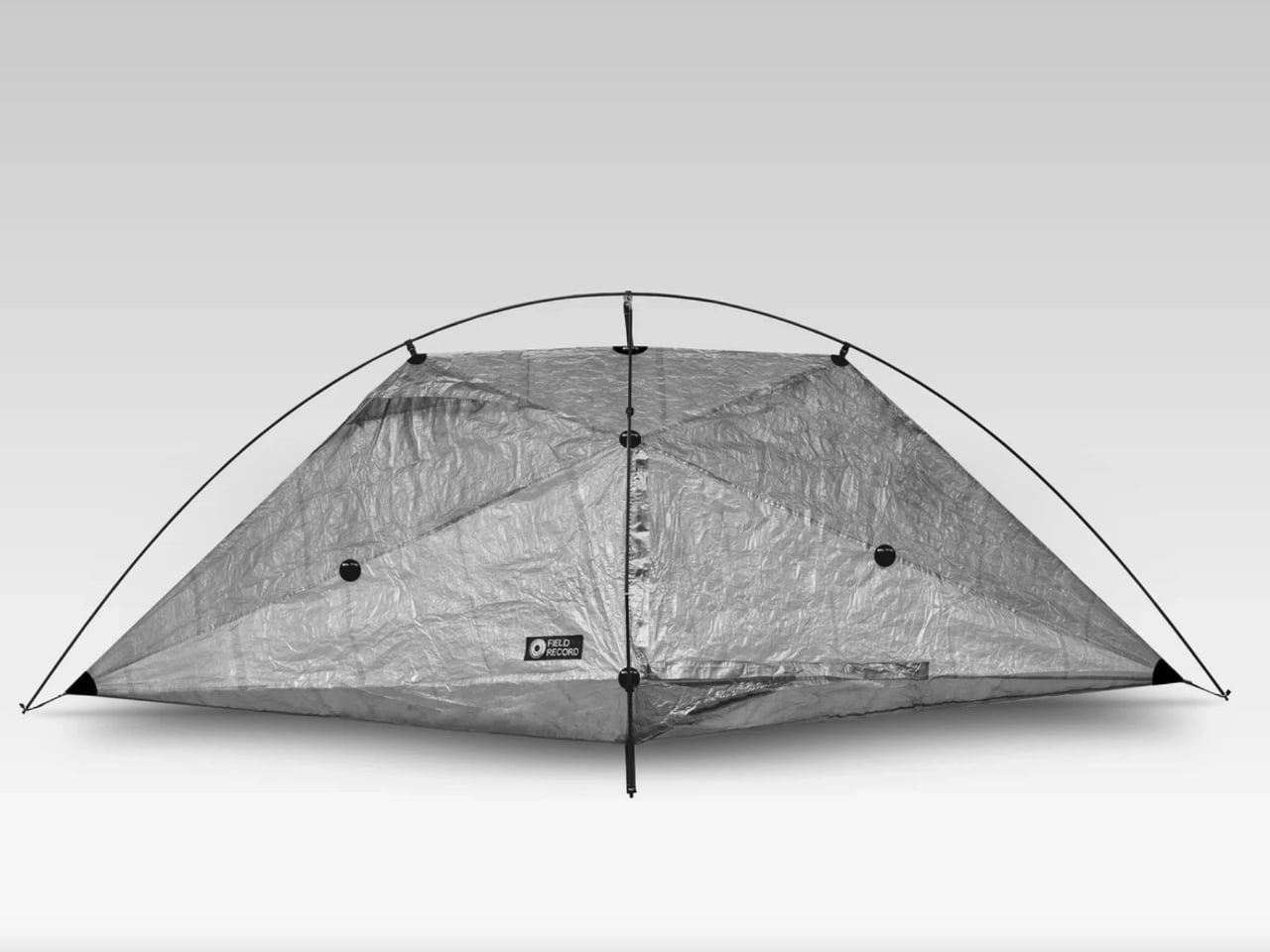
Carrying less shouldn’t have to mean giving up a tent that supports itself. That’s the appeal of Field Record’s FR-SCD, a one-person shelter with a listed body-and-pole weight of just 490 grams, or about 1.1 pounds. It addresses a recognizable backpacking dilemma: how to trim the load without switching to a shelter that depends on trekking poles for its structure.
That number deserves a little unpacking before anyone starts rearranging their gear closet. The 490 grams covers the tent and its Easton carbon fiber poles, not the complete packed kit. Carry bags, stakes, and guy lines aren’t included in that figure. It’s still remarkably light, but I’d rather know what’s on the scale than fall in love with a number that leaves the accessories off it.
Designer: Field Record
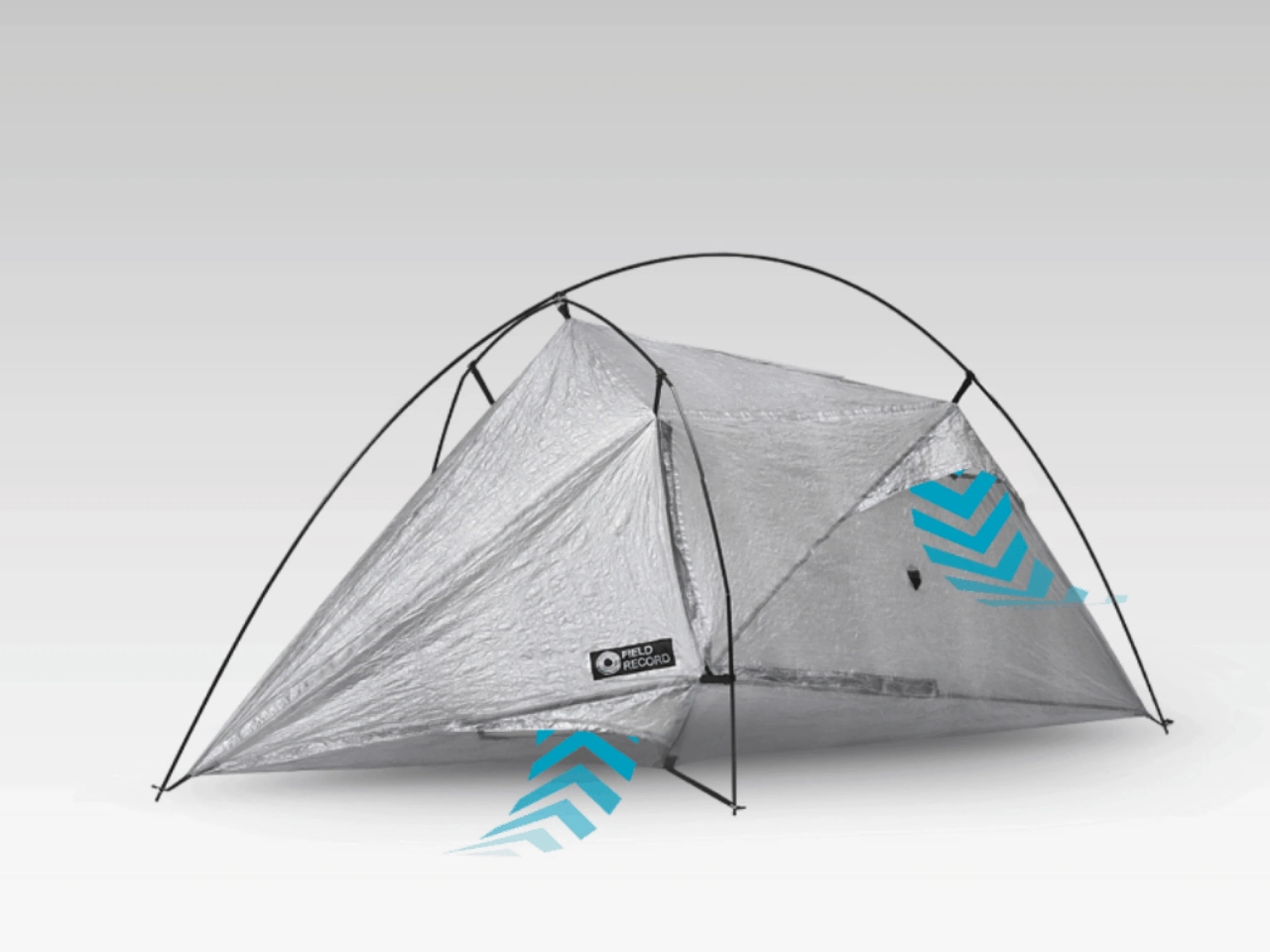
Field Record comes from designer Kouichi Okamoto of Kyouei Design, and the brand says it handles design, cutting, sewing, and seam processing in-house. The FR-SCD also isn’t a fresh launch disguised by a recent round of attention. It appeared in the brand’s 2023 lineup, with a special 470-gram version developed alongside trail runner Shogo Mochizuki. The production model uses a different Dyneema fabric. That history gives the weight-saving ambition some useful context.
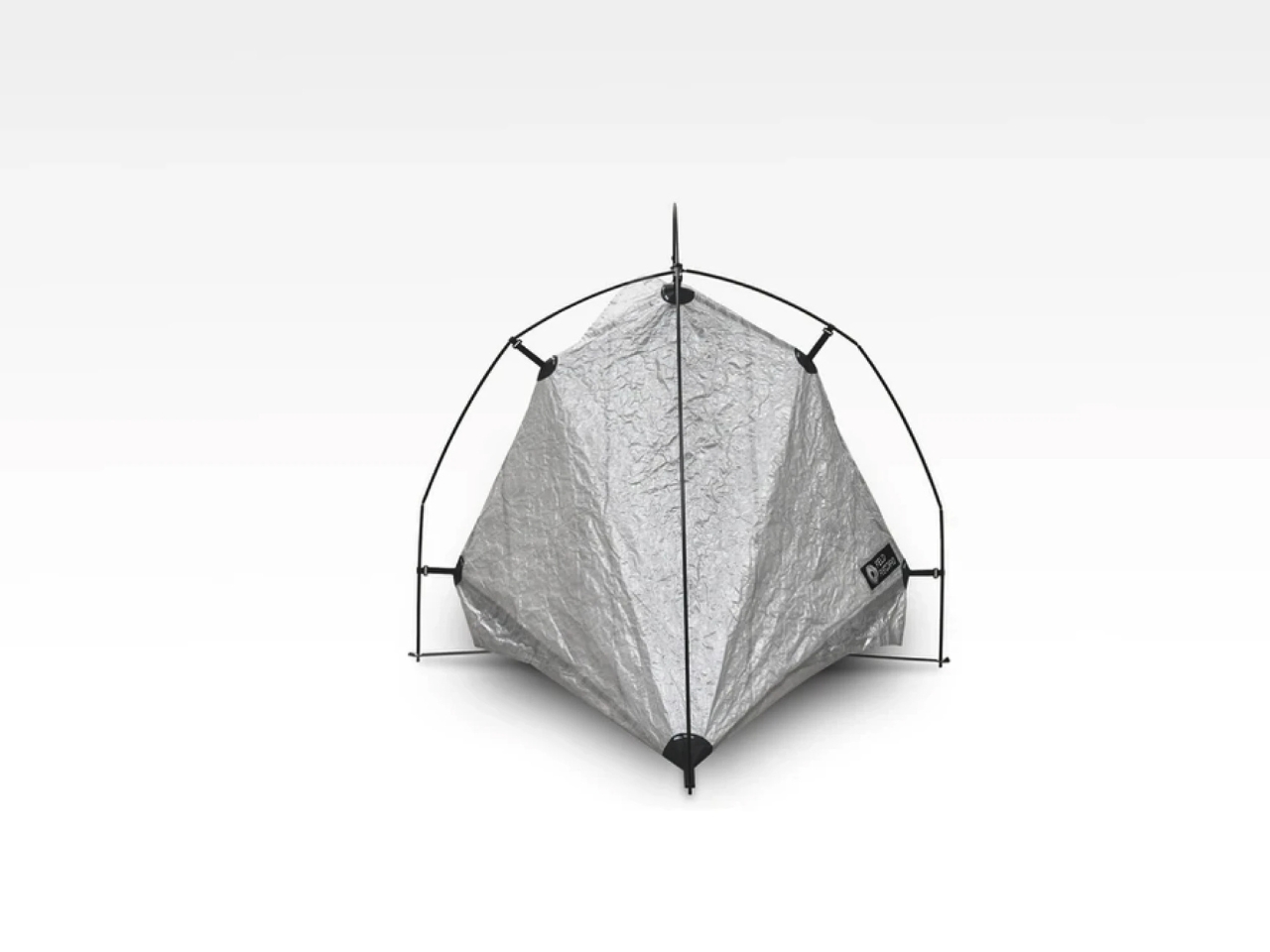
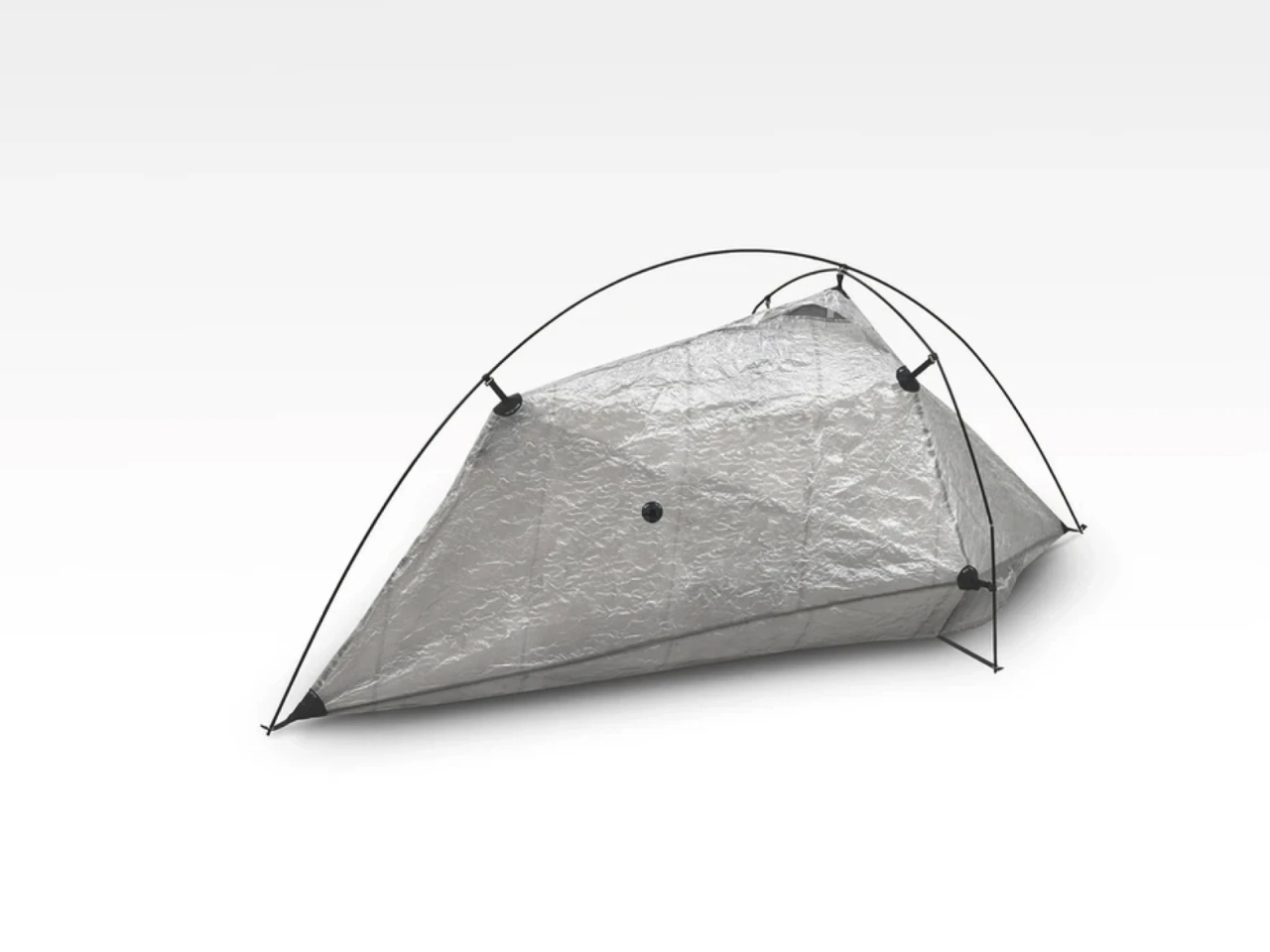
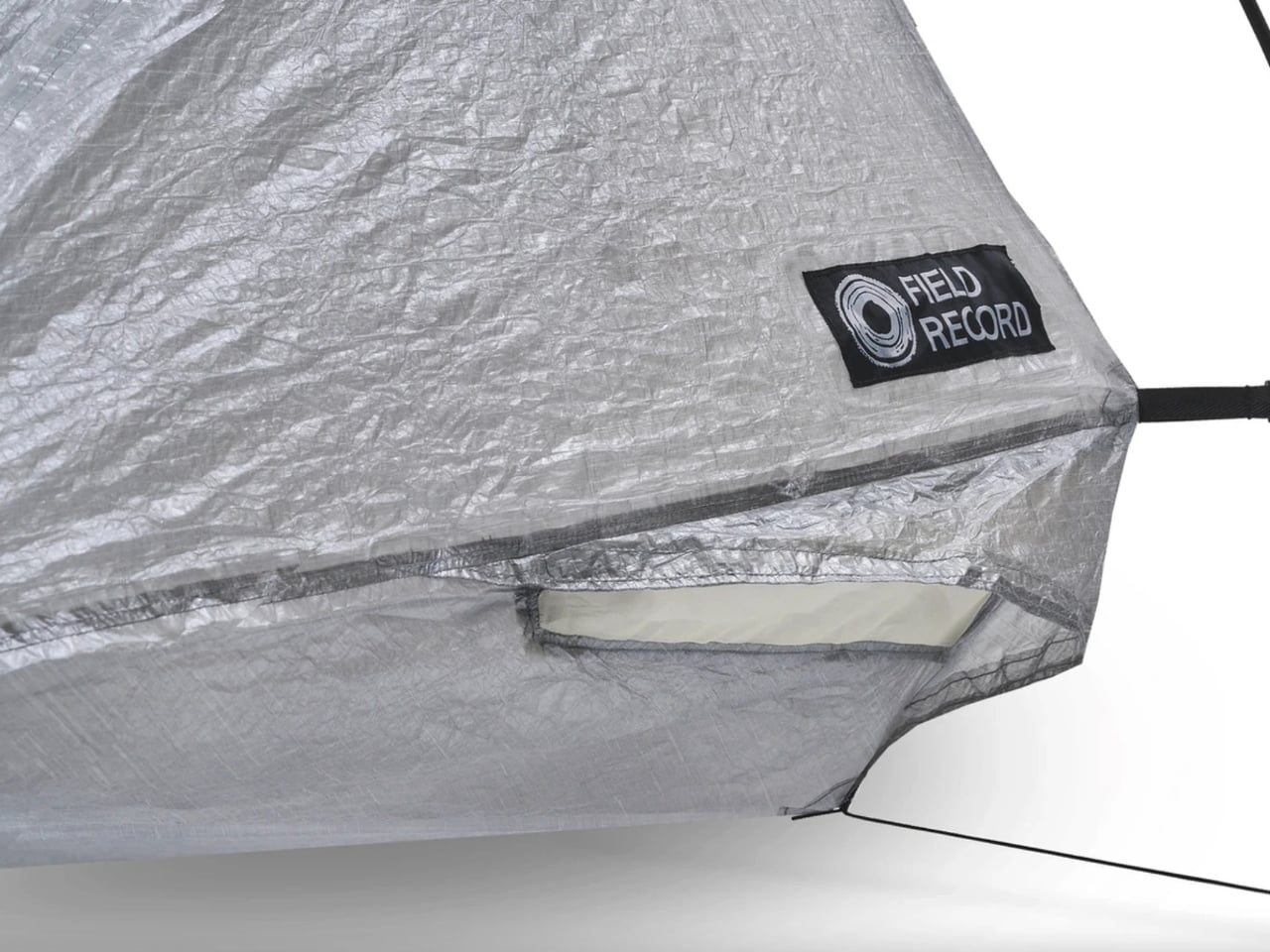
Visually, it’s an appealingly strange little object. The photographed shelter has a crinkled, translucent skin stretched beneath two crossing arcs, with pointed ends that make the overhead view resemble an elongated kite. I like how little effort it spends looking conventionally rugged. You can read the frame and the fabric as separate elements, and the shape feels more interesting for making that relationship so visible.
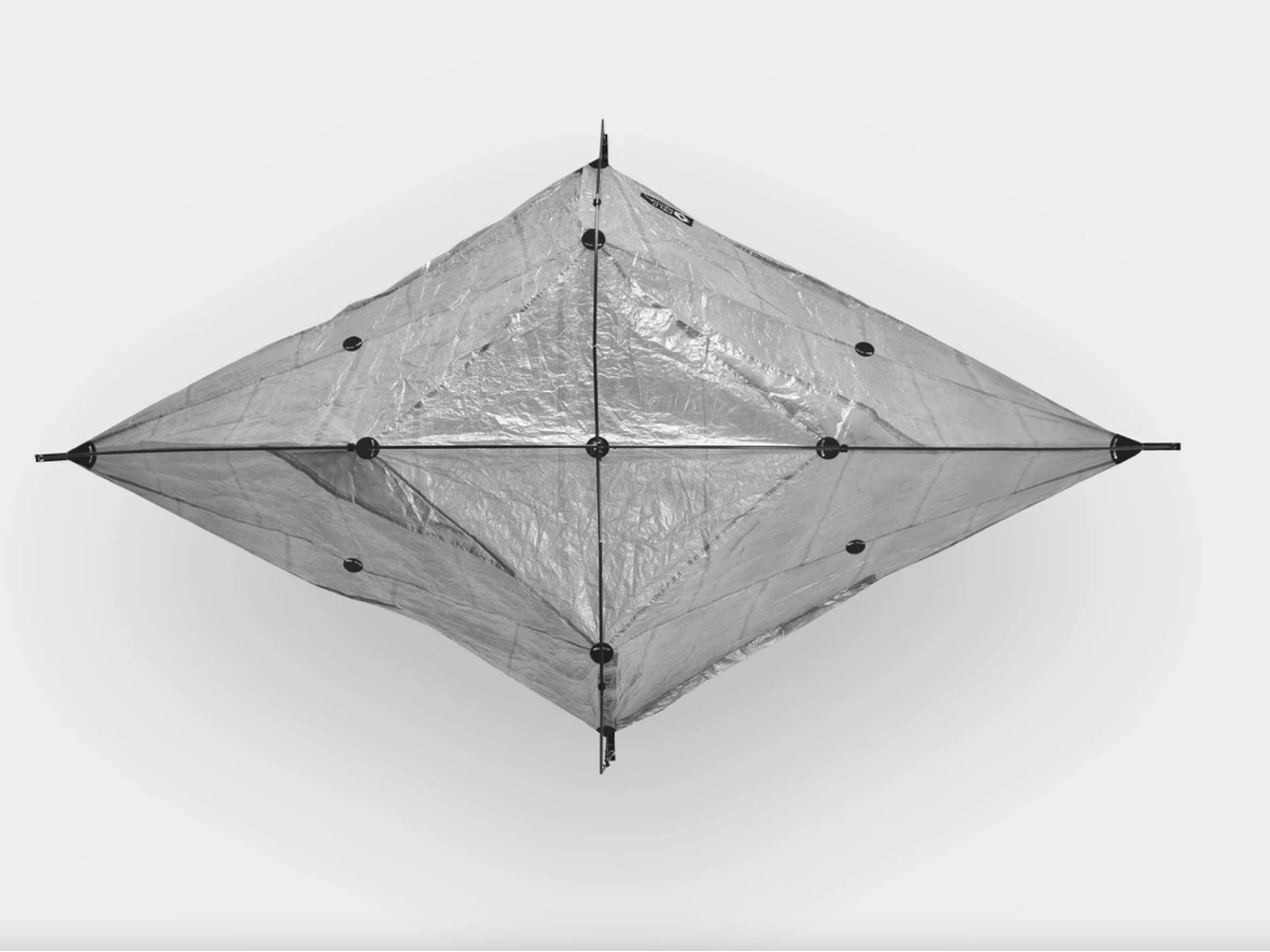
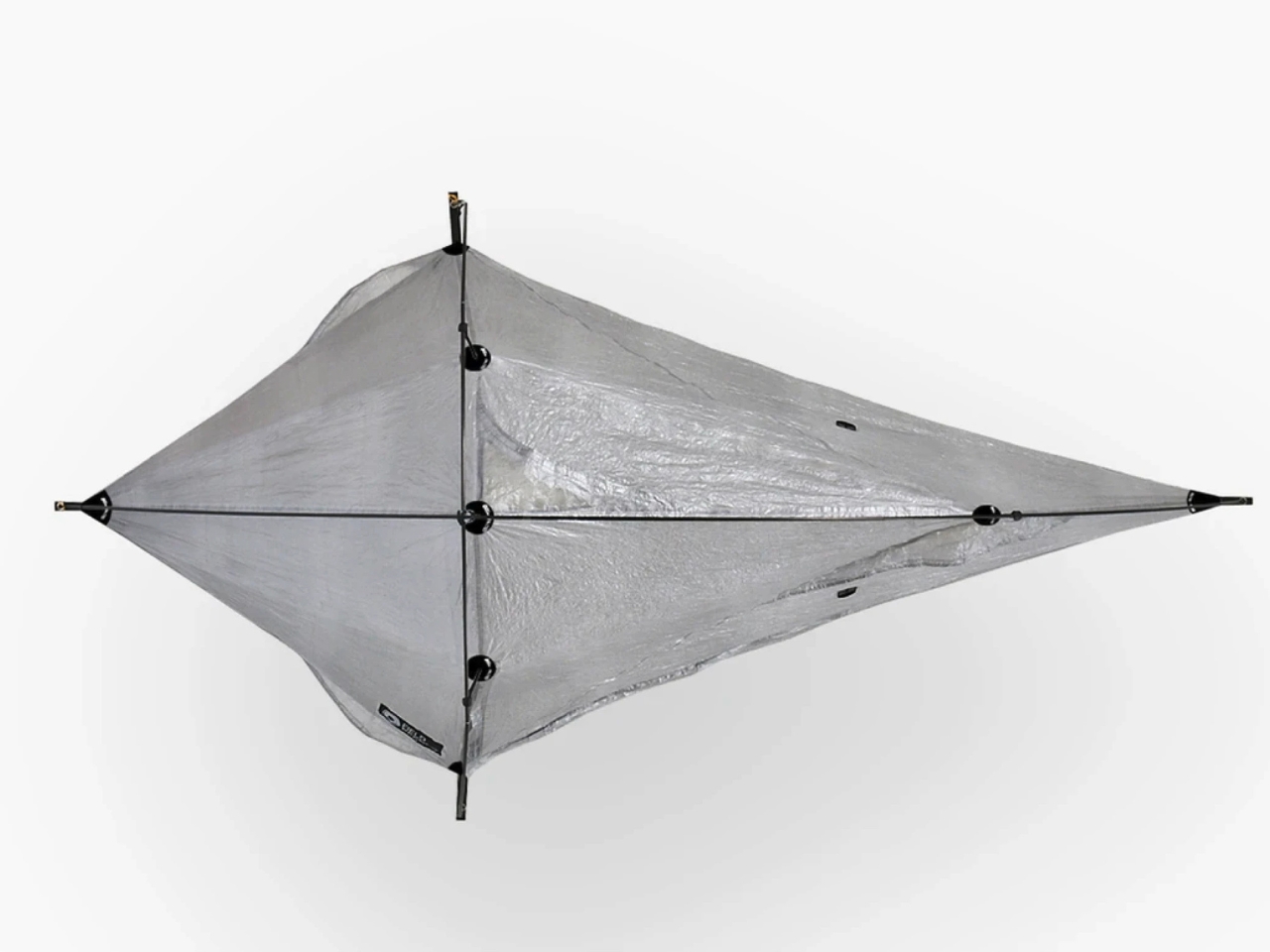
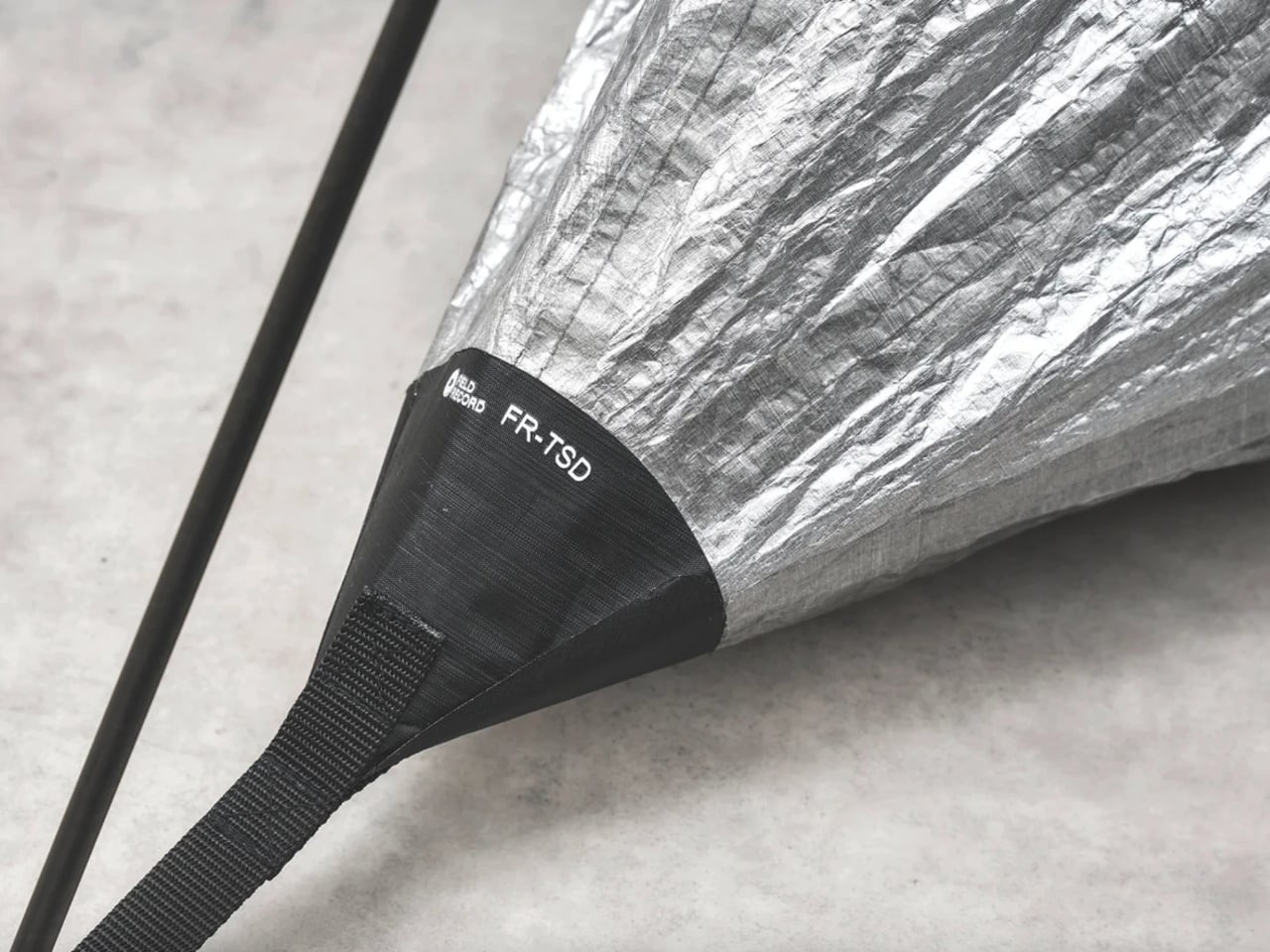
The construction is specific. Field Record pairs a Dyneema Composite Fabric body with Easton carbon poles, then applies bonded seam treatment after sewing. Twelve bonded reinforcement points support the construction. Those details matter because this isn’t merely a thin sheet draped over a frame. The maker has put reinforcement into selected locations while pursuing that low overall weight, a more interesting design exercise than indiscriminately removing material.
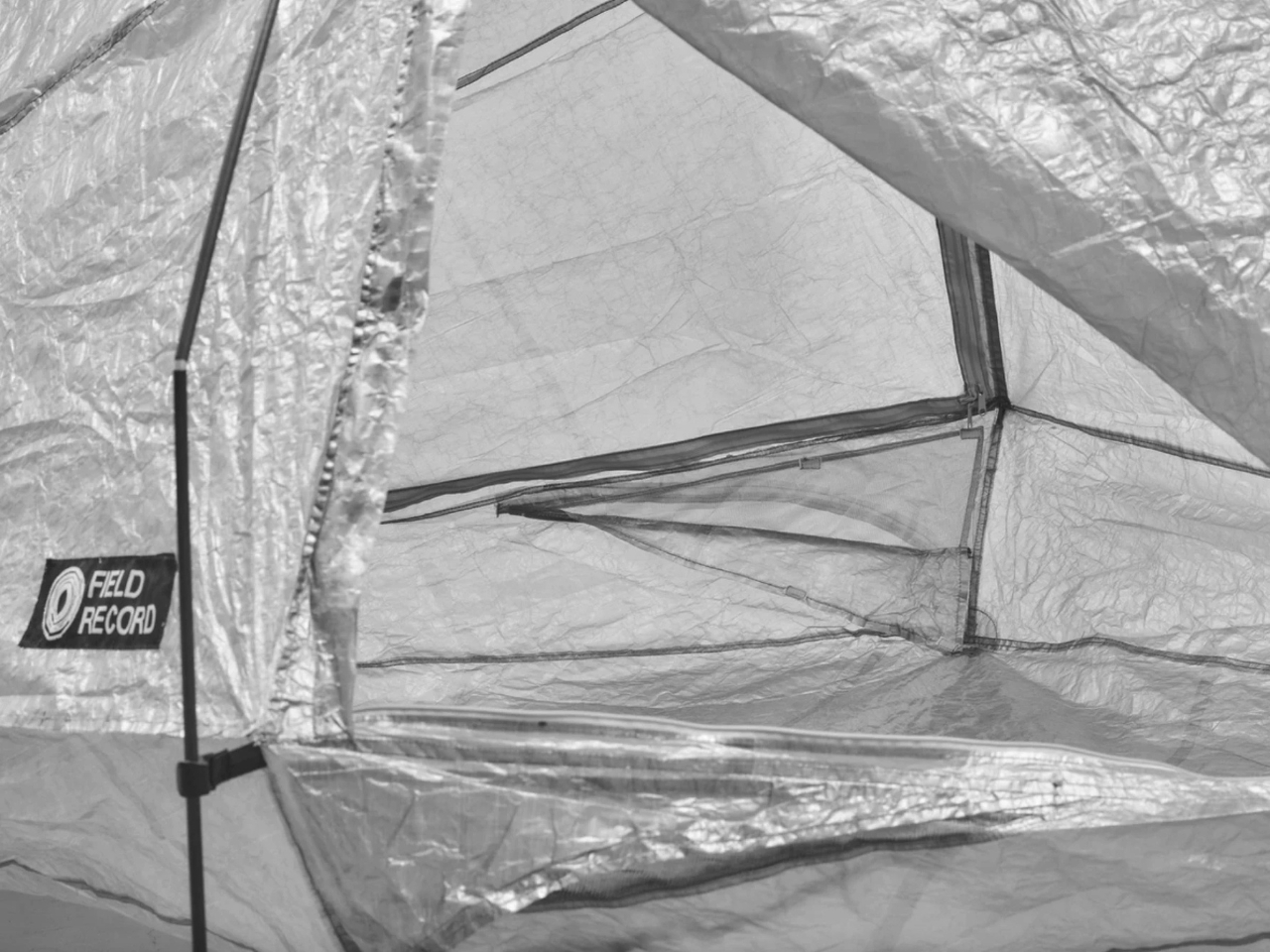
Ventilation is where the idea meets a less glamorous camping reality. Moisture inside a tent can be as unwelcome as rain outside it. Field Record says the FR-SCD’s form and four ventilation points encourage airflow to reduce condensation. That’s a design intention, not proof of consistently dry mornings. Ventilation is an established way to manage condensation, but I’d want field testing before treating these openings as a complete solution.
Space is another negotiation. The published dimensions are approximately 101.6 inches long, 42.5 inches wide, and 37.4 inches high. Those are overall measurements, not a rectangular sleeping area. Looking at the sharply tapered outline, I wouldn’t read the length and width as permission to sprawl. The low roof also makes this look like a place to sleep rather than a comfortable room for waiting out an entire afternoon.
Freestanding shouldn’t be mistaken for unanchored, either. A frame that holds the shelter’s shape is useful, but wind still makes staking and guying important. Sierra Designs’ tent guidance makes that distinction explicitly, even for freestanding models. I appreciate the convenience this architecture offers, provided the weight conversation doesn’t encourage anyone to leave necessary anchoring gear behind. Saving ounces shouldn’t depend on ignoring the campsite.
Then comes the price: ¥149,600, approximately $950 in New Atlas’s report. Field Record currently lists a roughly three-month lead time and offers international shipping, with customs charges left to the buyer. That puts it firmly in specialist territory. For me, the cost makes more sense as payment for a particular construction and manufacturing approach than as an obvious upgrade for anyone who occasionally spends a weekend outdoors.
I’m drawn to the FR-SCD because its priorities are easy to understand, even if they wouldn’t match everyone’s packing list. I’d want more evidence about livability before choosing it for a trip. As a design, though, it makes a persuasive case for keeping the convenience of a frame while being unusually disciplined about everything that frame has to carry.