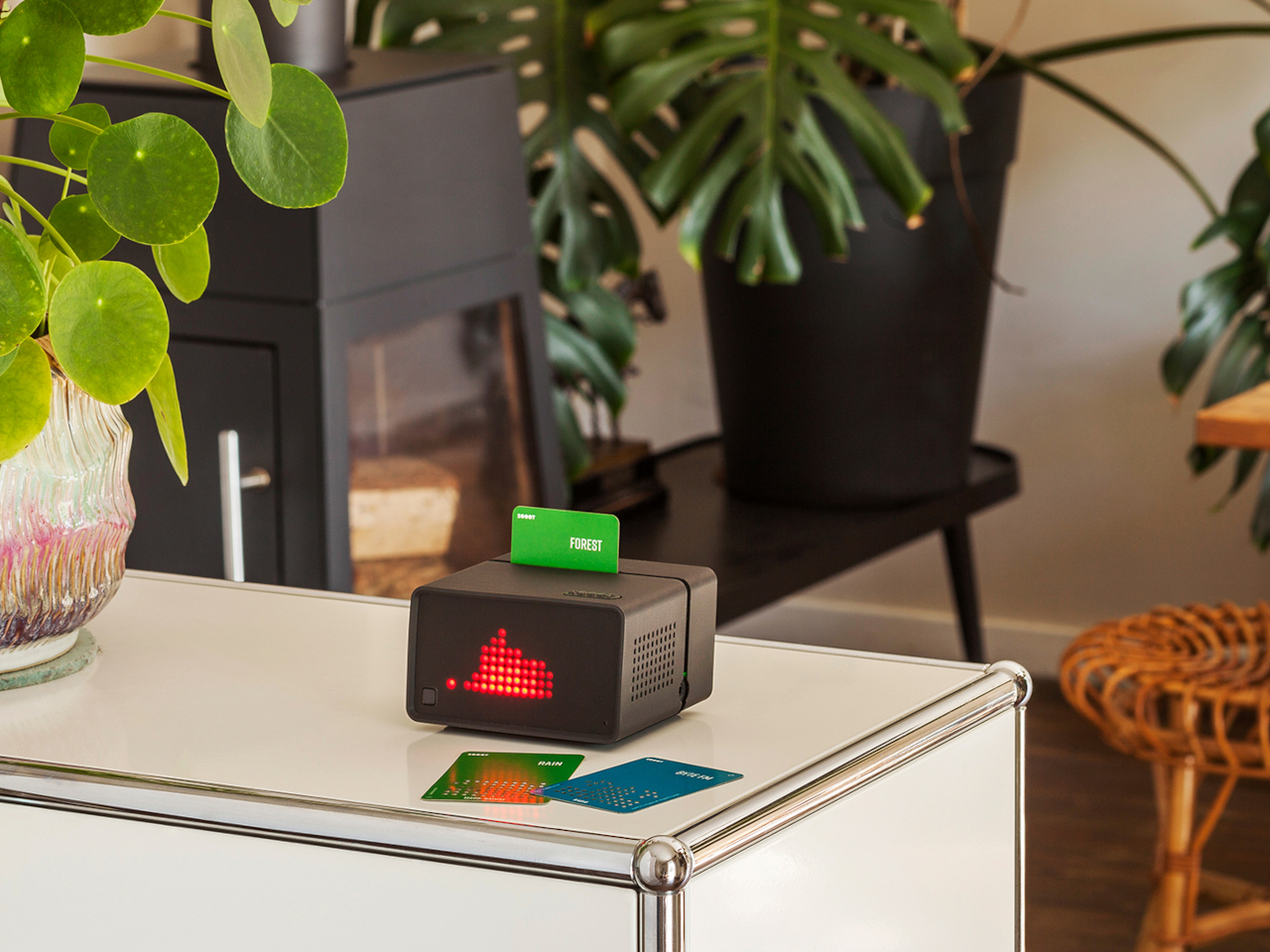
Starting a podcast shouldn’t require navigating past messages, notifications, and whatever else your phone has decided needs attention. Of course, that phone also holds the controls for much of what you’re trying to enjoy. The SOOOT Box offers another arrangement, using punched paper cards to select sounds and functions. This working prototype makes choosing digital content feel closer to picking from a deck.
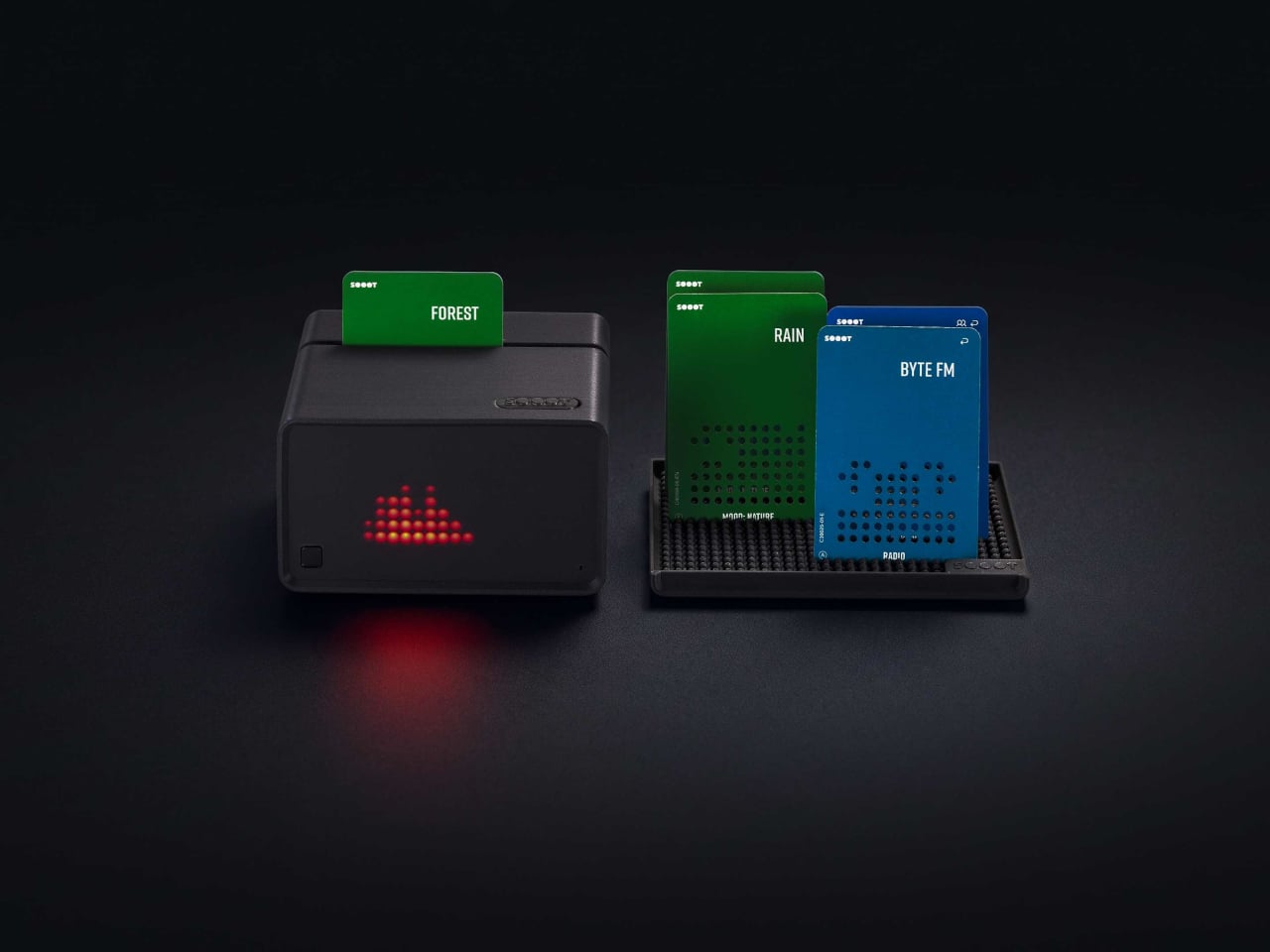
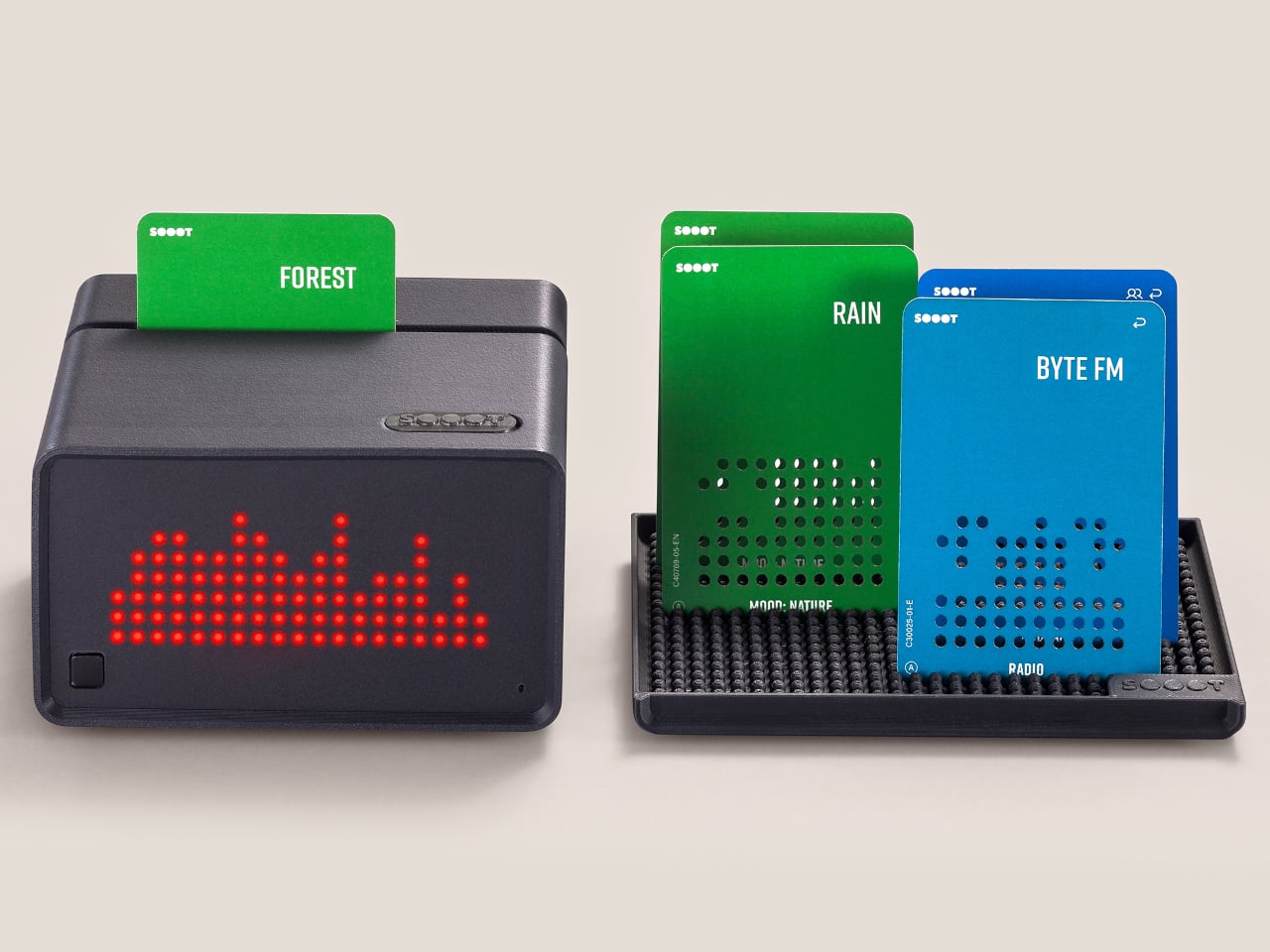
The box itself keeps things rather restrained, with a black, elevated body, a tilted front, speaker grilles on either side, and a slot across the top. A sparse red LED matrix supplies animation without turning the front into another screen full of menus. The colorful cards provide the more conspicuous decoration, staying visible above the enclosure so you can see what’s been asked to play.
Designer: three-2-one GmbH
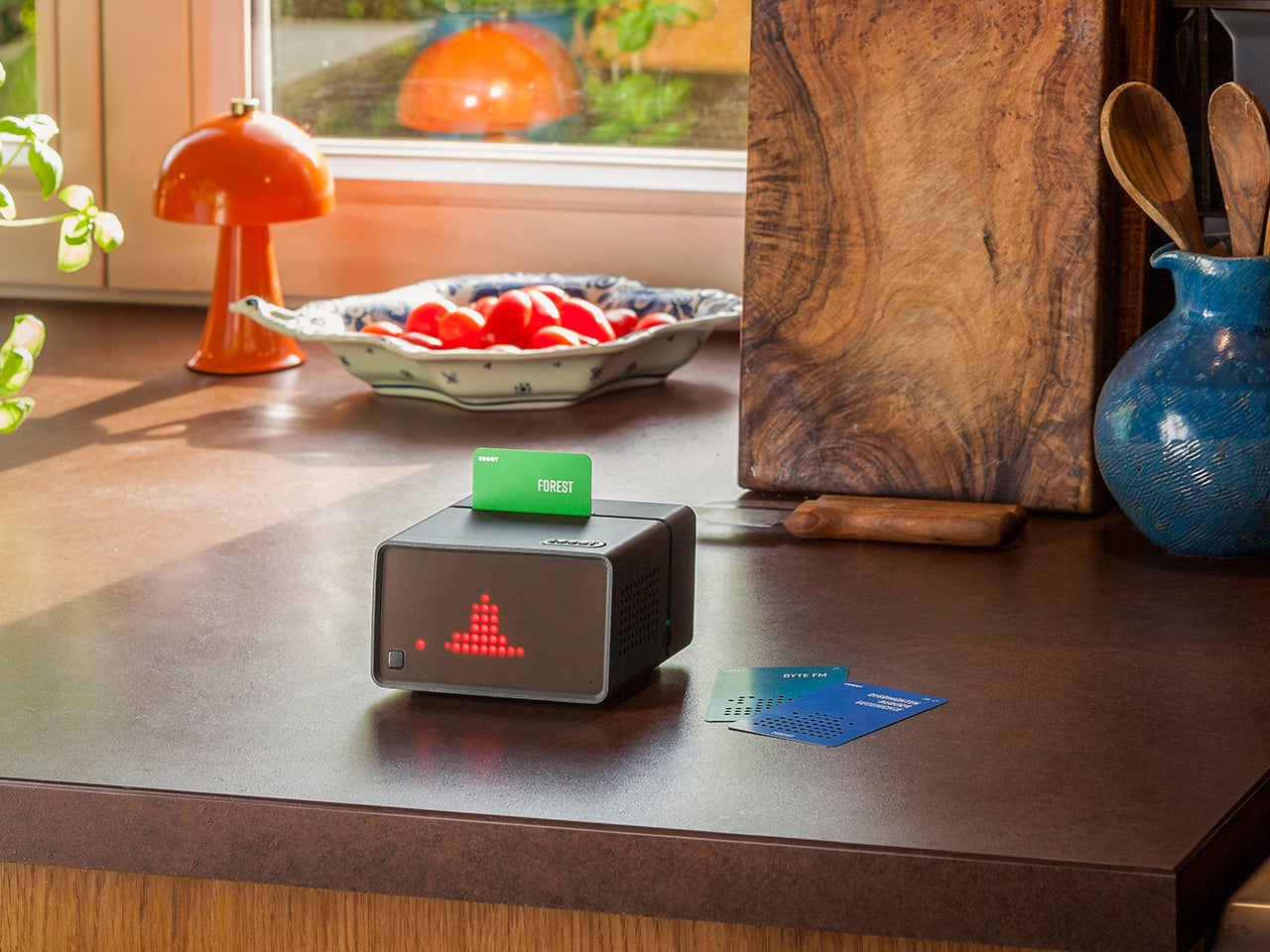
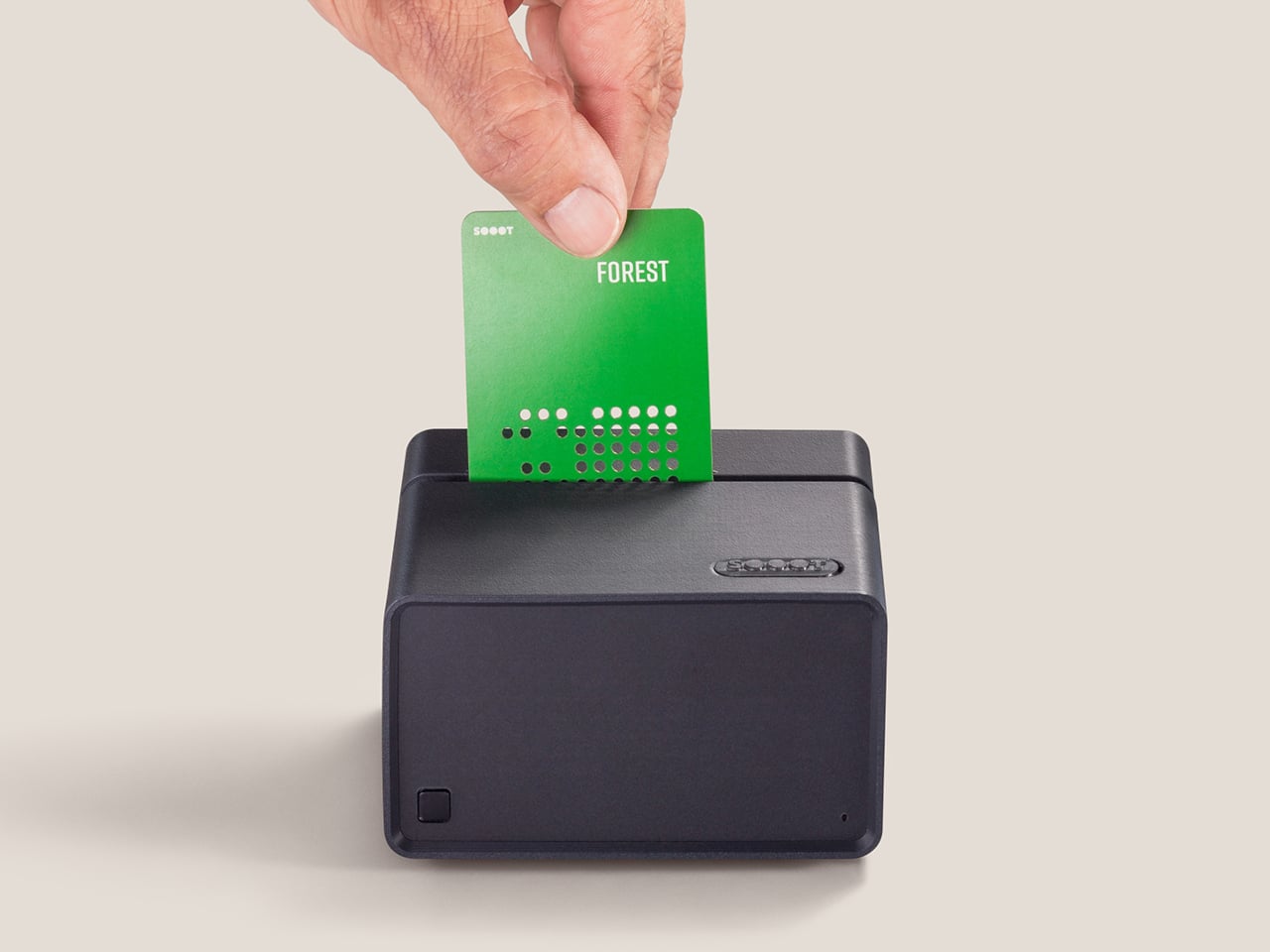
Those cards aren’t miniature storage devices, despite having content associated with them. Made from playing-card stock, they contain no electronics, with their identity determined by their pattern of punched holes. Insert a content card and playback starts; pull it out and playback stops. You can write or draw on the surface, giving a favorite sound a label that actually means something to you.
The more interesting trick comes when you insert several cards together. SOOOT accepts up to four at once, letting one function modify another. Its sourdough example pairs a 30-minute timer with a x4 card to mark four rounds of stretching and folding. Rather than find a setting buried inside a timer app, you assemble the instruction from pieces sitting on the kitchen counter.
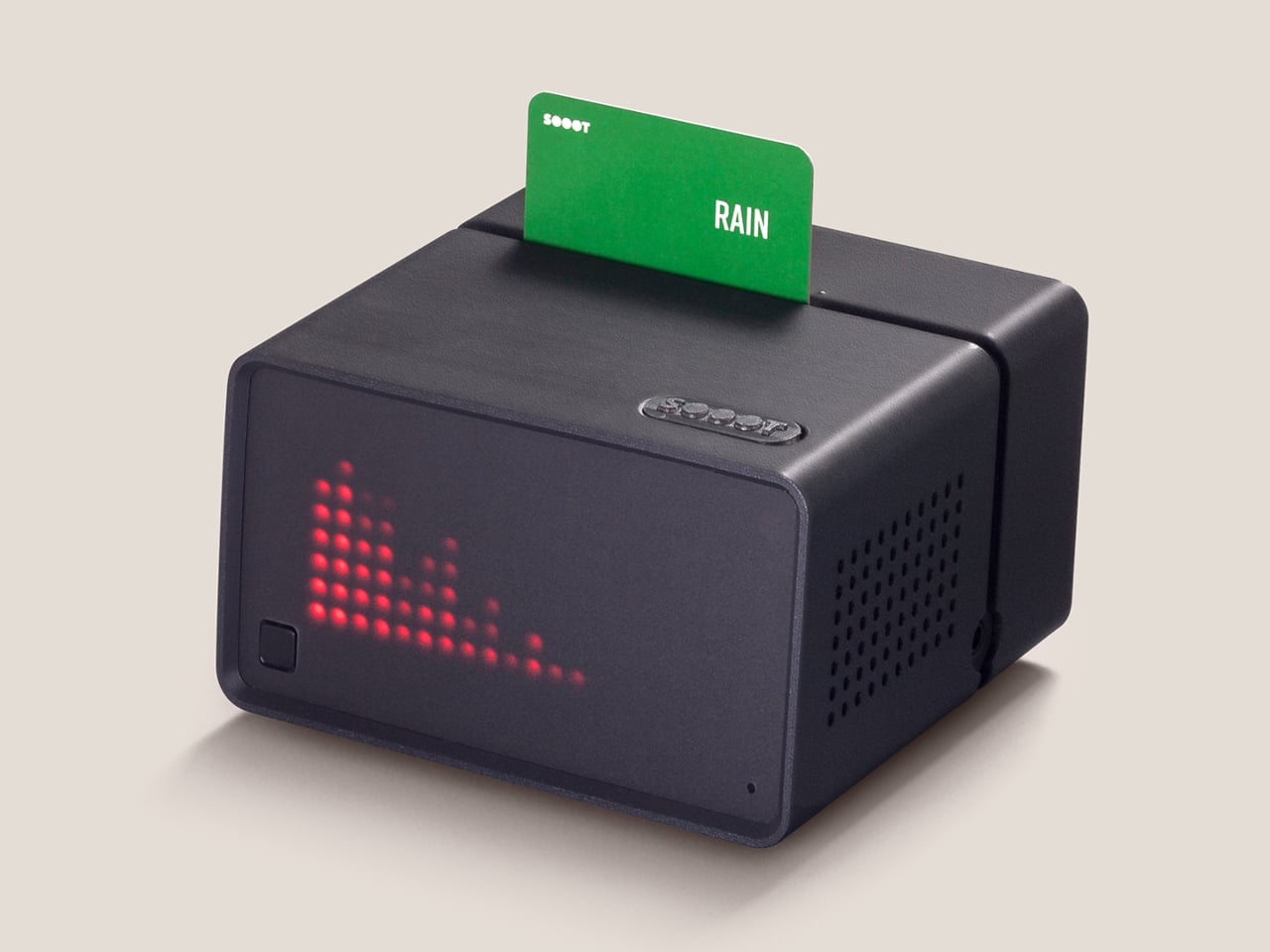
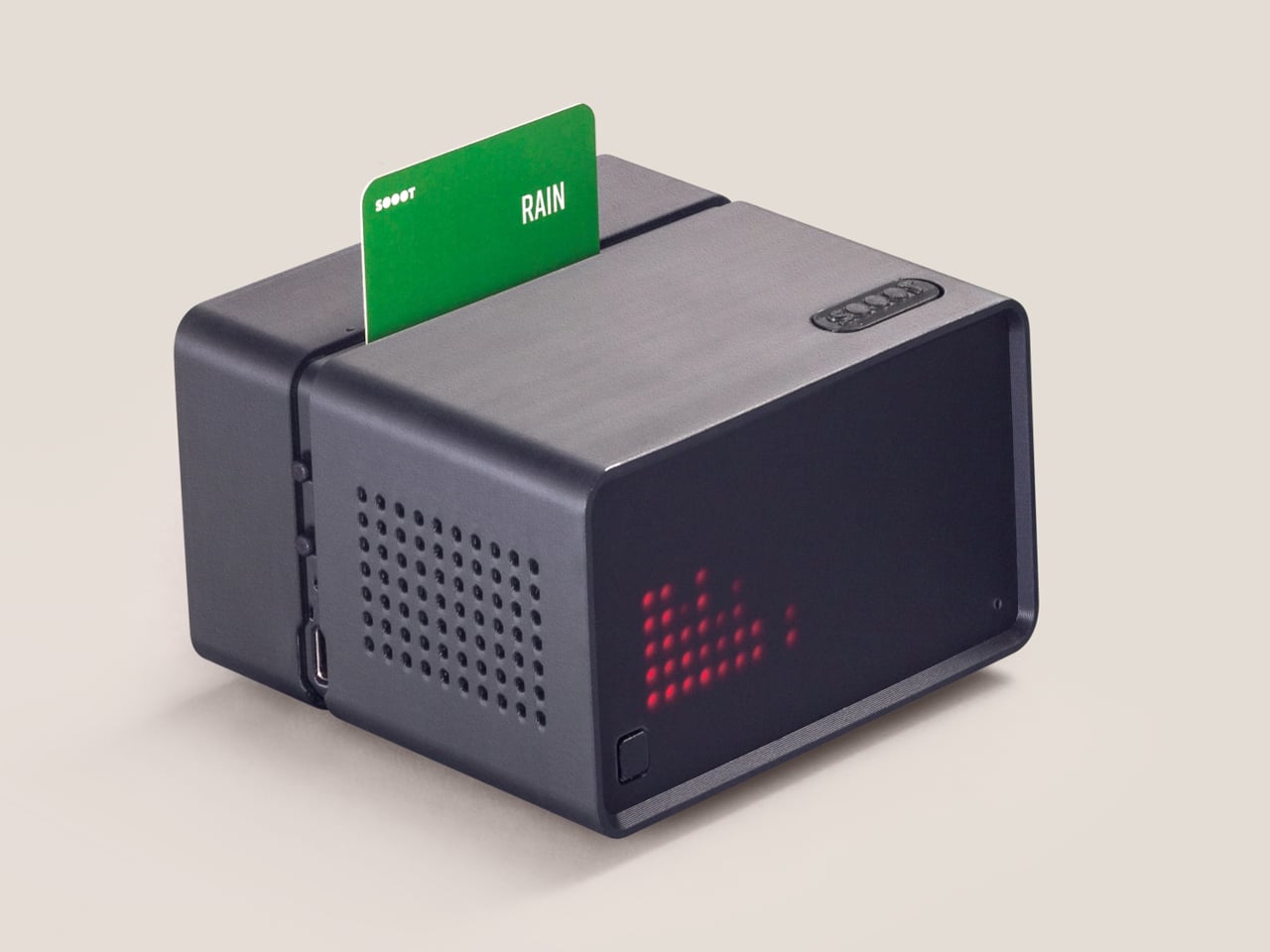
That logic follows you to the bedside table. Combine an audio card with a Sleep Timer card, and the sound gradually fades after the selected time. A Motion Sensor card changes the routine again, enabling playback when someone enters the room. Leave several soundscape cards inserted, and the box can greet each arrival with something different, without anyone reaching for a phone.
A built-in battery lets the box move between those spots without trailing a power cord. Soundscapes, timers, and stored audio files also work offline, although streaming still needs a connection. There’s a microphone for functions such as Party Mode, which turns surrounding sound into red LED animations. The studio says it activates only when needed, with an indicator showing when it’s listening.
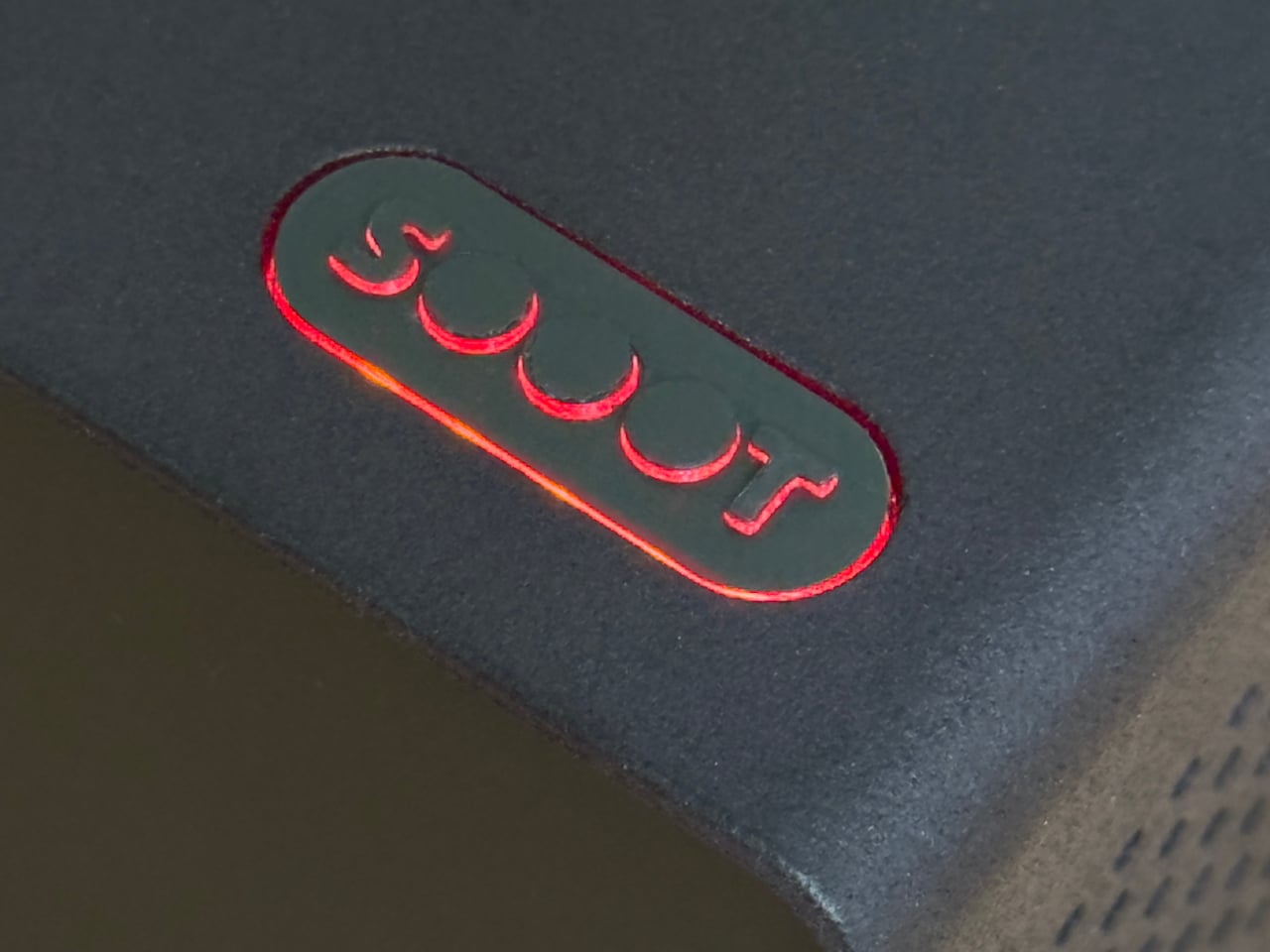
The smartphone hasn’t been banished completely, of course. A companion app for iOS and Android handles Wi-Fi setup, settings, and preparing Custom Cards for your own content or functions. It’s still in development, so this isn’t a finished alternative you can already put through its paces at home. The aim is to leave that app alone once the everyday controls are ready.
SOOOT was presented at Dutch Design Week this month, with a commercial launch planned for 2027. There’s an appealing tradeoff here: fewer things to hunt for inside a screen, but more little objects to keep track of around the house. A deck of paper controls might be easier to understand than another menu, provided your favorite podcast hasn’t disappeared underneath the sofa.