A closet full of clothes can still leave you staring at the same three shirts with no idea which one feels right. That little pause before getting dressed is the problem Jinwook Lee’s Emotion Hanger takes on. It doesn’t choose an outfit for you. Instead, the design gives that indecisive moment a visual counterpart, then turns the act of choosing into a small celebration.
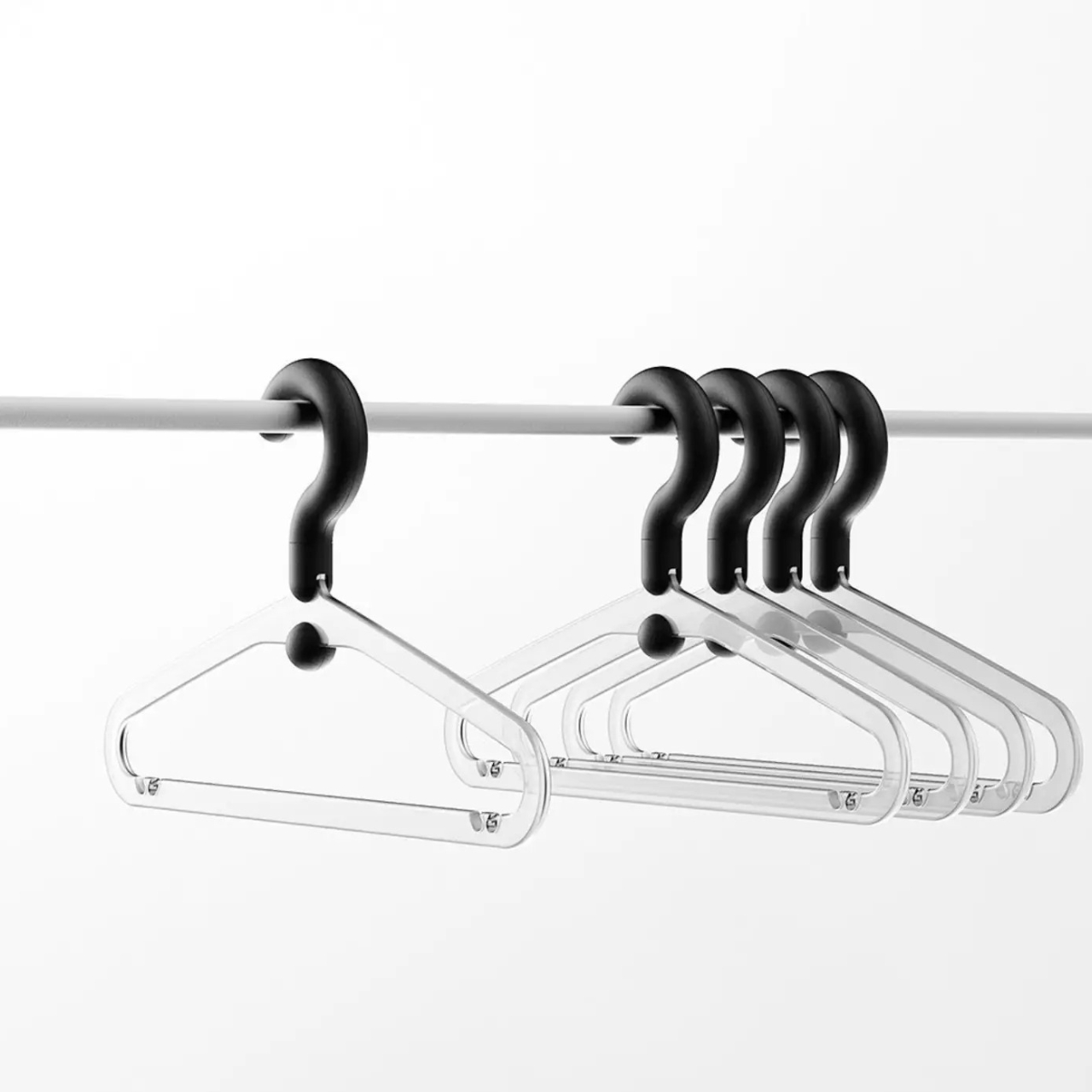
Lee’s houseware concept, presented in 2021, starts with a question mark. A thick, curved hook sits above a separate black dot, spelling out the uncertainty of deciding what to wear. The designer describes the transition from question mark to exclamation point as the central idea. It’s an unusually specific emotional brief for an object whose usual assignment is simply keeping a shirt off the floor.
Designer: Jinwook Lee
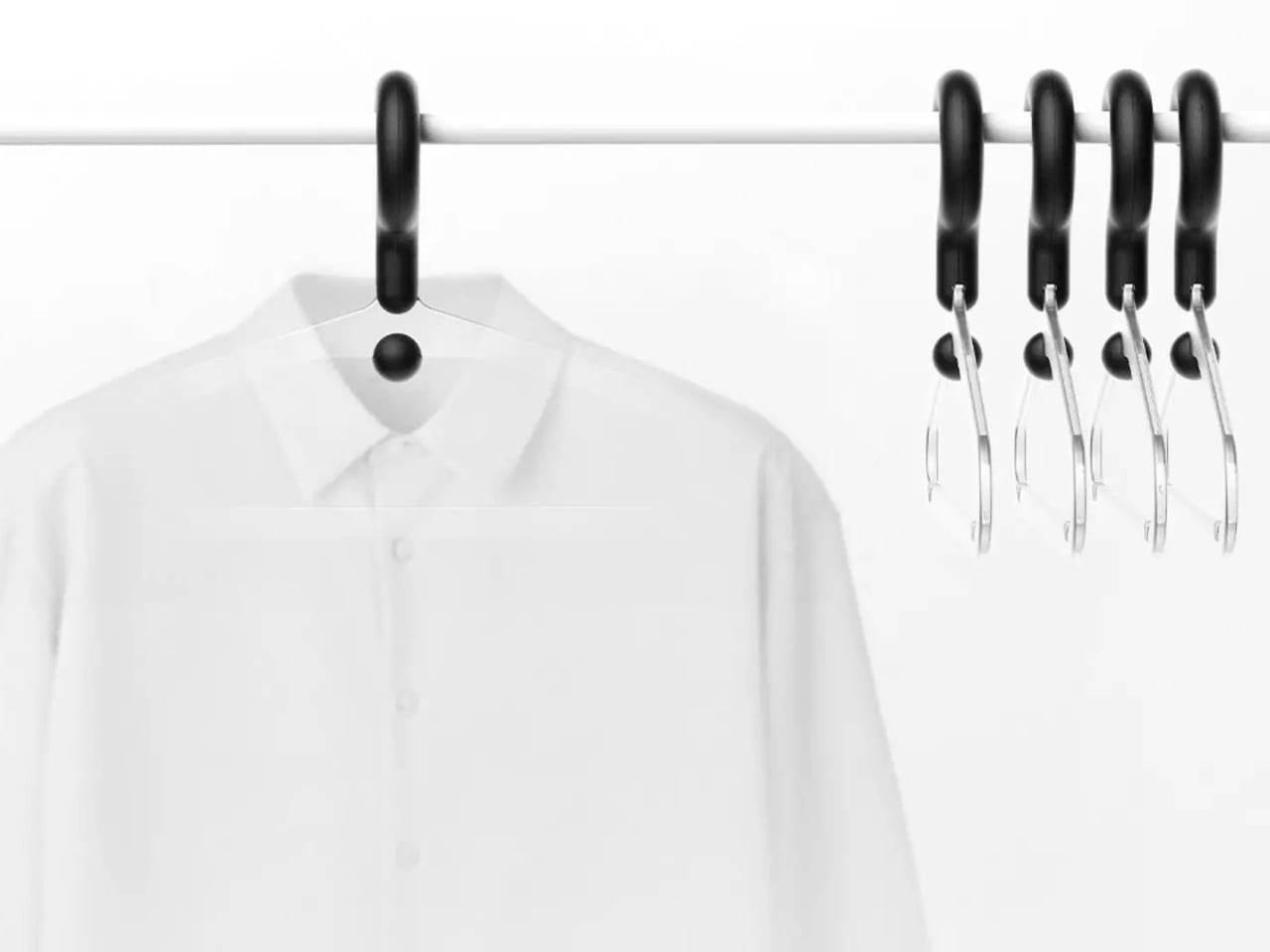
The interaction follows a familiar closet gesture. As you turn the triangular hanger body to bring a garment toward you, the hook’s orientation relative to the body changes. Its broad, questioning silhouette gives way to a narrow profile that reads as an exclamation point above the dot. The curve hasn’t straightened itself. The punctuation changes through perspective, which is a much more satisfying trick than adding a decorative symbol and calling the job finished.
Visually, the contrast does much of the work. The transparent triangular body recedes while the chunky black hook and rounded dot command attention. Small notches sit near the ends of the lower bar, keeping the outline recognizable as a clothes hanger rather than an oversized piece of typography. I like the restraint here. A brightly colored body or another expressive detail would compete with the one joke the object needs to land.
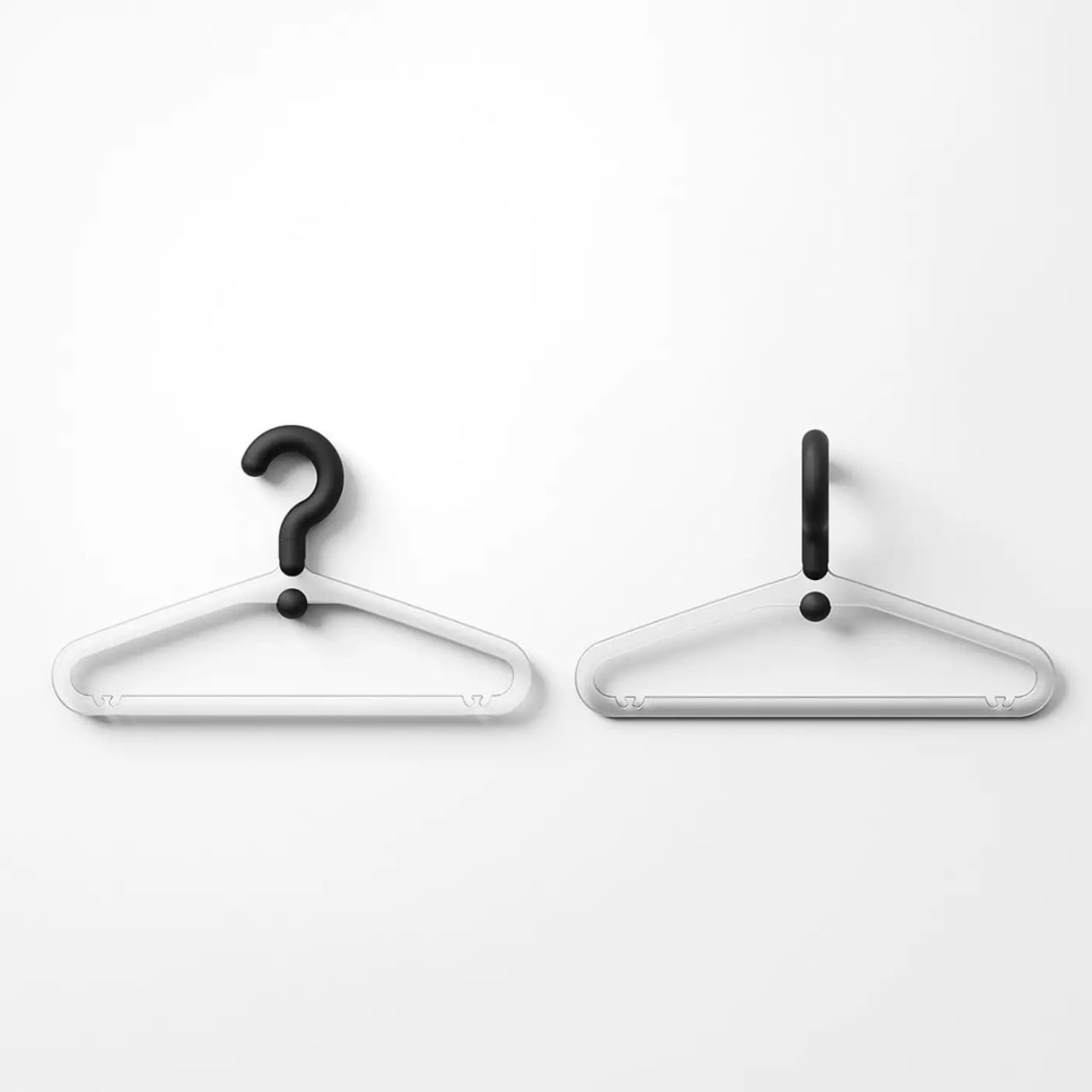
The appeal, for me, is that the expression belongs to the action. A question mark printed on a hanger would be cute once. Here, looking through clothes and turning one toward you completes the visual idea. You’re participating without learning a separate routine. That gives the humor a reason to exist beyond the product photograph, even if its ability to remain amusing over months of use is still an open question.
It’s also worth being clear about the scale of the solution. A punctuation mark won’t make an uncomfortable shirt fit better or settle whether sneakers work for dinner. Emotion addresses the mood surrounding a decision, not the decision itself. I’m comfortable with that modest ambition. Getting dressed already involves enough self-assessment. A small visual acknowledgment of the hesitation feels friendlier than treating every uncertain morning as a failure of organization.
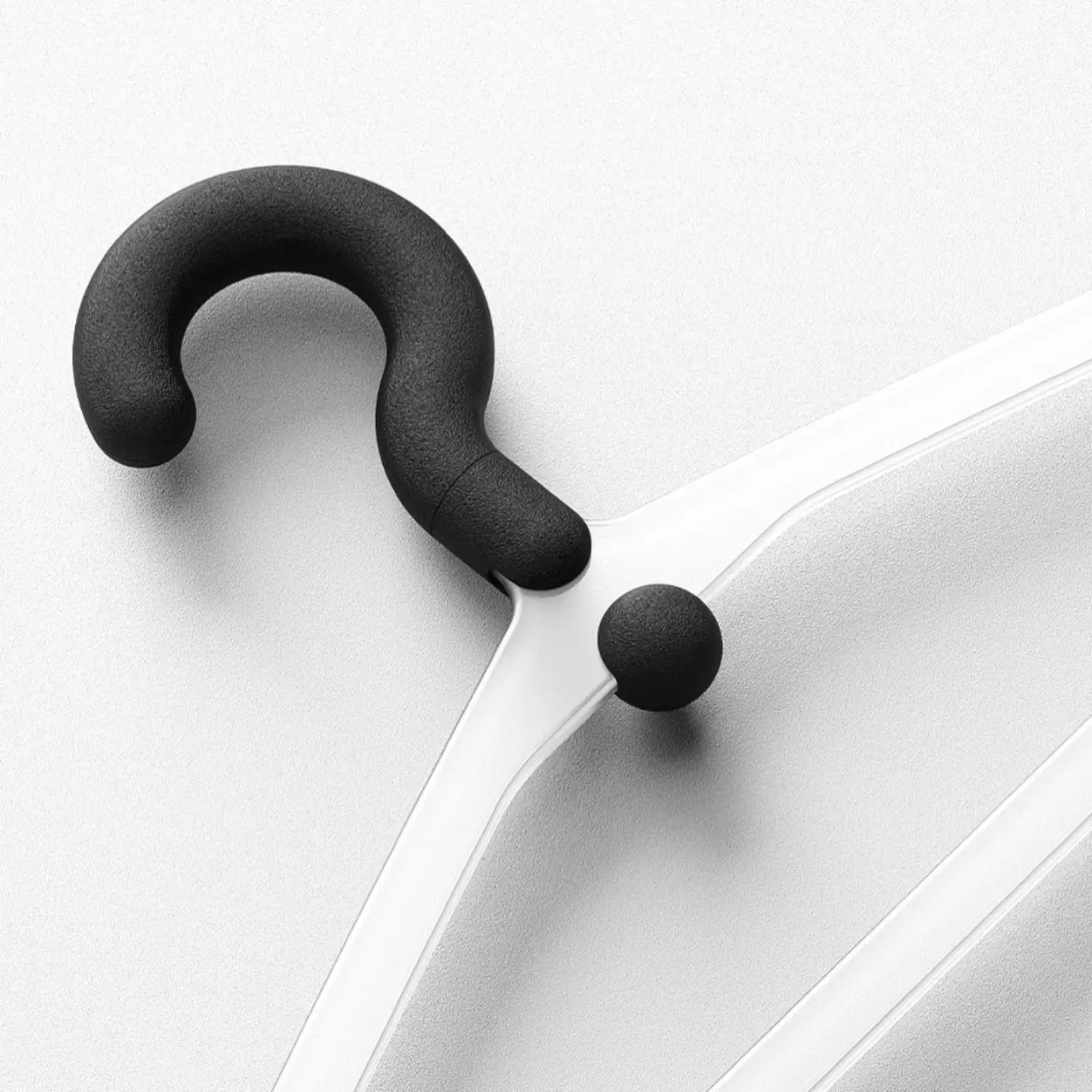
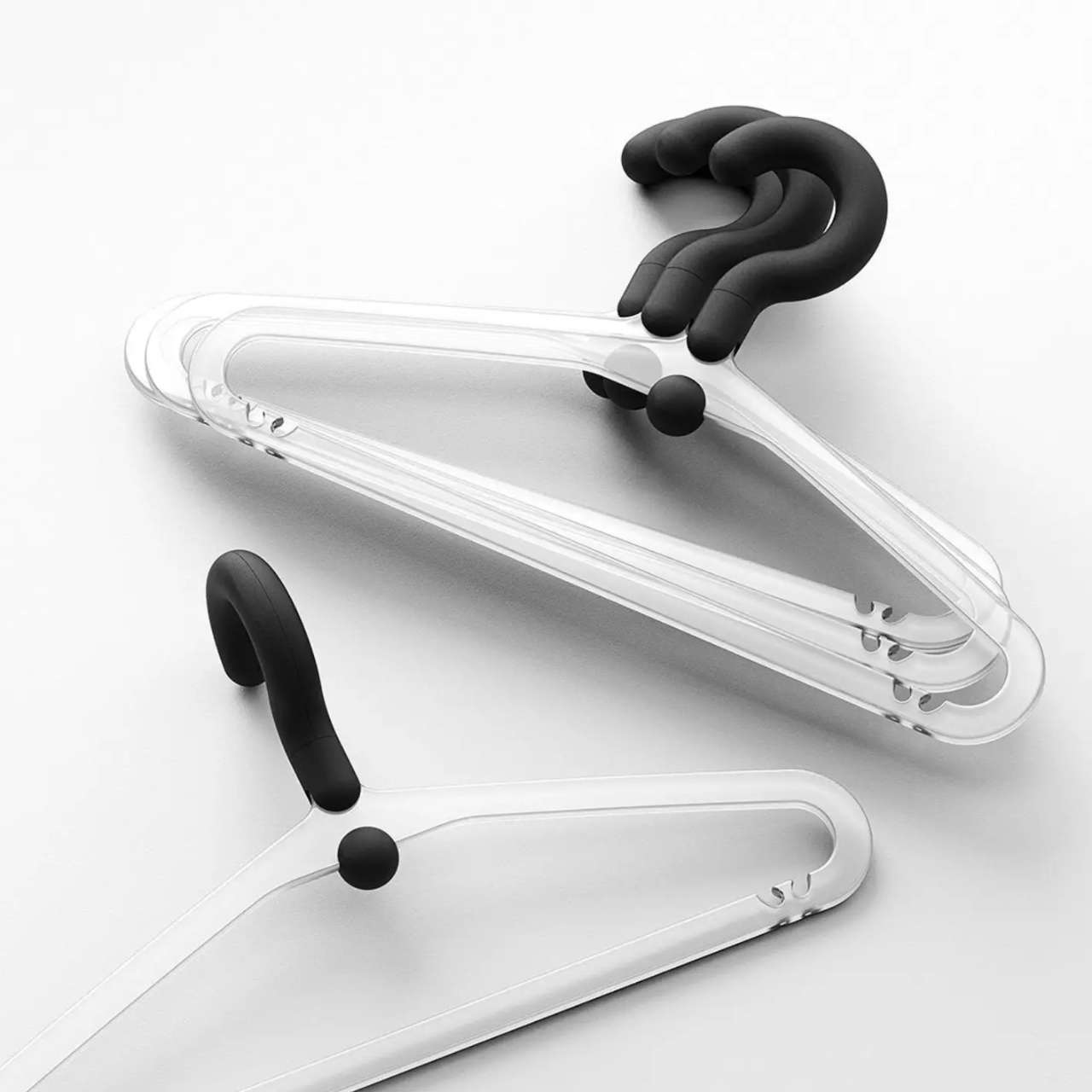
As an actual hanger, though, it would still have to earn its space. I’d want to know how easily the body rotates under the weight of clothing, whether that movement feels controlled, and how the shoulder profile treats delicate garments. A clever interaction loses its charm quickly if it makes retrieving a jacket awkward. Those are practical questions the presentation doesn’t settle, and they matter more to a purchase than how well the punctuation photographs.
The published project page offers a design presentation rather than a retail listing, with no purchase price, material specification, or load rating given. That leaves Emotion best approached as a concept to appreciate, not a closet upgrade with established performance. The distinction matters because its visual clarity makes it easy to imagine already sitting on a store shelf.

Still, I’d happily make room for this kind of humor in everyday objects. The question mark doesn’t ridicule the person taking too long to choose, and the exclamation point doesn’t demand a spectacular outfit. Your perfectly ordinary white shirt gets the same enthusiastic punctuation as anything more adventurous. That’s a generous little design choice. Some mornings, deciding is enough of an accomplishment to deserve the exclamation point.