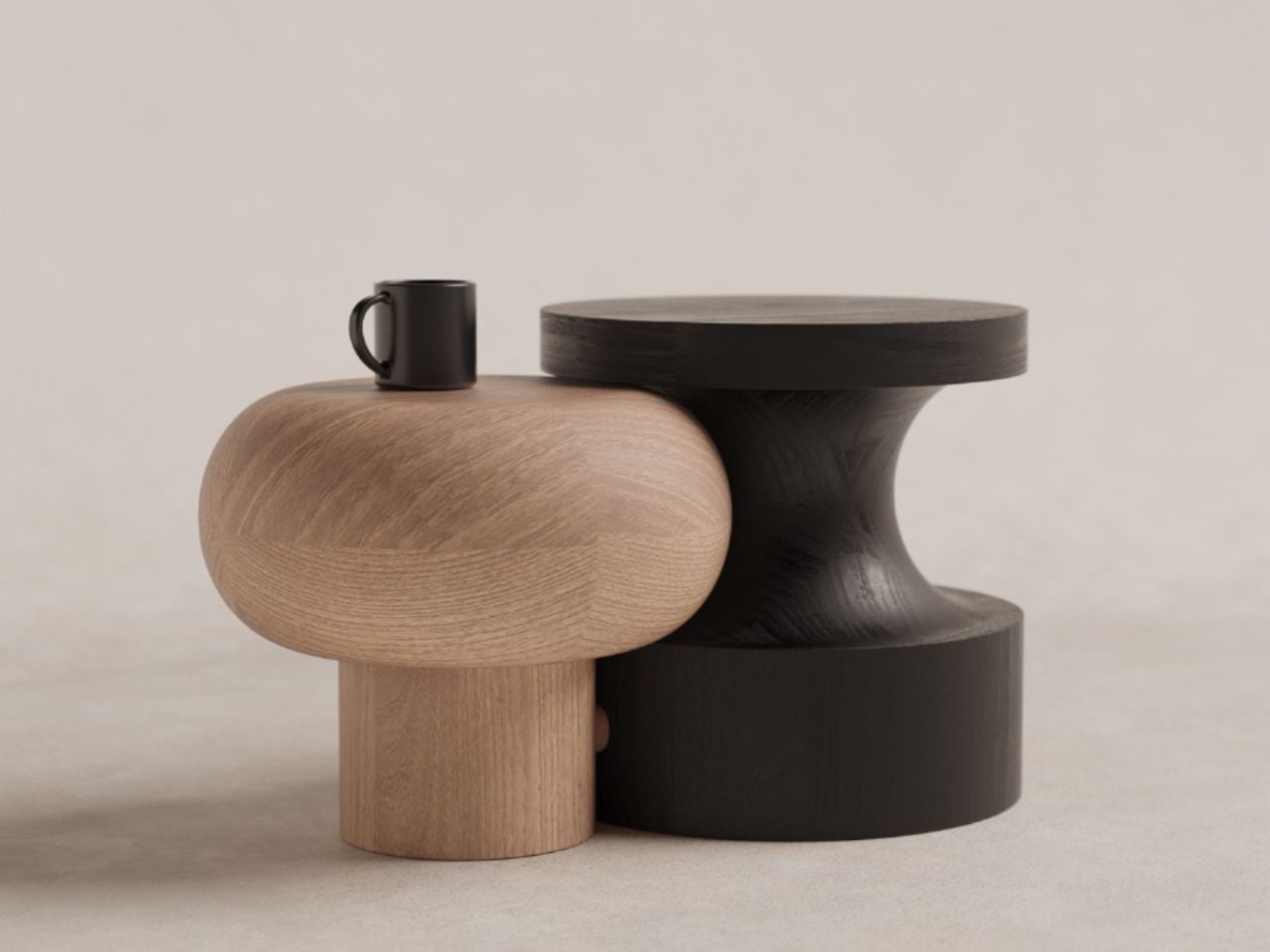
There is something oddly satisfying about two seemingly different shapes fitting together perfectly. The kind of visual harmony that makes you look twice, wondering how something so simple can feel so thoughtfully resolved. The Kokeshi Table, designed by Barcelona-based designer Luis Gimeno, captures precisely that feeling. With its sculptural silhouette, contrasting colors, and playful approach to functionality, this side table makes an impression without demanding attention.
Inspired by the traditional Japanese Kokeshi doll, the table borrows from the familiar proportions of these handcrafted wooden figures, known for their cylindrical bodies and rounded heads. Rather than interpreting the inspiration literally, Gimeno translates its defining characteristics into a contemporary piece of furniture. The result is an intriguing composition of two distinct shapes that appear to belong together, despite their differences.
Designer: Meguso
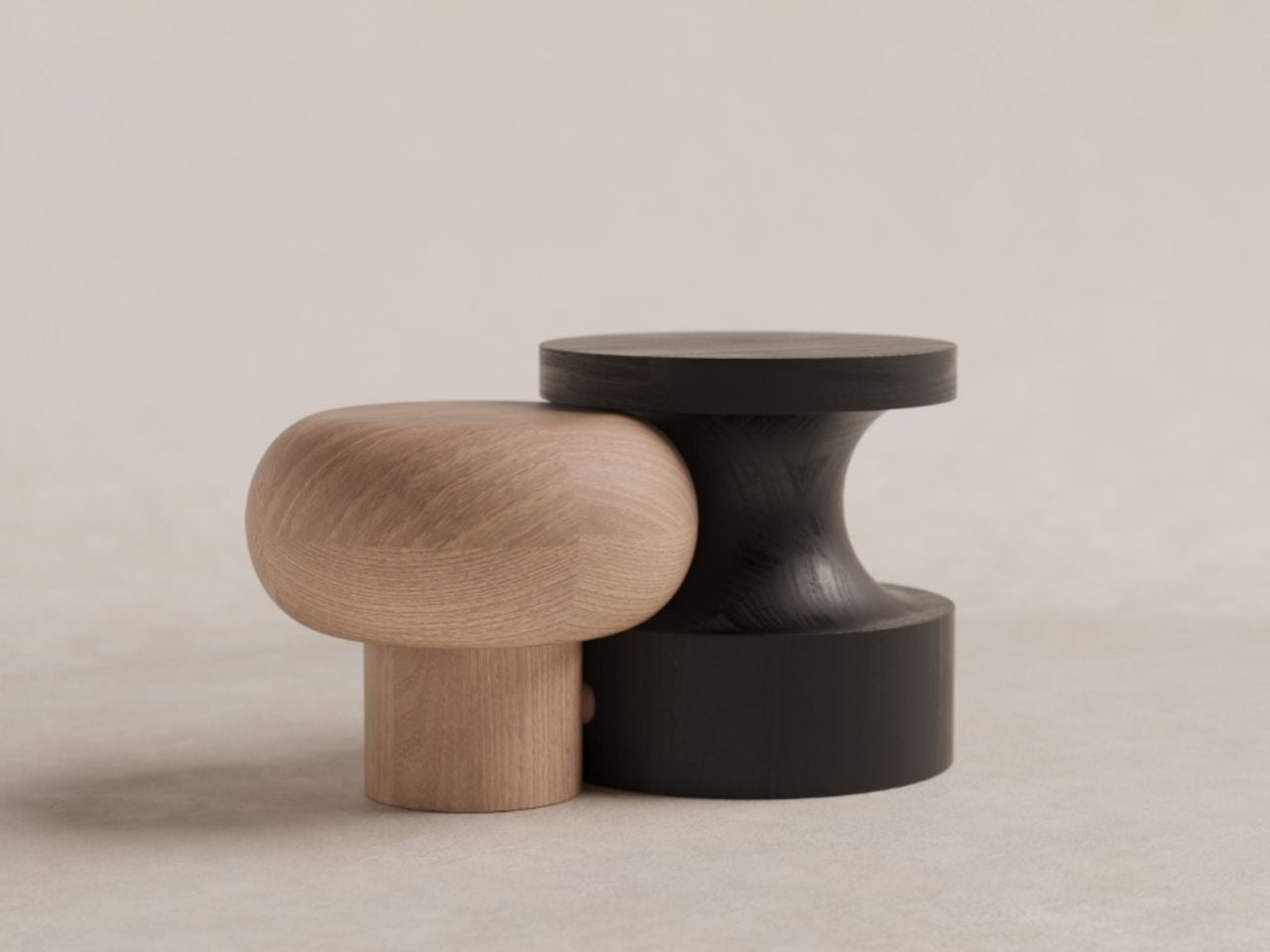
At the heart of the design is an interplay between a black cylindrical structure and a rounded wooden surface. The latter fits neatly into the cylinder’s silhouette, creating a slender waist where the two forms meet. This carefully considered intersection is perhaps the most captivating aspect of the table, with each curve appearing to accommodate the other effortlessly. There is an almost puzzle-like quality to the arrangement, where the satisfaction comes from seeing two contrasting geometries find their perfect fit. Although visually distinct, the two surfaces feel inseparable, each contributing to the identity of the whole.
Yet, the decision to bring these shapes together was motivated by more than aesthetics. Gimeno’s initial idea was to create a table with two separate surfaces, each accommodating a different kind of everyday use. The black surface offers a place for objects that tend to remain where they are, perhaps a favorite book, a small plant, or a decorative object. The rounded wooden surface, meanwhile, serves more immediate needs: a cup of morning coffee, the book currently being read, or something temporarily set aside. This subtle distinction introduces a sense of order without prescribing a routine, allowing both surfaces to accommodate changing habits throughout the day.
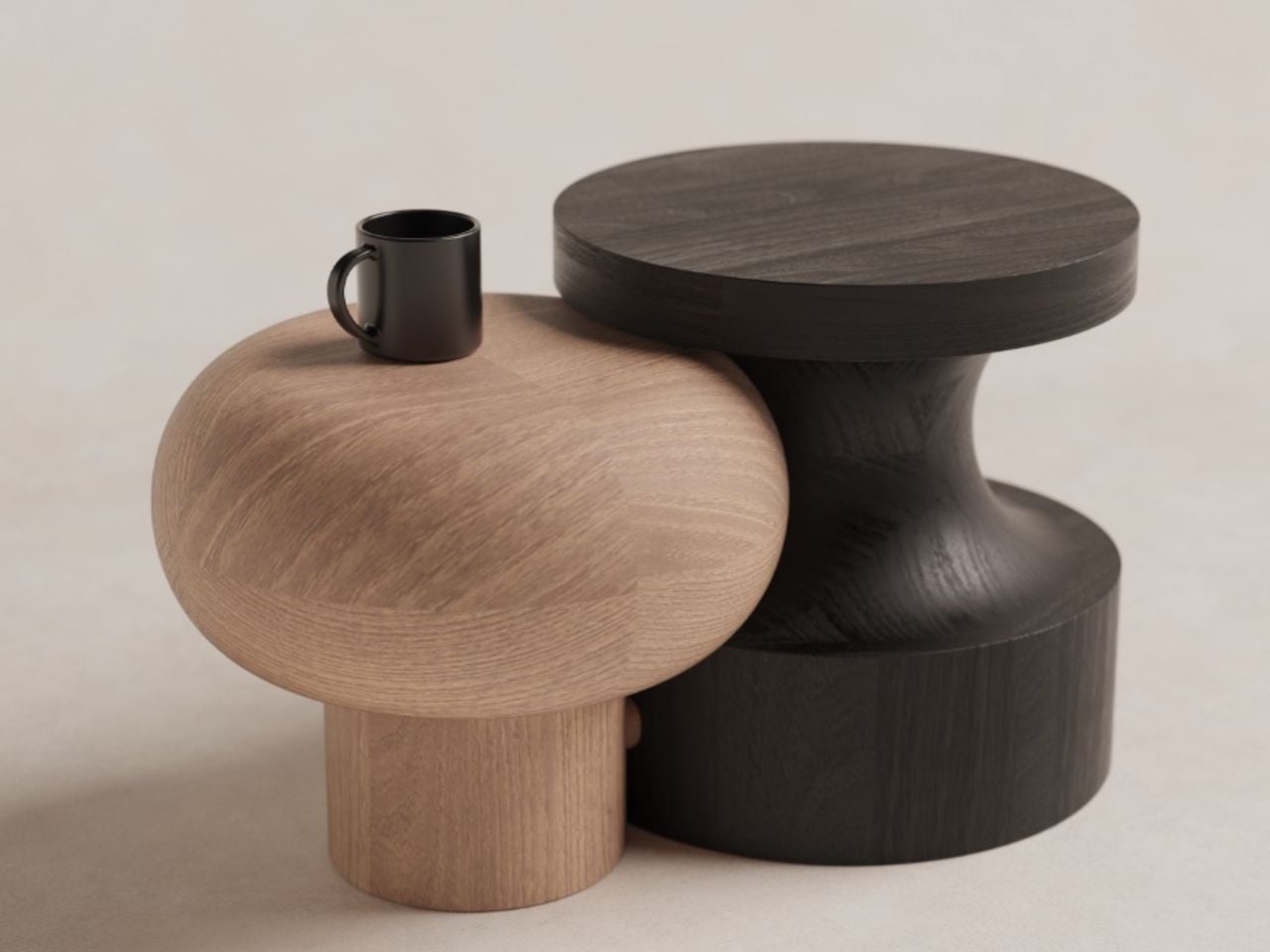
The choice of color further strengthens the relationship between the two forms. The matte black cylindrical body provides a strong visual anchor, while the warm, natural wood introduces softness and contrast. Together, they create a balanced composition that feels graphic without becoming overwhelming. The darker surface emphasizes the table’s distinctive silhouette, while the lighter rounded element draws attention to the point where the two shapes meet. The contrast makes the geometry easier to appreciate, allowing the design to communicate through its proportions rather than additional ornamentation.
There is also a versatility to the Kokeshi Table that makes it particularly appealing. Its compact sculptural presence could sit comfortably beside a sofa, complement a reading corner, or become an unexpected accent in a bedroom. In a minimalist interior, its contrasting forms offer just enough visual interest to interrupt an otherwise restrained setting. Within a more eclectic space, its playful character can hold its own among expressive furniture and decorative pieces. Customizable dimensions, colors, and wood types allow for further variation, while the relationship between the two forms keeps the design recognizable.
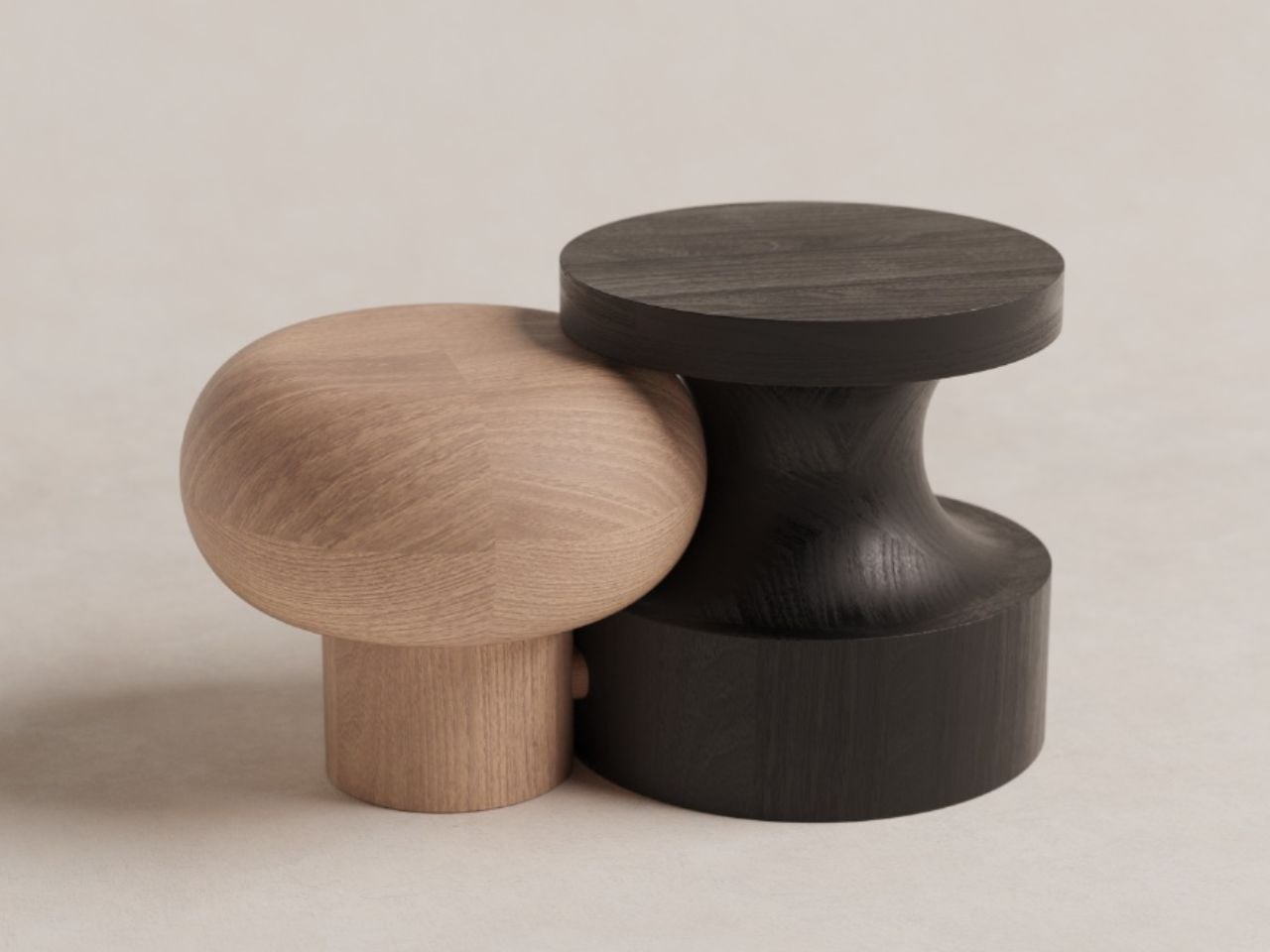
What makes the Kokeshi Table memorable is how naturally its visual and functional ideas coexist. The shapes are satisfying to look at, the contrasting surfaces have a practical purpose, and the reference to a traditional object gives the piece a sense of character without overwhelming its contemporary expression. Gimeno has created something that feels equally comfortable being appreciated as a small sculpture or used as an everyday side table.
In a space, the Kokeshi Table would be a muted statement piece, quietly distinctive and surprisingly adaptable. It is the kind of furniture that rewards a closer look, where the smallest detail, the precise meeting of two curves, becomes the most compelling part of the design.