Every October I do the same thing. I open Red Dot’s concept winners, grab a snack, and brace myself to fall in love with something that doesn’t exist yet. It works every time, and this year was no exception. The Red Dot Award: Design Concept has been celebrating unbuilt ideas since 2005, which makes it the closest thing design has to a crystal ball. Sometimes the ball shows you a gadget you’ll want next year, and sometimes it shows you something wonderfully ridiculous.
Best of the Best is the tier just below the Luminary, the award’s top prize, which has its own article. So everything below earned a standing ovation from a very picky jury. I’ve rounded up the winners that stuck with me, along with some opinions nobody asked for. Think of it as the pre-game and the post-game rolled into one. Settle in, because the lineup is a lot.
MobED Urban Hopper and MobED Golf by Hyundai Motor Company and Hyundai Genesis Global Design

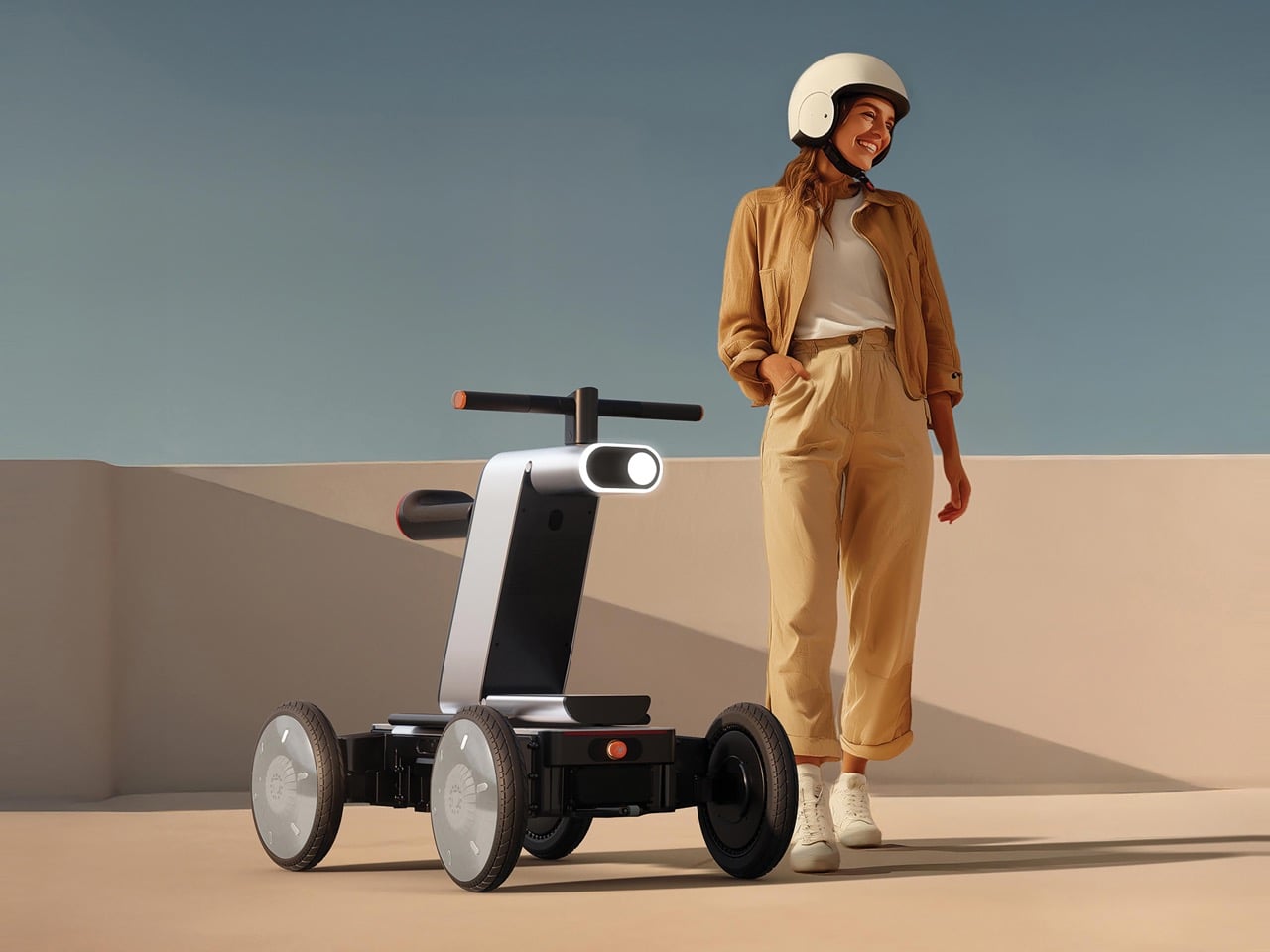
Hyundai’s MobED began as a flat, four-wheeled robot platform with a clever self-leveling trick, built to haul cargo and follow people around. These two concepts put a rider on that idea instead. Hyundai Genesis Global Design, the in-house team, shaped them around what Red Dot calls a compact robotic mobility platform with multi-directional driving and modular applications. In the lead image, a slim upright column carries a handlebar and a glowing round headlight, perched on four chunky wheels like a very polite scooter. It looks friendlier than most robots I’ve met, which is a low bar, but a cute one.
The Urban Hopper handles city trips, while MobED Golf takes the same base onto the fairway, and the thumbnails show it carrying a golf bag. A soccer ball rolls through another frame, so Hyundai clearly wants this thing at play as well as at work. Modular applications are how one chassis stretches across all of that. Hyundai says the pair also picked up a nomination for the Luminary, the competition’s top prize. The real MobED is already pitched at business customers, and I’d happily see a rideable cousin parked outside my apartment.
Tangibook by Mao Chengjie, Zhao Chenyang, and the TRIZID and Ningbo University Team
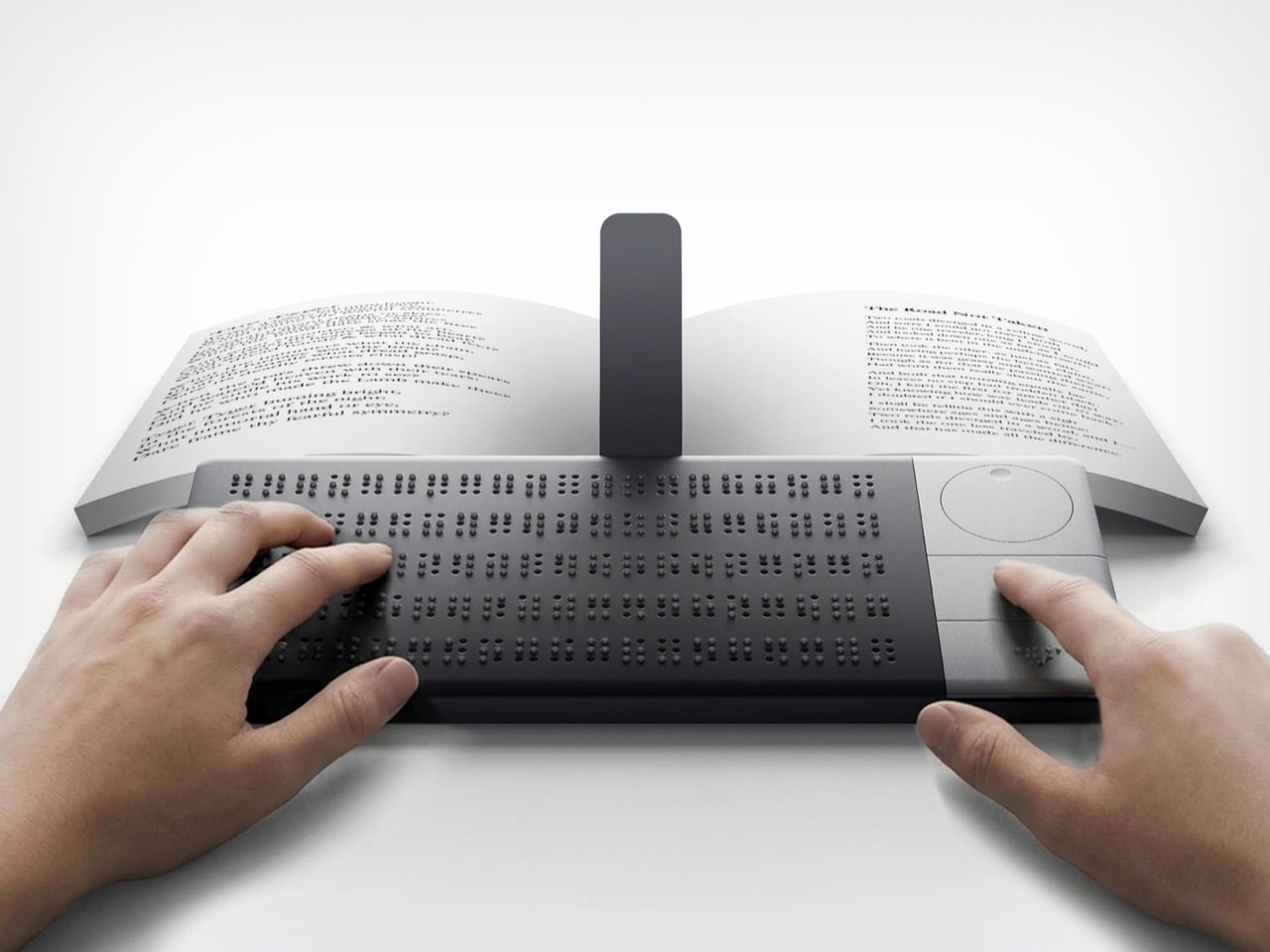
Only a small fraction of printed books ever get a Braille edition, which leaves blind readers waiting on someone else to decide what they can read. Tangibook skips the waiting. It’s a portable, refreshable Braille reader that turns printed text into real-time tactile output, so a visually impaired user can pick up a book and read it independently, accurately, and privately. TRIZID Industrial Design in Ningbo built it with Ningbo University, and seven designers are credited on the project. In the main image, an upright post stands behind the display while a book lies open in the background.
The slab carries rows of Braille cells under both hands, with a dial and a few buttons on the right. Reading looks closer to running your fingers down a page than poking at a gadget. The thumbnails show it propped on a folding stand and tucked under an arm like a slim clutch, which suits something meant to leave the house. Refreshable Braille displays often cost thousands of dollars and usually depend on a phone or computer for their content. Tangibook goes straight to the paper, which cuts out the middleman and the waiting list, and I love a design whose best feature is letting you read whatever you want, whenever you want.
Aridge A868 by JuanMa Lopez, Wang Tan, and the Aridge Design Team

Flying cars have been “five years away” for about seventy years, so I’m trained to roll my eyes at them. Then Xpeng’s Aridge unit shows up with the A868, a six-seat hybrid-electric tilt-rotor, and I’m only rolling one eye. Red Dot describes it as a full tilt-rotor flying car built for efficient regional air mobility, mixing vertical takeoff, long range, and comfort for premium travel. Aridge, the flying car unit Xpeng rebranded from Aeroht, led the design with JuanMa Lopez and Wang Tan, plus a dozen more designers. Fourteen names on the credit list suggests nobody got to design the rotors alone.
In the top-down render, the A868 shows a white fuselage with a black belly, ARIDGE lettered across the wings, and six rotor pods spread over a forested coastline. Aridge claims a range above 500 km (310 miles) and a top speed over 360 km/h (224 mph), thanks to a hybrid-electric powertrain. Joby’s S4 seats five, so the extra seat here is a flex. Xpeng says the prototype has entered test flights, which puts it ahead of most renders in this lineup. Flying cars still run on promises, but a six-seater that actually leaves the ground wins back some of my eye-roll.
Norton Manx R by Simon Skinner and Norton Motorcycles

Superbikes have spent two decades growing winglets, stickers, and creases until they look like fighter jets that lost a bet. Norton went the other way with the Manx R, a wingless, decal-free V4 superbike from the British marque, now owned by India’s TVS Motor Company. Head of Design Simon Skinner led the project, with Gerry McGovern, known for his Jaguar Land Rover work, advising as Norton’s chief creative advisor. Red Dot calls it a modern, reductive take on the superbike, free from racing regulations and built around the road rider. That freedom shows in the silver-white bodywork, which sweeps nose to tail without a single decorative line shouting for attention.
Underneath sits an all-new 1,200cc V4 making roughly 200 horsepower, backed by semi-active suspension, Brembo brakes, and an 8-inch TFT touchscreen. Fixings stay hidden while the mechanical bits stay on show, so the machinery does the decorating. The slatted tail with its glowing taillight looks more like a luxury coupe than a motorcycle, which fits the McGovern influence. It also took Bronze at this year’s IDEA Awards, the first combustion-engined production sports motorcycle to do so. Most superbikes want you to love the spec sheet, and this one wants you to look first, which suits a very old brand starting over.
MaxArt by the Lenovo Design Team
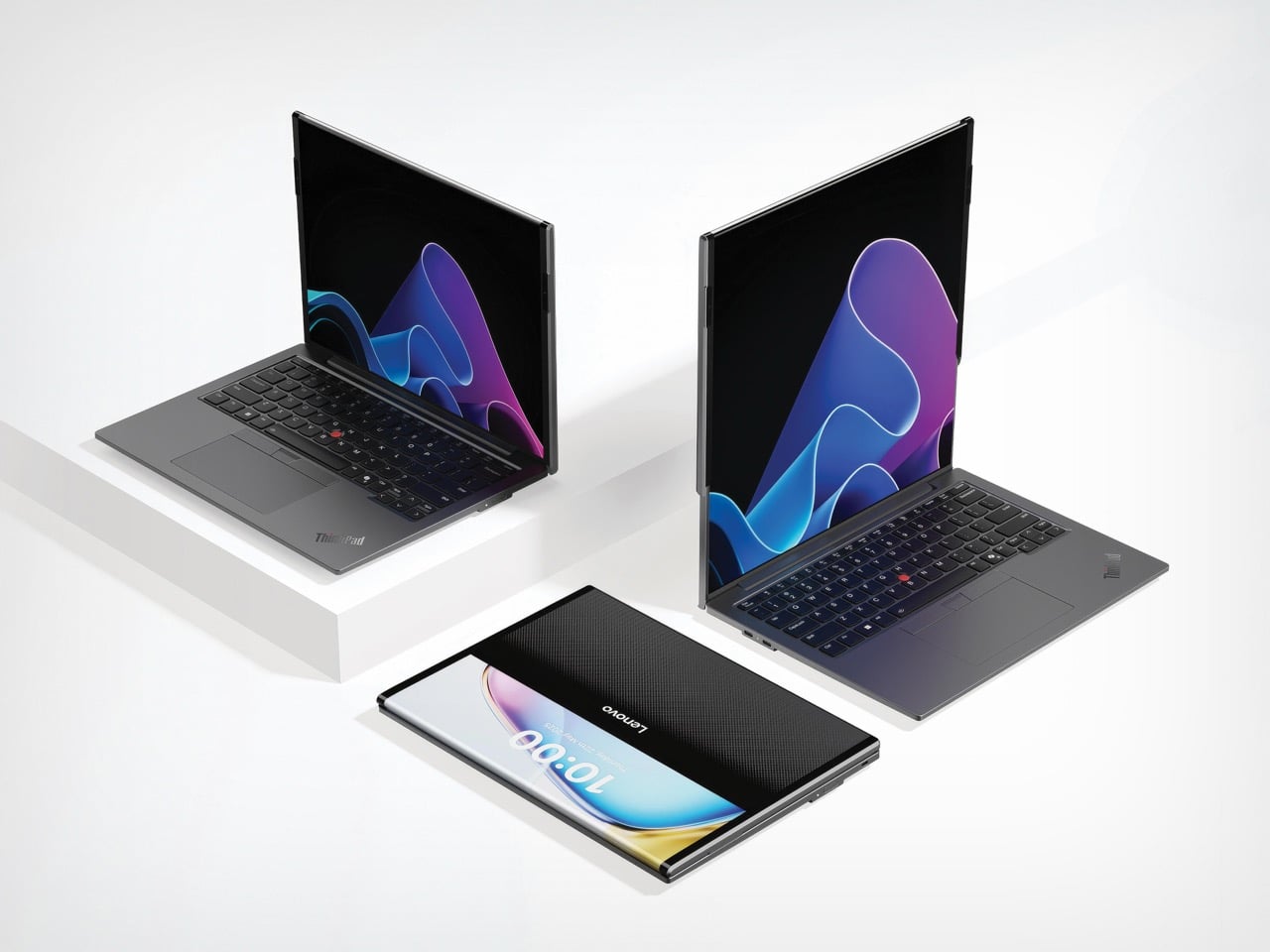
Lenovo has a habit of turning concept laptops into real ones, and its vertical rollable is the proof. The ThinkBook Plus Gen 6 Rollable used a pair of motors to stretch a 14-inch screen up to 16.7 inches, and it launched from $3,499. MaxArt is the sequel, billed by Red Dot as Lenovo’s second-generation rollable laptop, led by designer Yang Peiyin with a nine-person design team. The brief pairs AI-powered productivity with expandable display technology and a transparent design that shows off the engineering. In the renders, the screen climbs out of the base like a periscope and leaves a tall, portrait-shaped canvas behind.
The closed laptop is the sneaky part, since its lid hints at a bright strip of screen showing the time. Open it up and you still get a ThinkPad-style keyboard with the red TrackPoint nub intact, which tells me Lenovo knows which details its fans would riot over. Anyone who has ever wished for just a few more lines of code or one more document window will see the appeal right away. The first generation proved the idea could survive a production line, so a second pass is a fair bet to sharpen it. MaxArt is still a concept, but it already has a shipping older sibling to vouch for it.
CX Microdot Tattoo Applicator by Ferdinand Kohle, Shaoyu Wang, Hemal Dias, and CipherX

Tattoo machines have buzzed the same way for over a century, and the sound alone keeps plenty of people out of the chair. Ferdinand Kohle, who has a needle phobia himself, founded London startup CipherX to fix that. The CX Microdot Tattoo Applicator is the handheld tool behind it, designed under Kohle with Shaoyu Wang and Hemal Dias. Red Dot says it enables precise, pain-free application while making tattoo creation more accessible, safe, and inclusive. Instead of a needle gun, a single-use patch of dissolving microneedles carries the pigment, and the applicator presses it into the skin.
In the photo, the applicator is a matte black grip shaped a bit like a flashlight, pressed against an upper arm while the other hand steadies it. Dutch microneedle specialist uPATCH built the internals, and CipherX shaped the exterior and the overall experience, so it looks calm rather than clinical. The patch stays on for about 15 minutes, then peels away, leaving a permanent tattoo behind. CipherX says the tiny needles don’t reach as deep as a traditional tattoo needle, which is why it doesn’t hurt. For now it’s a London affair, with trained staff applying small designs, so American needle-phobes are waiting on an expansion.
Smart Insulin Kit by James Melia and BLOND
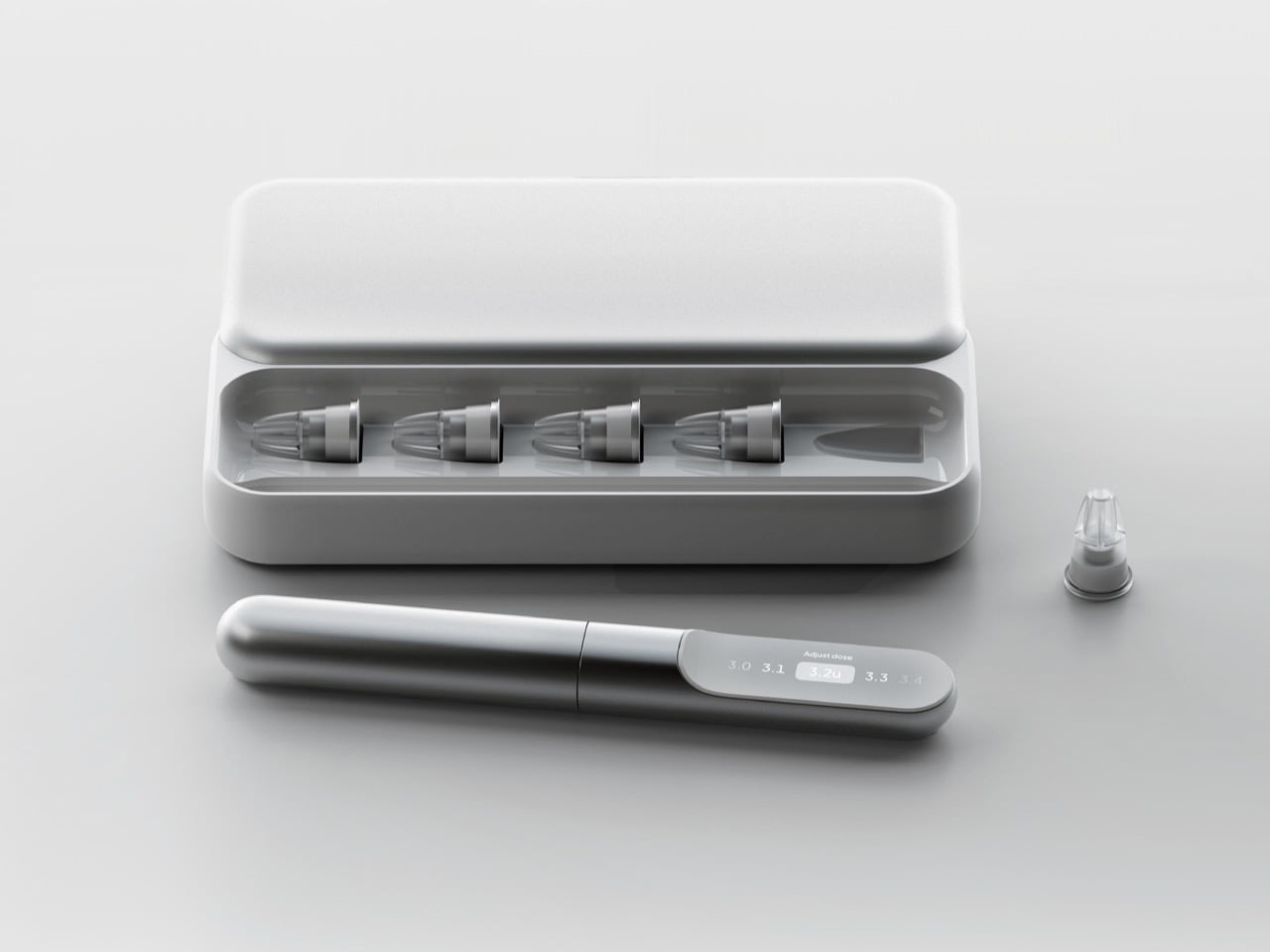
Just before this, a tattoo applicator promises to take the sting out of needles, and the Smart Insulin Kit goes after the daily routine around them. People who take insulin often repeat that routine several times a day, usually with gear that looks like it escaped from a clinic. BLOND, the London studio founded by James Melia, set out to make something calmer. Red Dot calls it a connected insulin management system, pairing a smart pen, a multifunctional storage case, and an AI-enabled app to simplify dosing, treatment administration, and diabetes care. It’s still a concept, so nothing here is on a shelf yet.
Smart pens already exist, with the InPen launching in the US in 2017 to log doses and send reminders, but many still look like medical gadgets with an app bolted on. BLOND, ranked the top design consultancy in Europe and the Americas by Red Dot, treats pen, case, and app as one family. The render shows a brushed metal pen with a slim dose display next to a pale case holding four small tips, all in matching soft gray. The thumbnails add a charging tray and a hand pressing the pen to skin. It reads like a fountain pen set, which is a lovely way to carry a daily routine into public.
Ice Cream Cone-Shaped Yarn Packaging by Li Xingguo, Ding Zhiyong, and ShenZhen YUTO Packaging

Somewhere in a craft aisle, a row of yarn skeins has been handed waffle cones and told to look delicious. ShenZhen YUTO Packaging, led by Li Xingguo and Ding Zhiyong, turned ordinary balls of yarn into scoops of lemon, blueberry, and strawberry, and honestly, I want a double. Red Dot says the design pairs playful aesthetics with practical function, thanks to one-sheet forming construction that gives you tangle-free dispensing, secure storage, and sustainable packaging in one integrated design. Yarn’s biggest crime is turning into a bird’s nest the moment you look away, and this cone politely refuses to let that happen.
Each cone wears a waffle diamond pattern, and a little paper band arches over the scoop like a handle, with lettering running along it. The kraft brown with pastel yarn is the exact color pairing of a summer afternoon, minus the sticky fingers. Everything folds from a single sheet, which is a very tidy way to be eco-friendly. The thumbnails show the cones lying down with bright stitch markers spilling out, so the cone keeps doing its job long after the yarn is gone. Soft serve for knitters has no calories and no brain freeze, and I’m already picking a flavor.
Bloomy by Qiu Qi and the Dalian Minzu University and Beijing City University Team (Peter Zec Prize Winner)
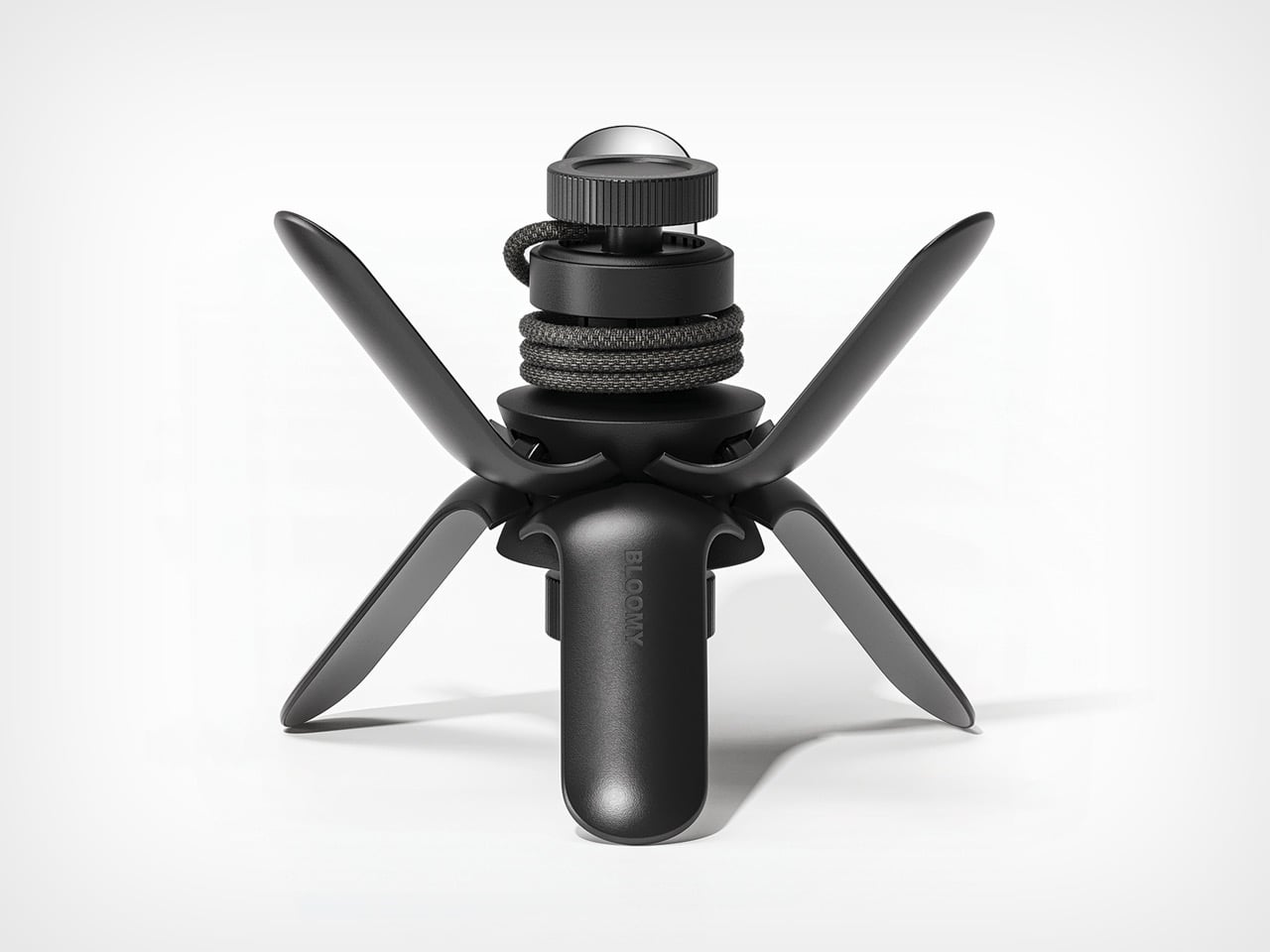
The Red Dot: Peter Zec Prize honors designers under 30, and this year it went to a camping stove shaped like a flower. Bloomy comes from a student team at Dalian Minzu University and Beijing City University, led by Qiu Qi with faculty advisor Kong Hao. Red Dot describes a portable stove inspired by a blooming flower, with a modular design that shifts between compact storage and stable cooking configurations. In the lead image, four black petals splay from a central stem topped with a knurled knob, like a flower that learned to hold a pot. I did not expect to call a camp stove pretty.
Camp stoves live with a permanent trade-off, because packing small wants everything folded and stable cooking wants everything sprawled. Bloomy settles it with petals that fold in until the whole thing becomes a smooth capsule, then open out into a wide, steady base. A woven cord wraps the stem for texture, and the matte black finish gives it the look of a gadget a gear nerd would keep on a desk. The Peter Zec Prize is the Luminary’s counterpart for young designers, which makes Bloomy the top Next Gen concept of the year. Next time my ramen goes wrong outdoors, I’ll blame the chef instead of the flower.