
Remember when wireless phone chargers felt like magic? Set your phone down, it charges, no fumbling with a cable in the dark. Somebody at Kitchenery apparently looked at that little glowing pad and thought, why stop at phones. The wireless power that charges a phone is being engineered to run full-size appliances, and Kitchenery’s patented Quantum Energy Pad delivers over 1,500 watts through the countertop, roughly 100 times a typical phone charger, to battery-free appliances with no cords and no plugs.
That is a wild jump in scale for a concept most of us associate with topping up 20% battery overnight. But the mechanics stay weirdly familiar. The QEP plugs into a wall outlet. The compatible appliance receives operating power while it is on the pad. Lift it away and power delivery stops. No batteries hiding inside your kettle, no charging cradle taking up cabinet space, just a pad that handles the heavy lifting while you get on with breakfast.
Designer: Kitchenery Inc.
Click Here to Buy Now: $1299. Hurry, only 7/9 left! Raised over $32,000.
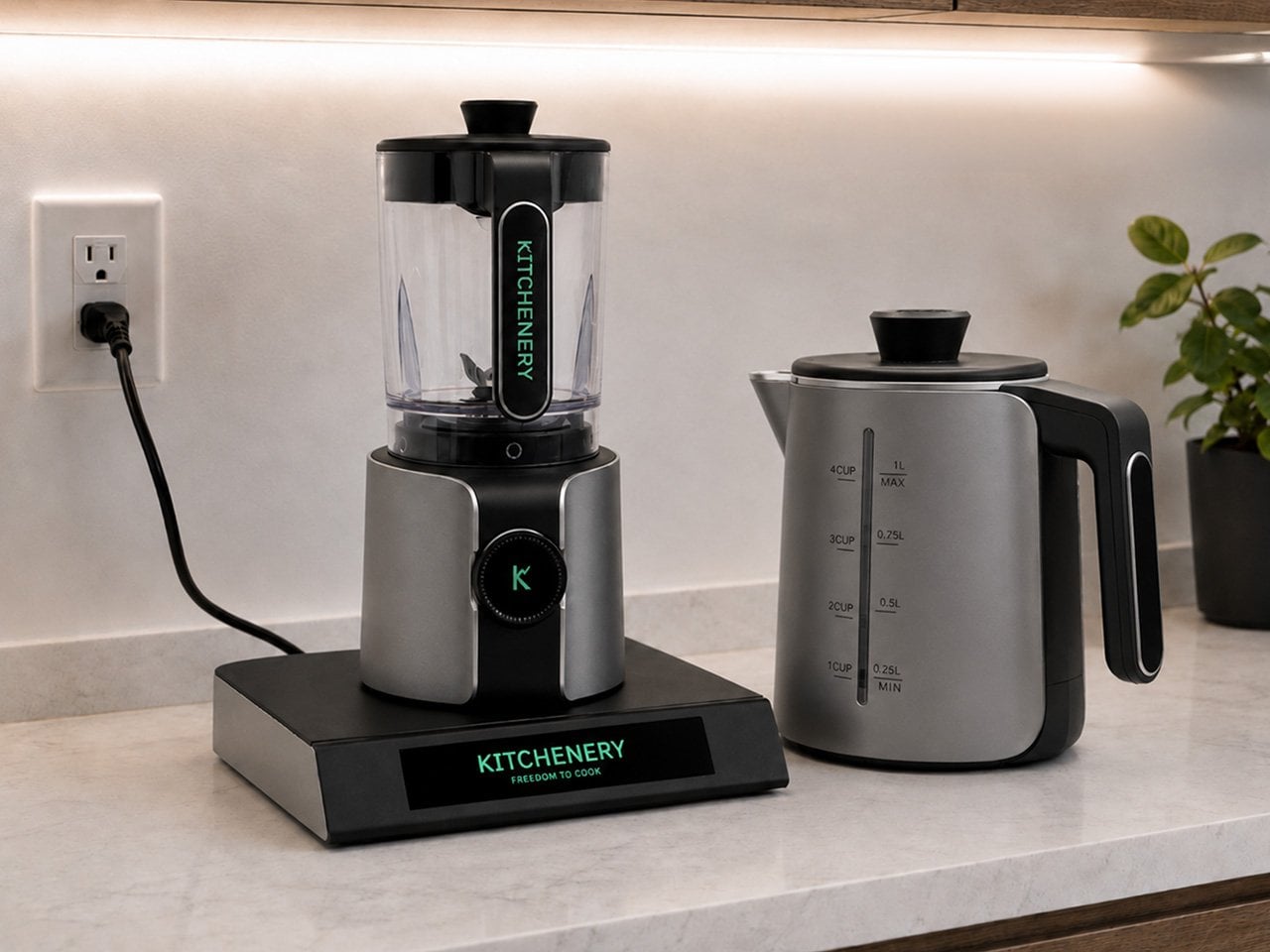
Stacked inside the QEP are three key components: a ceramic-glass surface, a hybrid power coil, and an adaptive touchscreen. The hybrid coil is the technical core, a single transmission coil that switches between resonance frequencies to do three jobs from one surface, power appliances, wirelessly charge devices, and induction-heat cookware. The adaptive touchscreen changes its control layout depending on what you set down, kettle-specific controls for the kettle, blender presets for the blender. Power input is 110-240V AC, covering most of the world’s wall outlets, and the ceramic glass surface also accepts induction-compatible cookware, meaning the pad earns its counter real estate as a cooktop, a wireless appliance power platform, and an ecosystem hub simultaneously.
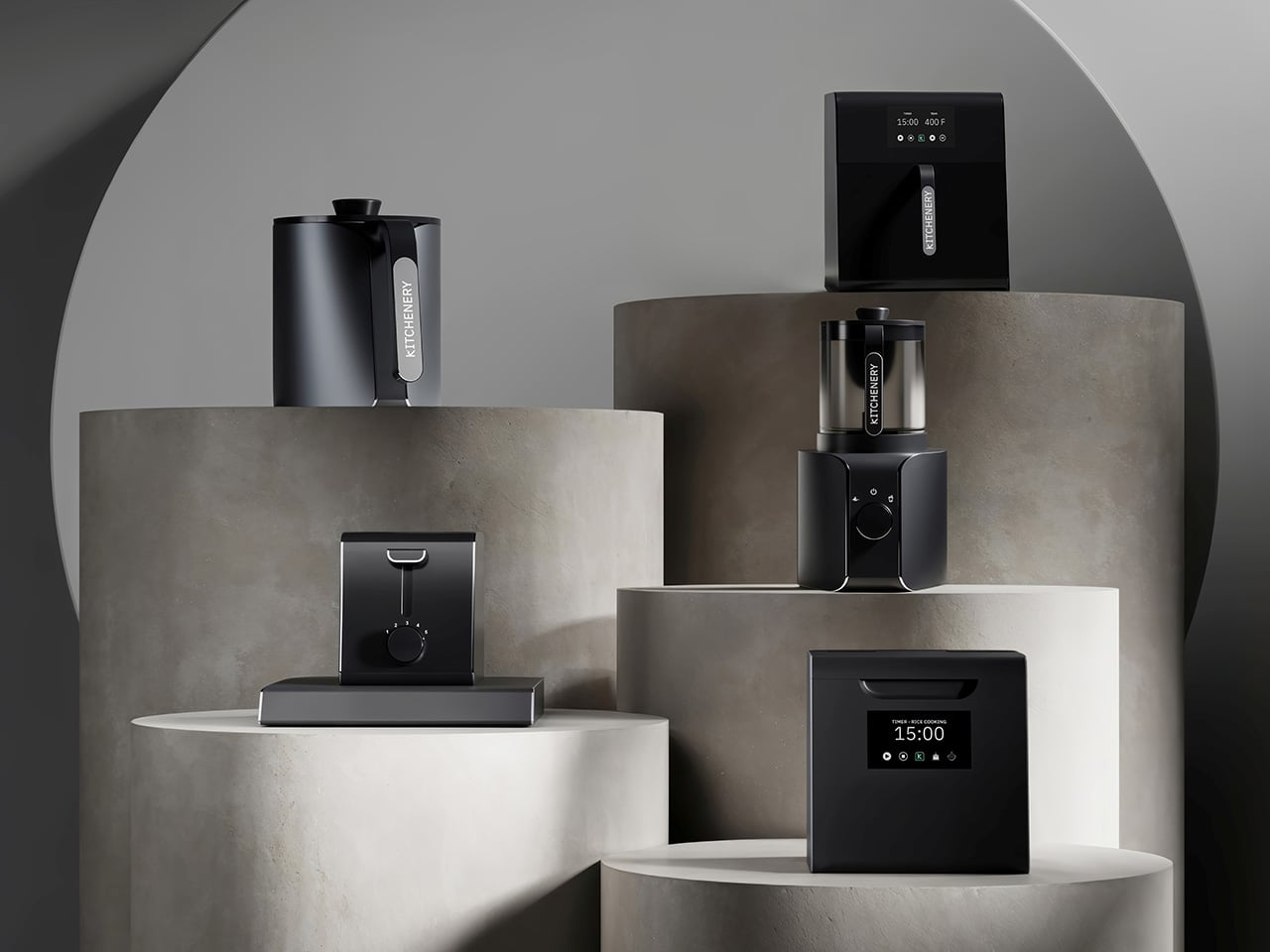
Kitchenery’s appliances are battery-free. Unlike cordless appliances that hide a rechargeable battery, the Silent Blender and Perfect Pour Kettle carry no battery at all, they draw power only while on the pad. That means less weight, less waste, and no batteries to degrade or replace. The pad also verifies each appliance through a low-power Bluetooth handshake before delivering full power, so only recognized, safe devices are energized. It is a meaningfully different architecture from the competition, and one that keeps the door open for a smarter, app-connected layer down the road.
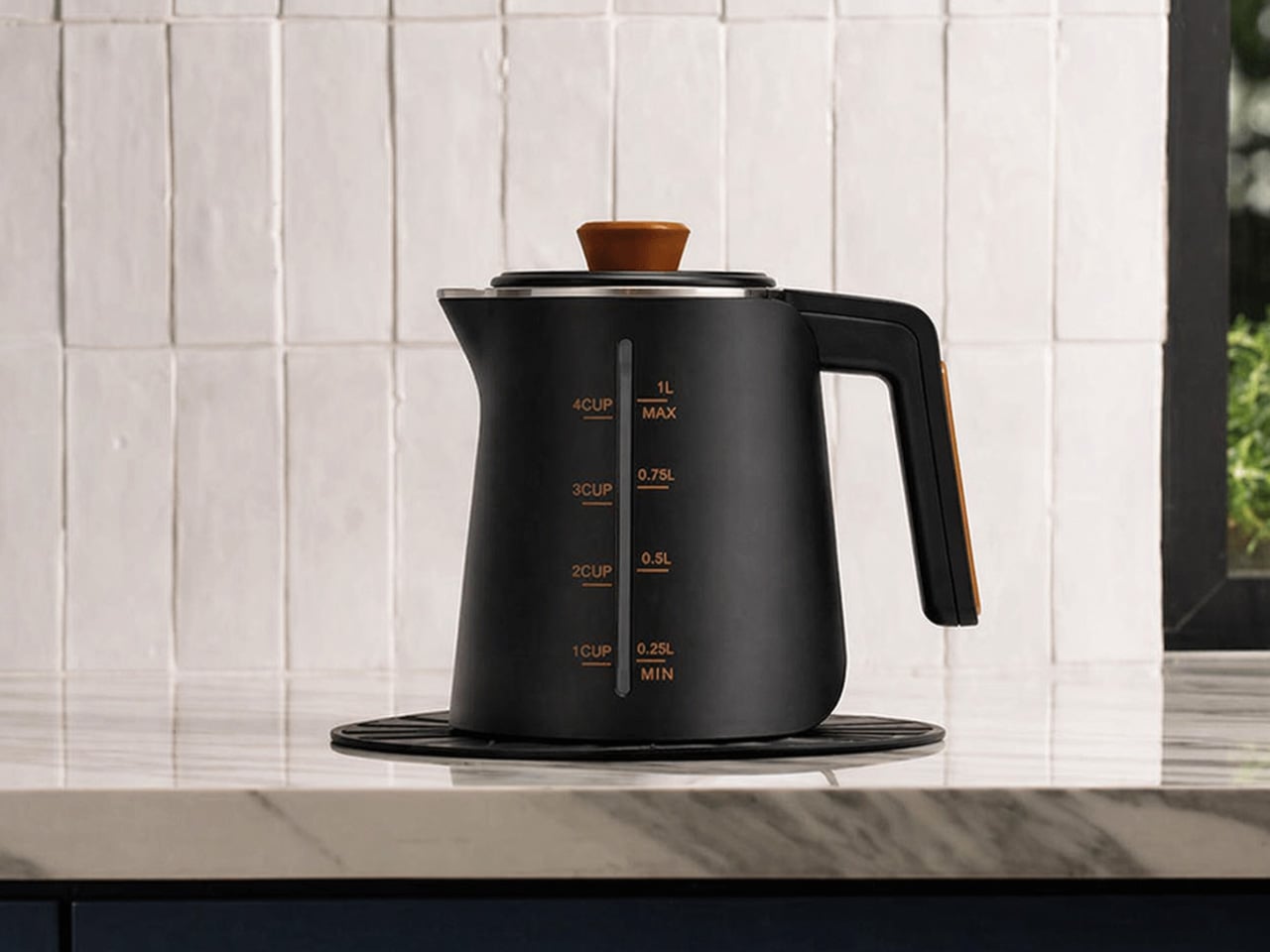
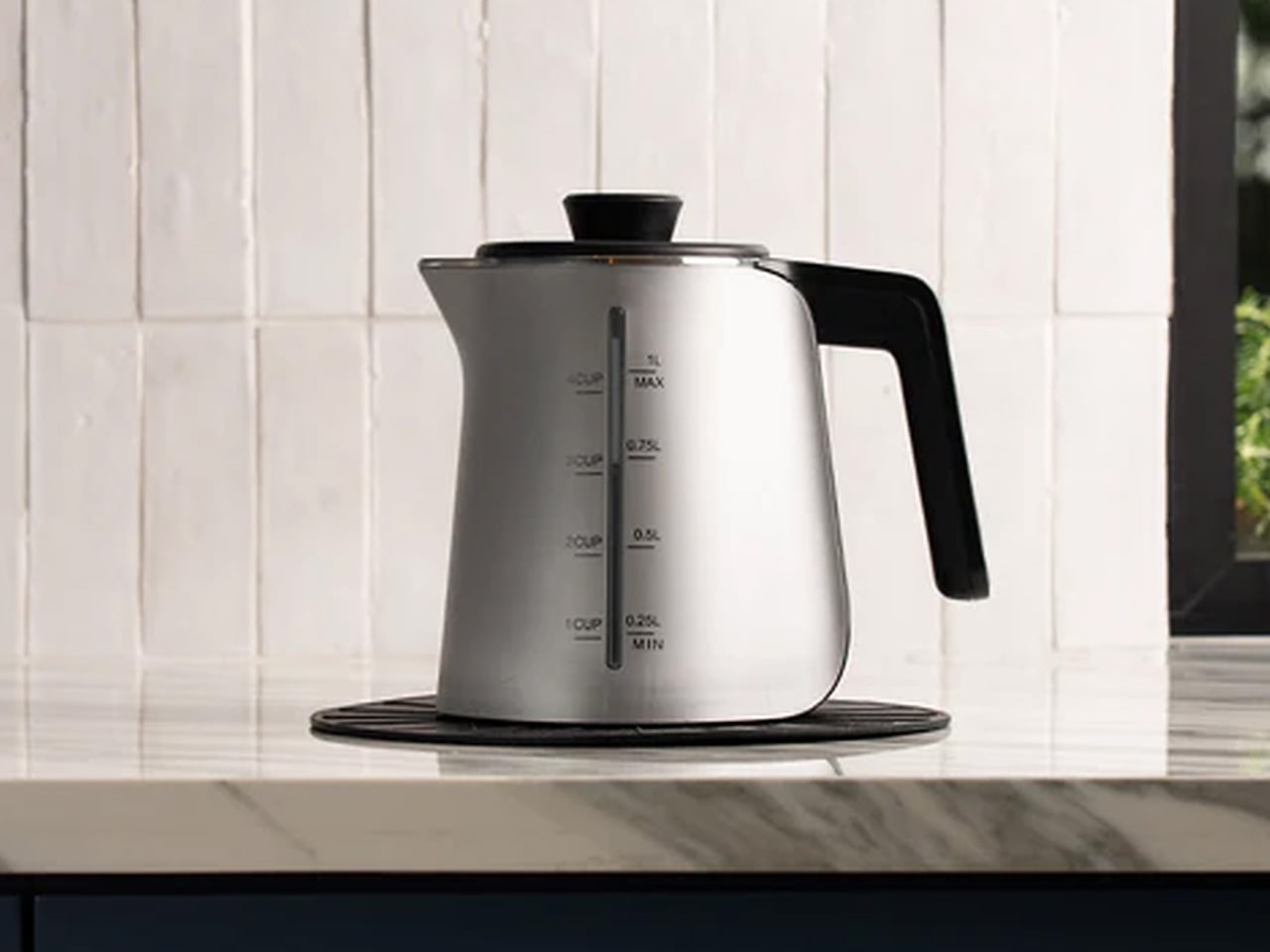
The Perfect Pour Induction Kettle is a 1-liter kettle designed for controlled pouring, with a 316 stainless-steel inner tank, a digital temperature display, and a color-changing handle light, all part of the Kitchenery system for everyday tea, coffee, and hot-water preparation. A removable lid gives you access to the stainless-steel interior for filling and cleaning, and the shaped spout is designed for precise, controlled flow, which matters quite a bit for pour-over coffee or loose-leaf tea. The kettle ships in stainless and dark finishes, and it can also operate on compatible standard induction cooktops beyond the QEP, giving it a degree of flexibility most ecosystem-locked appliances never offer.
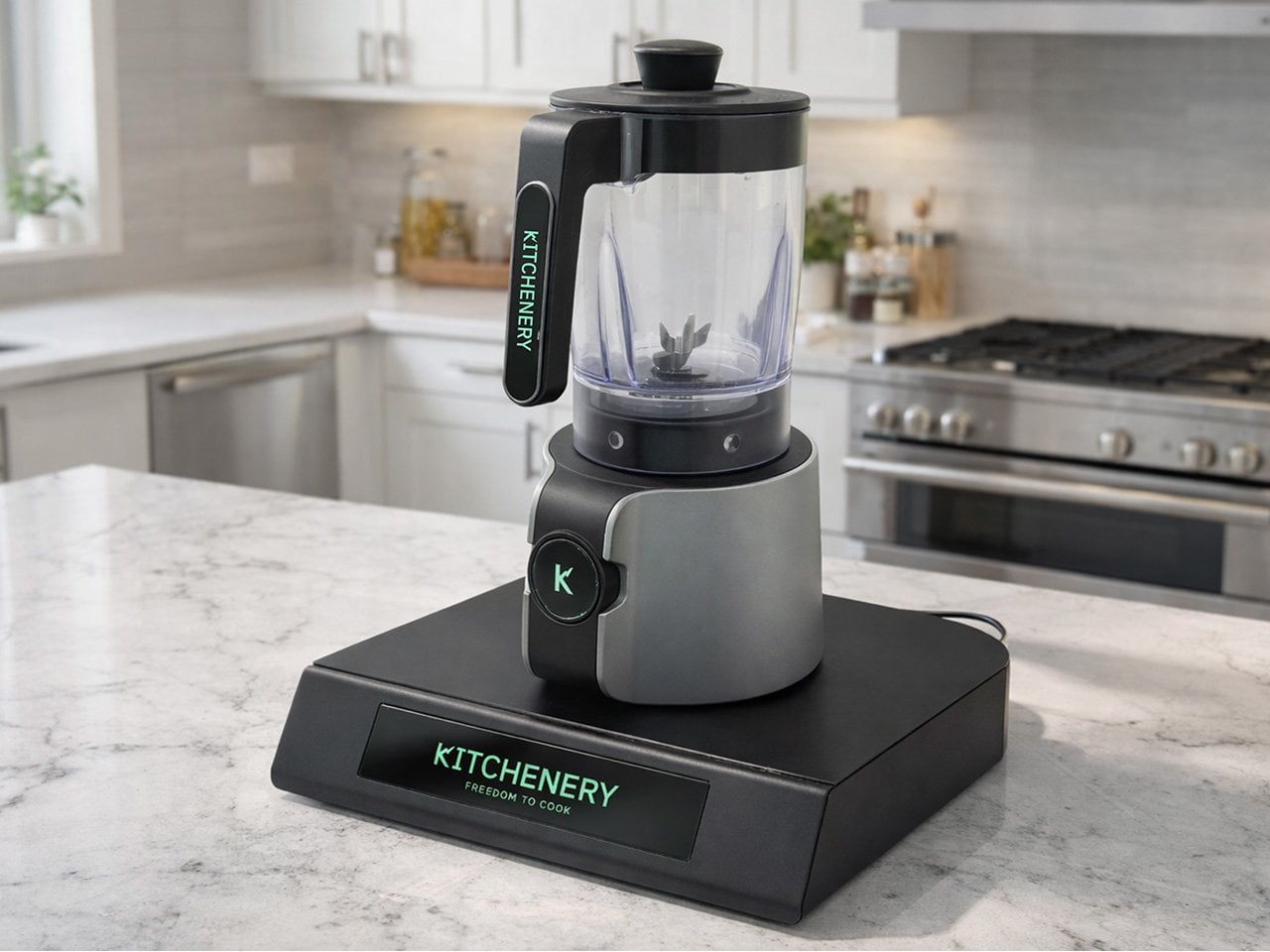
The Silent Blender is Kitchenery’s cordless countertop blender, with a receiver inside its base that draws operating power from the QEP, so the blender does not need its own wall cord or a rechargeable appliance battery. It is being developed for smoothies, sauces, and everyday blending. The motor is spec’d at 15,000 RPM at the current design stage, with a wireless-power receiver coil and electronics as the power architecture. The “Silent Blender” is the product name, and a quieter blending experience is a development goal, with comparative sound results still under validation. For an appliance category defined almost entirely by noise and cord clutter, the proposition is appealing enough on concept alone.
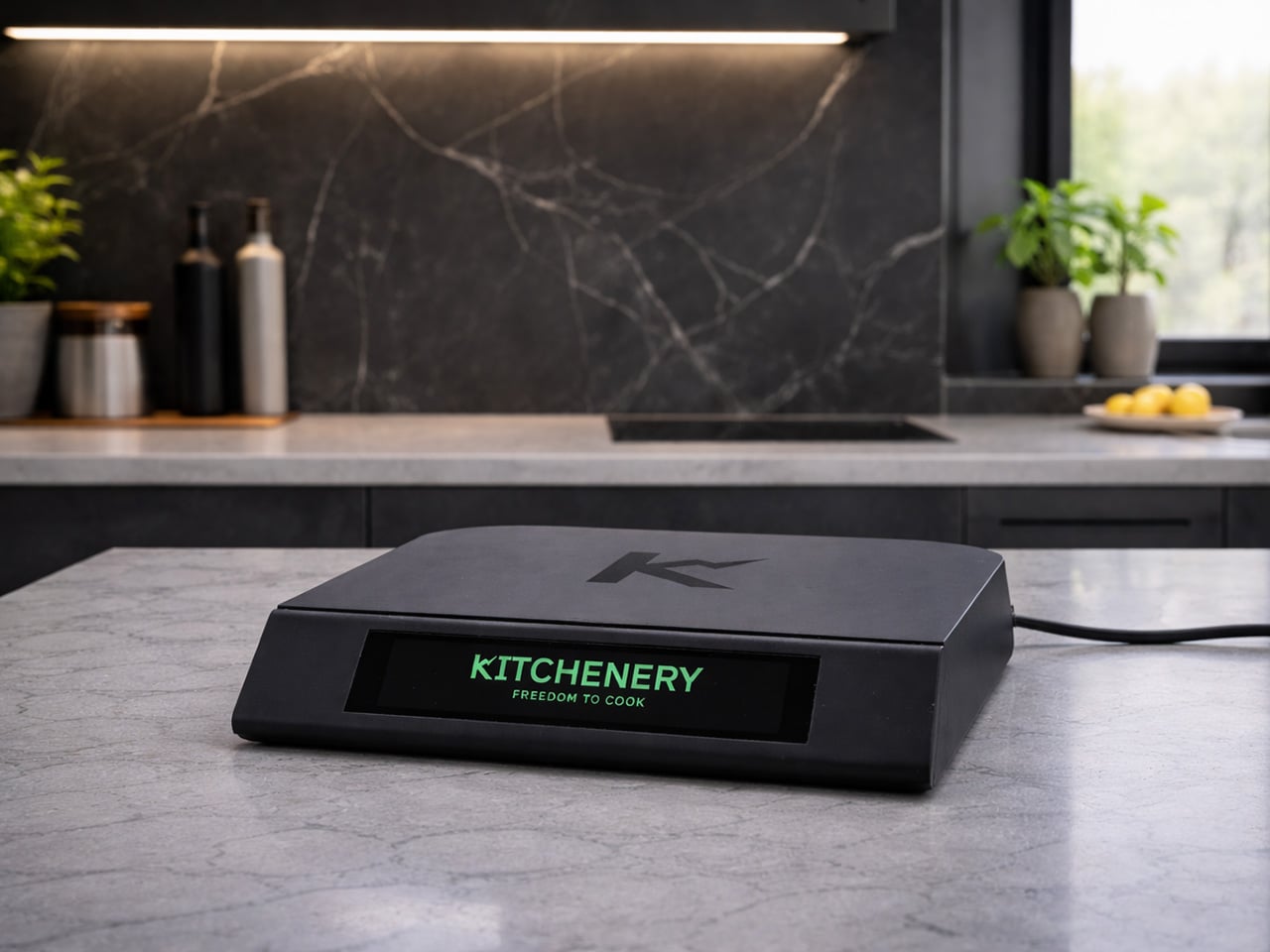
The most conventional use case here is also the most obvious: a home kitchen where counter space is limited, outlet access is a daily negotiation, and the cord situation behind the appliances has quietly become everyone’s problem and nobody’s priority. For that person, the QEP consolidates everything onto one plug while the appliances themselves float freely, stored when not in use, grabbed and set down without threading a cord anywhere. Appliances are modular, cord-free, and easy to store, so they tuck into the tightest cabinets and rearrange on demand, opening up kitchens traditional appliances can’t serve well and turning the smallest or most unusual spaces into fully capable ones.
That flexibility is where Kitchenery’s audience gets genuinely interesting. Yacht galleys, where space, safety, and weight all matter. Private aircraft galleys that need compact, cord-free appliances. RVs and overlanding setups where cordless, stackable appliances maximize every inch. Tiny and modular homes built around the space they save. And senior living and accessibility environments, where a kitchen with no open flames and no cords is an inherently safer one. I find that last group the most underappreciated of the bunch. The safety and accessibility argument for a cordless kitchen writes itself, and it is a demographic the traditional small appliance industry has consistently underserved. Any environment where cord management, heat hazards, and limited outlets are real daily concerns becomes a legitimate use case, and that covers a lot more kitchens than the standard marketing mood board suggests.
The wider industry is now validating the cordless kitchen. The Wireless Power Consortium, the group behind the Qi phone-charging standard, has introduced “Ki,” a cordless-kitchen standard for delivering up to approximately 2.2 kW to appliances placed on a transmitter. Kitchenery’s patented architecture targets the same high-power reality at 1,500W+, but pairs it with battery-free appliances and a finished, ready-to-use ecosystem rather than a single component, and can license that platform to appliance brands and OEMs. Where Ki uses NFC-based authentication, Kitchenery connects via Bluetooth, a communication layer with considerably more headroom for intelligence, personalization, and eventual smart-home integration. Kitchenery is the named assignee of U.S. Patent No. 12,603,526 B1, “Hybrid Wireless Power Device and Method,” issued April 14, 2026. Two very different organizations converging on the same idea from opposite directions is a fairly good signal the underlying technology has real legs.

Every set includes the QEP, the induction cooktop and shared power platform, plus the appliances. Estimated delivery is February 2027. The STARTER set, one QEP plus one Perfect Pour Induction Kettle plus a silicone mat, is priced at $1,299 at Super Early Bird. The SMOOTH set with one QEP and one Silent Blender starts at $1,499, and the TRIO with both appliances runs $1,699. All Kitchenery products include a one-year warranty covering parts and labor. Worldwide shipping is planned, with additional costs for shipping, taxes, and import duties to be confirmed. More at kitchenery.us.
Click Here to Buy Now: $1299. Hurry, only 7/9 left! Raised over $32,000.