There is something almost deceptive about the Muskoka Island Spa. From the outside, it looks exactly like the sort of modest cabin you might expect to stumble across on a wooded island in northern Ontario. Its dark green walls sit quietly beneath the trees, punctuated by small yellow-trimmed windows and capped with a familiar pitched roof. Nothing about it immediately announces luxury. That restraint is precisely what makes stepping inside so unexpected.
Located on a small island in Muskoka Lakes, Ontario, the 525-square-foot structure began life as an ice storage hut before Toronto-based architecture studio PARTISANS transformed it into an intimate thermal spa. Rather than erasing the cabin’s history, the designers chose to preserve much of its original exterior character. The old timber door remains at the entrance, solid and substantial, while the gabled form and original roof structure continue to define the building. Even after its transformation, the little green cabin still belongs convincingly to the landscape around it.
Designer: PARTISANS
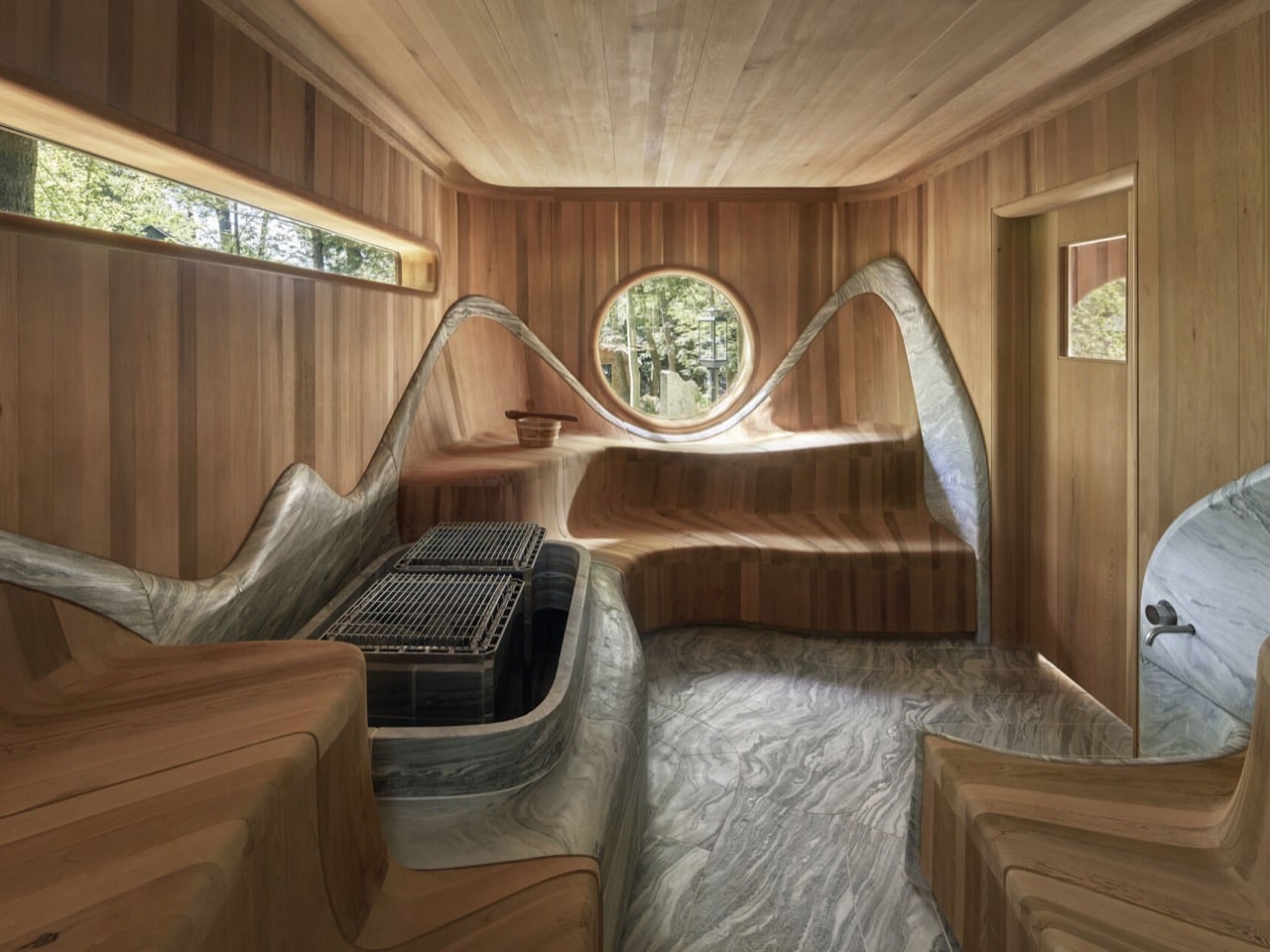
The spa experience begins before that timber door is opened. An outdoor stone shower sits among the surrounding rock and trees, offering the first hint that the familiar cabin exterior is concealing something far more sculptural. Once inside, the atmosphere changes almost immediately. Cedar curves across walls and ceilings. Granite rises from the floor. Warmth, cold water, steam, and quiet resting spaces are arranged within a footprint barely larger than many city apartments.
Within those 525 square feet, PARTISANS managed to fit a sauna, a cold plunge, a combined shower and steam room, and a massage room, along with smaller amenities tucked carefully into the edges of the plan. Their proximity becomes part of the experience. Visitors move through distinct changes in temperature, texture, and atmosphere within only a few steps. The heat of the sauna gives way to the shock of cold water, which transitions into enveloping steam and quieter spaces intended for rest.
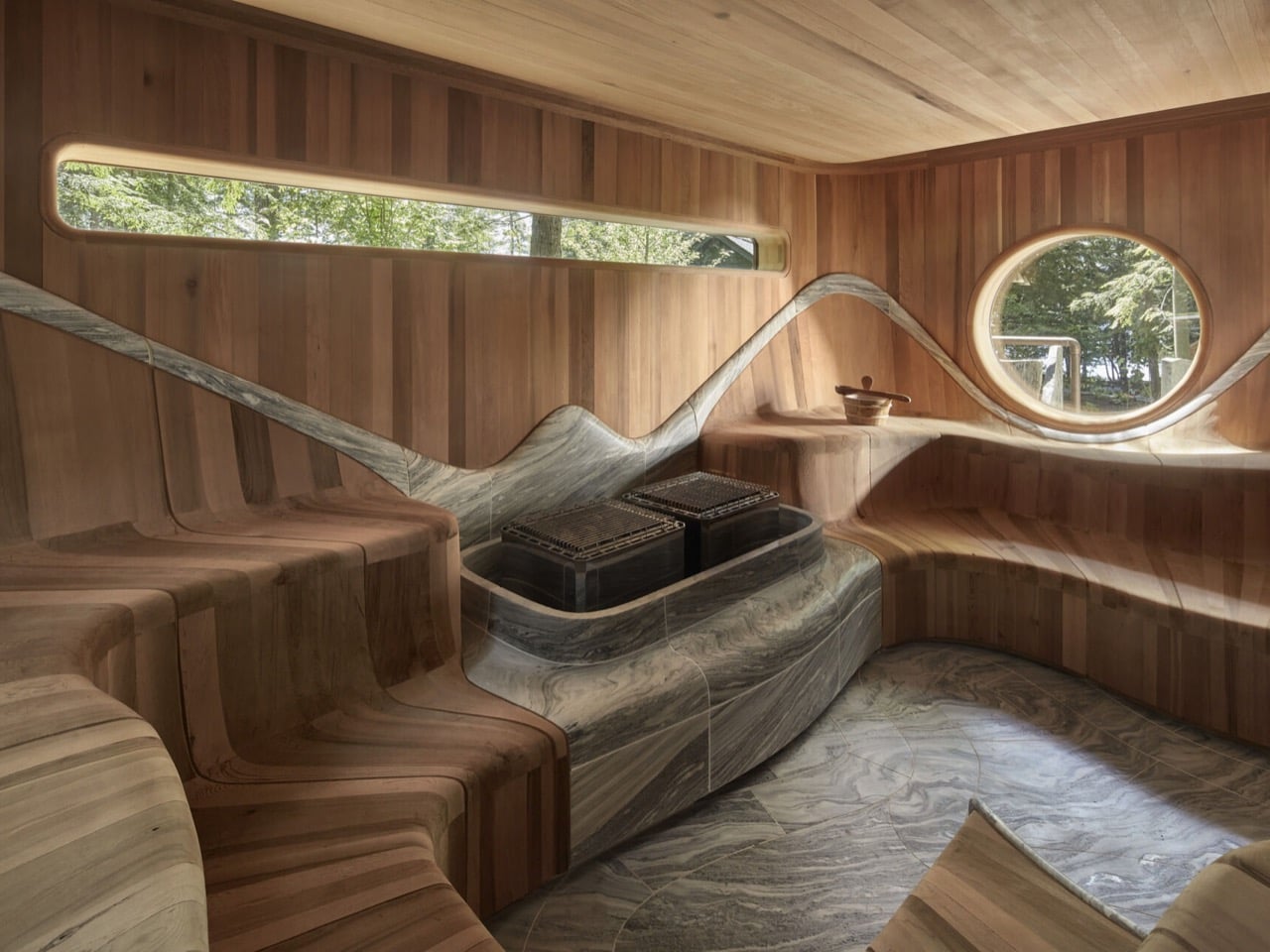
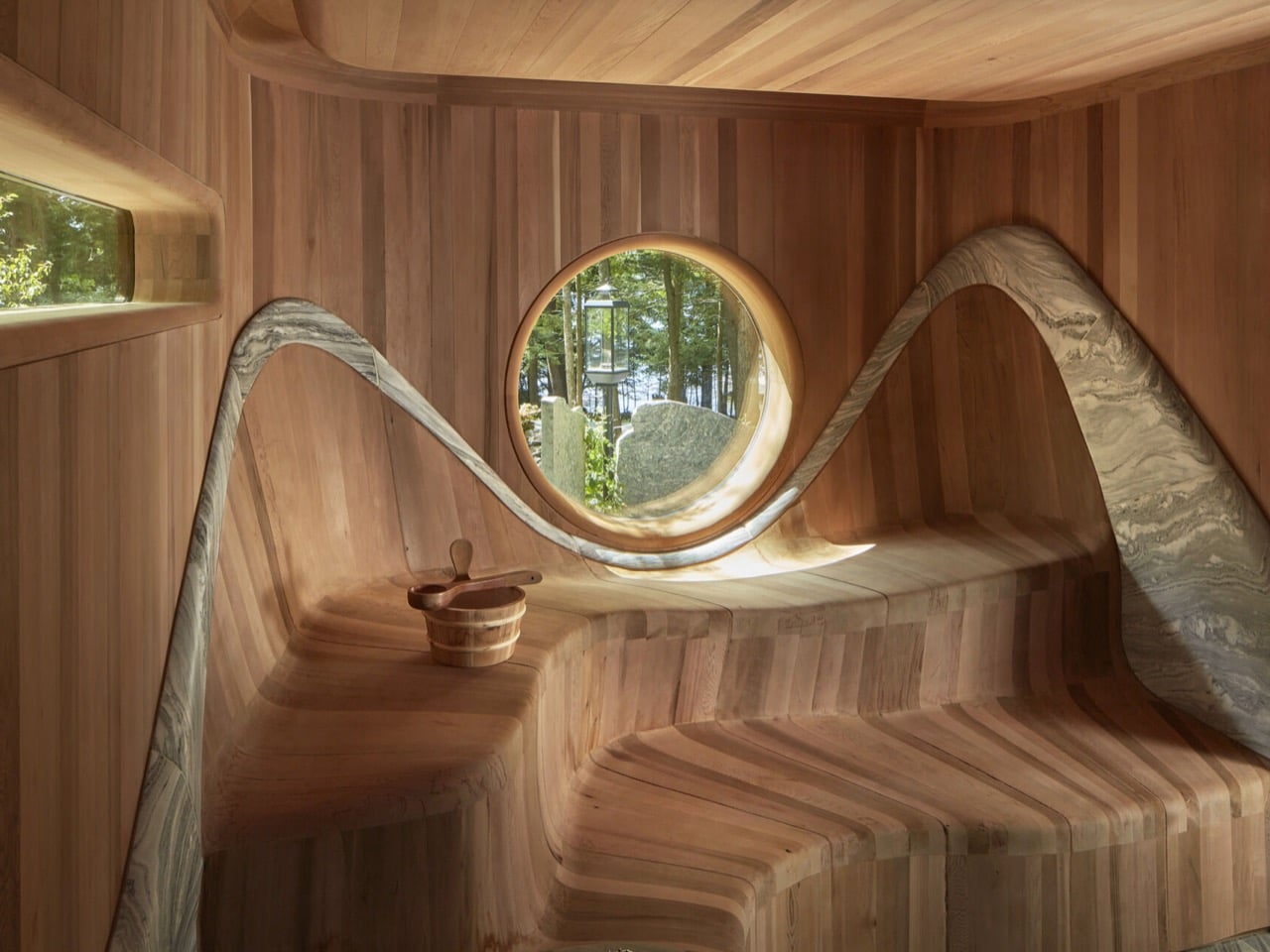
Much of the interior’s character comes from Canadian Shield granite, the same geological language visible across the surrounding Muskoka landscape. Large slabs cover the floor, their pale seams and irregular striations resembling exposed bedrock. In other areas, the granite appears to grow upward into the architecture itself. It forms seating, thresholds, basins, and sculpted edges rather than behaving like a decorative surface applied after the fact.
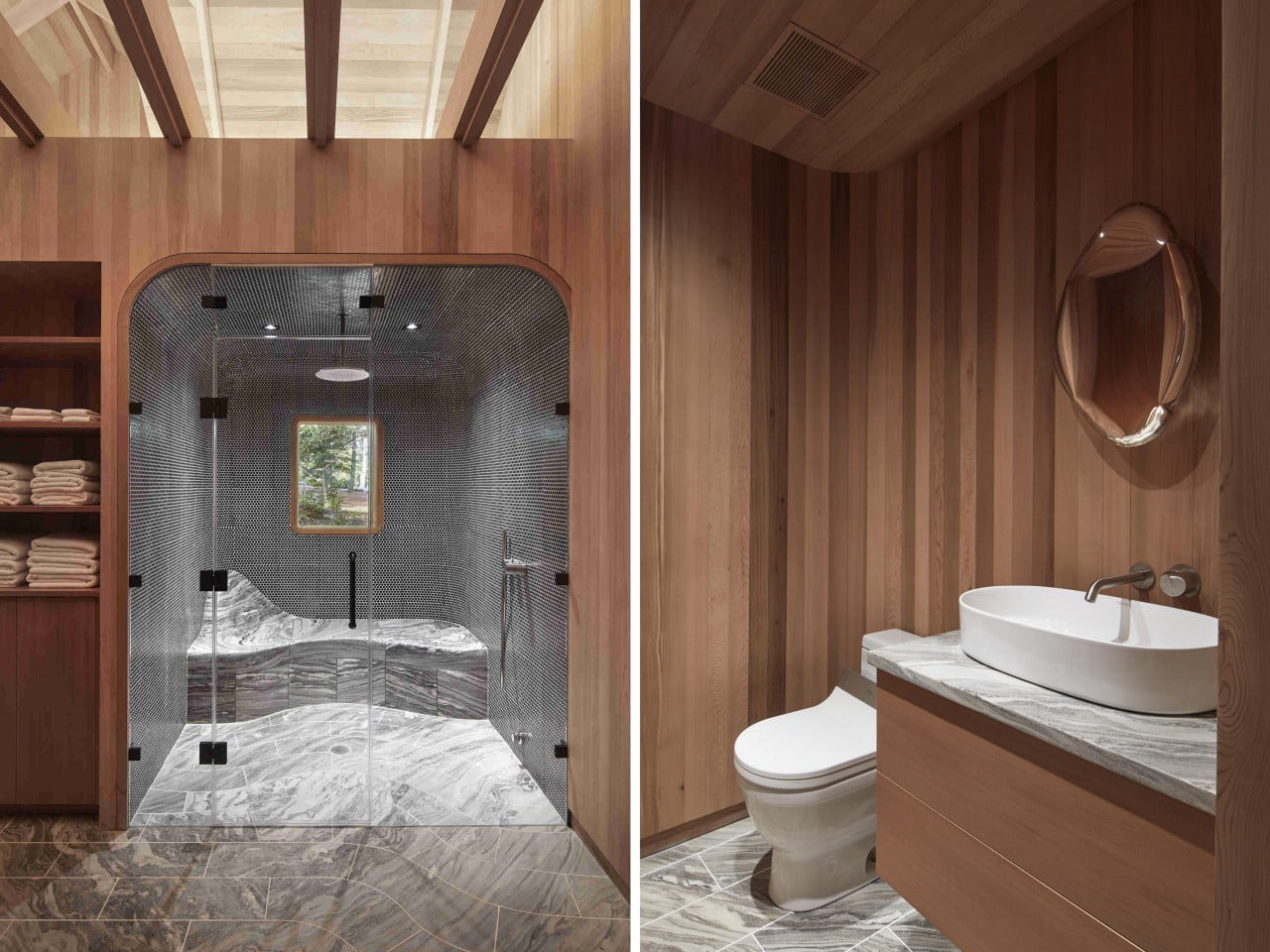
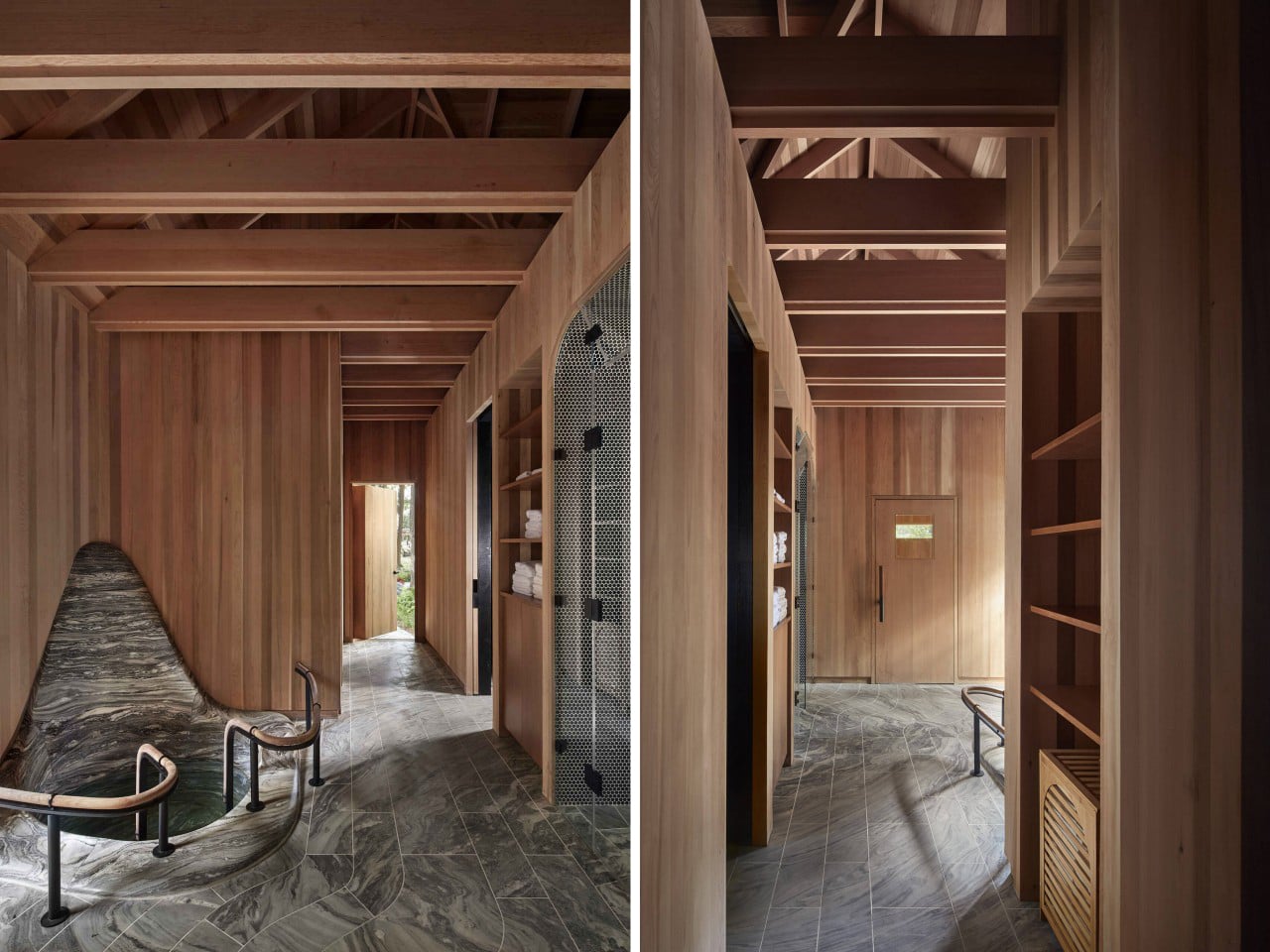
The cold plunge is perhaps the clearest expression of this idea. Carved from the same geological family of granite found around the island, it feels less like a conventional spa fixture and more like a pool discovered within the rock. Granite curves around the sauna heater and forms places to sit, lean against, and descend into the water, allowing the stone to shape the way the body moves through the space.
Against all that weight and coolness, custom-milled cedar introduces warmth. It wraps across the walls and ceilings in a continuous vertical grain, then shifts into ribs, curved planes, softened corners, benches and backrests. Inside the sauna, the cedar becomes almost architectural furniture, forming the enclosure as much as furnishing it. Stone feels dense, permanent and geological. Cedar feels warm, tactile and responsive. Together, they create an interior that seems to have been carved rather than assembled.
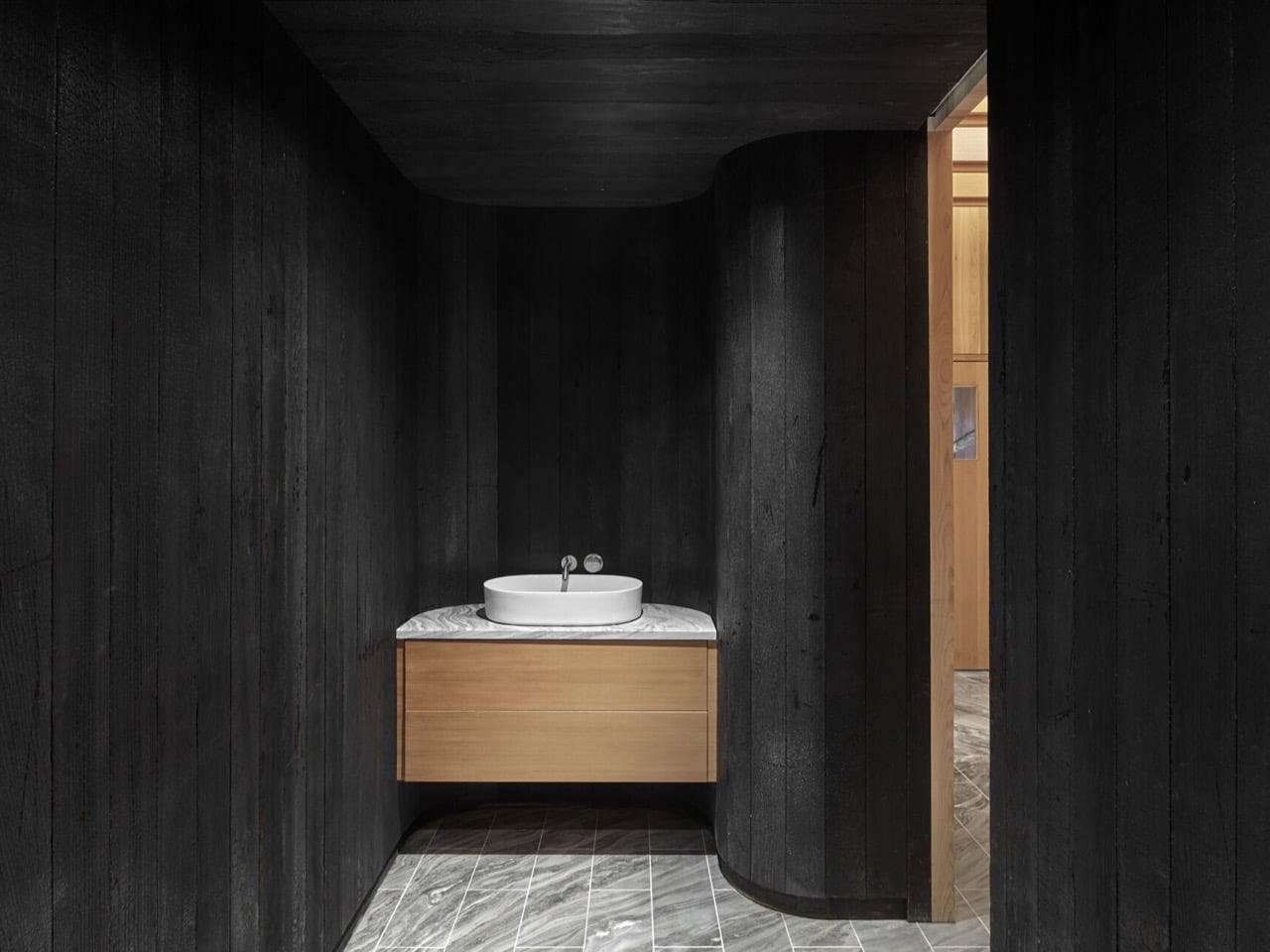
Achieving that sense of effortless continuity was anything but simple. Canadian Shield granite is exceptionally hard, and machining it reportedly wore down fabrication tools during the process. The curved timber and stone elements had to be developed as interconnected pieces, with digital milling followed by careful hand finishing. The island location made precision even more important. Without conventional road access, transporting heavy materials and adjusting complex components on site was difficult, leaving very little margin for improvisation once fabrication was complete.
That constraint encouraged an unusually integrated design process. Stonework, cabinetry, cedar surfaces, bathing elements, and mechanical systems were coordinated within a digital model so that every component could fit within the cabin’s limited dimensions. References to eroded rock formations, slot canyons, traditional landscape painting and sculpted timber interiors informed the eventual forms, creating a space that feels rooted in its location without becoming overly literal.
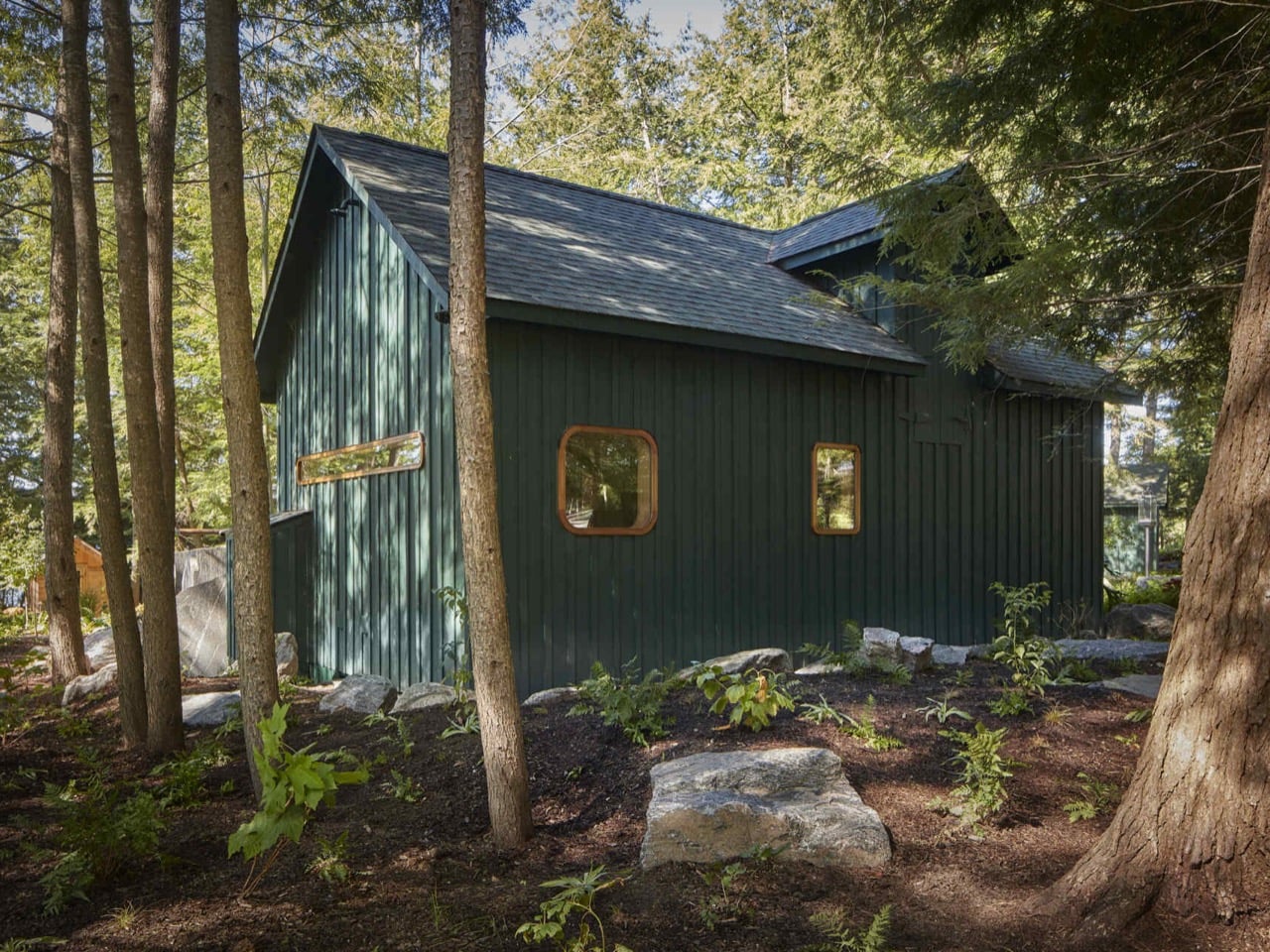
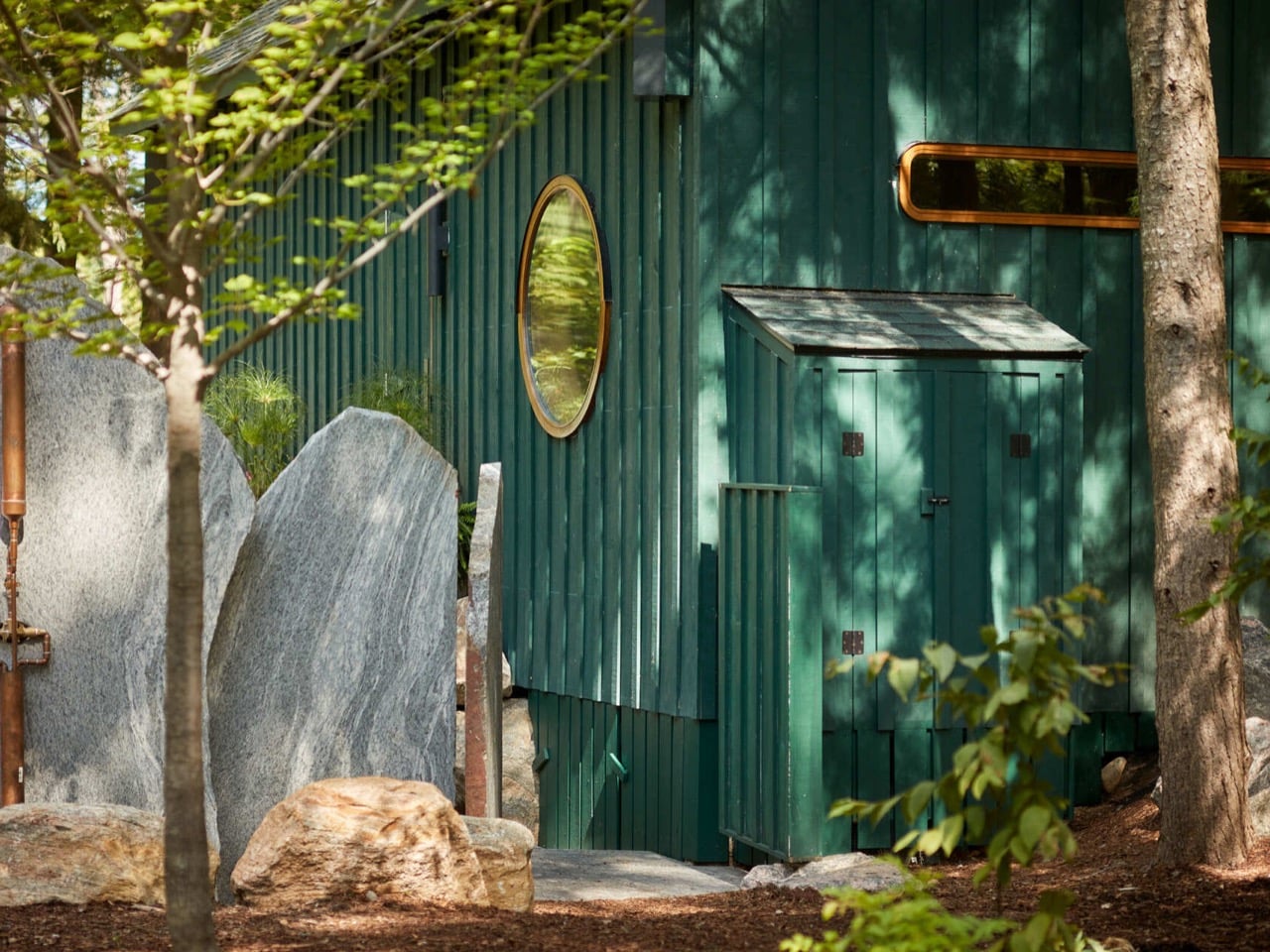
For all the sophistication inside, traces of the original ice hut are never far away. Look upward, and the familiar gabled volume is still there. The exposed roof structure remains visible. Small windows continue to frame pieces of the surrounding island, and the heavy old door continues to mark the transition between inside and out. The design does not attempt to disguise the building’s age or original purpose. Instead, those remnants give the new interior something to push against.
There is a satisfying irony in the change of function. A building that once existed to preserve ice is now centered around rituals of heat and cold. The same compact structure that once served a purely practical purpose now guides visitors through sauna heat, carved stone, cold water, steam, and massage.
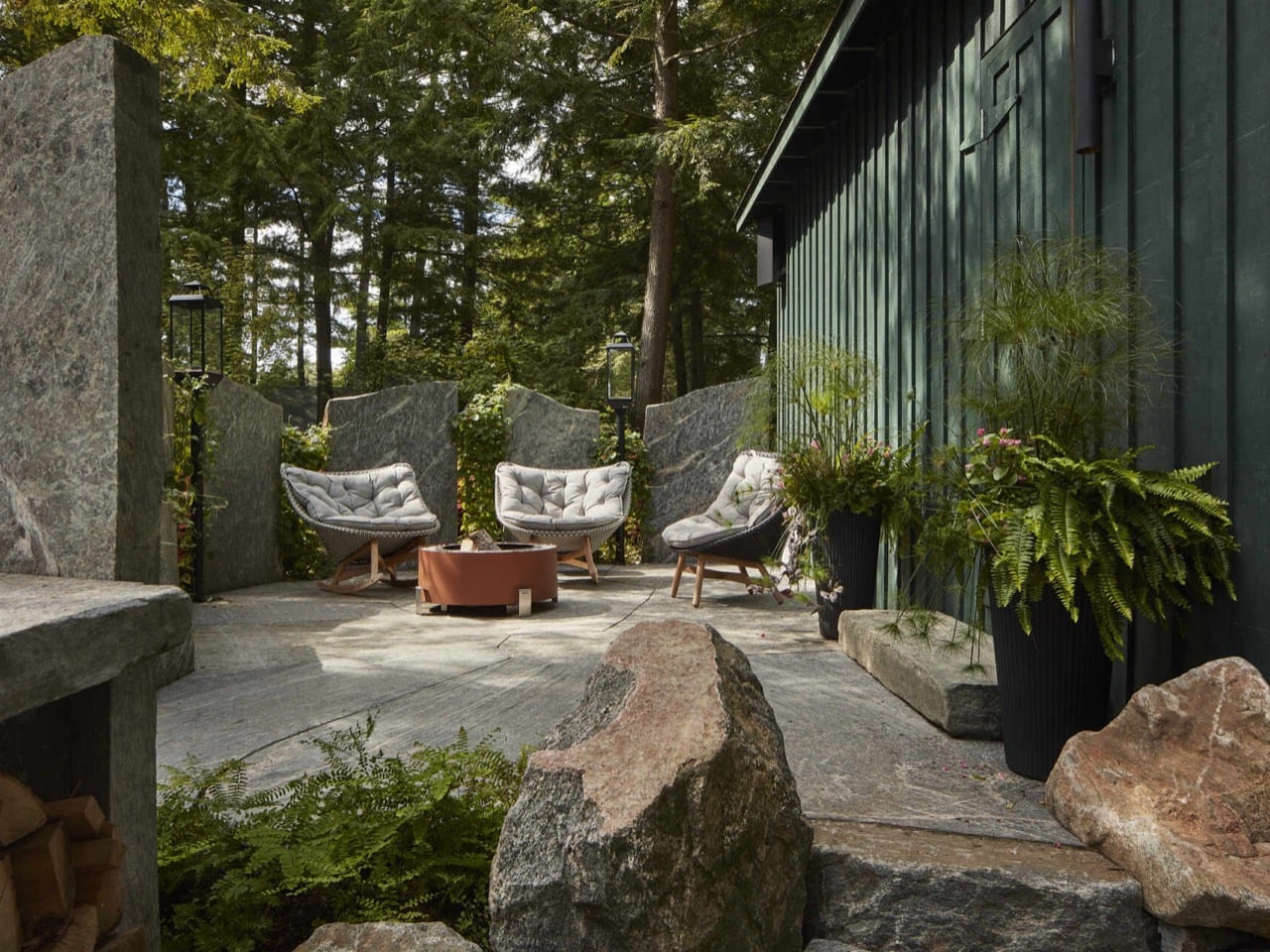
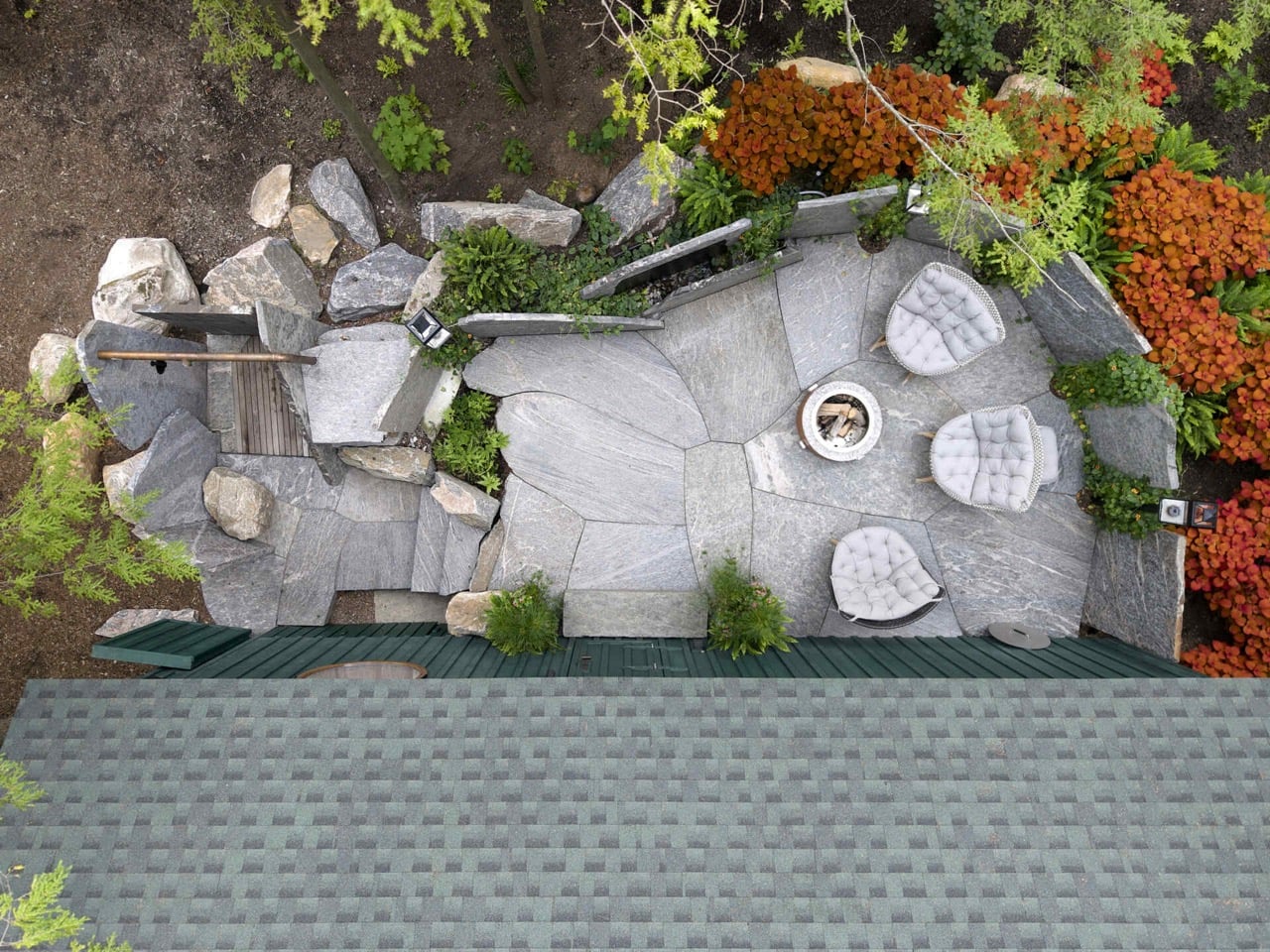
What makes the Muskoka Island Spa memorable is ultimately this tension between modesty and spectacle. From a distance, it remains a small green cabin tucked among trees and exposed stone. Inside, the architecture becomes fluid, tactile, and unexpectedly immersive. The granite beneath your feet feels connected to the rock outside. The cedar wrapping the room recalls the forest surrounding the building. Nothing needs to announce that connection because it is already present in the materials themselves.
The old ice hut has gained an entirely new life without being polished into anonymity. Its history is still visible, its scale remains humble, and its place within the island has barely changed. Yet behind that unassuming green exterior is a spa shaped by geology, craftsmanship, and the physical experience of moving between heat and cold. It is proof that transformation does not always require erasure. Sometimes the most interesting spaces begin by keeping exactly what was already there.