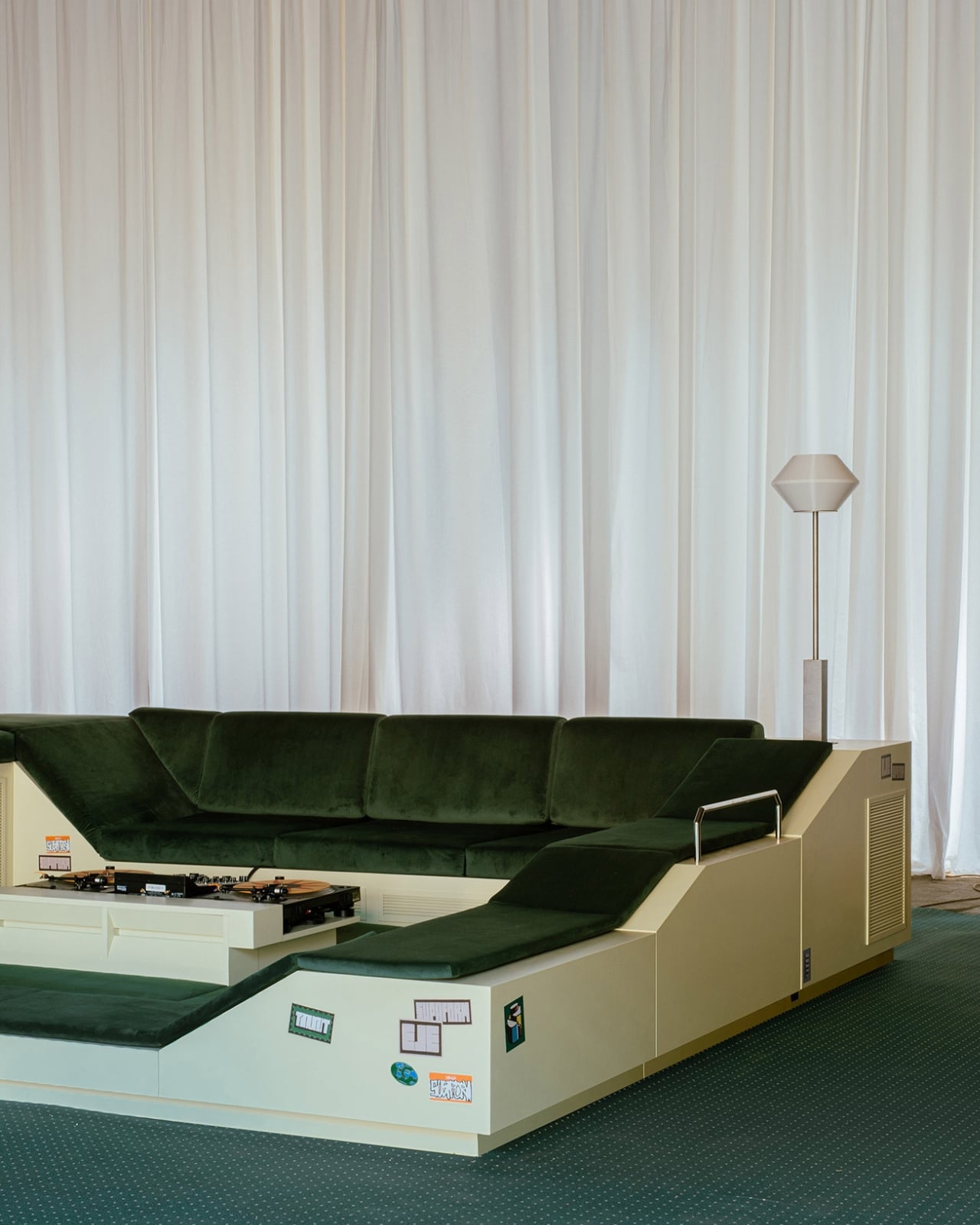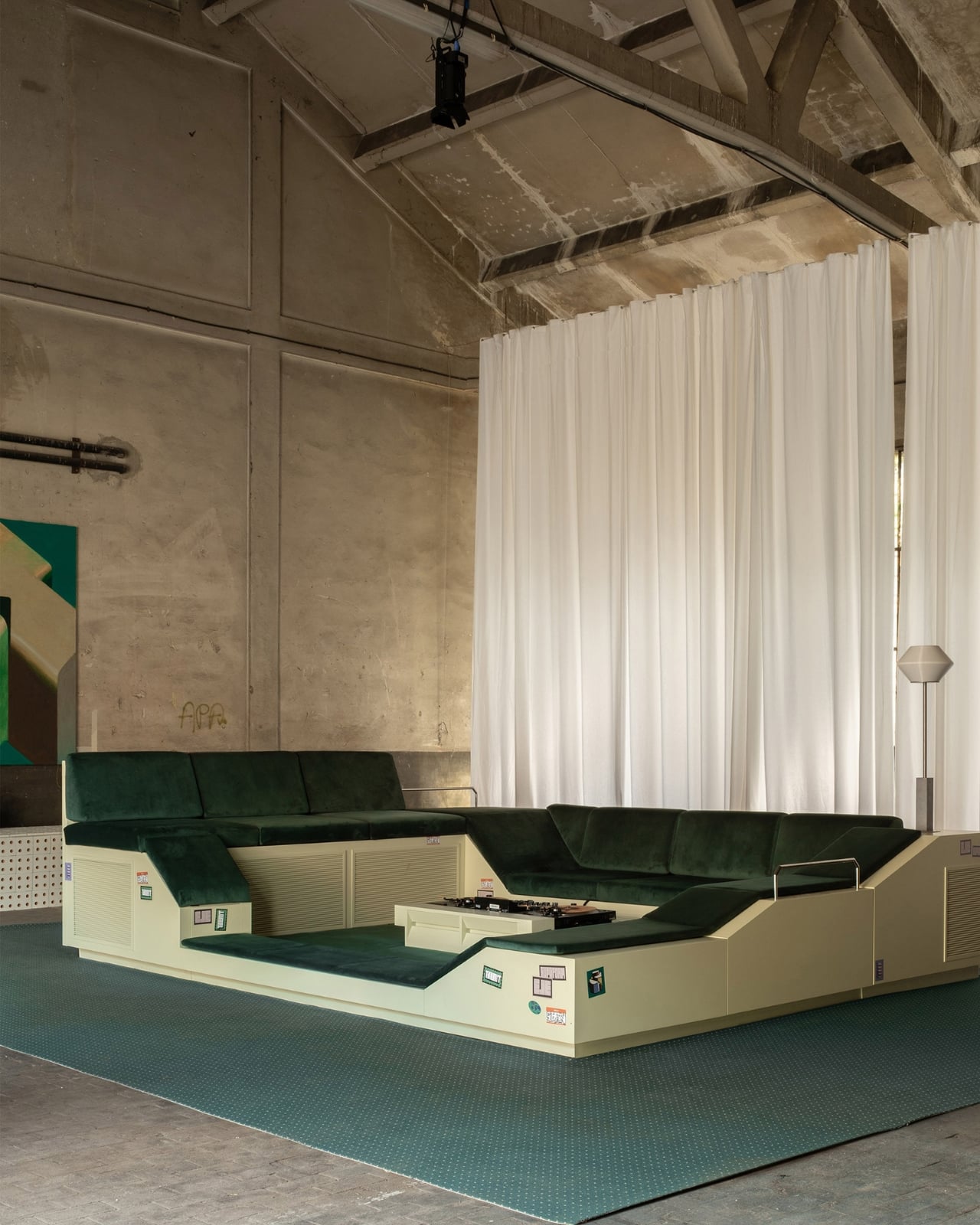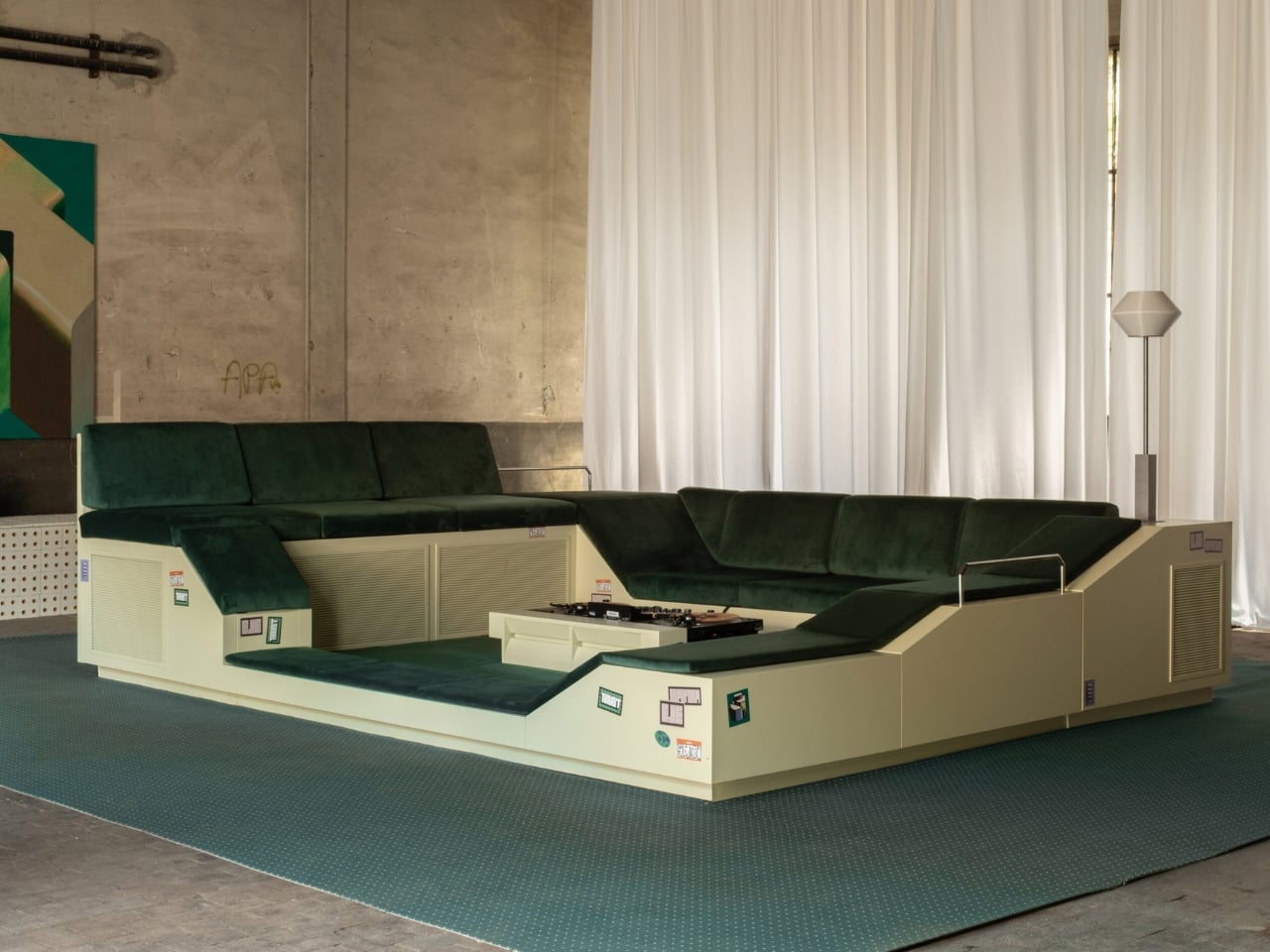
If you walked through Alcova at Milan Design Week this past April, odds are you found yourself gravitating toward a large green seating installation that seemed to have its own pull. People were sitting on it, around it, leaning against it. Conversations were happening. Music was playing. Nobody was rushing to the next booth. The piece was called Transit Encounters, and it was the work of Paris-based studio Supaform, led by designer Maxim Shcherbakov.
At its core, Transit Encounters is a seating landscape, a low-slung, communal structure that borrows from the mid-century idea of the conversation pit. If you’re not familiar with conversation pits, they were a design trend that had their heyday in the 1960s and 70s, those sunken, cushioned living room alcoves that gathered people inward, face to face, with no option for polite escape. They were a product of an era that genuinely believed design could engineer intimacy. And then, for decades, they fell out of favor, deemed impractical, difficult to clean, or just too aggressively retro.
Designer: Maxim Shcherbakov
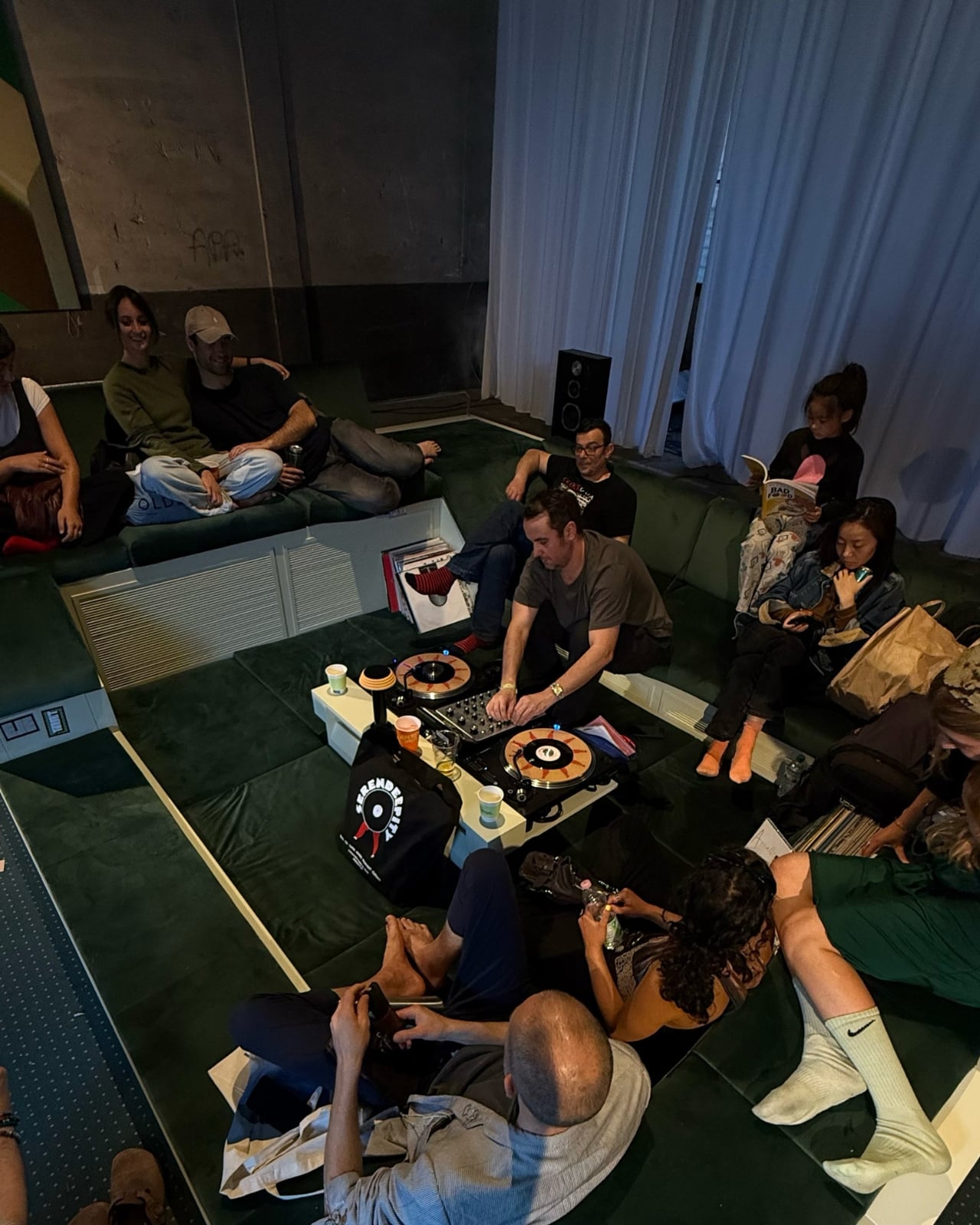
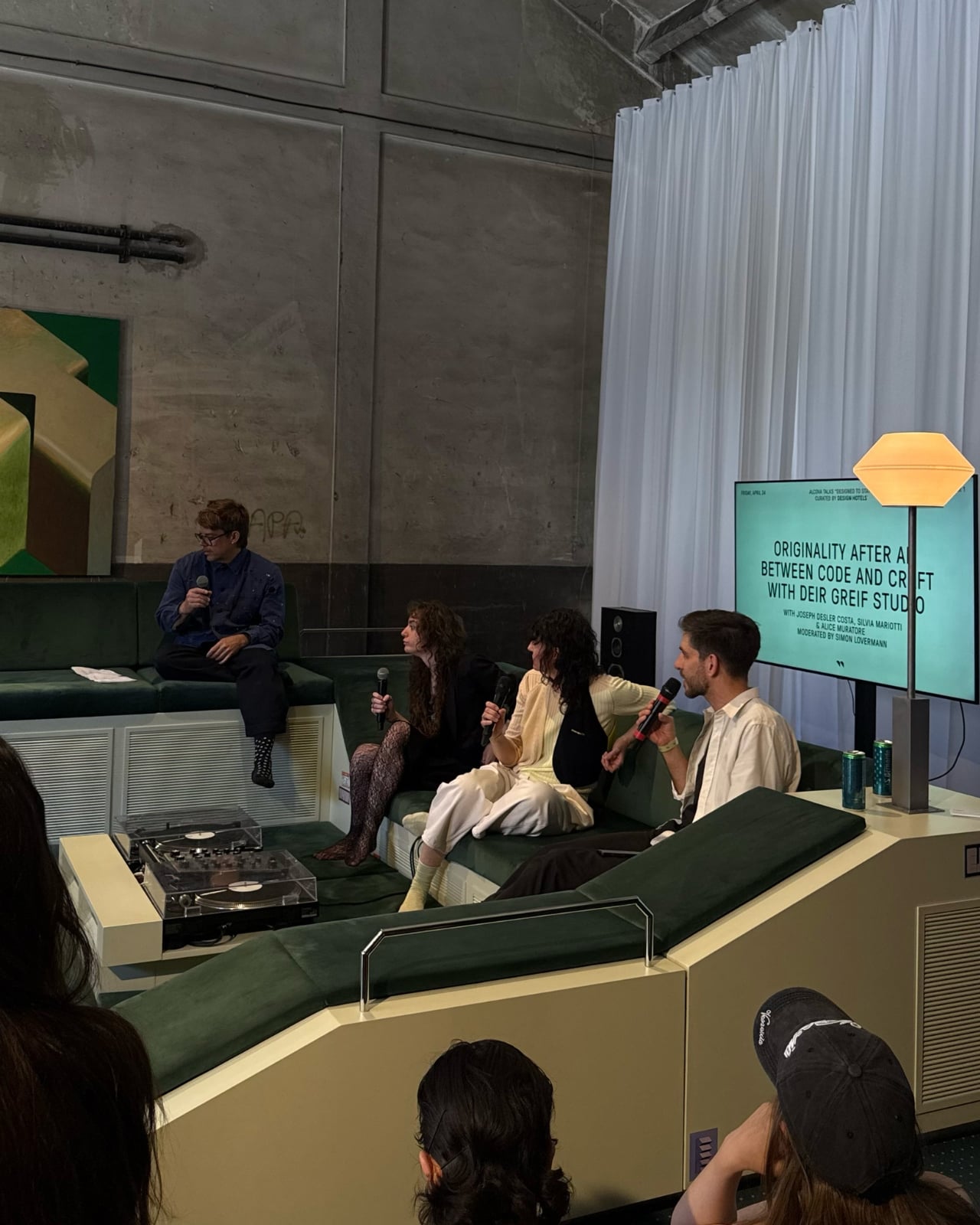
Shcherbakov’s version isn’t literally sunken into the ground, but it operates on the same principle: create a space that removes you from the noise and draws you into a shared moment with whoever happens to be next to you. Set inside the former Baggio Military Hospital, one of Alcova’s most atmospheric venues, the installation sat within raw, almost abandoned architecture that made the softness and warmth of the green seating feel even more deliberate. The contrast alone told a story.
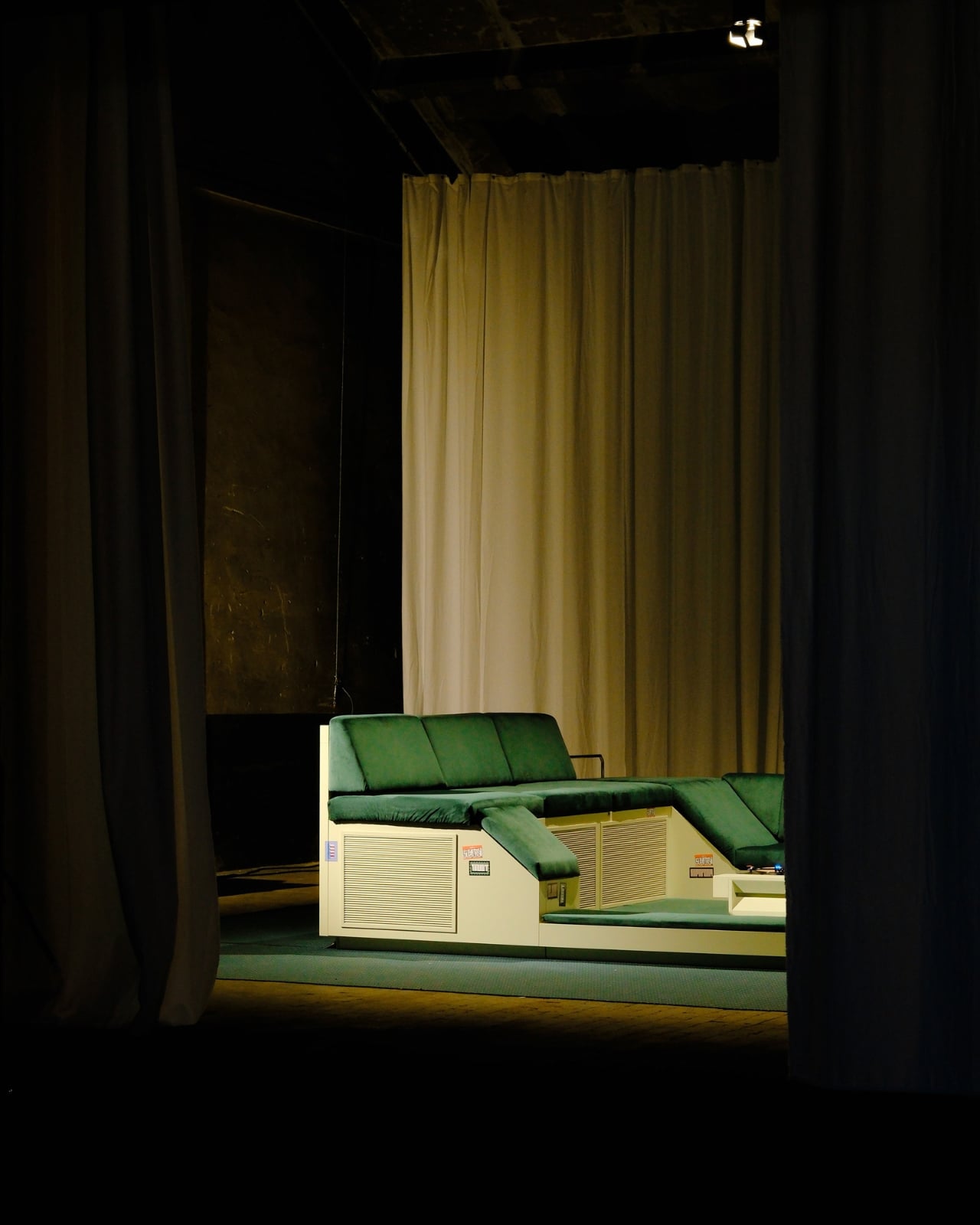
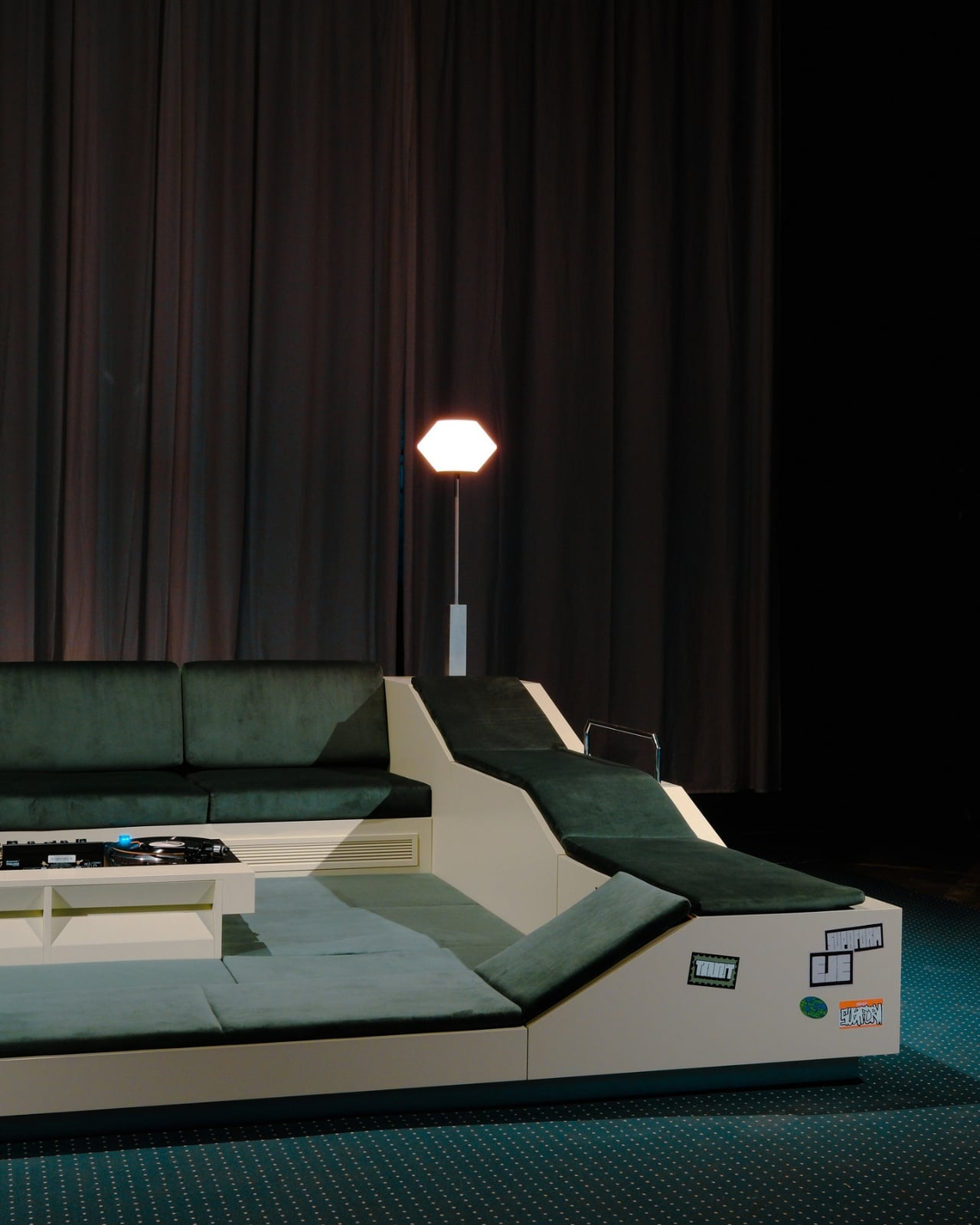
What makes Transit Encounters genuinely interesting, beyond its visual impact, is the thinking behind it. Shcherbakov noticed how a sofa’s boundaries aren’t really defined by its physical edges. People sit on the floor beside it. They lean against it. They occupy its orbit. He took that observation and ran with it, designing not just a piece of furniture but an entire social field. The result functions simultaneously as a stage, a lounge, and a gathering point, a piece of furniture that practically invites improvisation.
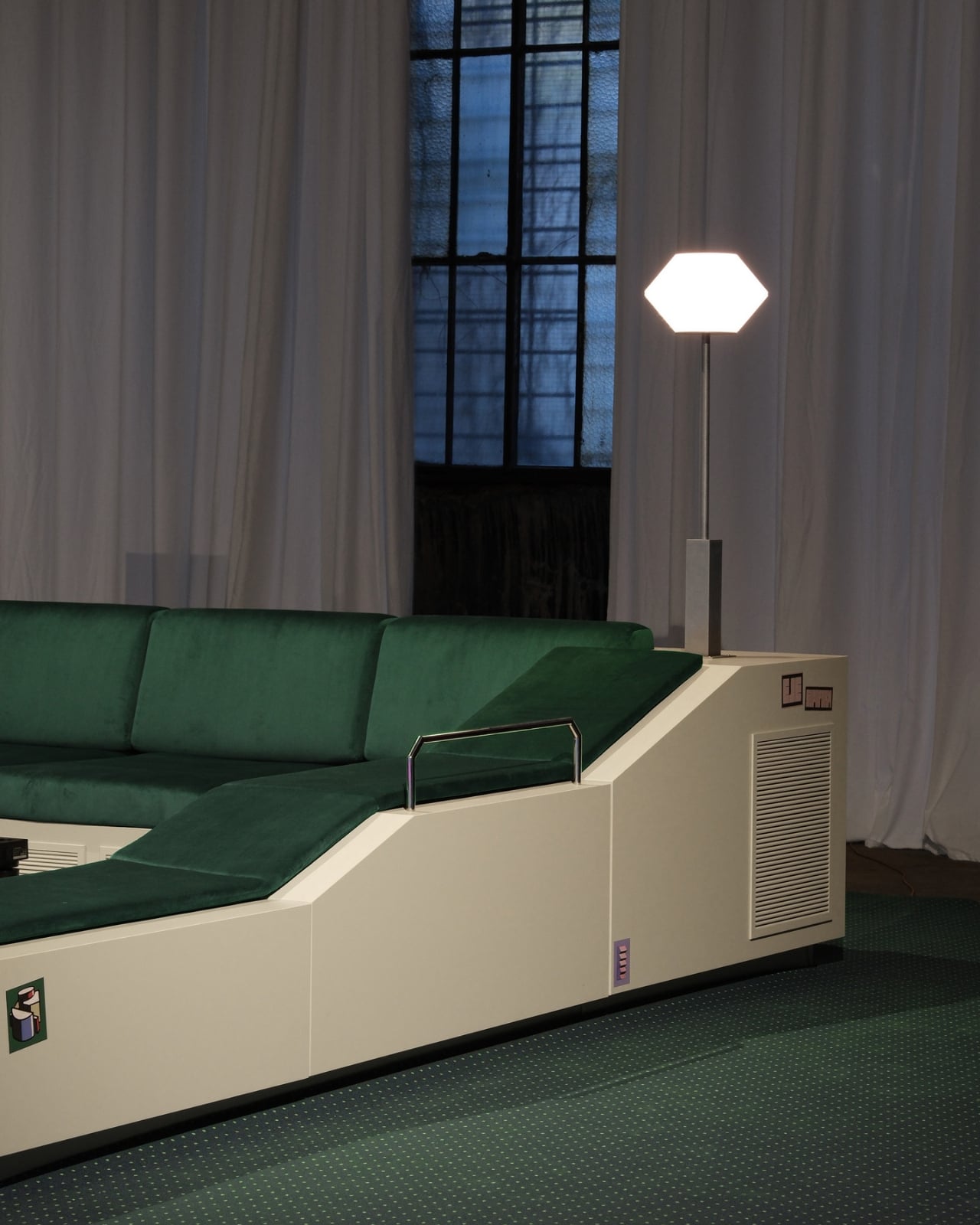
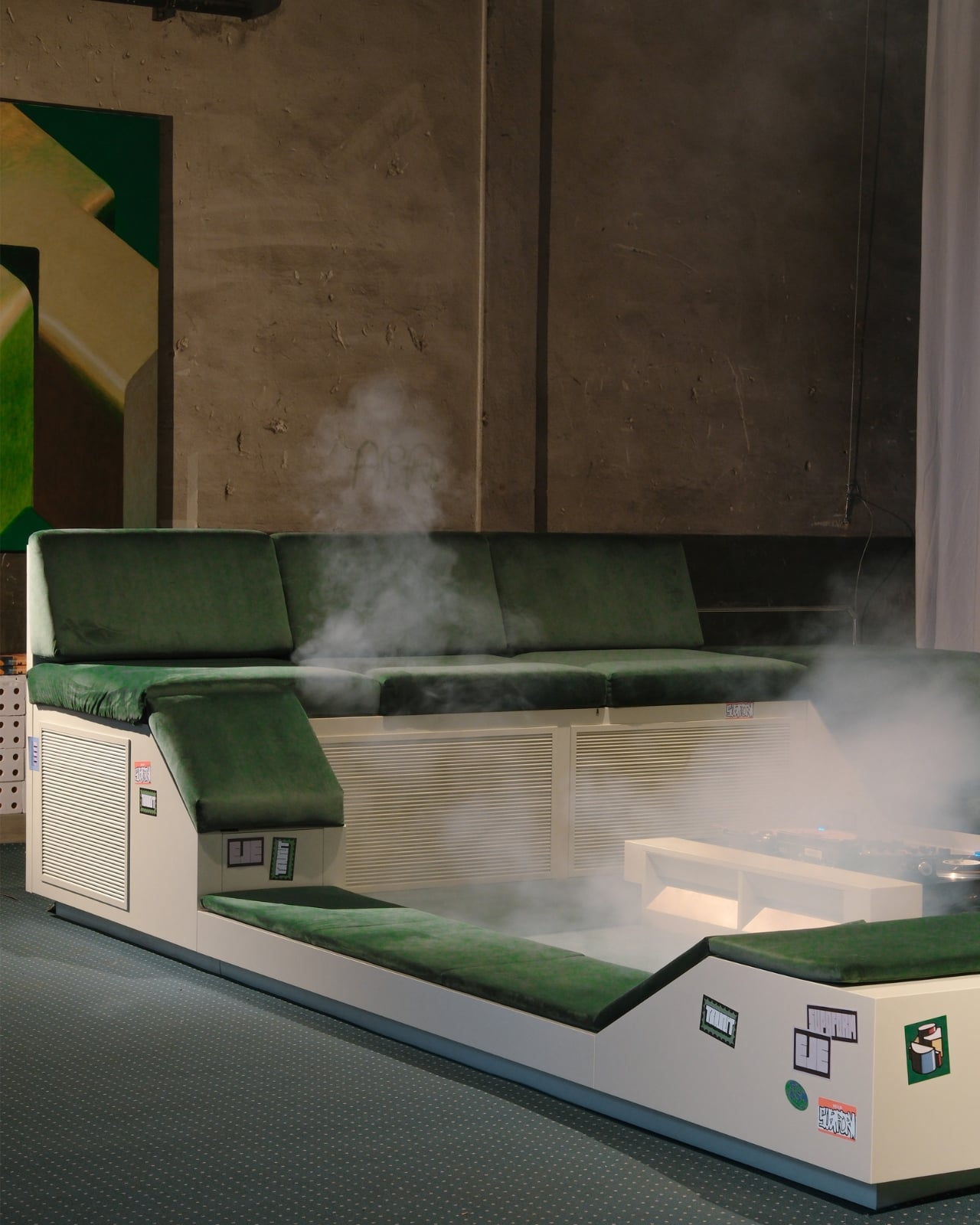
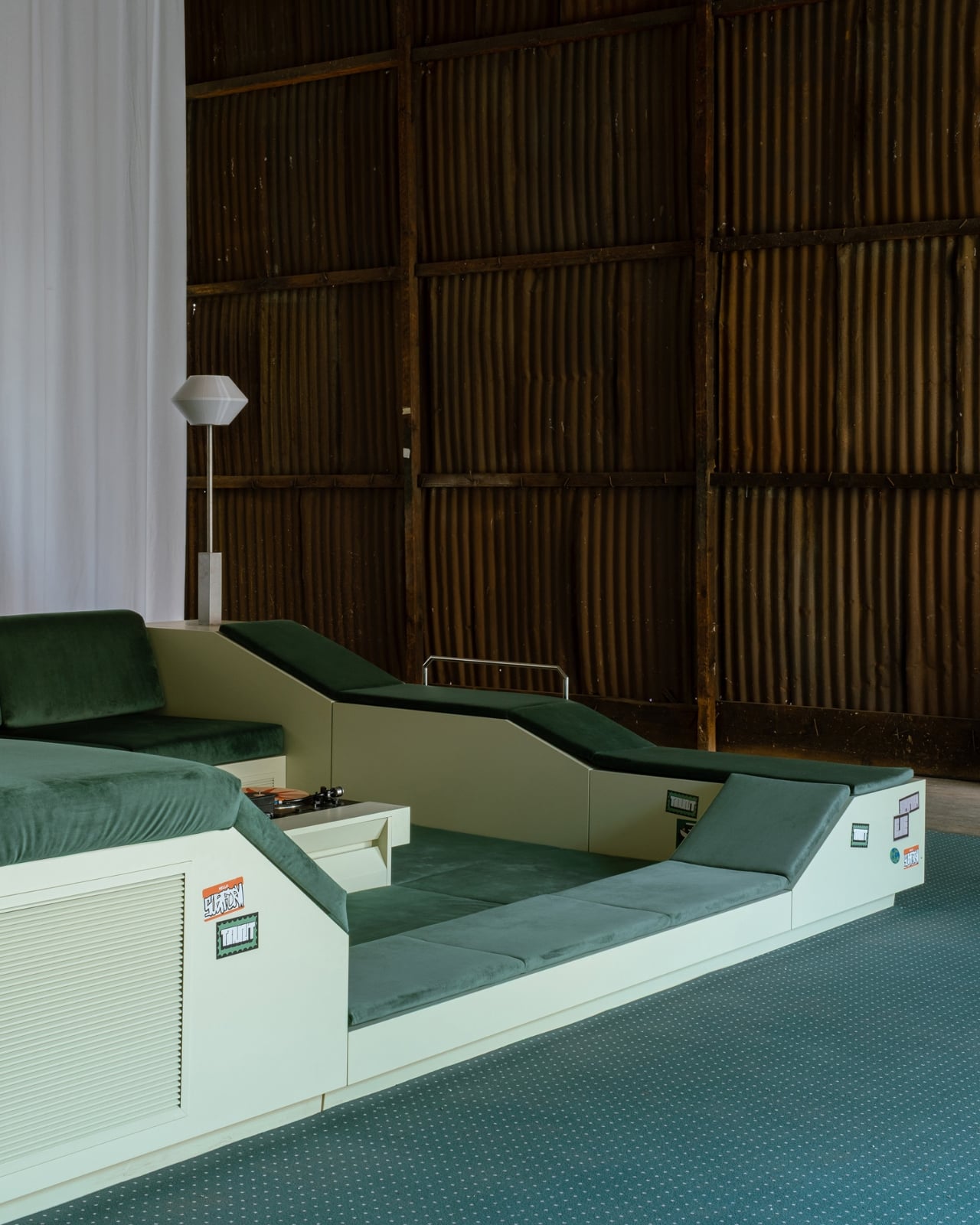
The title carries weight too. “Transit Encounters” points to something most of us have felt but rarely stop to name. We are constantly passing through spaces, airports, lobbies, plazas, and in those in-between places, we sometimes share moments with people we will never see again. There’s an intimacy to that kind of encounter that is entirely different from planned socializing. It’s more honest, somehow. Shcherbakov leans into that contradiction, the idea that transience and closeness can exist at the same time. The installation was developed in collaboration with Esthetic Joys and hosted DJ sets and talks with Design Hotels throughout the week, which means it was literally activated by those kinds of fleeting, unplanned connections.
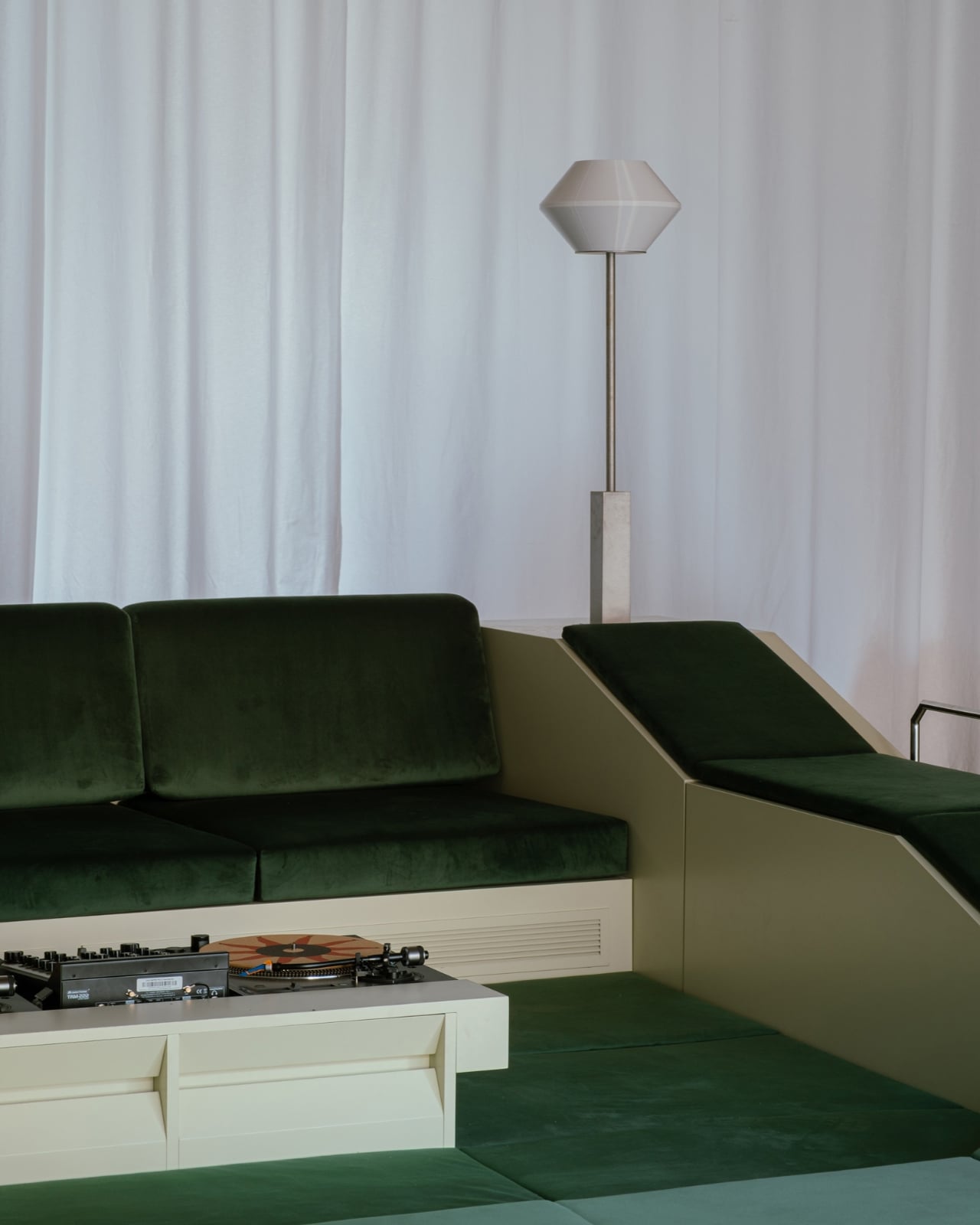
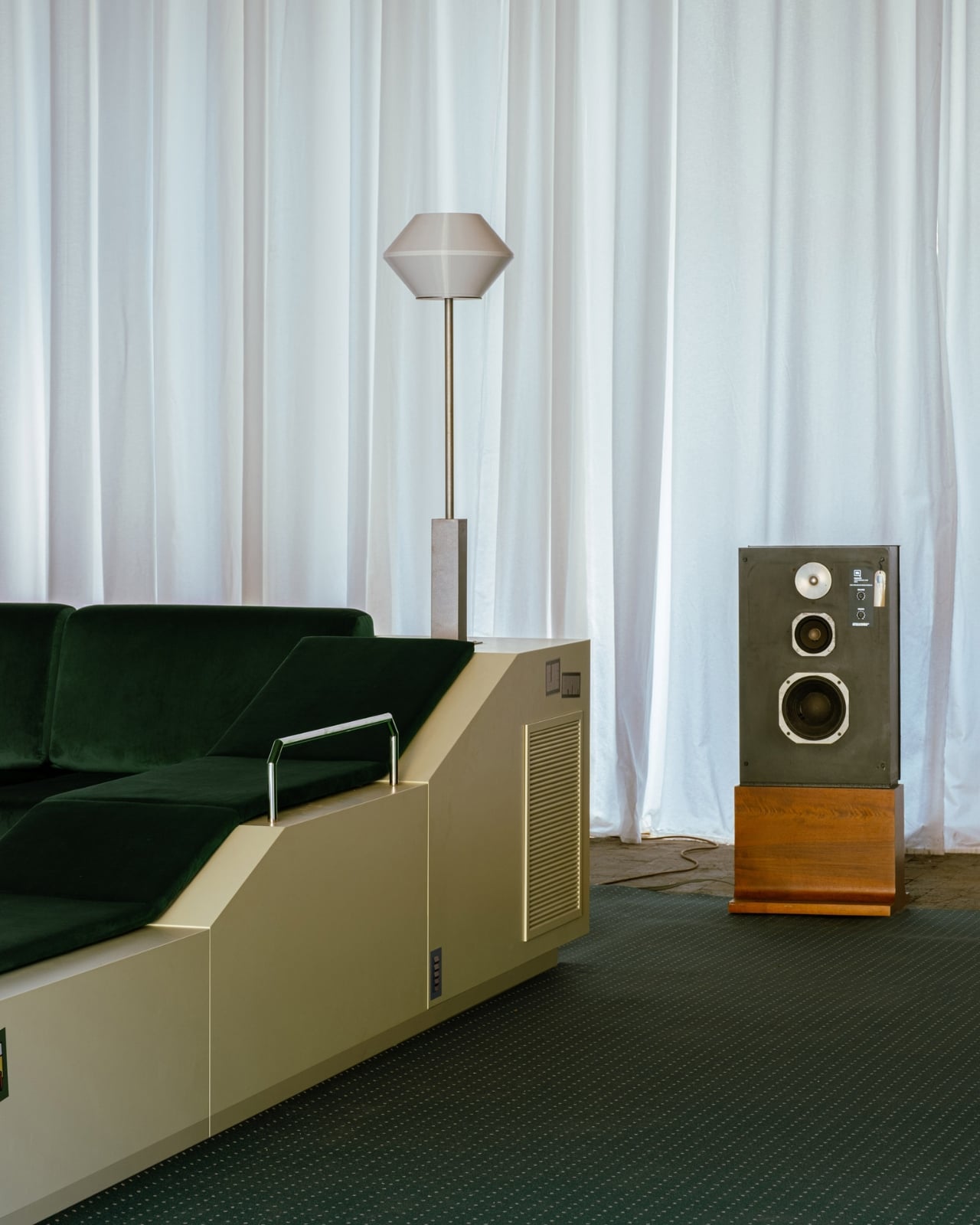
I’ll admit I have a personal bias here. I think we lost something when the conversation pit fell out of fashion. Not because I’m nostalgic for shag carpeting or sunken living rooms specifically, but because the underlying idea, that furniture could be designed to make you slow down, turn toward each other, and actually talk, felt like a worthy ambition. Most contemporary furniture design optimizes for flexibility, portability, and individual comfort. Modularity is the buzzword. Everything folds, stacks, or wheels away. Transit Encounters isn’t interested in any of that. It’s a fixed, unapologetic invitation to stay.
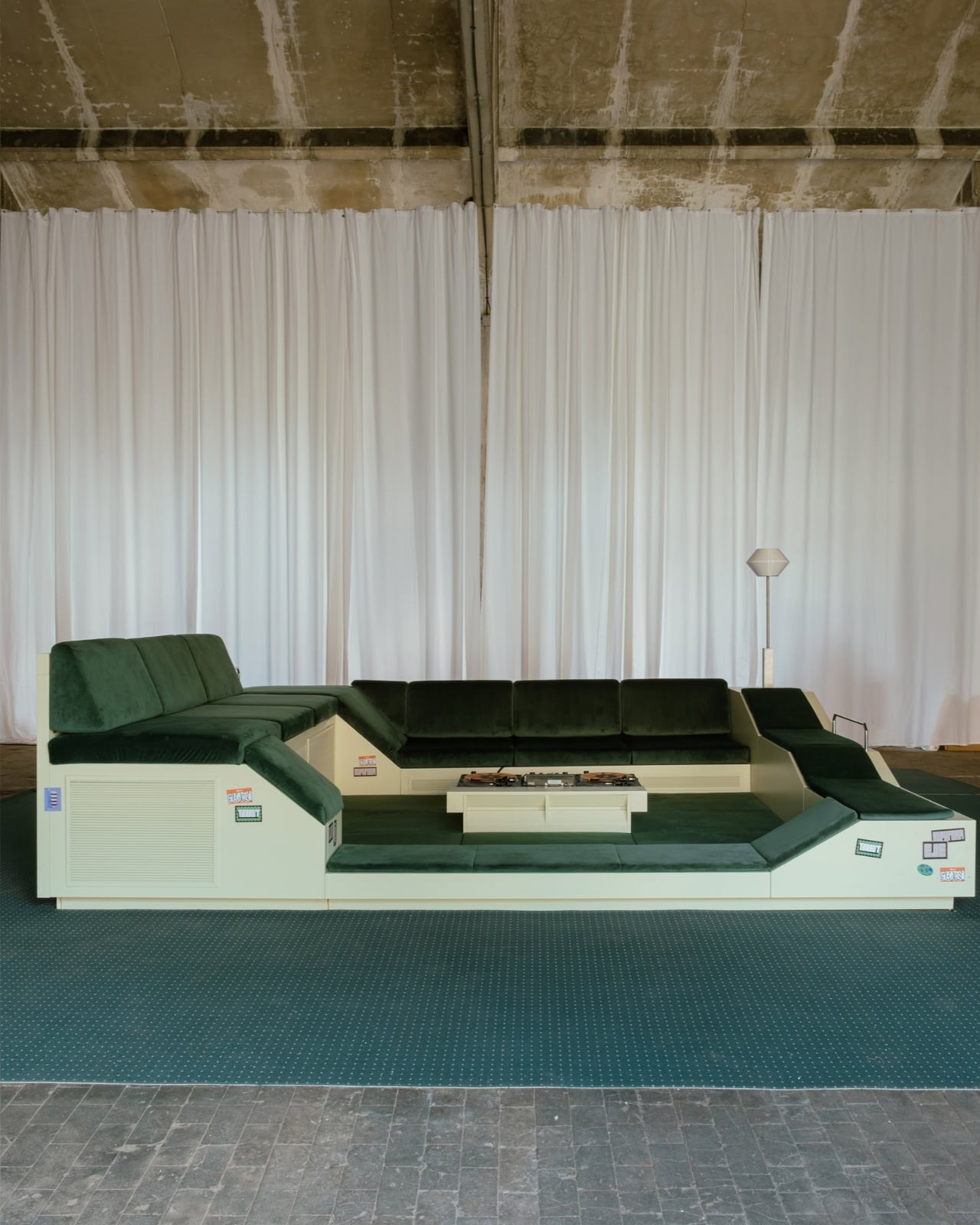
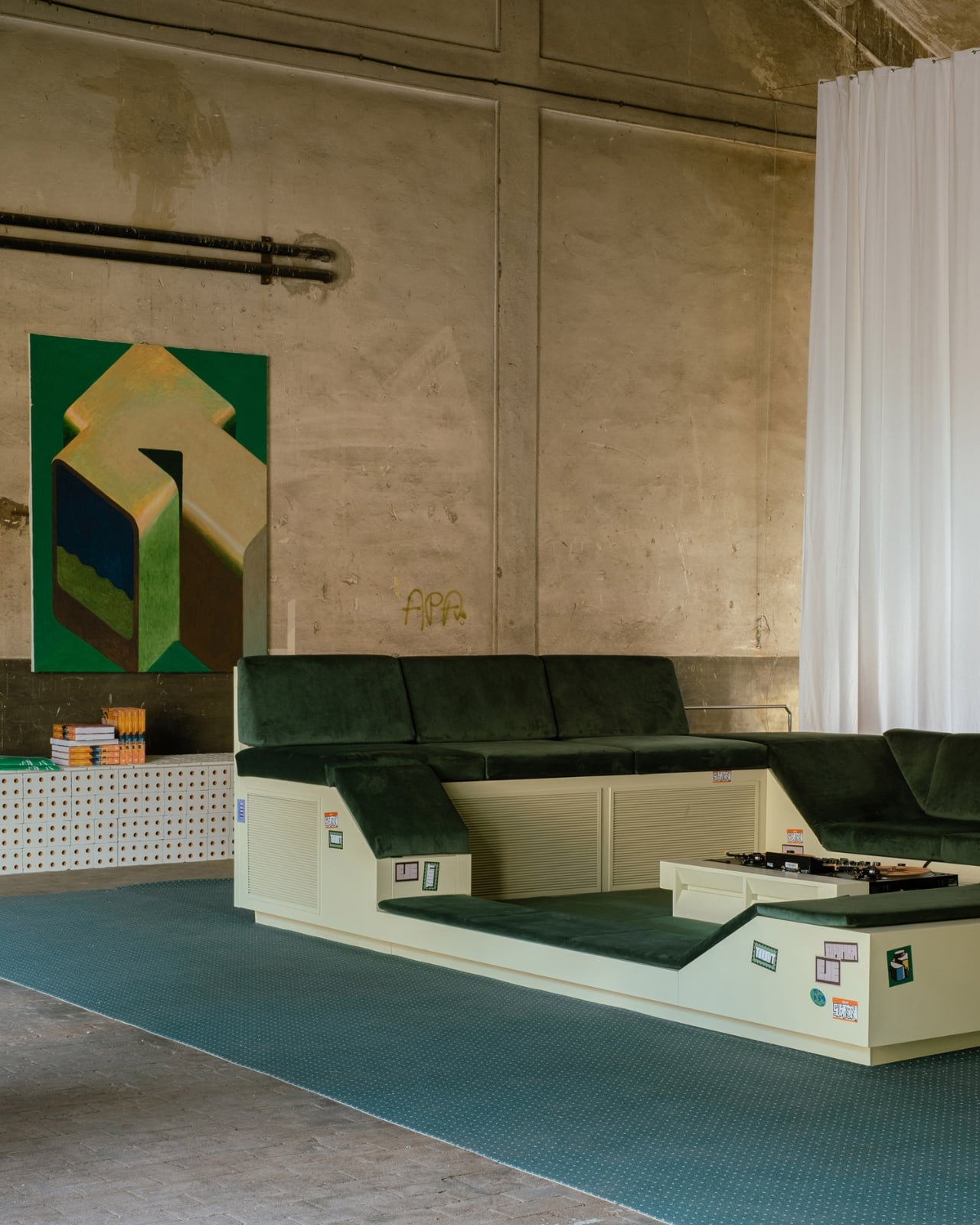
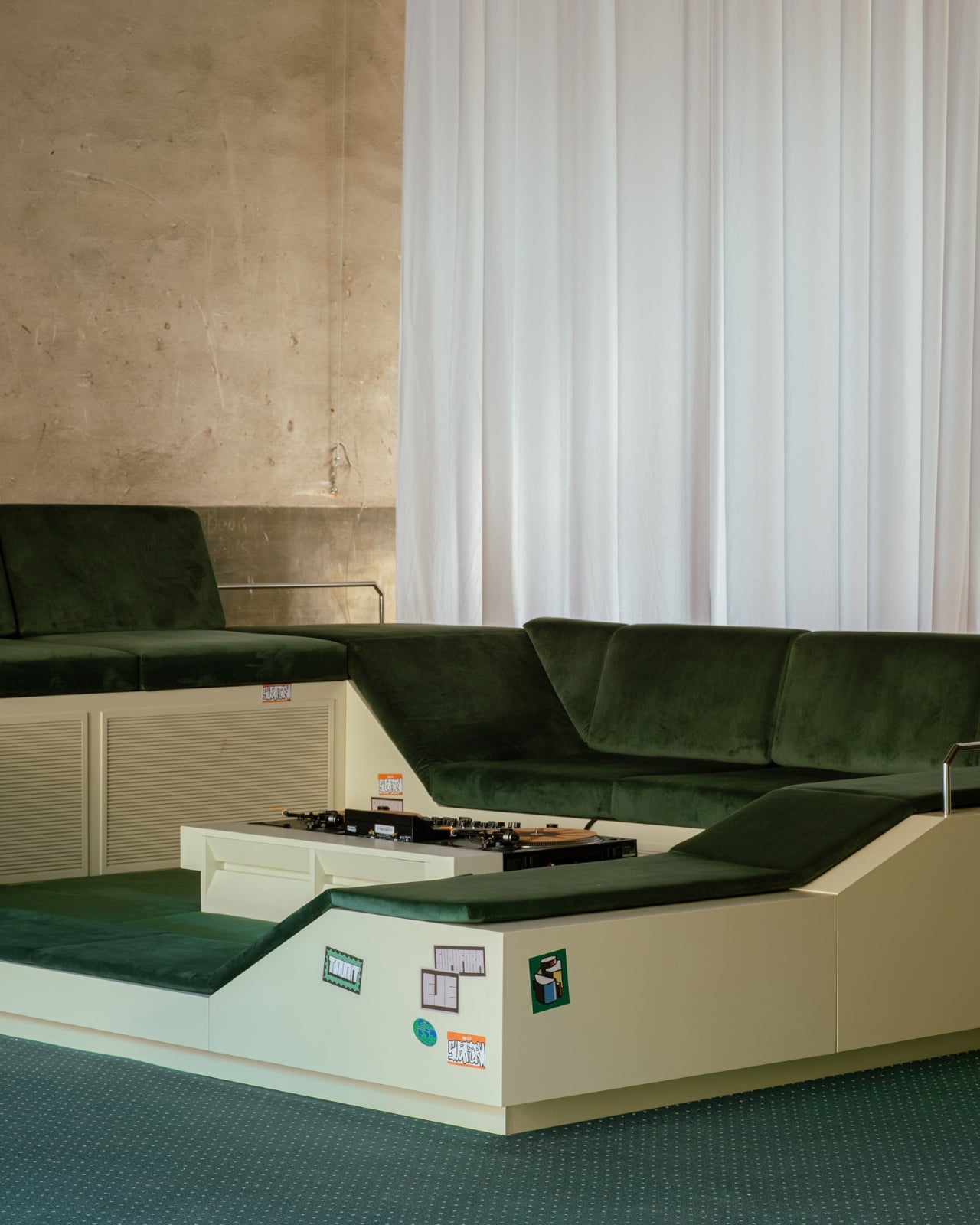
Supaform sits at the intersection of art and design, and that positioning gives Shcherbakov the freedom to treat furniture less like a product and more like a proposition. With Transit Encounters, the proposition is simple but radical: what if a room’s centerpiece wasn’t a coffee table or a statement light fixture, but an intentional container for human connection? What if we designed less for how a space looks on camera and more for how it feels when it’s full of people?
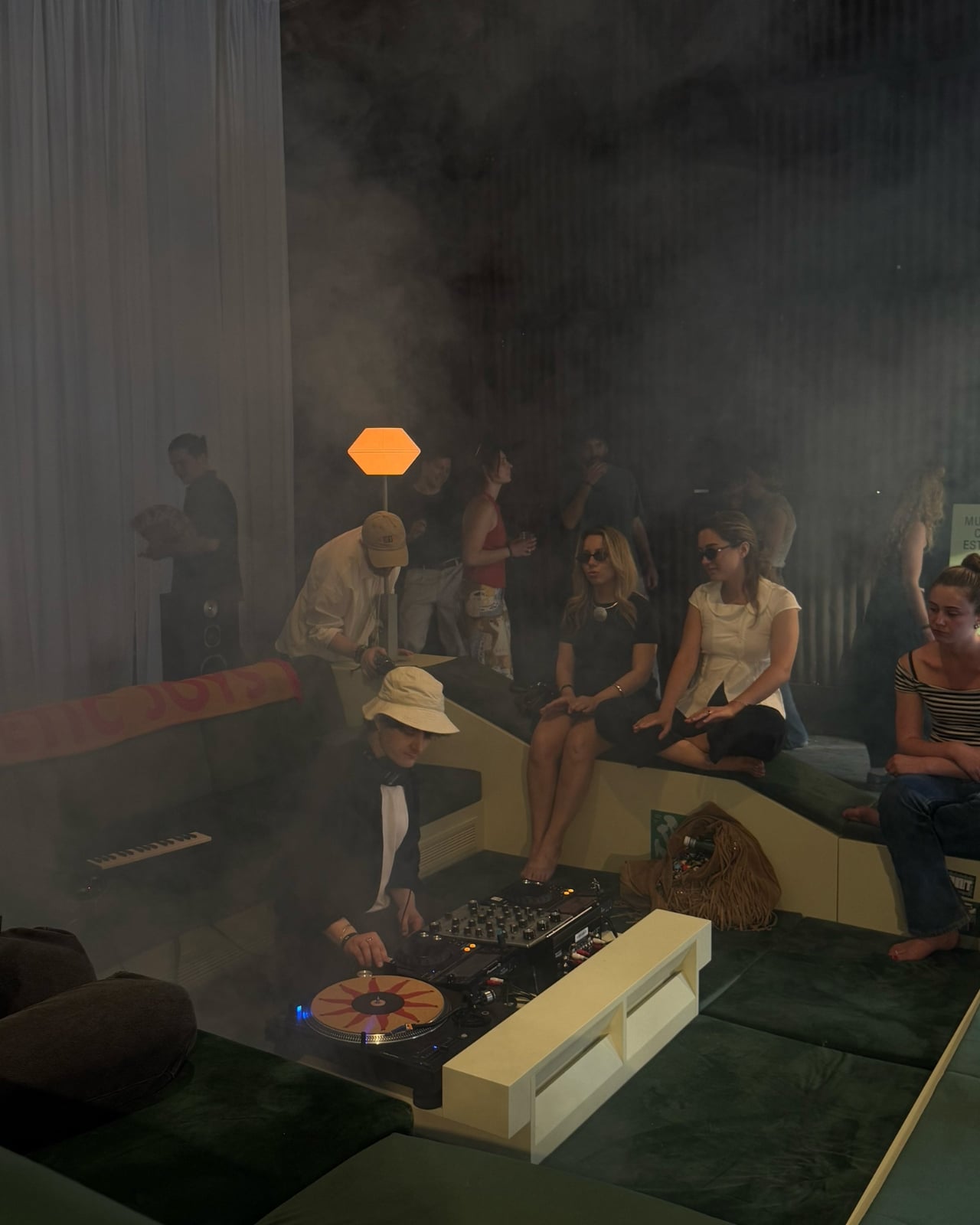
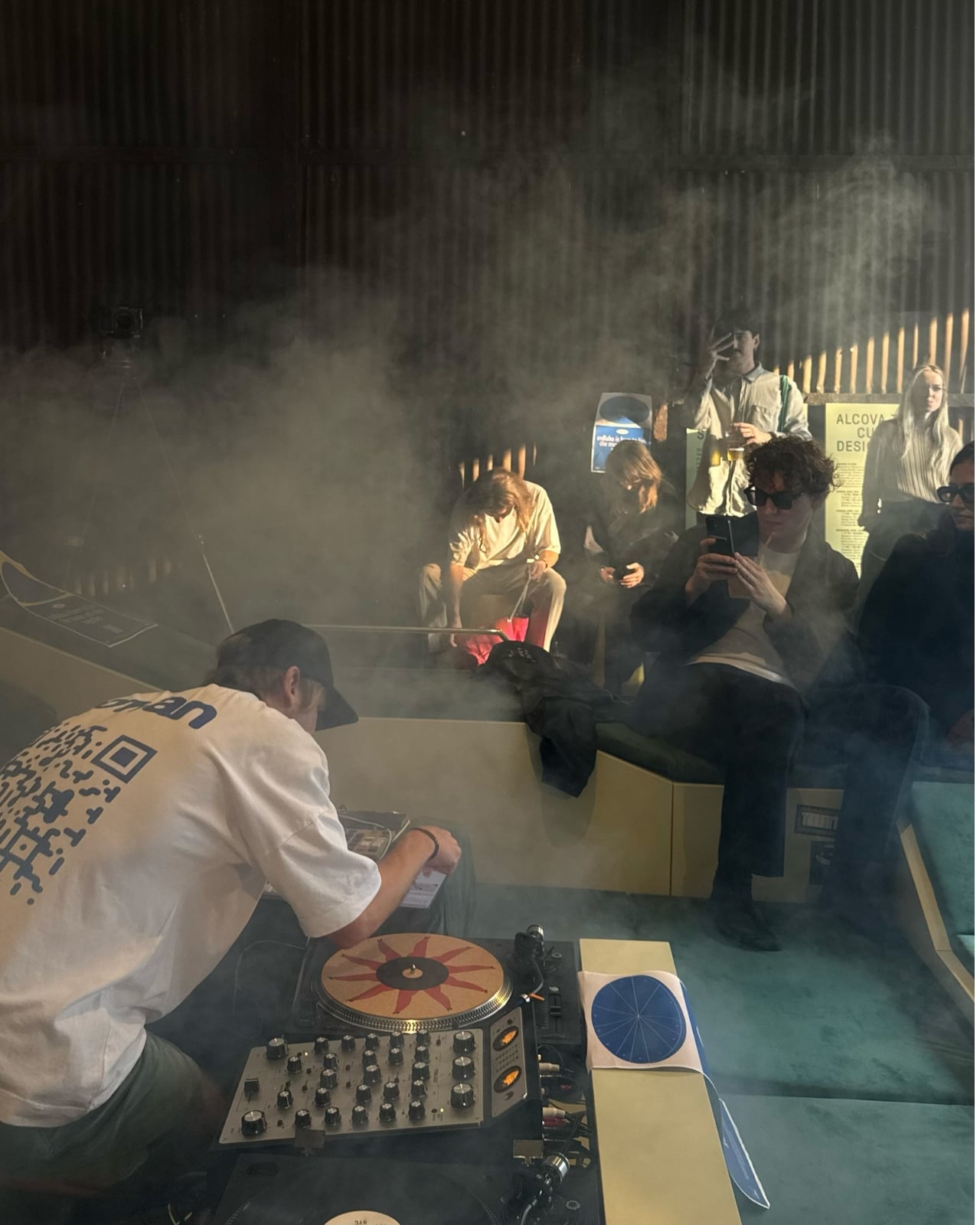
Milan Design Week surfaces a lot of beautiful things every year. Transit Encounters was one of the few that made you want to stop, sit, and stay awhile. At an event where foot traffic is the currency, that alone says everything.