Architecture has always been one of the most honest forms of cultural expression. It tells you what a people value, how they move through space, and what kind of relationship they want with the world outside their walls. So when a Korean couple settled in Moscow and commissioned designer Inga Kordya to create their home, the brief was never simply about aesthetics. It was about belonging. The result is Residence Open, and it’s the kind of project that quietly reframes what we mean when we talk about culturally informed design.
Kordya’s starting point was the Korean hanok, the traditional dwelling that has defined Korean domestic architecture for centuries. The hanok isn’t a rigid style so much as a philosophy: rooms that flow into one another, spaces defined by natural light rather than solid walls, a constant conversation between interior and exterior. These are principles that could easily be flattened into trend-driven styling. Inga Kordya did something far more considered than that.
Designer: Inga Kordya (photos by Mikhail Loskutov)
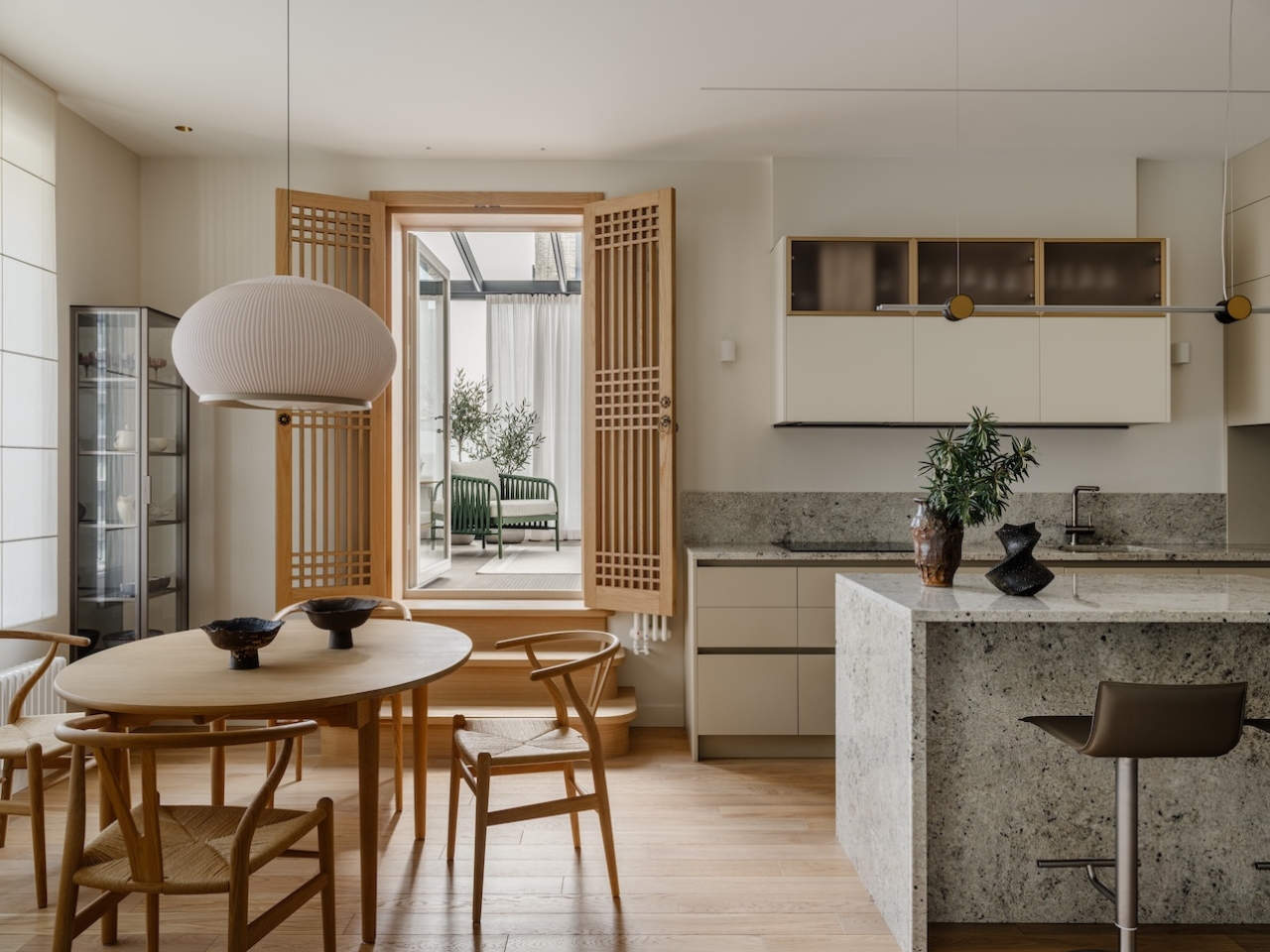
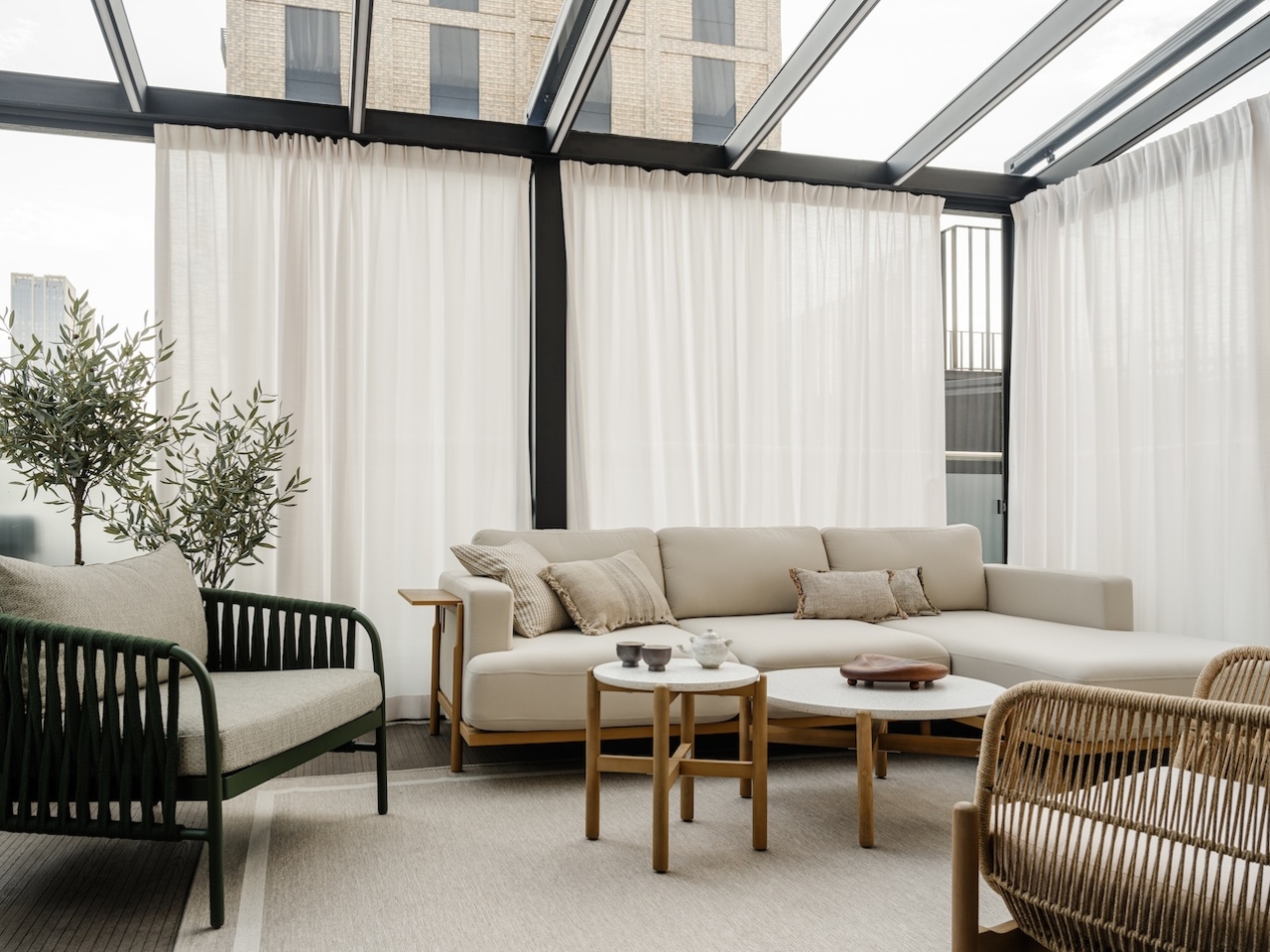
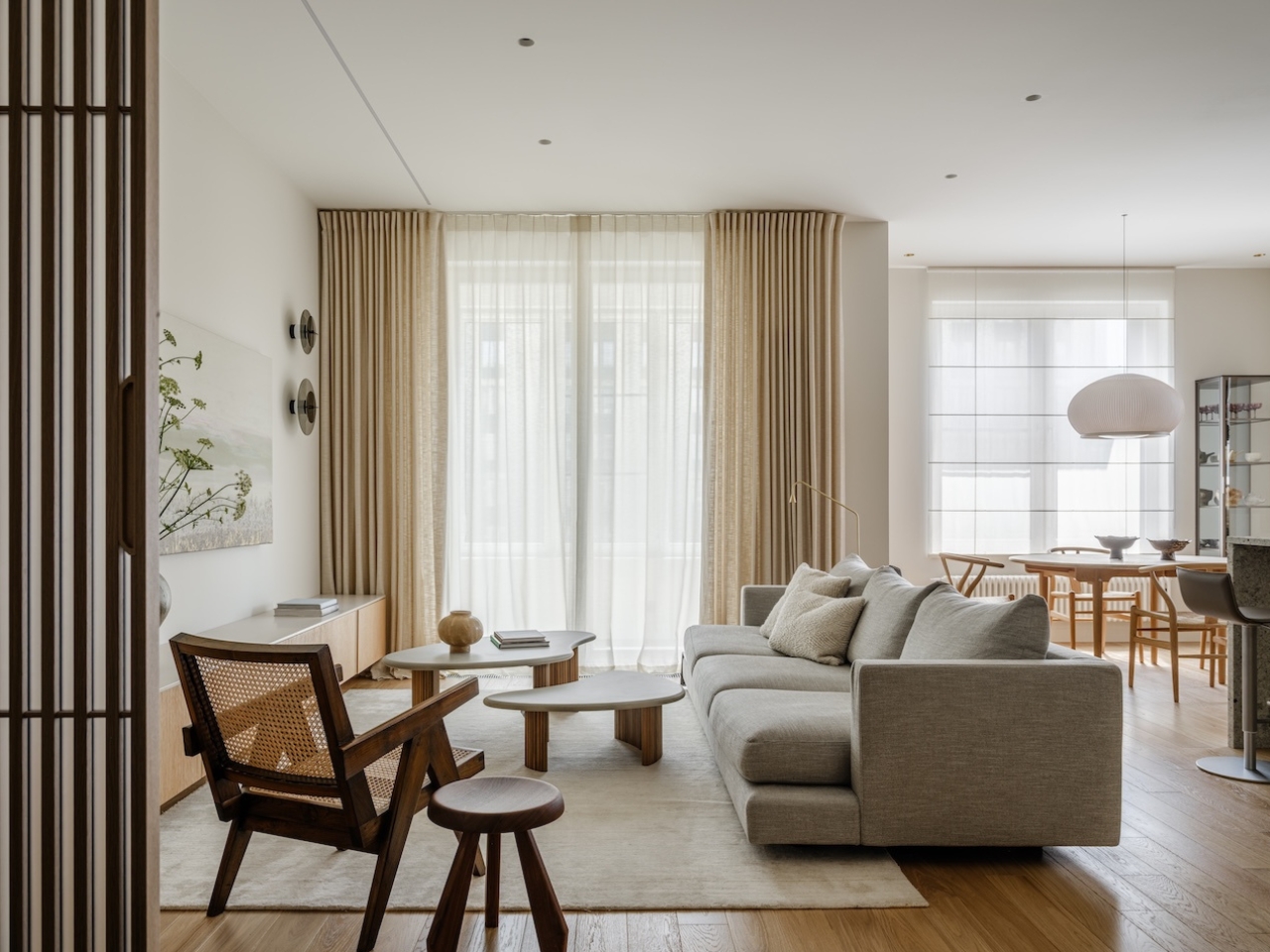
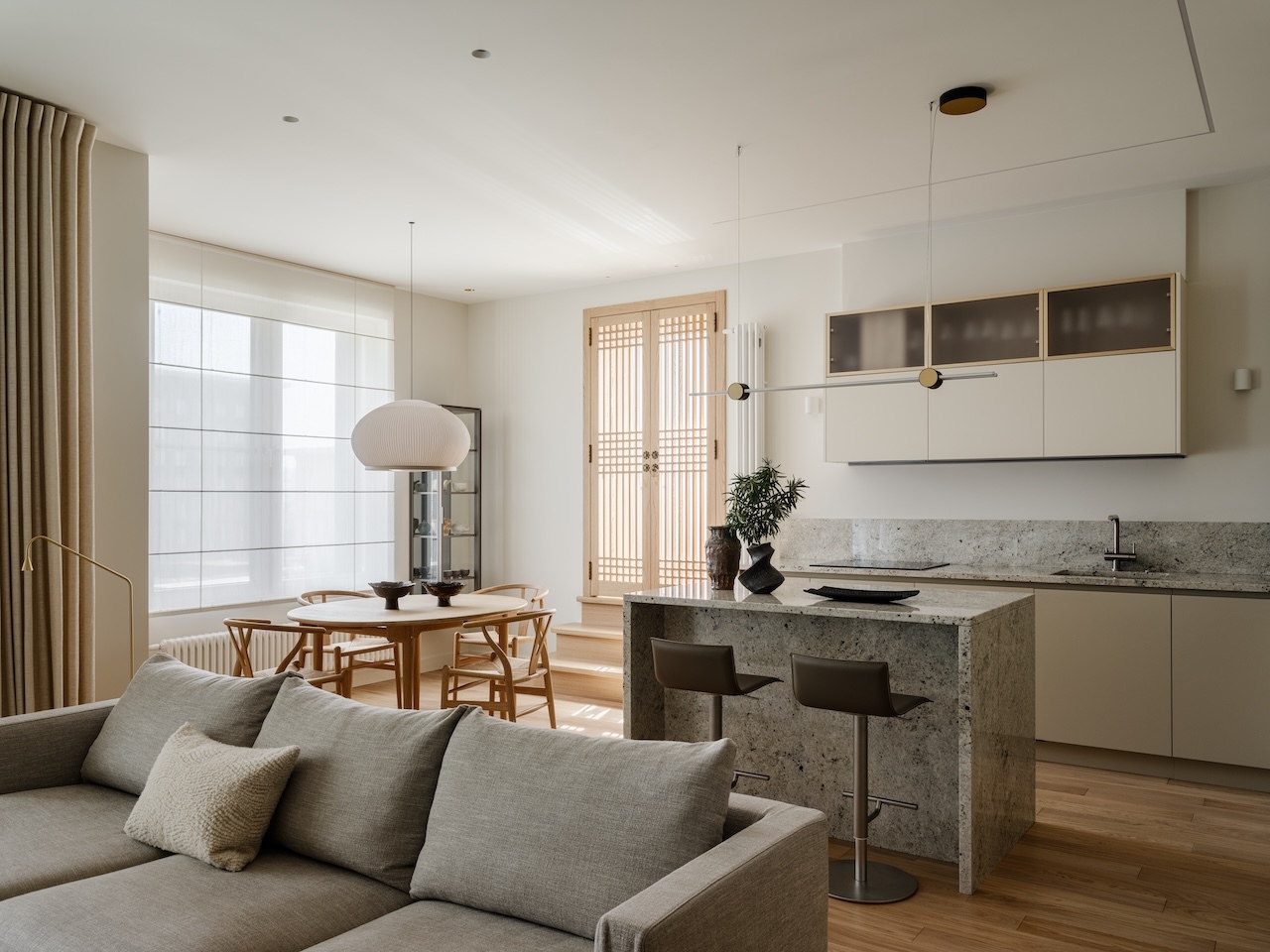
The apartment is organized around filtered light. It moves through the space the way it might move through the latticed wooden screens of a hanok in Seoul, diffused and soft, never harsh. A set of custom oak shutter doors in the living room does much of this work, drawing directly from traditional Korean door design and becoming, in the process, one of the most quietly beautiful features of the entire apartment. They don’t shout for attention. They earn it.
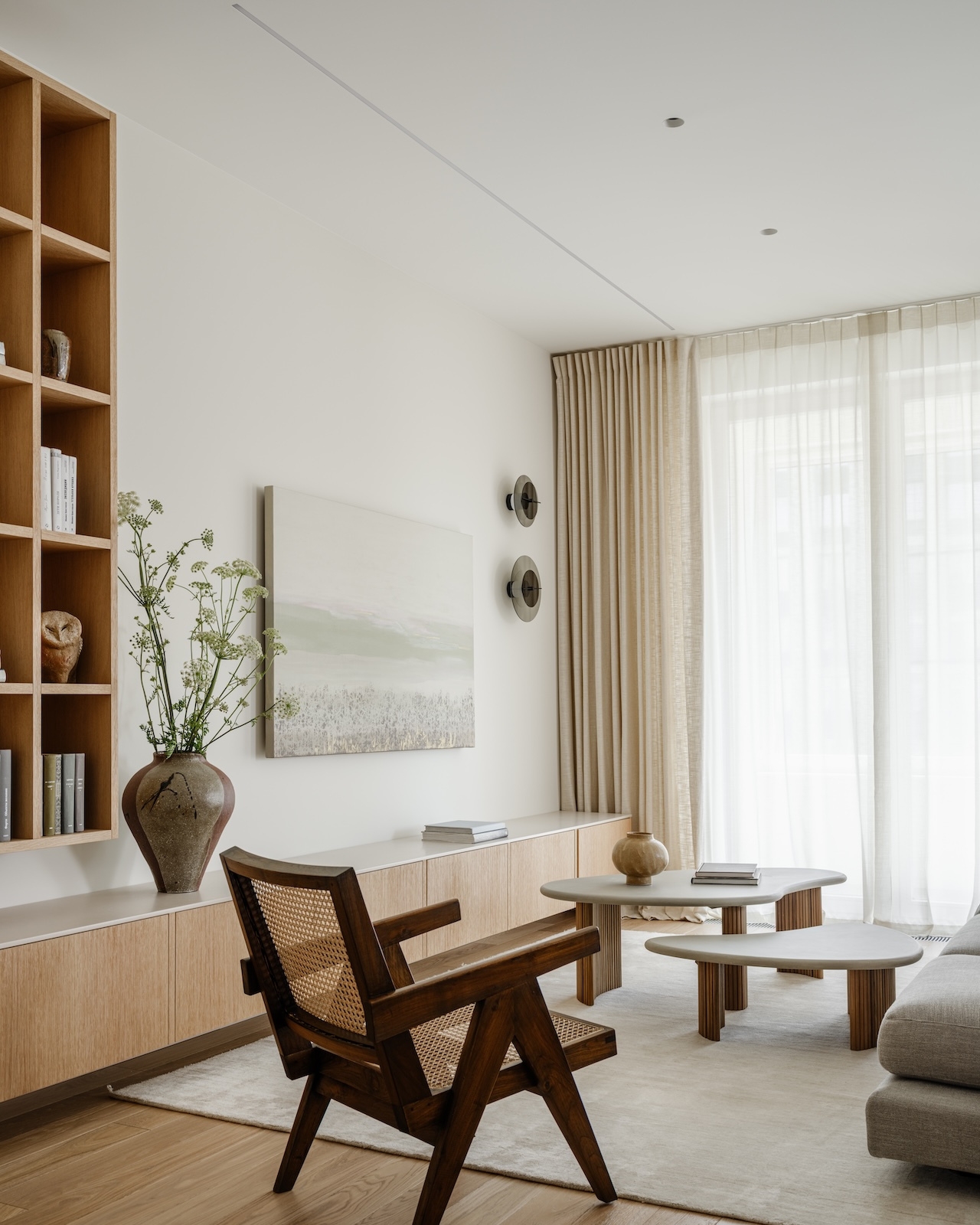
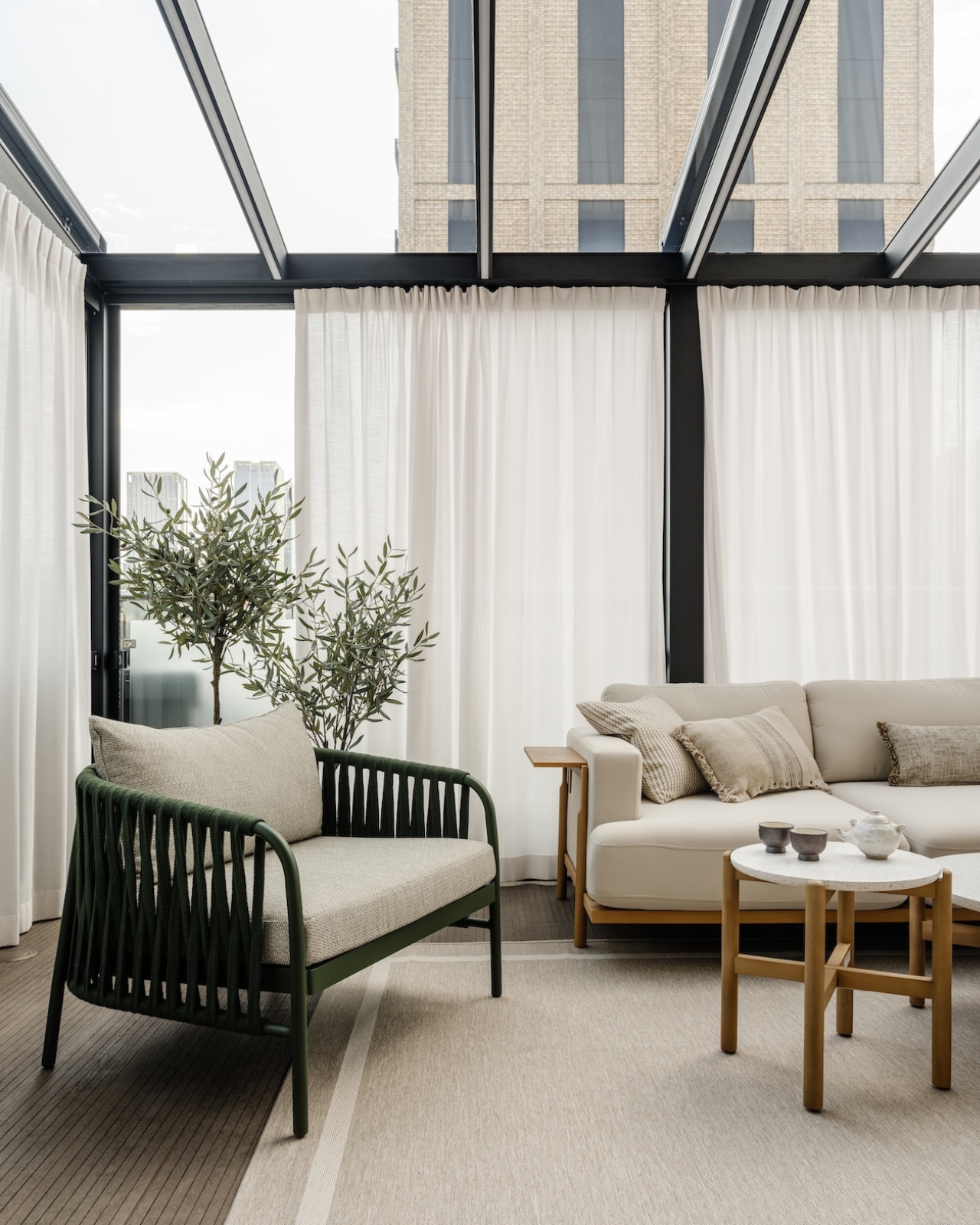
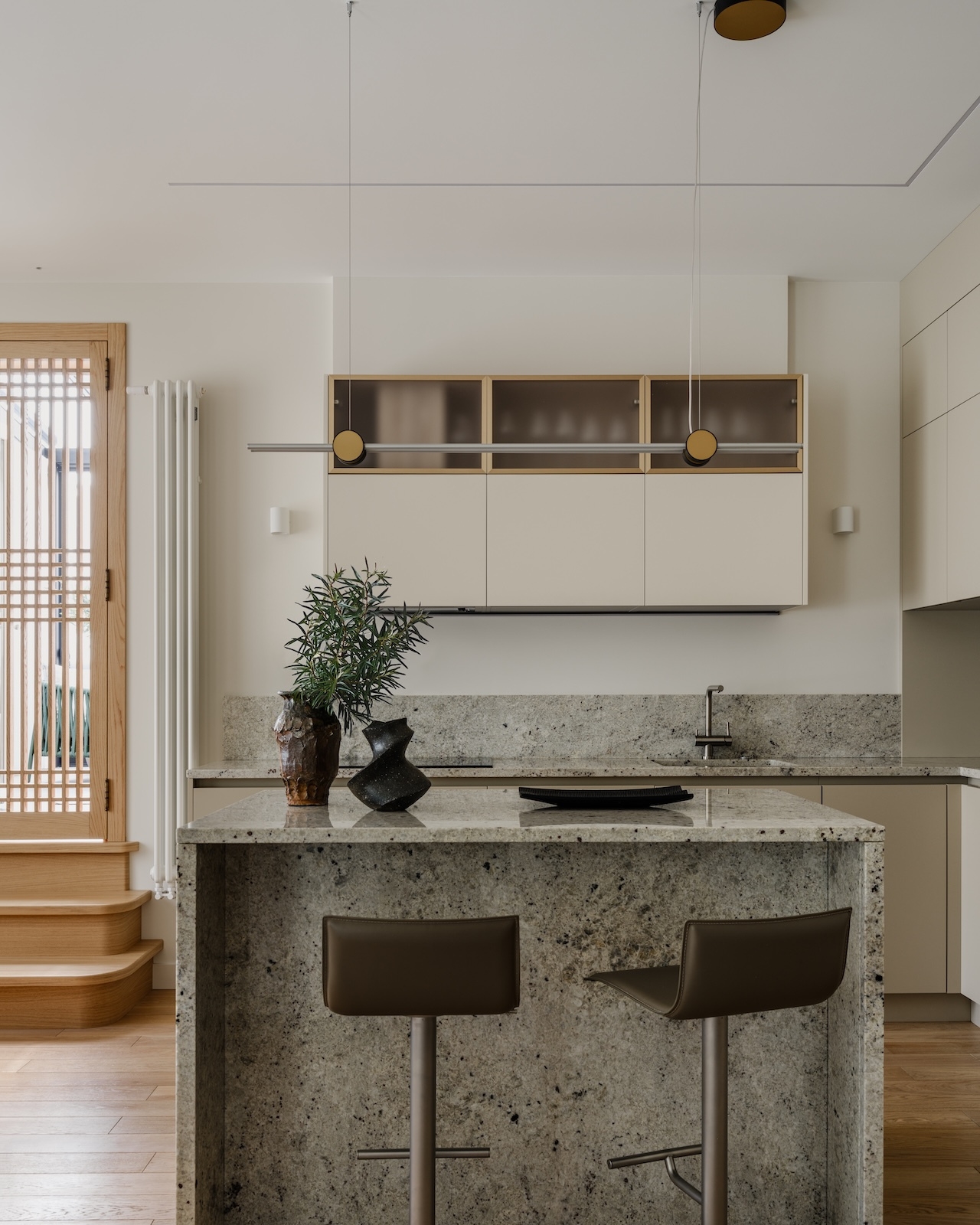
The material palette follows the same logic. Marble, granite, natural wood, brass, ceramics, linen. Nothing synthetic, nothing that flattens texture or pretends to be something it isn’t. These materials read as both internationally sophisticated and grounded in something older and more specific. They’re the kind of choices that age well, which matters enormously in a family home built for the long term.
Speaking of family, the spatial planning for the two daughters is worth pausing on. Their rooms are separated by sliding partitions that open into a shared play area, an idea borrowed directly from the hanok’s flexible interior logic. Spaces in a hanok weren’t locked into single functions. A room could be a sleeping space by night and a social one by day. Kordya applies this thinking to the children’s zone with genuine intelligence, giving the girls independence and togetherness at the same time. That’s not just good design theory. That’s good parenting, built into the walls.
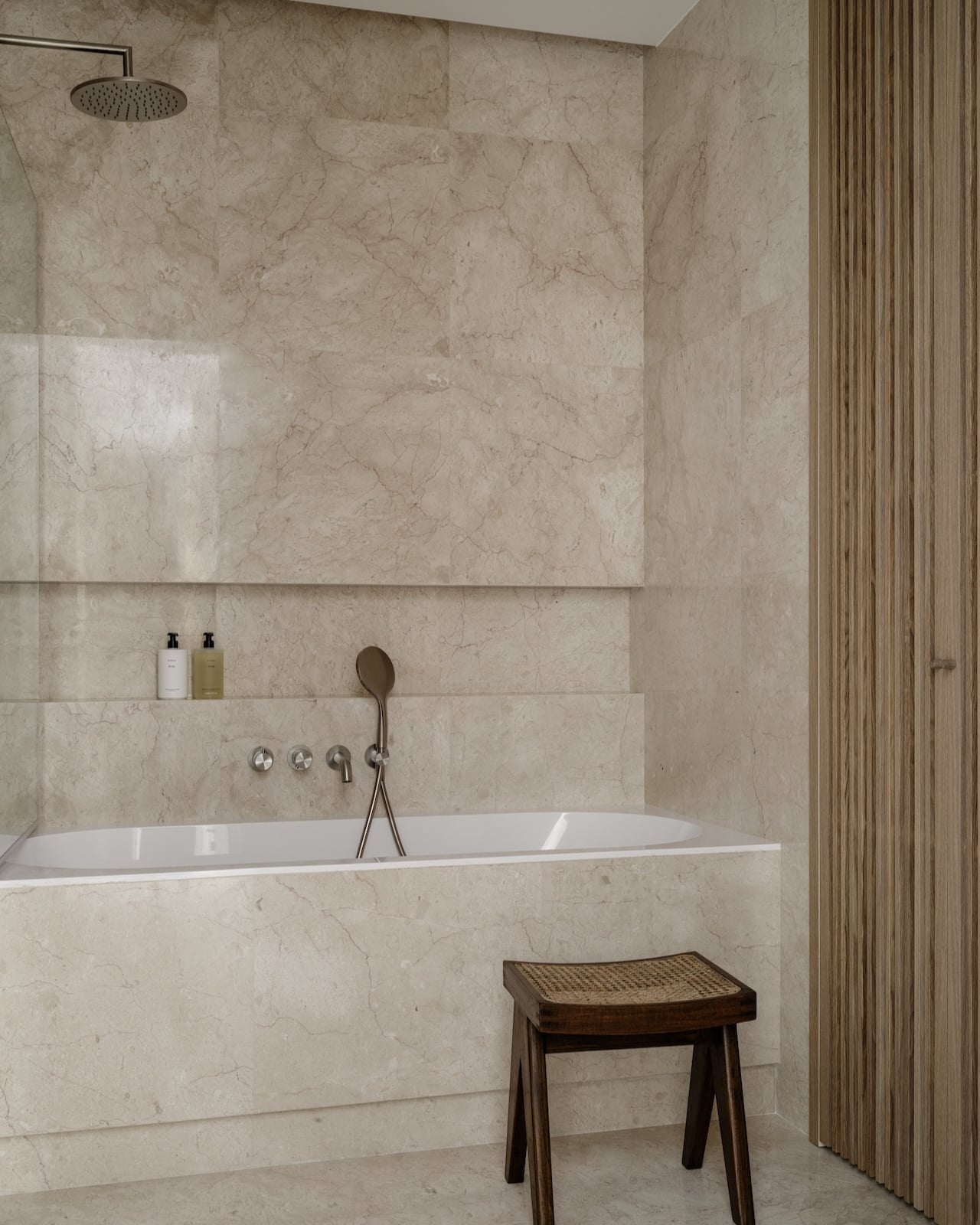
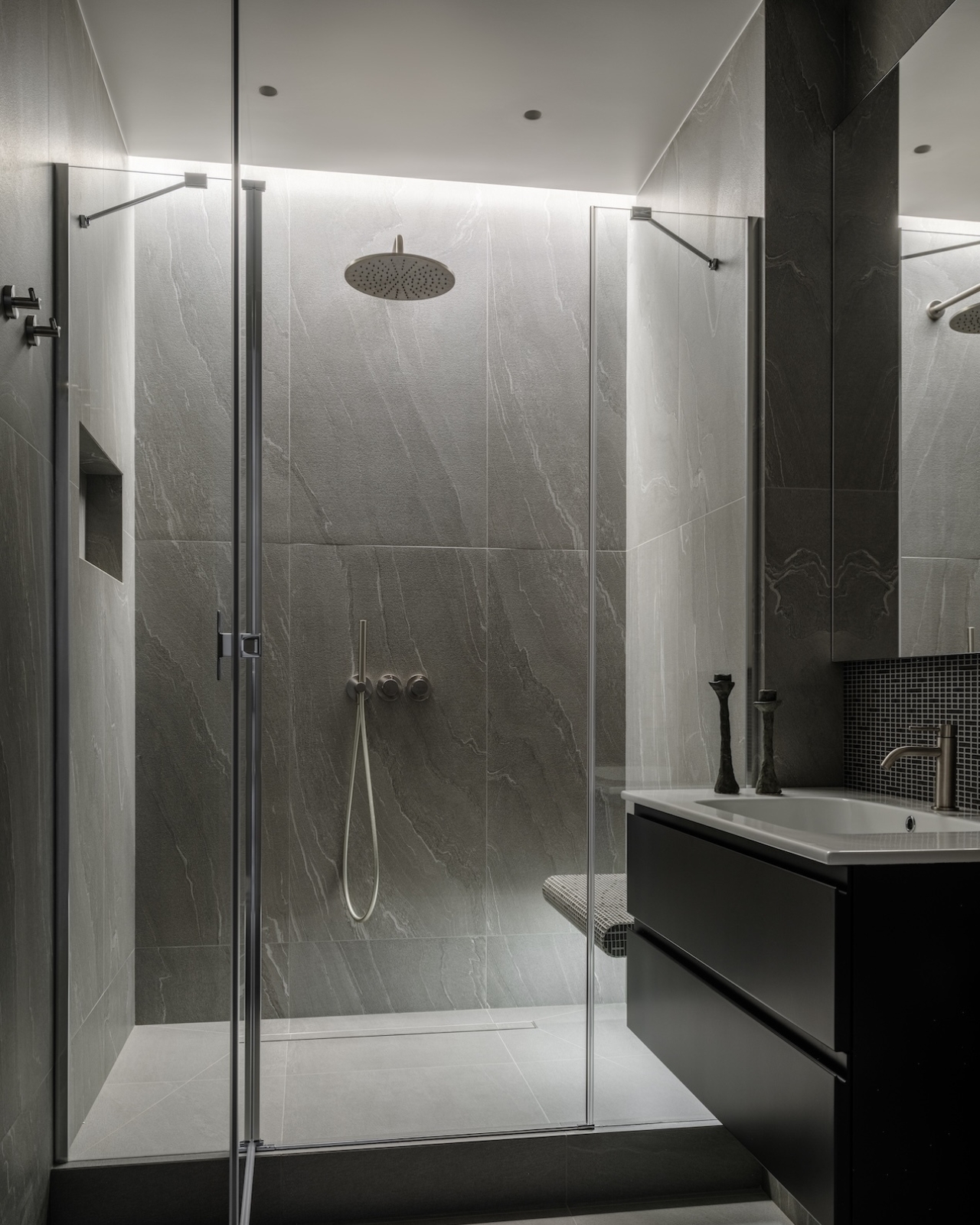
The broader conversation this apartment opens up is one that design has been circling for years: how do you honour cultural heritage without turning it into decoration? Plenty of projects get this wrong. They borrow the visual language of another culture, strip it of meaning, and call it a mood. Kordya avoids this entirely by working from the inside out, from principles and values rather than surfaces. The hanok’s spatial logic, its relationship to light, its flexibility and restraint, these things translate because they were never just visual to begin with.
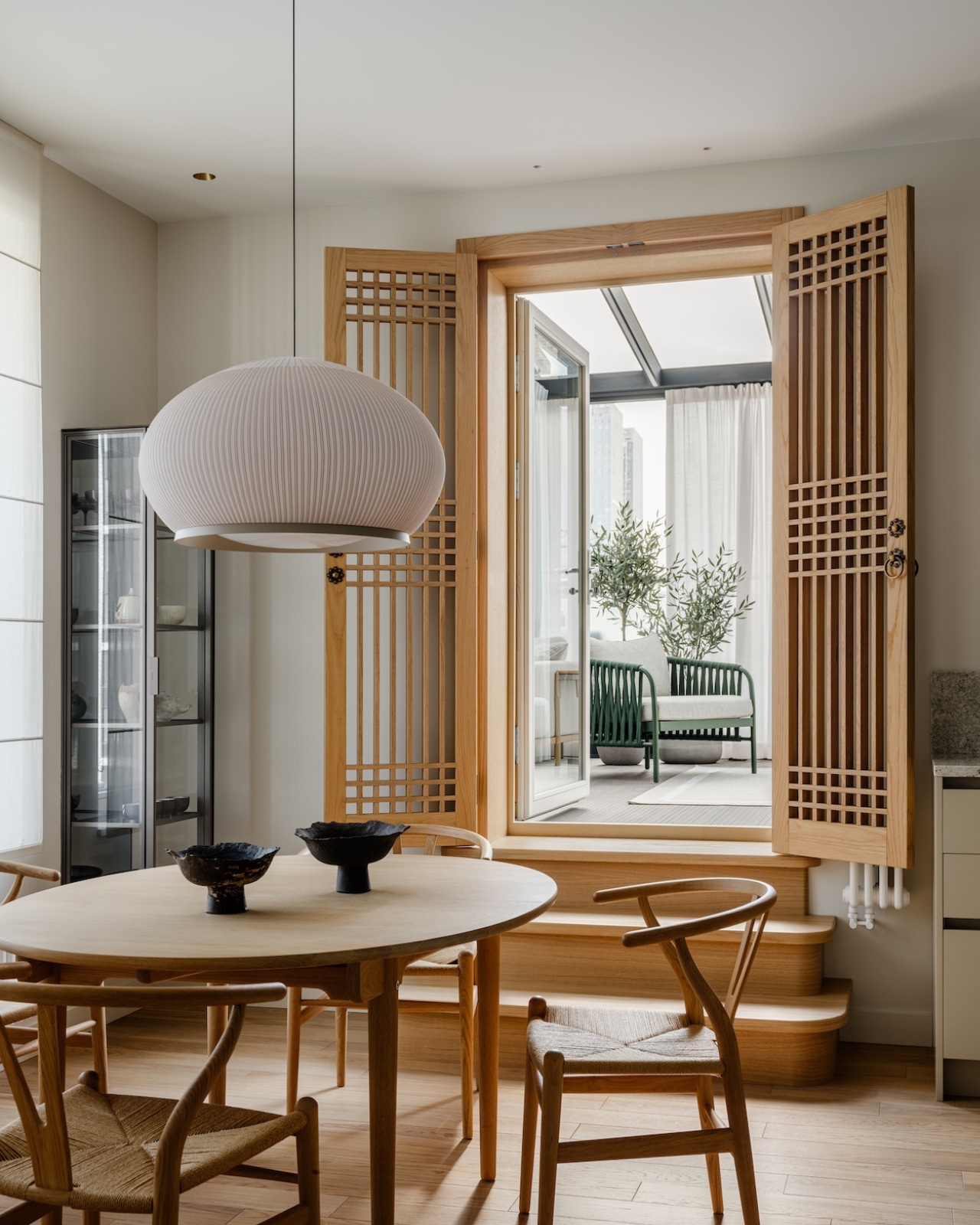
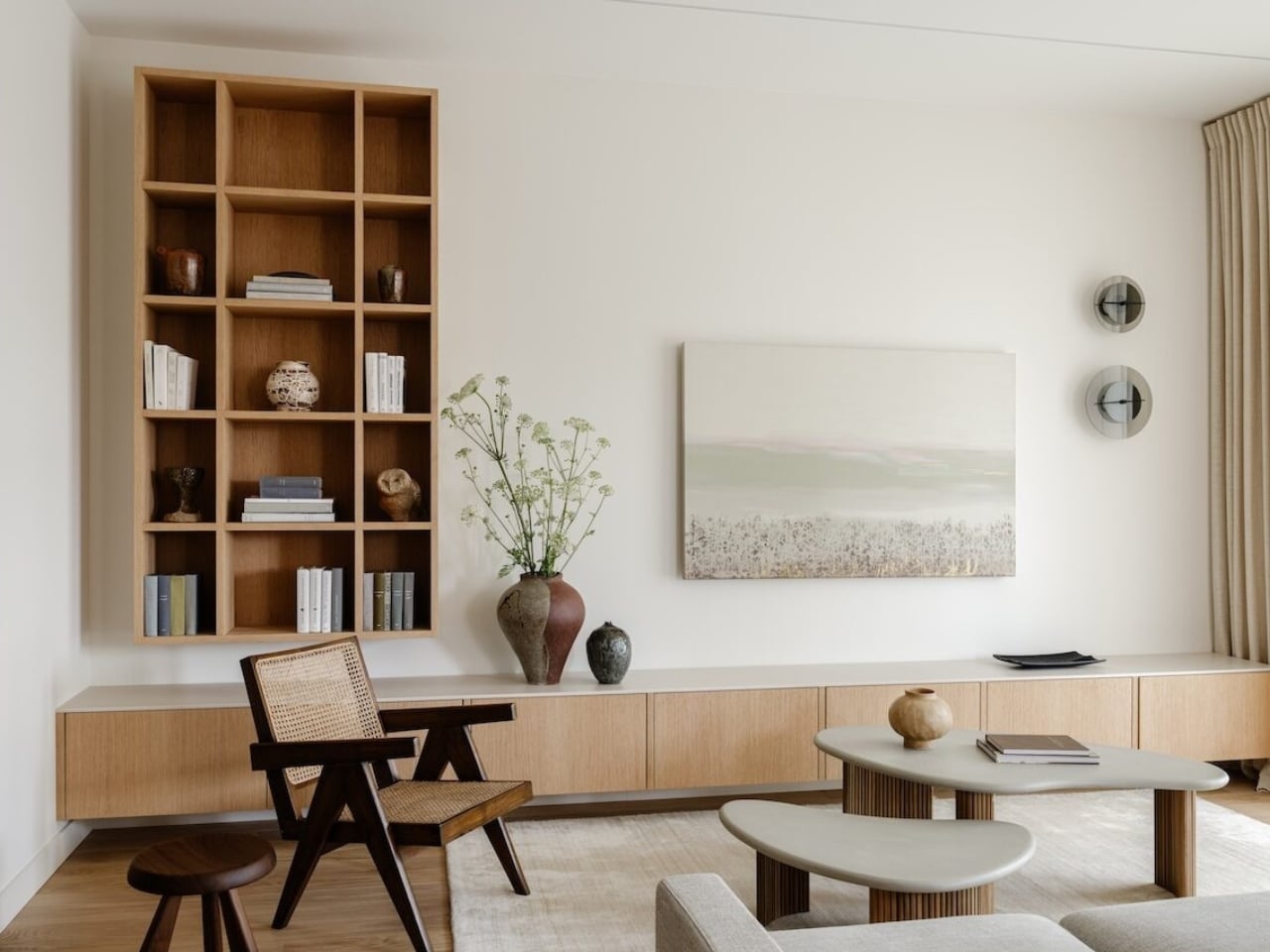
Context matters more than design writing usually admits. Moscow is not Seoul. The climate is different, the architectural tradition is different, the cultural references a visitor would bring to the space are different. And yet, within the apartment, you feel transported. Not in a theatrical way, not in a way that announces itself. It’s a quieter sensation, more like a shift in atmosphere. The light changes, the materials soften, and the rhythm of moving through the rooms feels deliberate and calm. That quality of calm is the hanok’s deepest gift, and Kordya has managed to carry it across an extraordinary distance.
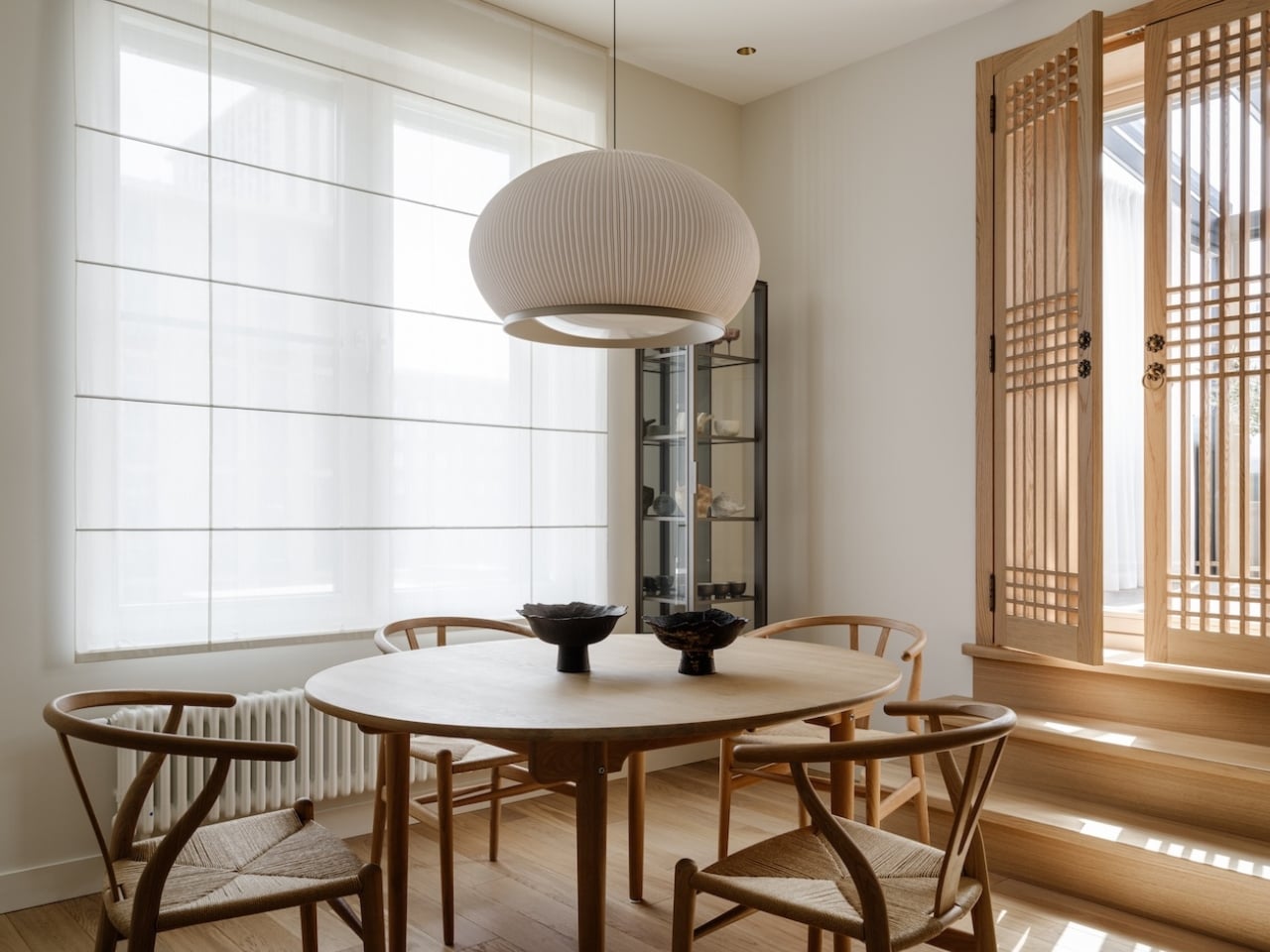
Residence Open is a reminder that the most interesting design conversations happen at the intersection of cultures rather than within any single one. It takes confidence to root a home this deeply in a tradition that isn’t local, and clarity to translate that tradition faithfully rather than decoratively. Inga Kordya brought both. The result is a home that knows exactly where it comes from, and is completely at ease with where it ended up.