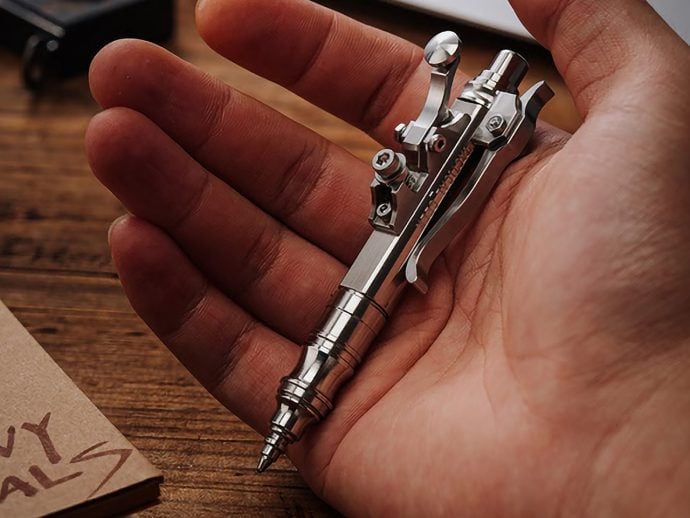
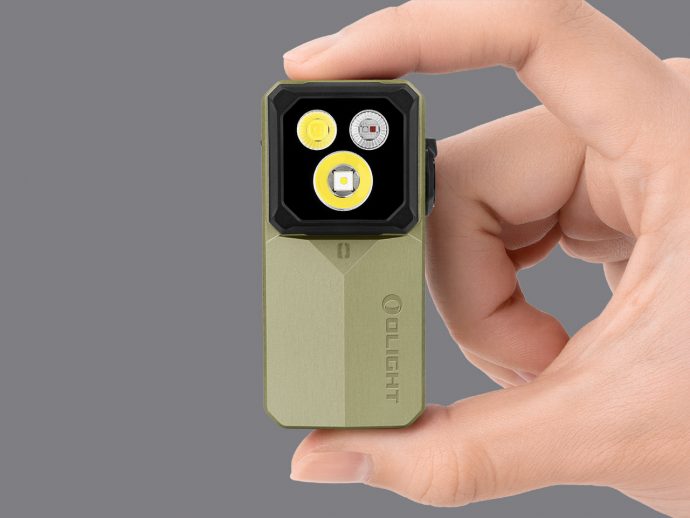
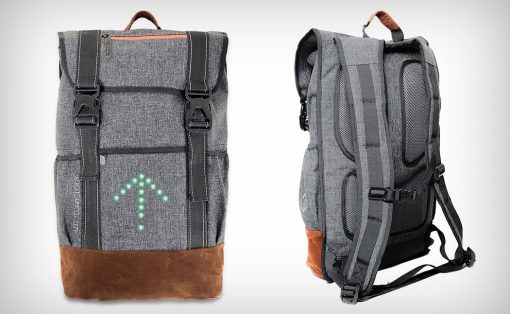
Labor Day is the last real weekend of summer. It’s the one where grills come out, plans stay loose, and someone always shows up with something worth talking about. For the person who carries their gear with intention, who thinks twice about what goes in their pocket before walking out the door, a thoughtful EDC gift lands differently than anything from a generic list. These five picks earn their place.
Each was chosen for a reason that goes beyond utility. The Cubik opens with gravity and no springs, which is more satisfying than it sounds. The Oblica sits in a breast pocket like it was tailored there. The NoxTi glows for twenty-five years without a single charge. The CasaBeam floods a campsite or a hallway with equal confidence. The Loki-Nav navigates, magnifies, and helps you start a fire. Here they are.
1. Cubik Knife
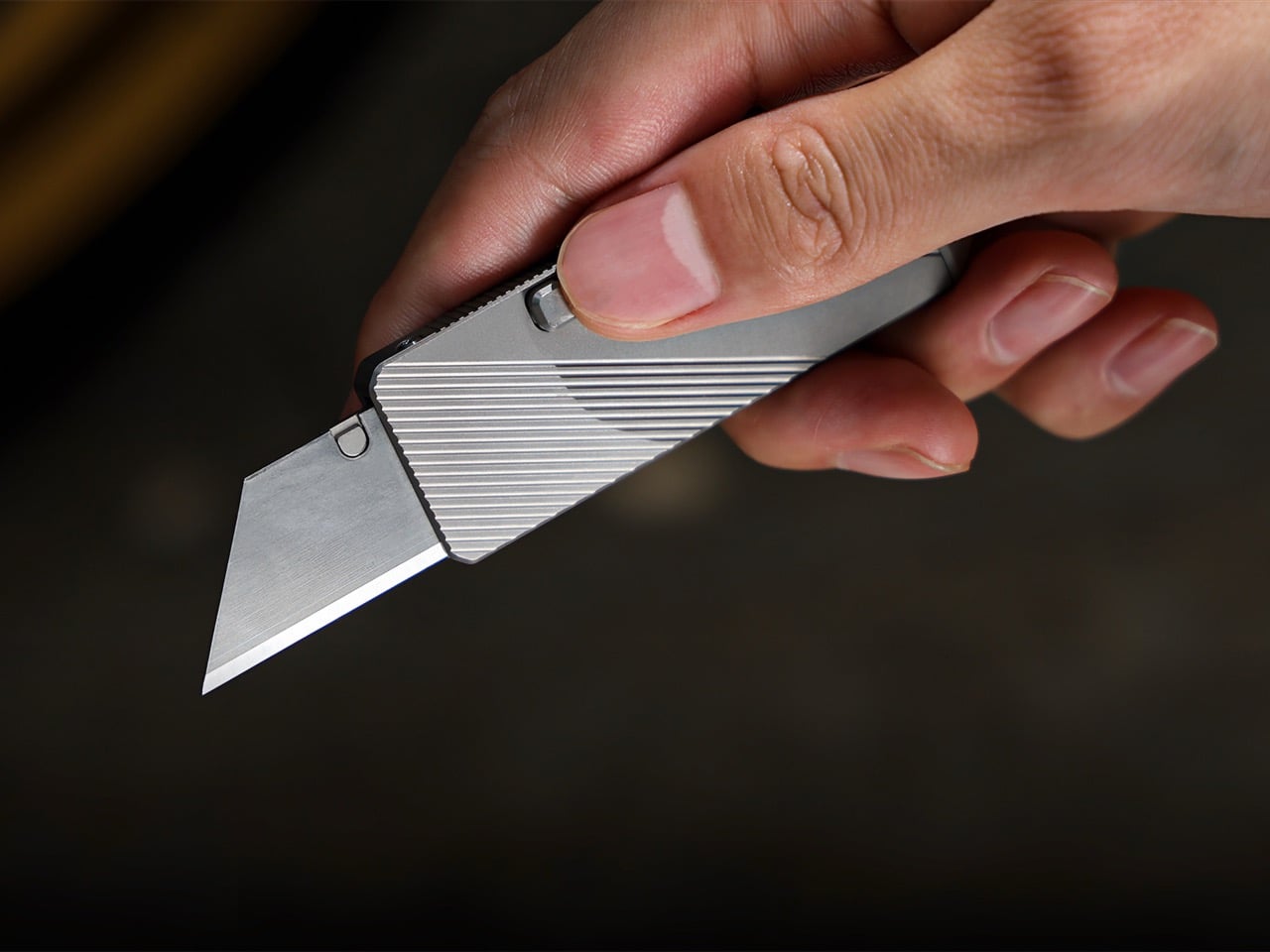

The Cubik is a Grade 5 titanium EDC pocket knife that weighs 1.65 ounces and opens in a way no other knife on this list manages: with gravity. A button flick releases the blade, which can also deploy with a wrist tilt alone, no springs involved. That mechanism is the first thing people ask about when they see it. The second is the blade system: the Cubik uses replaceable trapezoid utility blades built to tackle the majority of daily cutting tasks cleanly.
What that system means in practice is that you never send the knife out for sharpening. When a blade dulls, you swap it and move on. A glass breaker is built into the body, which extends its usefulness well past the kitchen and the weekend campsite. The slim profile disappears into a front pocket without creating a visible outline. This is a knife that operates like a precision instrument and tends to get treated like one by the person carrying it.
What we like
- The gravity-drop deployment is mechanically distinct from anything else in the pocket knife category right now
- Replaceable utility blades eliminate the sharpening requirement entirely
What we dislike
- The trapezoid utility blade format will not satisfy collectors who prefer a traditional blade geometry and grind
- It ships through a crowdfunding campaign, which means delivery timelines depend on production runs
2. Oblica Card Holder
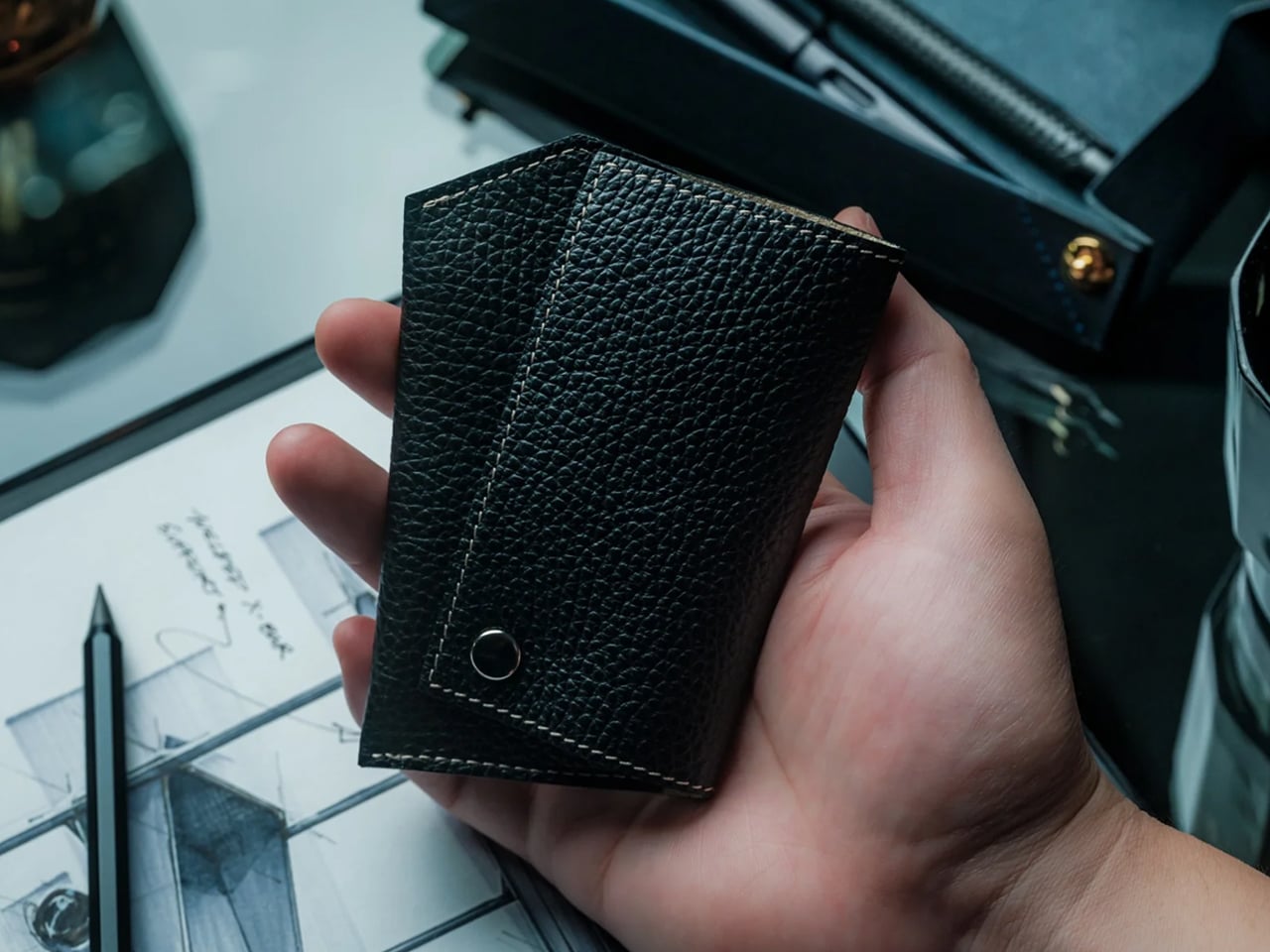
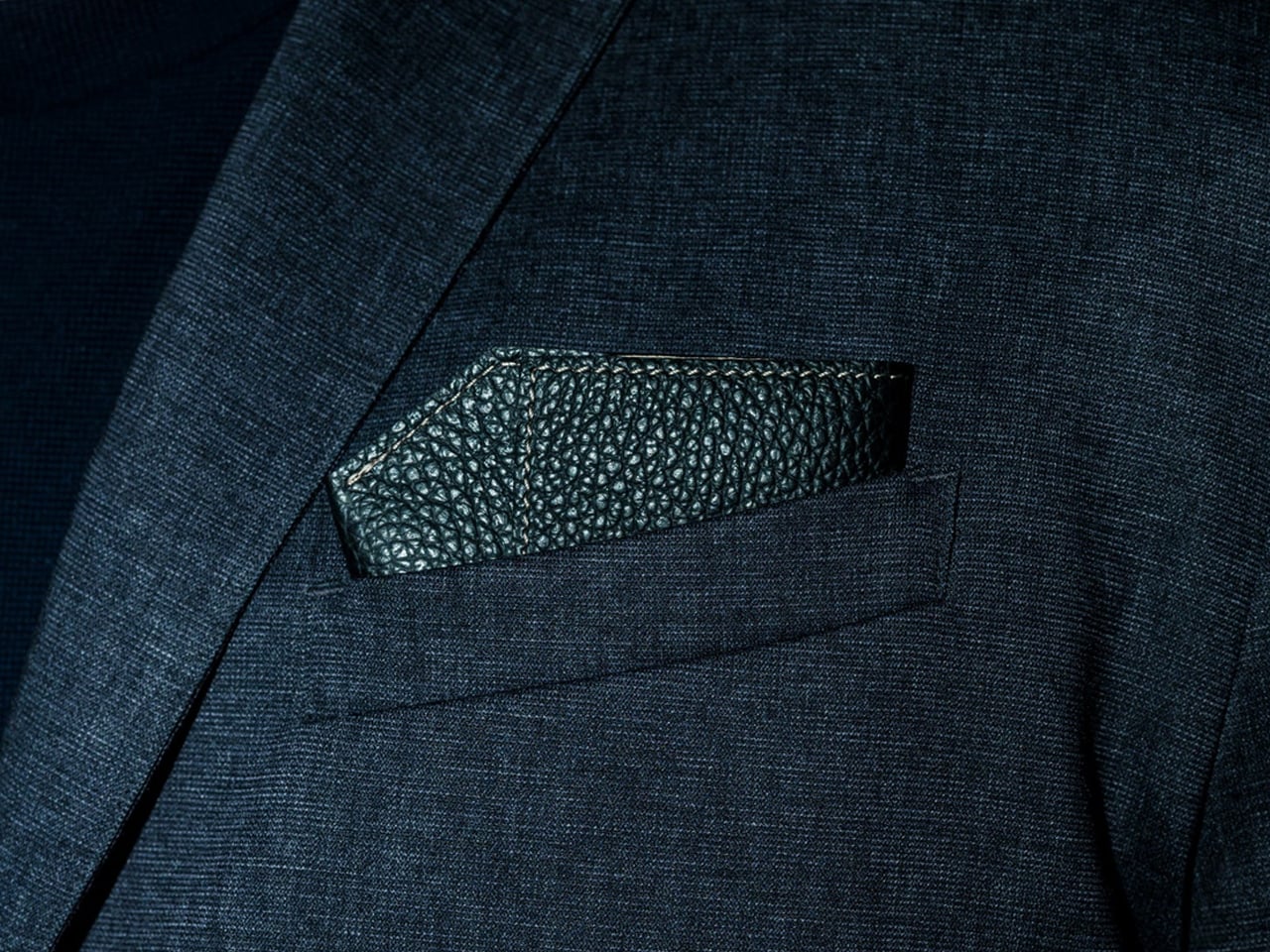
The Oblica was designed for one specific location: the breast pocket of a blazer. Not the back pocket, not a bag. The breast pocket, where it sits upright and visible at 9.5 by 13 centimeters and 0.5 centimeters thick. That positioning is the premise the whole product is built around. Most card holders are designed to disappear. The Oblica is designed to be seen, to identify a person who thinks about the objects they carry.
At $160, it costs real money for something this spare. That is the right kind of tension in a gift. It comes in five colors: Taupe, Black, Orange, Emerald, and Cerulean. Those are specific enough to read as design decisions rather than standard colorway options, which is exactly how the best accessories are made. For someone who wears a blazer with any regularity, the Oblica earns its place faster than most things at that price point.
What we like
- The breast-pocket orientation is a genuine design principle, not a retrofitted marketing feature
- The color range is specific and confident enough to feel like a personal, considered choice
What we dislike
- At $160, it requires a consistent blazer habit to justify its purpose
- It was designed for one location, which limits everyday versatility for those who carry differently
3. NoxTi Tritium Keychain
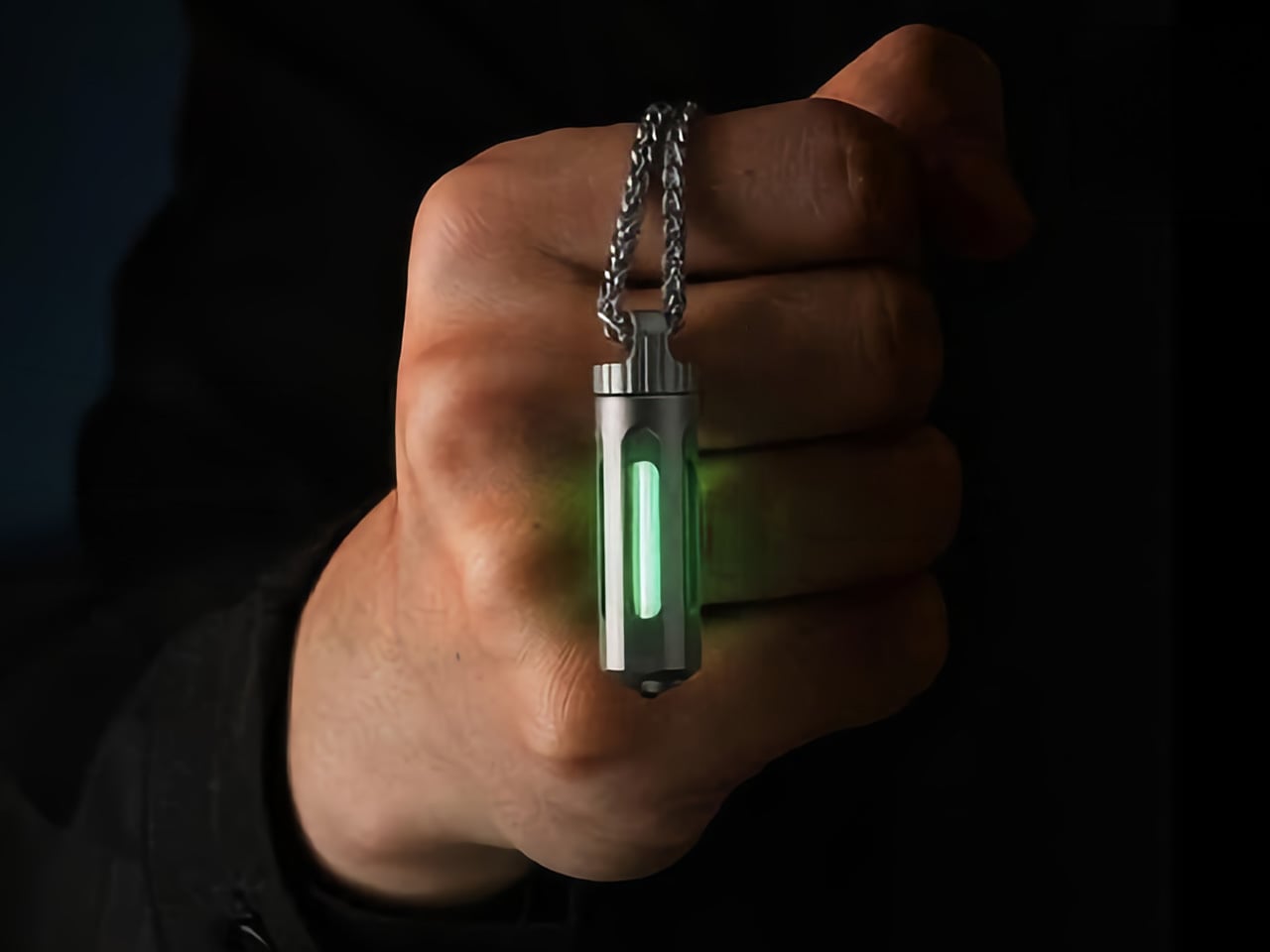

The NoxTi is a 45mm keychain by Xedge that glows for 25 years without a battery, without a charge, and without any maintenance at all. The light comes from a tritium vial sealed inside a Grade 5 titanium body, protected by a quartz window. It weighs 10.7 grams, which is negligible on a key ring. At that scale, every material choice becomes a visible decision: the quality of the CNC machining, the thread tolerance on the cap, the interchangeable vial system that allows you to change the glow color.
At around $30, it belongs to the category of gifts that genuinely surprise someone with what is achievable at a given price and size. A glass breaker tip is built into the body, adding emergency function to what could have remained a purely aesthetic object. The vials are swappable, which means the color of the glow is not a permanent commitment. It sits quietly on your keys and illuminates a dark pocket for the next quarter-century without asking for anything.
What we like
- Twenty-five years of passive glow from material physics alone, with zero upkeep required
- Interchangeable vials mean you can update the glow color without replacing the tool
What we dislike
- Tritium is a radioactive isotope, which requires a level of comfort not every buyer will have
- At 45mm, it sits on the larger side for a keychain piece if a minimal setup is the goal
4. CasaBeam Everyday Flashlight
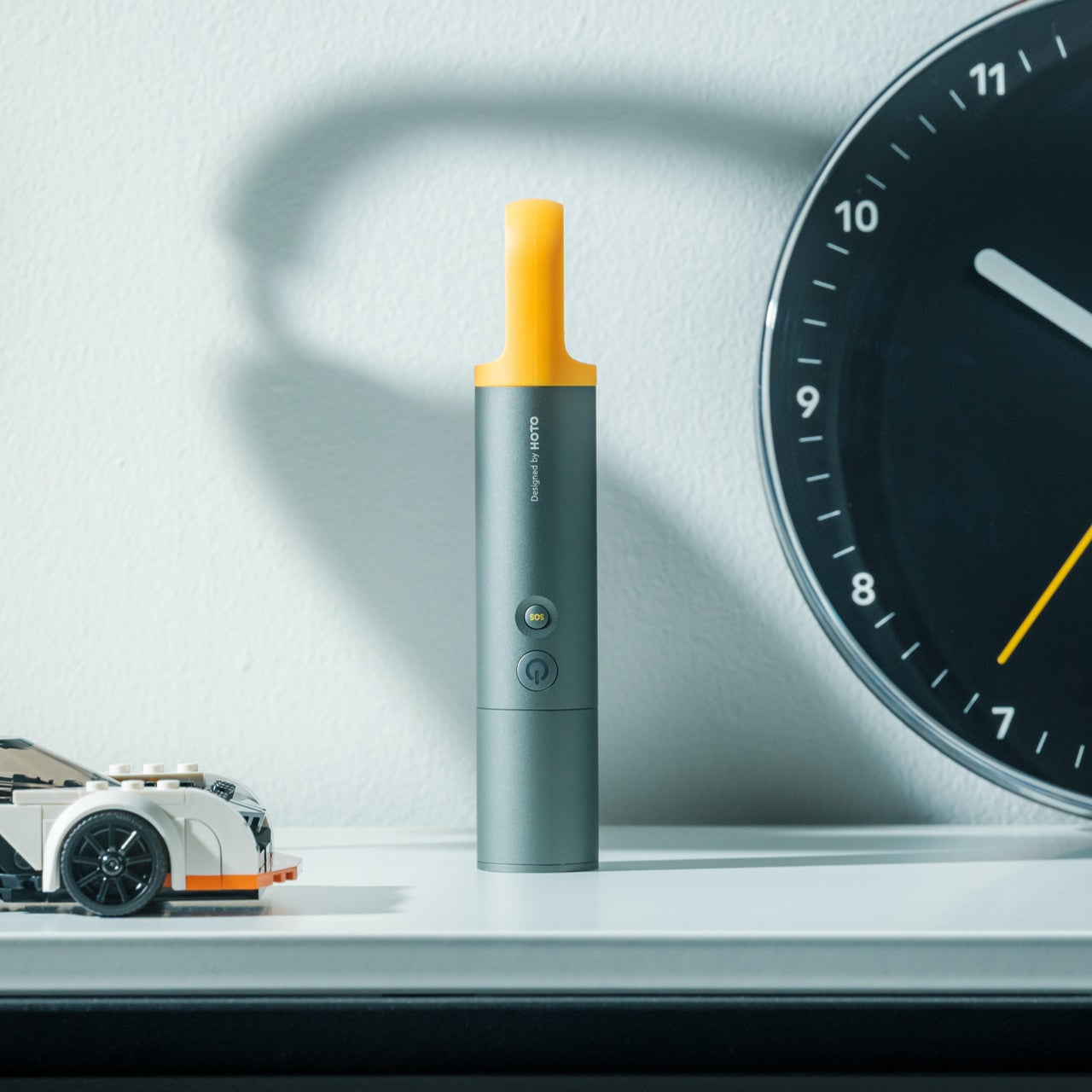
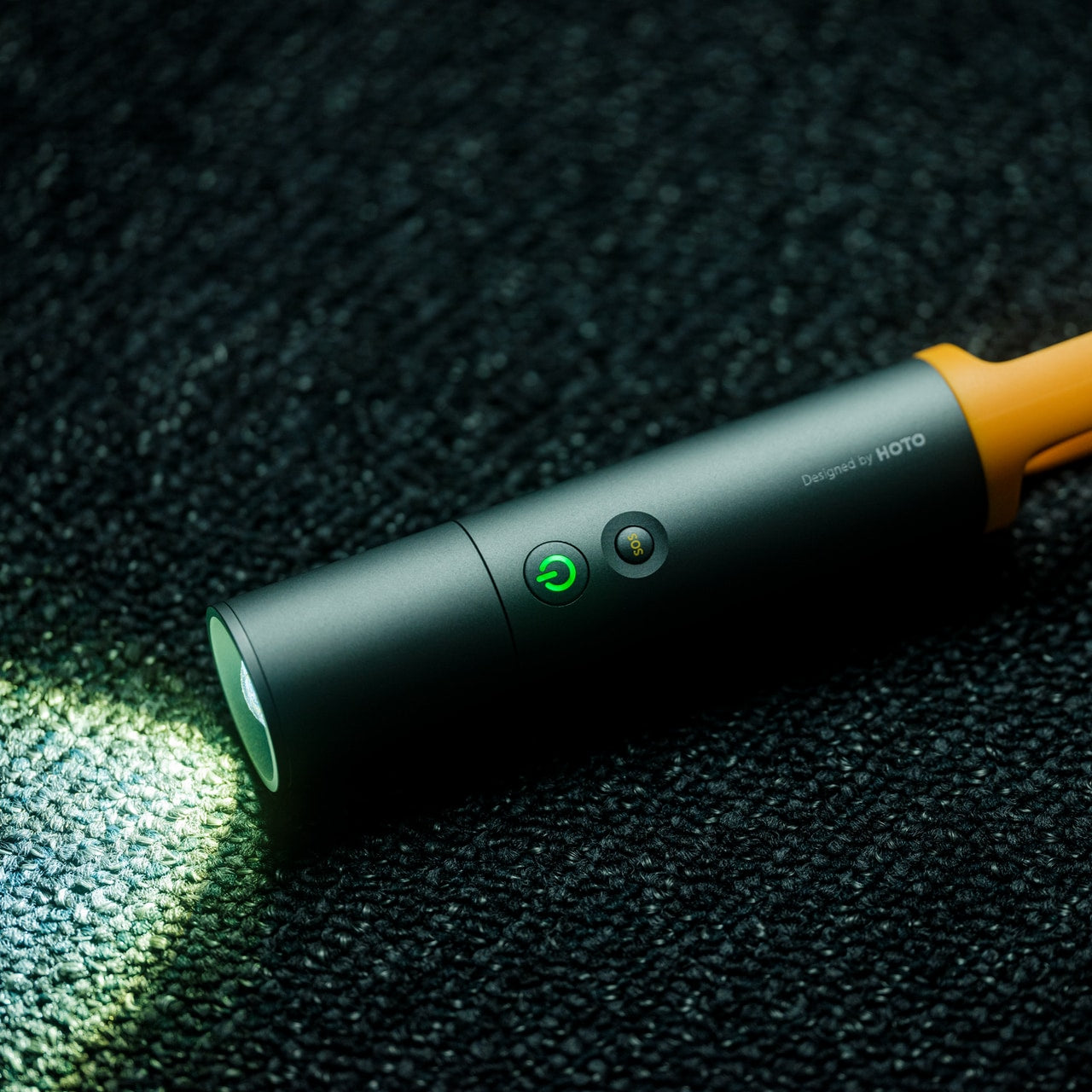
The CasaBeam Everyday Flashlight puts out 1,000 lumens and ships with a stand that converts it from a handheld torch to a freestanding lantern. Both modes work well enough that neither reads as an afterthought. The zoom function shifts the beam from a focused throw to a wide flood, which covers the practical difference between lighting a trail ahead of you and illuminating a full campsite. Those are genuinely different lighting needs, and it handles both from a single tool at $50.
Five modes cycle from one button, which keeps the operation clean and intuitive in the dark. The charging port stays hidden behind a cover when not in use, a detail that matters more than it sounds because most flashlights at this price leave the port exposed and collect pocket lint. The CasaBeam ends up in a kitchen drawer, a glove compartment, or a day pack and gets reached for in all three locations. It is the kind of light that earns its place through consistent use.
What we like
- The included stand converts it from a hand-held flashlight to a freestanding lantern with nothing extra required
- The hidden charging port is a cleaner design decision than the exposed ports standard at this price
What we dislike
- The form is functional rather than sculptural, placing it below the other picks in terms of visual presence on a desk or shelf
- Published battery runtime figures are not specific, making it difficult to calibrate expectations before you need it in the field
5. Loki-Nav Compass
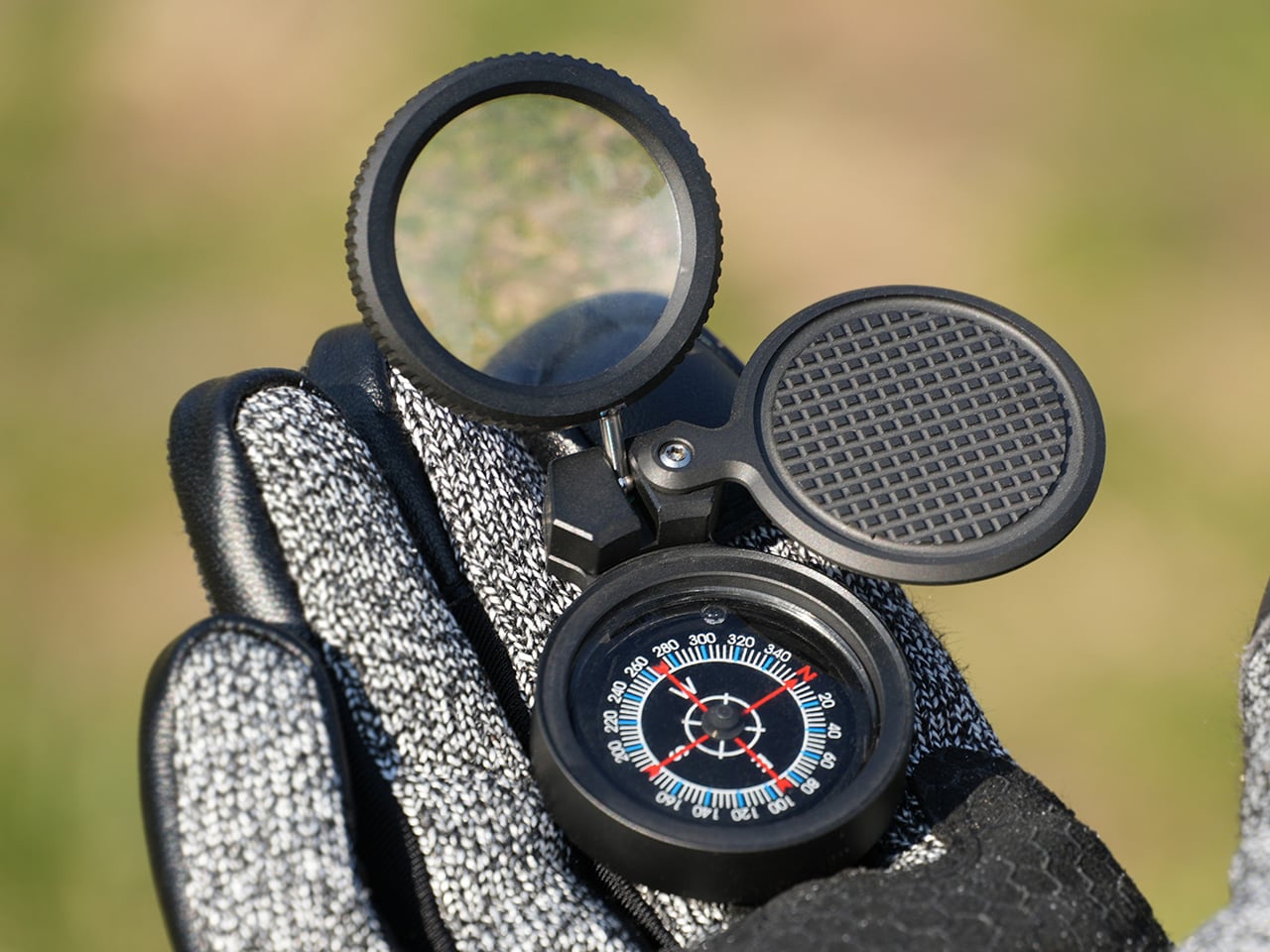
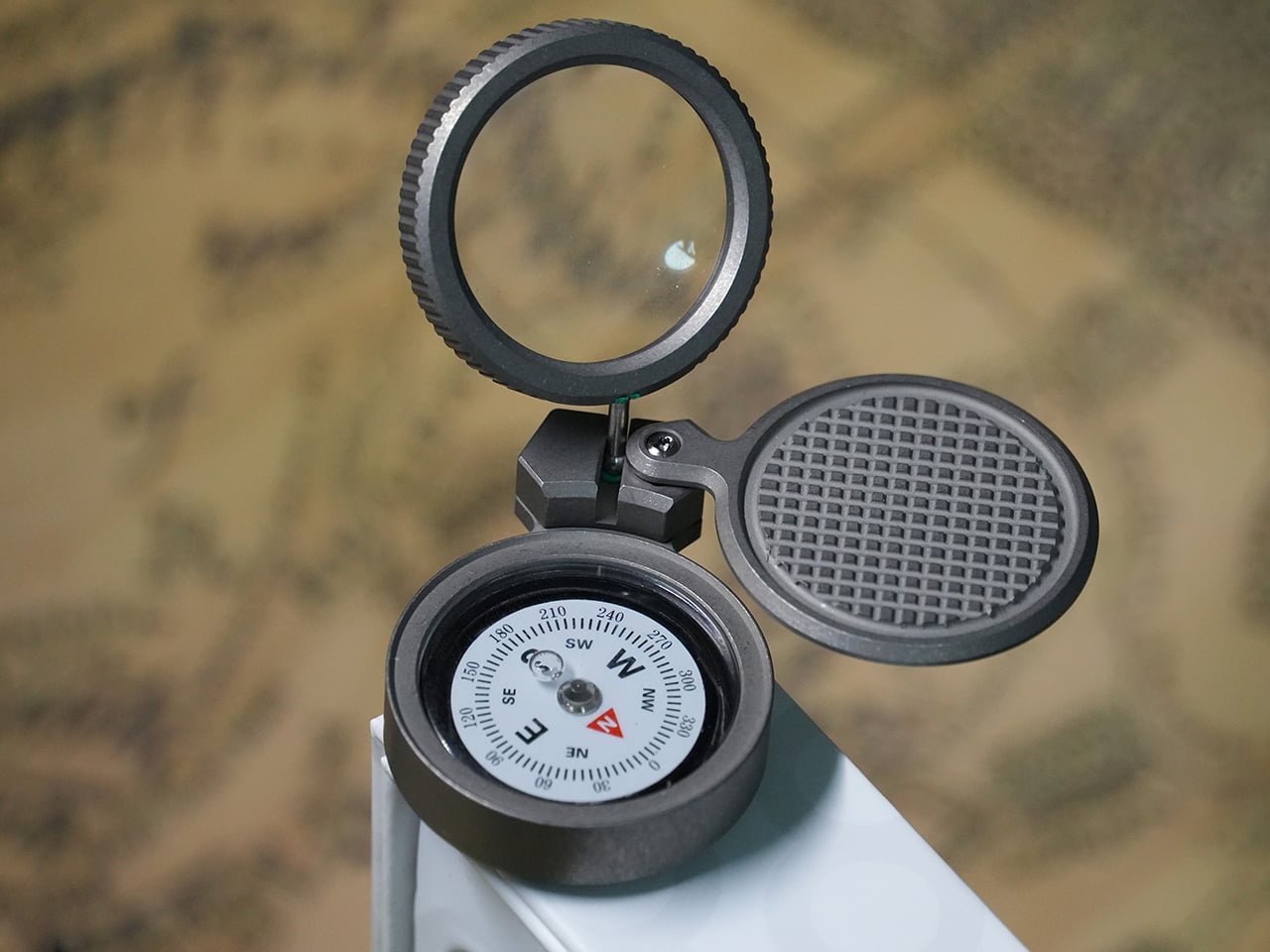
The Loki-Nav by EckDesign is a compact navigation tool built in Grade 5 titanium or aluminum, designed for people who understand that a phone in the backcountry is a plan B. The oil-filled compass core delivers precise needle movement in cold temperatures and is rated IPX8 waterproof. The core is replaceable, a design decision that reflects an assumption of long-term ownership rather than eventual disposal. A 12x magnifying loupe folds out from the body and rotates to aim without requiring you to adjust your grip on the tool.
The 3-in-1 cap carries a built-in emergency mirror and a wood file for tinder preparation. They fit the object’s intended environment without adding meaningful bulk. The aluminum version starts at $39, and the Grade 5 titanium build starts at $89. With a rating of 4.6 out of 5 across 42 verified reviews, the gap between what is described and what is delivered appears to be a small one.
What we like
- The replaceable compass core means the tool outlasts the component most likely to drift or degrade over time
- IPX8 waterproofing makes it trustworthy in exactly the conditions where a compass actually matters
What we dislike
- The 12x loupe requires decent ambient light to produce a useful image in field conditions
- The upper end of the titanium price range ($89 and above) invites comparison with more specialized dedicated navigation tools
The Best Gift Is One That Comes With a Story
These five things share something a longer list would dilute: each was made with a point of view. The Cubik uses a deployment mechanism no other knife uses. The Oblica was designed for one pocket. The NoxTi carries 25 years of light in a 10-gram cylinder. The CasaBeam converts cleanly between two modes that both work. The Loki-Nav treats redundancy as engineering, not marketing. That is the difference between gear and gifts.
Labor Day is the kind of weekend that disappears fast. One of these lands better than anything off a generic wish list, because each carries a story about why it was made the way it was. That story is what the person receiving it will repeat. Not the specs, not the price, not the brand. The idea behind it. Pick the one that fits their pocket.