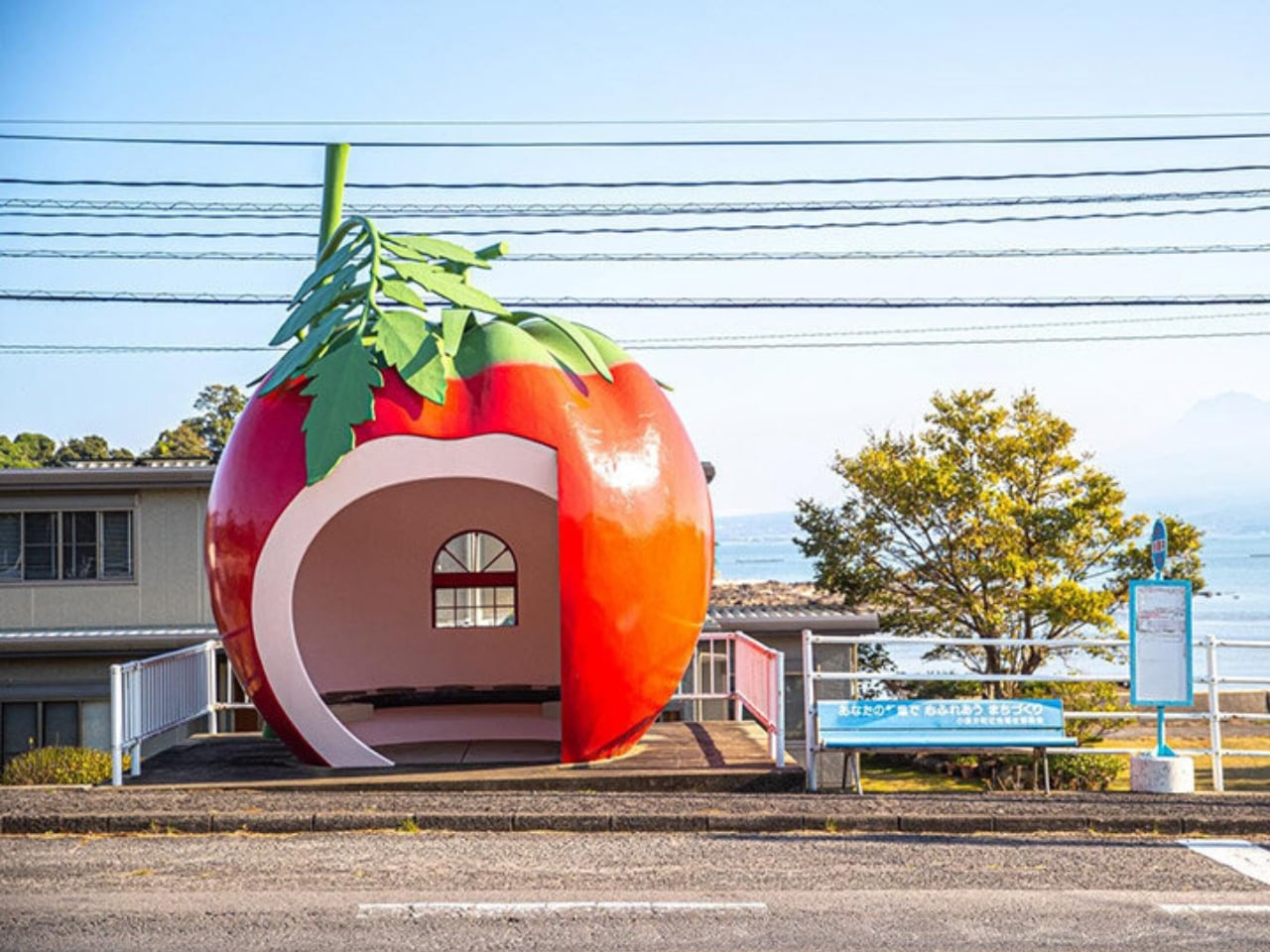
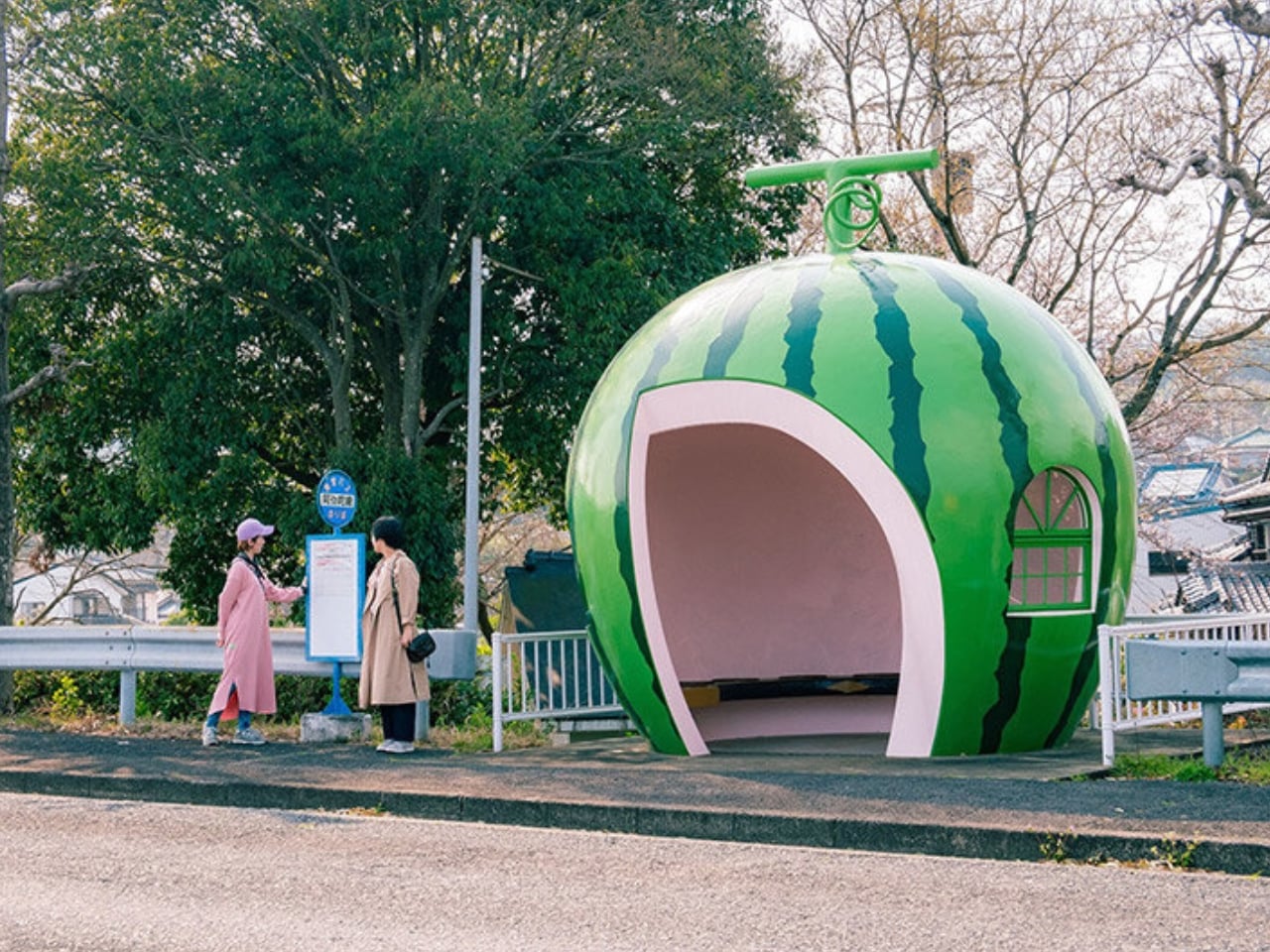
There are 16 bus stops scattered along Route 207 in Konagai, a small coastal town in Nagasaki Prefecture, Japan, and not a single one of them looks like what you’d expect a bus stop to look like. One is a giant watermelon. Another is a melon, its pale green surface etched with thick, bold webbing. There’s a tomato, a mandarin orange, a strawberry. Each one is large enough to stand inside, functional enough to shelter you from the rain, and joyful enough to make you genuinely stop scrolling and just look.
The project is called the Tokimeki Fruit-Shaped Bus Stop Avenue, and the name alone tells you everything about the intention behind it. Tokimeki is a Japanese word that loosely translates to a kind of heart-flutter excitement, the feeling of being pleasantly surprised. That’s exactly what these bus stops deliver every time a driver rounds a bend on Route 207 and a six-foot strawberry appears on the side of the road.
Designer: Yoshitsugu Industries and Time Design Office
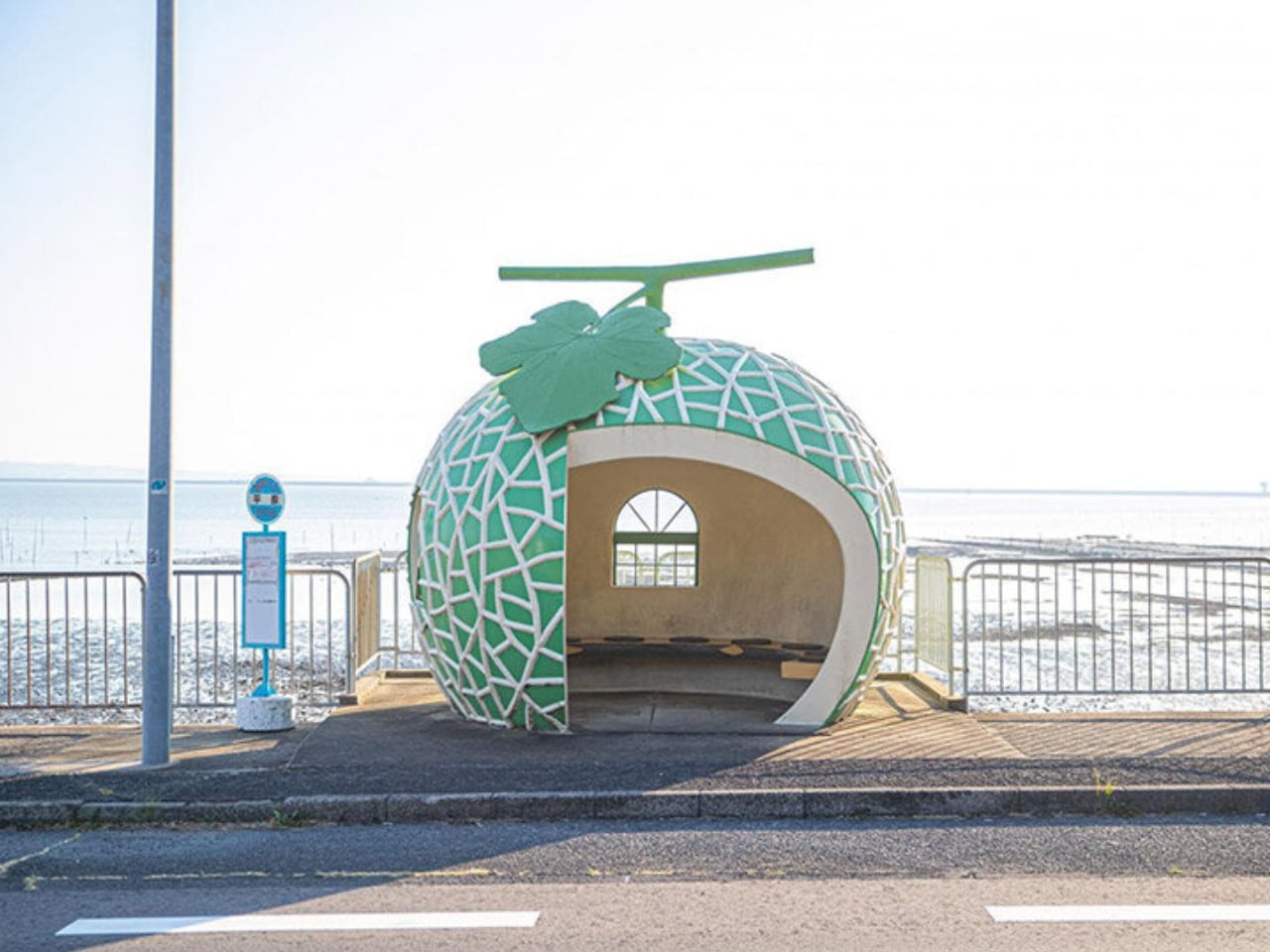
They were built in 1989 and 1990 by Yoshitsugu Industries and Time Design Office for the Journey Exposition Nagasaki 1990, an event that brought visitors from across the region into Konagai as one of the eastern gateways to the prefecture. The idea reportedly drew inspiration from Cinderella’s pumpkin carriage, which is the kind of creative brief that could have gone terribly wrong and instead produced one of the most quietly beloved pieces of public design in Japan.
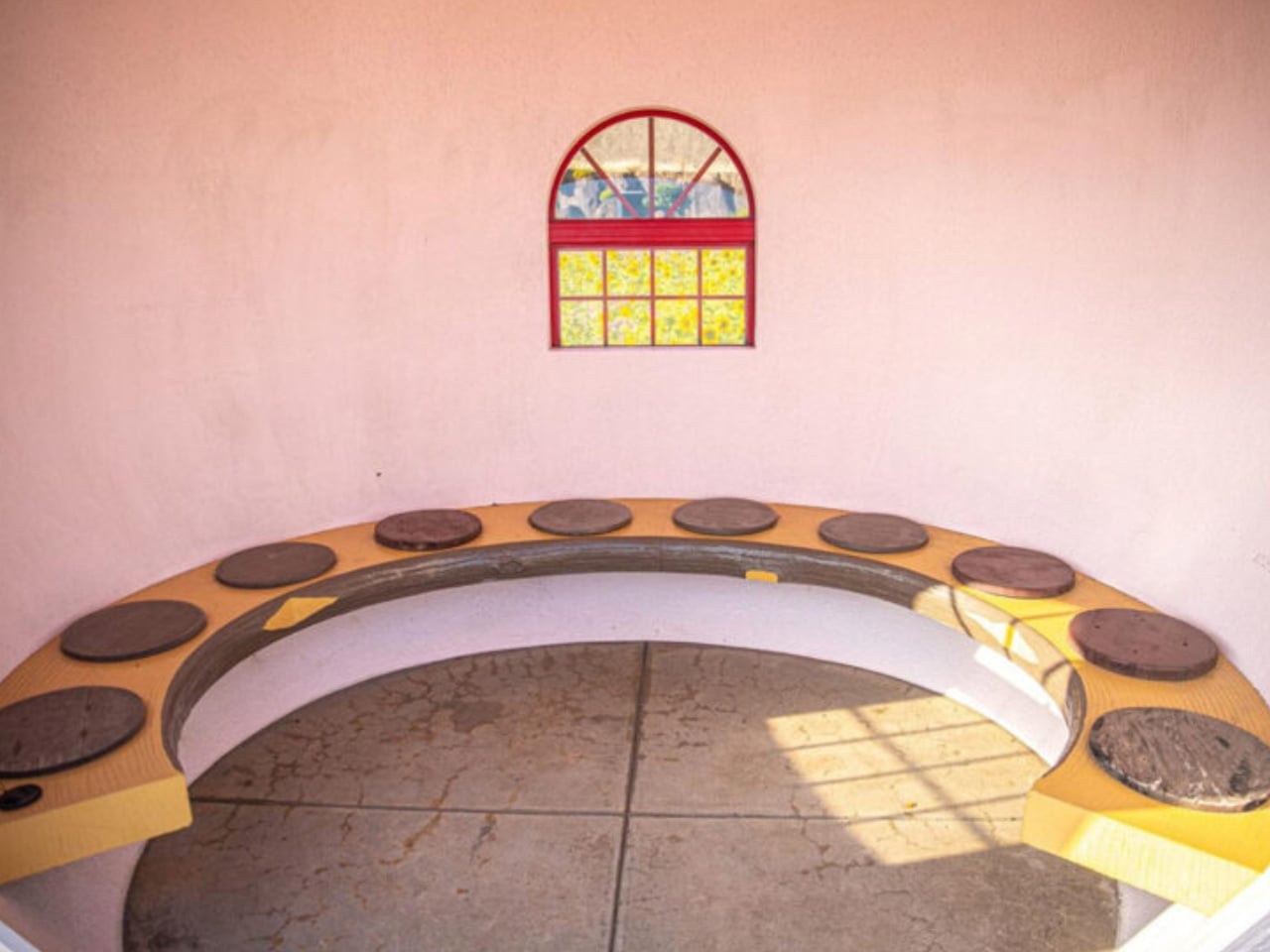
The construction is where things get genuinely impressive. These aren’t fiberglass novelties. Yoshitsugu Industries built each shelter using metal lath frames packed with mortar, applying a colored finish to create each fruit’s skin and shaping the stems and leaves directly into the architecture. The original strawberry shelters were detailed with approximately 180 individual seeds, each one handcrafted from mortar. The melon’s surface webbing was deliberately scaled up so it would read clearly from a passing car. Every decision was made with both visibility and craft in mind, and you can feel that care in how the forms have held up across decades.
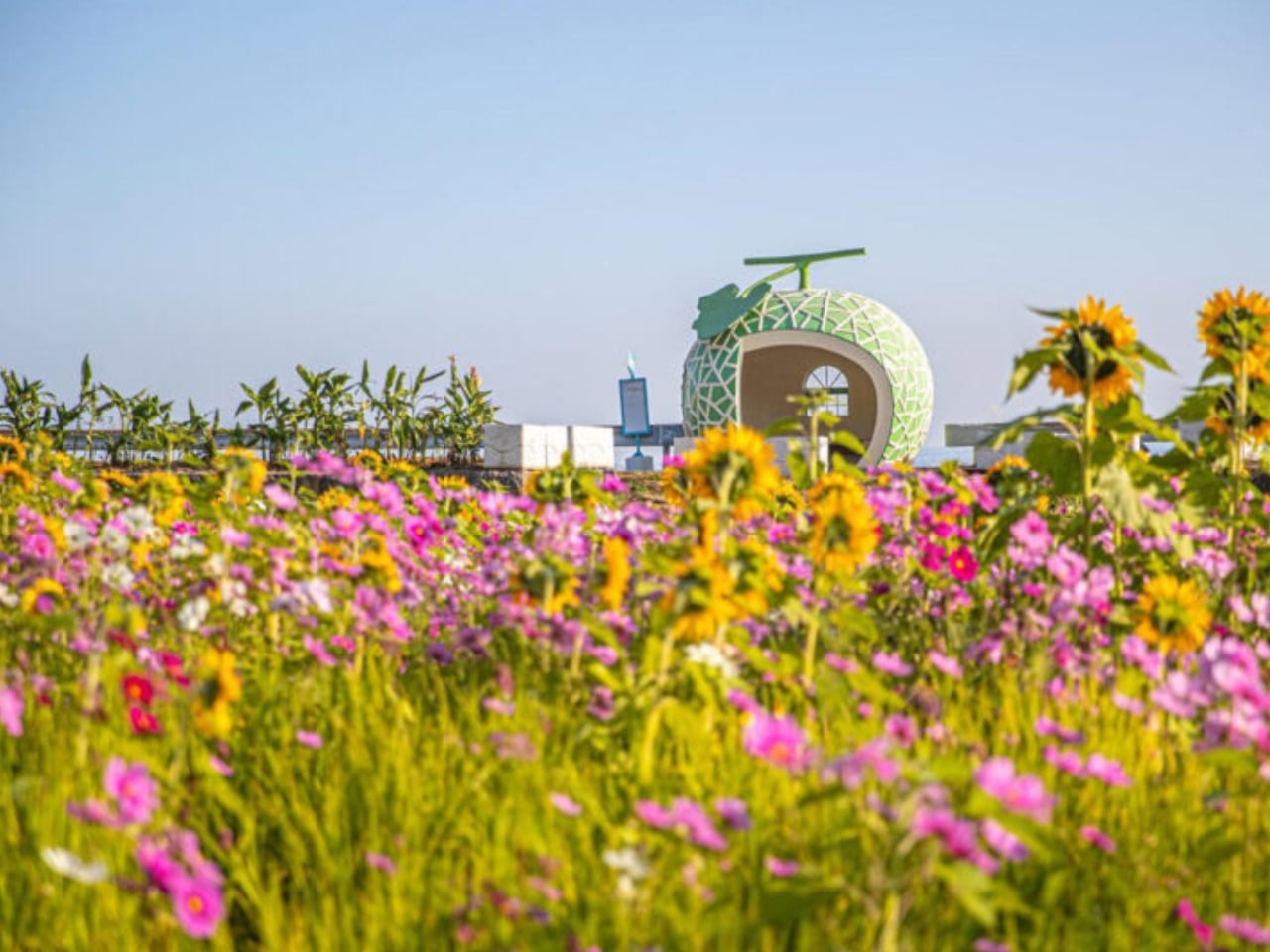
The fact that these structures are still standing, still in active use, and still generating genuine delight more than thirty-five years after they were built says something interesting about what public infrastructure can be when it’s treated as an opportunity rather than a checkbox. Most street furniture disappears into the background. These bus stops became a destination. People make specific trips to Konagai to photograph them. They appear in travel guides. They have their own section on the Nagasaki tourism board’s website.
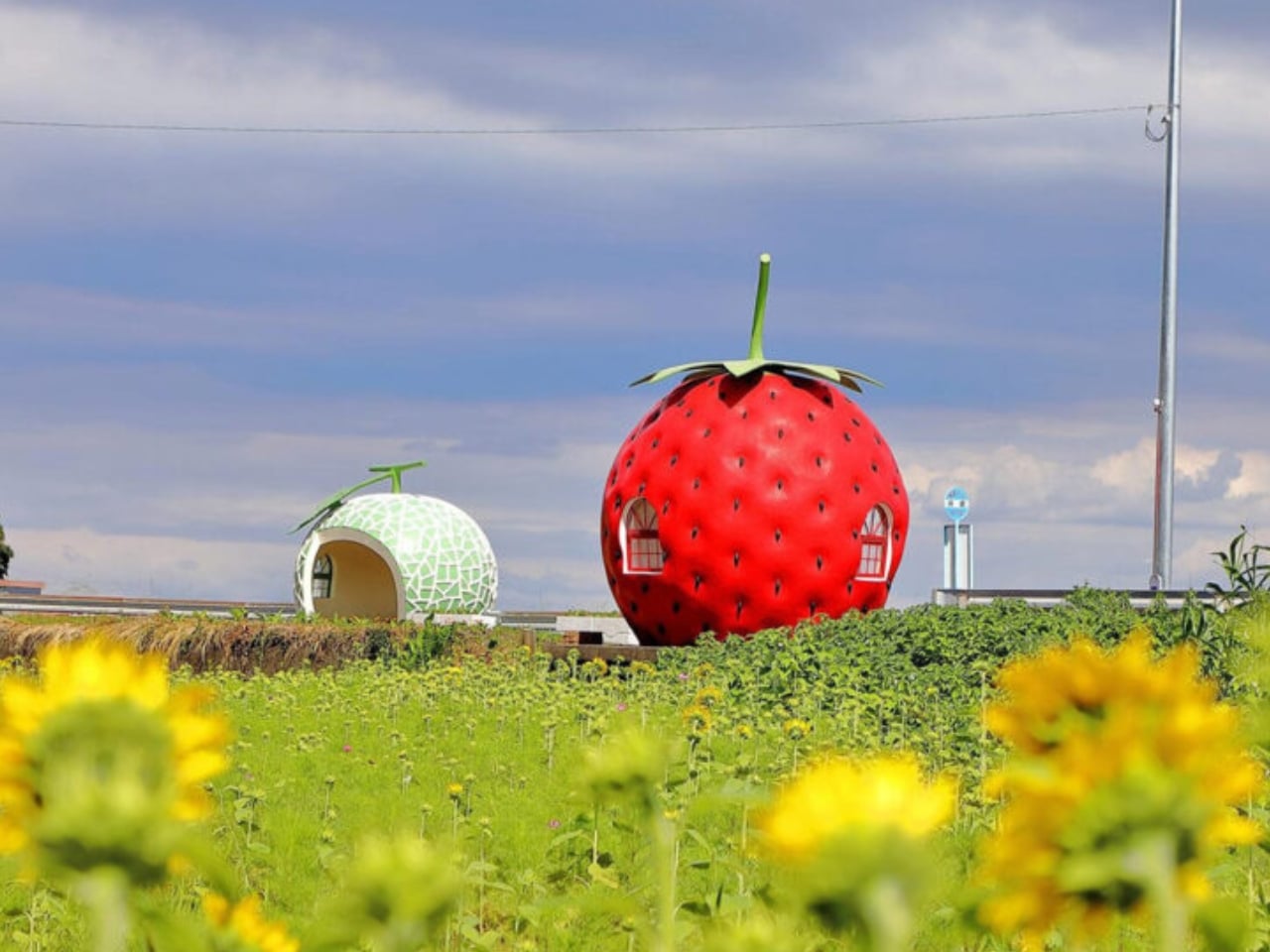
That’s not an accident, and it’s not just novelty either. The design works because it connects directly to the place. Konagai sits along the coast, and the surrounding land is agricultural. Strawberries, melons, oranges, and tomatoes aren’t arbitrary choices. They’re local crops, translated into architecture. The shelters function as a kind of ambient storytelling about what this town grows, who lives here, what the land produces. It’s community identity expressed as a bus stop, and somehow that framing makes the whole thing feel less quirky and more genuinely thoughtful.
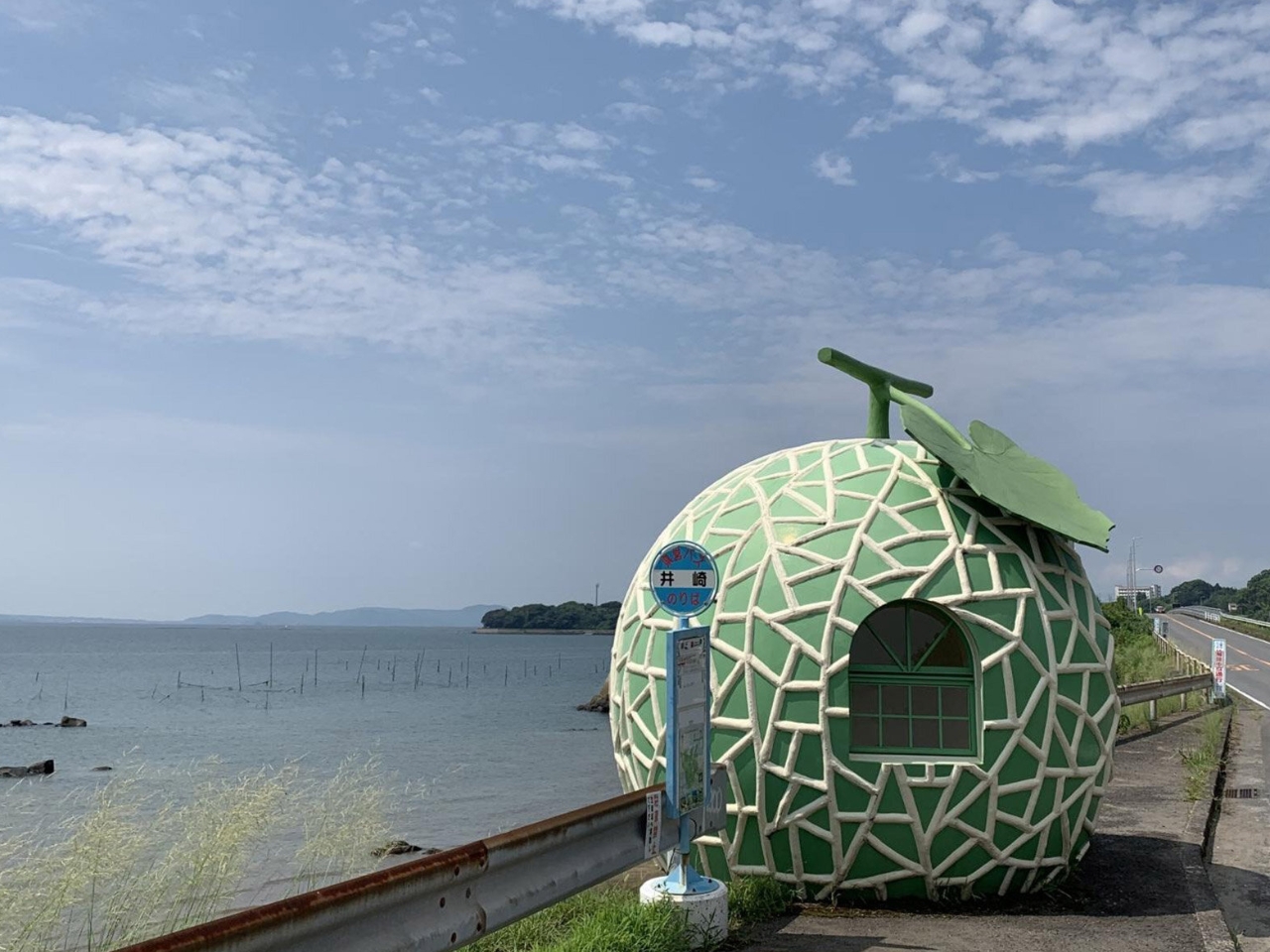
Public design rarely gets credit for the emotional labor it performs. We talk about parks and monuments, galleries and cultural centers, but the everyday infrastructure that shapes how people move through a place tends to be treated as a purely practical problem. Konagai’s fruit bus stops are a quiet argument against that logic. They prove that even the smallest civic touchpoint, a covered bench on the side of a rural road, can carry meaning, beauty, and a bit of Cinderella magic all at once.
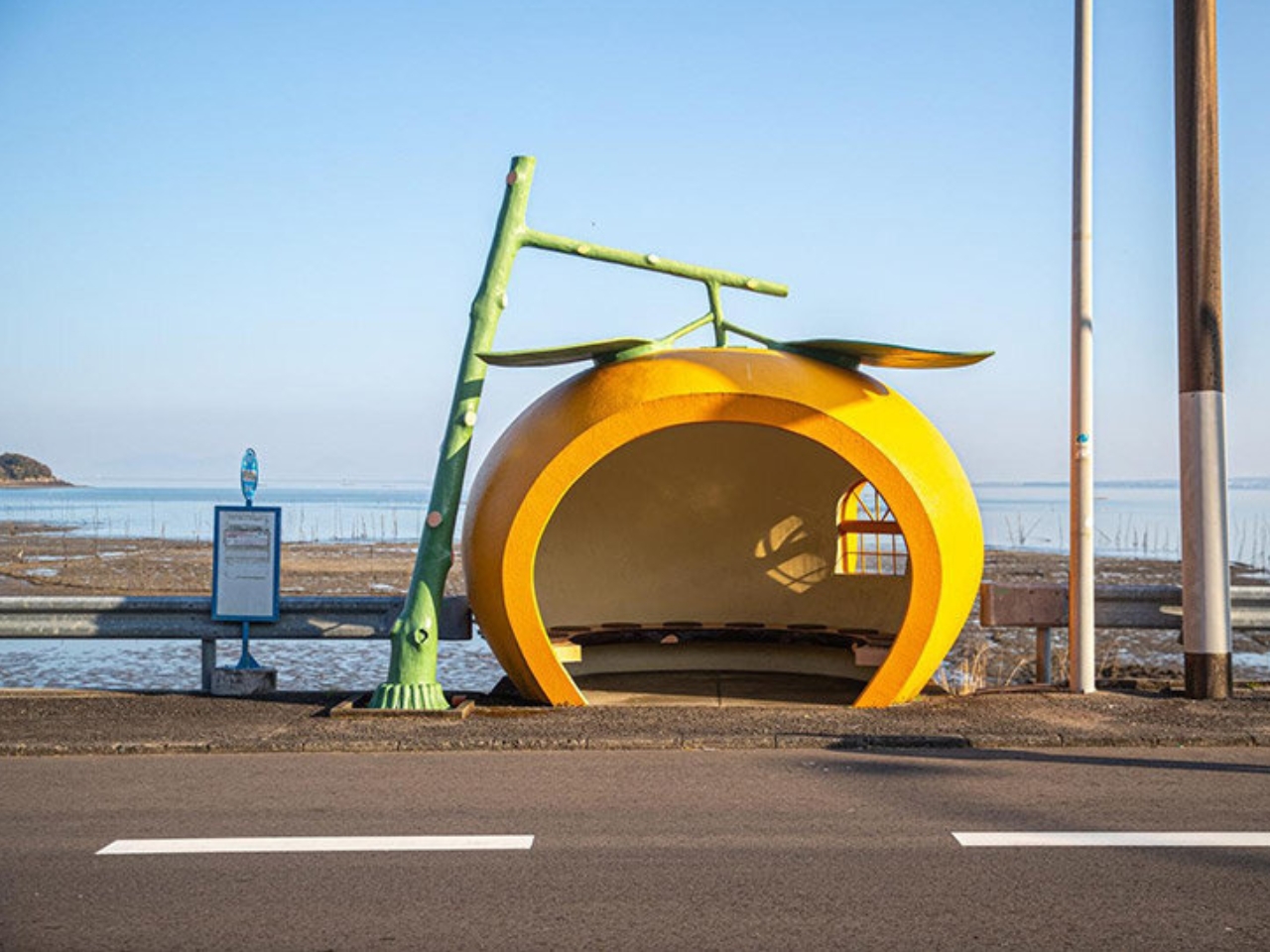
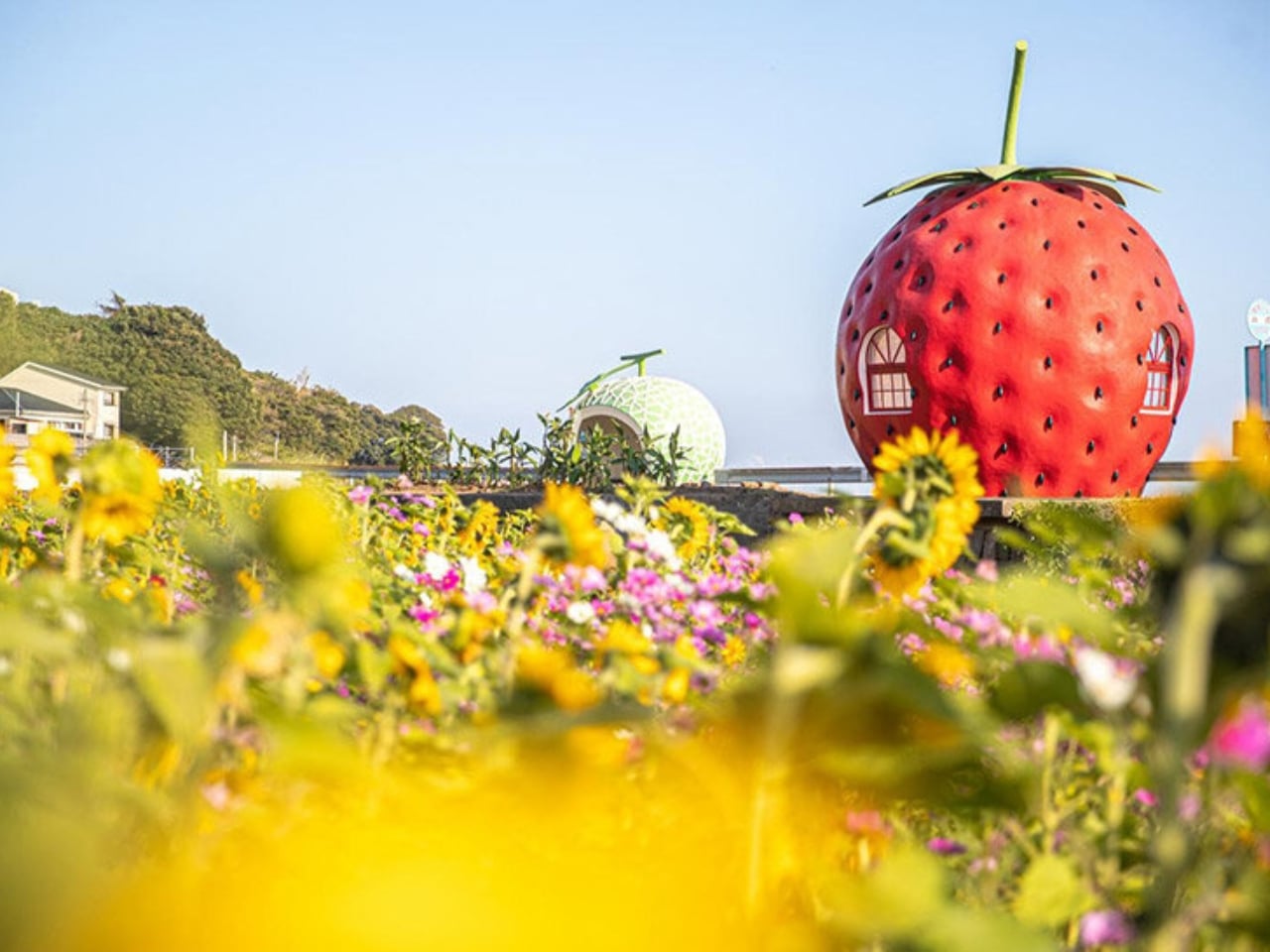
The bus stops are still there, still waiting along Route 207. Buses still stop. People still wait inside a melon or a strawberry, sheltered by an oversized leaf, and presumably feel at least a small flutter of something that makes the wait a little better.
SHARE