The pen case is one of those objects that nobody seems to have genuinely rethought. The standard design is a zippered pouch: pens go in, pens pile up, you dig through until you find the right one, and then you close it again. That sequence repeats itself a dozen times a day, and most of the friction happens in that brief moment between needing a pen and actually having it in hand.
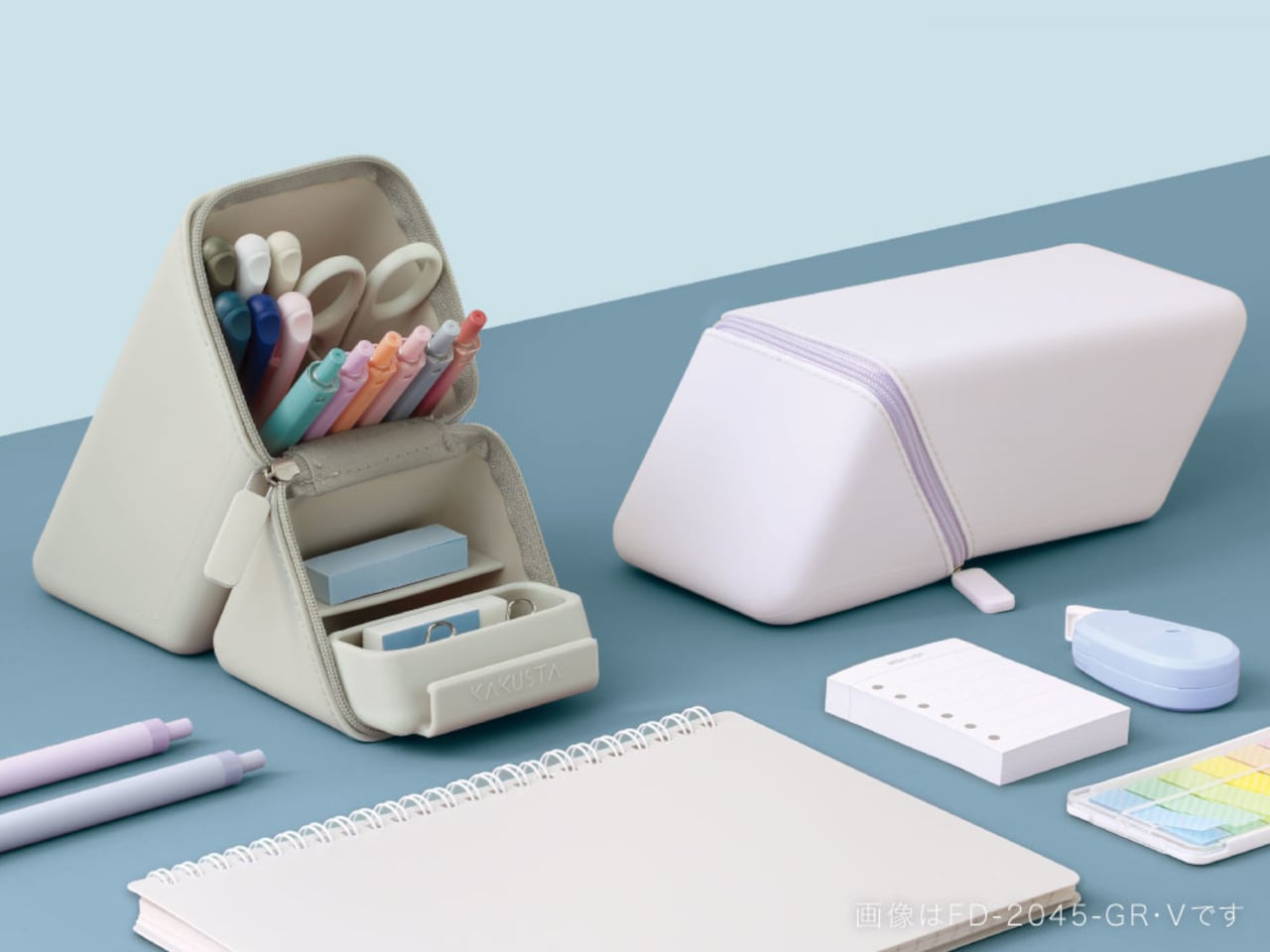
Sonic, a Japanese stationery manufacturer, focused specifically on that moment. Their Kakusta Portable Pen Holder is a silicone case that converts into an upright pen stand with a single unzip and fold. The idea isn’t just about carrying pens more conveniently; it’s about changing how you interact with them once you sit down to work, which is a different design problem entirely from making a better pouch.
Designer: Sonic
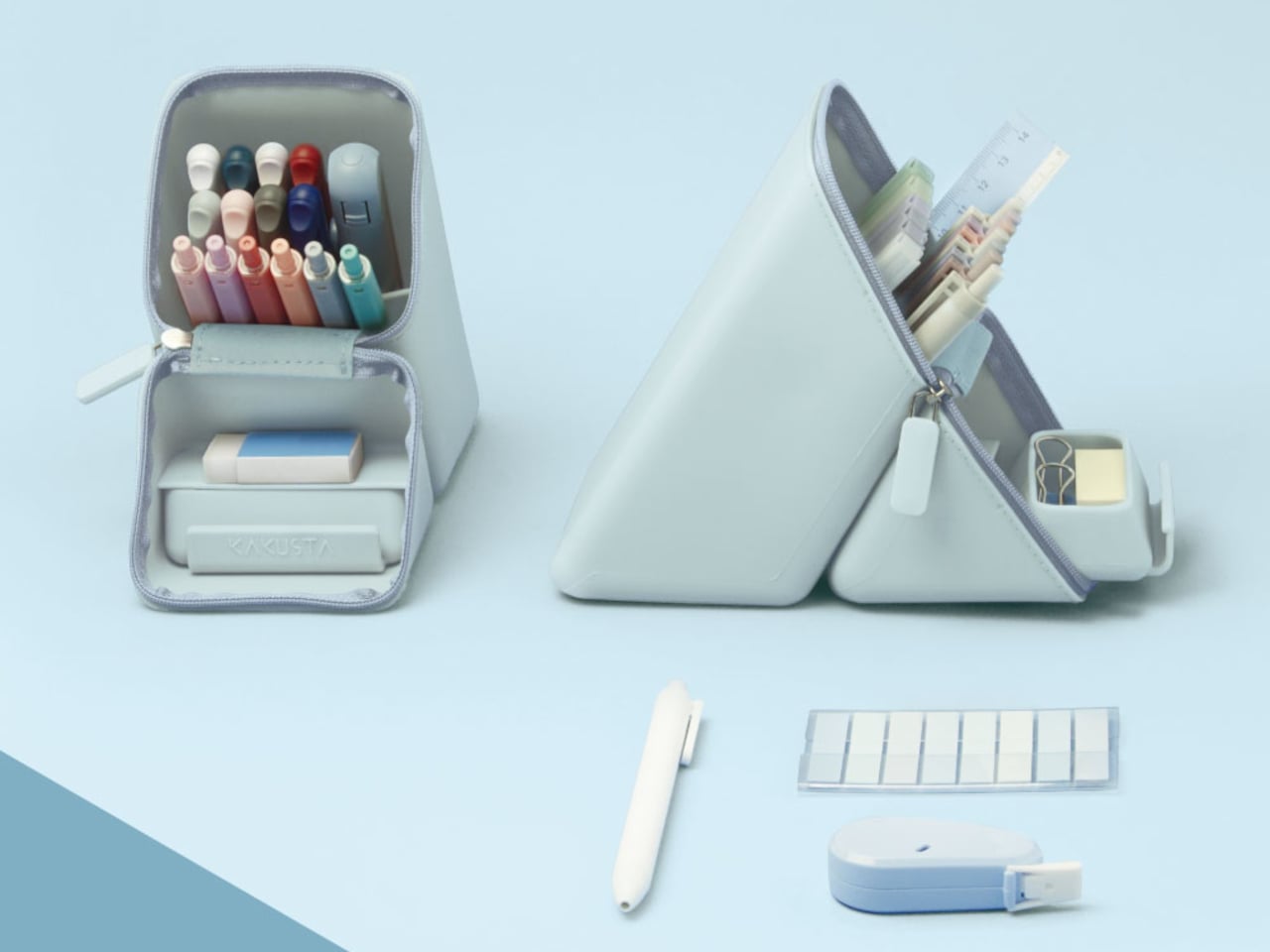
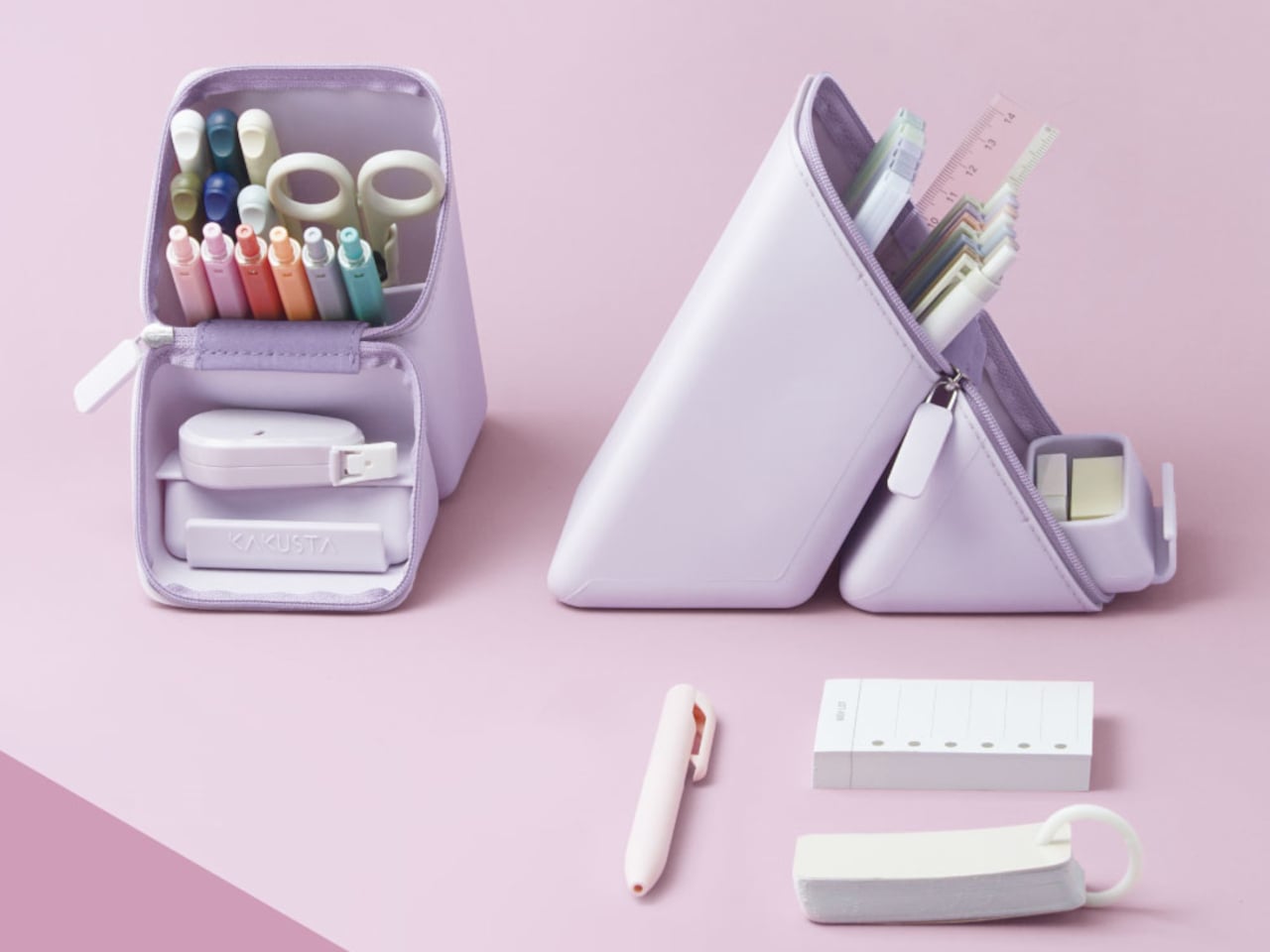
The transformation is central to the whole concept. When closed, the Kakusta is a flat, parallelogram-shaped case that fits easily in a bag pocket. Unzip it, fold the lid back, and it forms a triangular stand held in position by built-in magnets. Nothing needs to be assembled, no extra base is required, and there’s nothing to lose. The carrying case and the desktop holder are the same object.
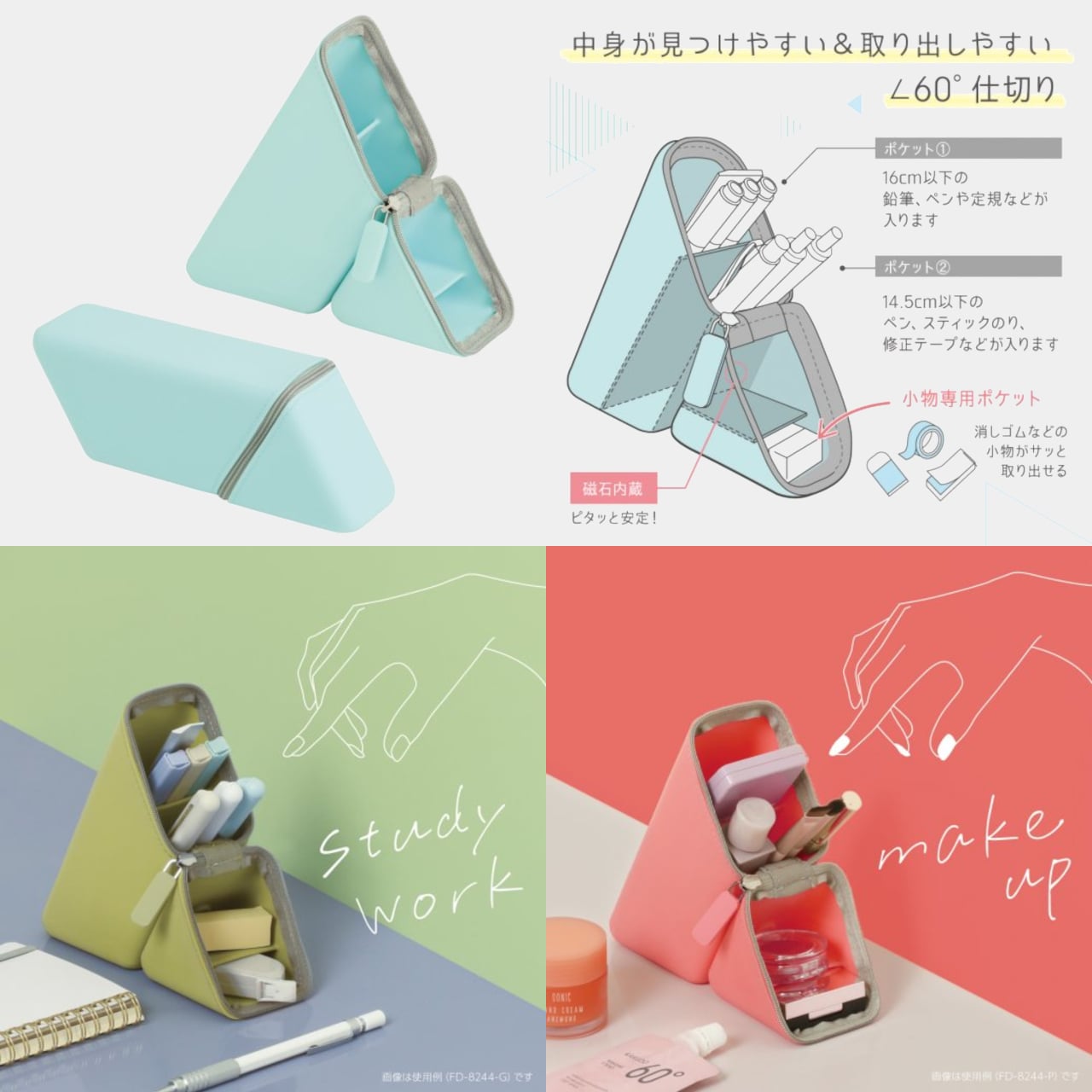
The interior follows the same logic. The 60-degree angled dividers run across the base of the stand, keeping each pen tilted and visible rather than lying flat against the others. In a conventional pen pouch, finding a specific pen means pulling out several to get to it. The angled dividers let you see everything at a glance, a small improvement that adds up over a full working day.
The silicone body is flexible enough to accommodate pens of varying sizes and soft enough to compress in a bag without warping. The triangular form is stable by geometry, and the magnets keep the folded lid from springing back while you’re working. A matte surface treatment on the exterior resists dust and fingerprints, which matters for something that moves between a bag and a desk multiple times daily.
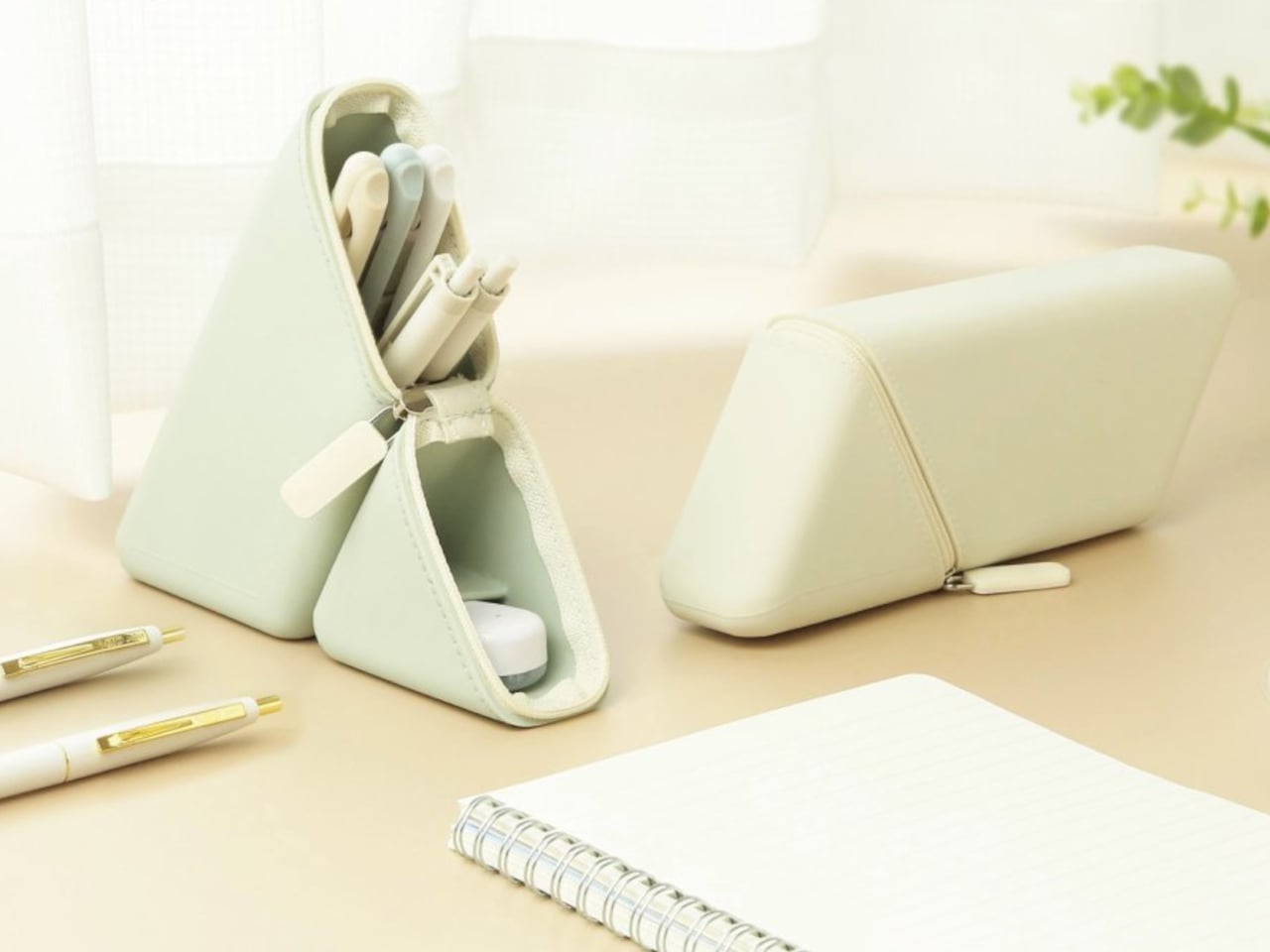
The magnets also allow the standing Kakusta to attach to metal surfaces, which is a small but genuinely useful detail. A student moving between classrooms can stick it to a locker door; someone working in an office can place it against a filing cabinet when desk space is limited. It’s the kind of secondary function that doesn’t announce itself in the pitch but gets used regularly once you notice it.
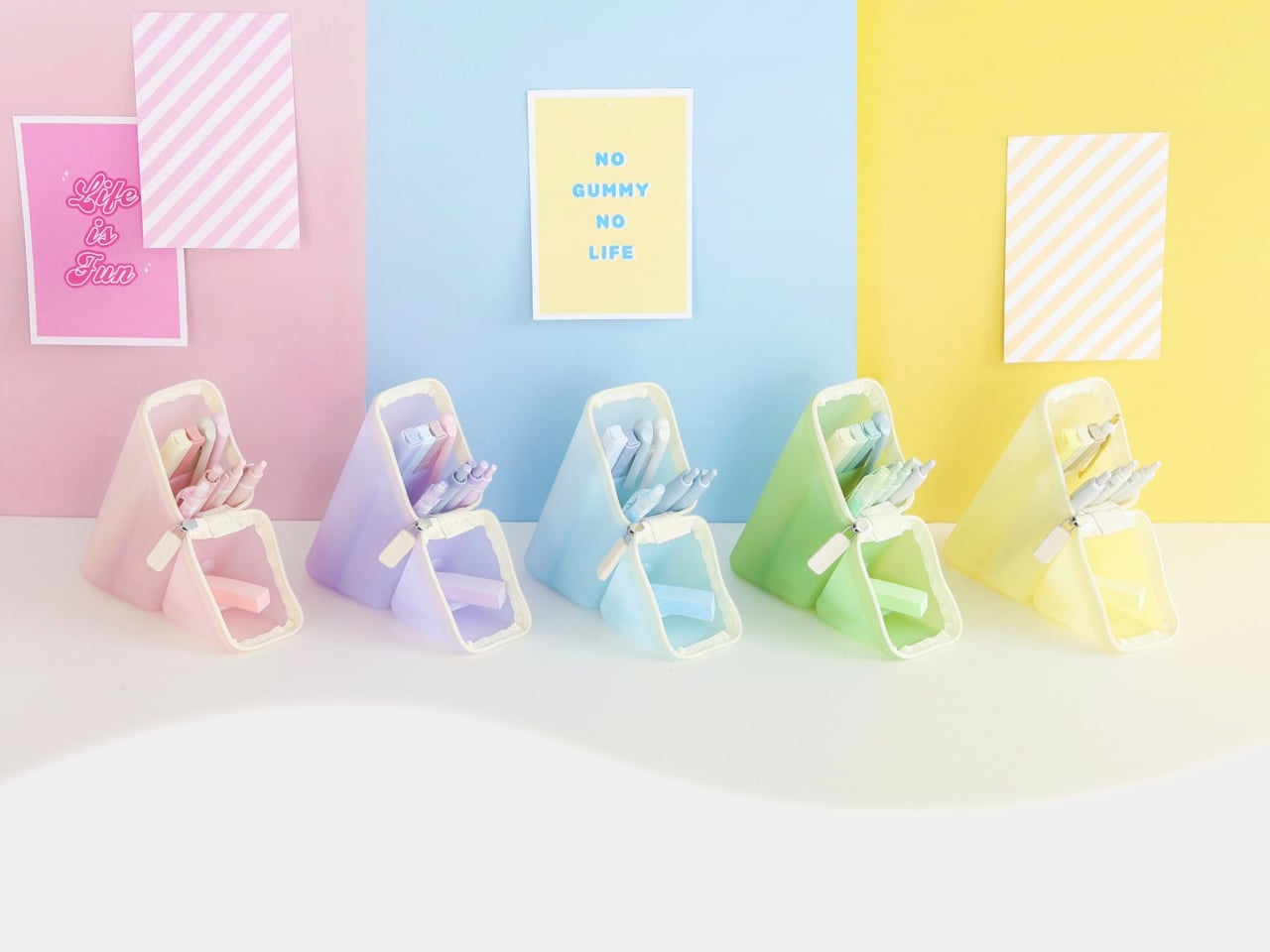
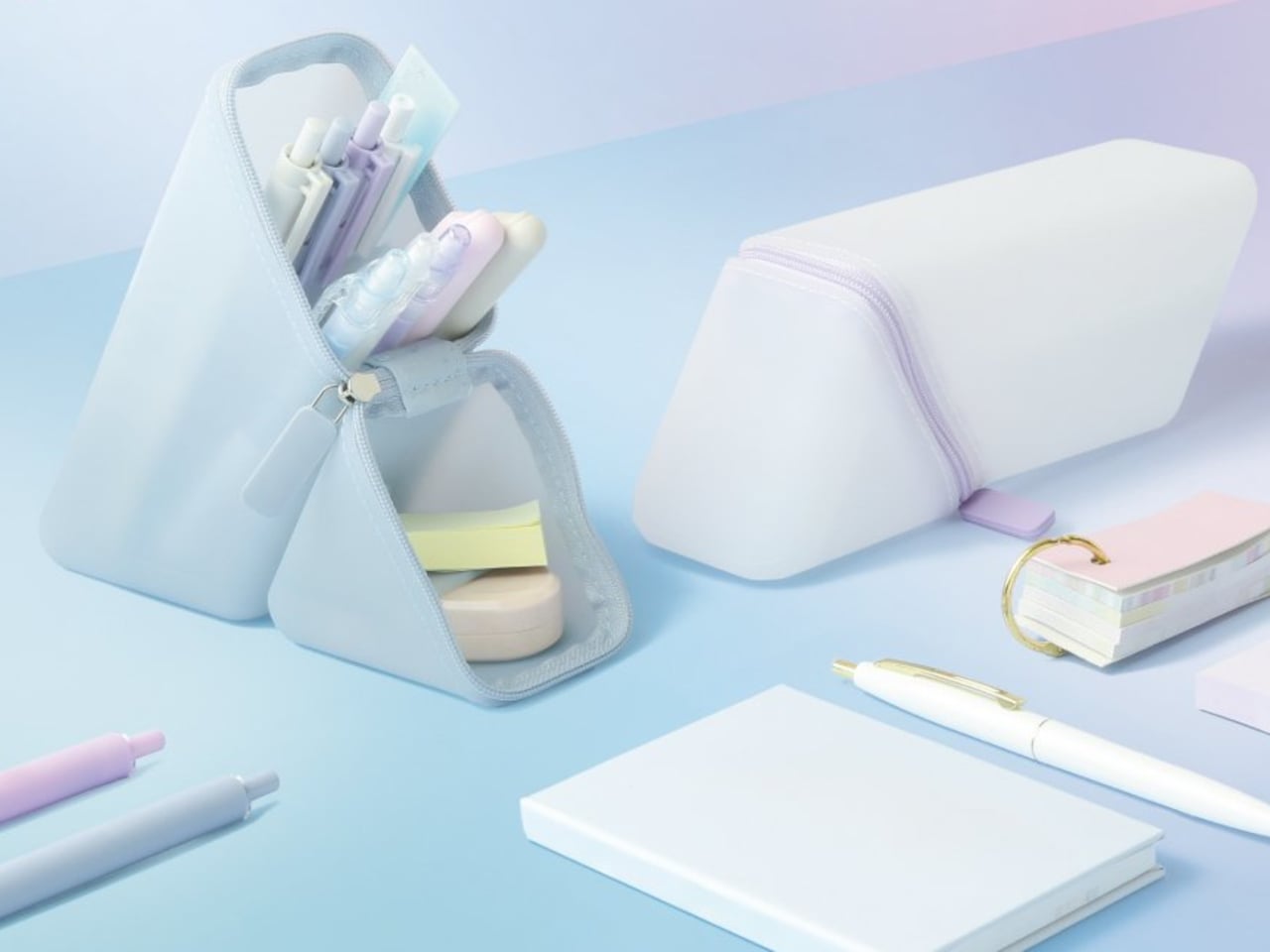
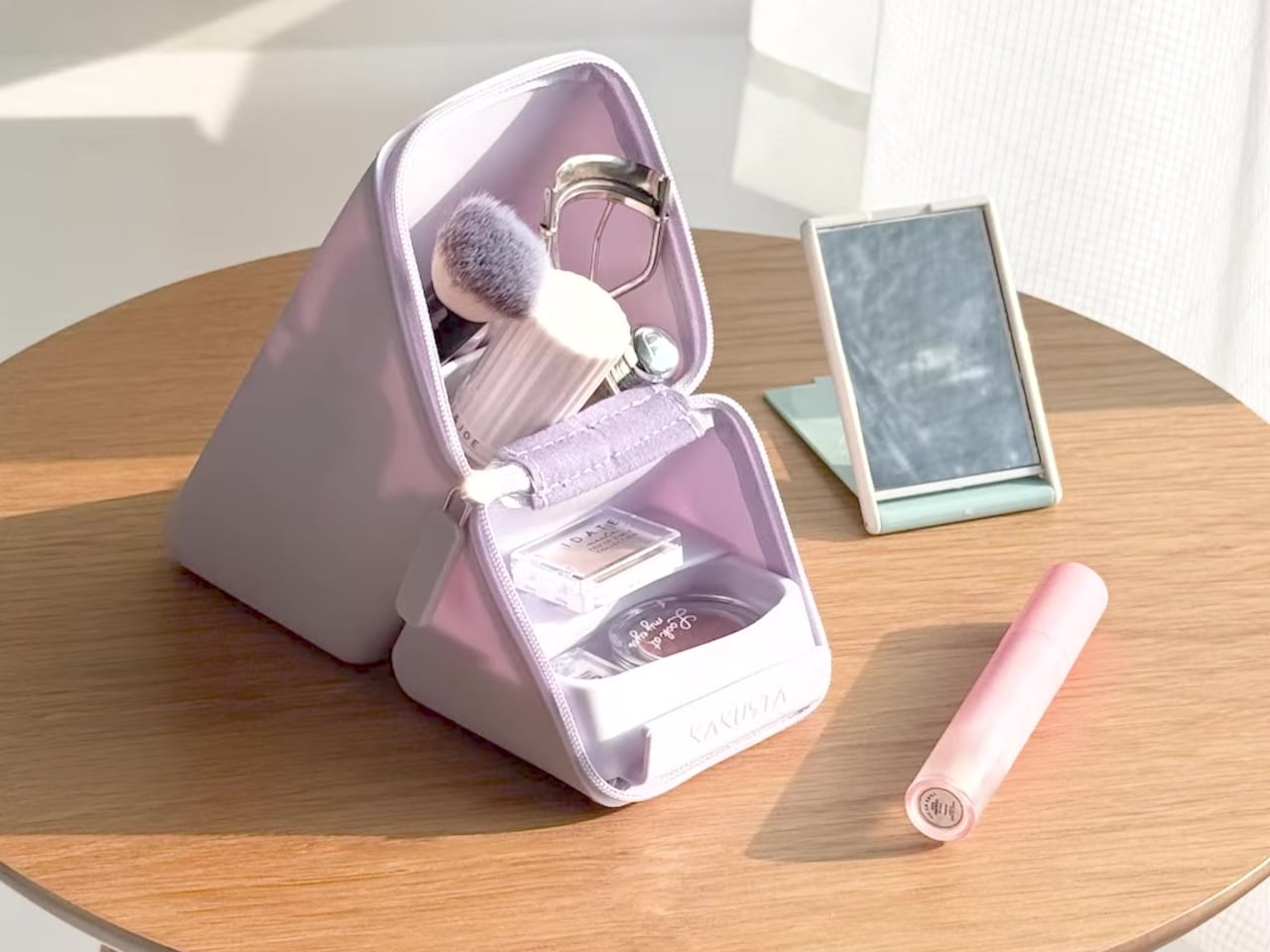
The case is compact enough to fit in a bag pocket without taking space meant for something else. Color options are restrained enough to sit on any desk without looking out of place. The palette leans toward the kind of tones that blend into a workspace rather than call attention to themselves. Kakusta is versatile enough to be used for other things, like holding makeup, proving that good design allows objects to extend beyond their initial purpose.
SHARE