The mechanical keyboard market has grown considerably in recent years, but most of the attention still goes to full-size, desk-bound boards that aren’t designed to travel. Compact computing has moved in a very different direction, with more people coding, writing, and browsing from small setups, tablets, mini PCs, and couches as often as from dedicated workstations. Keyboards built for that kind of flexibility are surprisingly hard to find.
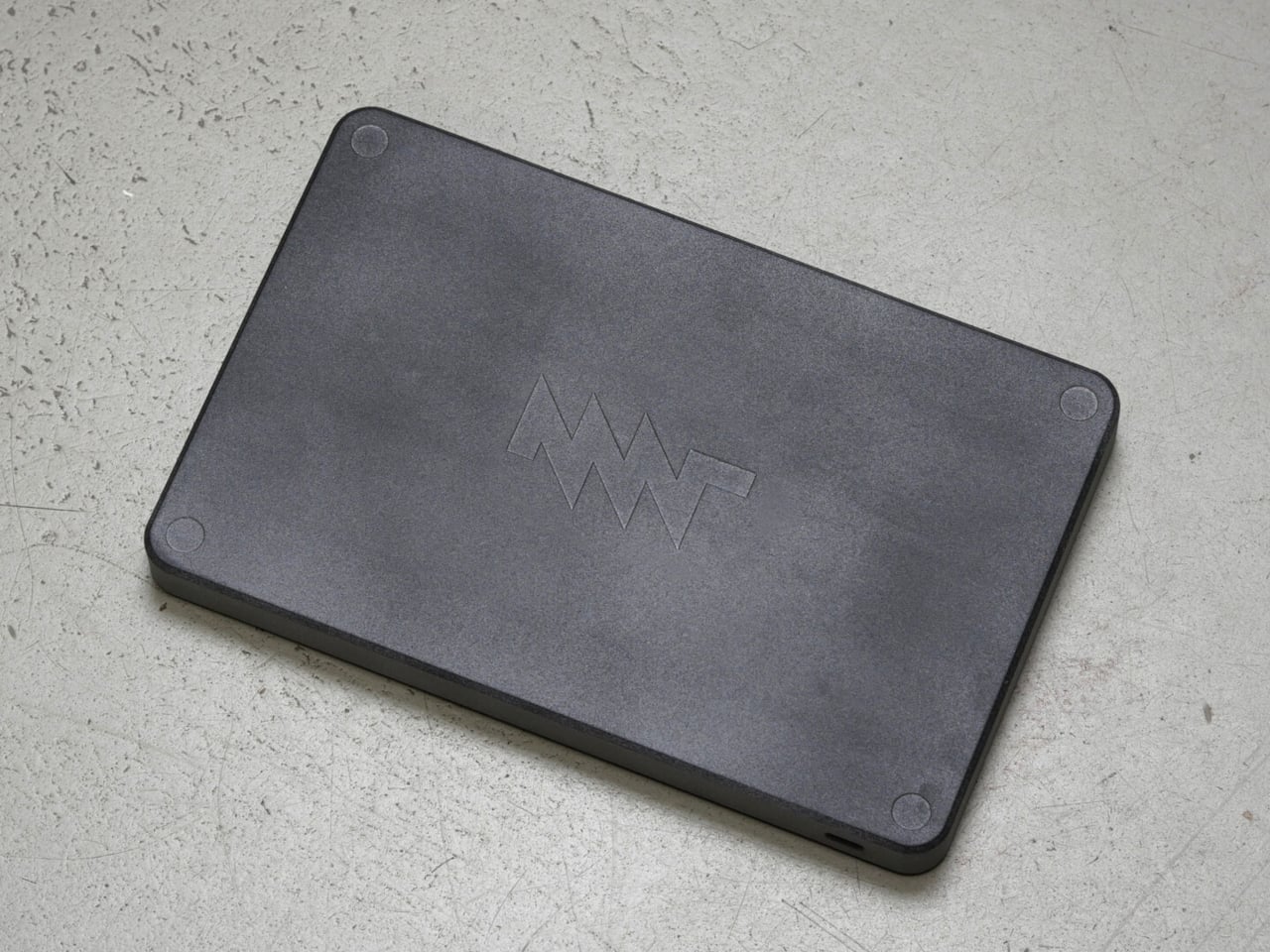
The MNT Pocket Reform Standalone Keyboard takes an unusual path to solving that. It started as the built-in keyboard of the Pocket Reform, a netbook-inspired open-hardware mini laptop, and has since been given a dedicated anthracite enclosure for use with any device. Everything that made it satisfying in the original machine, the integrated trackball, the ortholinear layout, the mechanical switches, came along with it.
Designer: MNT Reform
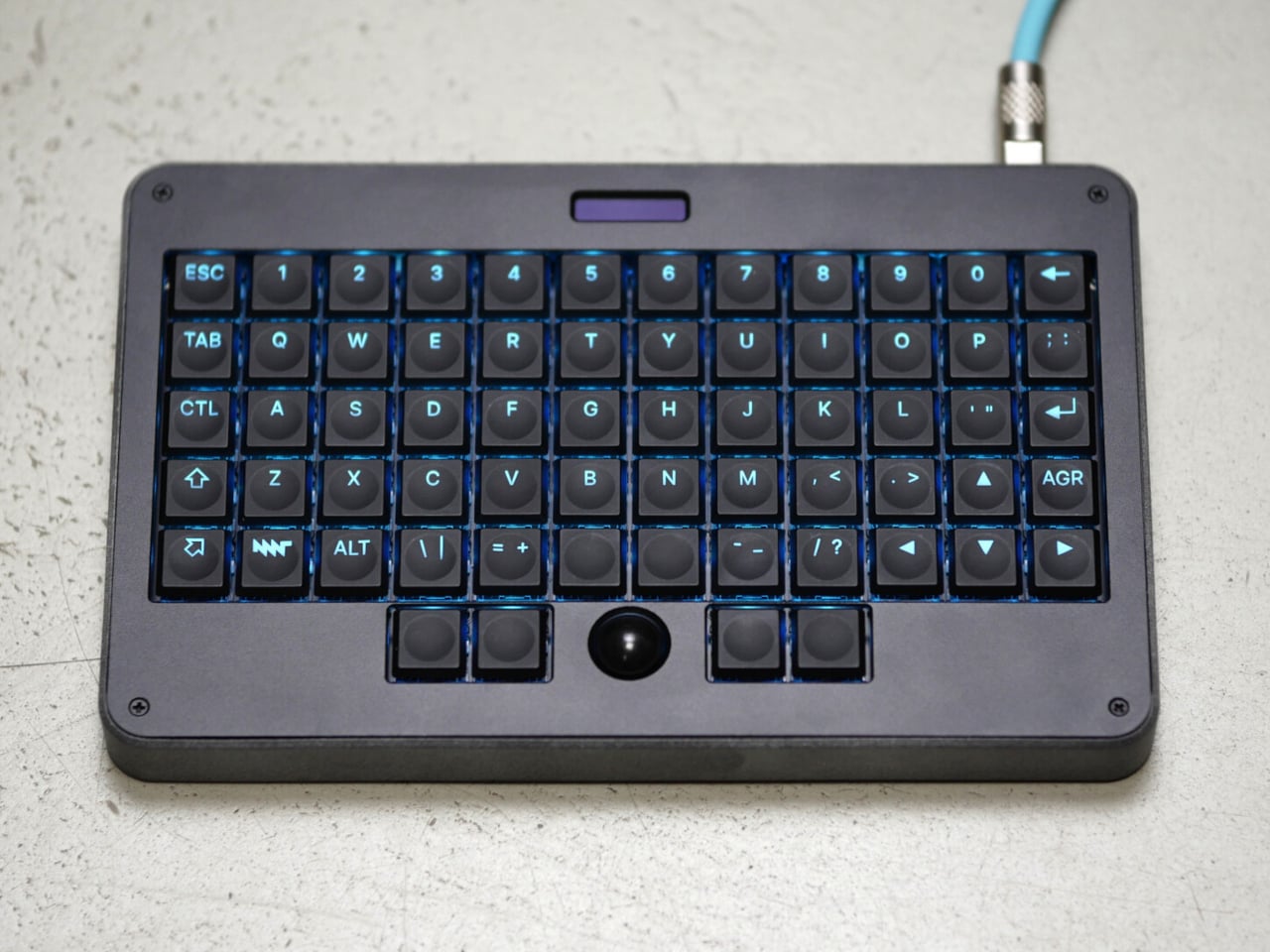
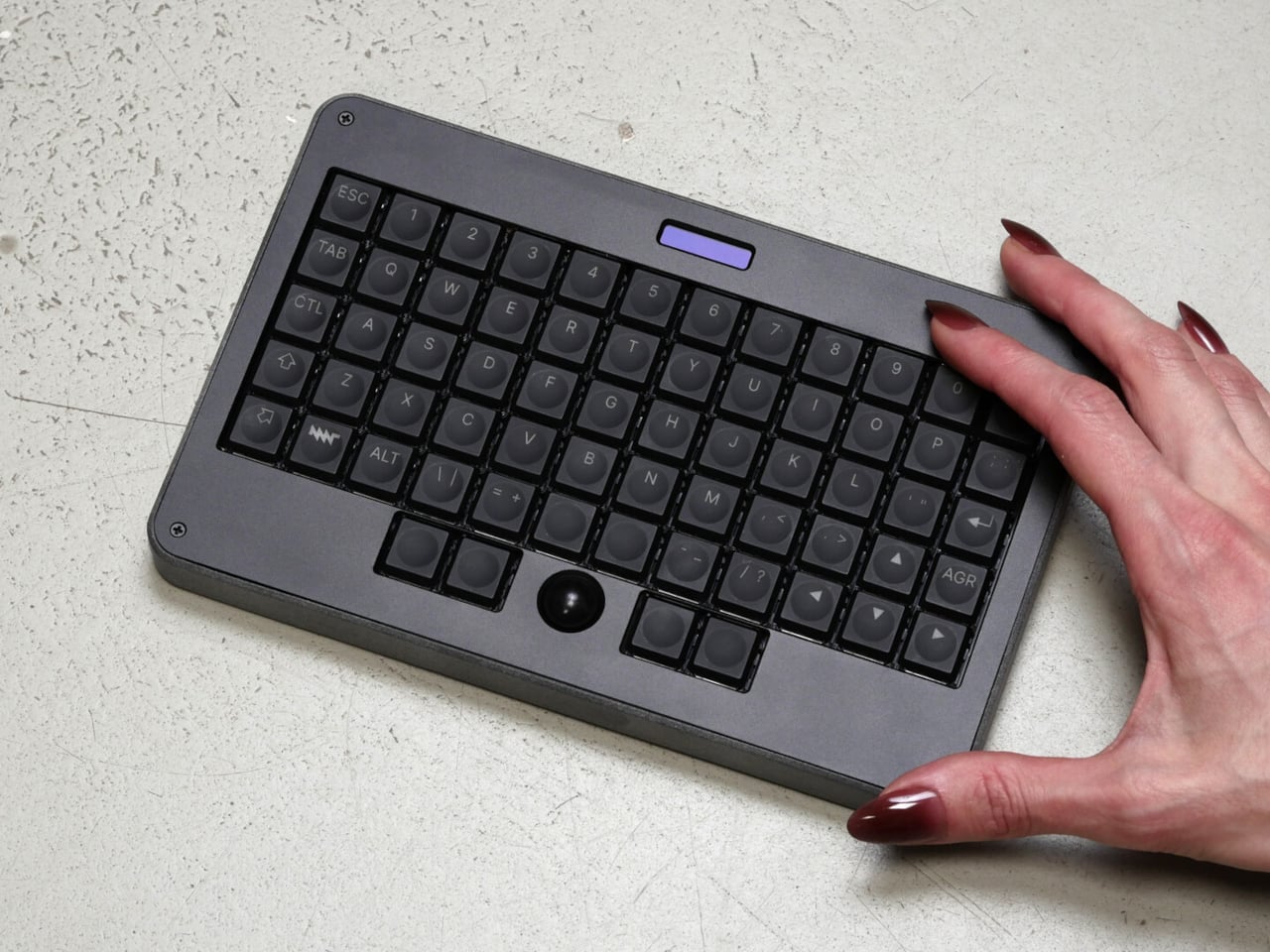
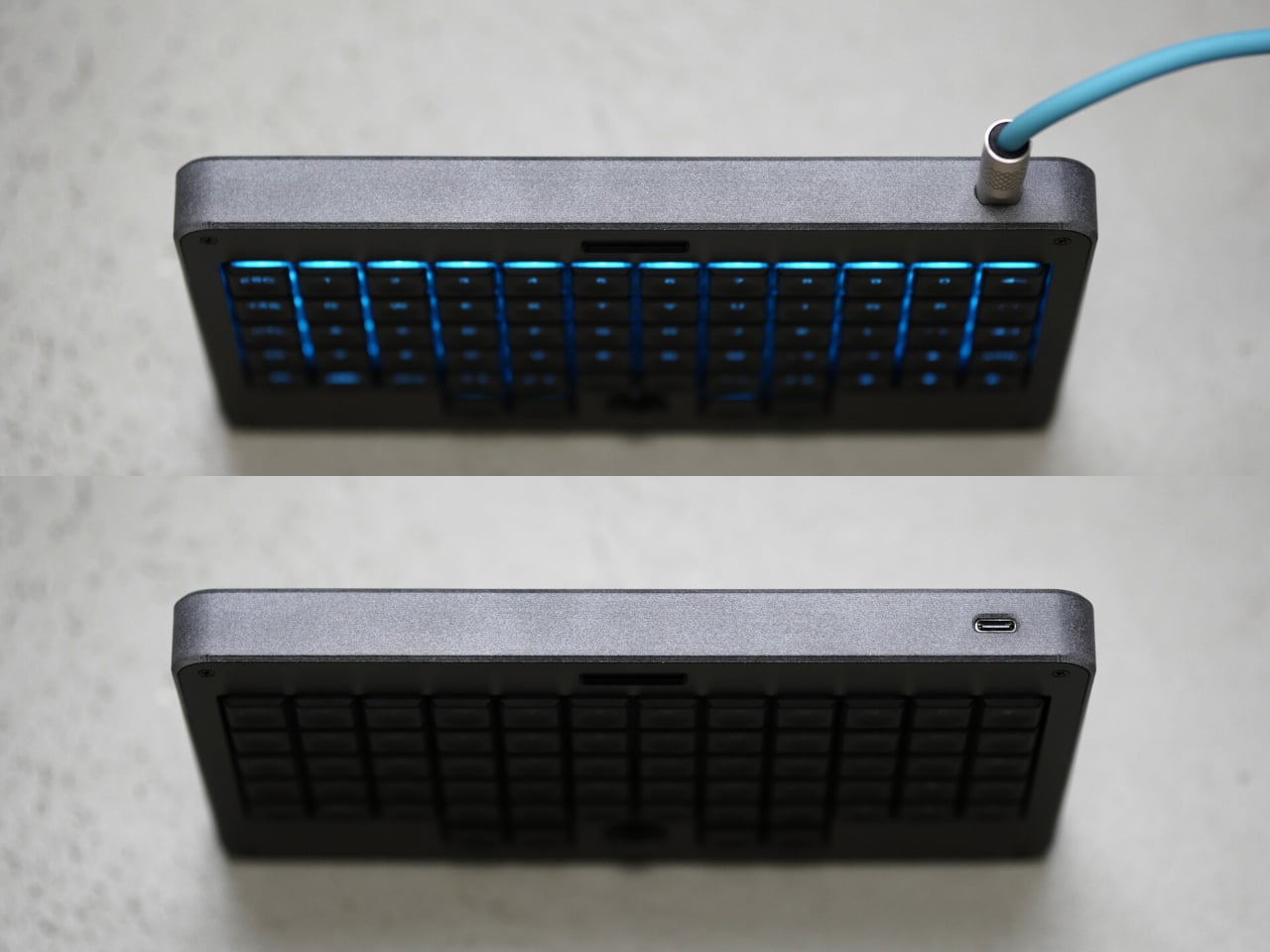
The layout is the first thing to adjust to. All 60 keys sit in a strict rectangular grid, doing away with the staggered rows on conventional keyboards. The arrangement is designed to reduce the diagonal reach each finger makes on a standard board, and everything fits into a footprint of 20.5cm x 13cm, compact enough for a desk corner or a couch armrest.
Switch choice is picked at purchase: Kailh Choc Red Pro for a smooth, quiet linear press; Choc Brown for tactile feedback without the noise; or Choc White for an audible click. The same switches also power the four buttons flanking the trackball, which keeps the typing and pointing experience consistent throughout. The keycaps are laser-engraved with a translucent ABS and PU construction that lets the RGB backlight show through clearly.
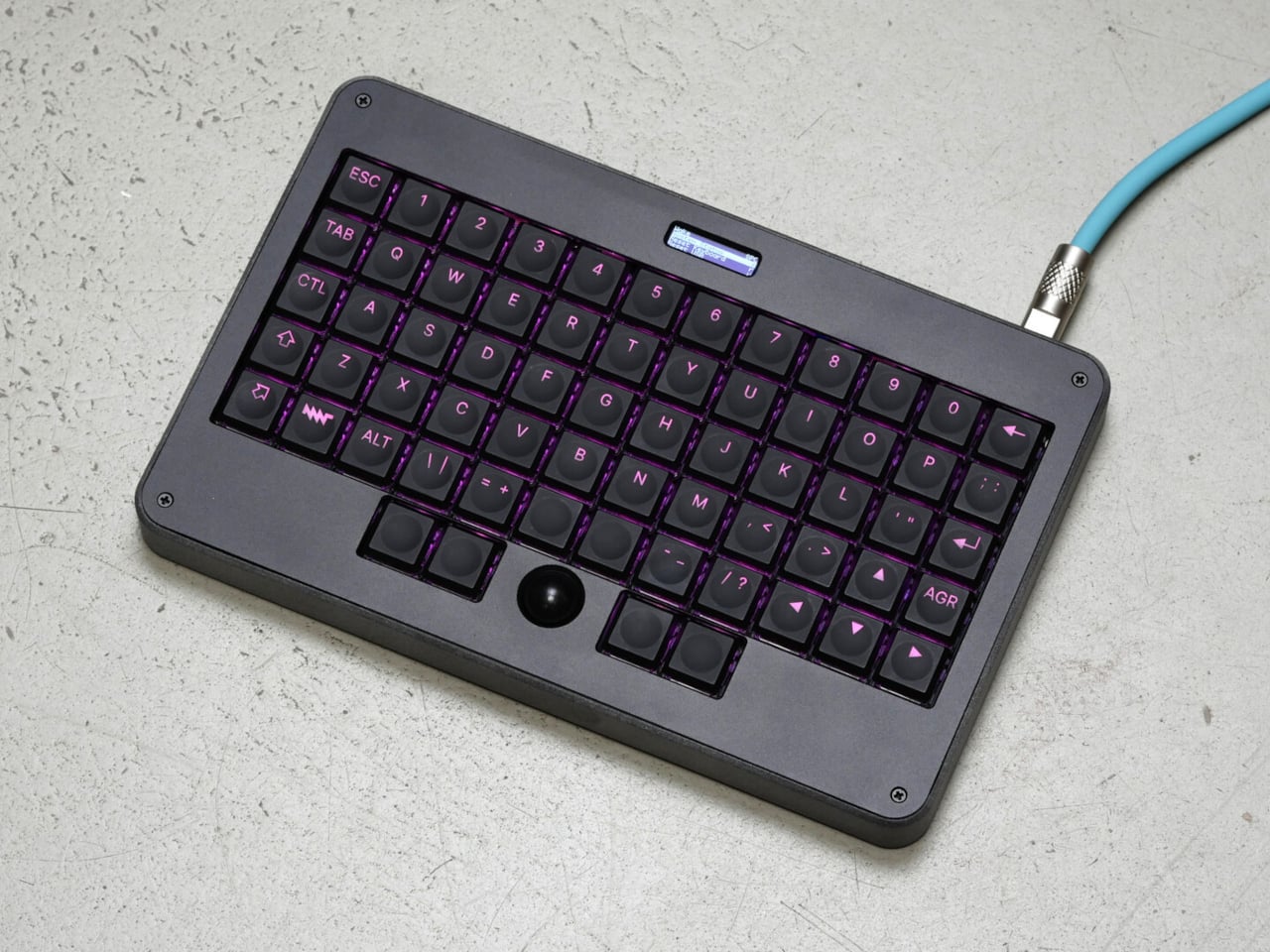
The built-in trackball is arguably the standout feature for anyone tired of juggling a keyboard and a mouse on a tight desk. The 15mm optical trackball handles left, middle, and right clicks plus scroll through its four surrounding buttons, positioned right below the spacebar. A 128×64 pixel OLED display near the top of the board acts as a live settings interface for the RP2040 microcontroller running the unit.
The 64 individually addressable RGB LEDs give the backlight a customizable glow that can be dimmed to nothing or tuned to taste. The enclosure is made from two materials: a lightweight grey nylon lower shell produced through HP Multi Jet Fusion, and a black-anodized, bead-blasted aluminum top plate. The combination keeps the board light without compromising the surface rigidity that matters during fast, heavy typing.
The keyboard is also fully open hardware, with PCB schematics, firmware, and mechanical designs all publicly available for modification. Like every device in the Reform family, it’s built to be repaired or altered by the owner, and the community around the platform means documentation and support are genuinely active. For people who care about knowing exactly what’s in their gear, that’s a meaningful distinction.
It connects to computers, tablets, and phones via USB-C, which handles both data and power, making it compatible with anything that supports USB HID. That also means plugging it into a phone or tablet for on-the-go typing is genuinely straightforward, and that’s a handy thing when the alternative is a touchscreen keyboard. The fully assembled version is available from the MNT Research store for €169, with no cable included.