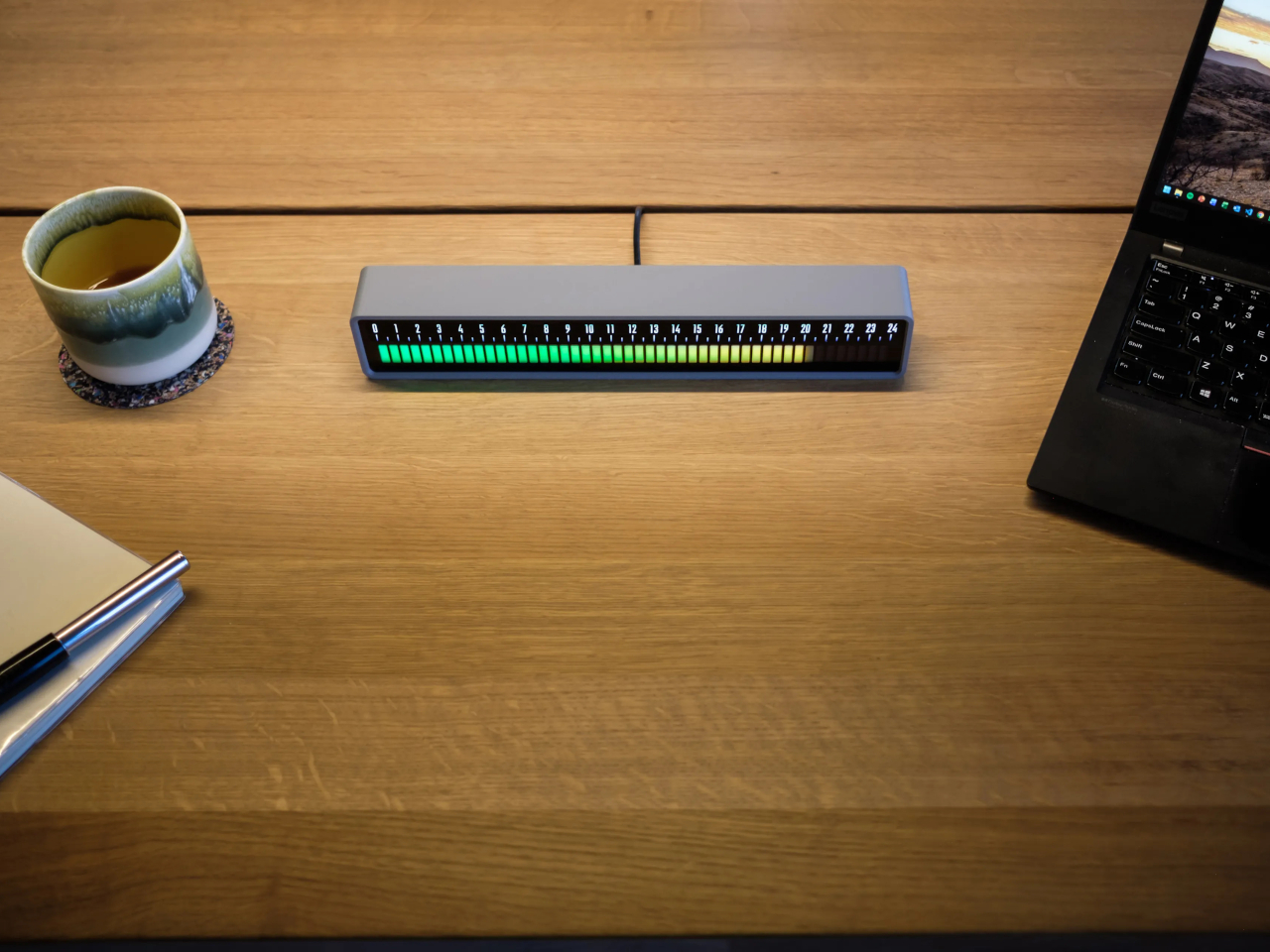
A digital clock can tell you it’s 3 p.m., but working out what’s left of the day is still your job. Daylight Machines’ Linear Clock gives that calculation a physical shape, spreading 24 hours across a glowing bar. The desktop device fills from midnight onward, letting you see time accumulating instead of watching another set of digits quietly change while you’re busy elsewhere.
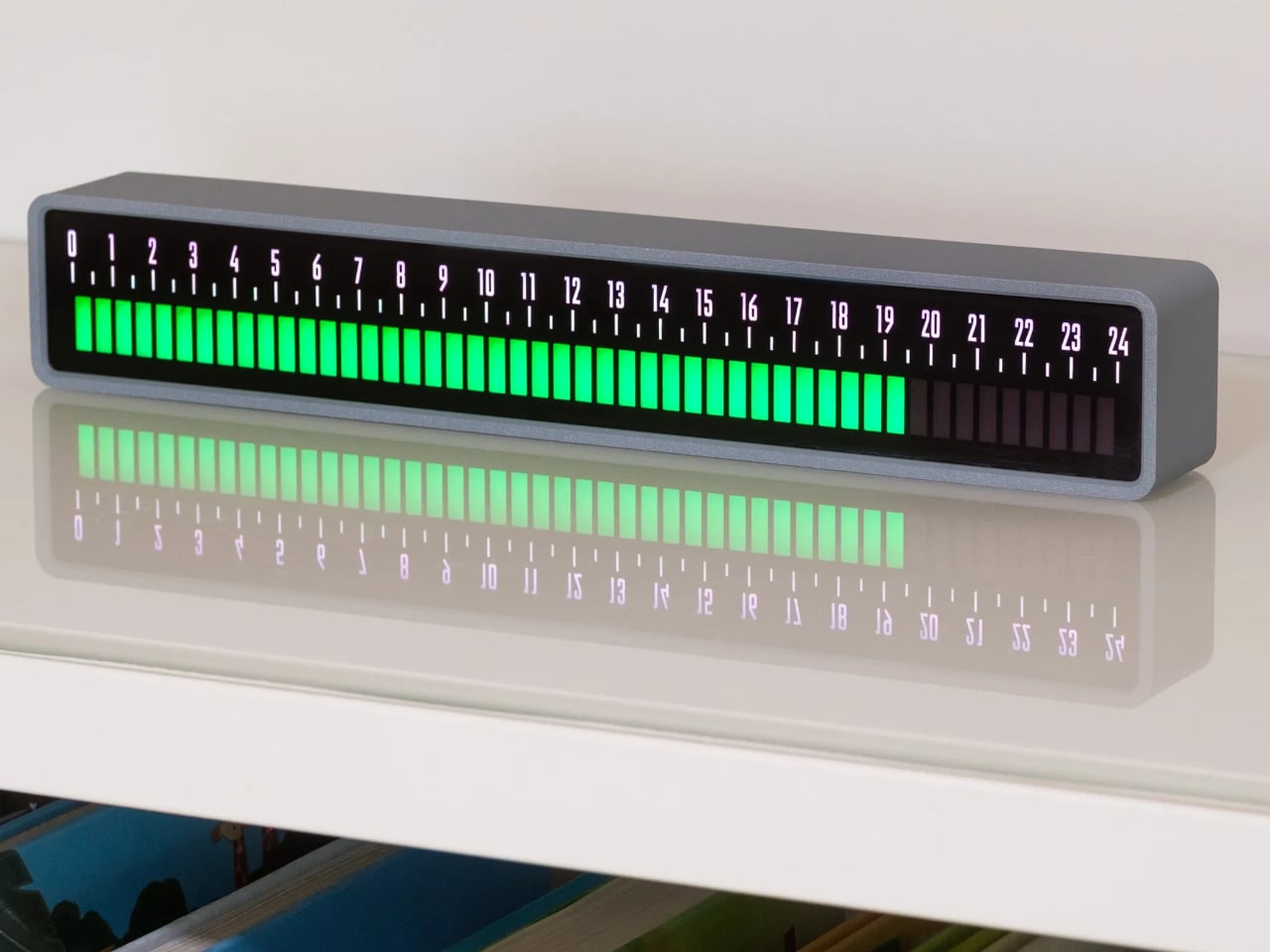
The display uses 48 blocks, each representing 30 minutes, beneath a scale running from zero to 24. A completed half hour stays lit, while the current block gradually illuminates as time passes. Daylight Machines says you can estimate the time within a few minutes this way. It’s less suited to catching the second than noticing how much of your afternoon has disappeared.
Designer: Daylight Machines
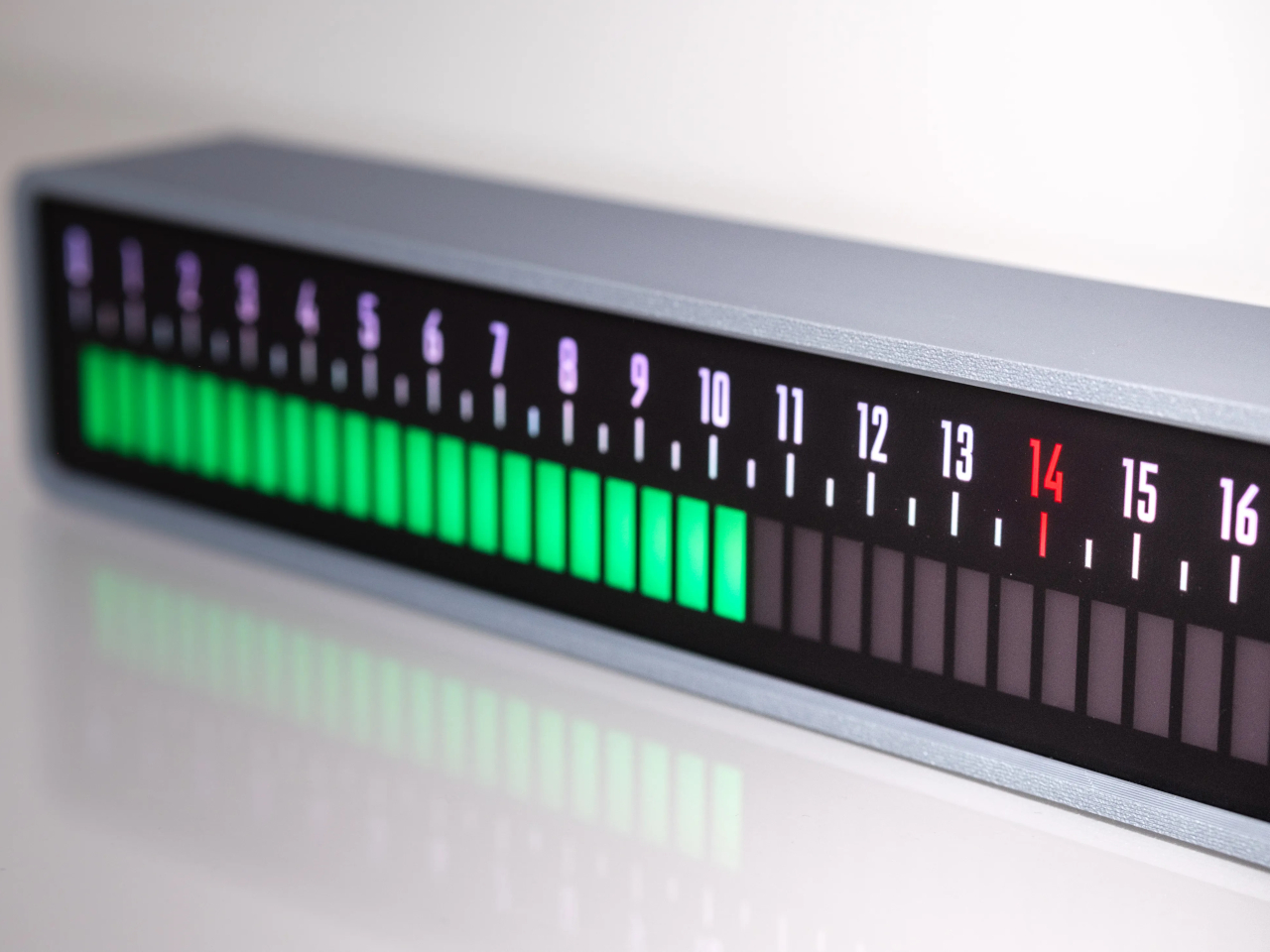
The long, low enclosure has something of a ruler about it, with a black face surrounded by rounded gray edges. Its 3D-printed PLA plastic body measures 12.2 inches wide, two inches tall, and 1.6 inches deep. That shallow profile could sit beneath a monitor or along a shelf, leaving the colored blocks to provide most of the decoration rather than an elaborate housing.
Those colors can also have a job beyond looking cheerful. Schedule mode lets you assign different stretches of the day their own hues, separating working hours from lunch or an evening away from the desk. Set the boundaries yourself, and the next color becomes a visible destination, giving a long task an endpoint without putting another calendar window on your crowded monitor.
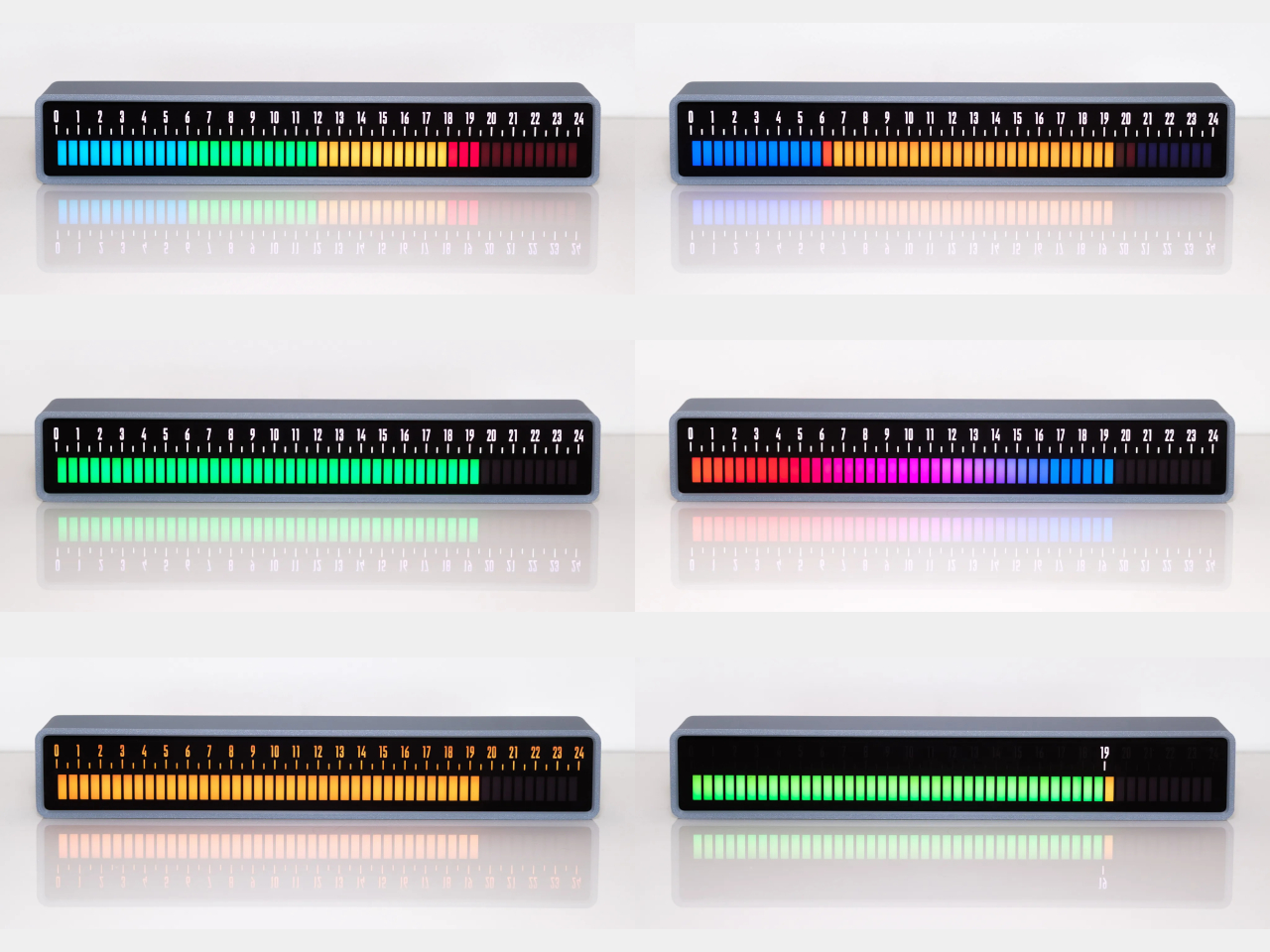
Sunrise/sunset mode follows a different schedule, calculating daylight from the date, location, and time zone you enter. Blue marks nighttime, amber identifies daylight, and red highlights the intervals containing sunrise and sunset. Beside a workspace, that could help you judge whether there’s still time for a walk before dark. No weather forecast is involved, so it won’t tell you to bring an umbrella.
Reminders add a red marker to the upper scale, while a countdown reverses the usual behavior and drains the bar toward empty. That gives a short break or timed activity its visible limit. There’s a catch for anyone expecting an alarm, however: the clock can’t make sounds. Its visual alert needs to be seen, so wandering into another room defeats the point.
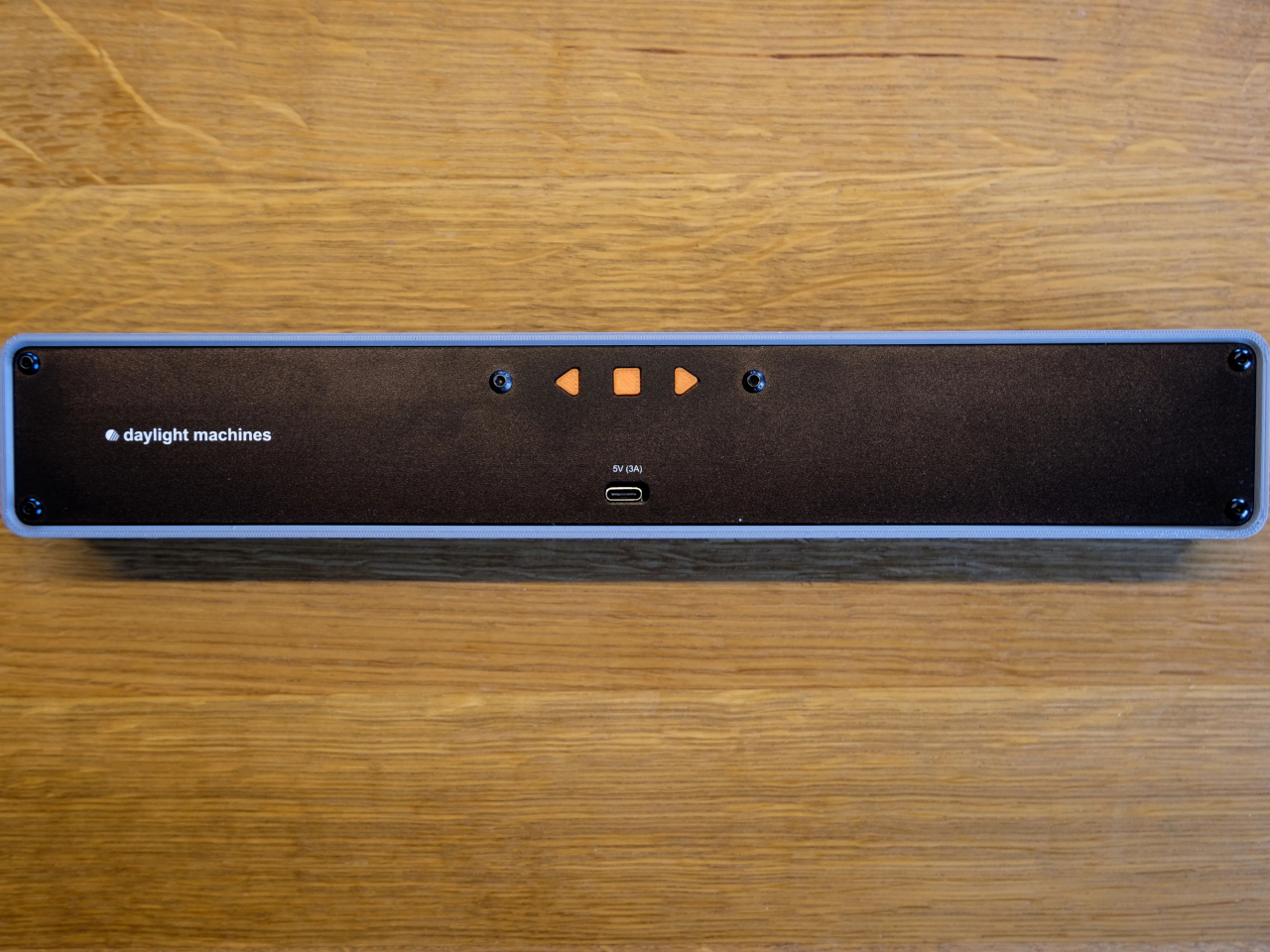
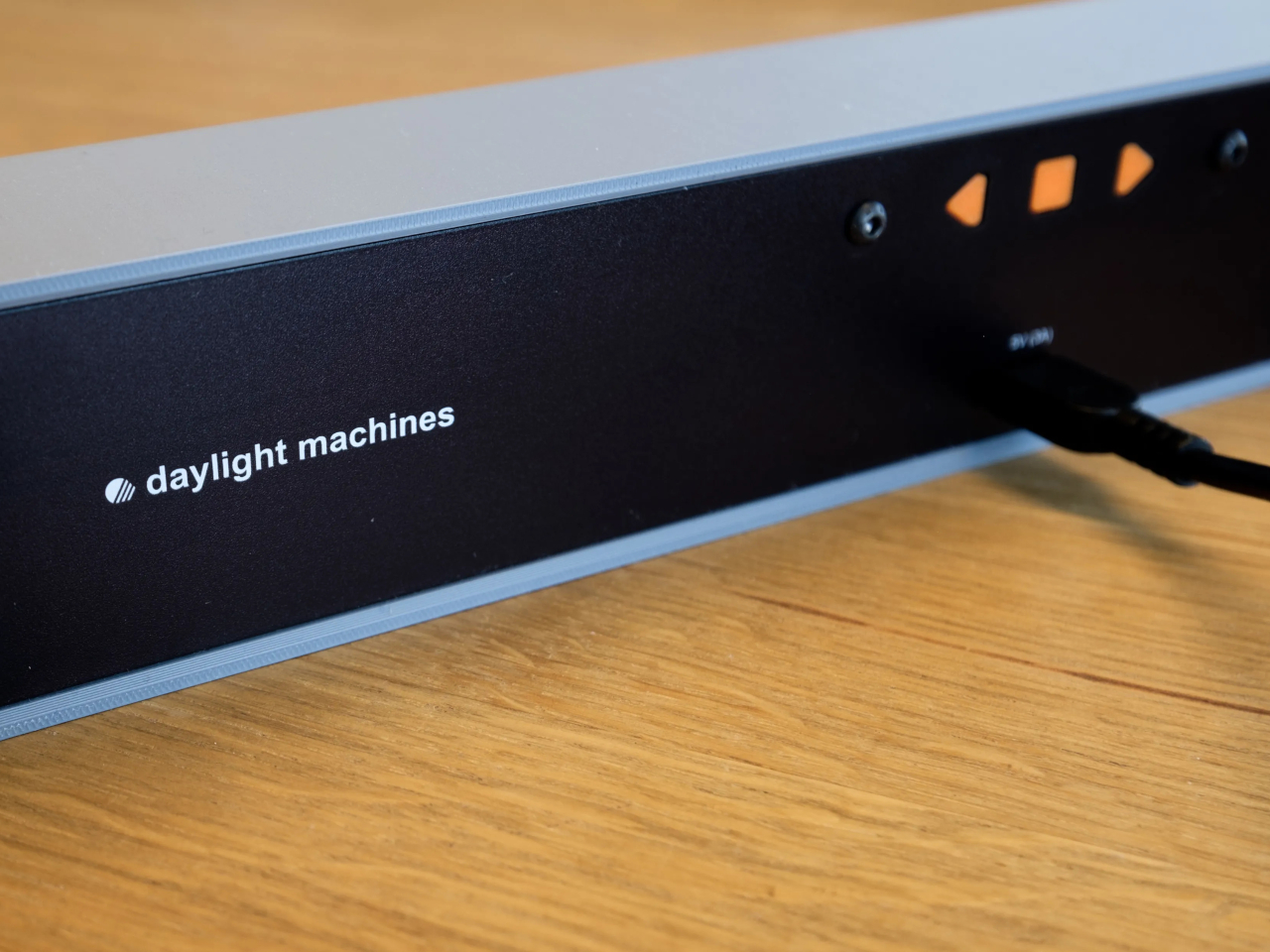
Everything is configured through three rear buttons, with no app or Wi-Fi required for normal operation. That keeps your phone out of the setup, although entering a detailed schedule means working through the clock’s menus. Brightness is adjustable, and active hours can switch the display off at night. You can also hide unwanted hours, keeping the view focused on your working day instead.
The clock costs €159 (about $176), excluding VAT, with the current batch marked as sold out. It needs at least a 15W, 3A USB-C supply; the included cable doesn’t come with an adapter. At a desk, the growing line could be a reminder to finish work, rather than an invitation to find more tasks to squeeze into whatever space is still left before midnight.