Amsterdam gets around 1,600 hours of sunshine a year. Los Angeles gets close to 2,500. Anne Berends spent years feeling that difference, which is a very common Dutch experience and a very uncommon reason to start a hardware company. She was a nanomaterials scientist, so rather than buying a lamp she asked herself, “What if I could mount a piece of the sun on top of my laptop, which I spend roughly 8 hours in front of everyday?” The answer was near-infrared, the invisible band that shoots out of your TV remote. Turns out, at the right wavelength and focus, it provides a similar physiological experience as being in the sun. Berends built a webcam-ish device that sits on top of your laptop/desktop screen, giving you that dose of “sunlight” you wouldn’t get in most northern countries between September and March.
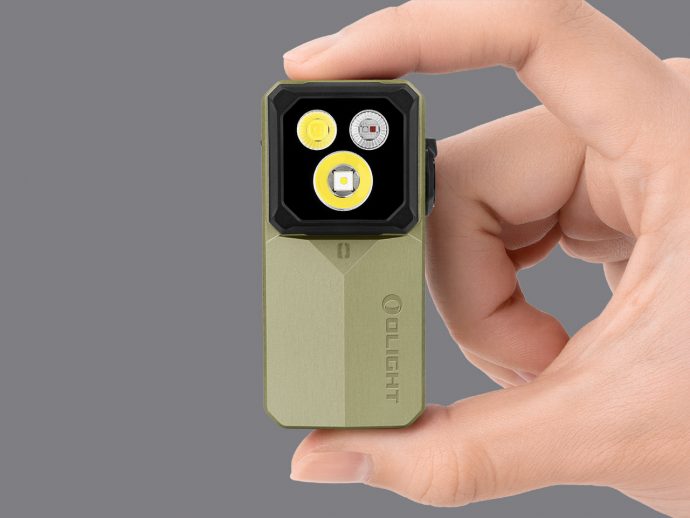
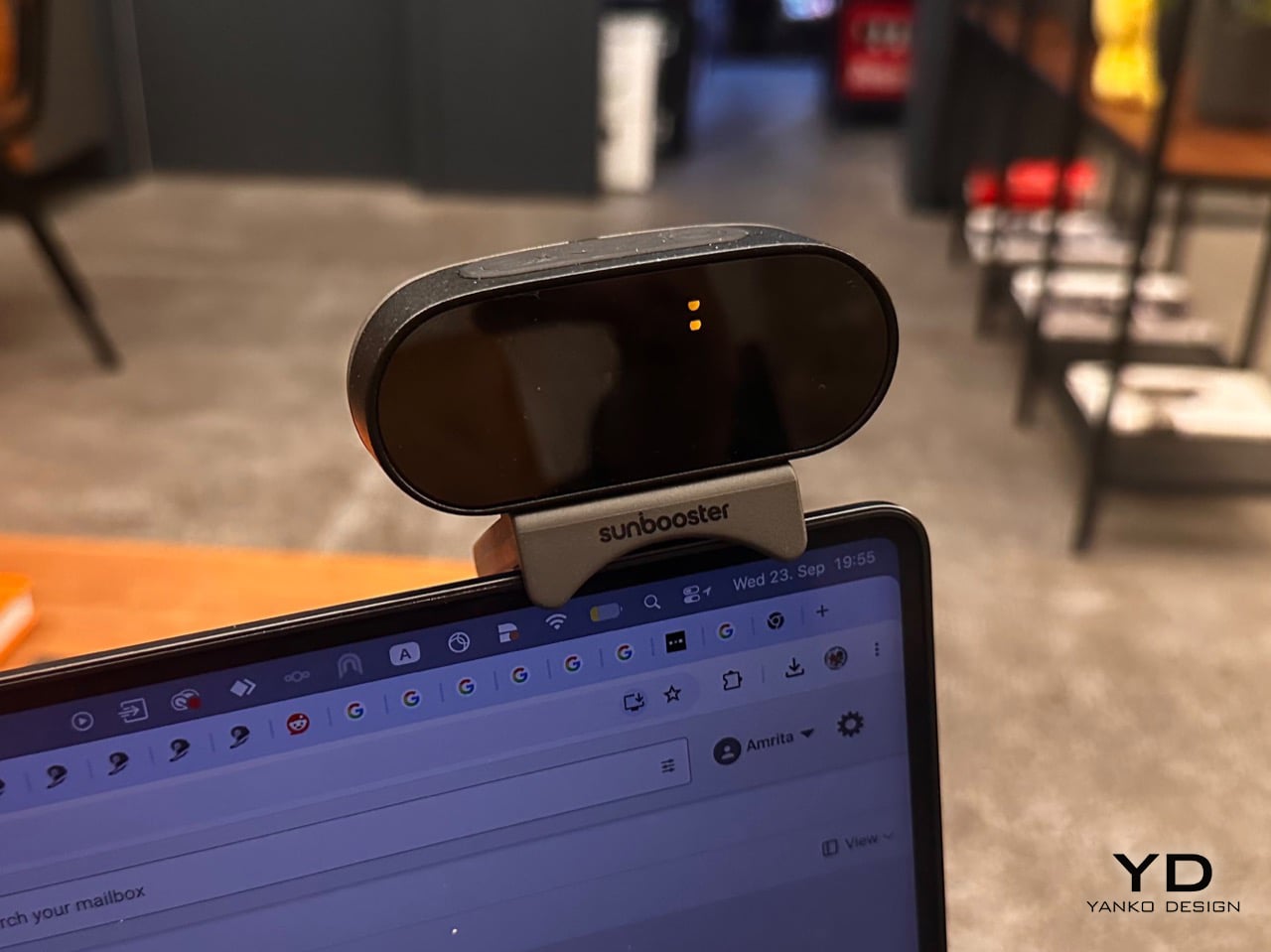
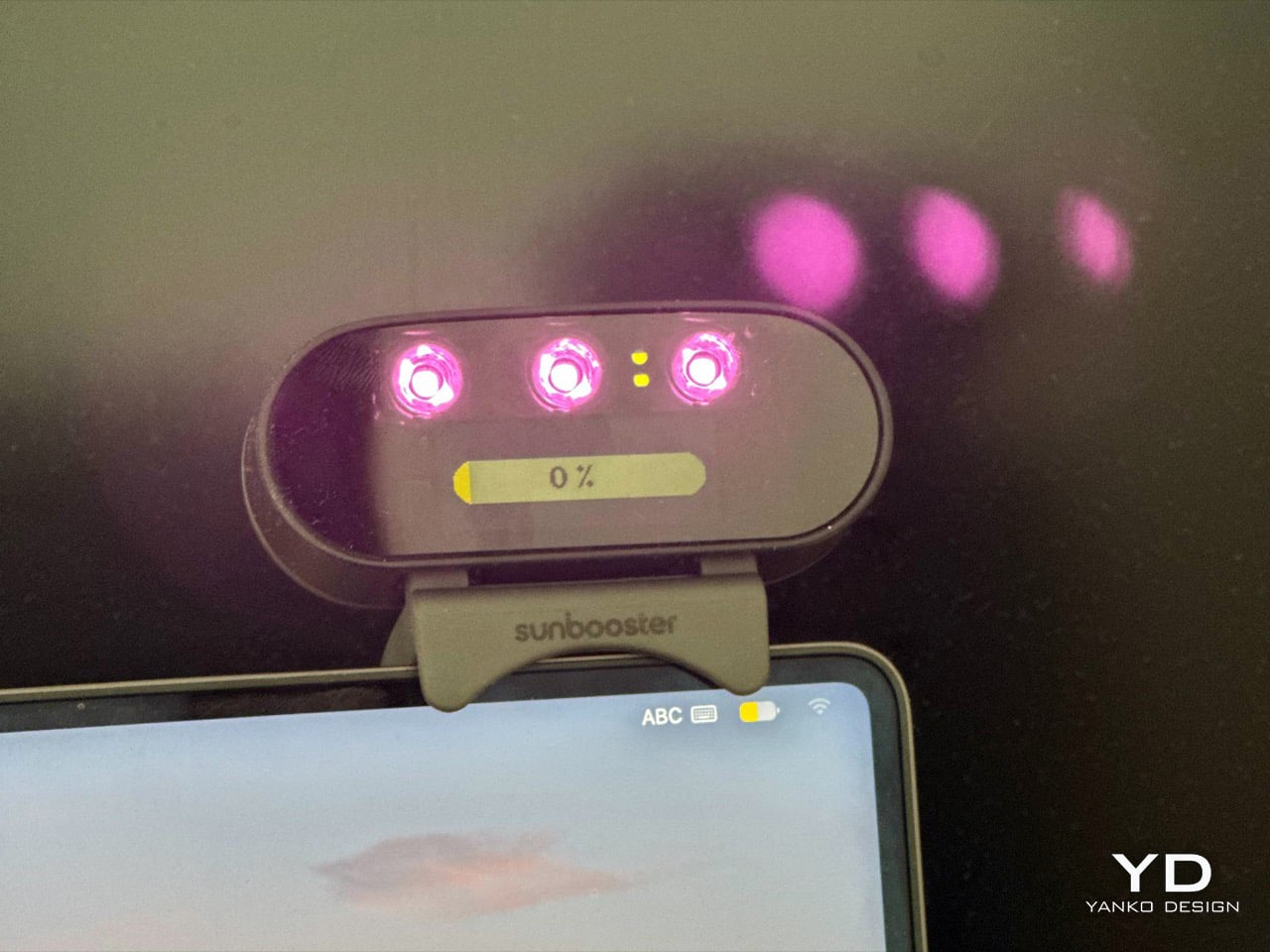
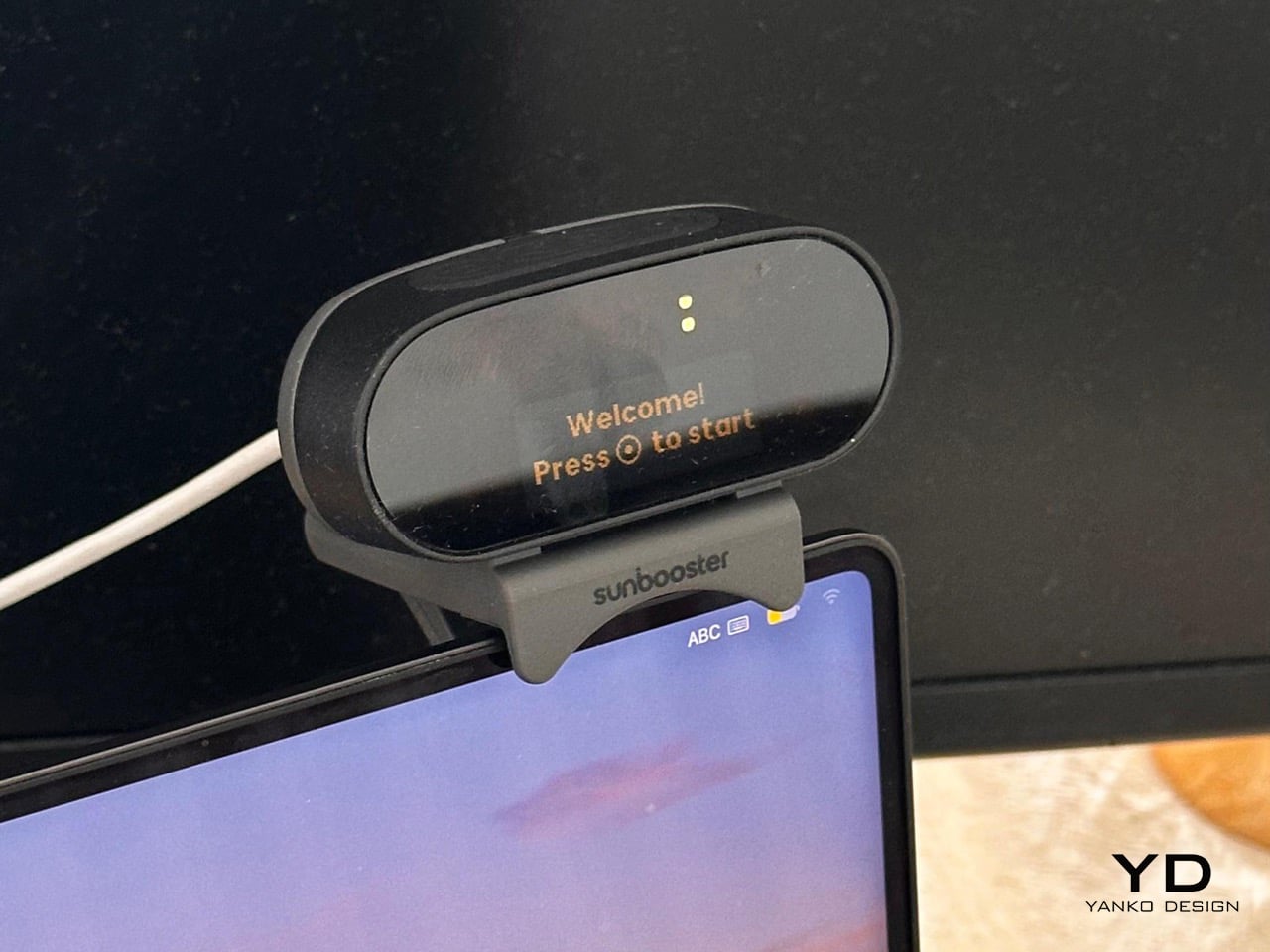
I have had a unit from IFA 2026 clipped to my screen for roughly twenty days now. It is a 120 gram puck, 83mm across, aluminum and plastic, USB-C powered, with three LEDs running at 850nm. A presence sensor confirms you are between 30 and 100cm away and cuts the light the moment you leave the desk. Berends co-founded SunLED with lighting industry veteran Ayhan Siriner, out of the Amsterdam research lab Seaborough. It sells for $249 and carries a 2026 iF Design Award in Medical and Healthcare.
Designers: Dr. Anne Berends & Ayhan Siriner (SunLED Life Science)
SunLED did not start with a clip-on gadget. The original plan baked near-infrared into ceiling fixtures, so whole rooms got a dose without anyone changing habits. That idea collapsed under basic physics, since near-infrared only works on skin, and light scattered from three meters up wastes itself on the walls. Berends summed up what the ceiling version would require in one blunt line: you’d need a nuclear plant, basically. That is not a metaphor she reached for lightly. The whole product shrank from architecture down to arm’s length, landing on the surface everyone stares at for eight hours a day.
The product does not do anything you can perceive, which is the strangest part of the brief. No warmth, no glow, no hum. At MWC, SunLED’s team had to hand journalists a special viewer just to prove the beam was there, since 850 nanometers sits outside what human eyes register. Most companies faced with an invisible feature would have cheated and added a soft status light for reassurance. SunLED skipped that. What you get instead is a presence sensor that checks your distance, and an app that logs weekly exposure after the fact.
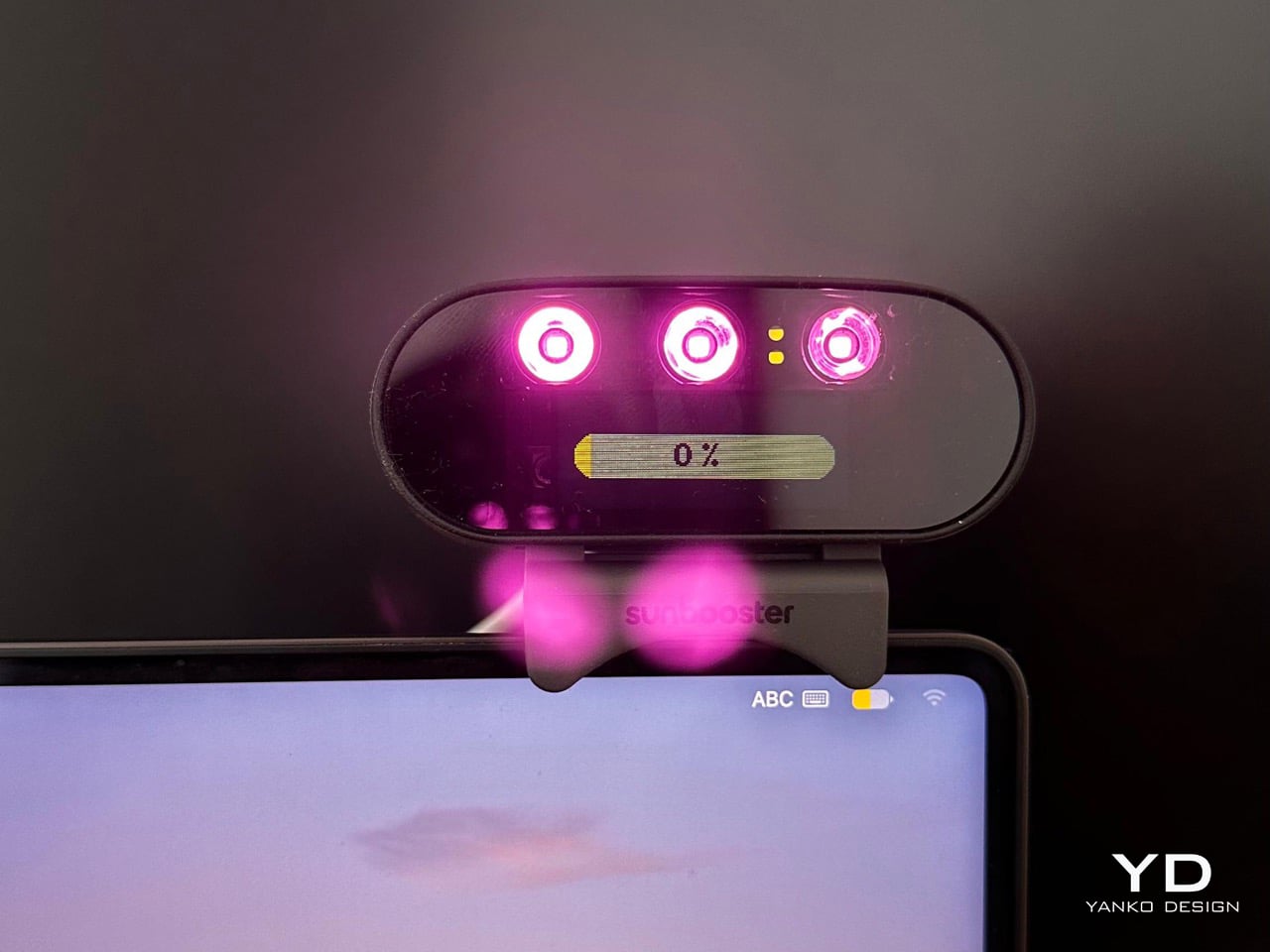
On the desk, the SunBooster reads less like a wellness gadget and more like a webcam that wandered off from a video call. That is deliberate, since it never screams self-care at anyone glancing at your monitor mid meeting. Compare that to the SAD lamps this category grew up on, glowing slabs you sit in front of like you are serving a sentence. Or compare it to red light panels, which mix visible red with near-infrared and demand a timed session standing in front of them. SunBooster skips the ritual and the spectacle both.
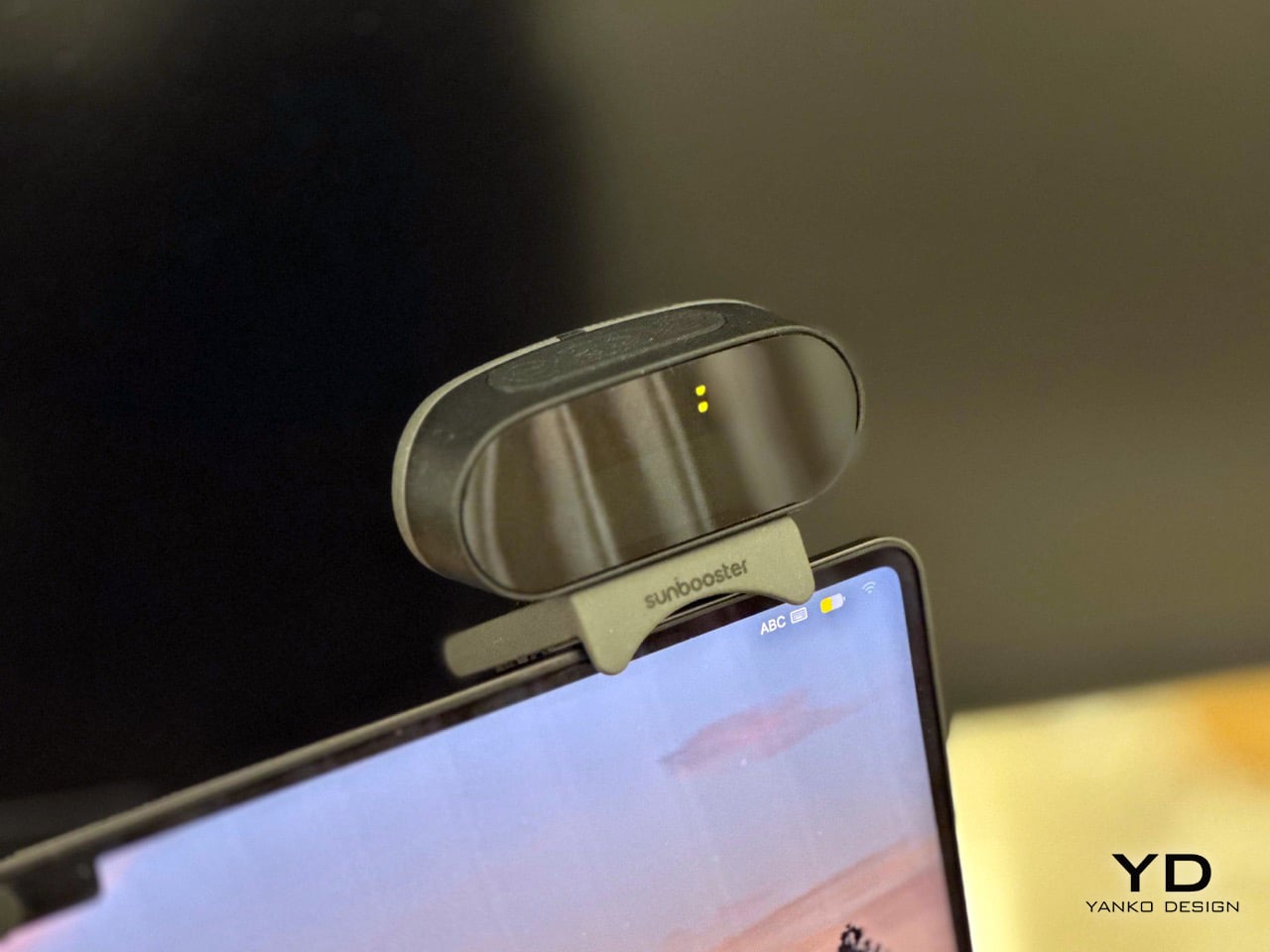
The science leans on a study from the University of Groningen, double-blind and placebo-controlled: participants reported better mood after a single day, most pronounced in winter, and more energy after four weeks. A separate UBC study found near-infrared exposure improved emotional stability under demanding cognitive tasks. None of that is nothing, for a category that usually runs on vibes over citations. I will admit upfront that I live somewhere the sun works unpaid overtime year round, so whether this does anything for a hypothetical Dutch February version of me, I genuinely cannot tell. What I can report is that it has never once made my desk feel cluttered, which is more than most wellness gadgets manage.
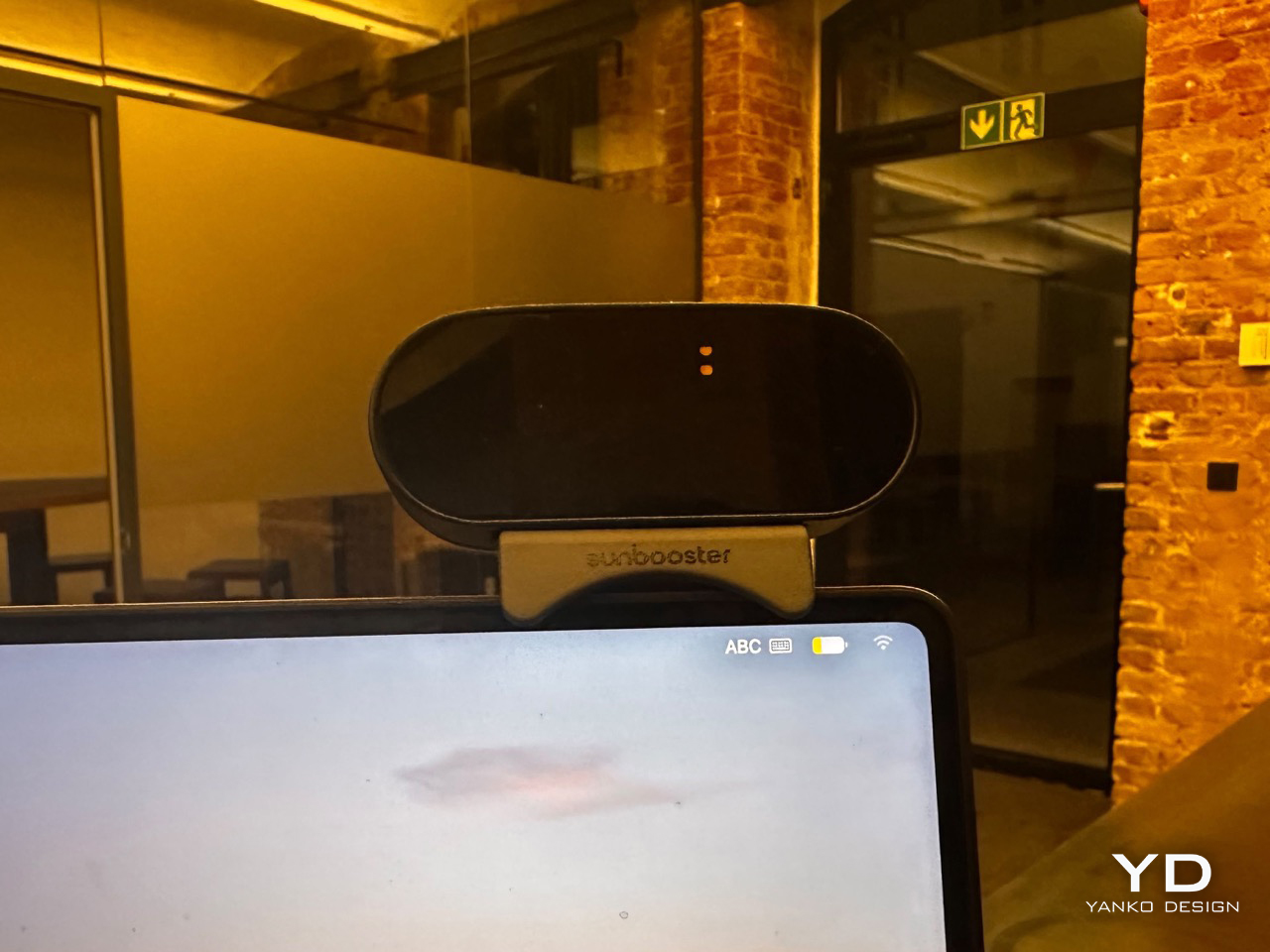
The standalone device might not even be the real plan here. SunLED has shown concept hardware alongside it, including a phone case with the same LEDs built in and a laptop with near-infrared woven into the display housing. The company is licensing the tech to monitor and laptop makers, and Berends has pitched it as adding roughly the cost of a Netflix subscription to a device’s bill of materials. If that lands with even one major laptop brand, the object on my screen stops being a product and becomes a proof of concept that shipped first. That is bigger ambition than most $249 gadgets carry.
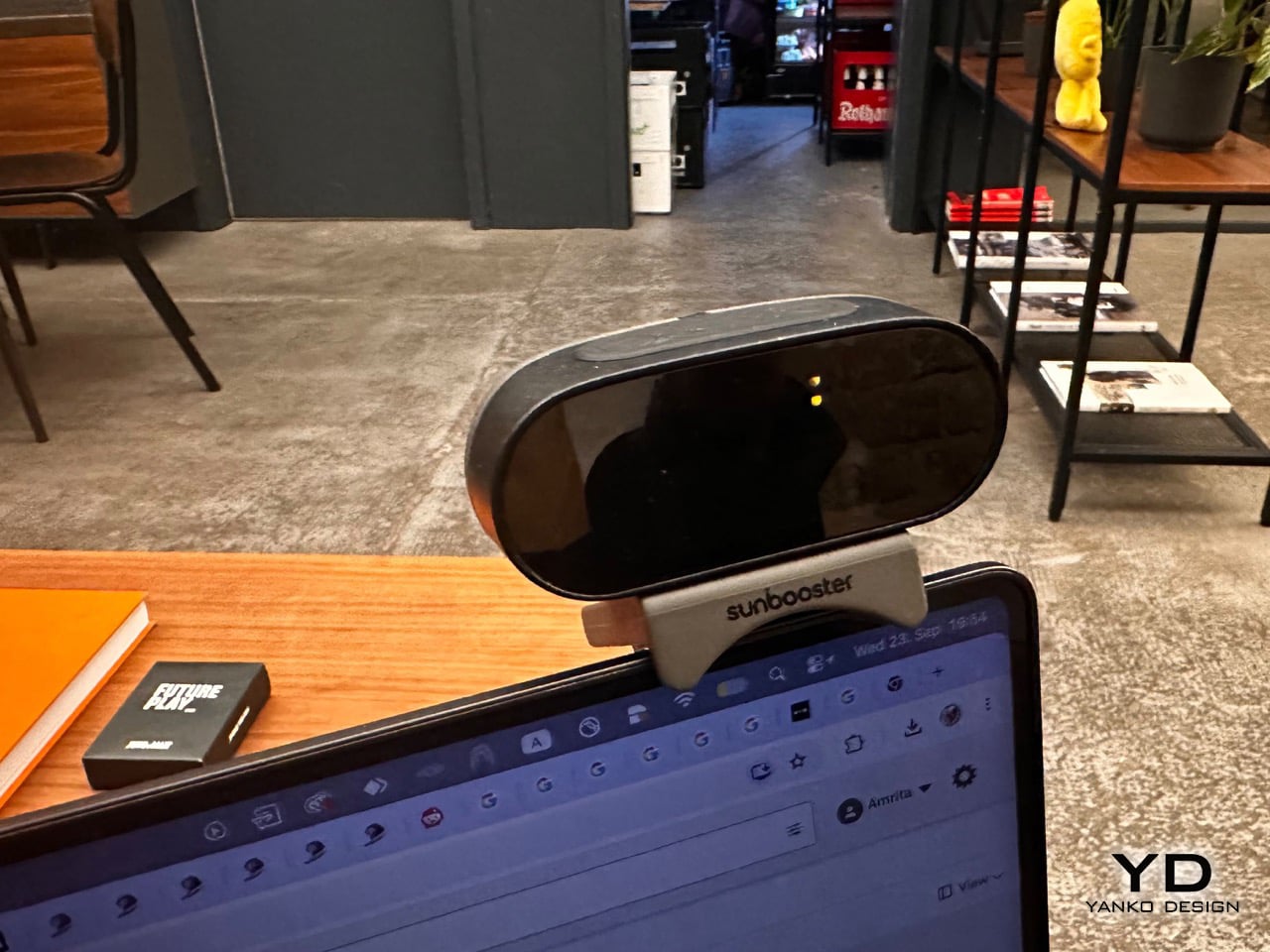
Winning an iF Design Award for a wellness gadget is not rare anymore, the category has gotten crowded with panels and pods chasing the same jury. What sets the SunBooster apart is that it never asked to look like medicine. It looks like hardware, sized and finished the way a camera accessory would be, sitting on a bezel instead of a bathroom shelf. If SunLED pulls off the licensing play, this unit gets remembered less as a product and more as the pitch deck that worked. Until then, it sits on my monitor, doing something I will never see, for a winter I will never have to survive.
SHARE