Google’s Add Me is one of the stranger things a phone has ever done. Introduced on the Pixel 9, it takes a photo of your family, then hands the phone to somebody in that photo, who takes a second shot of you standing where the gap was. The phone stitches the two together and produces a group picture that never existed, of a moment where everybody was never actually in the room at once. It works remarkably well. It is also, if you think about it for longer than four seconds, deeply odd, a family portrait assembled in post like a Marvel crowd scene.
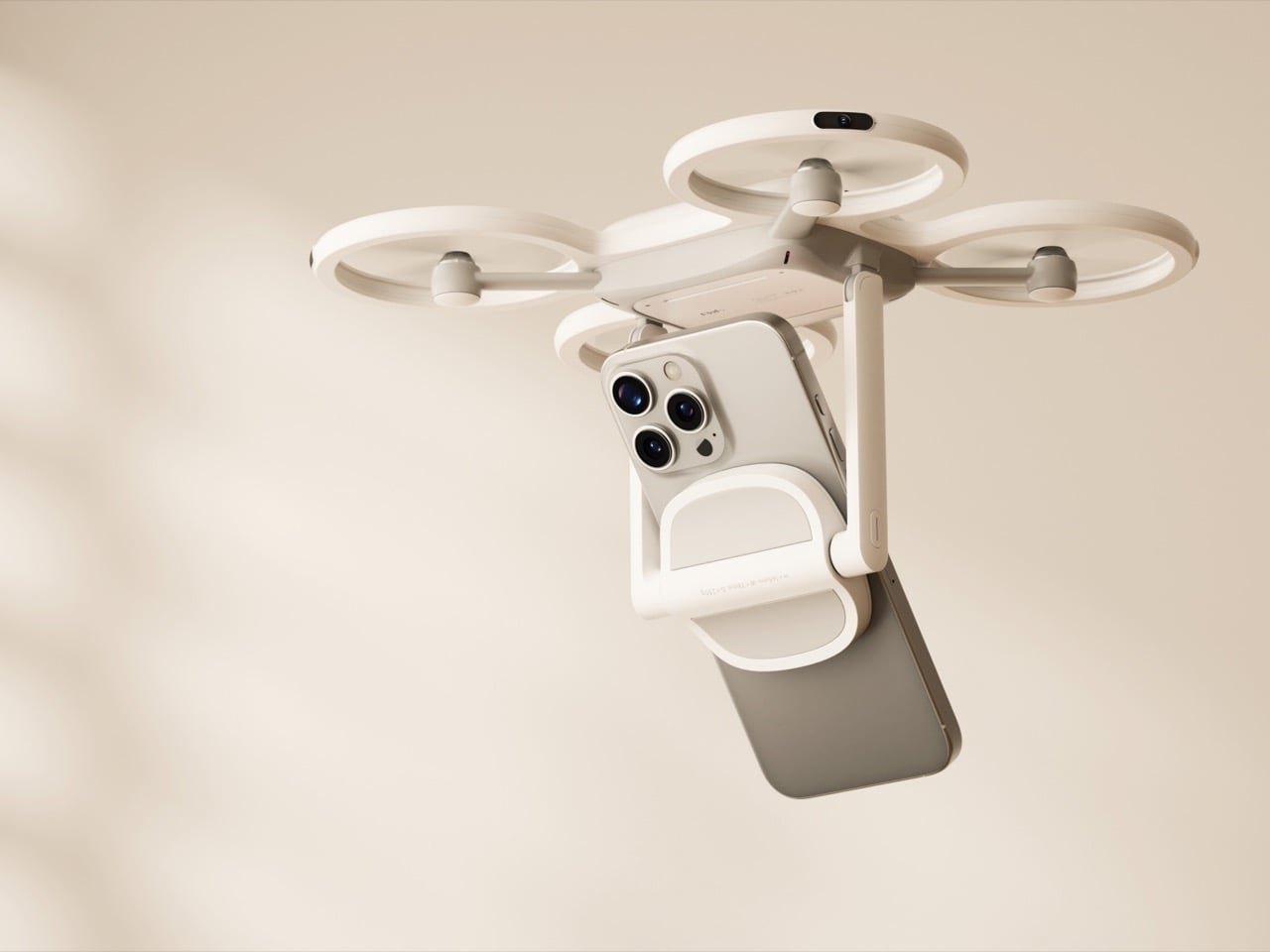
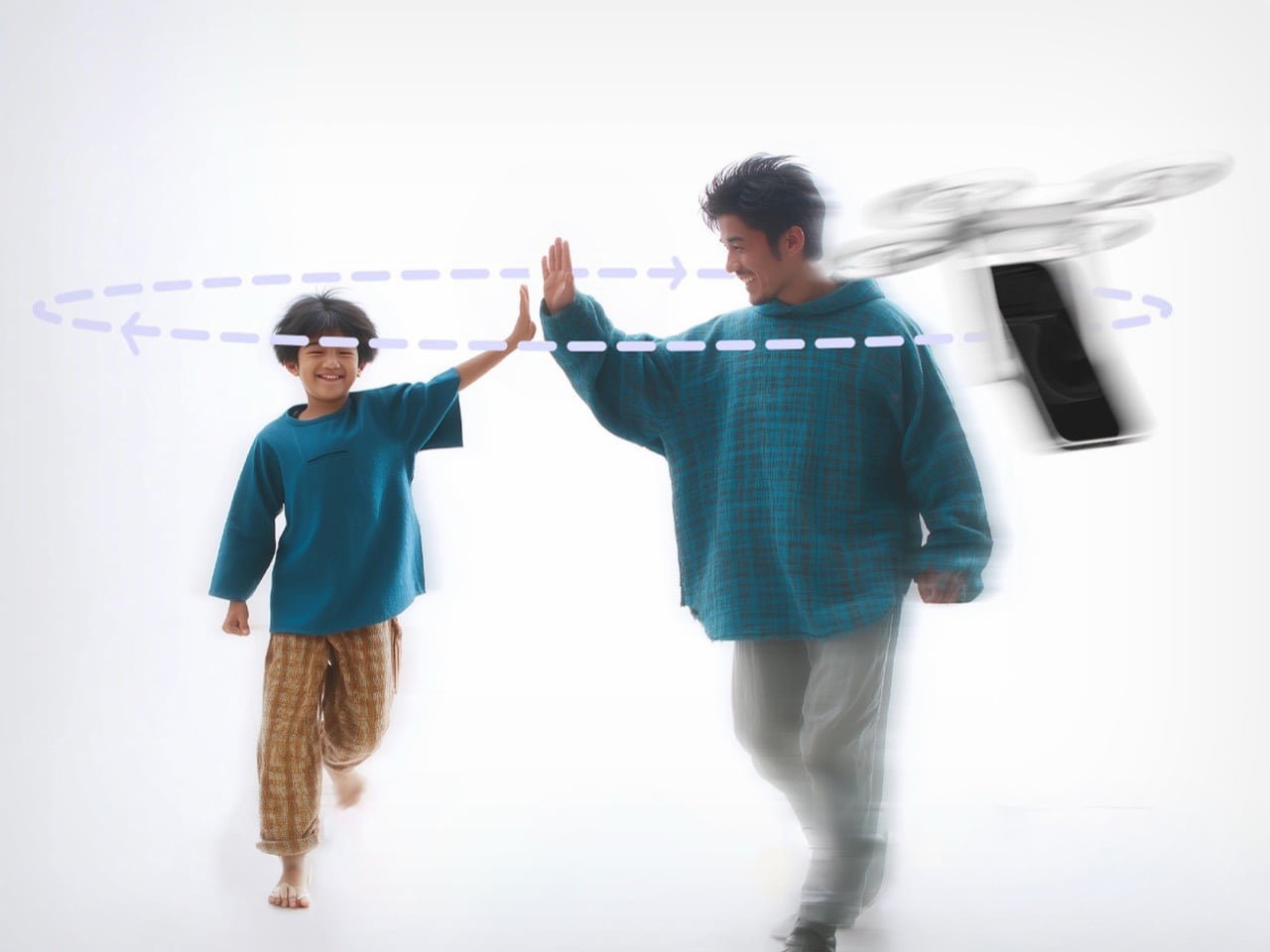
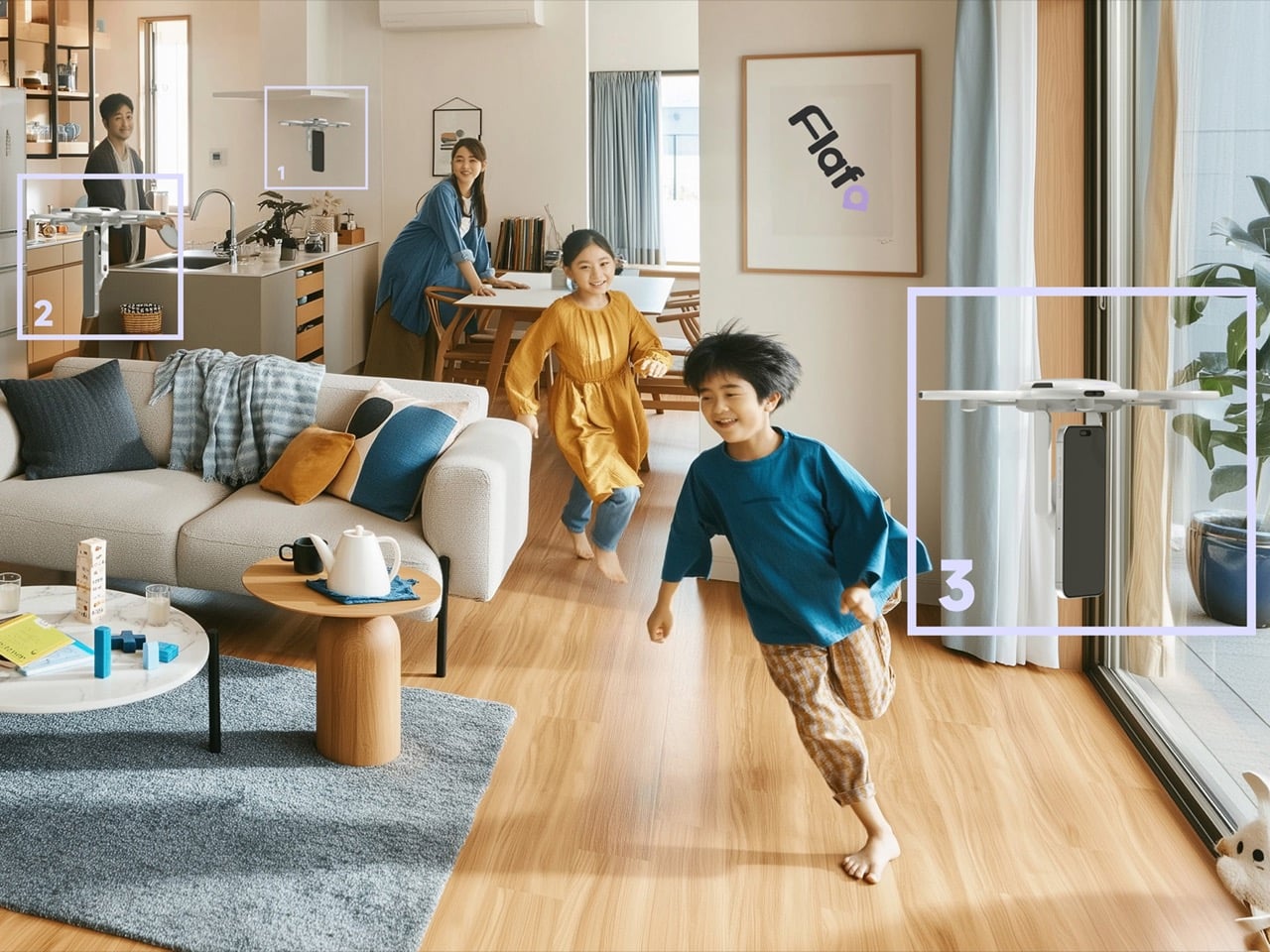
Flafa proposes the analog answer to the same question. A concept from Kaiyuan Liu and four classmates at the Guangzhou Academy of Fine Arts, it’s a small quadcopter that carries your phone into the air so the camera can hold its own position while every human stays put. The phone snaps onto a magnetic pad below four fully enclosed rotors, hangs face-out, and records while the drone flies itself. It won its category at the 2025 European Product Design Award. Same problem, opposite philosophy: Google removes the photographer with software, Flafa removes them with lift.
Designers: Kaiyuan Liu, Qiushi Wang, Yan Wang, Shiqi Liu & Xiaoyi Chen
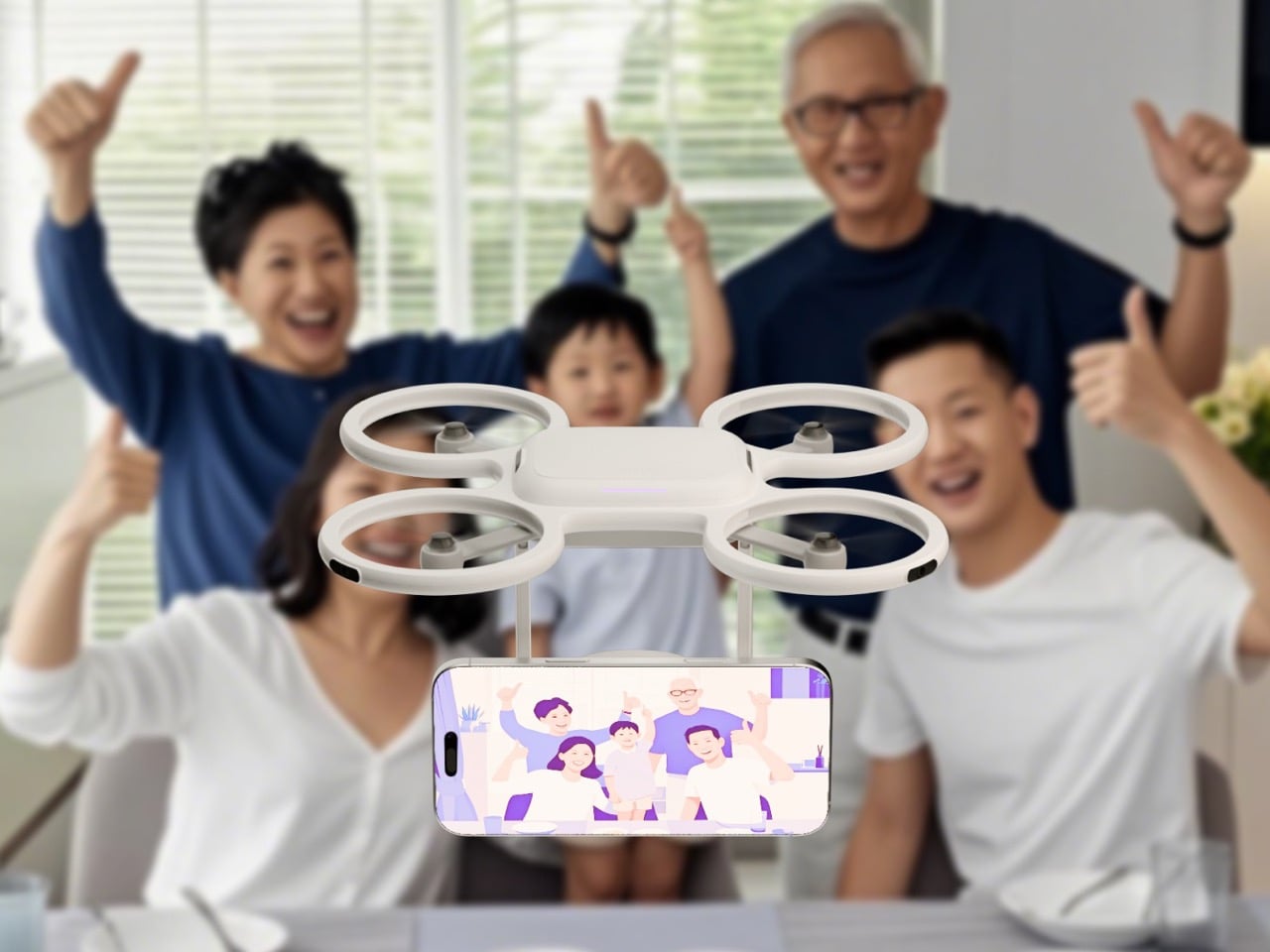
Selfie drones have failed so many times that the category has a graveyard. AirSelfie tried in 2017. Snap’s Pixy launched in 2022, died four months later, and was recalled in 2024 because the batteries caught fire. They all lost for the same reason. A drone light enough to fly indoors cannot carry a camera that beats the phone already in your pocket, so you buy a flying camera, fly it twice, and quietly retire it to a drawer. Flafa declines that fight entirely by bringing no camera at all.
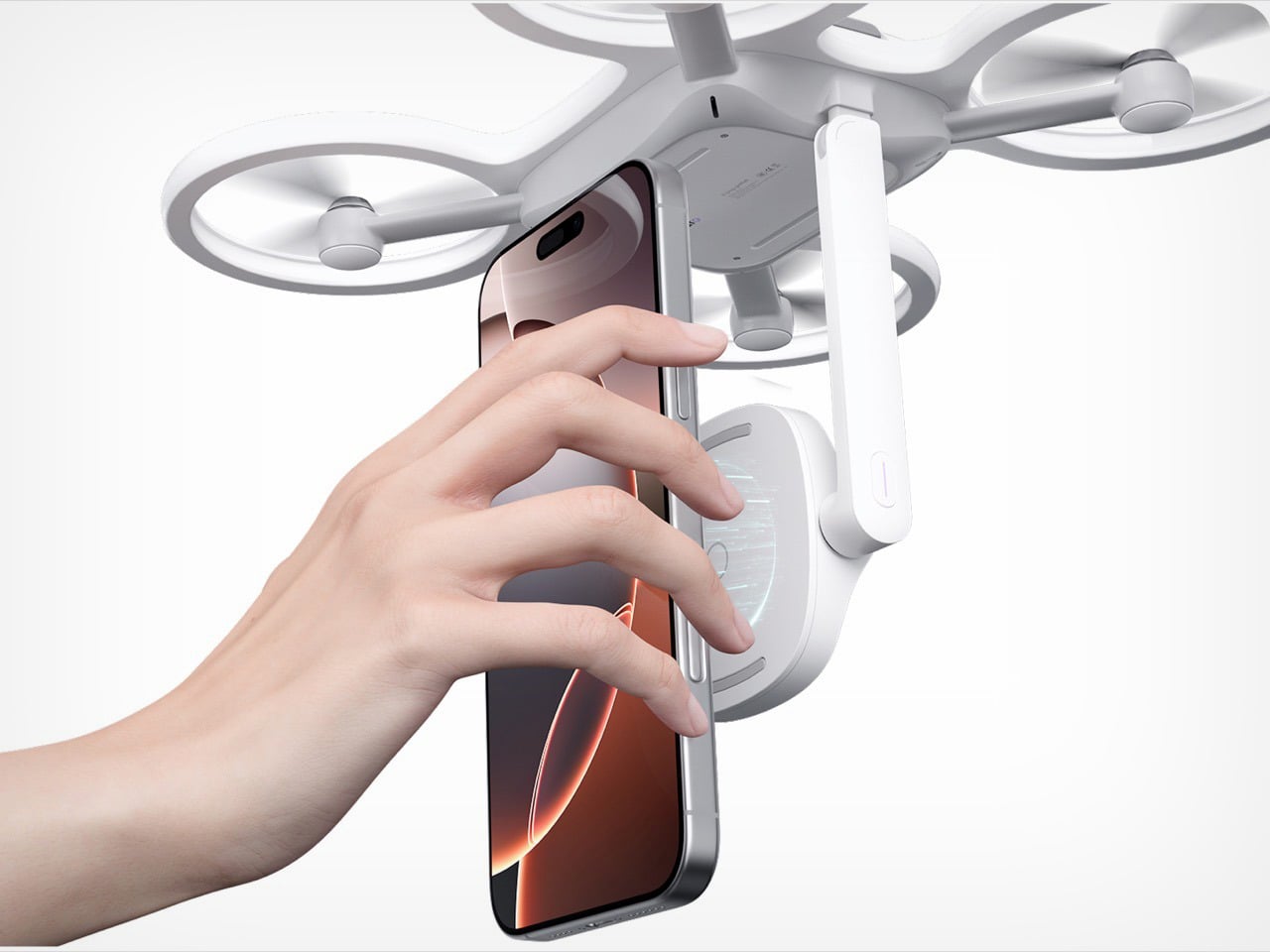
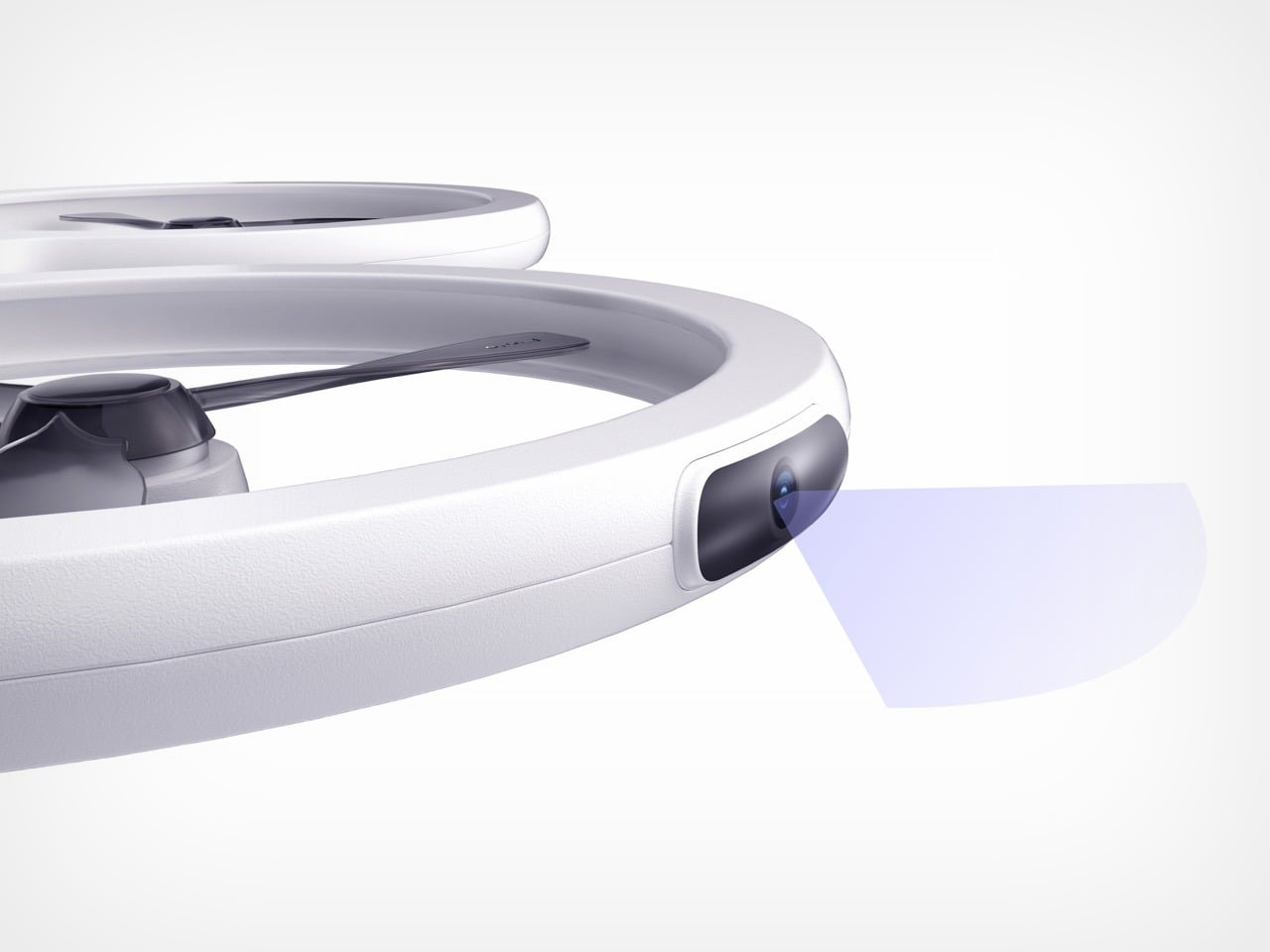
Two small sensor windows sit on the front propeller shrouds, giving the drone its own eyes for navigation while your phone dedicates itself to recording. That division of labor is the smartest thing in the whole project. Most flying cameras ask one sensor to handle obstacle avoidance, subject tracking, and image capture simultaneously, and it shows in the footage. Here the quadcopter worries about the ceiling fan and the phone worries about your kid’s face, which is roughly how you’d split the job if you had two people.
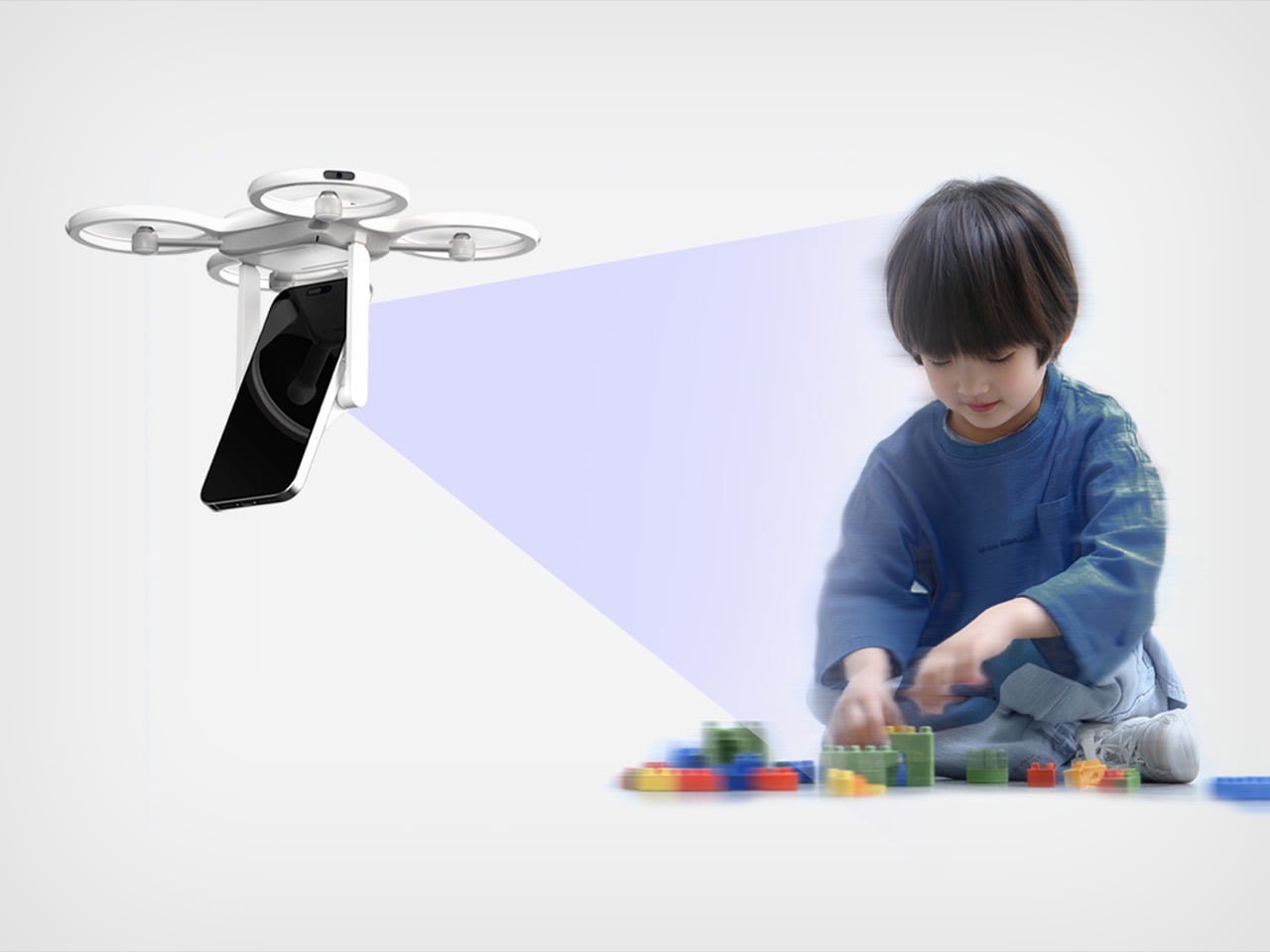
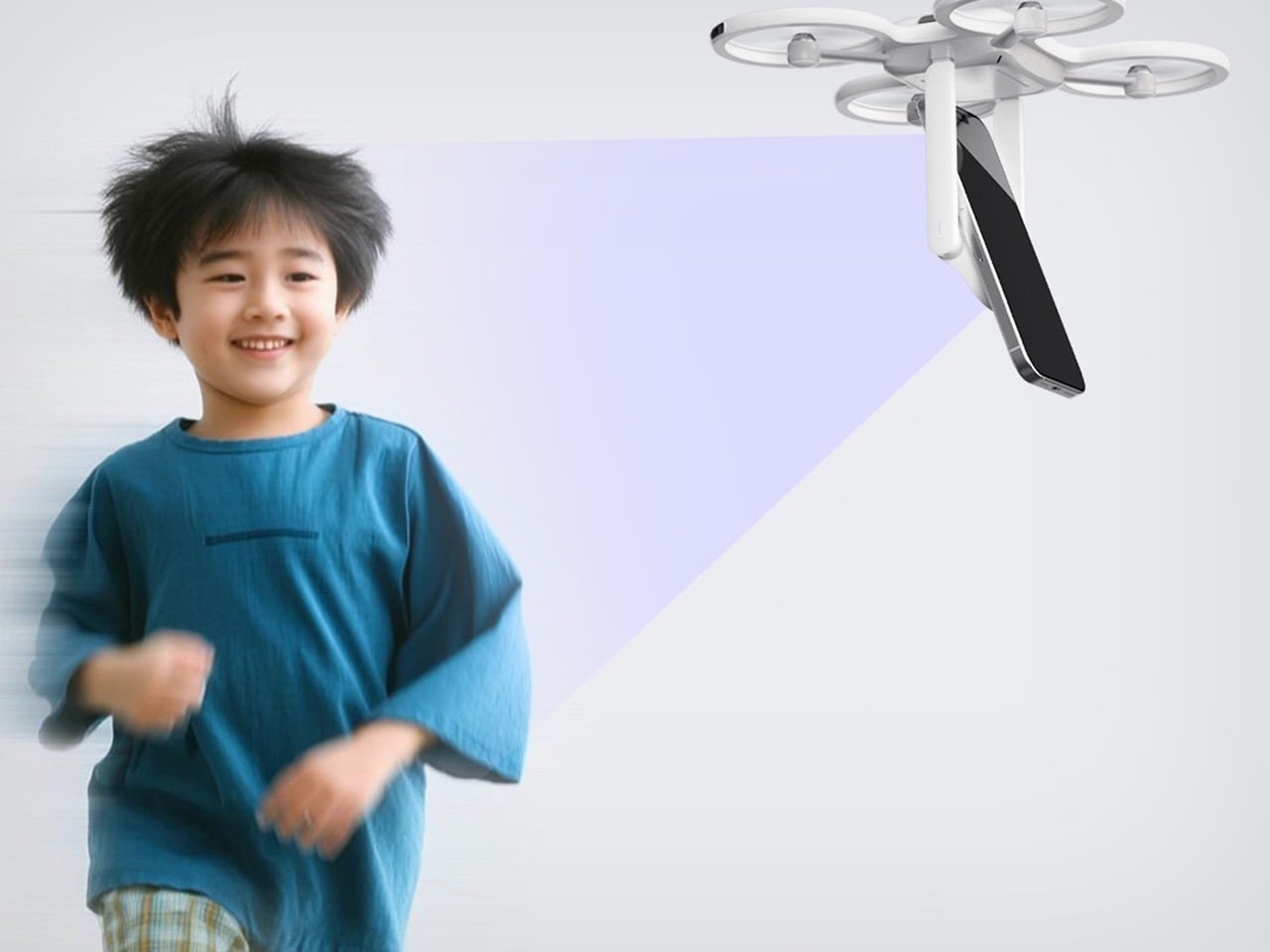
Somebody on this team understood that a drone meant to hover near a toddler cannot look like drone. The renders show warm oat cream, soft radii, matte surfaces, and not one visible screw, putting Flafa closer to a Muji humidifier than to anything DJI has shipped. Consumer drones are almost universally styled for a man in sunglasses on a cliff, all black plastic and angular vents. That grammar makes sense in a camera bag. It makes none in a living room during a birthday party.
The mount deserves credit for paranoia. A magnetic puck holds the phone, and a hinged brace folds along the handset’s edge as mechanical backup, which suggests the team thought hard about a thousand dollars of glass becoming a lawn dart. That said, the physics remains the open question. An iPhone Pro Max weighs around 233 grams, heavier than an entire DJI Neo, and hanging that mass below the center of lift makes a pendulum. The project is called a flying gimbal, but the renders show a hinge rather than an actuated axis.
Student concepts are allowed to be ahead of their batteries. What Flafa gets right is the framing of the problem, and that part is free. Every family album has one person missing, and it’s whoever picked up the camera. Google’s answer is to invent them back in afterward. This one just sends the camera upstairs for a minute.
SHARE