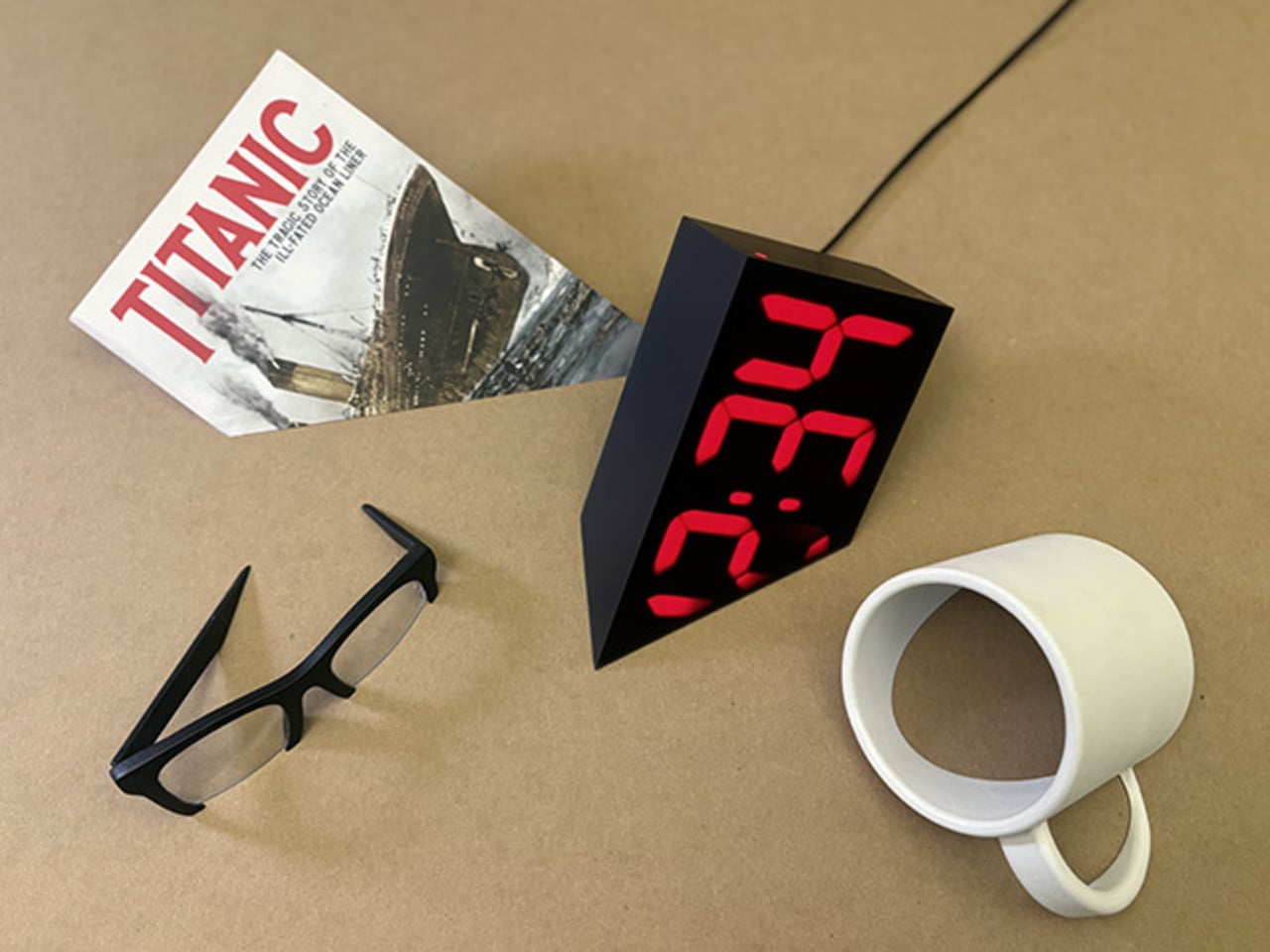
Clock design hasn’t changed much in its fundamentals for generations. The round face, the numbered ring, the hands that sweep from hour to hour, these conventions are so deeply embedded that most people don’t question them. The clock is a functional object, and like most functional objects, its form tends to follow a well-established script. Most designers accept that arrangement. The rare few who don’t tend to produce something genuinely worth paying attention to.
The Sinking Clock started as a self-imposed creative exercise: how much could you distort or take away from a clock without costing it the ability to tell time? That question became a limited-edition timepiece that looks exactly as its name suggests, as if a conventional tabletop clock were being absorbed into the flat surface it’s sitting on, caught mid-sink somewhere between this world and whatever lies below it.
Designer: Ross McBride
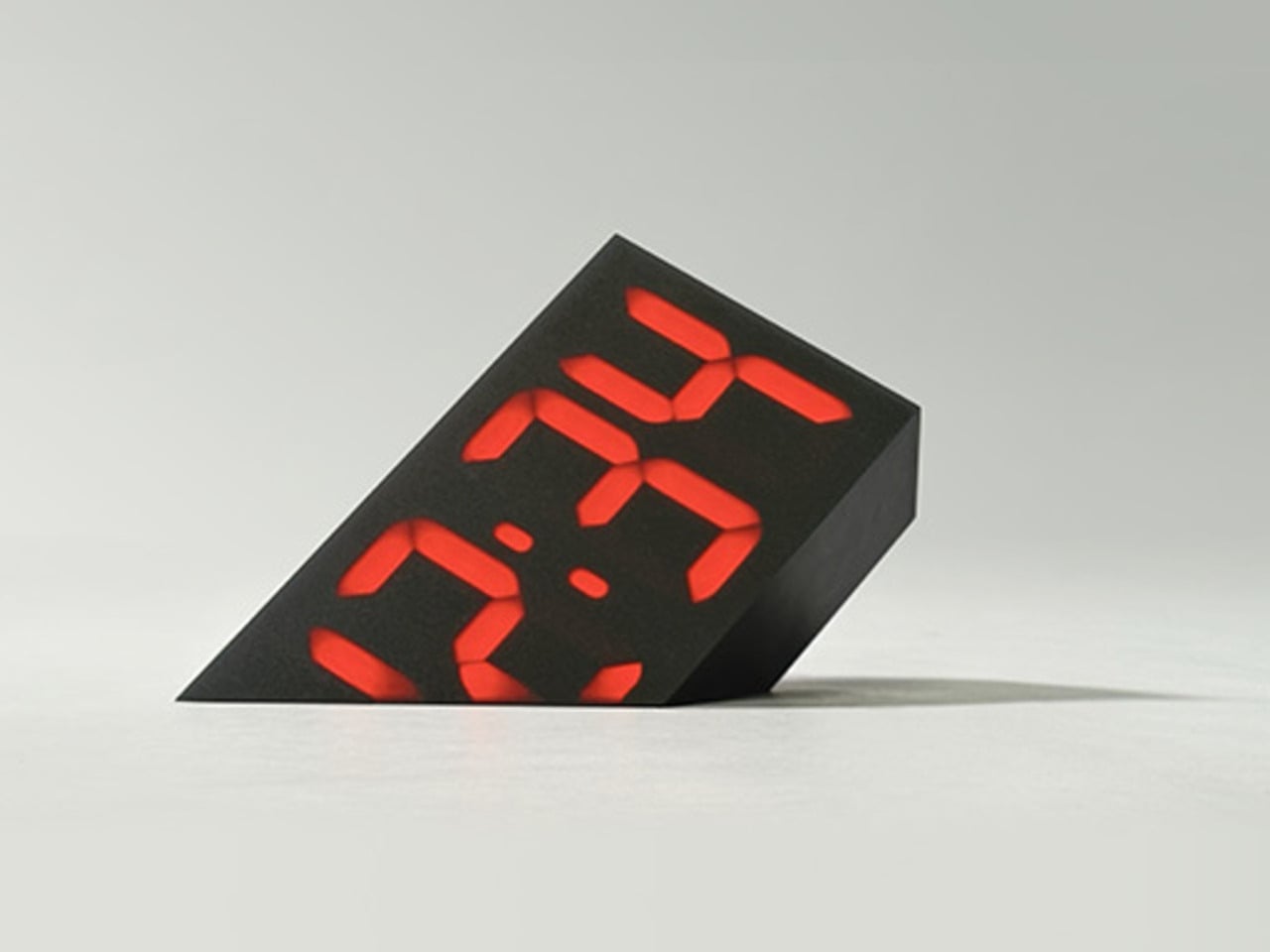
That effect isn’t achieved through software or projection. The clock’s own form is sculpted to create the impression that it’s disappearing into the surface it rests on. The lower portion dissolves into the plane of the desk while the readable face stays above. It’s deliberately disorienting, giving you the time while making you question what you’re actually looking at. The object reads as a clock and as something else entirely at once.

The philosophy behind it is that a clock doesn’t need to announce itself. Most homes and offices already have enough of them, ticking as quiet reminders of every passing hour. The intent was to make something that gives you the time when you need it but otherwise recedes, functioning more as a kinetic object than a conventional instrument. It’s there when you need it and something quieter when you don’t.
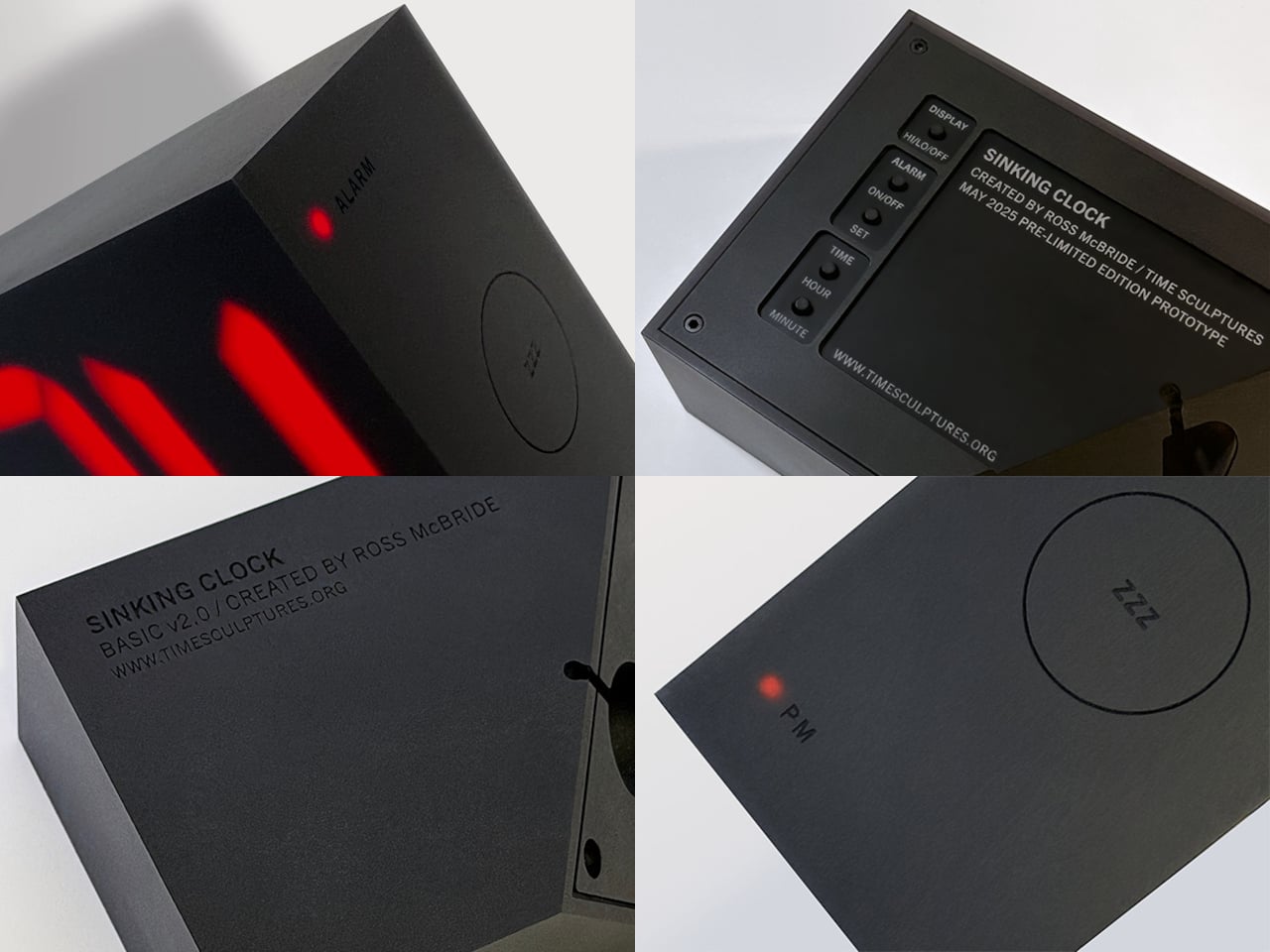
The body is constructed from gold PVD steel, giving it a warm finish that sits somewhere between industrial and refined. The movement is quartz and battery-operated, with nothing to wind and nothing to plug in. At 19.14cm x 15.39cm x 13.37cm, it fits comfortably on a desk or nightstand without dominating the space around it. Each piece is handmade to order, numbered, and can be personalized, meaning no two feel entirely alike.
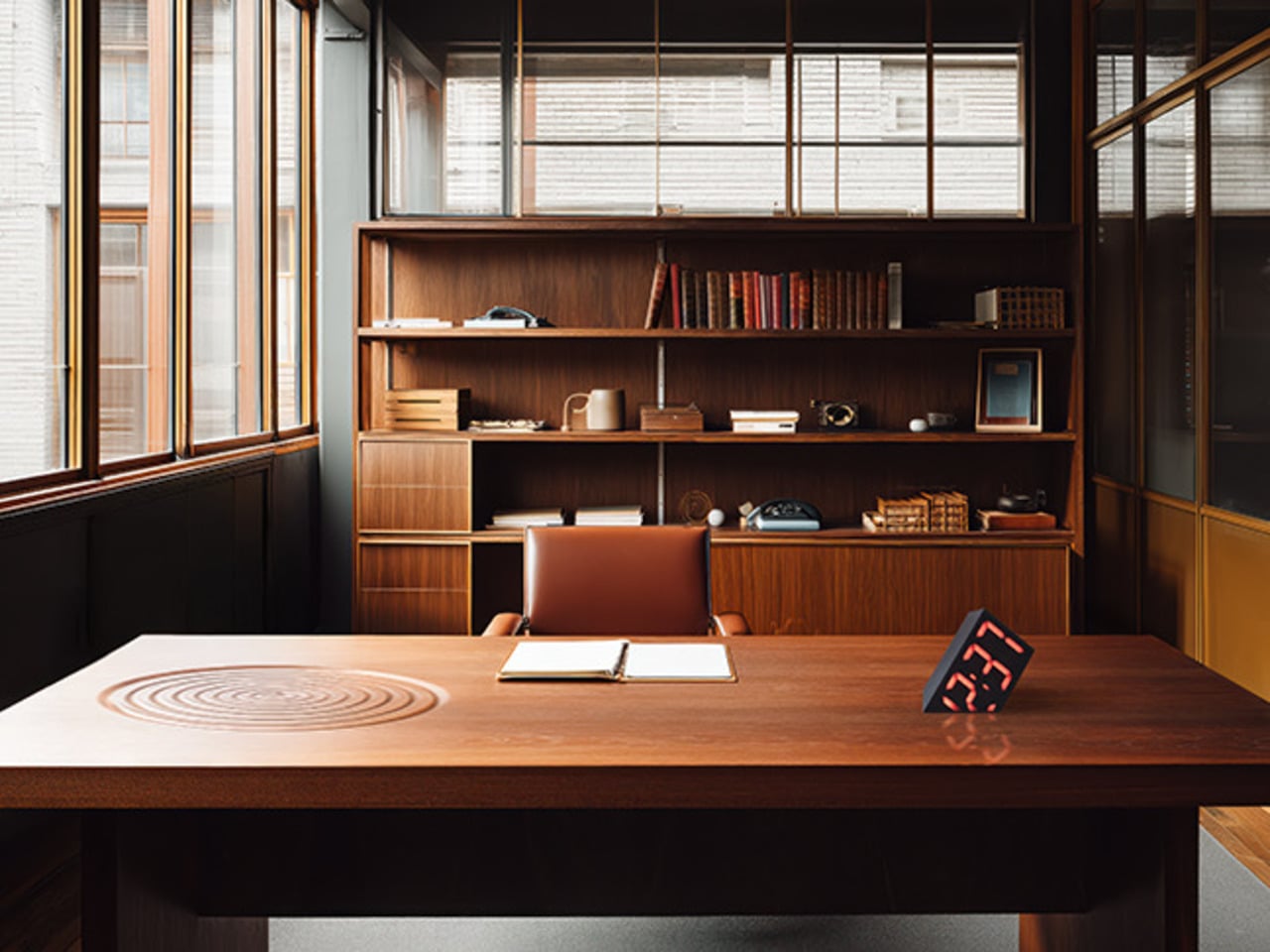
On a bedside table, it does something most clocks don’t: it draws attention not for how loudly it announces the time, but for how strangely it sits there. On a desk, the same thing happens. You notice it, look closer, and the question of how it works starts to matter more than whatever hour it’s currently showing. That quality is either an annoyance or a distinction, depending on how much you appreciate being puzzled by an object.

The Sinking Clock is a handmade piece in an era when handmade things are genuinely rare in the product world, shaped by mid-century American design sensibility and Japanese minimalism in equal measure. The result doesn’t feel like either tradition directly, which is part of what makes it difficult to place in any familiar category. For a clock, that might be the most interesting thing it can be: useful and genuinely puzzling at the same time.