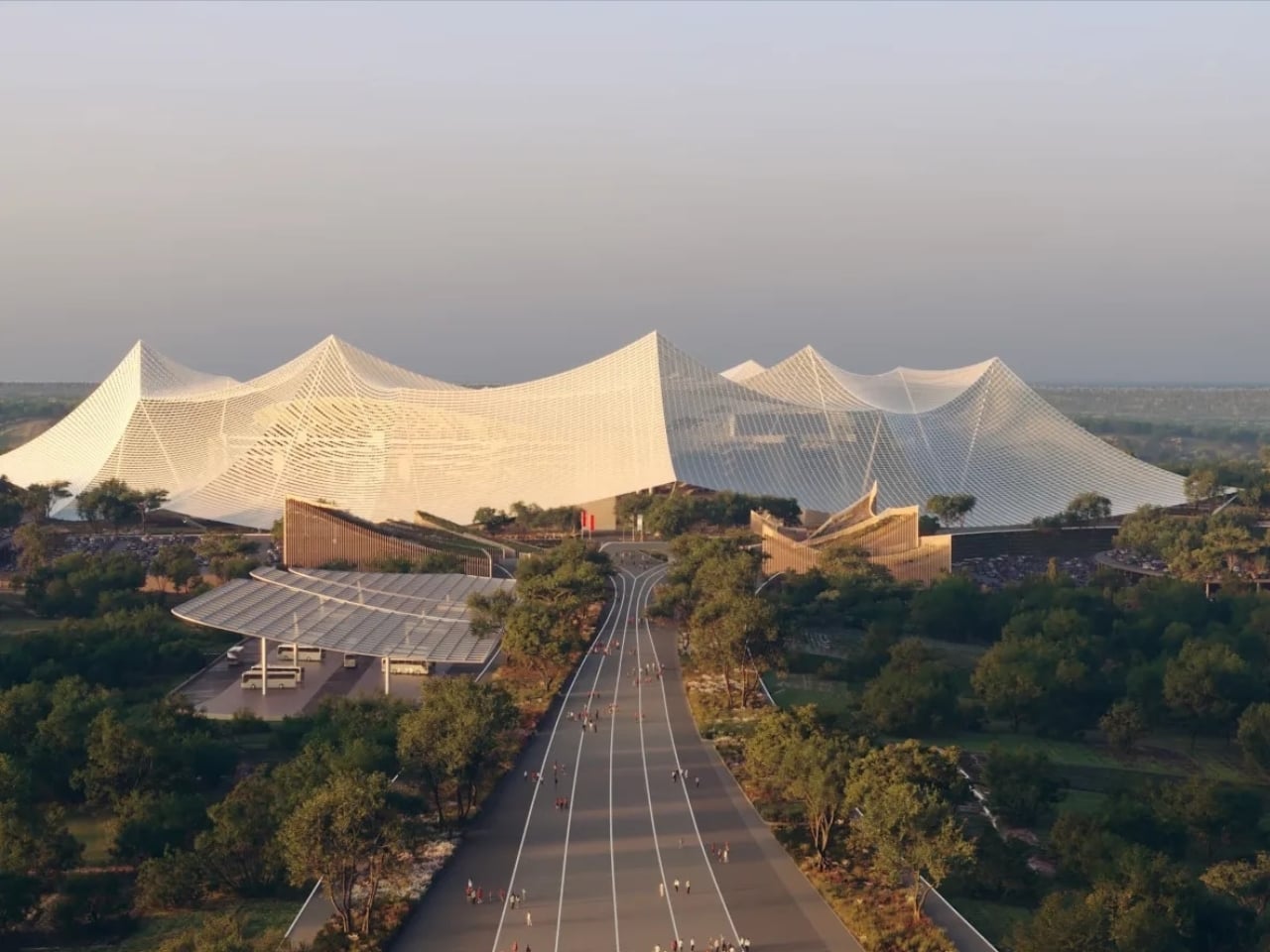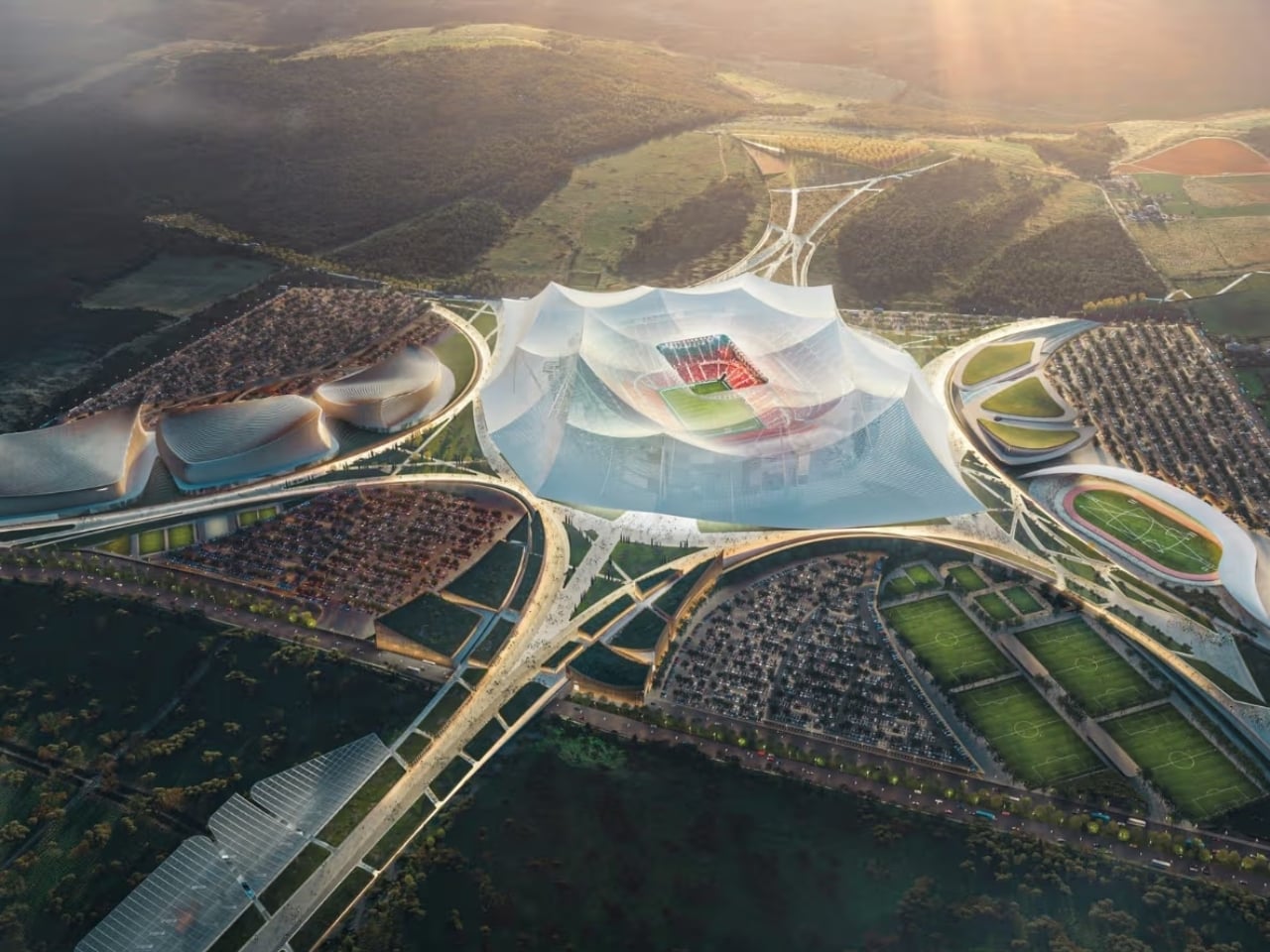
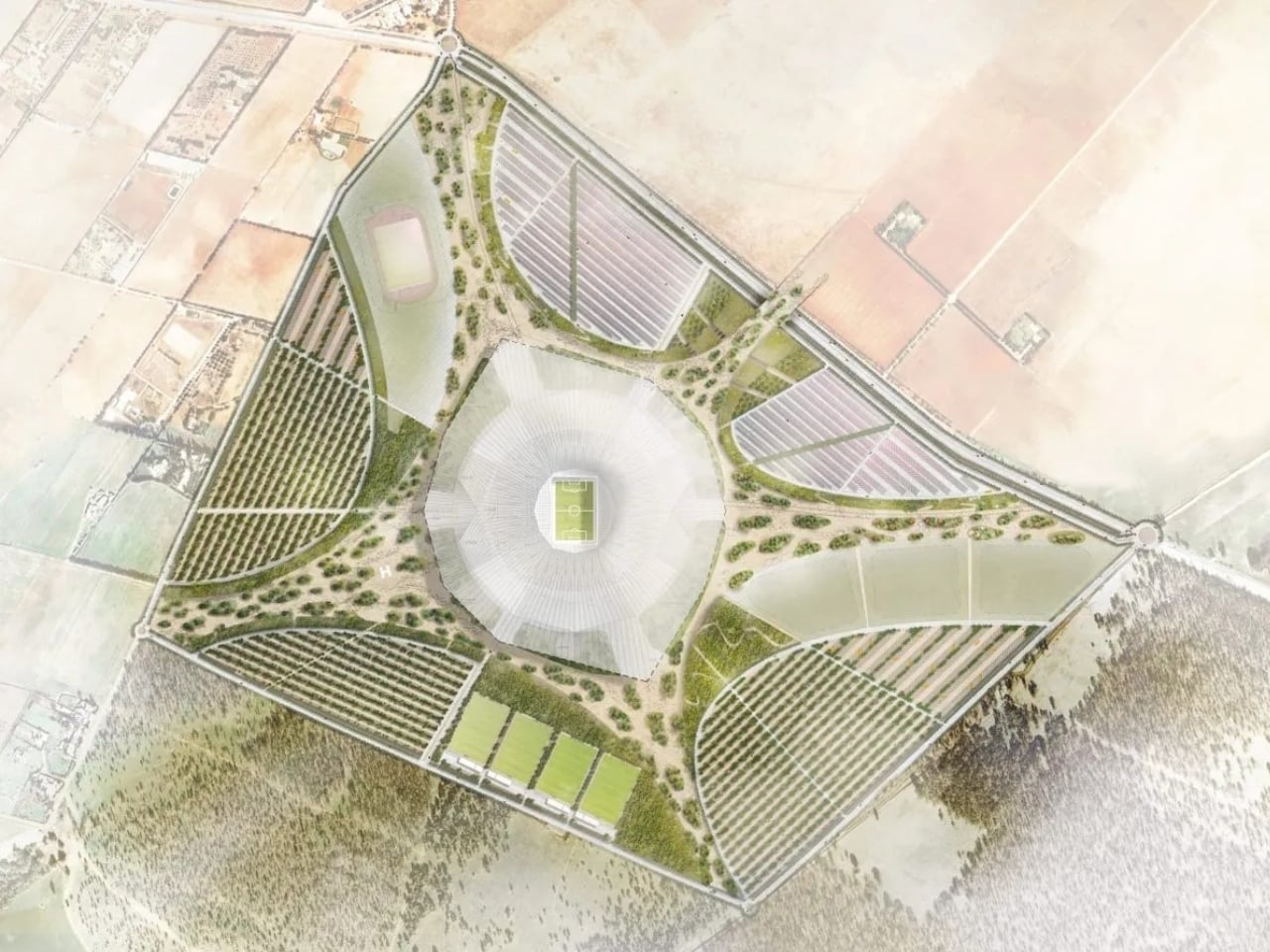
When Morocco and Spain co-hosted the 2030 World Cup bid announcement back in 2022, Grand Stade Hassan II was the kind of promise that sounded almost too big to keep. A 115,000-seat stadium shaped like a tent, rising from a forested site 38 kilometers north of Casablanca, designed to become the largest purpose-built football venue on the planet. You could have been forgiven for filing it under “ambitious concept” and moving on.
That filing cabinet is looking a little embarrassed right now. Nine months into active construction, Grand Stade Hassan II is approximately 30% complete, with around 40% of its tribunes already built. The team is operating across three continuous shifts a day, seven days a week, targeting full completion by the end of 2027. For a stadium of this scale, that is not a slow-burn project. That is a sprint, and by all accounts, it is on pace.
Designers: Oualalou + Choi and Populous
Morocco has committed roughly €1 billion in public funding to the project, with Phase 2 construction carrying a budget of $320 million alone. A $35.6 million earthworks package was awarded to local firm SGTM and is near completion. New highways and rail links are being built alongside the stadium to handle the infrastructure demands of 115,000 people arriving for a match. When you commit at that level, you are not hedging. You are building for a legacy.
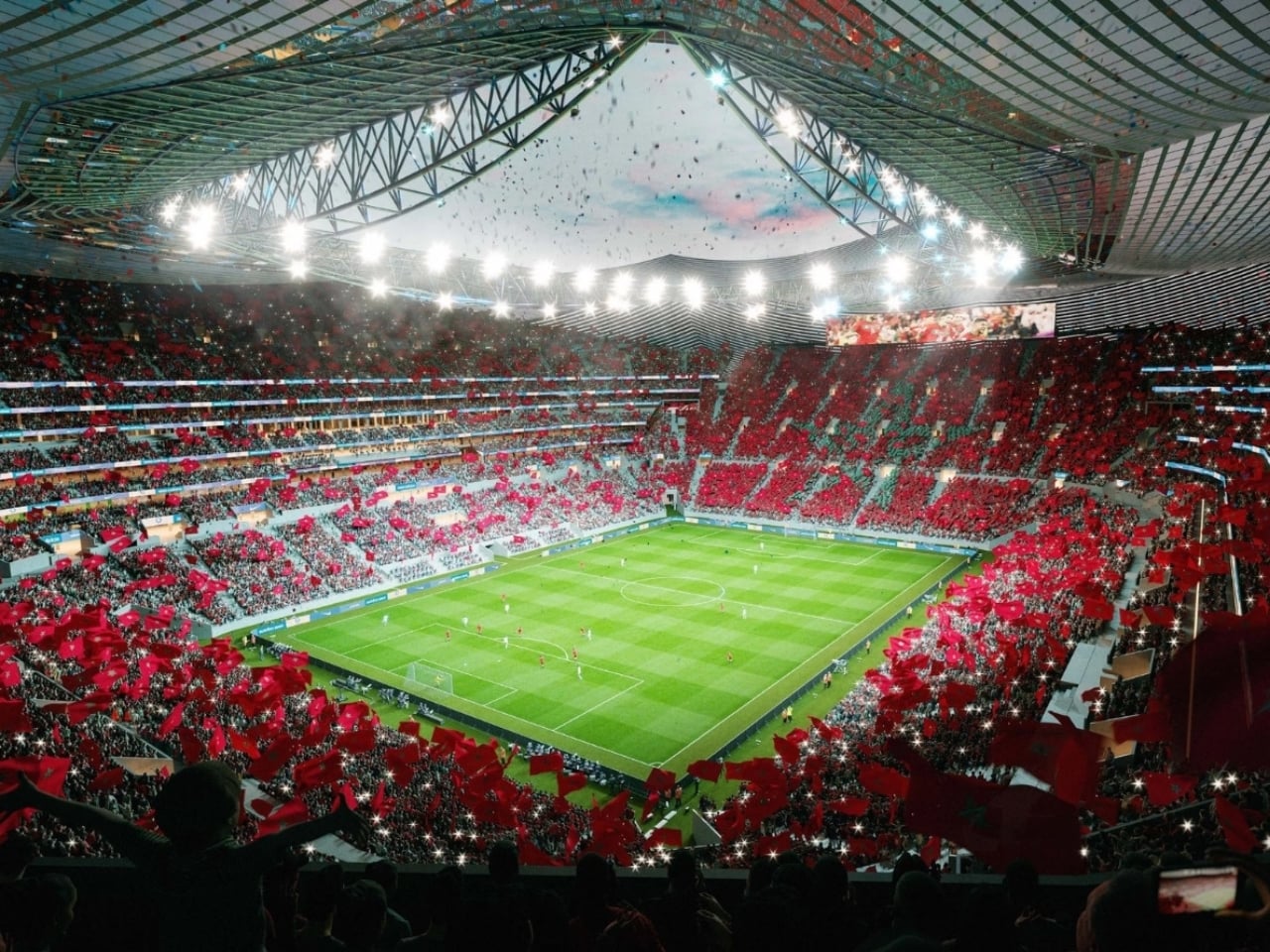
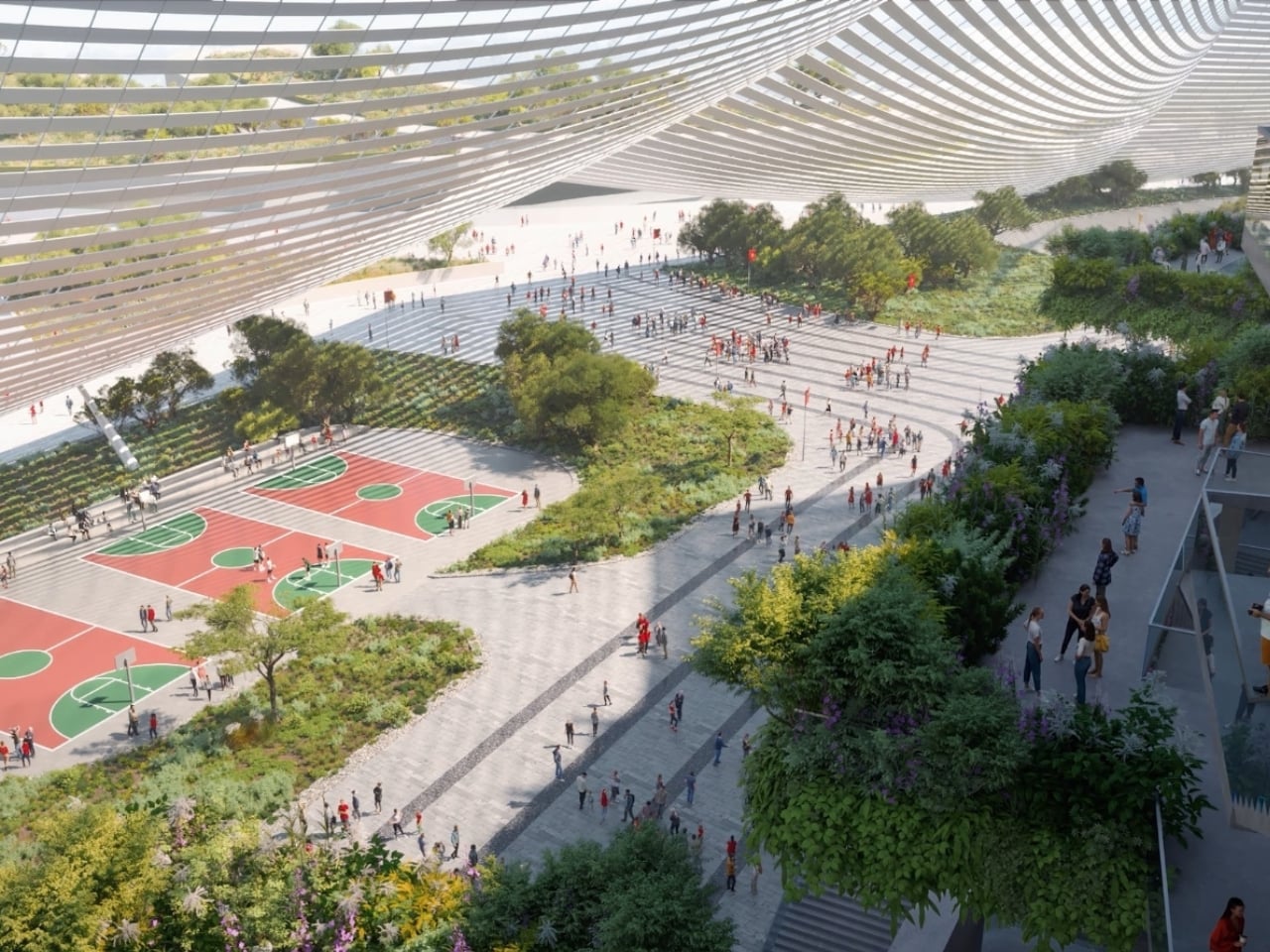
The design itself was covered here when it was first announced, but seeing it move from render to reality changes what you’re looking at. Populous and Oualalou + Choi built the concept around the idea of arrival over access, where the experience begins well before anyone finds their seat. Gardens, shaded walkways, and vast public concourses sit beneath a continuous aluminium canopy, elevated platforms bring greenery 28 metres above ground, and the whole structure feels more like a destination than a stadium. Renders only go so far. Construction footage is different.
What’s changed since the announcement is the stakes. For a long time, the 2030 World Cup Final looked like a formality for Real Madrid’s Estadio Bernabeu. Spain co-hosting the tournament made that assumption feel almost automatic. But as Grand Stade Hassan II has moved from concept to construction with speed and seriousness, the conversation around the final has quietly shifted. Sources cited by The Athletic have noted that Casablanca is now a genuine challenger, with Morocco’s investment and its growing influence within global football making what once looked like a straightforward decision into something far more competitive.
I’ll be upfront: I want Morocco to host the final. Not because of any particular rivalry with Spain, but because the moment Grand Stade Hassan II opens, it will be unlike any stadium that has ever hosted a World Cup final. The Bernabeu is iconic. Camp Nou is historic. Grand Stade Hassan II would be something with no real comparison, a stadium built from cultural memory, designed as a gathering place rather than just an arena, and carrying with it the full weight of a country’s decades-long pursuit of this exact moment.
Morocco first proposed a major Casablanca stadium in its bid for the 2010 World Cup. Then again for 2026. Both times, the bid fell short and the stadium remained a drawing. This is the third attempt, and unlike the previous two, the cranes are actually there.
After the 2030 tournament, the stadium will become home to Raja Club Athletic, Wydad Athletic Club, and the Moroccan national team. The €1 billion investment doesn’t disappear after the closing ceremony. It stays, and it becomes the foundation for football in a country that has spent a generation proving it belongs at the top table. Whether FIFA ultimately awards Morocco the final or not, Grand Stade Hassan II is real, it is rising, and it is moving faster than almost anyone expected. Some big promises actually get kept.