Rocking horses have one unspoken rule that nobody ever actually wrote down anywhere, you just absorb it by osmosis. The thing has to be wood. Carved wood, painted wood, distressed vintage wood, it doesn’t matter, but wood, always wood, like it’s baked into the toy’s DNA at a genetic level. Kids’ chairs went plastic decades ago, strollers went full aerospace aluminum, even cribs have cycled through a dozen material phases, but rocking horses just sat in the corner being wooden and judgmental about it. Nobody questioned it because nobody had a reason to. Then somebody finally did.
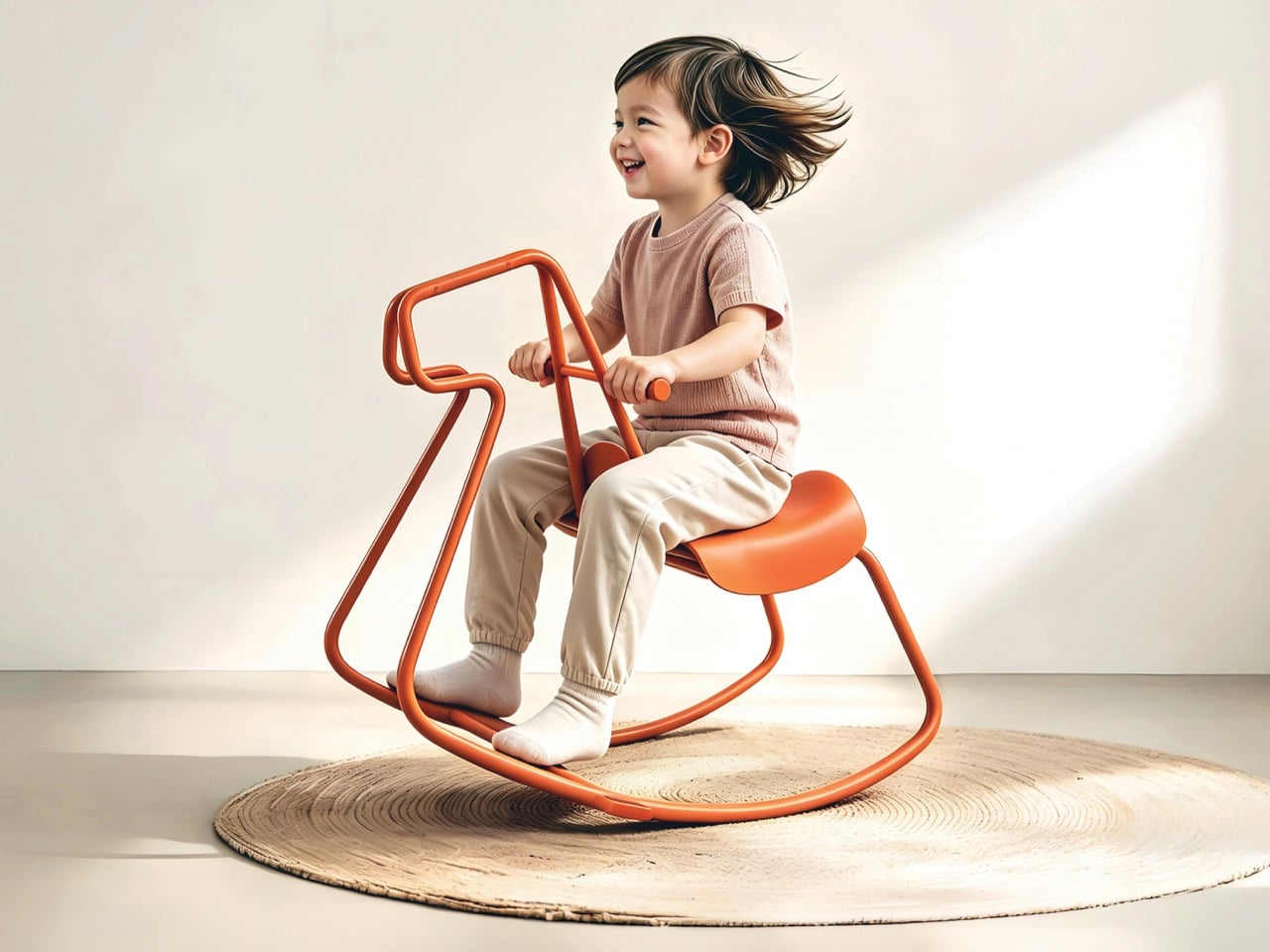
PonyGo, designed by Wang Suoling at Shandong University of Art & Design, drops the lumber and builds the hobby horse entirely from bent metal tube. No carved mane, no wood grain, just one continuous loop forming the head, the handlebar, and the rocker base. It won a Red Dot Award in the Design Concept category for 2026, the wing reserved for sharp ideas still ahead of production. The flat-pack frame also claims a 60 percent cut in shipping volume against a standard hobby horse, proof the material swap pulls double duty. Three centuries of wooden horses, and someone finally said no.
Designer: Wang Suoling
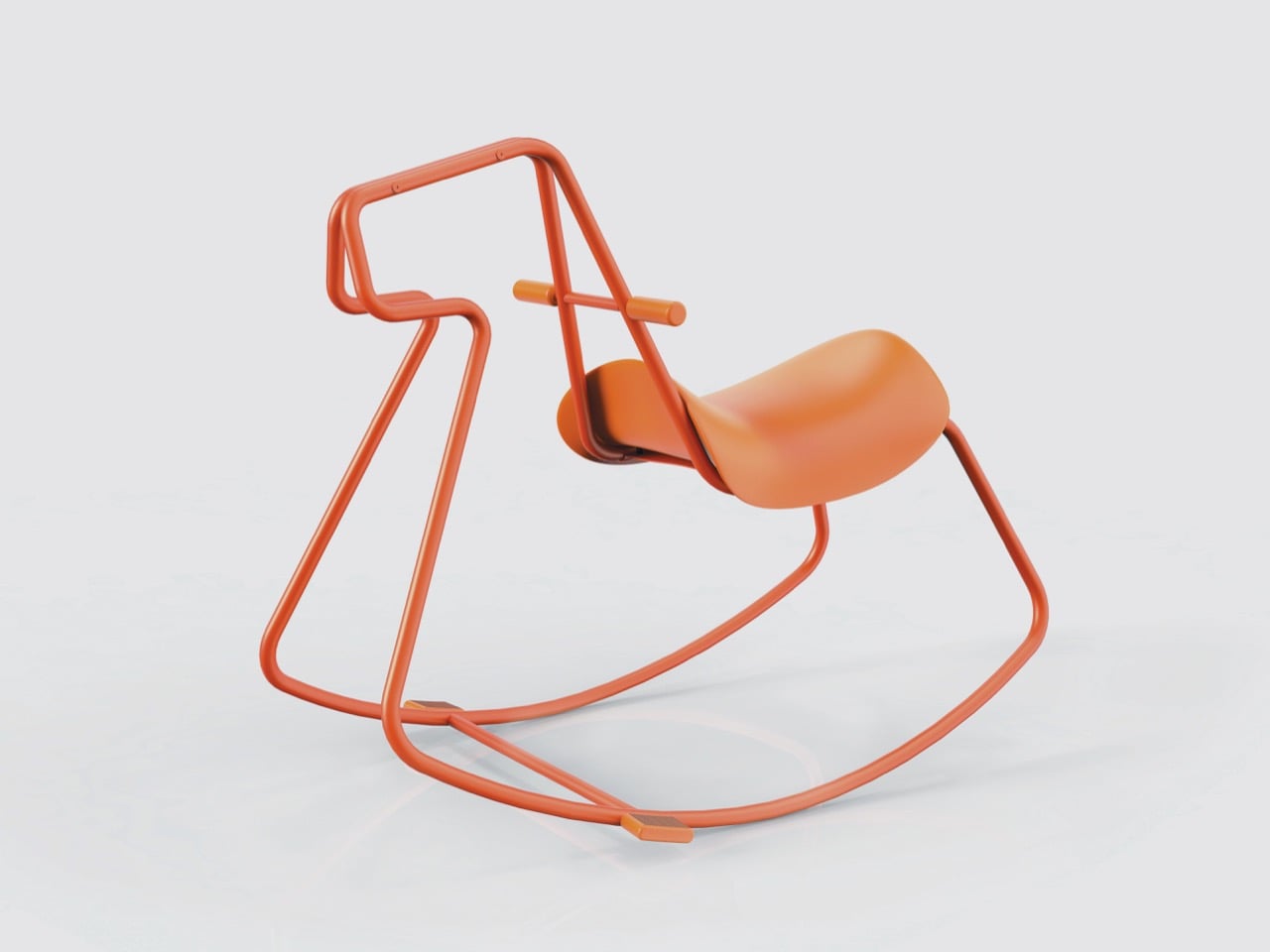
Red Dot splits its program into three separate competitions, Product Design, Brands & Communication Design, and Design Concept, and PonyGo sits in the last one. Design Concept exists for ideas that haven’t reached a shelf yet, judged on the thinking rather than a finished supply chain. That means no price, no manufacturer, and no release window attached to PonyGo right now. What you do get is a tidy orange tube frame that already looks production ready, even if production itself stays hypothetical. Concept-stage work like this is basically a design school’s way of testing an idea before committing money.
Red Dot has seen this exact toy reinvented before, never quite like this. Googy won in 2012 by turning the rocking horse into something plush and nearly impossible to tip over, all soft edges and cushioned bulk. Horse won in 2019 by going the opposite direction, carving a Corian shell into a Scandinavian-minimalist silhouette so reduced it barely reads as a horse anymore. Both treated the rocking horse as a solid object, built once and kept forever. PonyGo breaks from that lineage by treating the horse as a kit to assemble rather than an heirloom to inherit.
IKEA proved decades ago that packaging constraints can reshape a design category, after a table got its legs removed just to fit in a car trunk. That single fix spiraled into flat-pack becoming the default logic for mass furniture, trading carved solidity for tubes, flat panels, and Allen keys. PonyGo runs the same playbook on a toy that never got the memo. Bent tube happens to be the one material that lets a hobby horse disassemble cleanly, snap back together, and still hold a kid’s full body weight mid-gallop. Wood never had a flat-pack mode, maybe why this toy sat untouched for three centuries.
PonyGo remains a concept winner, with no production toy on shelves yet, worth remembering before getting attached to the render. What it does prove is that rocking horses had a second material option sitting right there the whole time, untouched for three centuries. Metal tube skips the warmth of a sanded wooden mane, but it buys something wood structurally cannot, a toy that folds flat and survives a warehouse shelf. Somebody at Shandong just handed every toy designer still reaching for lumber an obvious dare. Wood’s unchallenged run on this particular toy just found its first real competitor.