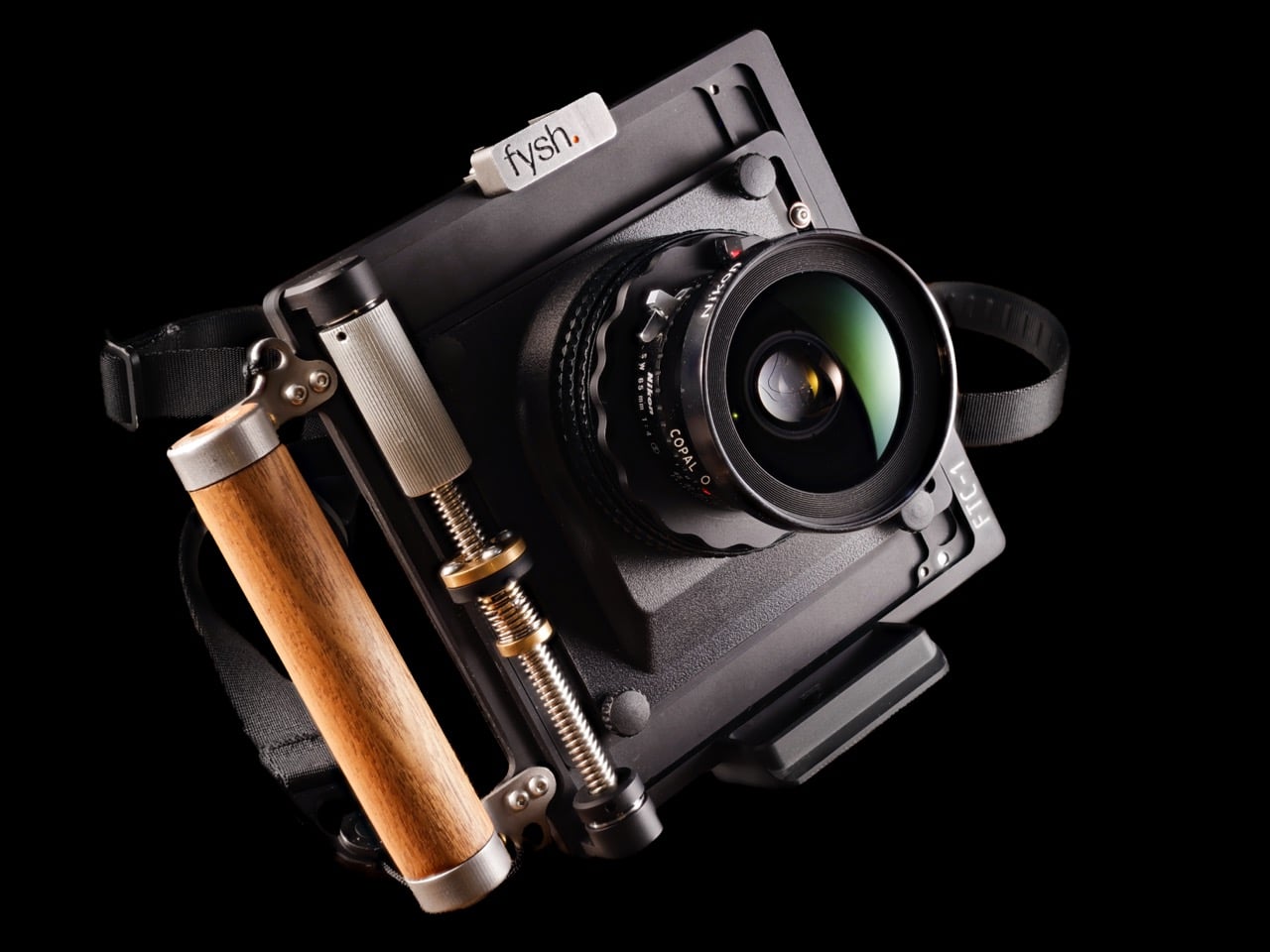
Point your phone at a tall building and snap a photo, then look at it. The whole thing is leaning back like it’s trying to dodge a punch, and that effect has a name: converging verticals. Architecture photographers have spent about a century fighting it with view cameras and shift lenses, which tend to be heavy, pricey, or both. Lachlan Fysh, a Melbourne designer with a serious building habit, decided to fight it with a 3D printer, a CNC machine, and a wooden dowel. The result is the FTC-1, a 6×7 film camera that just took Gold for Cameras at the 2025 International Design Awards.
The FTC-1 shoots 120 film on Mamiya RB67 backs and borrows lenses from the large format world, whose oversized image circles leave plenty of room to move. Turn a knob and the lens rises up to 30mm (1.2 inches), keeping the camera perfectly level while the frame slides up to catch the top of the tower. A second mechanism handles 15mm (0.6 inches) of sideways shift, and the back spins between portrait and landscape on magnetic detents. The whole package weighs 2.4 pounds (1.1 kg) and sells for $1,200 AUD, roughly $850. The Swiss cameras that pull off the same trick start in the thousands before you’ve even bought a lens.
Designer: Lachlan Fysh (Fysh Technical)
Metal Only Where It Counts
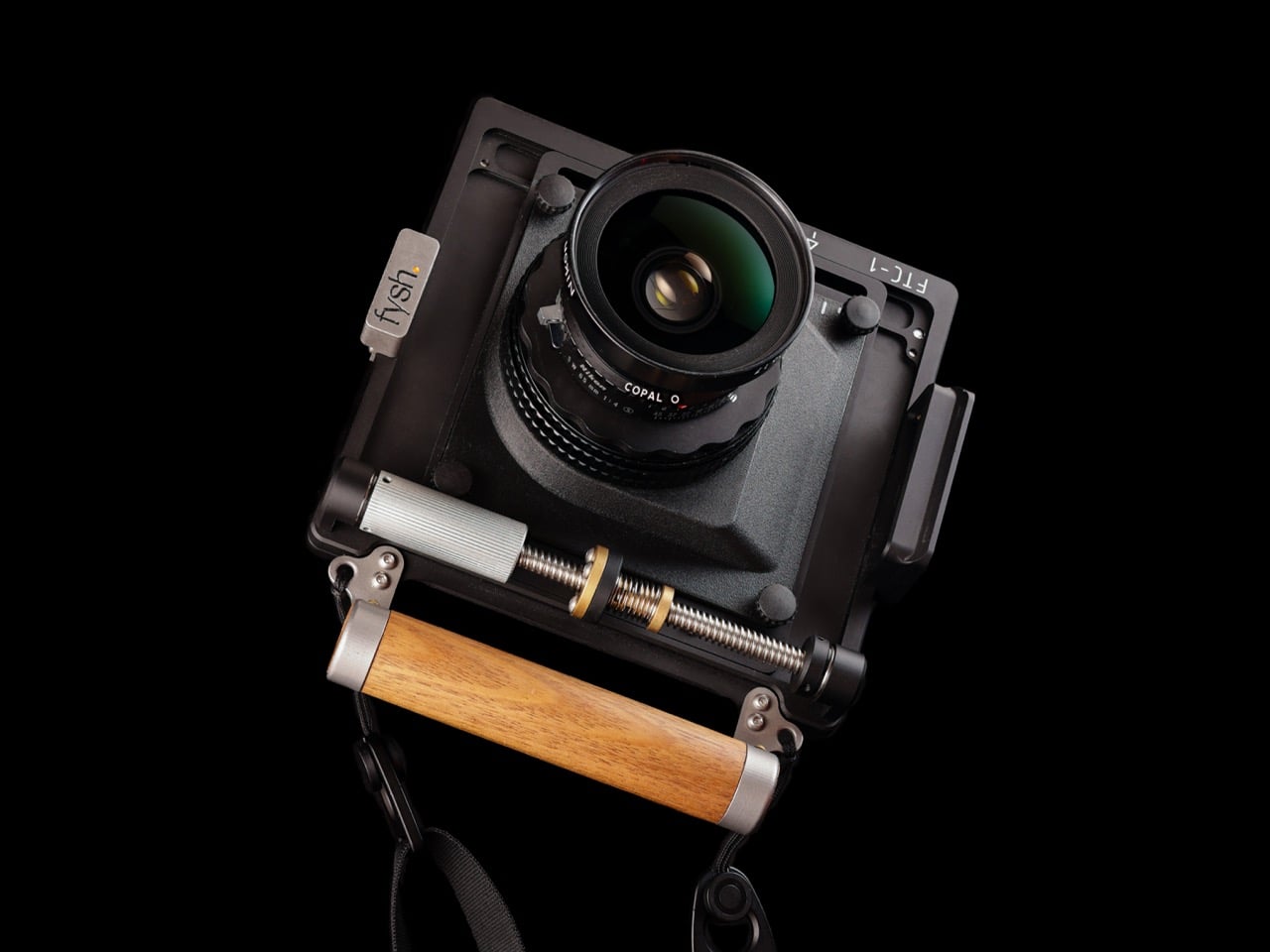
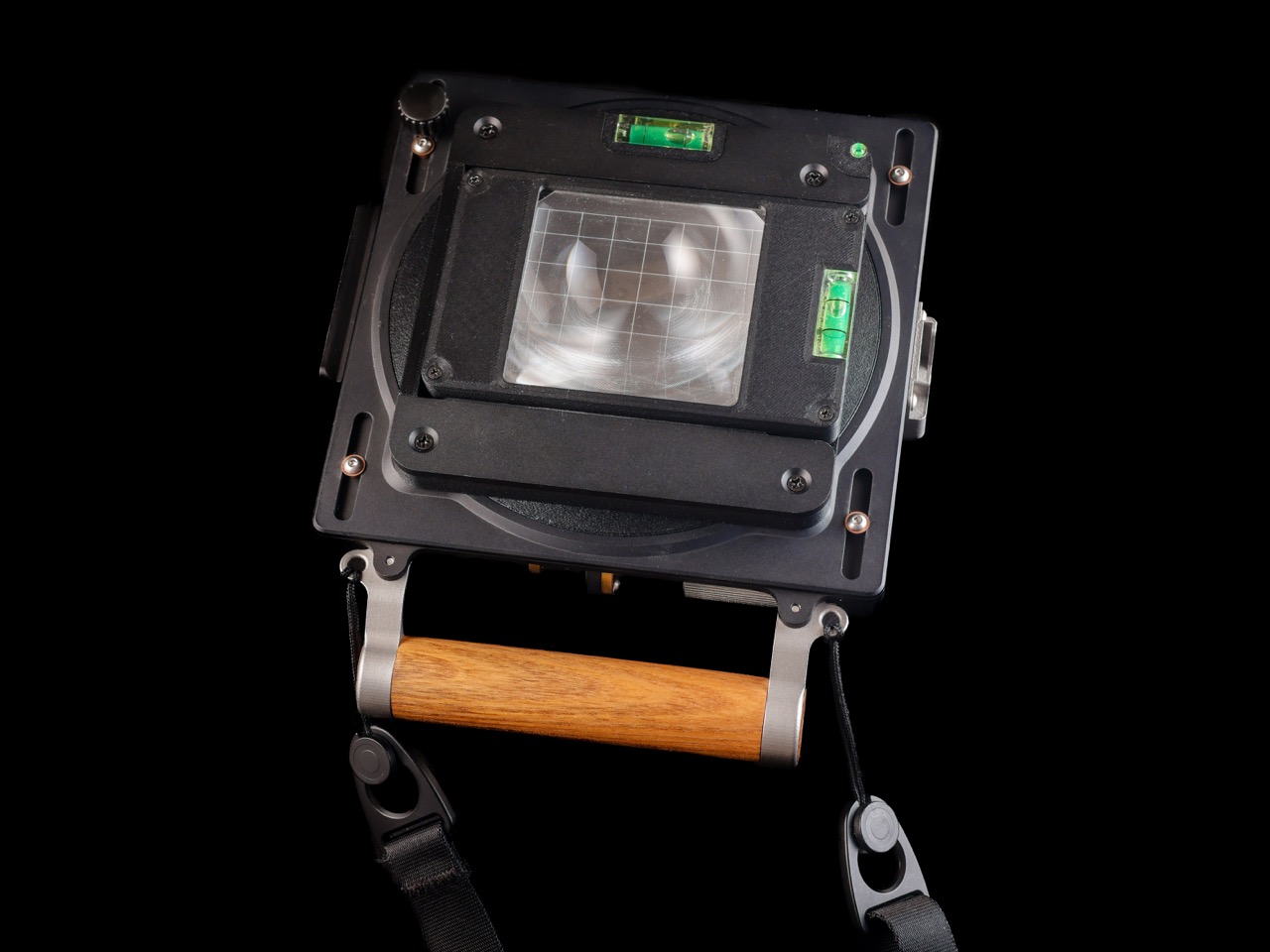
Fysh’s first prototype was printed entirely in plastic, and it worked surprisingly well until he put it on a tripod. The body would sway for a beat after every adjustment before settling down, which is a dealbreaker on a camera you focus by squinting at ground glass. Over coffee in Japan, Oscar Oweson of Panomicron, who builds his own indie cameras, nudged him toward aluminum. Fysh brought in CNC-machined aluminum plates for the core and tripod base, where stiffness actually matters. Everything that just needs to hold its shape stayed printed, keeping the body light enough for a guy who still shoots from a bicycle.
Machining the FTC-1’s big hollow lens cones from solid metal would leave a mountain of aluminum shavings on the floor, which Fysh disliked on environmental grounds. Printing them uses a fraction of the material and still delivers all the stiffness they need. Because he runs FDM printers at home, he can print a cone to order for whatever lens you own, and reprint one fast if you pick the wrong size. The ring-shaped brackets holding the handle would be a nightmare to mill, so those are 3D printed metal, now titanium for a little weight saving. Even the ground glass is acrylic, which stays flat, survives being dropped, and keeps the price down.
A 3D Printer Part in Disguise
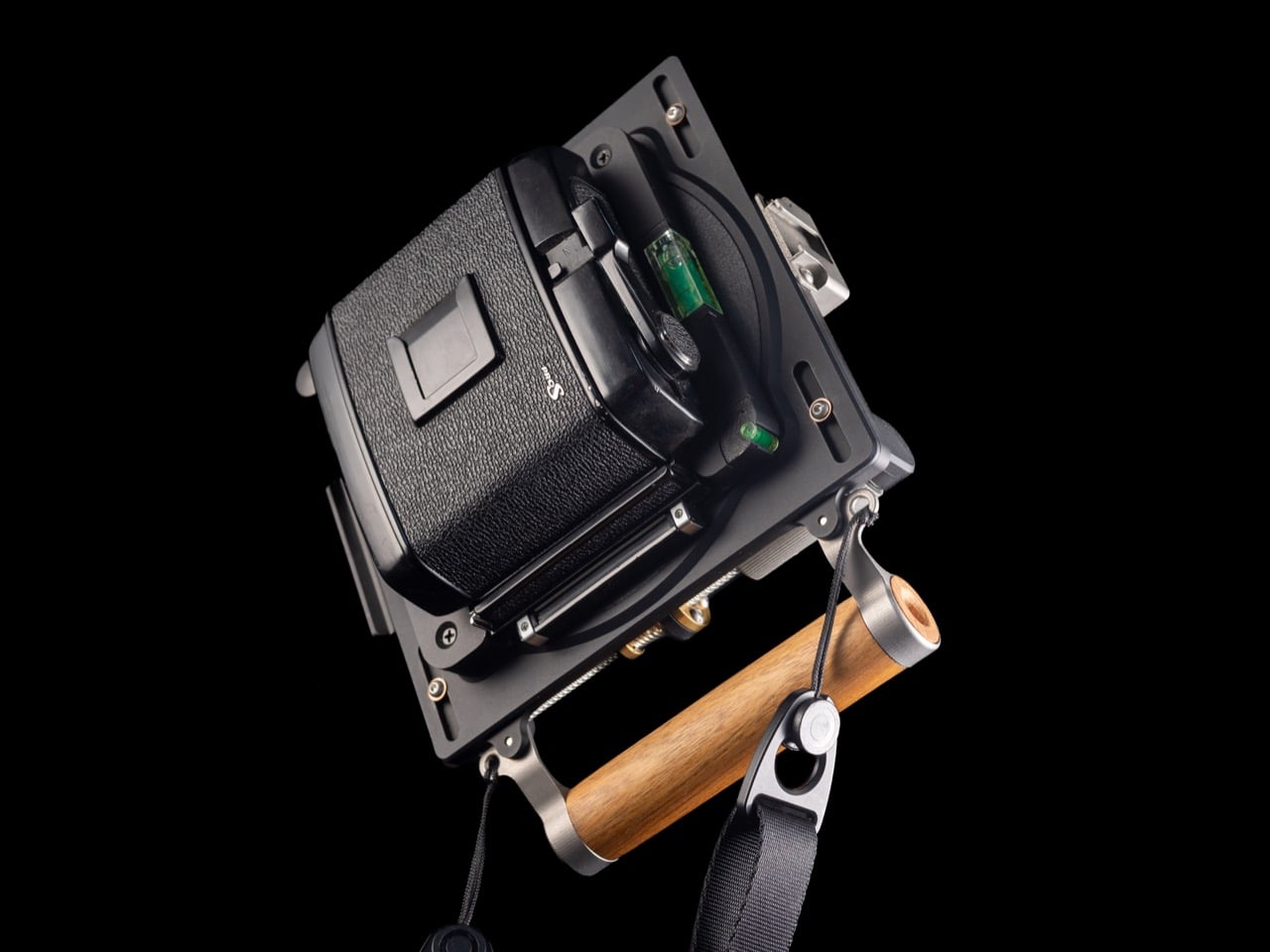
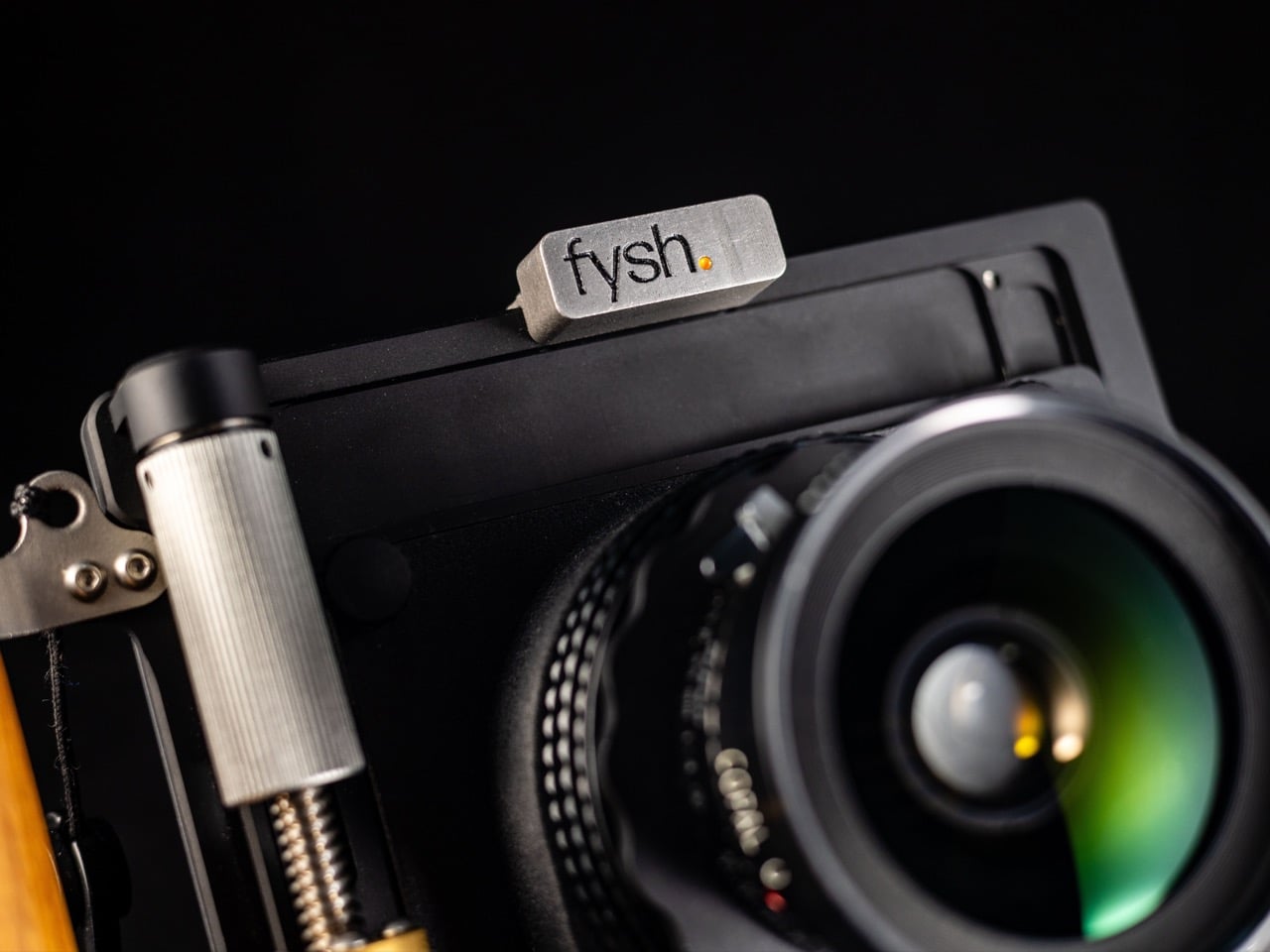
The rise mechanism runs on a TR8 lead screw, the same 8mm threaded rod that drives the vertical axis on loads of desktop 3D printers. Fysh started with smaller TR4 and TR5 screws to save weight, but they forced a choice between slow adjustment and reliable locking. A lead screw only holds its position on its own when its lead stays under roughly 60% of its diameter, so a speedy 4mm lead needed the chunkier 8mm rod. Now the lens moves quickly and stays exactly where you leave it, with no separate locking knob. Earlier prototypes used rack and pinion gears, and Fysh admits he kept forgetting to tighten those.
The brass part with the spring is an anti-backlash nut, and it’s the reason the rise feels so immediate. It’s essentially a nut split in two, with a spring pushing the halves against opposite sides of the thread so there’s zero slop when you change direction. Because TR8 hardware is everywhere in the 3D printing world, these nuts come off the shelf instead of being custom machined, which keeps costs sane. One Reddit commenter called the whole setup overkill, and Fysh is pretty confident it isn’t. I’m with Fysh here, since a buttery, slop-free rise is exactly what you want when nudging a frame by a millimeter on a windy rooftop.
Tilt, Locked In
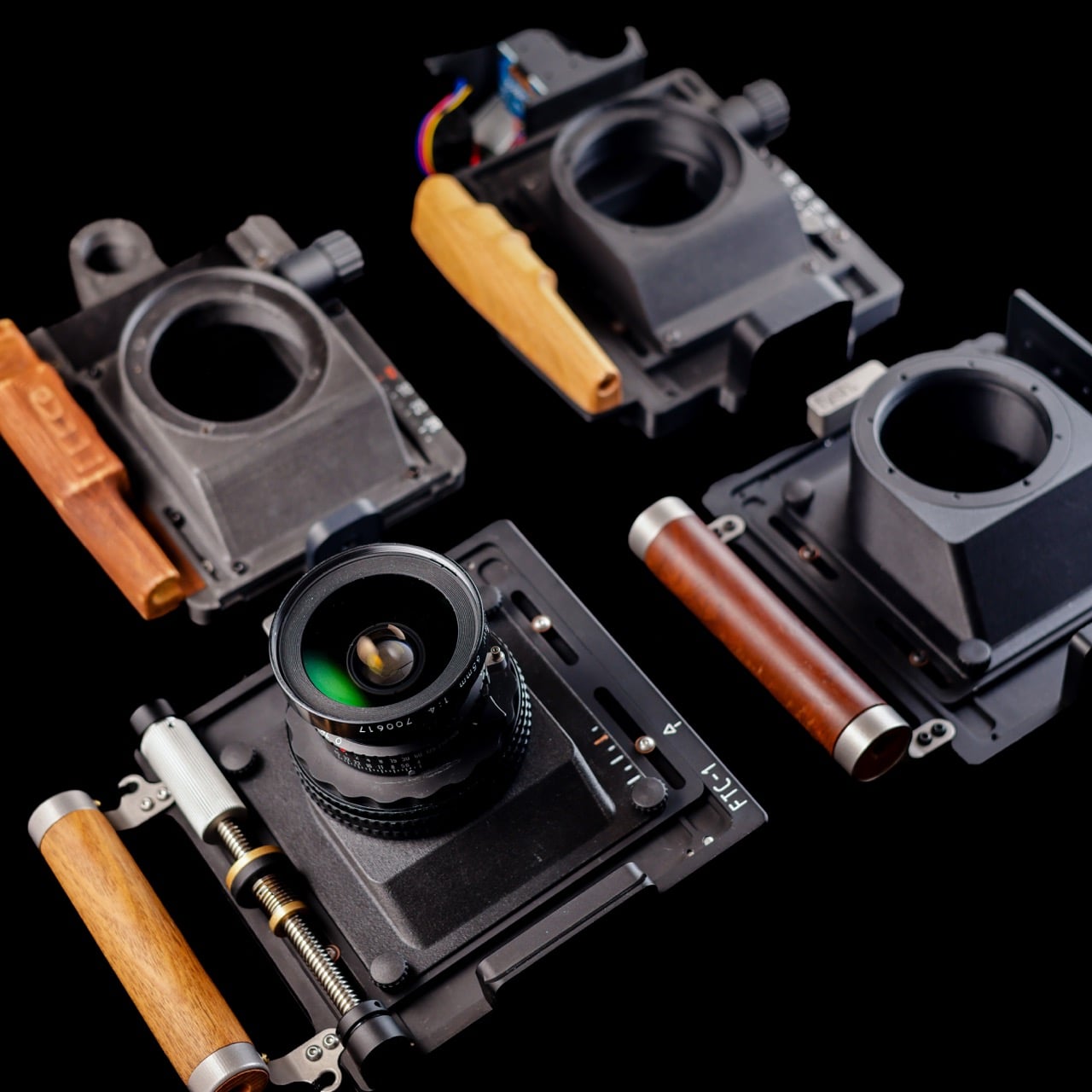
Most technical cameras offer tilt, which angles the plane of focus (the Scheimpflug principle) so a landscape can stay sharp from the rock at your feet to the mountains on the horizon. Fysh left it out of the body on purpose. He worried that with a tilt mechanism built in, he’d never be totally sure it was sitting at zero, which is where he wants it about 95% of the time. His fix is a set of lens cones with a fixed tilt angle baked in, calculated for each focal length using a Scheimpflug visualizer he built himself. Swapping cones takes about a minute in the field, and the angle can never drift.
The FTC-1 sells for $1,200 AUD (roughly $850) on the Fysh Technical site, with fixed tilt cones at $50 AUD each. Alpa’s 12 STC body alone costs CHF 4,300, north of $5,000, for similar rise and shift. Fysh builds each camera around a full-time job, so stock arrives in small batches, and a 6×17 panoramic sibling called the FTC-W is already in development on the same cone system. IDA’s global jury judges concepts and finished products alike, which makes this Gold sweeter, since you can actually buy the thing. Turns out the cure for converging verticals was a bike trip, a shed full of printers, and a guy stubborn enough to do the math.