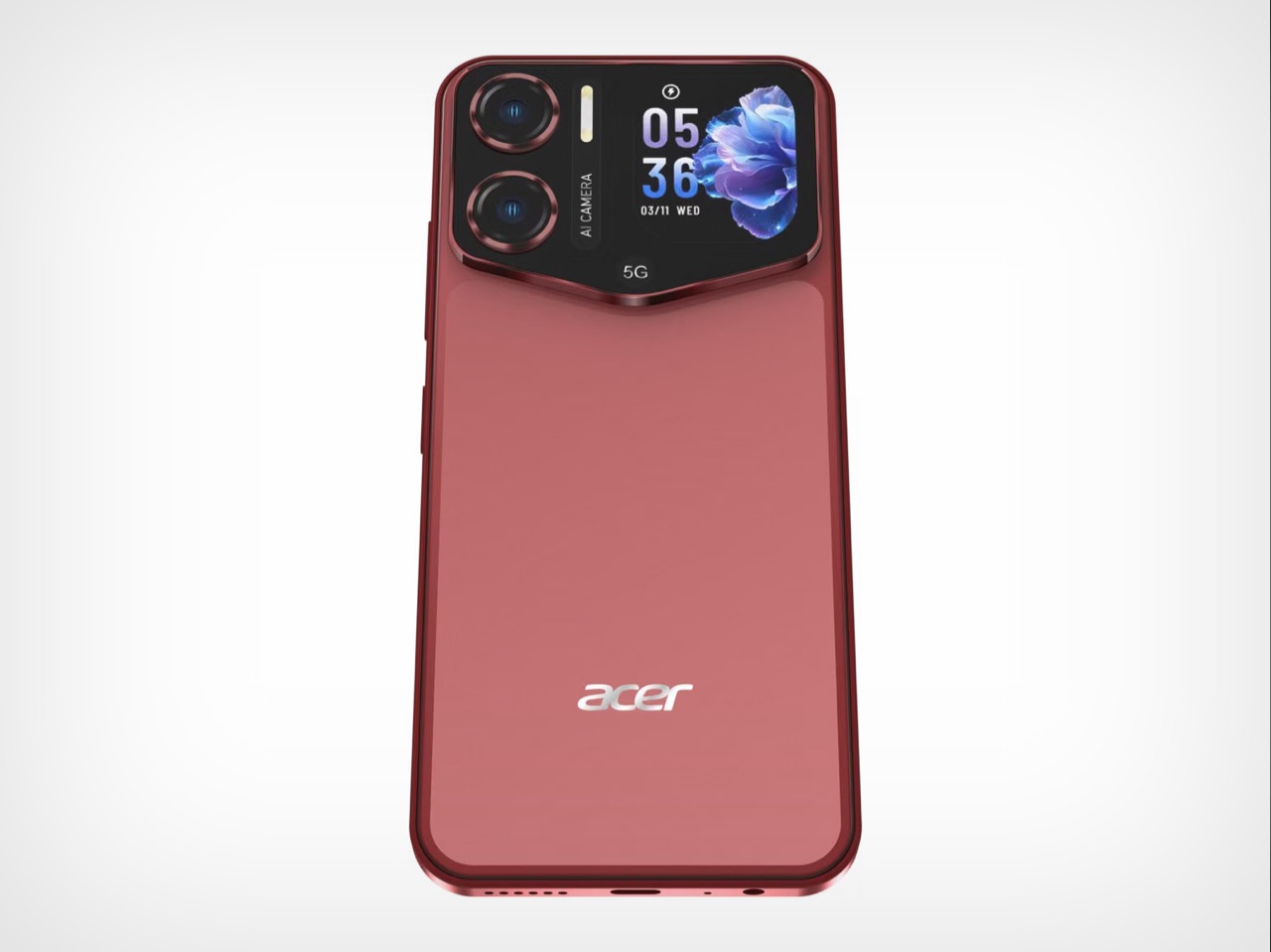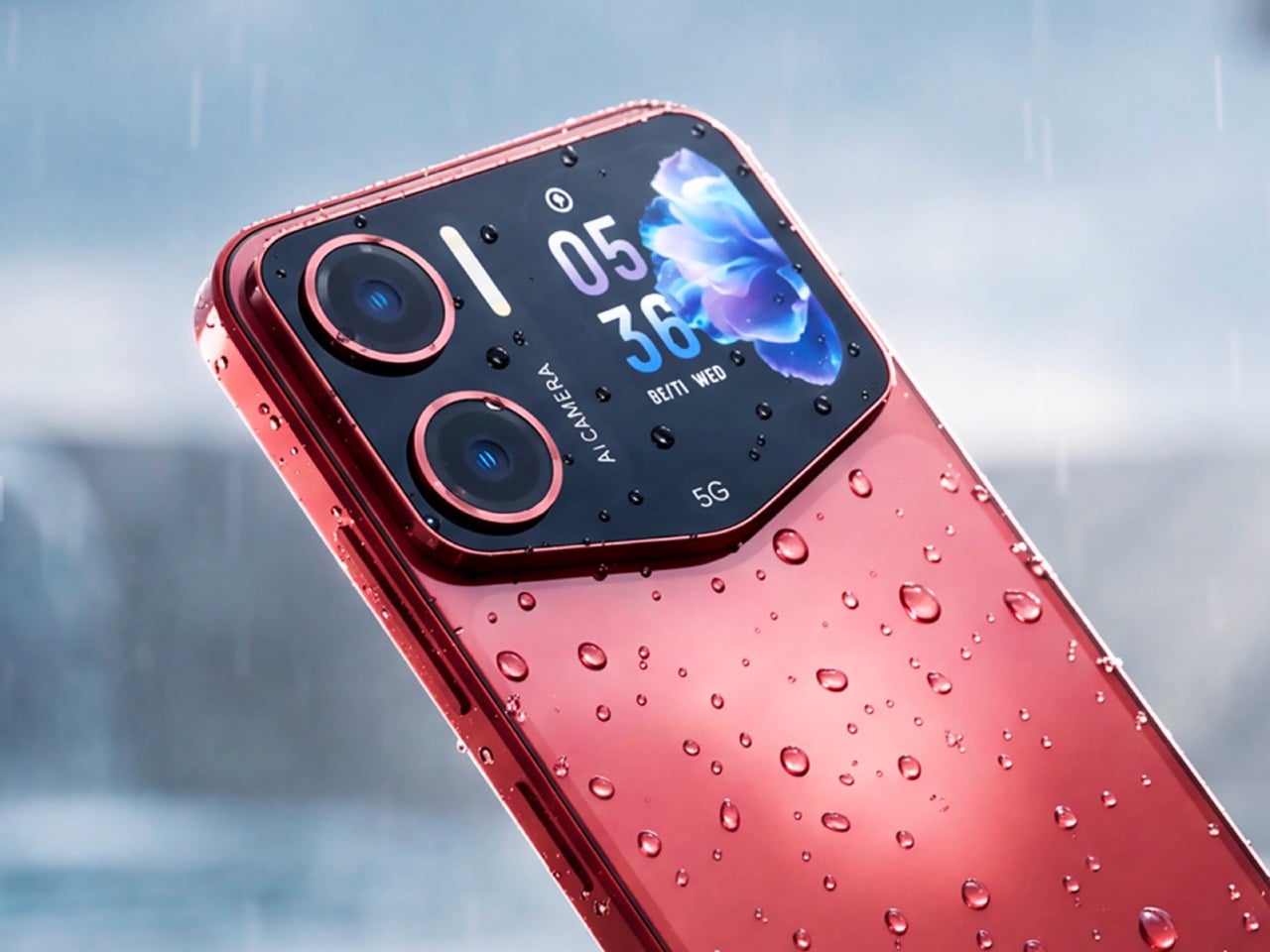
Some phones look like slabs, some look like jewelry, and the Acer Sospiro A70 looks dressed for a wedding. A black glass camera module runs across the top of the back and ends in a pointed V, exactly like the flap on a blazer pocket. I love it. It gives the phone an instantly recognizable silhouette in a market where most rivals share one camera island and one personality. The V points down the back like an arrow, as if the phone is gesturing at its own camera and saying, look at this. Anyone who keeps a phone in a blazer pocket will feel right at home.
The A70 comes from Senwa Global, the Mexican company that licenses the Acer name for phones sold across Latin America. Tucked into that module is a 1.88-inch second screen that works as a viewfinder, so you can shoot selfies with the 64MP main camera instead of the 16MP front one. Under the hood sit a Unisoc T8200 chip (two fast cores, six frugal ones), 8GB of RAM, 256GB of storage, 5G, and a headphone jack. Pricing and a launch date are still unannounced. Sadly, the A70 isn’t sold in the US, so this one is admiration from a distance.
Designer: Acer
Selfies Finally Get the Good Camera
Front cameras are the budget cut nobody advertises. The A70’s 16MP selfie shooter is fine, but the 64MP rear sensor is the one Acer actually bragged about. The 1.88-inch rear screen (240 x 284 pixels) lets you flip the phone around and frame yourself with that better camera. No more guessing where your forehead ended up. The same panel shows the time, notifications, and incoming calls, which suits a face-down phone on a cafe table. At roughly 198 pixels per inch it’s softer than the main display, but for checking your hair that is plenty.
Xiaomi started this whole idea in 2021 with the Mi 11 Ultra, which carried a 1.1-inch AMOLED beside its camera and sold in Europe for €1,199. The Xiaomi 17 Pro and Pro Max grew the screen to 2.7 and 2.9 inches in 2025, starting at CNY 5,000 and CNY 6,000 (roughly $700 and $850). Those are flagship prices, and the phones launched in China first. The A70’s 1.88-inch panel lands between those two generations in size and keeps the same logic, minus the flagship bill. Nobody had a licensed Acer down as the one to carry the trickle-down torch, myself included.
The V Does the Branding
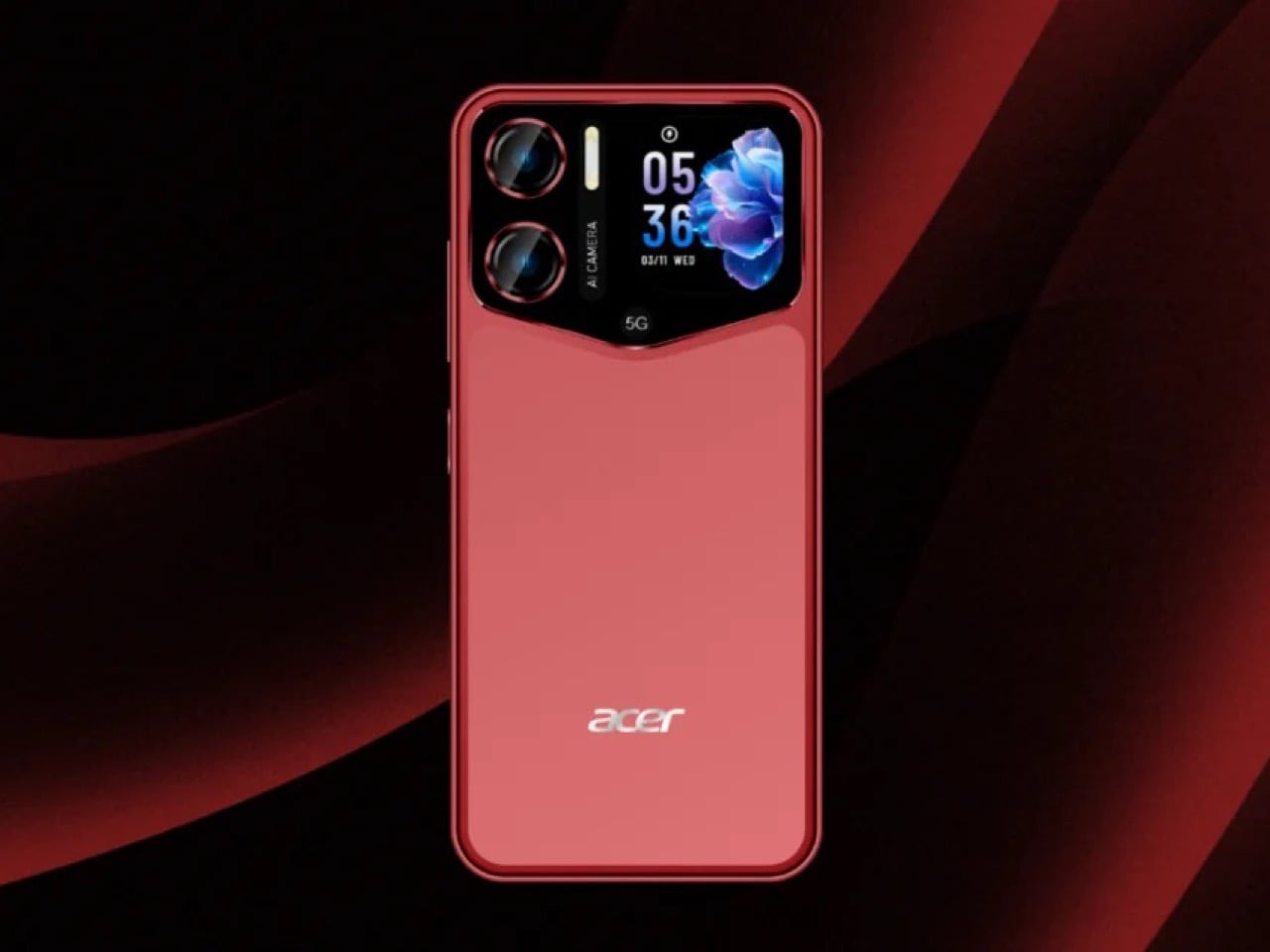
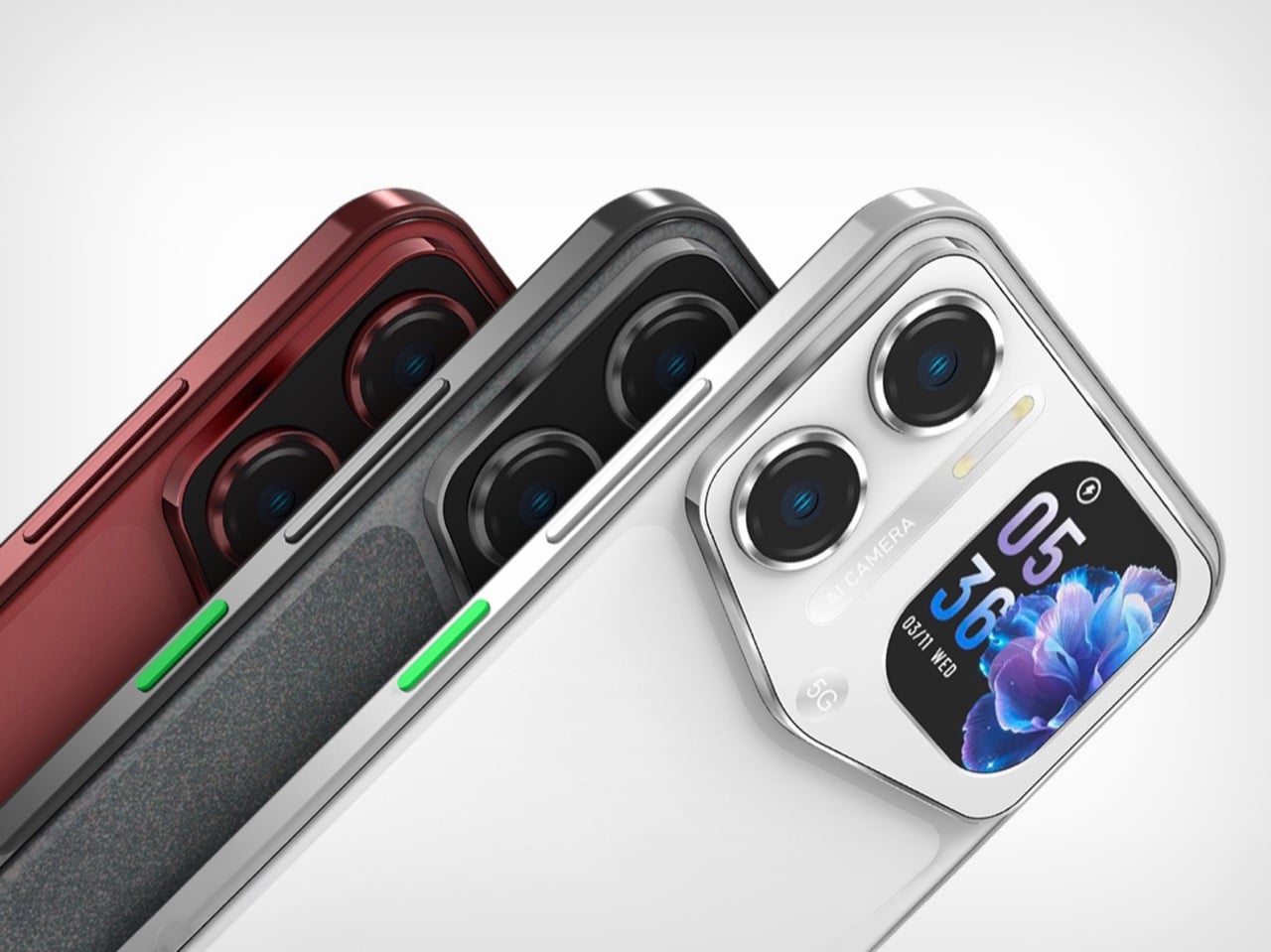
On the red and graphite versions, the module is a black glass band spanning the full width of the back, with a chevron lower edge pointing down the body. The lens rings are tinted to match each body, so the red gets red rings, the white gets silver, and the graphite stays dark. A vertical flash strip sits beside the lenses, and the rear screen fills the right half of the module in Acer’s renders, with a gradient clock and a flower wallpaper overlapping the digits. A small 5G badge sits right at the V point. It is a tidy composition for a phone in this class.
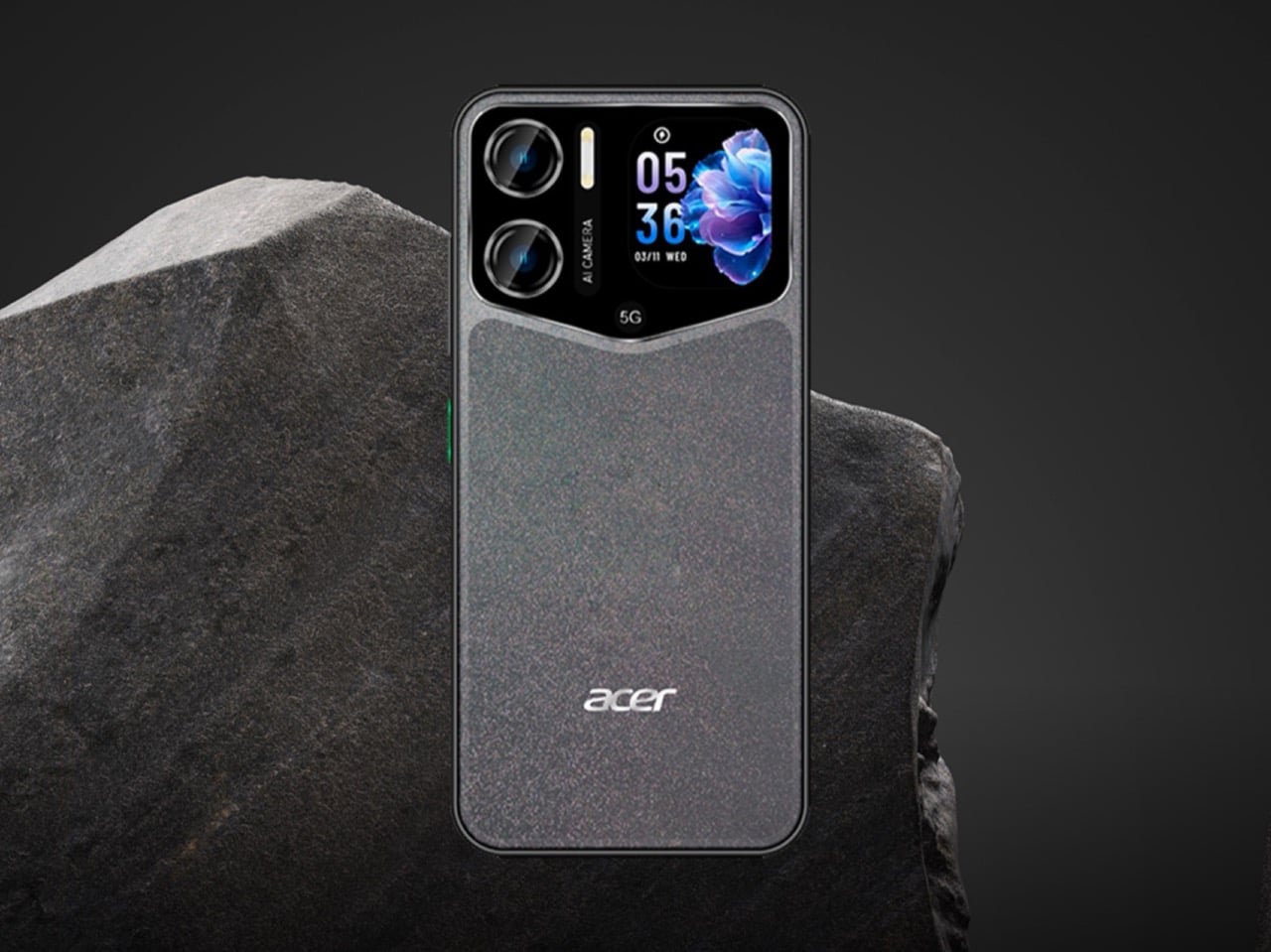
The graphite finish is my favorite, a speckled texture with a faint sparkle that Acer photographed against a slab of rock for maximum drama. The red is glossy and loud, and the white pairs a silver frame with a white module for a cleaner look. Green accents on the side keys add a pop of color in the renders. Back to the pocket flap, though. I would argue a distinctive camera shape does more branding work than the Acer logo, which sits modestly near the bottom. Even from across a table, that V says Acer Sospiro louder than any badge.
Sensible Specs, Zero US Availability
The rest of the spec sheet reads like a practical friend. A 5,000mAh battery is the usual all-day size, and the box includes a charger, cable, case, and screen protector, which saves you a trip to the accessory aisle. The 6.67-inch screen is only 720 x 1600 pixels, but it runs at 120Hz (120 refreshes per second), so scrolling stays smooth even if small text is not razor sharp. Storage is 256GB with a microSD slot for cards up to 1TB, so your vacation clips have somewhere to go. The 3.5mm jack and FM radio are on board, and IP64 handles rain but not a pool.
Pricing and a launch date are unannounced, and the A70 isn’t sold in the US, so American readers will need a Latin American friend or a lot of patience. The nearest thing on US shelves is a midrange Samsung Galaxy A phone or a Google Pixel A model, and neither has a second screen on the back. Senwa’s lineup of Acer-branded phones has mostly been budget fare, which makes this one a clear step up in ambition. Xiaomi proved the rear screen could be a flagship feature, and Acer’s licensee is betting it can be a mid-range one. If it works, the cheap seats get the coolest design detail first.