It’s 2026, and there’s a fair chance any kid born in the next 10 years will see more server racks than they will actual bears. An incredibly twisted reality, but a reality nonetheless… so much so that Rajeev Basu decided to poke fun at this predicament in a way that only artists with a dark sense of humor know how. Meet Bezzy, a stuffed plushie that’s actually a server rack, not a teddy bear. Squeeze it and it emits an incredibly annoying hum, captured from actual data centers around USA.
Bezzy would be cute if it weren’t so pathetic. The toy’s thinly veiled satire on the fact that our AI CEO oligarchs want us to think of their world-ending water-sucking creations as anthropomorphic harmless beings. Meta unveiled Muse, a seemingly cute avatar that hides the fact that it’s selling your data to governments and marketers. OpenAI unveiled Dots, an adorable set of AI assistants that definitely don’t want you to think about the fact that the company’s AI bots have been routinely hacking into organizations, governments, etc. To that extent, Bezzy might be too effective in making AI seem cute. That’s until you hug the thing.
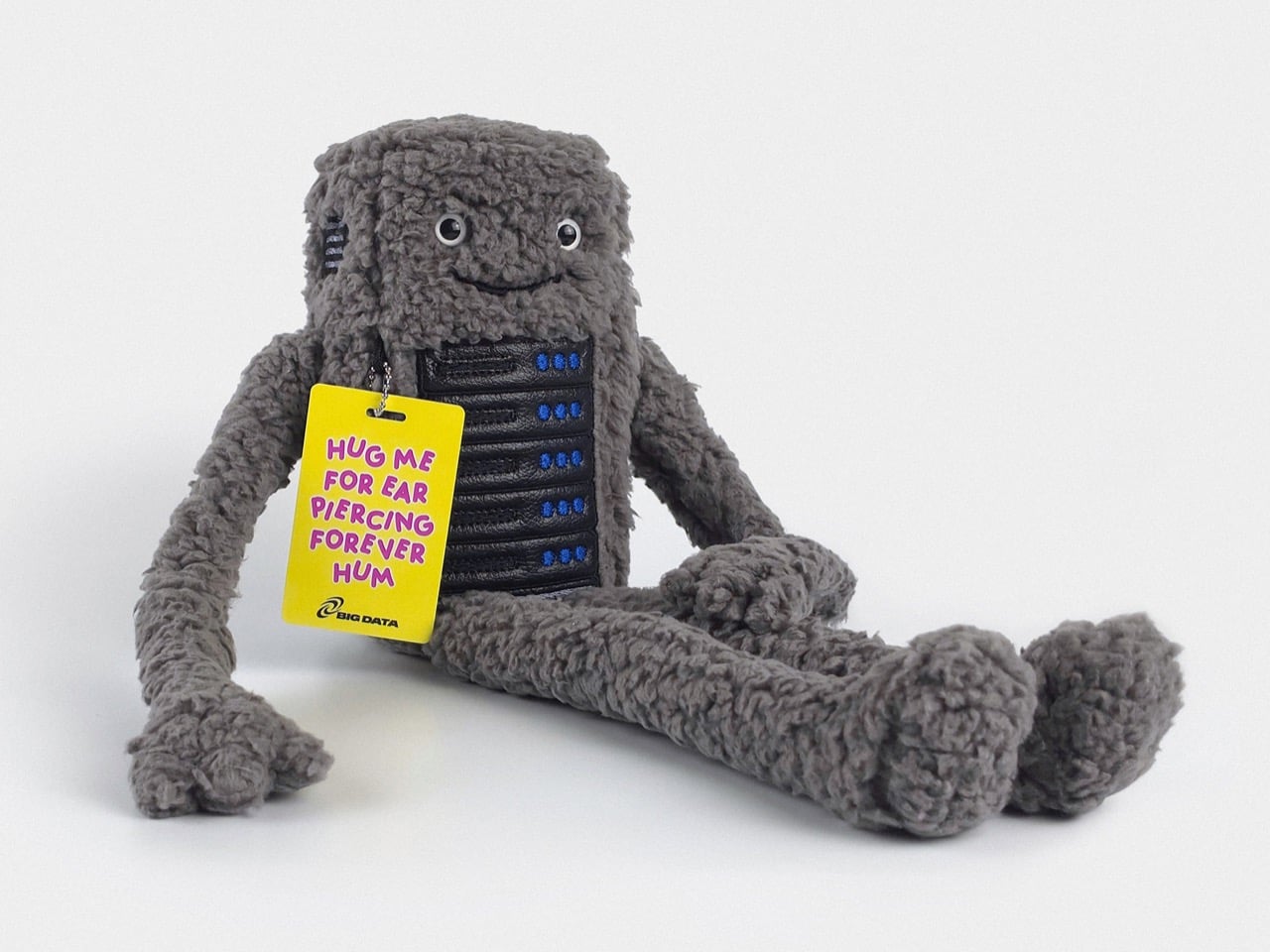
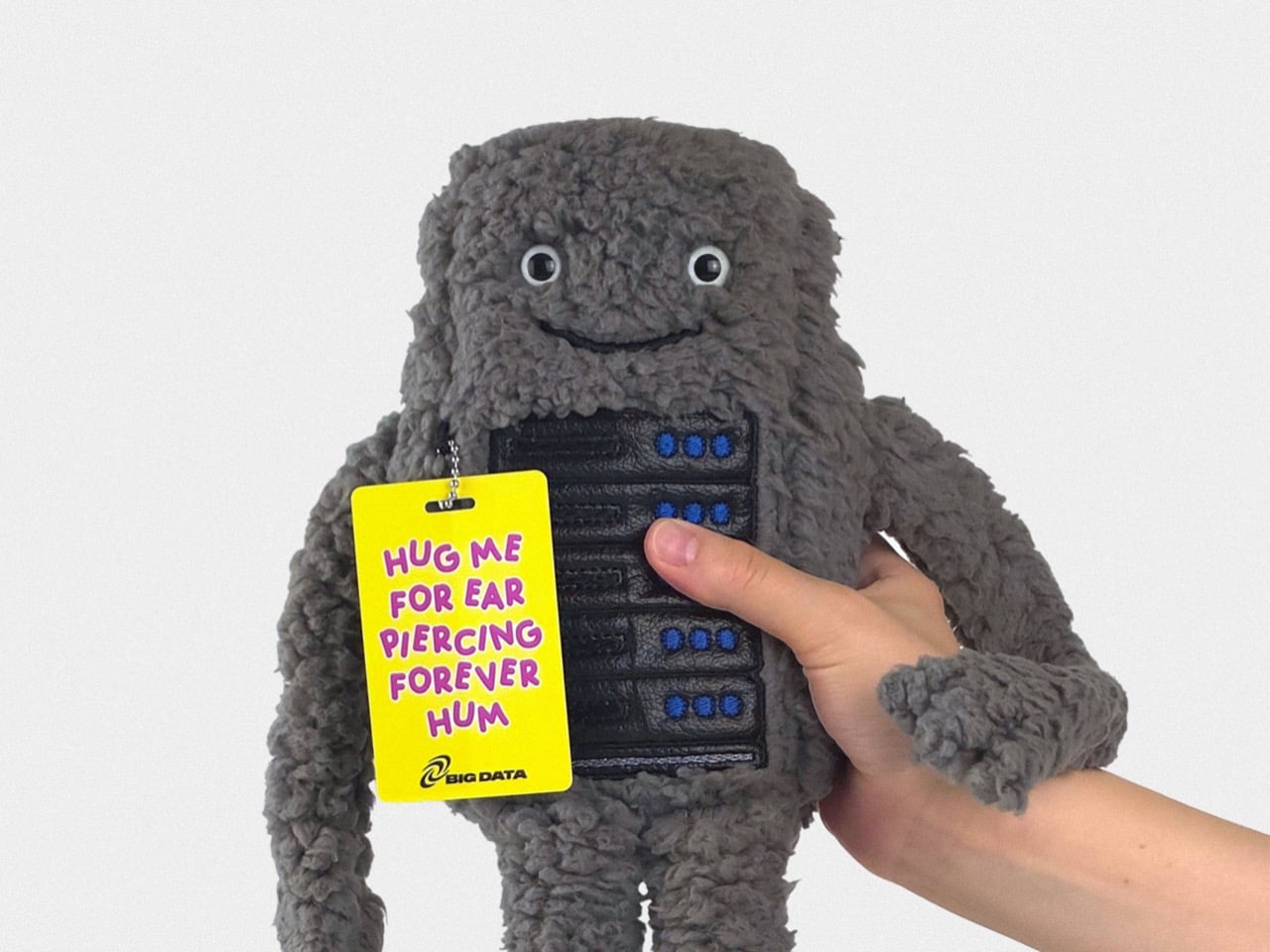
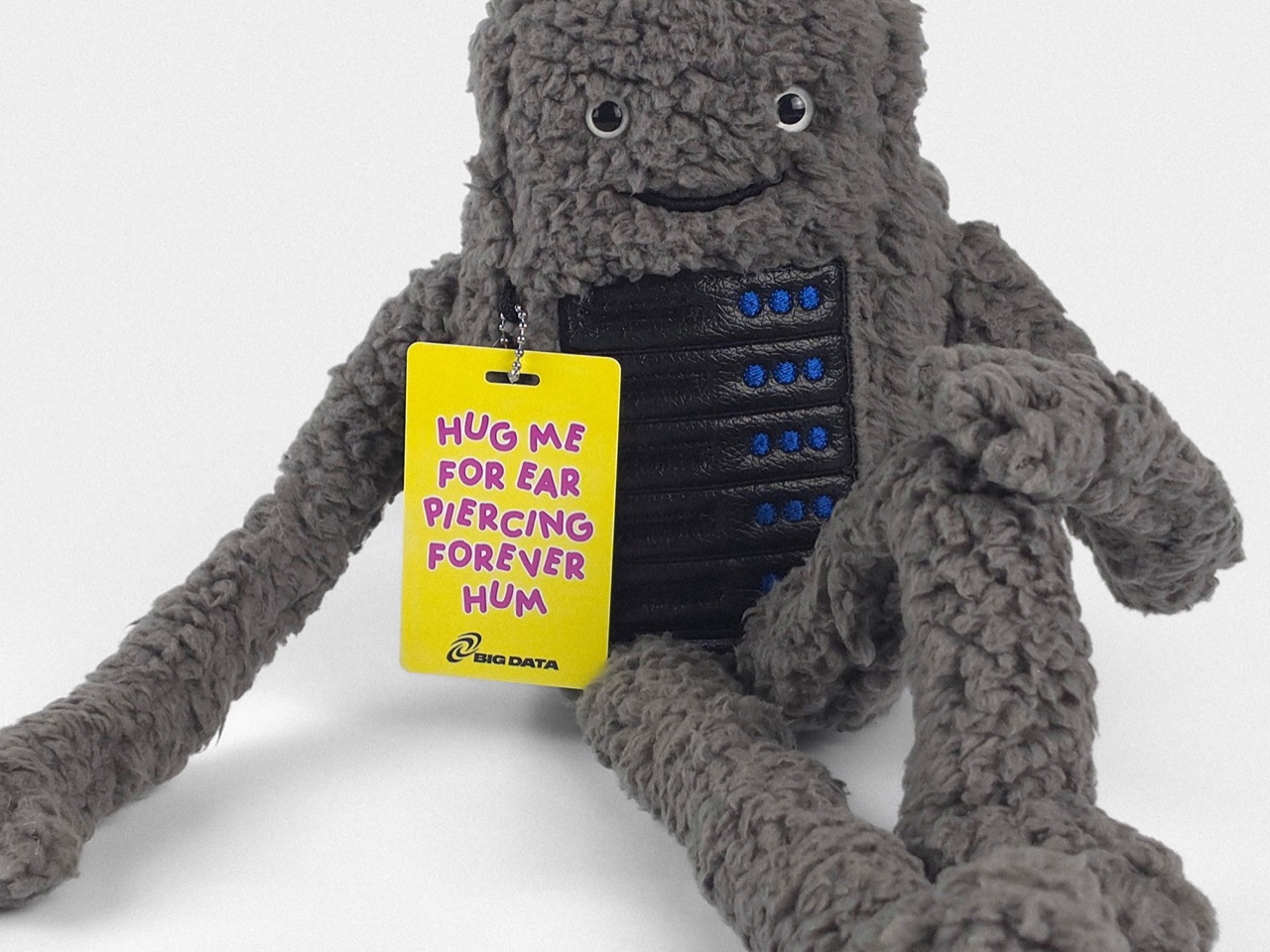
Take a close look at Bezzy and you start appreciating how much thought went into making him look so deliberately unstudied. The gray sherpa fleece, the floppy limbs, the googly eyes, and that little smile are all pulled straight from the visual grammar of the charity adoption plushie, specifically the kind WWF used to send you after you donated to save a panda. His torso, though, is a different story: a black textured panel with rows of blue LED dots running down it, server-rack iconography dressed up in fur. All 20 were handmade in the US, and the design intentionally avoids looking polished or new, going instead for that lived-in quality of a toy you might find at the bottom of a thrift store bin. The yellow tag dangling from his chest, screaming “HUG ME FOR EAR PIERCING FOREVER HUM,” is doing most of the heavy lifting.
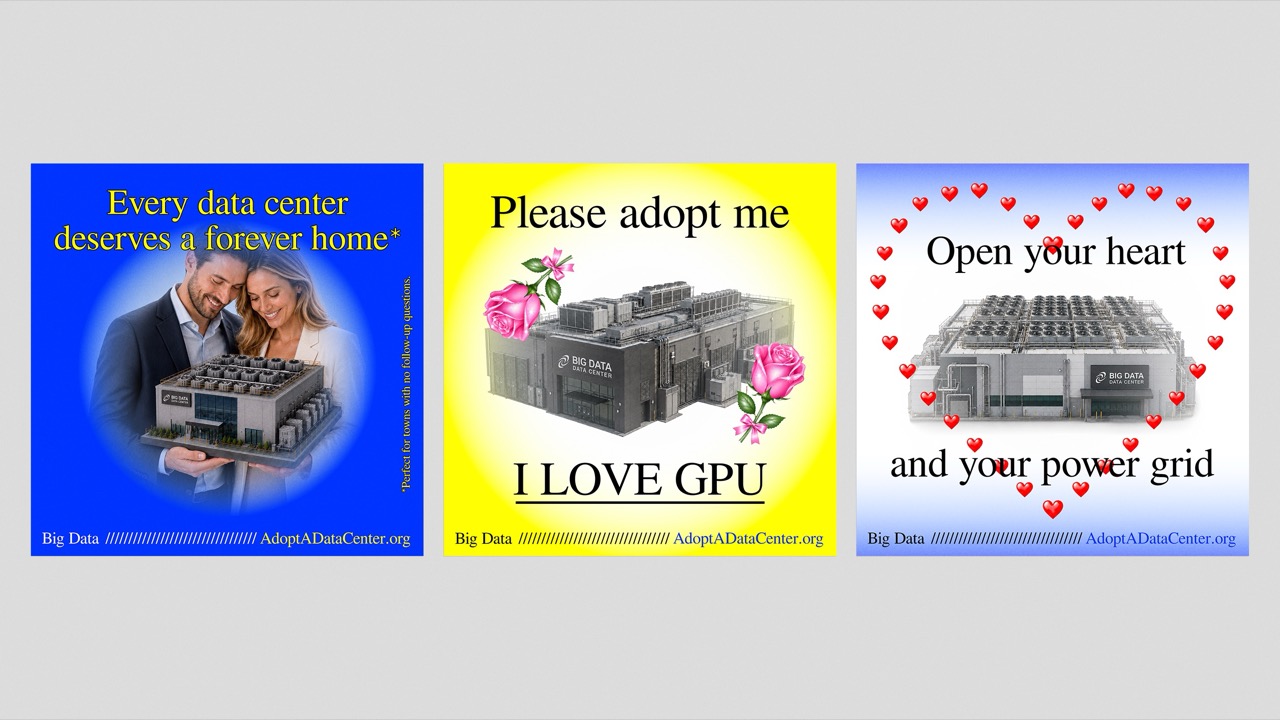
The toy is the physical centerpiece of a bigger satirical project called Adopt A Data Center, which Basura designed to look exactly like a charity adoption portal. Hit “adopt now” and instead of a certificate, you get a page of citations and journalism covering data center noise complaints, water consumption, land use, and the tax incentives that make communities such convenient targets for developers. Stickers in the campaign read “Open your heart. And your power grid.” The tagline for the whole thing is “All they ask for is everything,” which is honestly one of the better lines written about the AI era.
The duo behind the project is a pretty inspired pairing for something this arch. Rajeev Basu runs Basura, a New York studio with a resume that includes stints at Wieden+Kennedy, Spotify, and Maximum Effort, where he wrote for Ryan Reynolds and Rob McElhenney. His previous projects have the same DNA as Bezzy: the Hinge Phonebook was a phone-shaped book filled with ideas for getting off your phone that sold out in 24 hours, and the Yerba Madre Dirt Shoes literally crumbled apart mid-walk to spread wildflower seeds. His collaborator is Alan Wilkis, who makes music as Big Data, a project he started in 2012 explicitly to comment on how the internet was mining and monetizing personal data. Bezzy launches alongside Big Data 4.0, Wilkis’s first album in seven years, and a new single called “Rabbit Hole,” which honestly tracks.
The hum inside Bezzy wasn’t recorded in a studio. It was captured by a woman living next to a data center in Virginia and handed over during Basura’s research process, part of six months of conversations with people across the US who live beside these facilities. Northern Virginia alone hosts over 500 data centers handling as much as 70% of the world’s internet traffic, and residents there have been filing noise and health complaints for years with very little relief. A 2026 UN University report found that data centers could consume 945 terawatt-hours of electricity annually by 2030, while AI-related water use could equal the domestic needs of 1.3 billion people. Bezzy, all 20 of them, at $99 each, won’t fix any of that. But he’s a pretty hard thing to ignore while he’s screaming.