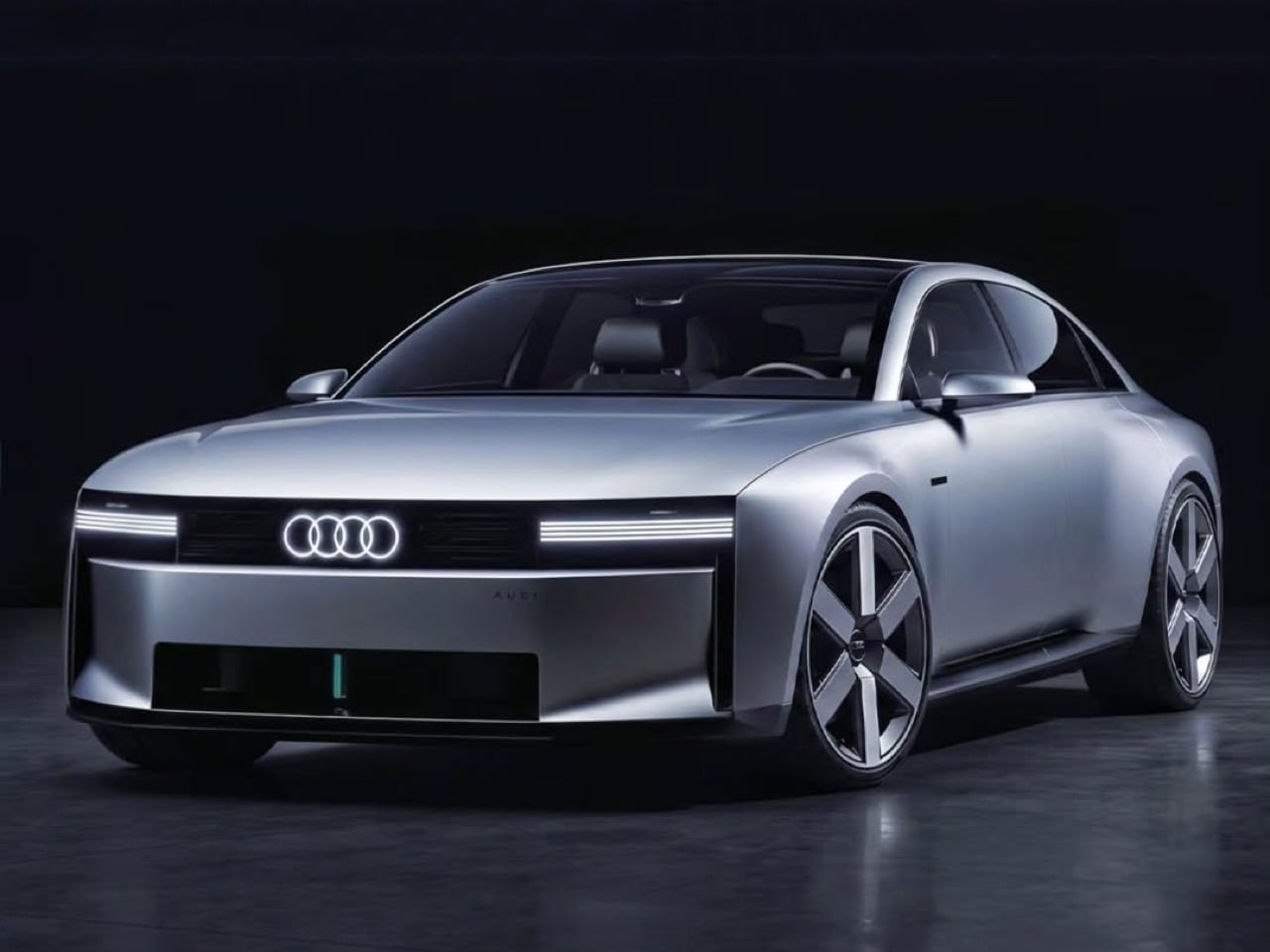
The Audi A8 died in early 2026, quietly, the way flagships die now. Order books shut in Germany, production wound down, and the Q9 SUV inherited the crown after the A8 managed 1,406 US sales in a year the Q8 did 10,881. Audi swears a fifth generation arrives around 2030. Luca Serafini apparently decided four years is a long time to sit around, so he built one himself. His version borrows the Concept C’s monolithic surfacing and four-element light signature, then quietly refuses the vertical Singleframe, running a full-width horizontal bar with the four rings lit at center instead, plus twin exhausts in the diffuser.
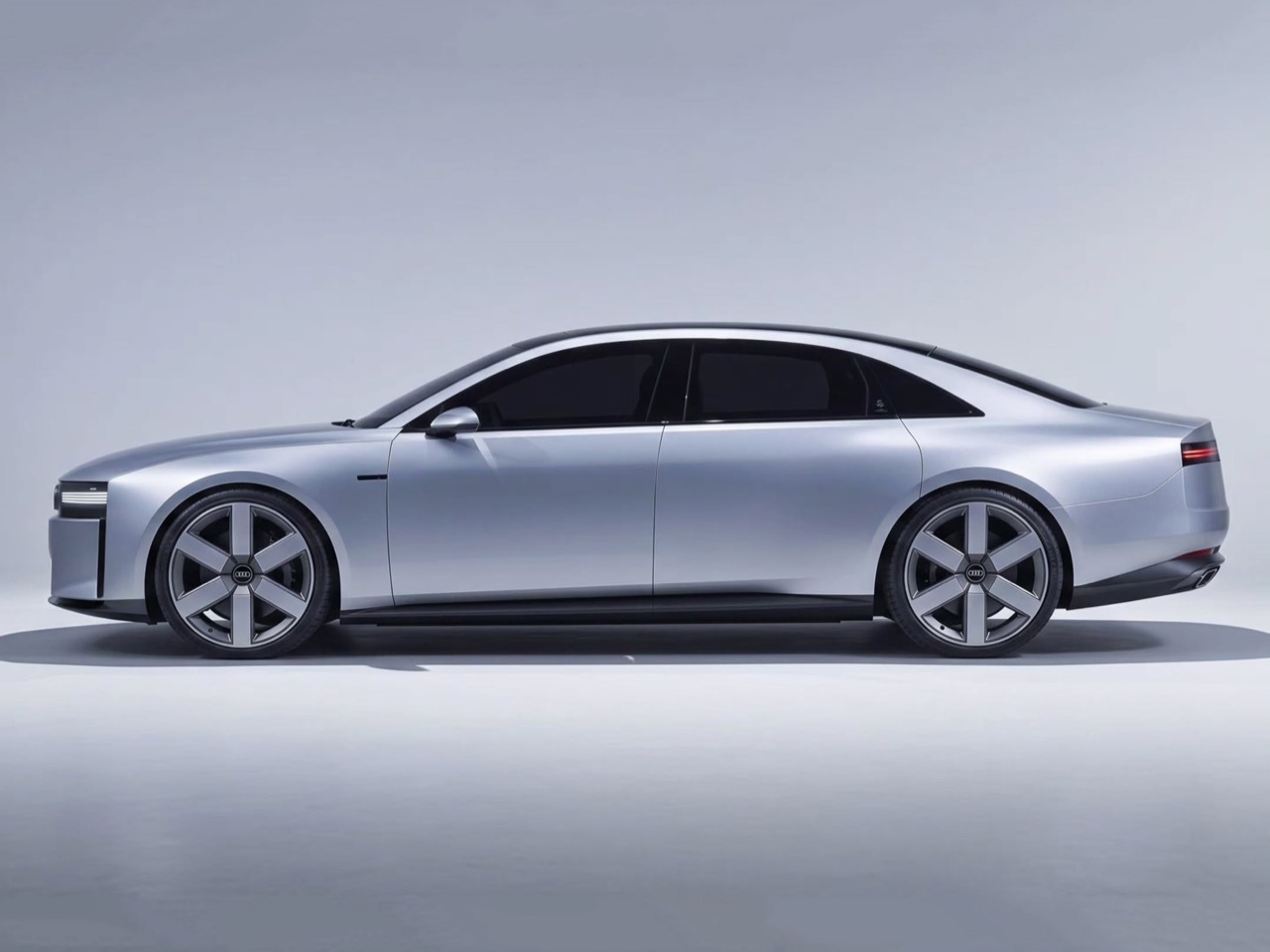
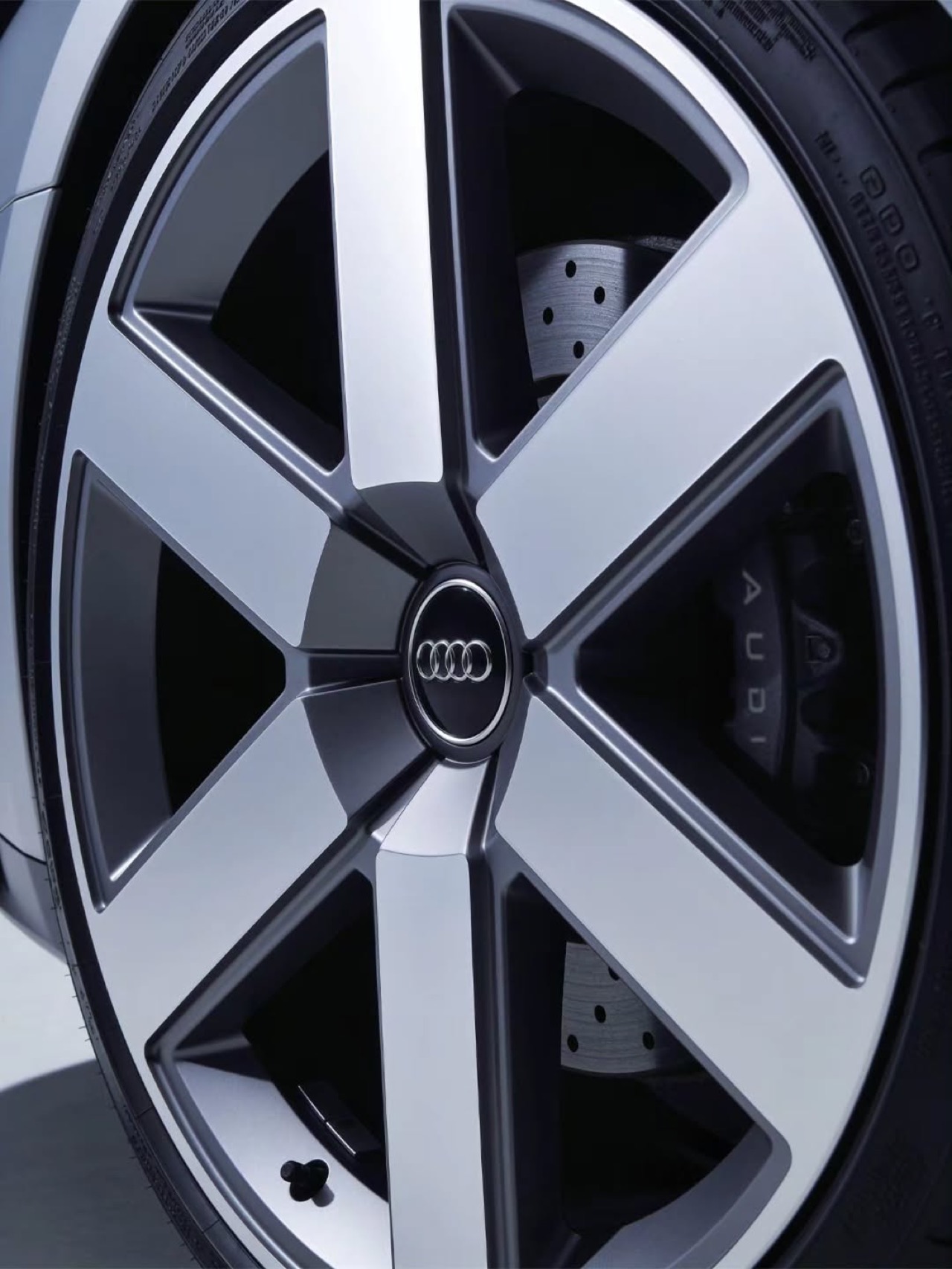
Everything else on the car is doing less on purpose. Six-spoke wheels with cross-drilled discs behind them, blacked-out pillars, flush glass, a shoulder line so soft you have to hunt for it, and a titanium-silver finish borrowed straight from Concept C’s anodized aluminum look. Those illuminated rings front and rear go dark the second any regulator sees them, and the front overhang is shorter than crash structure would ever allow. Neither problem makes the renders less convincing. They just mark exactly where a designer stopped negotiating with reality.
Designer: Luca Serafini, LS Design
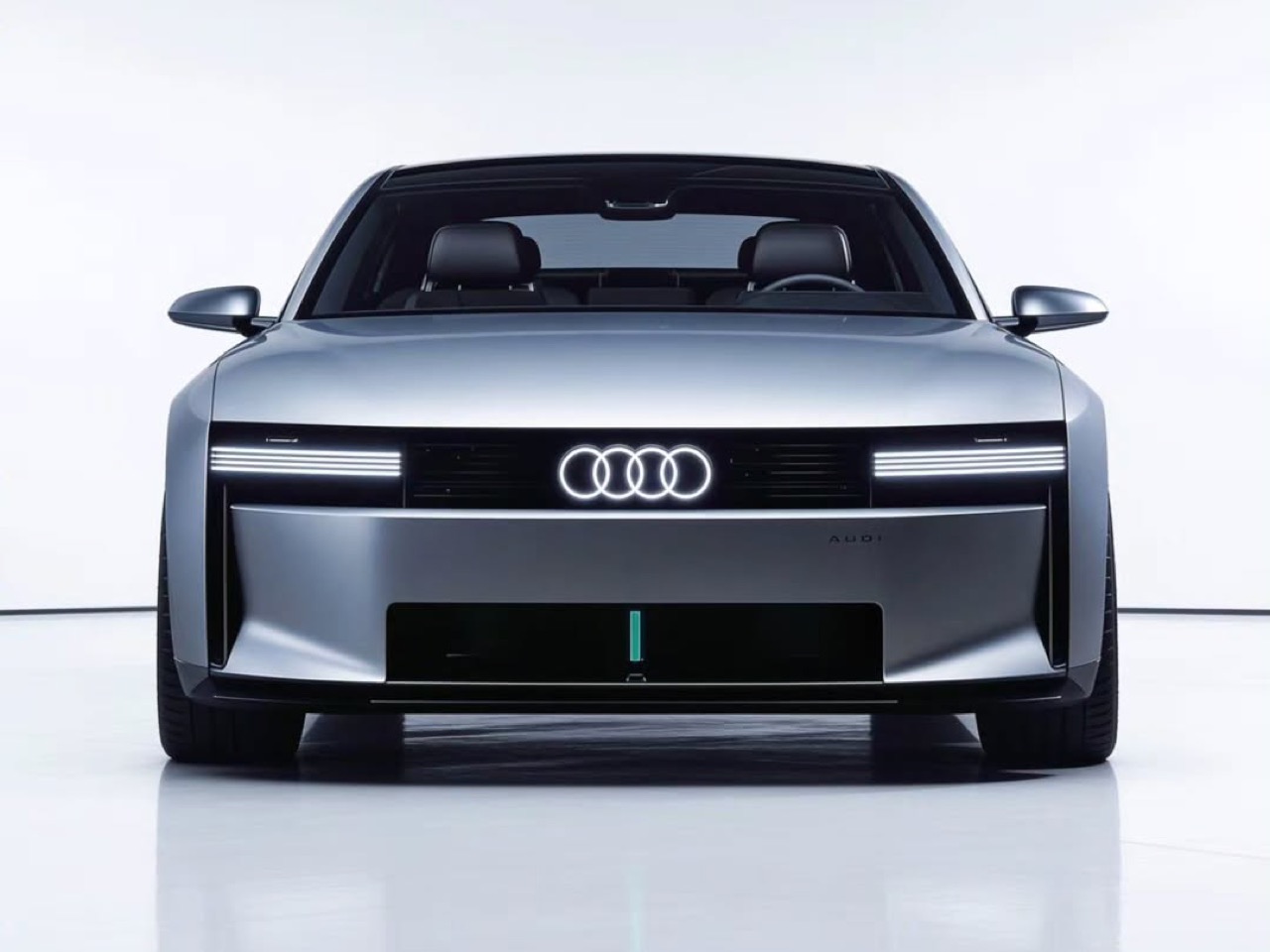
The vertical Singleframe remains the most argued-about thing Audi has done in a decade, and Serafini declines it outright. Massimo Frascella built that upright slab for the Concept C by reaching back to the 1936 Auto Union Type C and the 2004 A6, and when we spent forty minutes with the car in Munich it absolutely worked at roadster scale. Stretch the same face across five-plus meters of limousine, though, and authority starts sliding toward novelty toothpaste tube. What replaces it is a wide horizontal aperture with the rings glowing dead center, flanked by the four-element light graphic Audi now uses front and rear. Autoevolution called the result tame. I’d call it a designer knowing what a big car’s face has to do.
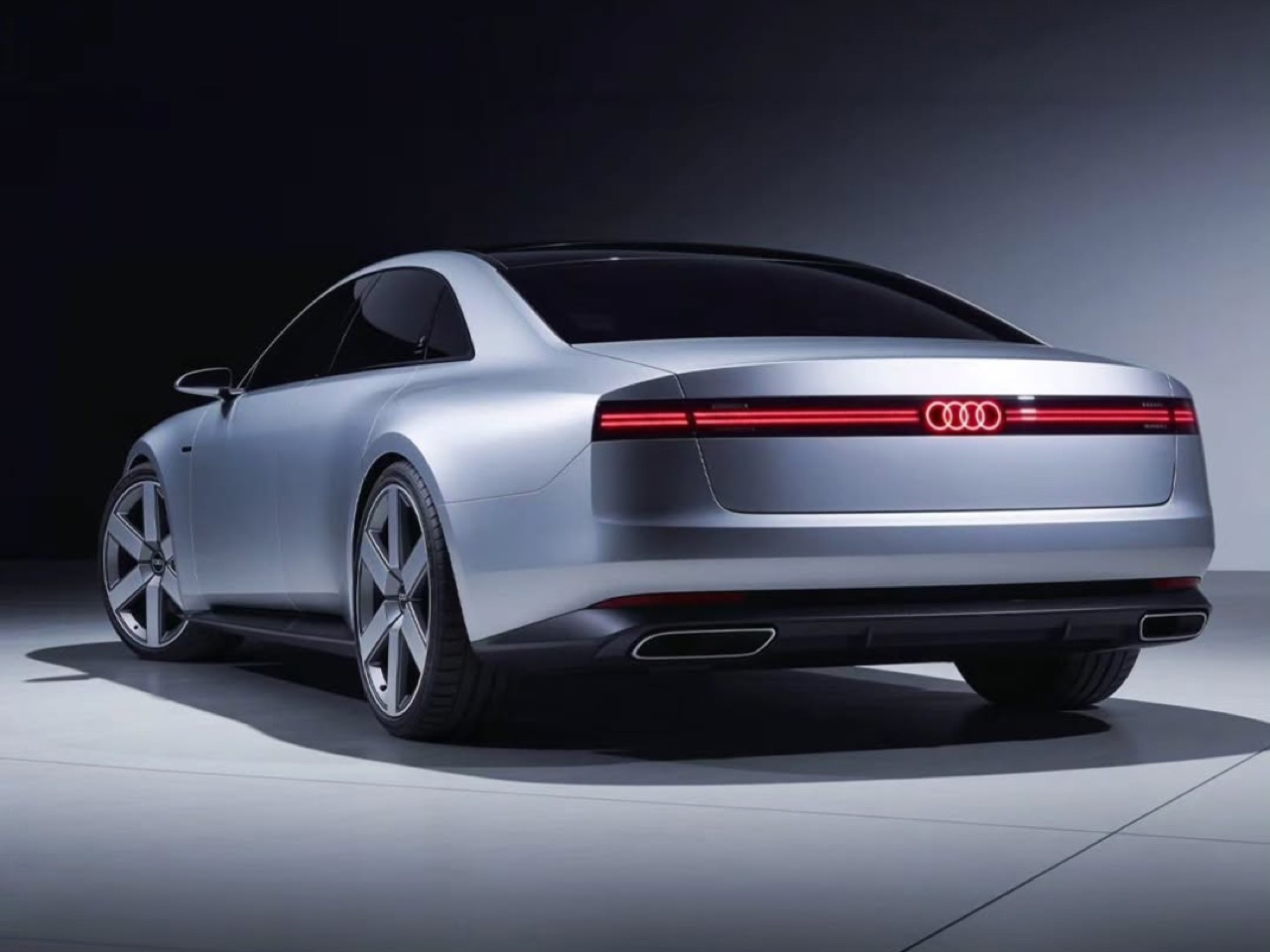
Audi built the slipperiest sedan on the planet in 1982 by bonding the side glass flush with the bodywork, hitting a drag coefficient of 0.30 and calling itself the aerodynamics world champion. Forty-four years later the same instinct gets rebranded as radical simplicity. Serafini’s A8 runs the C3 playbook almost literally, with flush glazing, no visible door handles, blacked-out pillars, and a body carrying zero character lines. The whole surface works on volume and reflection alone, which is the hardest thing to pull off in car design and the easiest to botch. Broad rear haunches and a near-vertical Kamm tail keep it from reading as a bar of soap.
Twin oval outlets sit in the black rear diffuser, which rules out any A8 e-tron reading immediately. That looks prophetic rather than backward-facing, given Audi scrapped its 2033 combustion cutoff and then dropped the 987-hp Nuvolari, a 4.0-liter twin-turbo V8 with three axial-flux motors and a 10,000 rpm redline, in the exact year it once promised to go electric-only. A green vertical accent in the lower intake muddles the story slightly, since it reads like a charge-status indicator on a car with tailpipes. Serafini has been running Concept C surfacing across an imaginary Audi lineup since last September, covering an SUV, a hot hatch, an A2 revival and an R8 Spyder. This flagship is his second run at the A8.
Frascella’s rule now is that Audi shows nothing it cannot build, which makes independent work like this the only place ambition still runs unsupervised. Serafini works in Blender, 3DS Max and Unreal with AI in the pipeline, so the images are staged rather than surfaced from production CAD, and a few details fall apart under close reading. His Ferrari single seater from yesterday had the same quality, gorgeous and structurally impossible in roughly equal measure. What this A8 proves is that the segment’s problem was never the shape. Audi walked away from the sedan because buyers did, and a car this composed makes that math feel like a shame.