There was a window, roughly 1998 to 2006, when you could walk into a shop, buy a disc, and own the thing forever. No login, no region check, no email explaining that your library is migrating to a new tier. We traded that for the cloud and got monthly bills and films that quietly vanish from the catalog. BluHub is a 9-in-1 external Blu-ray drive built for people who want their files back on a shelf, with an aluminum lid that props open like a grand piano so a spare disc sits on display while the drive burns another. It is a strange, slightly stubborn object, and I like it.
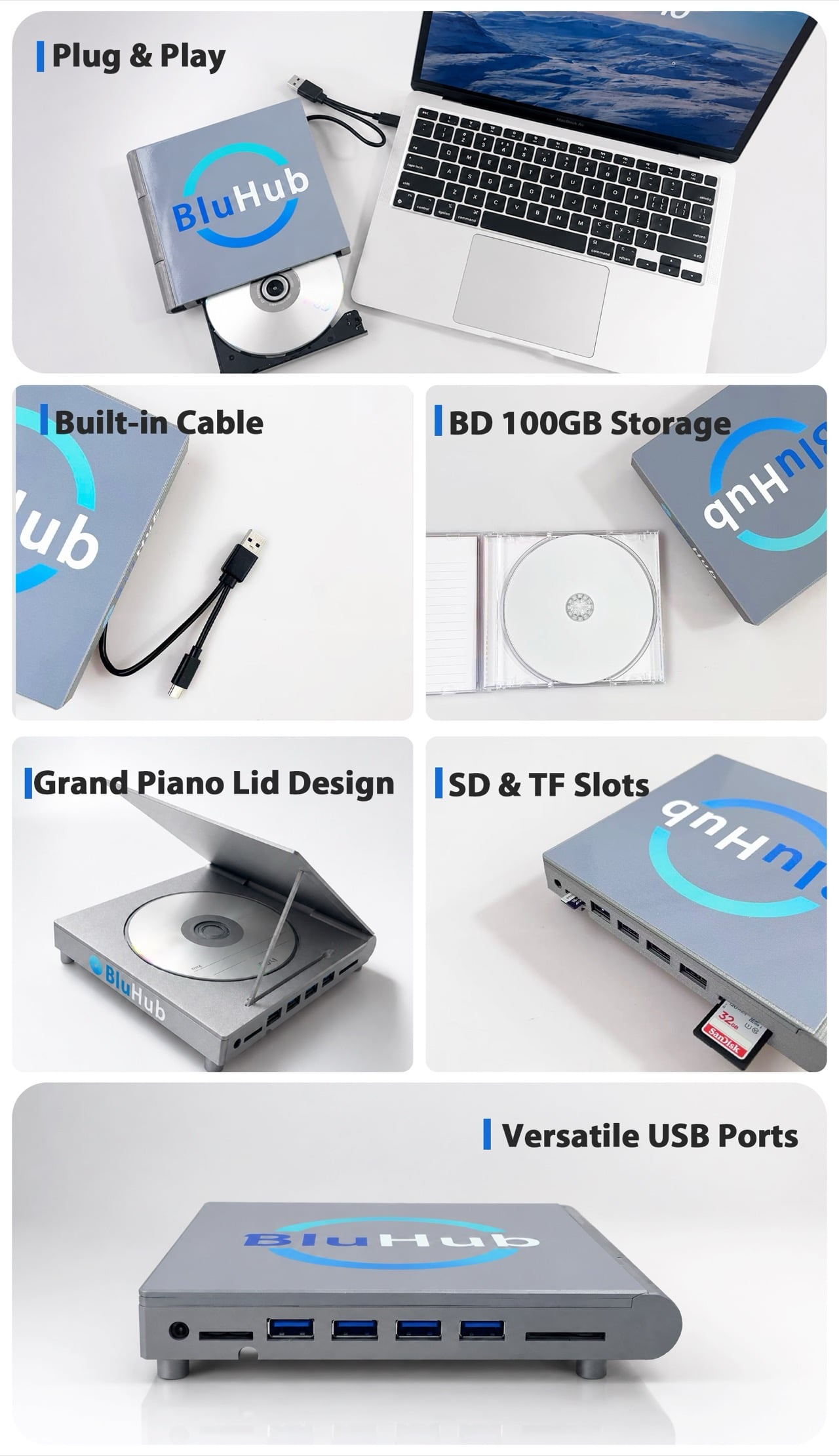
Under the styling it reads and writes Blu-ray, DVD and CD, burns BD-R at 6x onto 100GB discs, and adds four USB 3.0 ports, SD and microSD slots and captive USB-C and USB-A cables, all in a 409g aluminum body running on bus power. Early pricing is $59 against $129 retail, with units due in November 2026. Sony ended production of all recordable Blu-ray media in February 2025, and Pioneer’s US arm has since stopped selling optical drives entirely. A three-person Los Angeles team looked at that and decided it was the perfect moment to build a nicer one.
Designer: BluHub
Click Here to Buy Now: $59 $129 (54% off) Hurry! Only 6 days left.
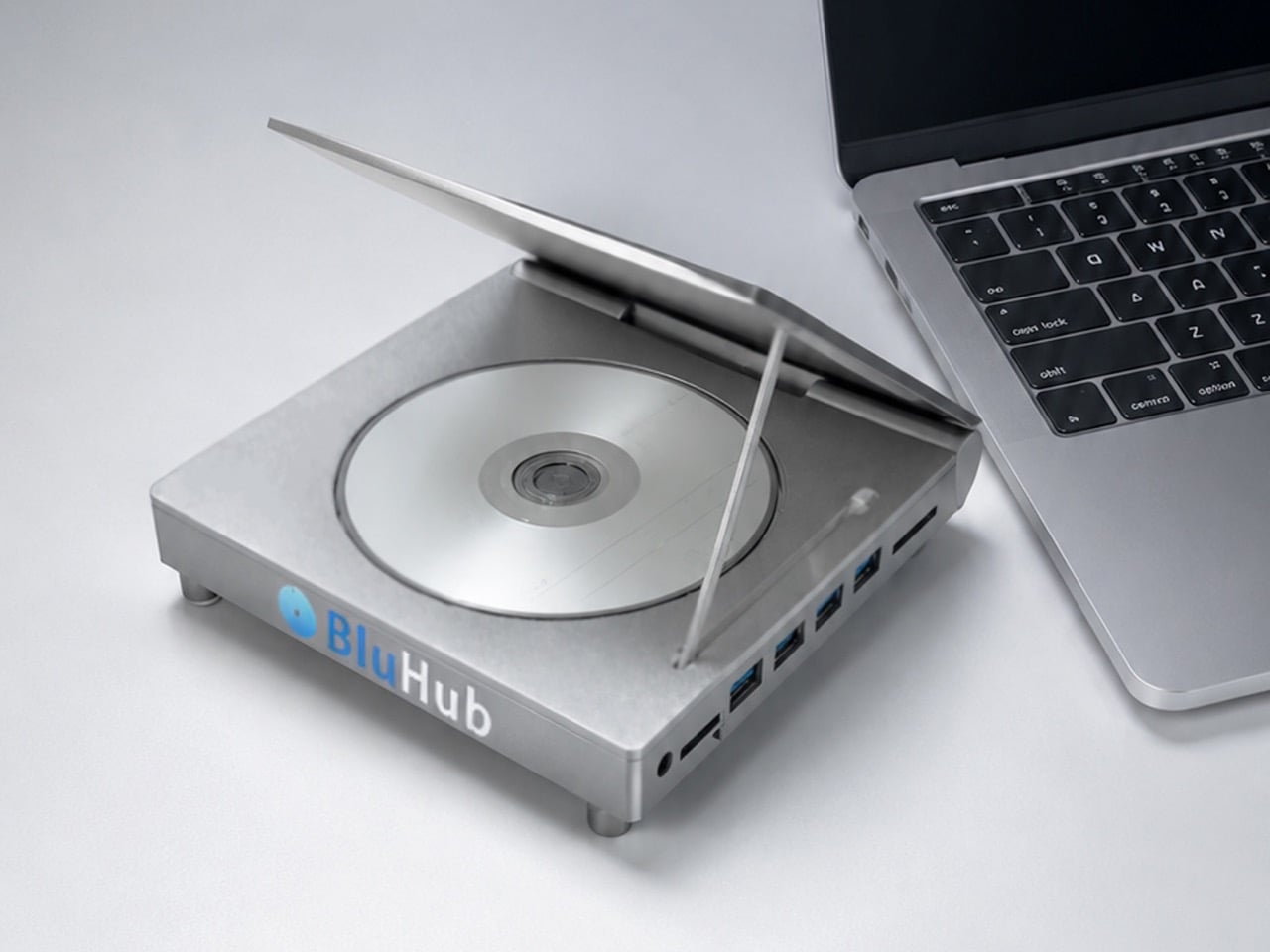
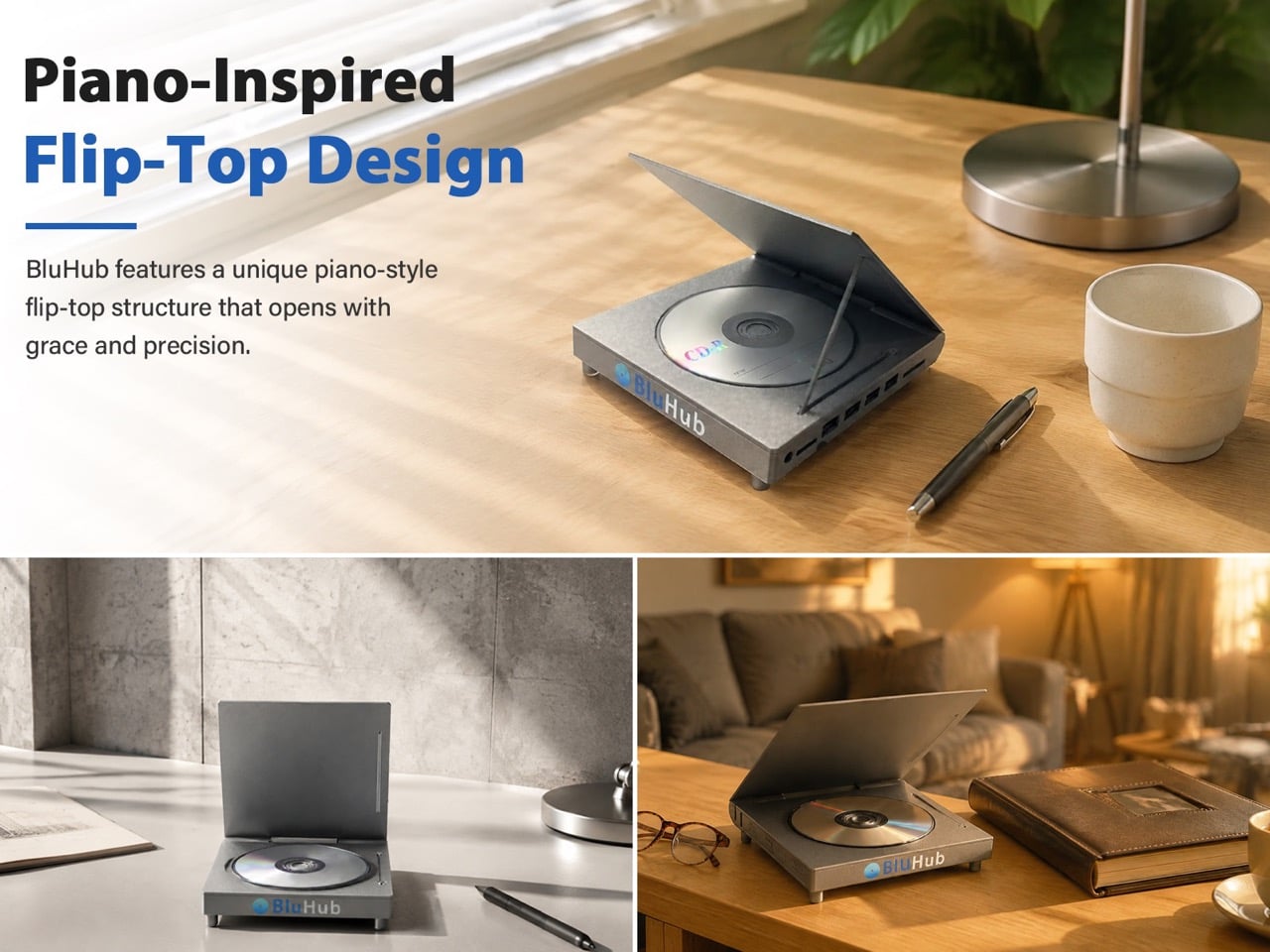
Lift the aluminum lid and it locks upright on a thin strut, holding a second disc in plain view while the internal tray reads or burns another underneath. Wang gets the credit for pushing that flip-top through, and it is the one decision here with real design lineage behind it. Dieter Rams and Hans Gugelot put a clear acrylic cover on the Braun SK4 in 1956 and people nicknamed it Snow White’s Coffin, because for the first time a machine let you watch it think. Naoto Fukasawa did the same trick differently in 2000, hanging a Muji CD player on the wall so the spinning disc became the whole point of looking at it. Laptops spent the two decades after that hiding the mechanism, then removing it. BluHub just quietly puts it back where you can see it.

Apple pulled the optical drive from the MacBook Pro in 2012 and called it progress, and every Windows manufacturer followed within a few years, chasing thinner chassis and lighter shipping weights. That trade made sense for a while, streaming was cheap, storage was cheap, and nobody missed the disc tray. It also happened to be the moment computing quietly stopped selling you a machine that could read what you owned outright and started renting you access instead. The optical drive was the last piece of hardware standing between a consumer and a library they fully controlled, no account required, no revocation possible. Bringing it back as an external accessory does not undo that shift, but it does hand the option back to anyone who wants it.
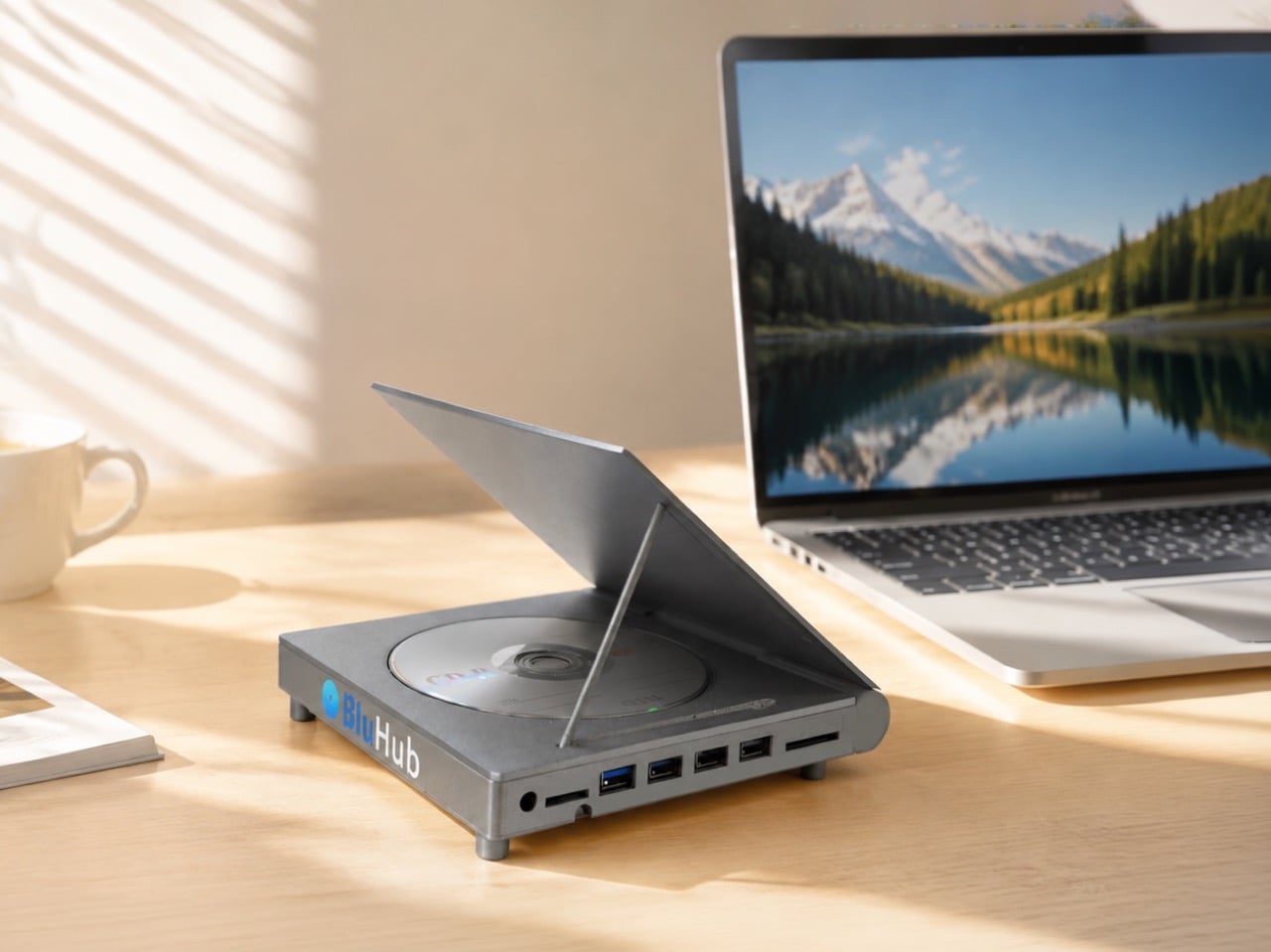
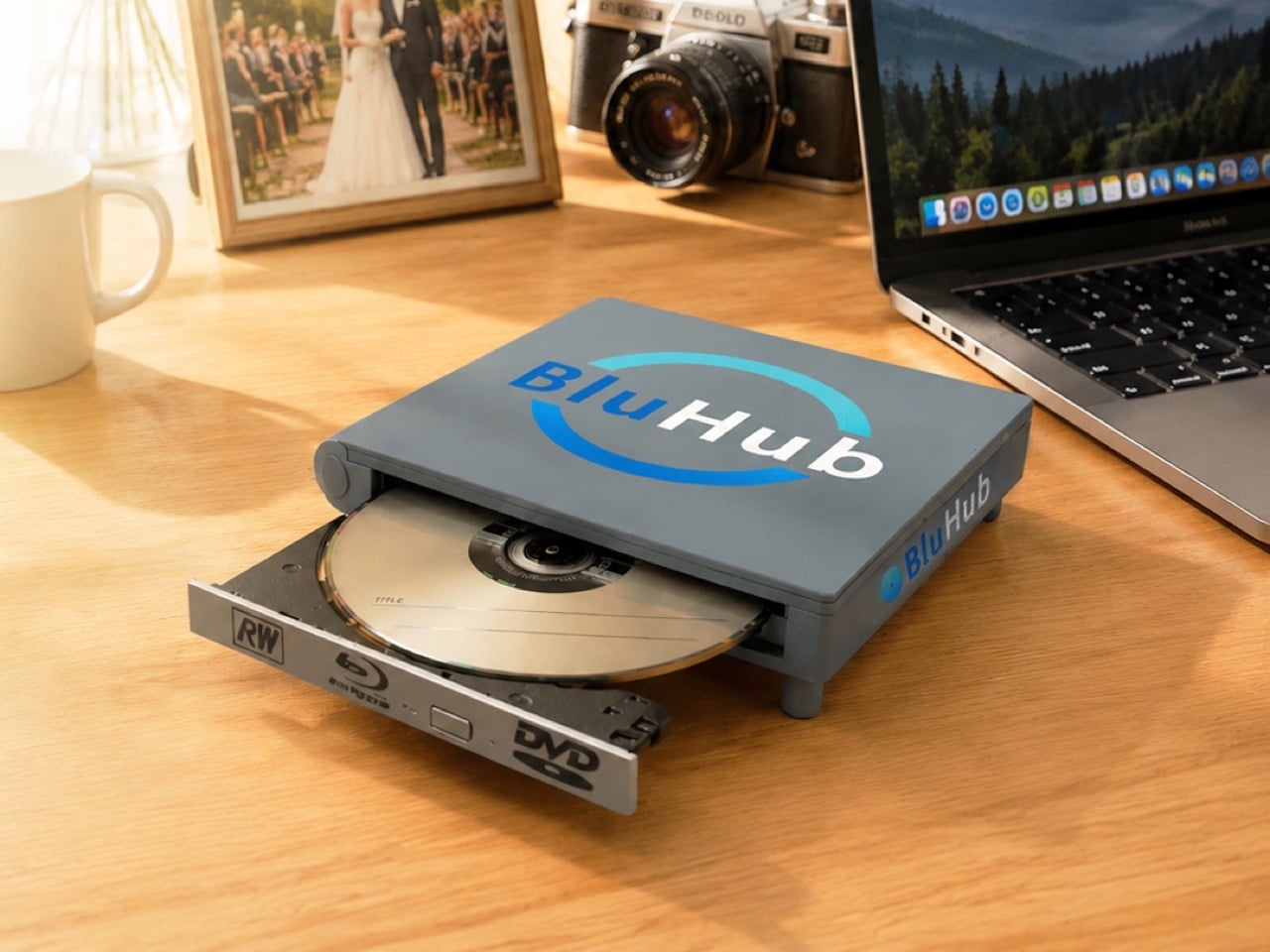
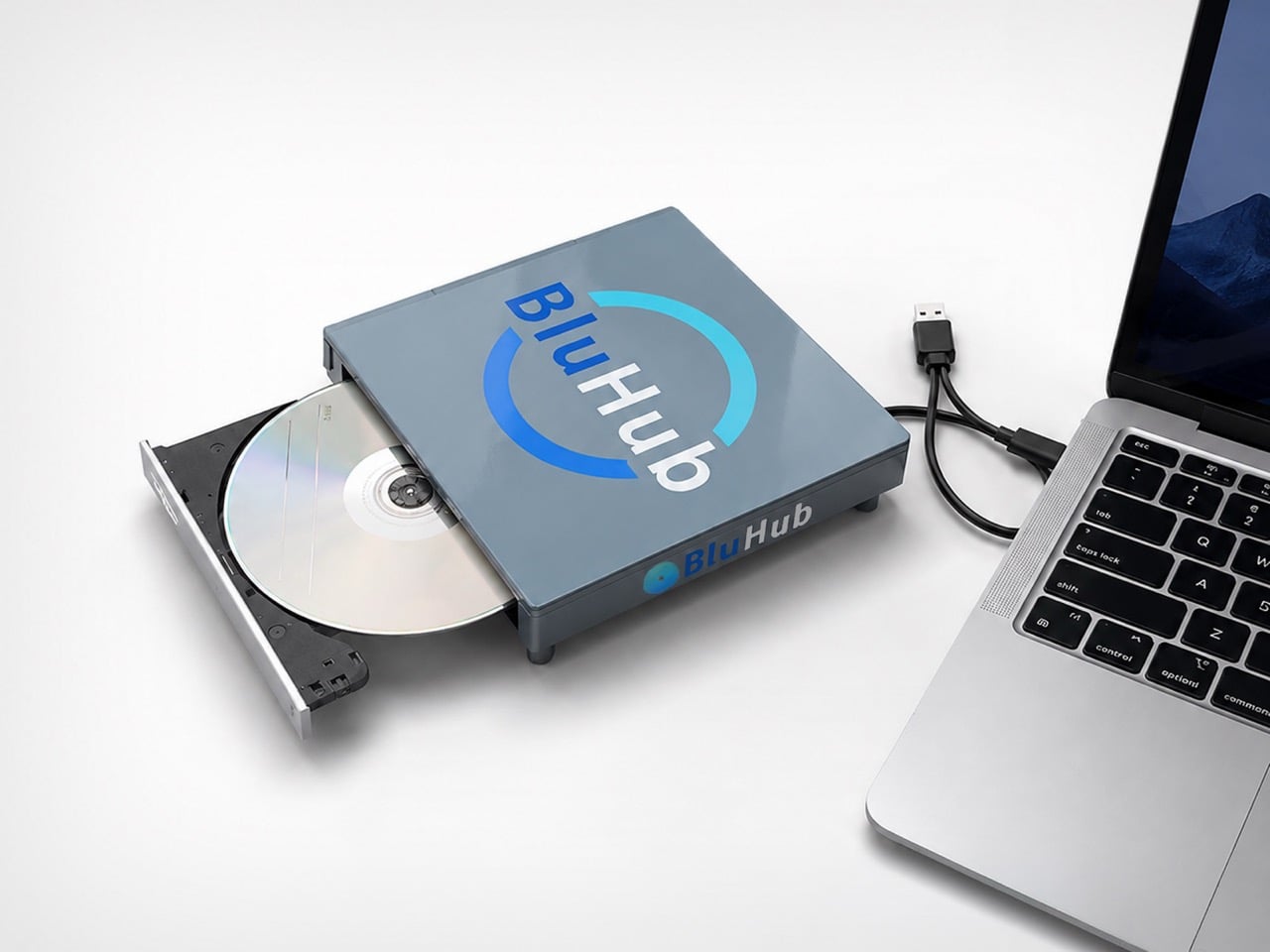
Aluminum alloy covers a 165 x 160 x 34mm footprint, sitting on four anti-vibration feet with a claimed sub-30dB noise floor while burning. A captive USB-C and USB-A cable stows in a channel underneath, so there is nothing loose to lose in a drawer. Every USB hub I have ever owned has shed its cable within a year, and building the cord into the chassis is the kind of unglamorous fix that never makes a keynote but genuinely improves daily use. Four USB 3.0 ports, an SD slot and a microSD slot round out the connectivity, all riding a shared USB 3.2 Gen2 pipe rated at 10Gbps rather than 10Gbps per port, worth knowing before a card dump and a disc burn compete for bandwidth at the same time. Compatibility spans Windows, macOS, Linux and ChromeOS, plus iPadOS and Android over OTG.
A 1TB SSD costs roughly double what it did in late 2025, chased there by an AI-driven NAND shortage that shows no sign of easing before 2027. RAM prices are climbing for the same reason. Sony confirmed this July that PlayStation physical discs stop being produced altogether by 2028, one more signal that game ownership is headed the way of movie ownership already went. Against that backdrop, a $55 hub that turns a five dollar disc into 100GB of storage nobody can revoke reads less like nostalgia and more like a hedge. The piano lid is what got me. The timing is what makes the argument.
BluHub is available through its Kickstarter campaign, with the early bird sitting at $59 against a stated $129 retail price. Multi-unit bundles run $109 for two, $159 for three and $259 for five. Shipping is estimated for November 2026, with delivery fees of $6 to $7 in the US and comparable rates internationally.
Click Here to Buy Now: $59 $129 (54% off) Hurry! Only 6 days left.