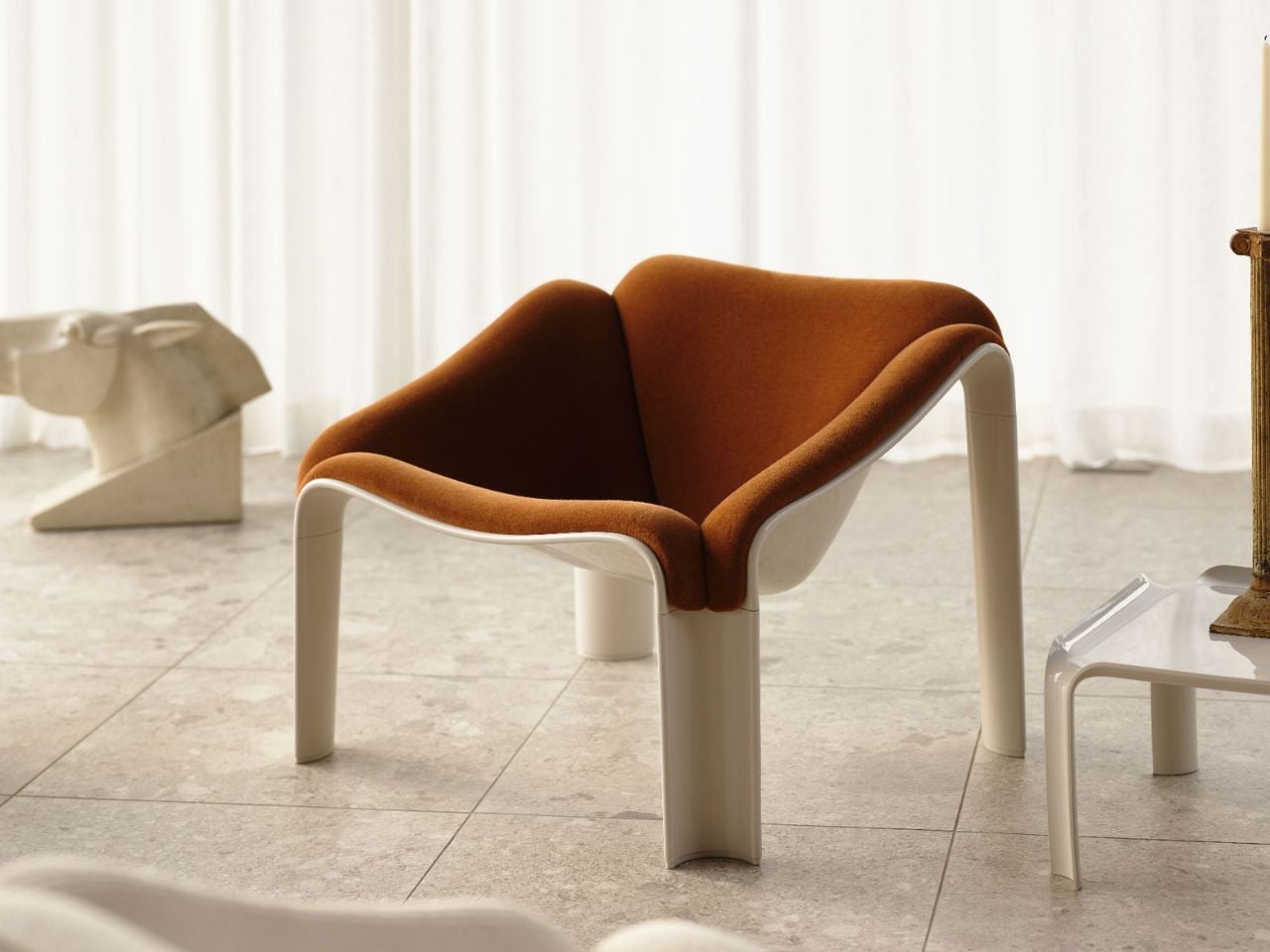
Some pieces of furniture explain themselves immediately. Others ask you to slow down for a second. Pierre Paulin’s F300 Lounge Chair belongs to the second category. Originally designed in the late 1960s and now reissued by GUBI, the chair still has the strange, magnetic presence of an object that refuses to behave like conventional seating.
At first glance, the F300 looks almost poured into existence. Its body is a single, continuous form, low to the ground and generous in width, with no obvious separation between seat, back, or base. There are no legs to visually interrupt the silhouette, no hard frame, no decorative detailing. Just a smooth, sculptural sweep that seems to shift depending on where you stand. From one angle, it feels futuristic. From another, it looks relaxed, almost playful. That tension is where much of its charm lives.
Designer: GUBI
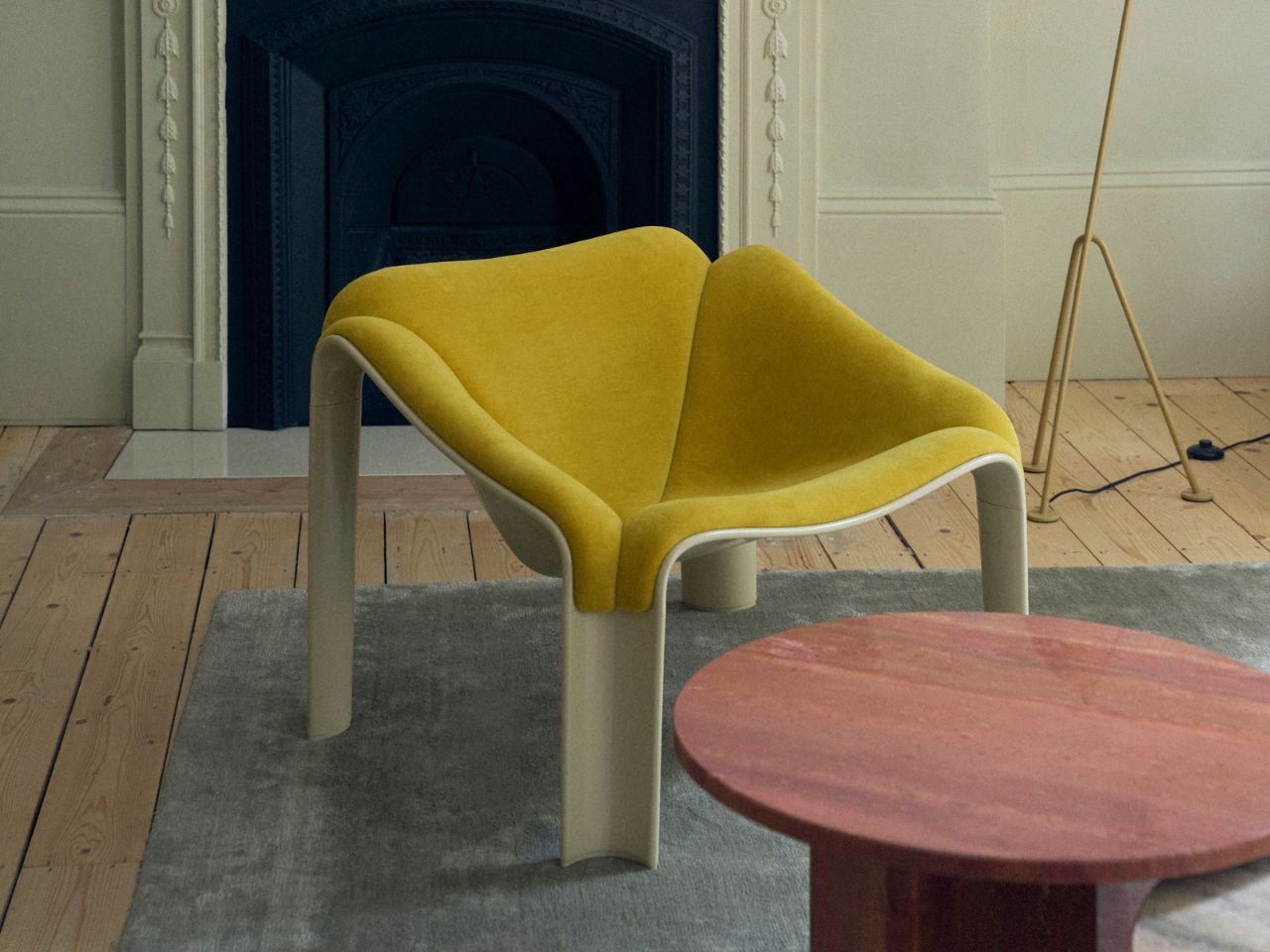
Paulin designed the chair during a period when furniture was beginning to loosen up. Domestic life was changing, and so was the way people wanted to sit, gather, lounge, and move through interiors. The F300 captures that cultural shift beautifully. It does not dictate posture. It does not tell the body to sit upright, stay centered, or behave. Instead, it gives the sitter permission to settle in however they want. You can lean back, turn sideways, curl your legs beneath you, or stretch out with a book nearby. The chair works less like a fixed seat and more like a landscape for the body.
That sense of openness is what makes the F300 feel so current, even decades after its original release. Many lounge chairs are designed around comfort, but comfort often comes with bulk or visual heaviness. Paulin managed to avoid that. The F300 is roomy without feeling clumsy, expressive without being loud, and sculptural without becoming precious. It has the confidence of a design icon, but it still feels approachable enough to be used every day.
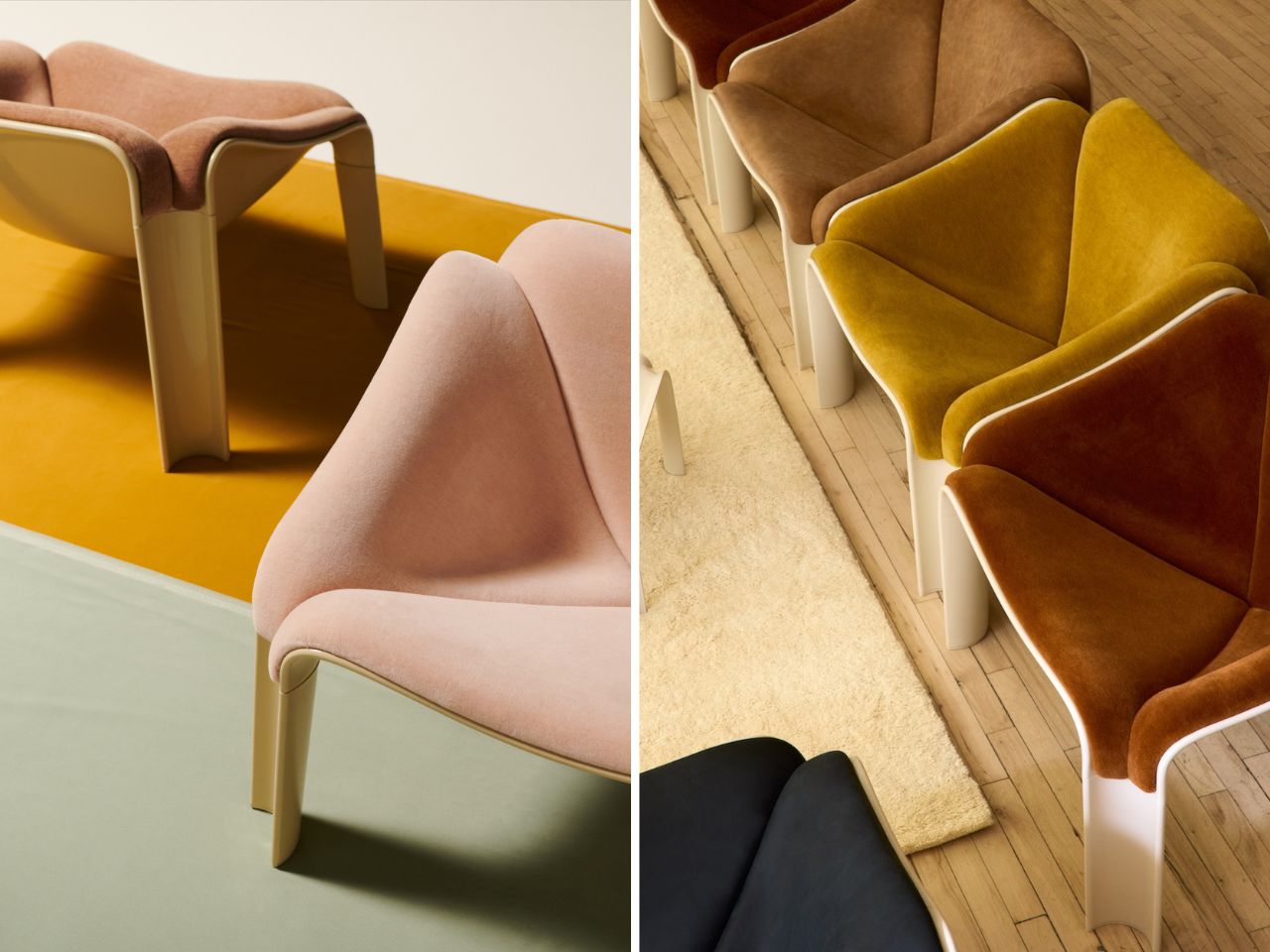
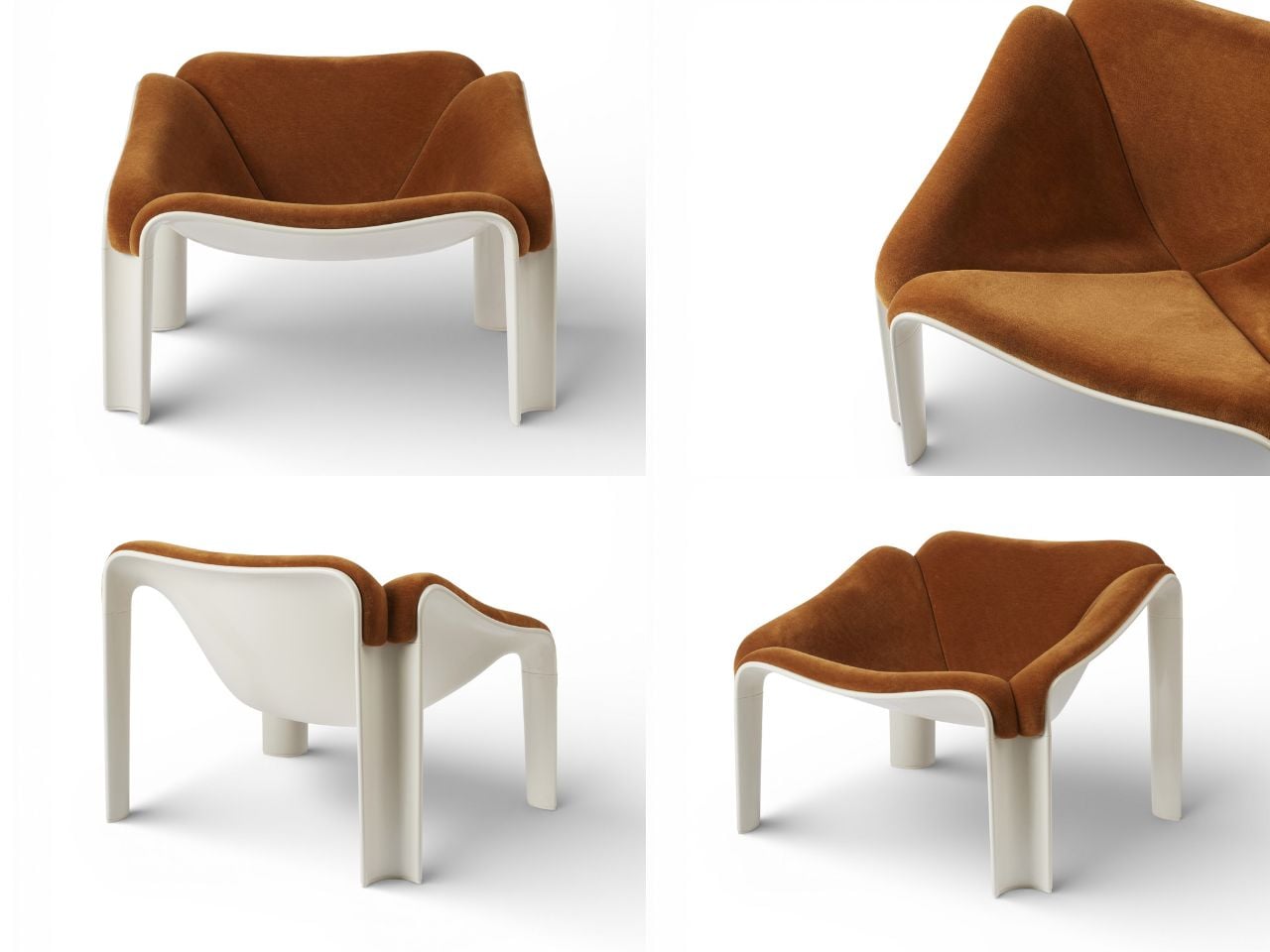
For the reissue, GUBI has preserved the original geometry while updating the chair’s material composition for contemporary use. The new shell is made from HiREK, an engineered polymer that incorporates recycled industrial plastic. This change gives the chair a stronger, more durable body while keeping the uninterrupted surface that defines its character. It also makes the piece more resistant to UV exposure and outdoor conditions, allowing the F300 to move beyond the living room and into terraces, patios, poolside settings, and open-air spaces.
That material update is important because it does not treat the chair as a museum piece. Instead of freezing Paulin’s design in the past, GUBI allows it to continue living. The reissue respects the original idea while making it more useful for how people live now: across indoor and outdoor spaces, in homes that are more fluid, informal, and less bound by traditional room categories.
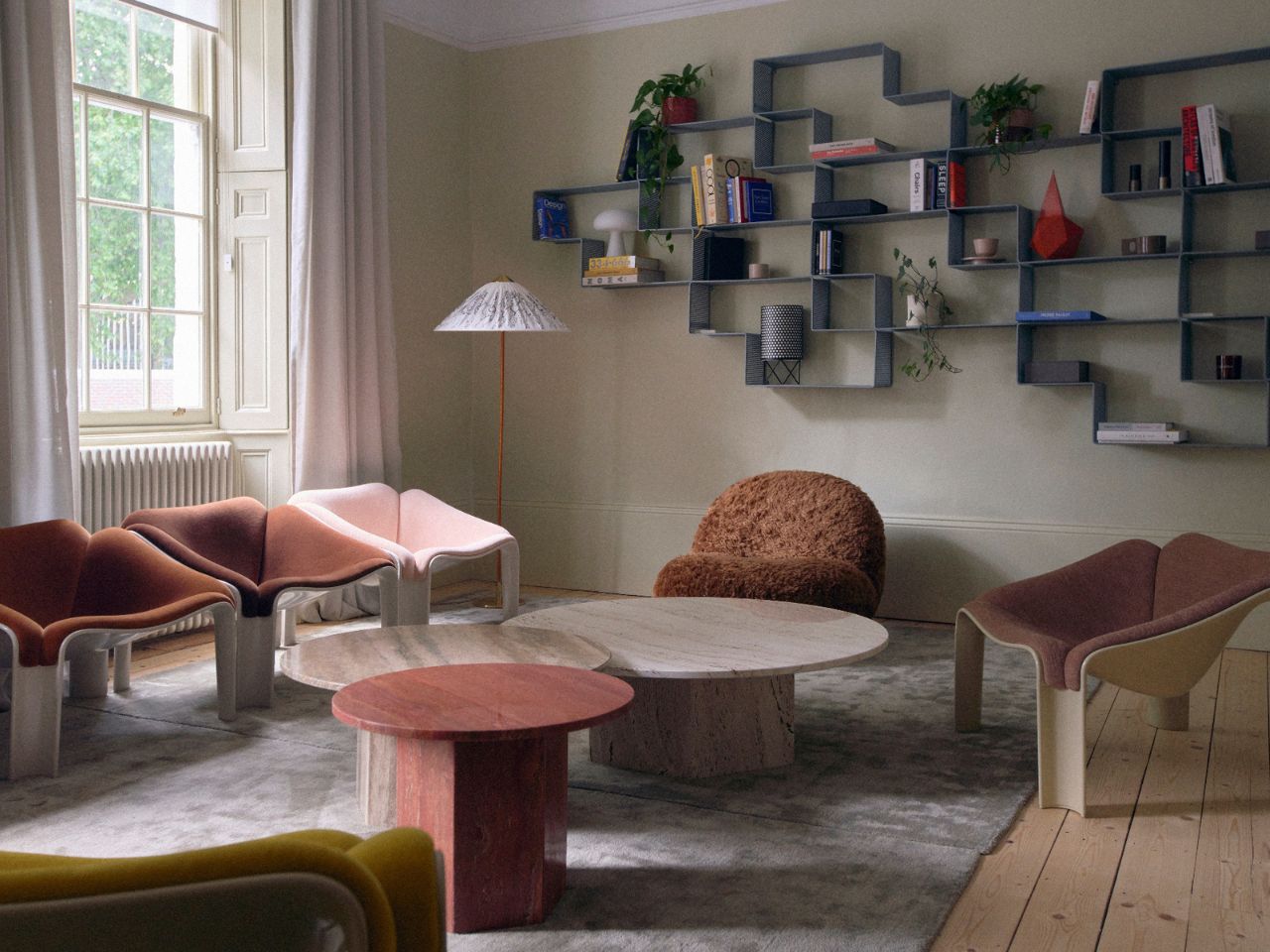
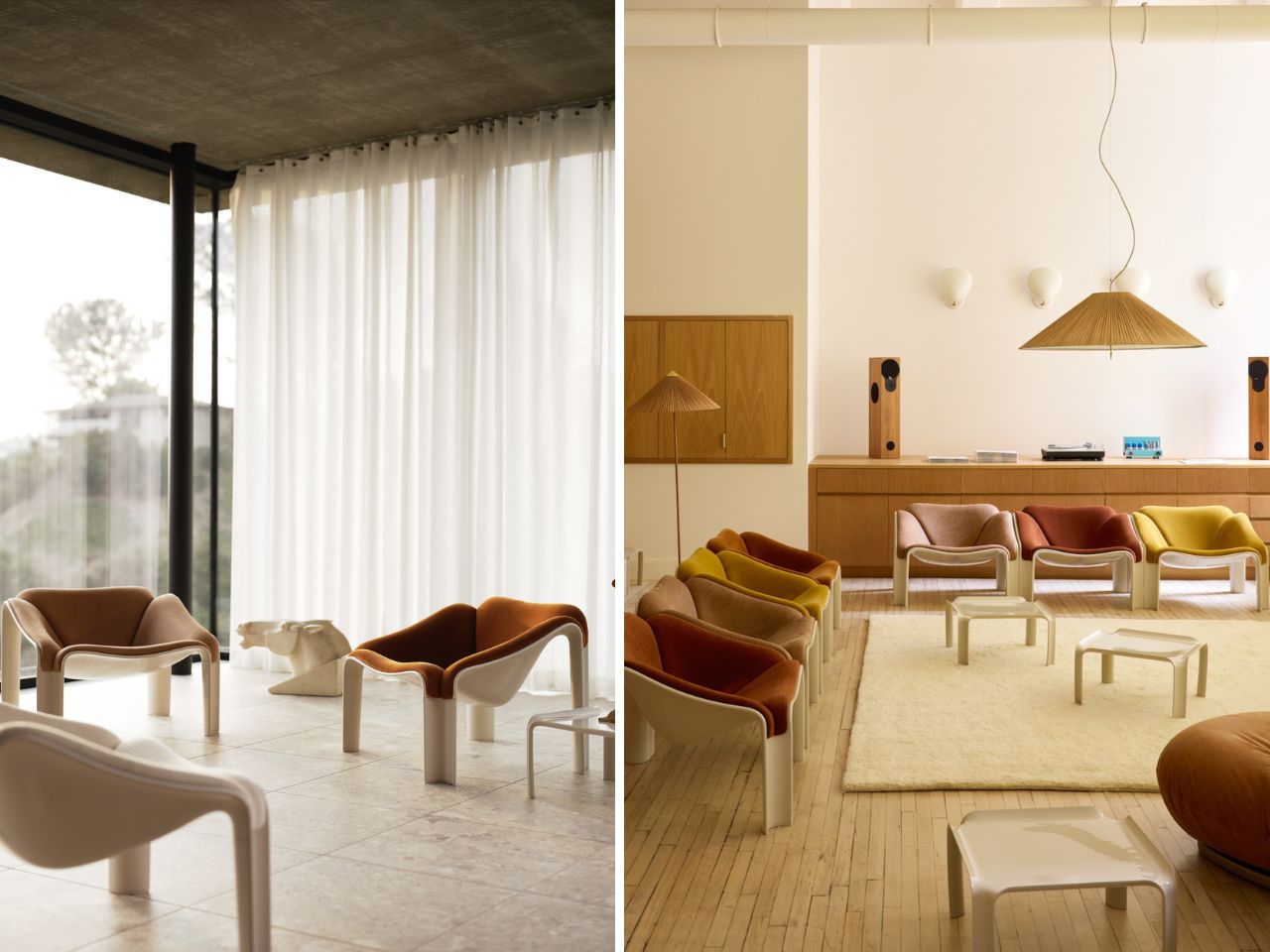
The F300 has also been relaunched alongside Paulin’s matching T877 side table. Together, the two pieces create a shared visual language of curves, openness, and ease. The table feels like a natural companion rather than an accessory, echoing the chair’s soft, sculptural logic without competing with it. Placed together, they form a small island of leisure: a place for a drink, a book, a long conversation, or no agenda at all.
What makes the F300 compelling is not only its shape, but the attitude behind it. It suggests that design can be bold without being uncomfortable, experimental without being alienating, and relaxed without disappearing into the background. More than half a century after Paulin first imagined it, the chair still feels fresh because it was never simply about style. It was about freedom: freedom of posture, freedom of use, and freedom from the rigid expectations of what a lounge chair should be.