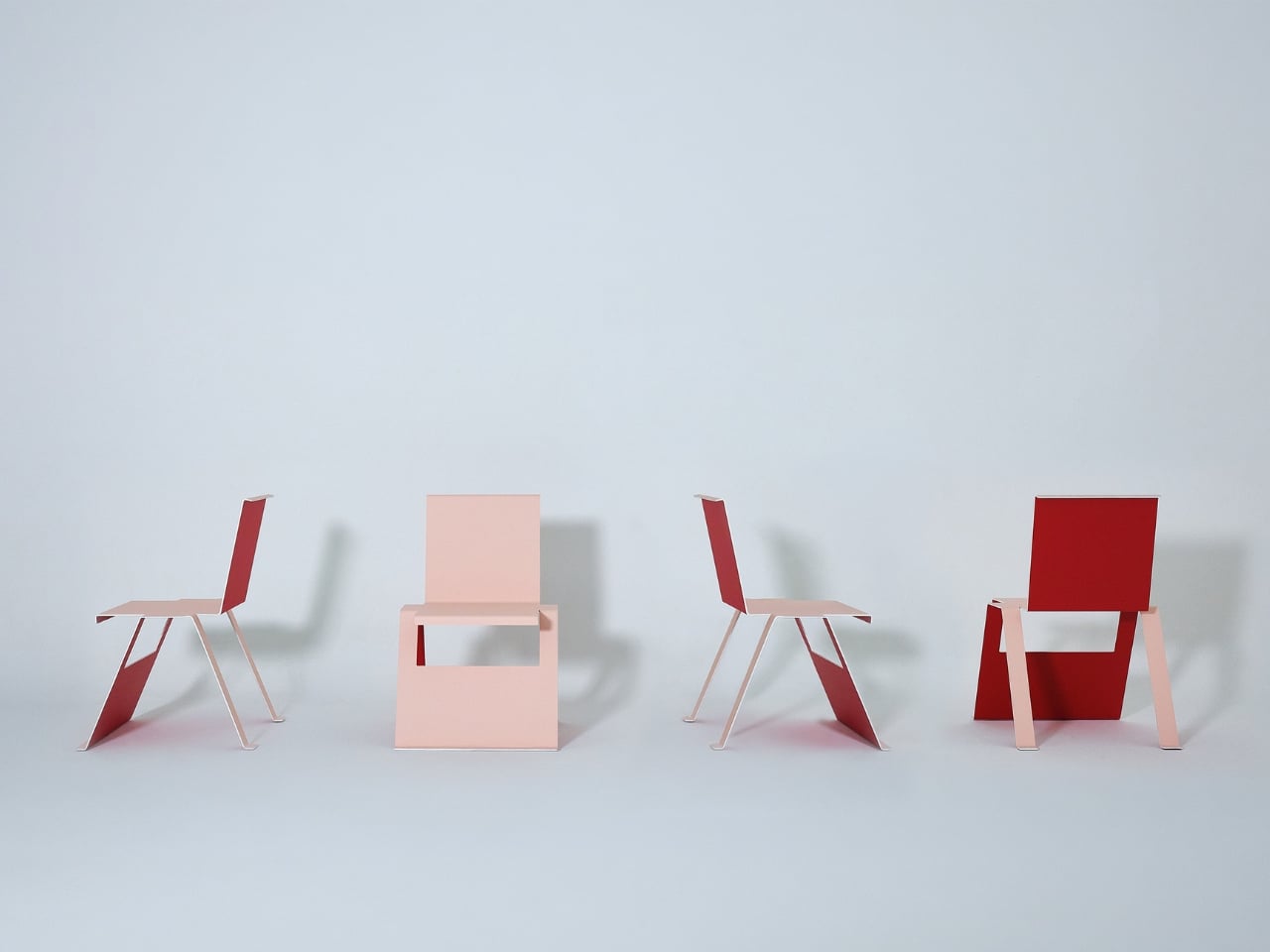
You know that double-sided colored paper, one side red, one side white, the kind you’d fold into cranes and fortune tellers as a kid? Seoul-based GANG Studio turned that memory into a chair, and somehow it works completely.
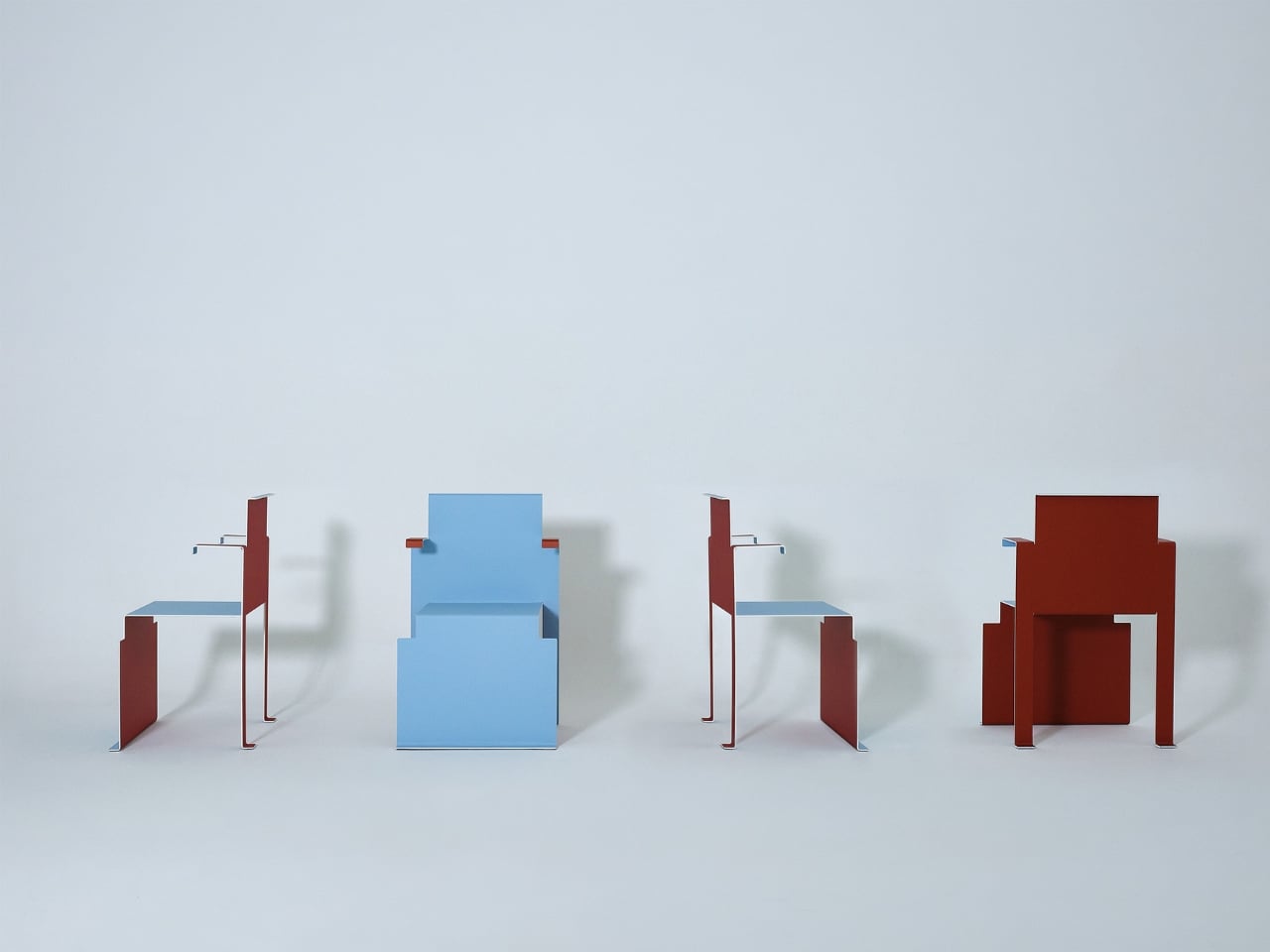
The Flip Chair, a 2026 artisanal project by designer Byungwook Gang, takes its core concept directly from 색종이, the double-sided colored paper that’s a staple of Korean childhood craft. The idea is simple: a sheet that reveals a completely different color depending on which way you look at it. Applied to furniture, this translates into metal sheets where the front face and the back face carry contrasting hues, so the chair literally changes character depending on the angle you’re viewing it from. The name isn’t just clever. It’s the whole point.
Designer: GANG Studio
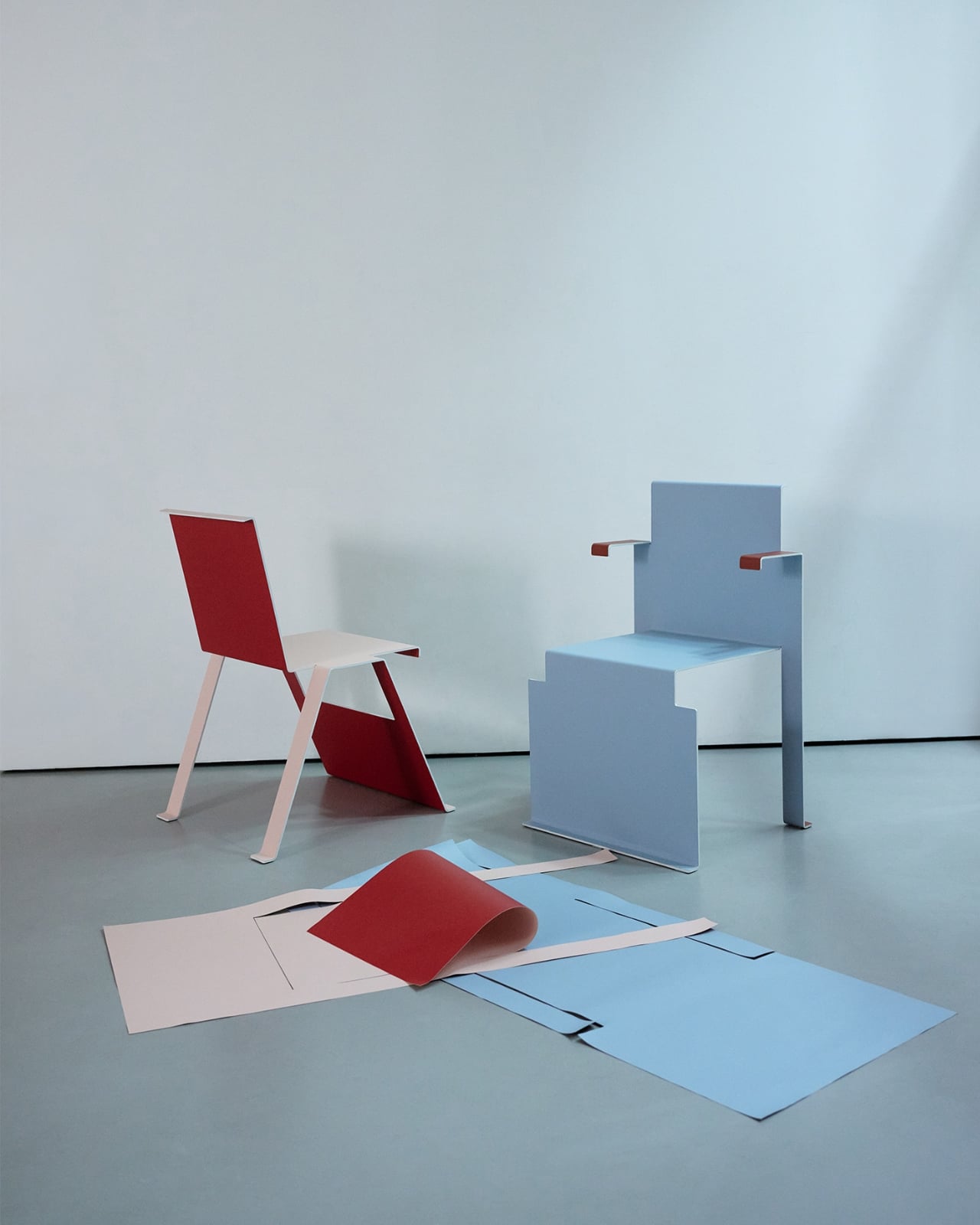
What makes this genuinely interesting, and not just Instagram-interesting, is how deliberate the idea is. Good furniture design usually asks you to look at it from one preferred angle, the hero shot that ended up on the mood board. The Flip Chair refuses to cooperate with that logic. It doesn’t have a wrong side or a right side. You get two chairs for the price of one visual experience, depending on where you’re standing in the room. For anyone who’s ever turned a piece around and liked the back better, that feels quietly radical.
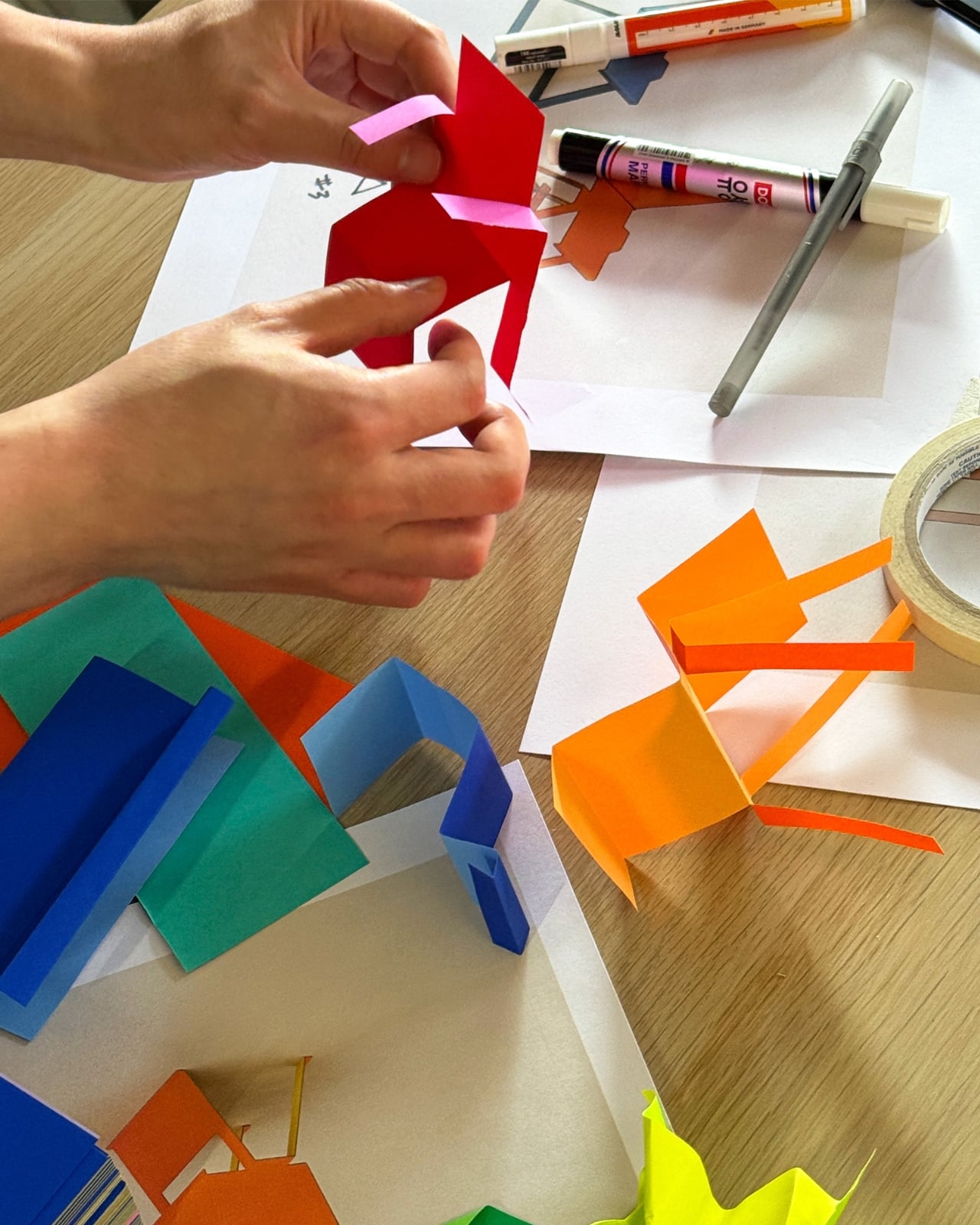
Byungwook Gang leads GANG Studio out of Seoul with the kind of quietly confident focus that makes you pay attention. The studio’s philosophy centers on weaving stories into everyday objects, from furniture and decorative items to consumer electronics. That mission statement could easily sound generic, but the Flip Chair is proof it means something in practice. The story isn’t buried in a press release. It’s right there, written into the object’s surface.
Korean design has been having a real moment internationally, and it’s not hard to see why when studios like GANG are pushing this kind of thinking. The country’s design culture has always carried a sophisticated relationship with materiality and craft, from traditional lacquerwork to contemporary lighting, and what’s emerging right now feels less like trend-chasing and more like a design community that has genuinely found its own voice. The Flip Chair sits comfortably inside that story without having to announce it.
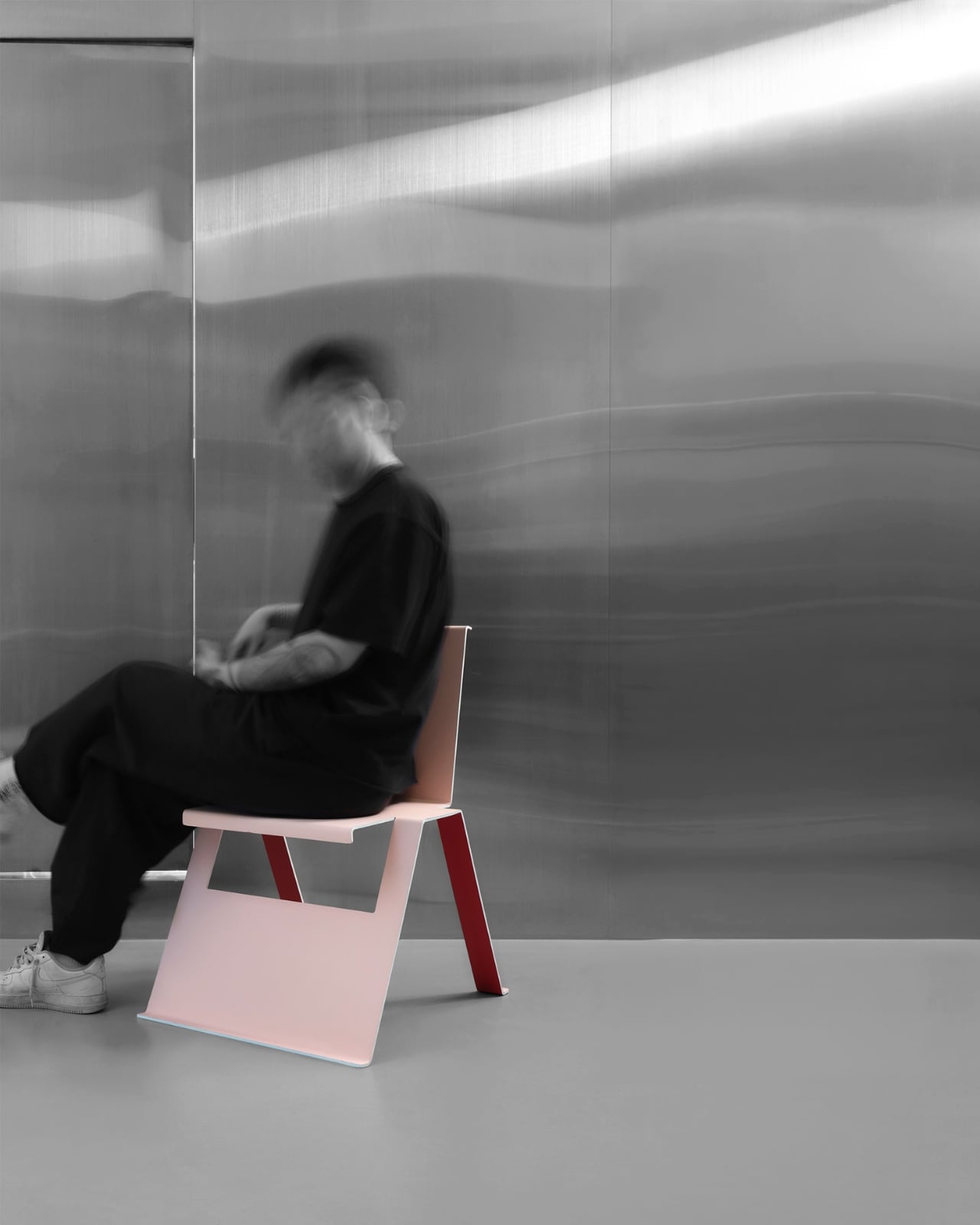
The artisanal classification matters here too. This isn’t a piece designed for mass production, and you can feel that intention in the concept itself. A factory-scaled version of this chair would probably flatten its meaning, turn it into a gimmick, a color-block moment for a hotel lobby. Made by hand, the dual-color metal sheet carries weight, both literally and metaphorically. The idea of someone deliberately choosing which side faces outward begins to feel like a quiet conversation between maker and owner.
I’ll be honest: the childhood reference hits. Design that reaches into universal memory without tipping into sentimentality is genuinely difficult to pull off. The best of it makes you feel like the designer found something you’d forgotten you knew. The Flip Chair does exactly that. You don’t need to have grown up folding 색종이 to immediately understand what it means to have something that looks completely different depending on how you hold it. That’s a deeply human experience, and a clever one to build a chair around.
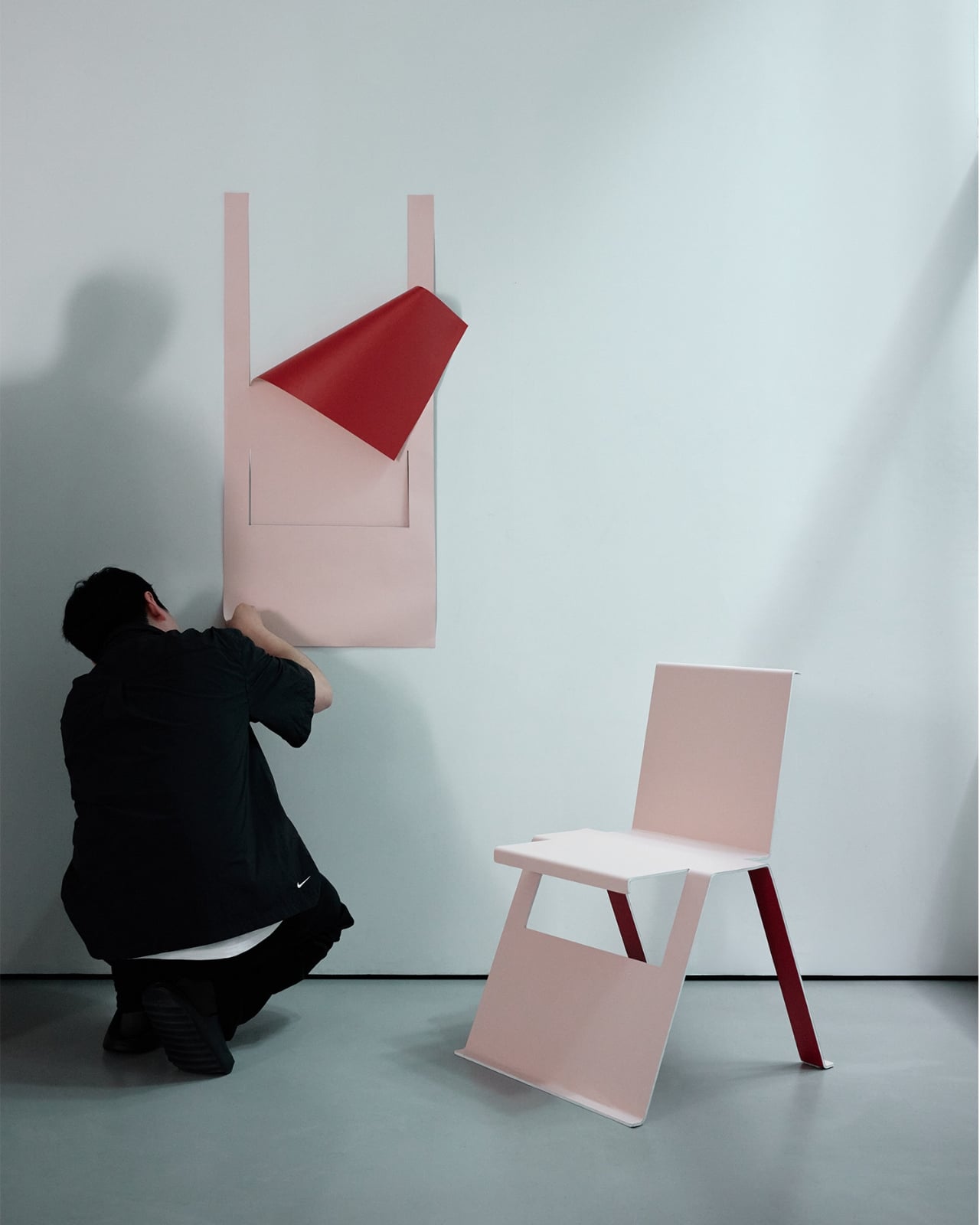
It also raises a question that more furniture designers should probably be asking: what happens to an object’s meaning when its appearance shifts with perspective? Most furniture is designed to be consistent, predictable, fully resolved. The Flip Chair introduces a small, deliberate amount of ambiguity into a category that rarely invites it. And that’s the kind of move that tends to stay with you long after you’ve scrolled past the renders.
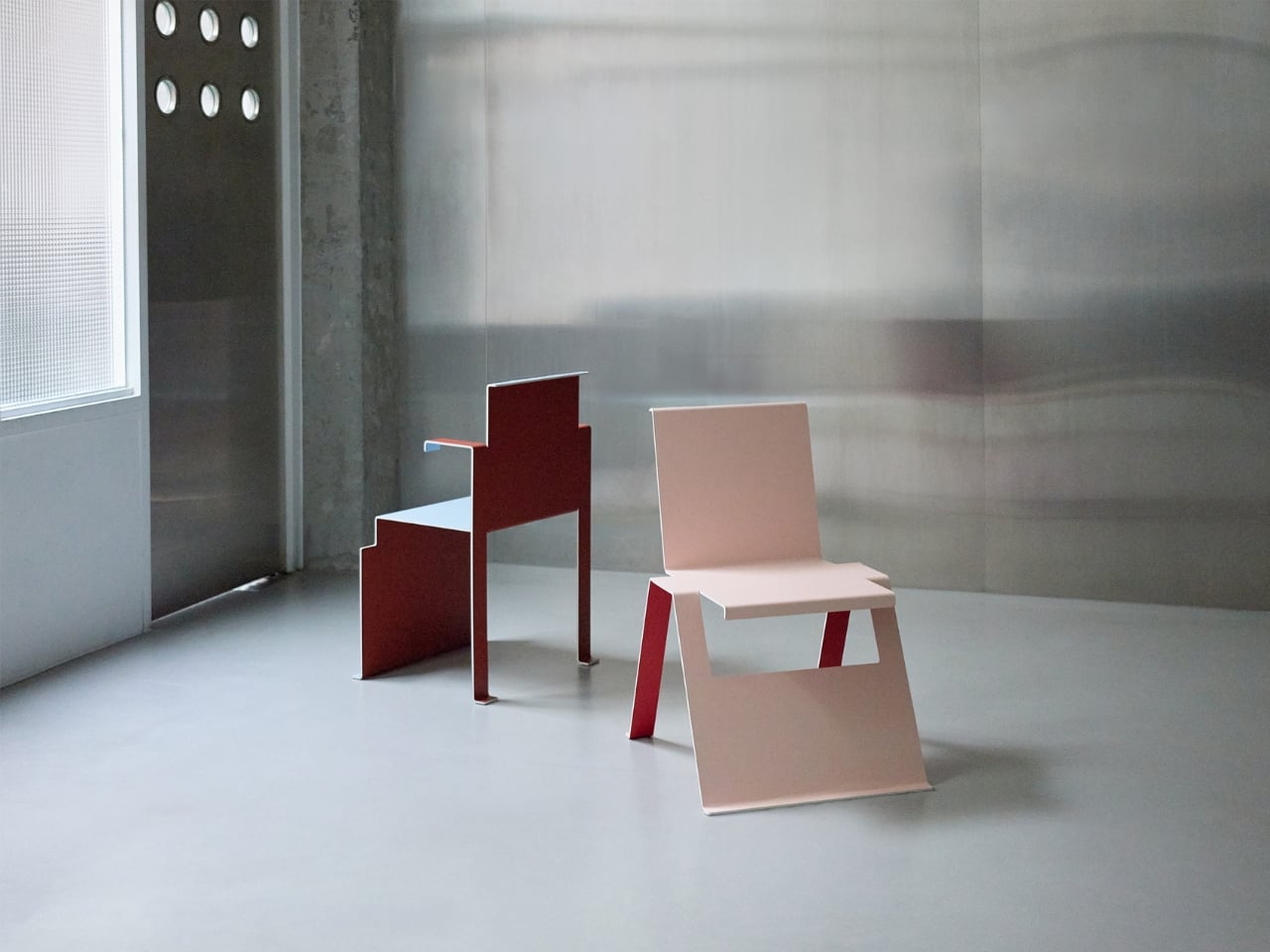
GANG Studio isn’t trying to reinvent the chair. It’s doing something harder: giving a familiar form a genuine idea to carry. The Flip Chair is the kind of piece you’d want in a corner of a room not just because it looks good, but because it keeps making you look again.