Most decorative lighting doesn’t ask much of you. It sits on a shelf, does its job, and eventually gets replaced when something newer or cheaper comes along. The design industry produces objects by the millions, and very few of them carry any real sense of craft or intention. Even those marketed as artisanal tend to follow predictable patterns, rarely drawing from the natural world in any genuinely meaningful way.
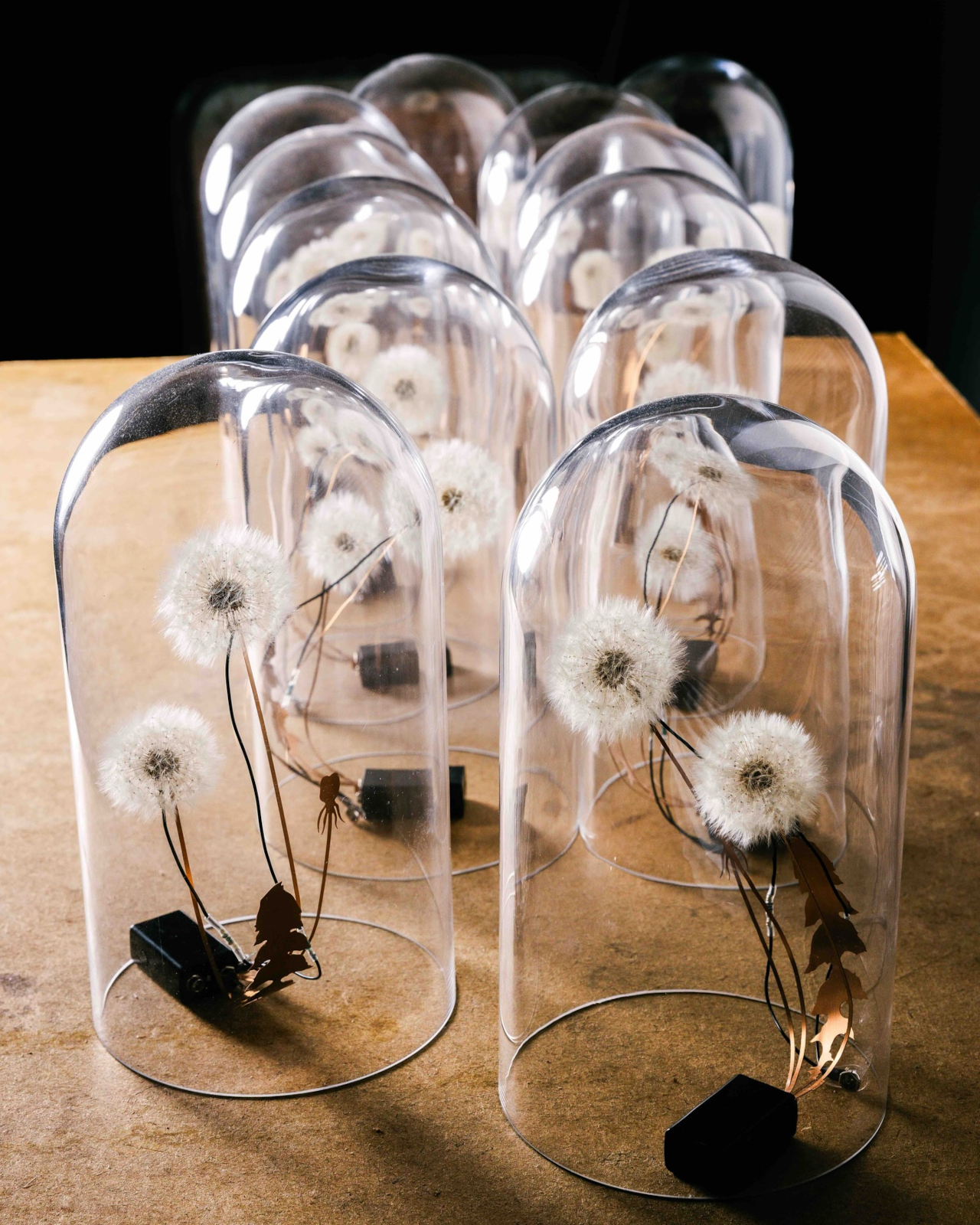
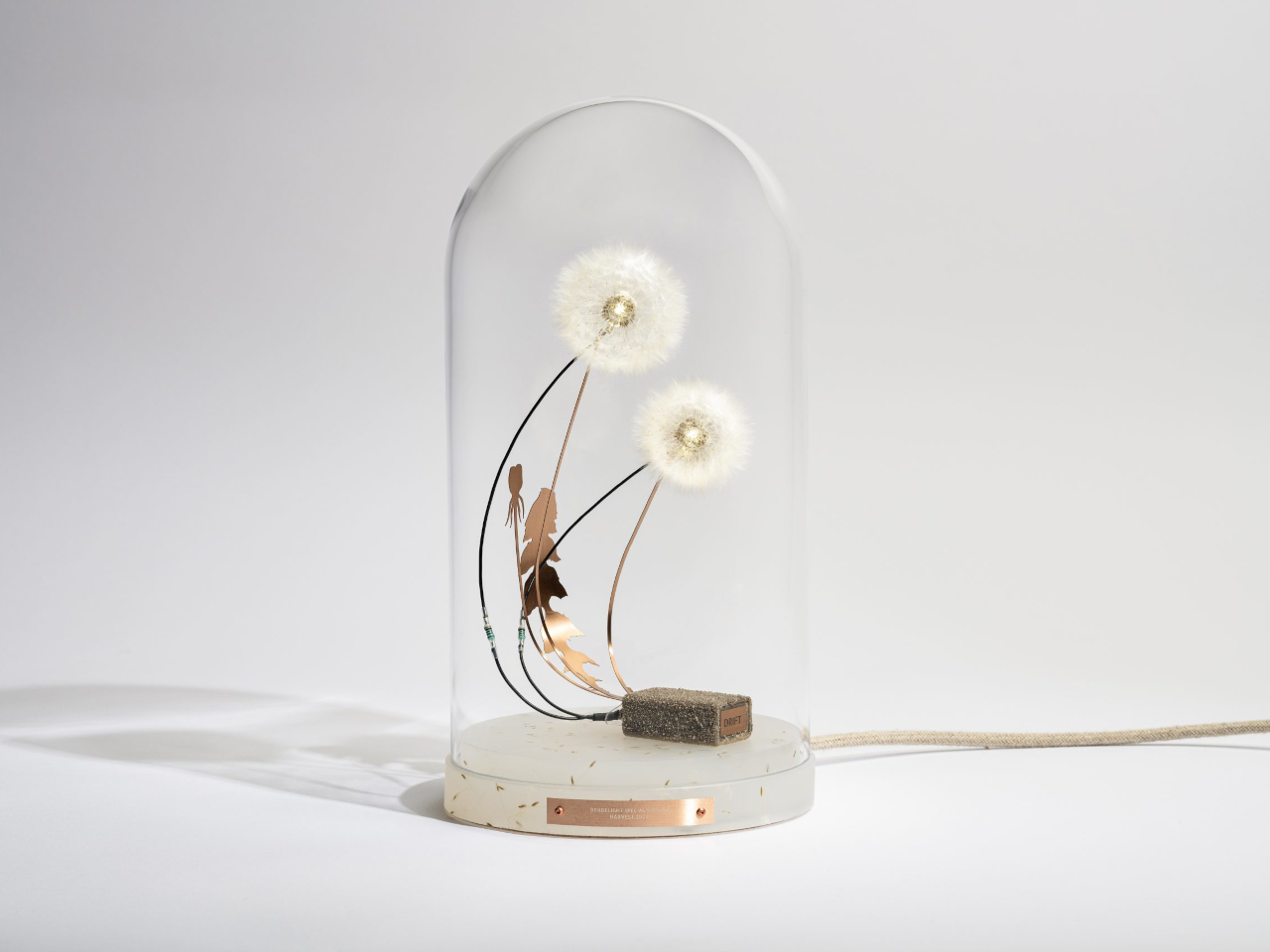
That’s what makes the Dandelight from Studio Drift so quietly disarming. It’s a small table lamp, but its material isn’t glass or ceramic or carved wood. It’s a real dandelion, handpicked during spring in the Netherlands, its seeds attached one by one to a tiny LED. Designers Lonneke Gordijn and Ralph Nauta first conceived it in 2007 as a statement against mass production and throwaway habits in design.
Designers: Lonneke Gordijn and Ralph Nauta (Studio DRIFT)
Dandelions grow practically everywhere, from pristine meadows to the edges of busy highways, yet most adults barely register them. They’re generally dismissed as weeds, which makes it easy to overlook that they’re historically prized for their medicinal value and that their seed heads are among nature’s most precisely engineered structures. Studio Drift’s interest in them isn’t sentimental; it comes from a genuine curiosity about what nature quietly constructs and what that construction might illuminate.
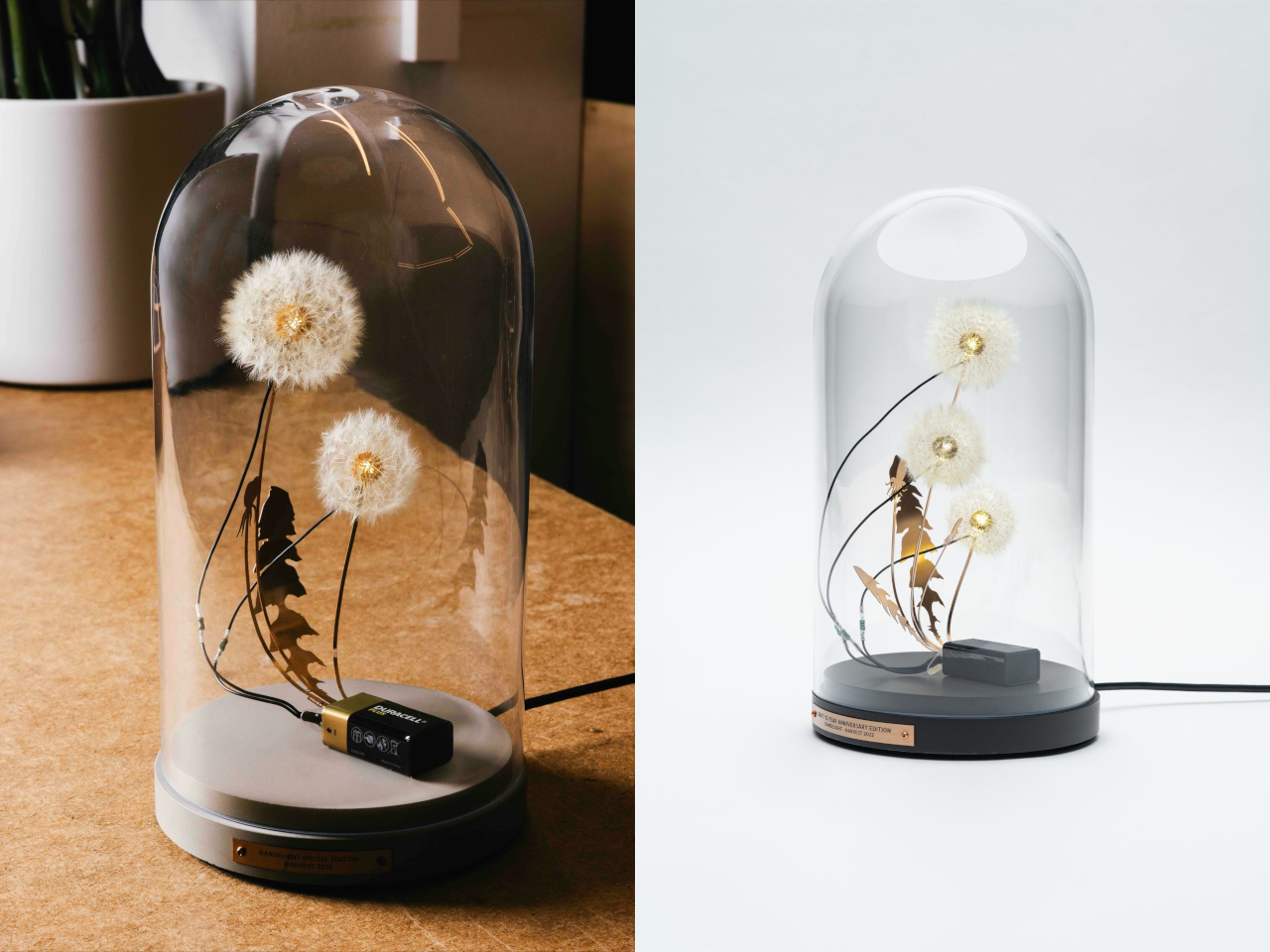

Put it on a bedside table or a windowsill, and the glow that filters through those fragile seeds isn’t harsh or bright. It’s soft and diffused, the kind of light that tells a room to settle down for the evening. The dandelion isn’t decorating the lamp; the dandelion is the lamp, and that distinction changes everything about how you experience it and, perhaps, the plant itself.
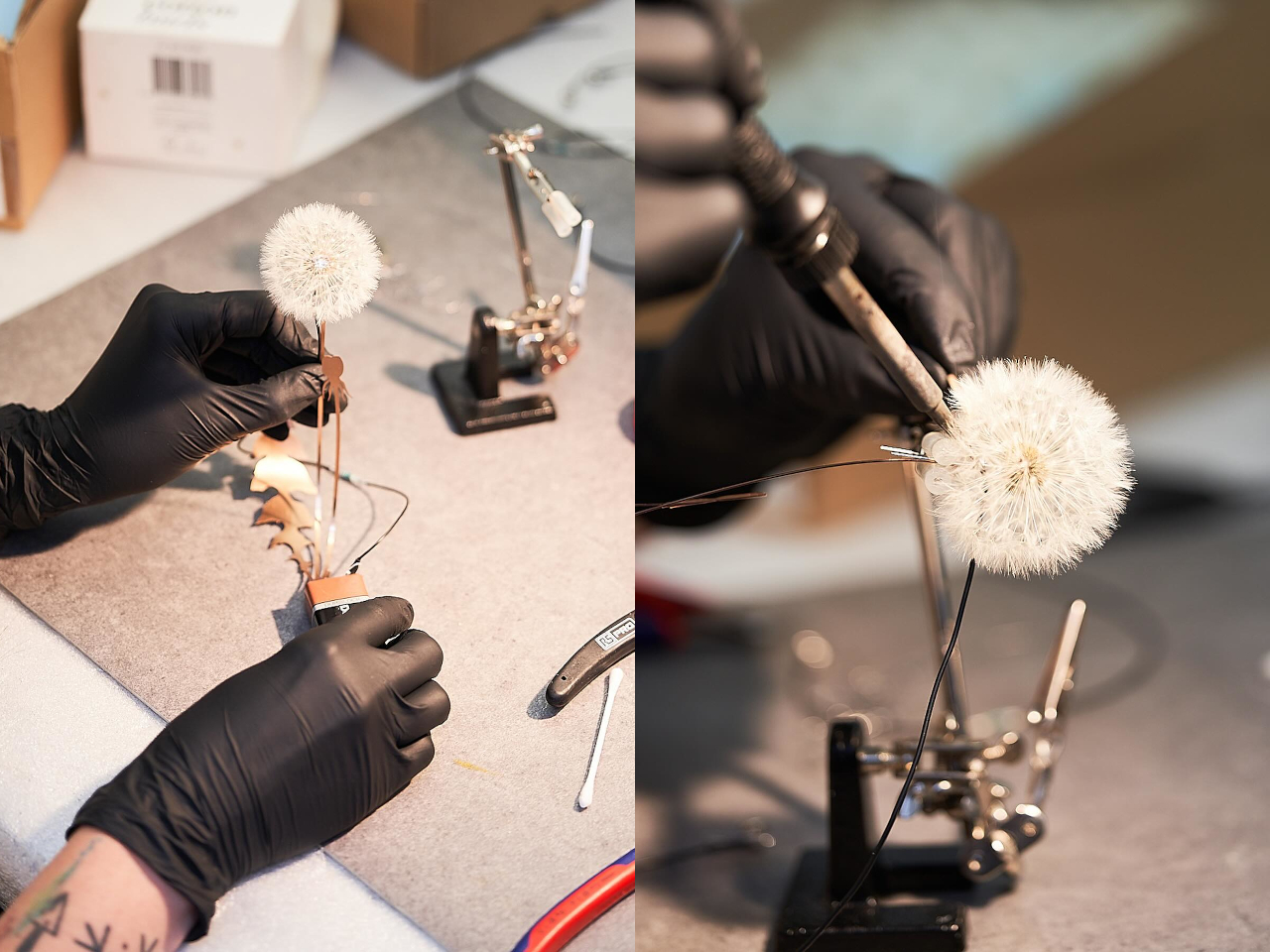
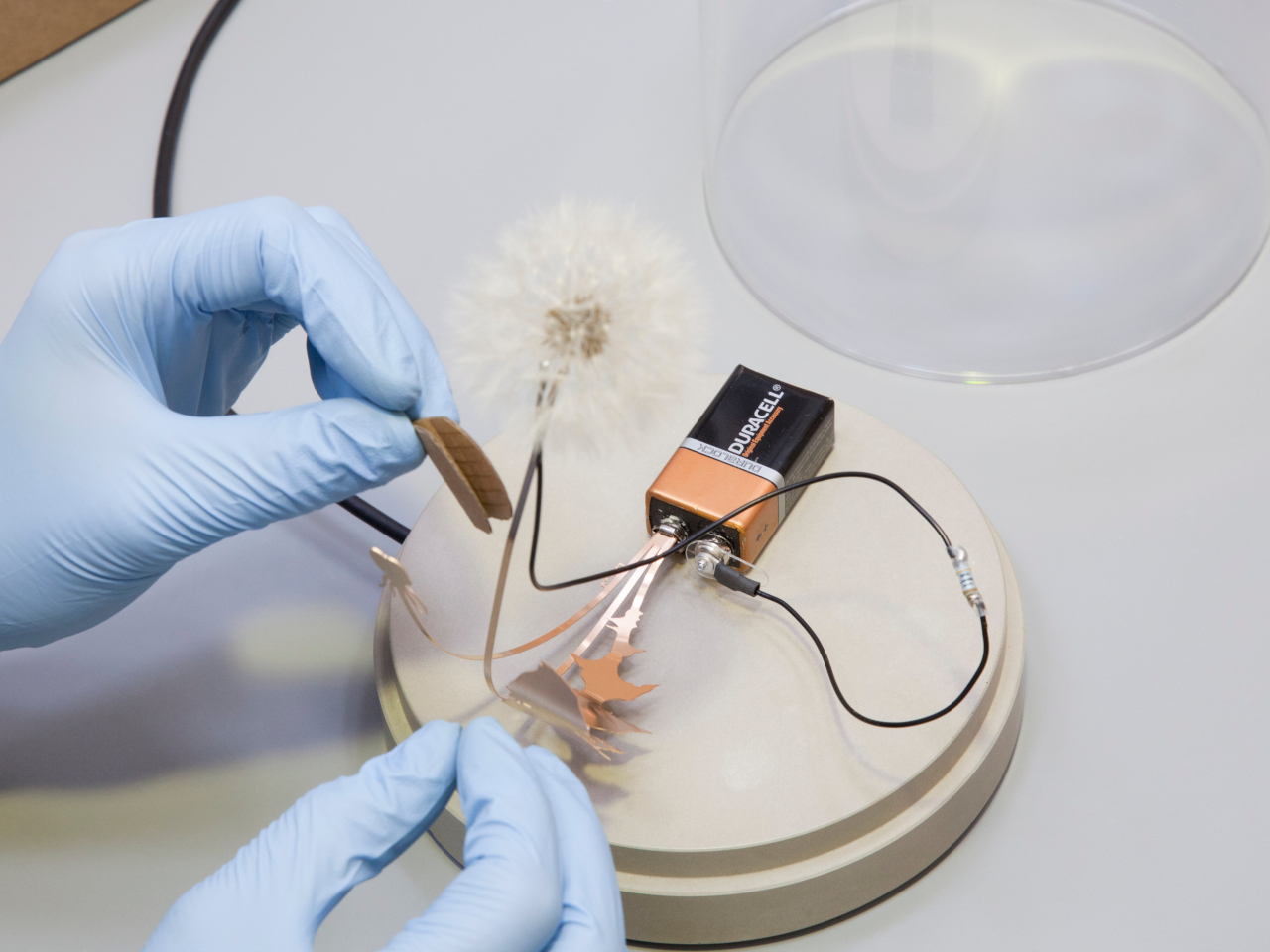
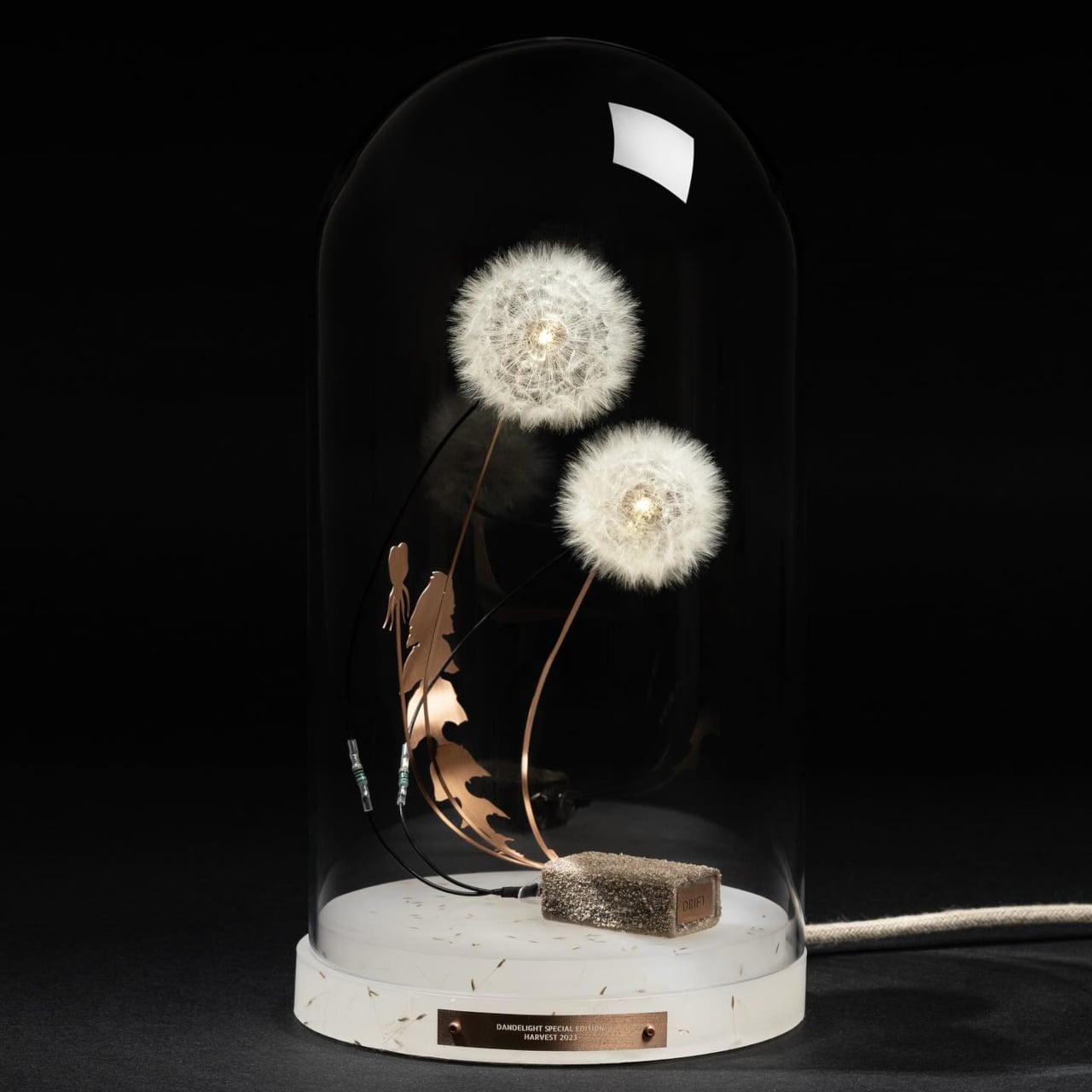
The making is as deliberate as the idea. During spring, the studio handpicks dandelions and attaches each seed to an LED, one at a time. A slender phosphorus bronze stem carries the current to a battery, which sits in plain view rather than tucked out of sight. That visible battery isn’t an oversight; it’s a reminder that the object owes nothing to any pretense of effortless production.
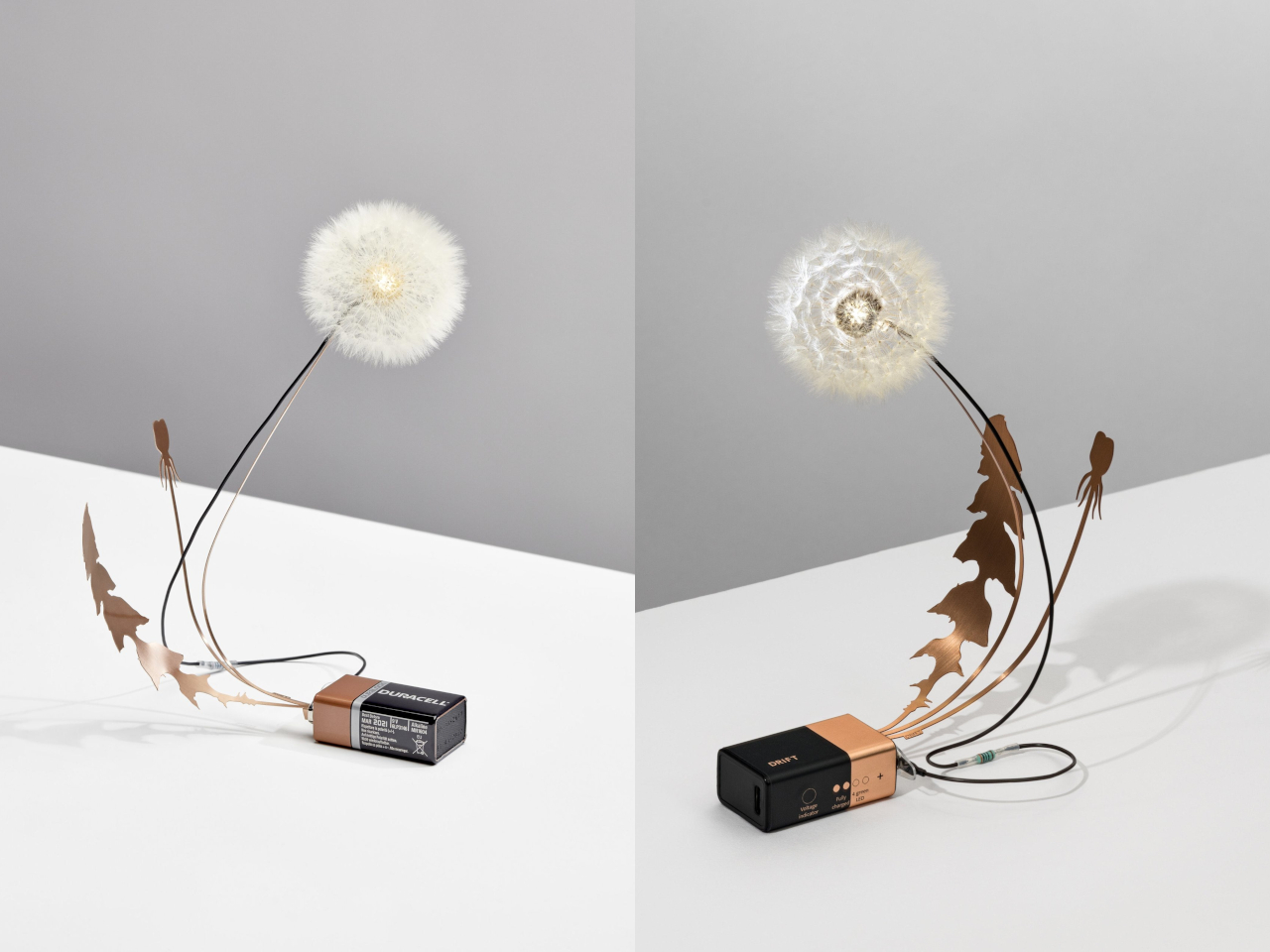
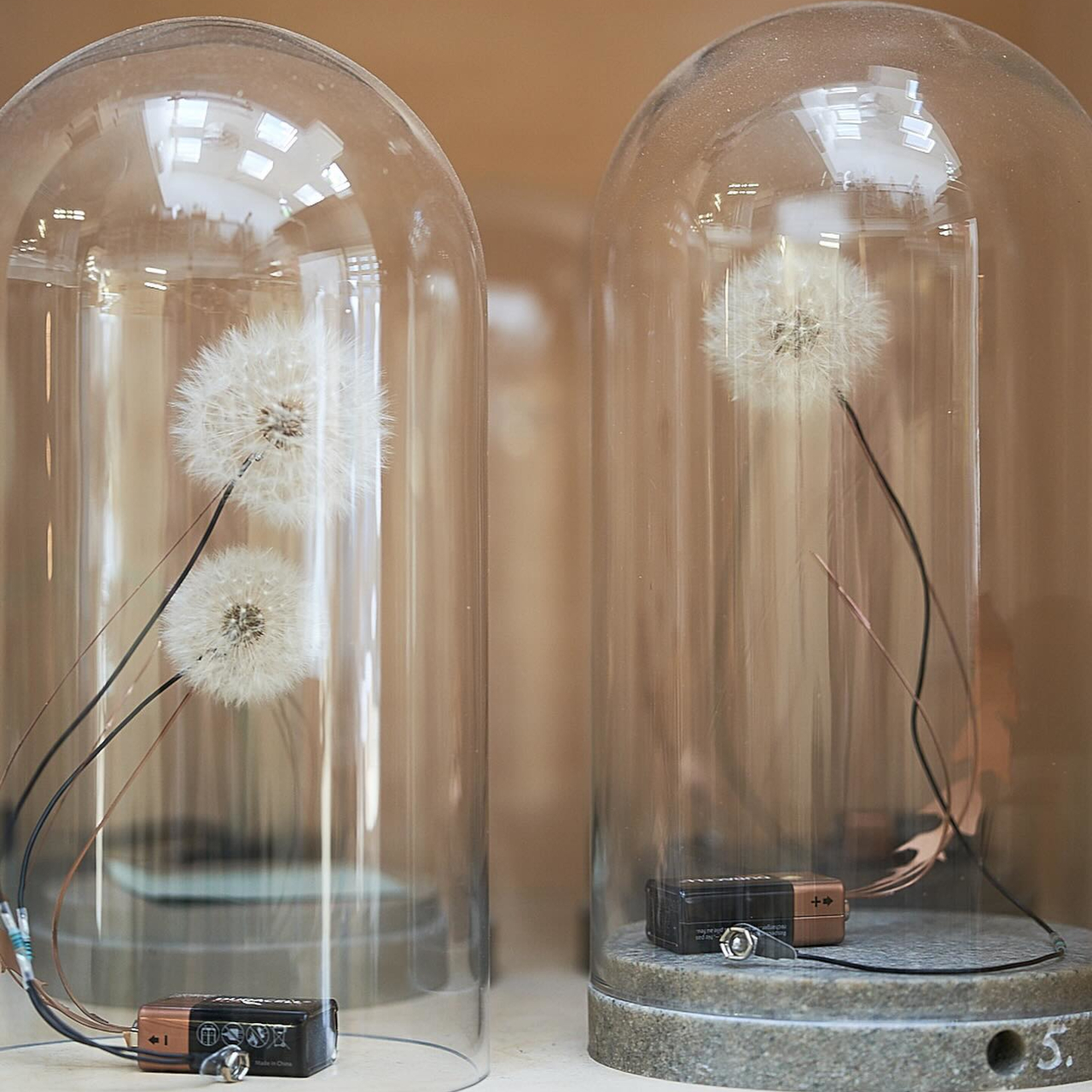
Two versions are available. The standard Dandelight, priced at $214, stands 18 cm tall and leaves the dandelion open to the room. The dome version, at $437, encloses everything inside a handblown glass shell on a concrete and polymer base, measuring 28 cm tall. The dome turns the seeds into something closer to a preserved specimen, which makes it feel like a collector’s object as much as a light source.
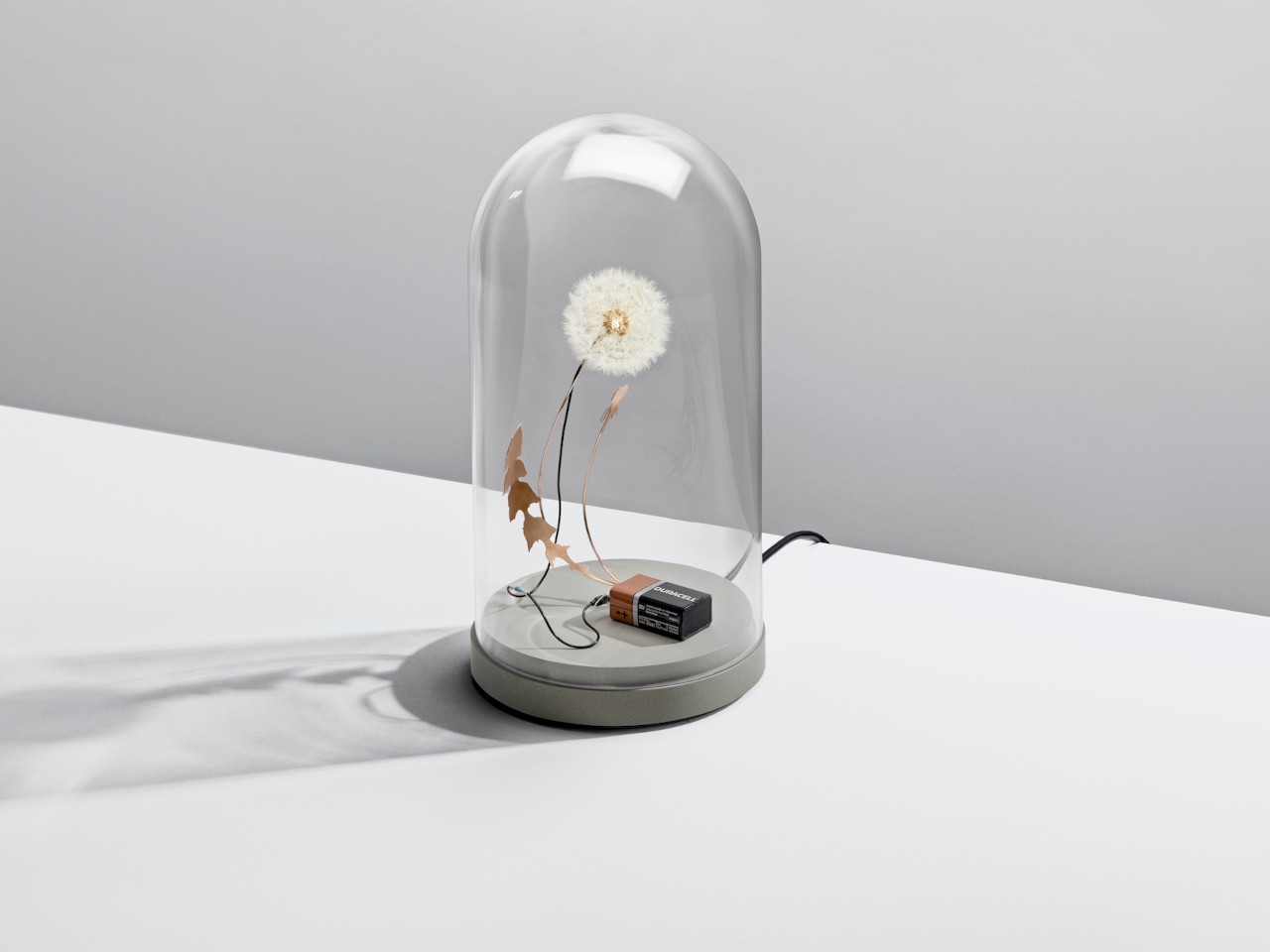
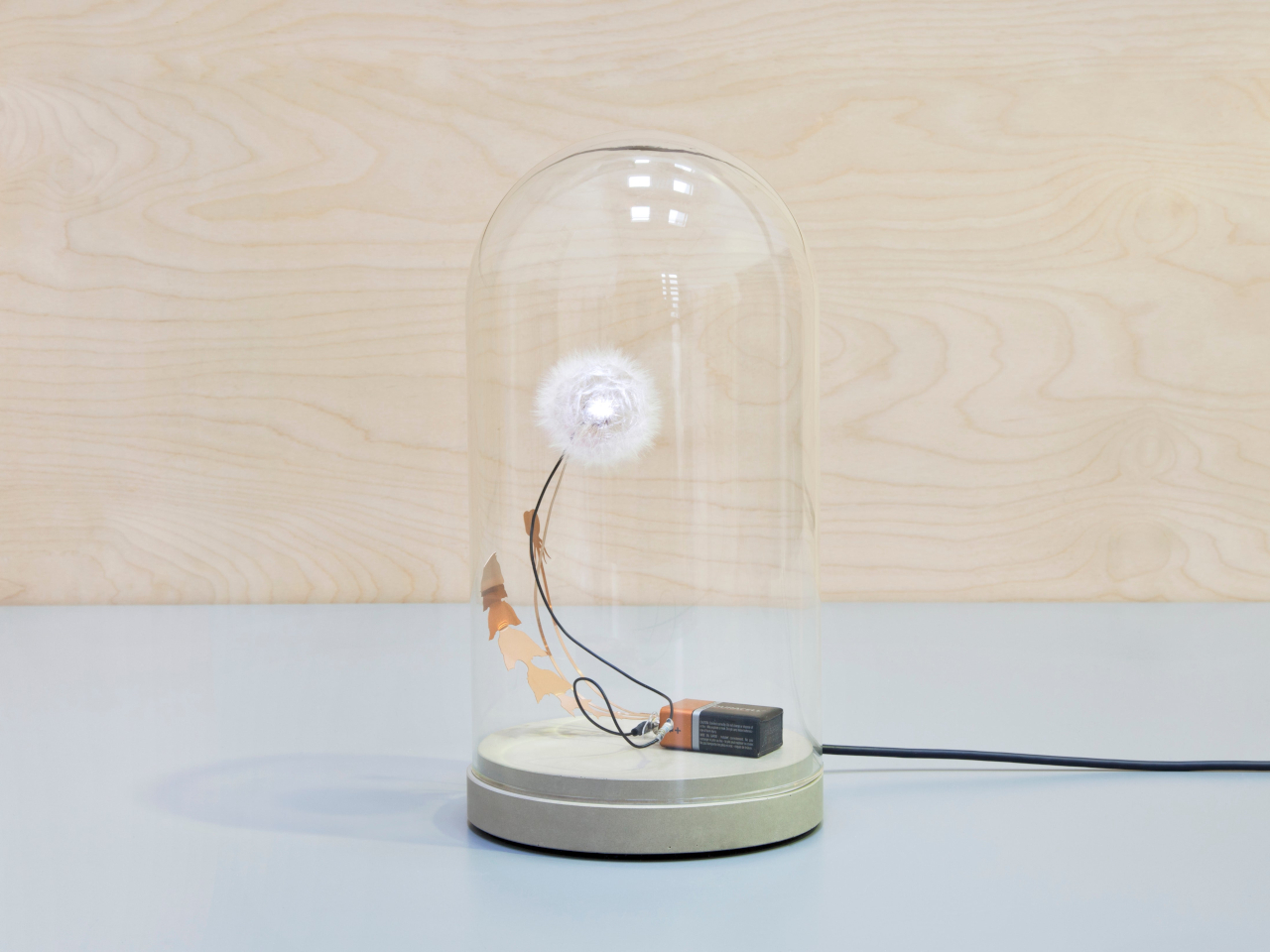
The Dandelight also invites you to look at the dandelion as a built form, a radial structure shaped by repetition, lightness, and balance that few people ever slow down to notice. Each piece comes out slightly different since no two dandelions are identical, and the hands doing the placing aren’t machines. That variability isn’t a flaw; it’s exactly what the object has that no mass-produced lamp can replicate.