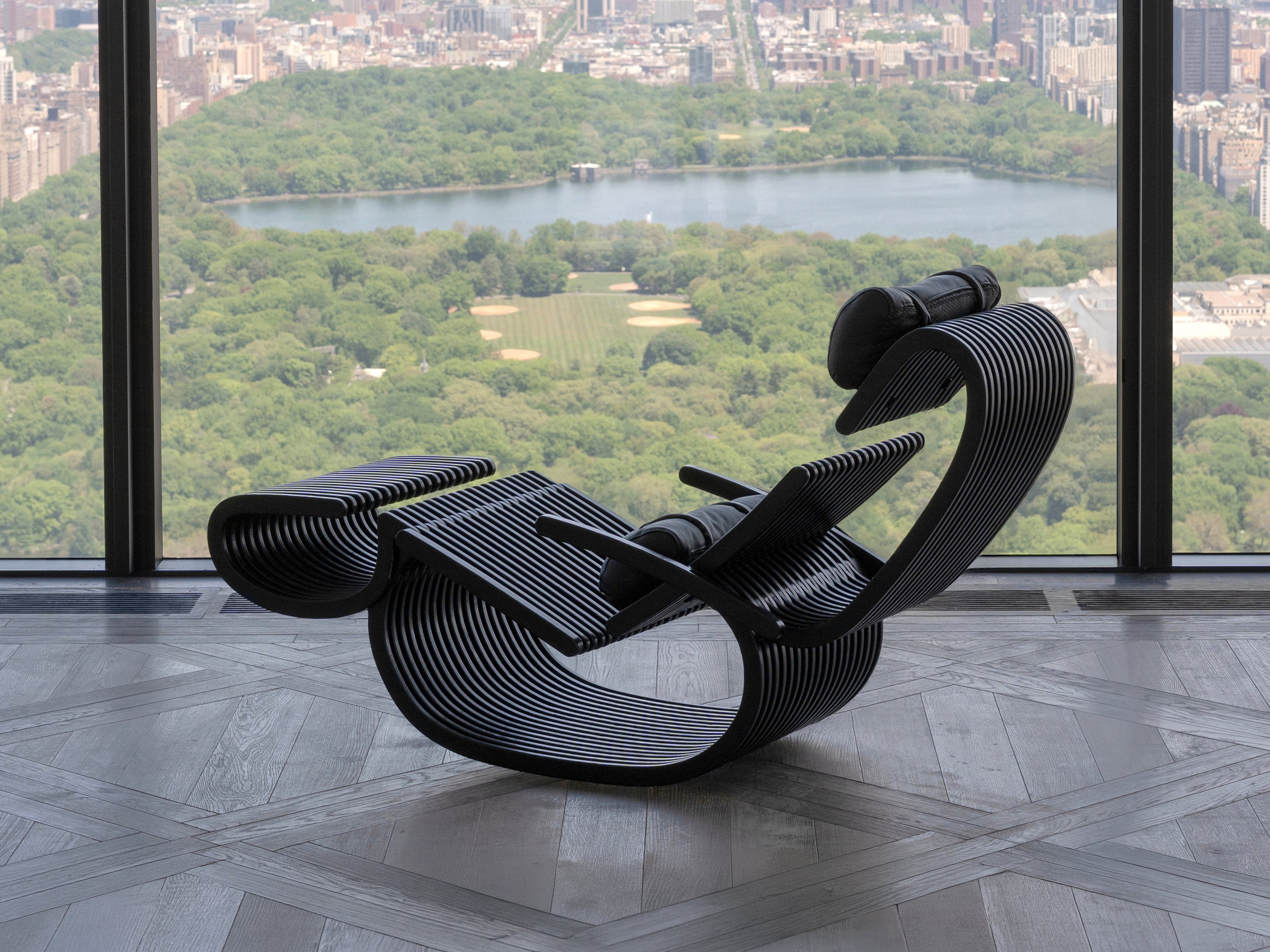
The transformable furniture category has an ugliness problem.The transformable furniture category has an ugliness problem. Murphy beds wear their utilitarian origins on their sleeve, all exposed hinges and wall-mounted hardware that reads less like furniture and more like a filing system for humans. Sofa beds announce their dual nature through the awkward geometry of frames that can never quite commit to either function they serve. The mechanical logic of most convertible furniture sits right on the surface, visible and apologetic, because the joinery required to make an object shapeshift tends to be industrial in a way that no amount of upholstery can fully absorb. Jonah Rappaport’s Silhouette, a convertible chair that just won at the A’ Design Award 2025-2026, treats that ugliness as the actual design problem, not a side effect of solving a functional one.
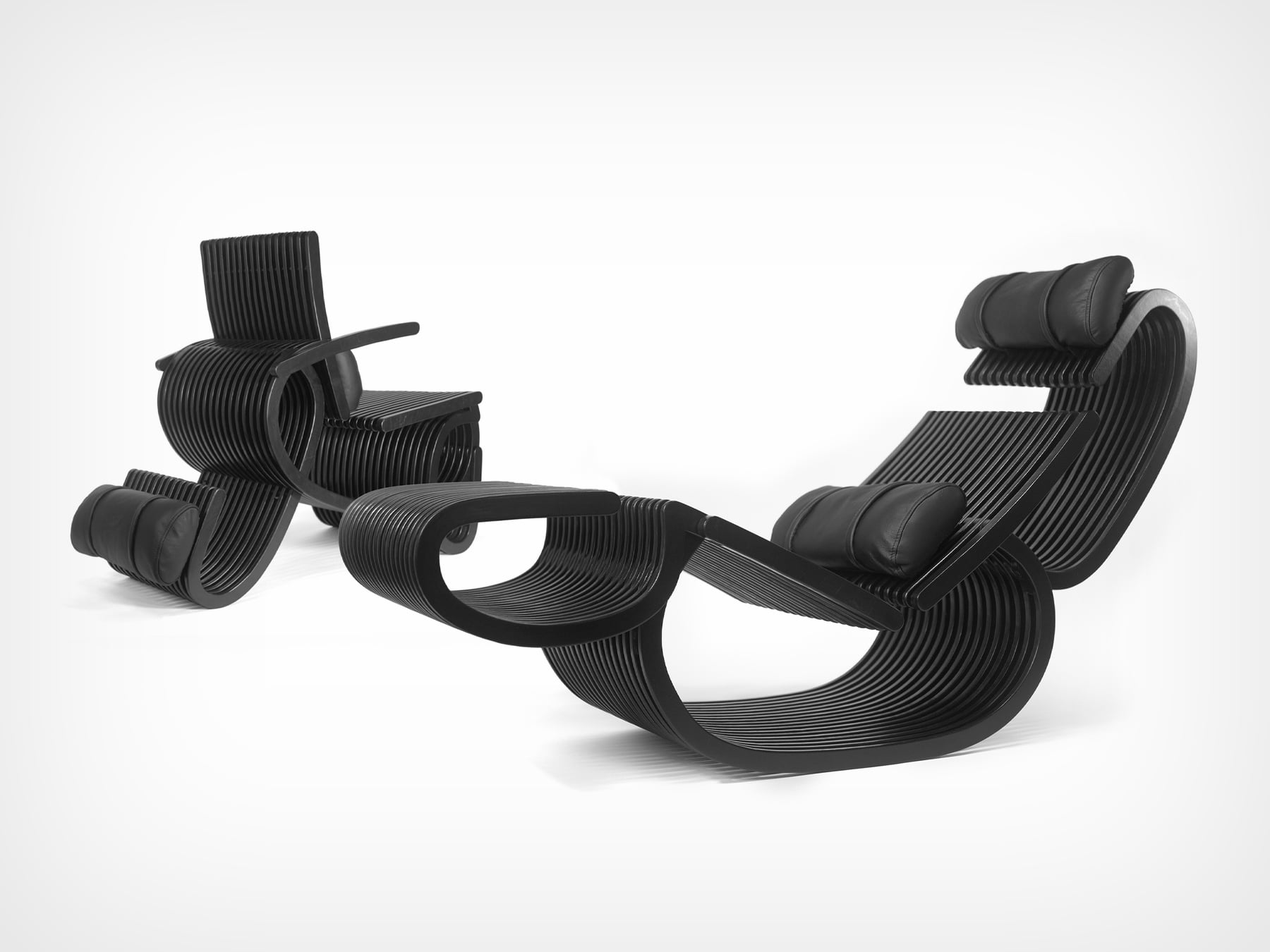
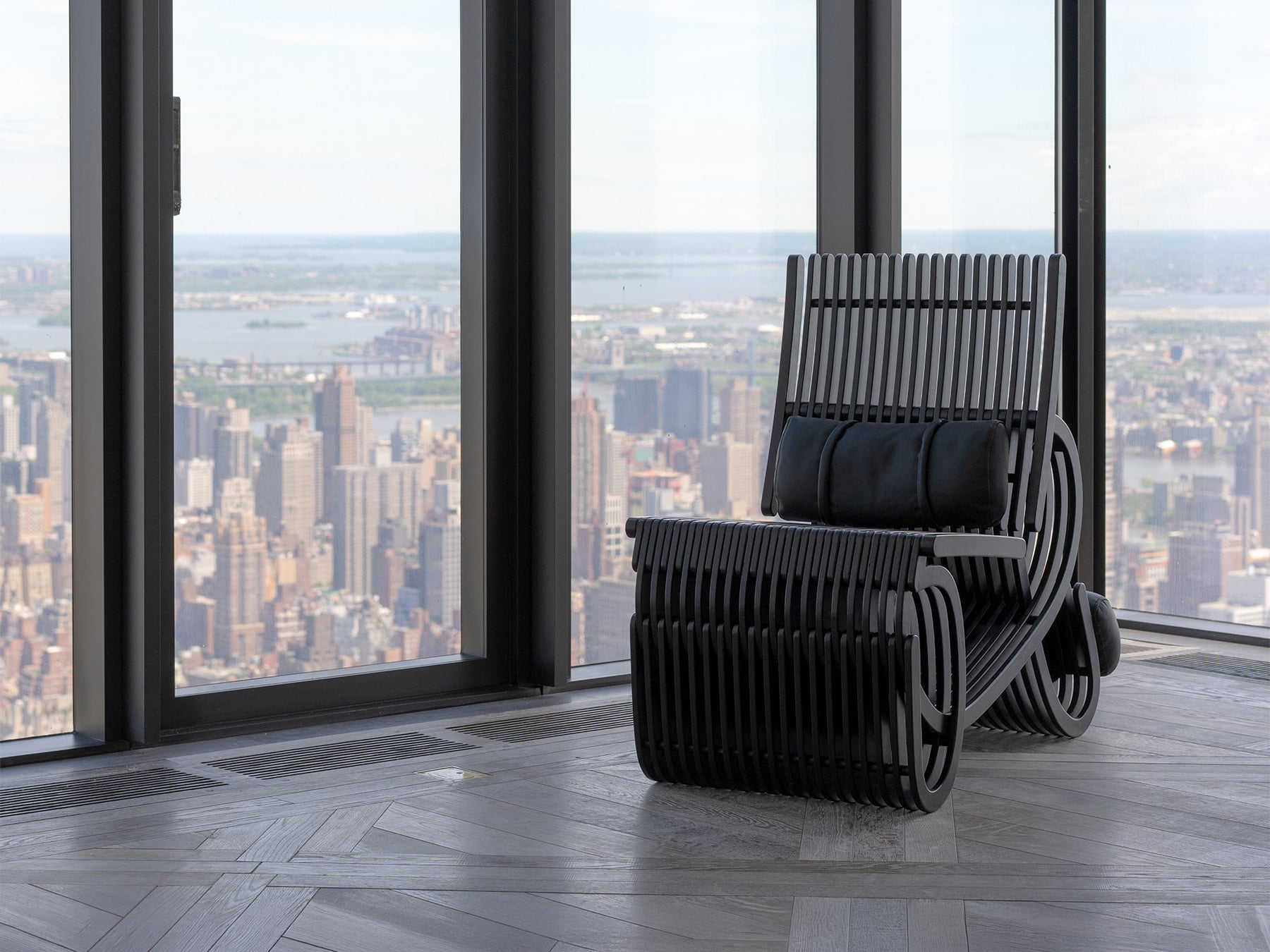
What Rappaport made instead looks, depending on the configuration, like a piece of abstract calligraphy that somebody decided to sit in. The layered Baltic birch plywood builds into looping, scroll-like curves that read as pure formal composition regardless of which of the three configurations the chair currently occupies, armchair, lounge chair, or chaise longue. Nothing about the silhouette suggests mechanism, utility, or compromise. The transformation is structural rather than additive: the headrest and legrest rotate to swap between suspended cushion supports and load-bearing legs, with concealed locking components in the base securing each position. Rappaport conceived and fabricated the entire object across four months at Yale’s wood and metal shops, and the finish, a true black stain under clear polyurethane, gives the whole assembly the visual unity of something carved rather than constructed.
Designer: Jonah Rappaport
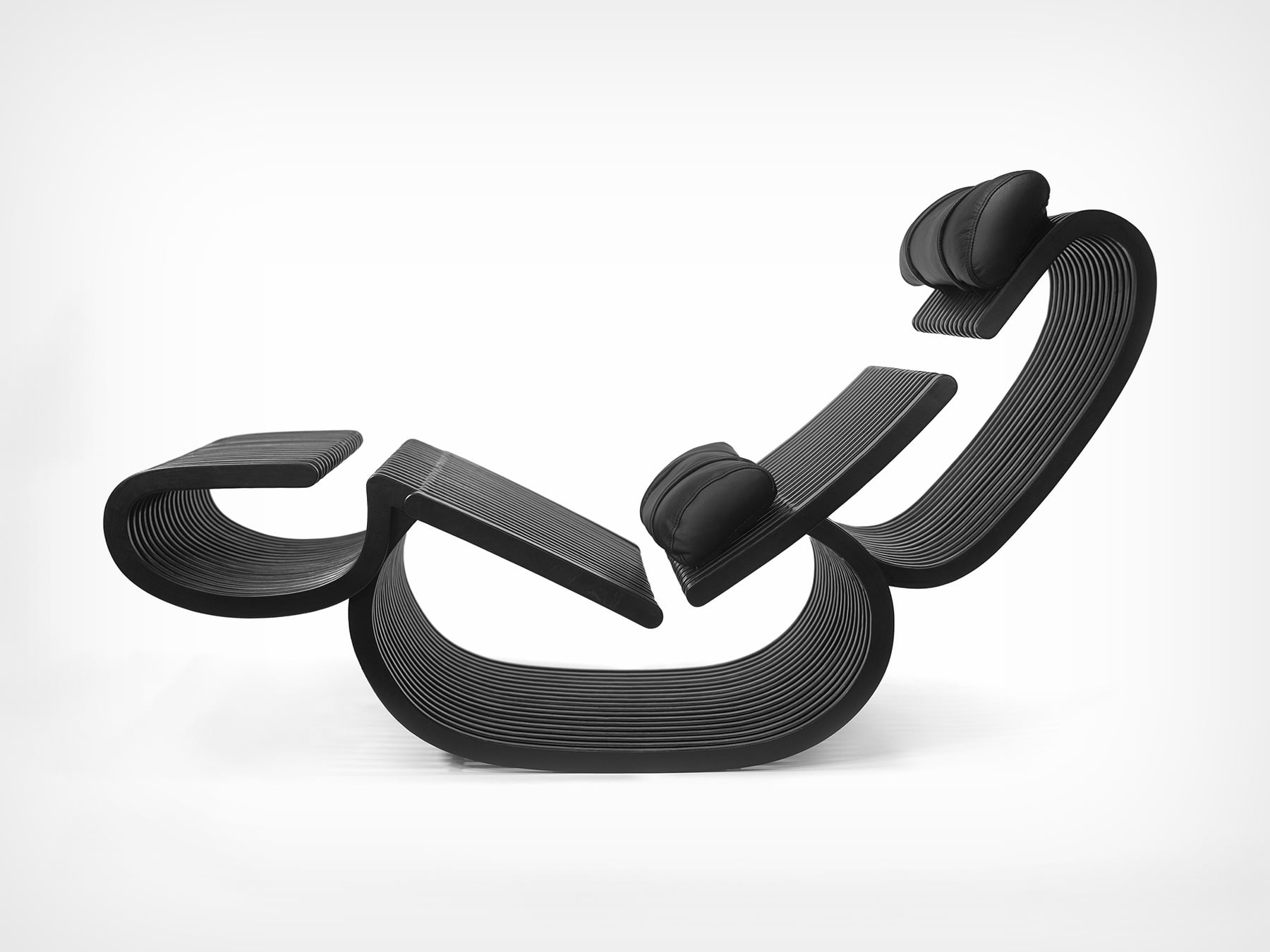
Most convertible furniture relies on added hardware, external pivots, visible bolts, upholstered-over frames, precisely because the transformation logic lives outside the primary structure. Silhouette inverts that entirely. The same components that suspend the headrest and legrest in chaise mode rotate down to become the front and rear legs in armchair mode, meaning the chair’s structural geometry reorganizes around a single fluid movement with no auxiliary parts changing state. Concealed locking mechanisms within the base guide and secure each position, and the adjustable armrests and infinitely variable backrest handle the postural transitions in between, from fully reclined to fully upright, without requiring any tools or external hardware whatsoever.
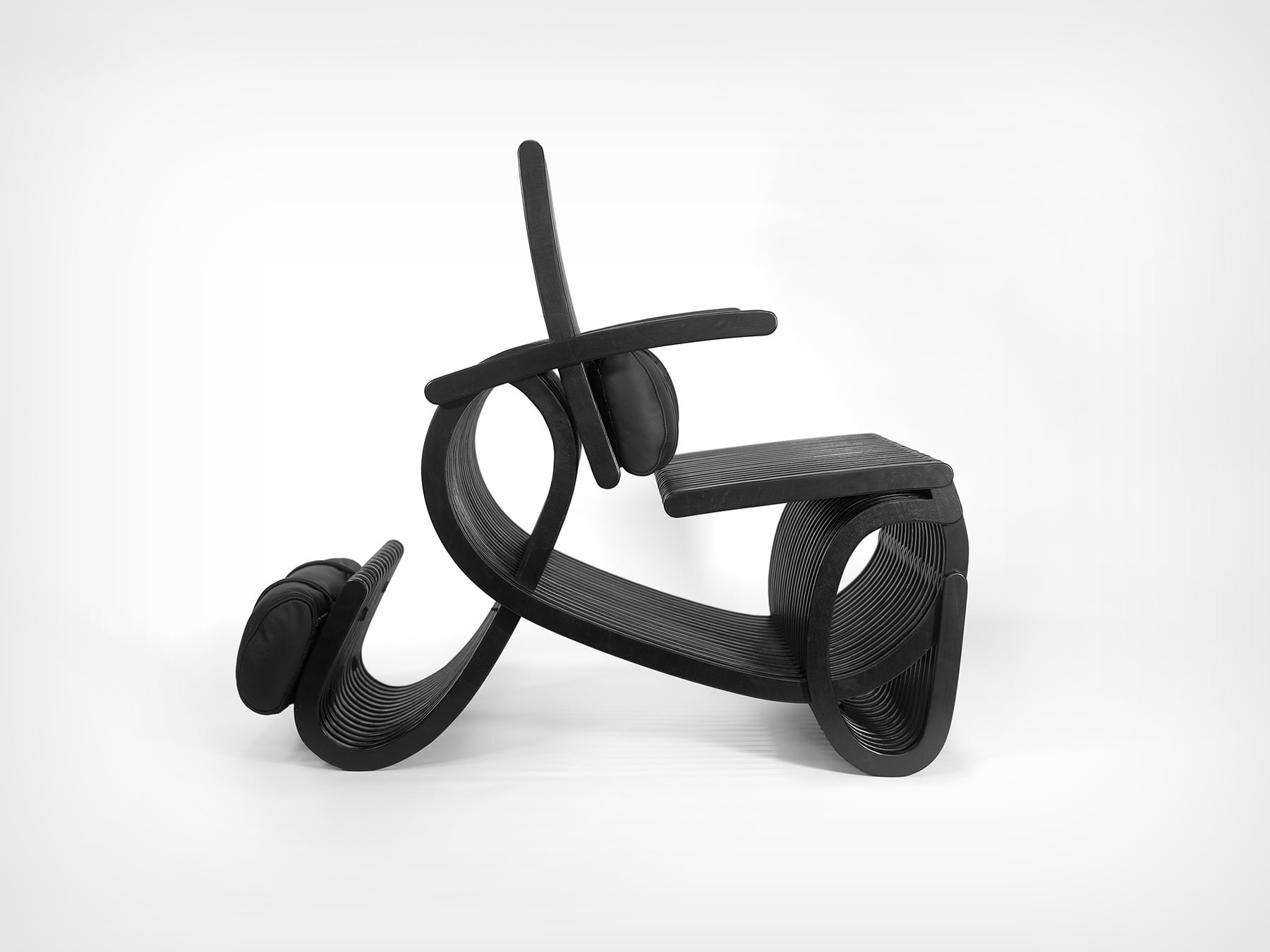
Wood components were laser-cut, hand-routed, sanded, and stained. Custom sheet metal parts were manually threaded, welded, and finished by hand. Every moving connection is metal to metal, with no glue or permanent bonds between joints, meaning the entire object can be fully disassembled, repaired, and reassembled without degrading the wood. That repairability is a quiet but serious design statement in a furniture market that treats most objects as disposable on a ten-year horizon. The chair measures 545mm by 900mm by 860mm in armchair configuration and extends to 1,400mm in chaise mode, dimensions that keep it residential without being precious about space.
Rappaport is Montreal-born, Yale-trained, and currently a designer at ASH NYC, a Brooklyn-based studio known for residential and hospitality interiors with a strong material sensibility. Silhouette reads as entirely consistent with that context, the kind of object a serious interior practice would specify for a client who wants furniture with genuine formal presence and no tolerance for the visual noise that convertible pieces usually bring into a room. The A’ Design Award recognition in Furniture Design positions it alongside professionally produced work from established studios, which is notable given that this began as a graduate thesis project built entirely within a school workshop. IP filings across the UK, EU, Canada, and the United States suggest a production version is a serious near-term possibility, and you can follow the project at jonahrappaport.com/chair.