Pocket real estate is non-negotiable. Every gram you carry should earn its spot — by solving a problem you actually face, doing it better than what’s already in your rotation, or pulling off both without adding the kind of bulk that defeats the purpose of carrying light. April delivered a focused set of drops that clear that bar across the board.
The drops include a tool built on a patent that predates the first World War, a carabiner that turns an AirTag into proper hardware, a collaboration piece that turns Japanese wave motifs into functional grip texture, and a flashlight that rethinks how a carry light should deploy. None of these is an impulse purchase. They’re the work of people who thought seriously about what an object owes the person carrying it.
1. MetMo Pocket Grip — A 1913 Patent, Finally Fulfilled
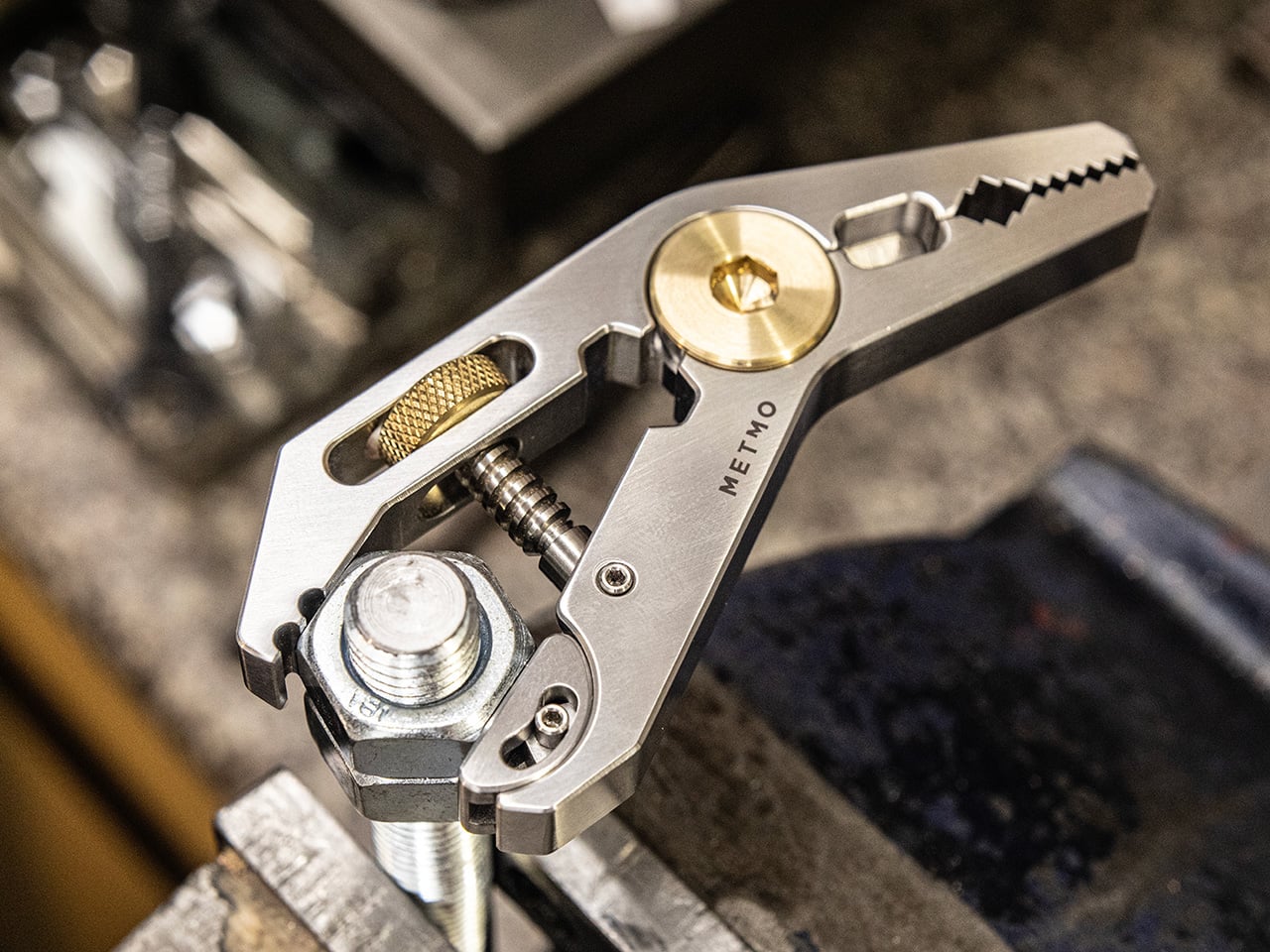

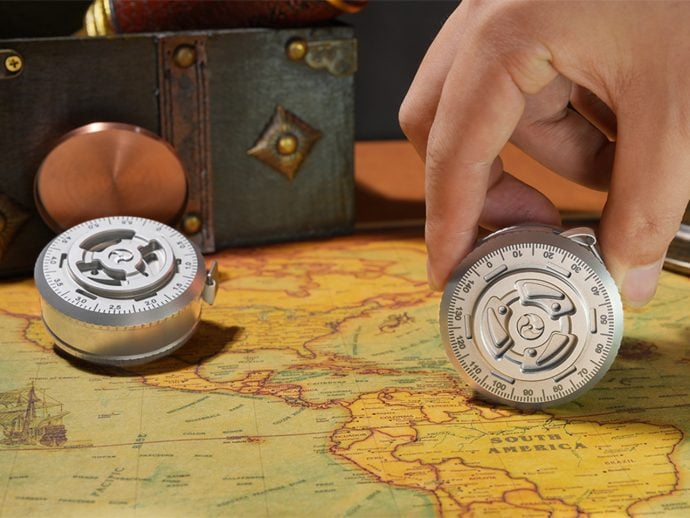
The Pocket Grip is proof that the best ideas don’t expire — they wait for the manufacturing era that can do them justice. MetMo pulled a 1913 Anderson patent from near-total obscurity and rebuilt the concept from scratch using CNC machining and modern metallurgy. The double-ended, central-pivot architecture that made the original mechanically clever is still the structural engine here, but the tolerances, surface finishing, and material quality are generations ahead of what Anderson’s era could produce. It doesn’t feel like a revival. It feels like the tool is arriving for the first time, fully formed.
What keeps it from becoming a novelty is the design discipline packed into every surface. The central pivot, a structural requirement in the 1913 concept, is machined to serve as a 1/4-inch hex drive for standard bits. The jaws split into distinct functional zones: a chomping area for raw grip, dedicated geometry for round and flat objects, and a nipping point for edge work. Nothing is decorative. Every millimeter carries a job, which is a genuinely rare quality in a category that usually trades specificity for the appearance of versatility.
What We Like
- CNC precision transforms a century-old mechanical concept into a tool that performs to modern standards
- Jaw geometry, divided into distinct zones, removes the clumsy generalism of traditional multi-tool pliers
What We Dislike
- The central-pivot format will feel unfamiliar to anyone who’s built habits around conventional plier-style tools
- Specialized architecture means it won’t replace a full multi-tool on extended technical trips
2. AirTag Carabiner — Aerospace-Grade Metal for Your Most-Forgotten Gear


The problem with most AirTag holders isn’t the tracker — it’s the housing. Plastic shells and rubber sleeves cheapen what should feel like a permanent fixture in your carry system. This Duralumin composite carabiner takes a different position entirely, using a material cleared for aircraft, spacecraft, and marine environments to do a job most people hand off to a keyring loop. The result is a carabiner that snaps onto a bag strap, bike frame, or umbrella handle and genuinely disappears into the hardware without looking like an afterthought.
What makes it worth calling out specifically is the handcrafted construction and the material choices available at checkout. Duralumin keeps the weight negligible while delivering structural integrity that synthetic alternatives simply can’t match at this scale. Untreated brass and stainless steel variants let you match the finish to what’s already on your keychain or bag without compromising the function. The AirTag sits cleanly inside the carabiner body, turning a tracker that would otherwise rattle around a pocket into something secured, accessible, and built to last well beyond the device it’s carrying.
Click Here to Buy Now: $149.00
What We Like
- Duralumin construction brings aerospace-grade material standards to an everyday carry accessory without adding perceptible weight
- Multiple finish options in brass and stainless steel let it integrate into an existing carry system rather than clash with it
What We Dislike
- AirTag is not included, meaning the full cost of the setup requires accounting for Apple’s tracker price separately
- Carabiner-style attachment won’t suit minimalist setups where a slim keyring profile is a priority
3. Audacious Concept x URBAN Tool XS — Chaos Seigaiha Edition
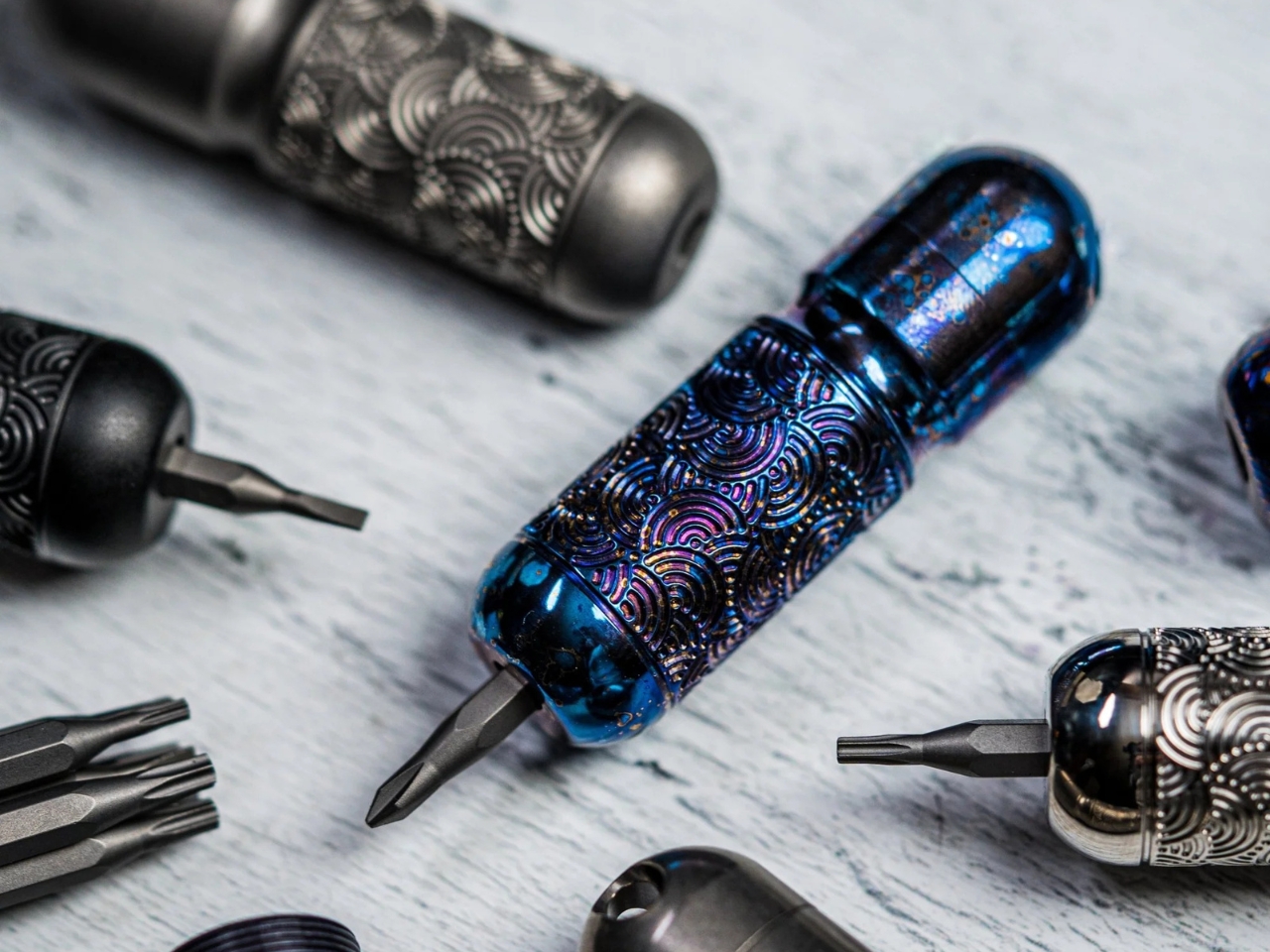
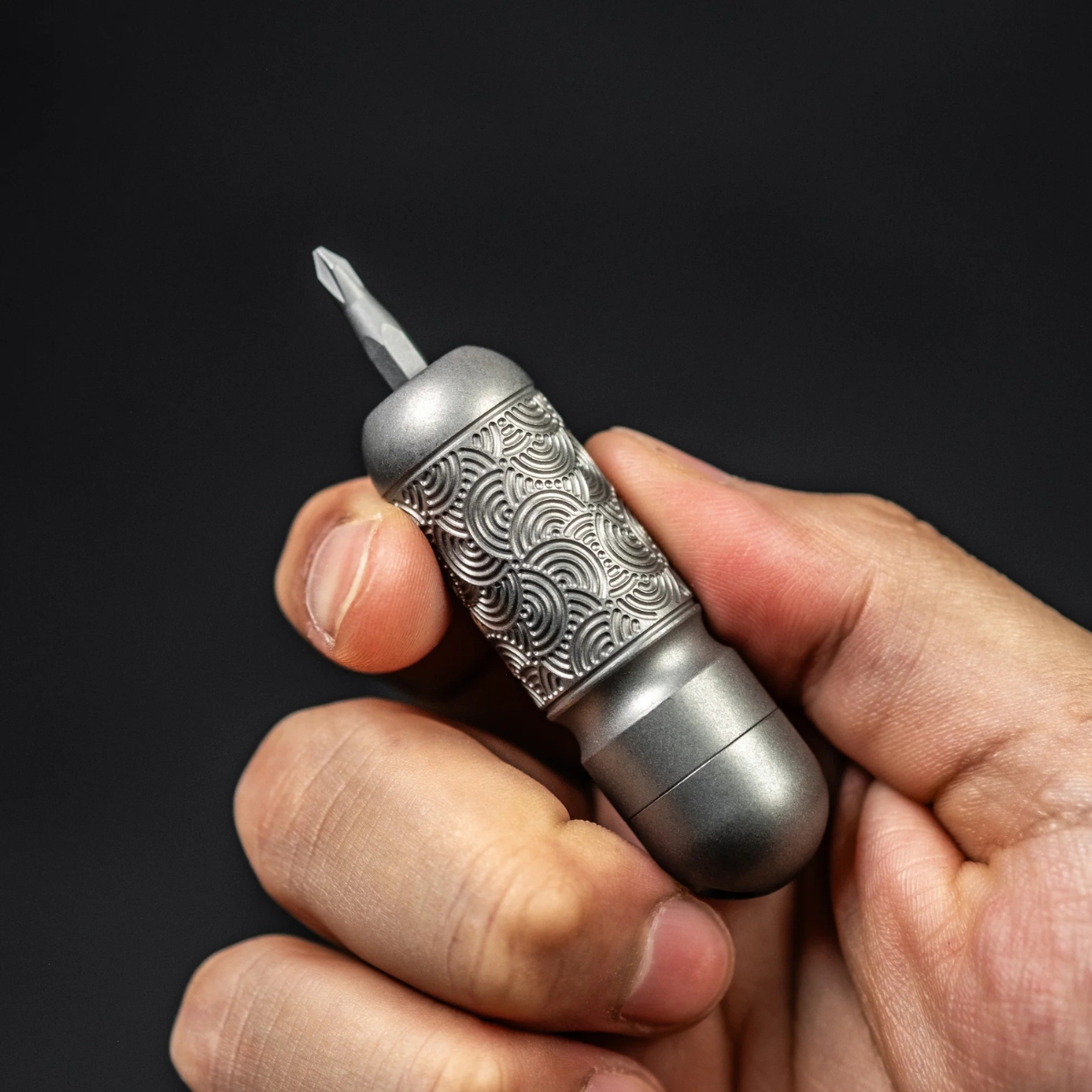
The collaboration between Audacious Concept and URBAN EDC produced something the limited-edition tool market rarely manages — a piece that’s genuinely better because of its design, not just more expensive because of its branding. The titanium body is milled with the Chaos Seigaiha pattern, a Japanese wave motif that reads immediately as art on a shelf. Hold it, and the texture resolves into a real grip surface, tactile enough to prevent slip under pressure without being rough against pocket fabric or a keychain ring. Lightweight, corrosion-resistant, and built to outlast most objects you’ll carry alongside it for the next decade.
Inside the body, a neodymium magnetic core holds seven micro bits in place and releases them cleanly on demand. The selection covers Phillips and flathead sizes, which handle the practical scope of most small-scale fastener work — eyeglass adjustments, consumer electronics, and pocket gear maintenance. Bit retention is tight enough that nothing rattles loose in a jacket pocket, but the swap is smooth and one-handed. For something designed to live on a keychain, the functional depth is serious enough to make reaching for a larger screwdriver feel unnecessary for anything outside heavy-torque work.
What We Like
- The Seigaiha milling functions simultaneously as a visual identity marker and a genuine grip surface
- Magnetic core bit retention secures seven micro bits without adding measurable weight to the titanium body
What We Dislike
- Limited-edition status means supply is finite, and secondary market pricing will reflect that quickly
- Micro bit format won’t satisfy tasks requiring full-size driver torque or a longer shaft reach
4. 8-in-1 EDC Scissors — The Tool That Benefits From Being Underestimated
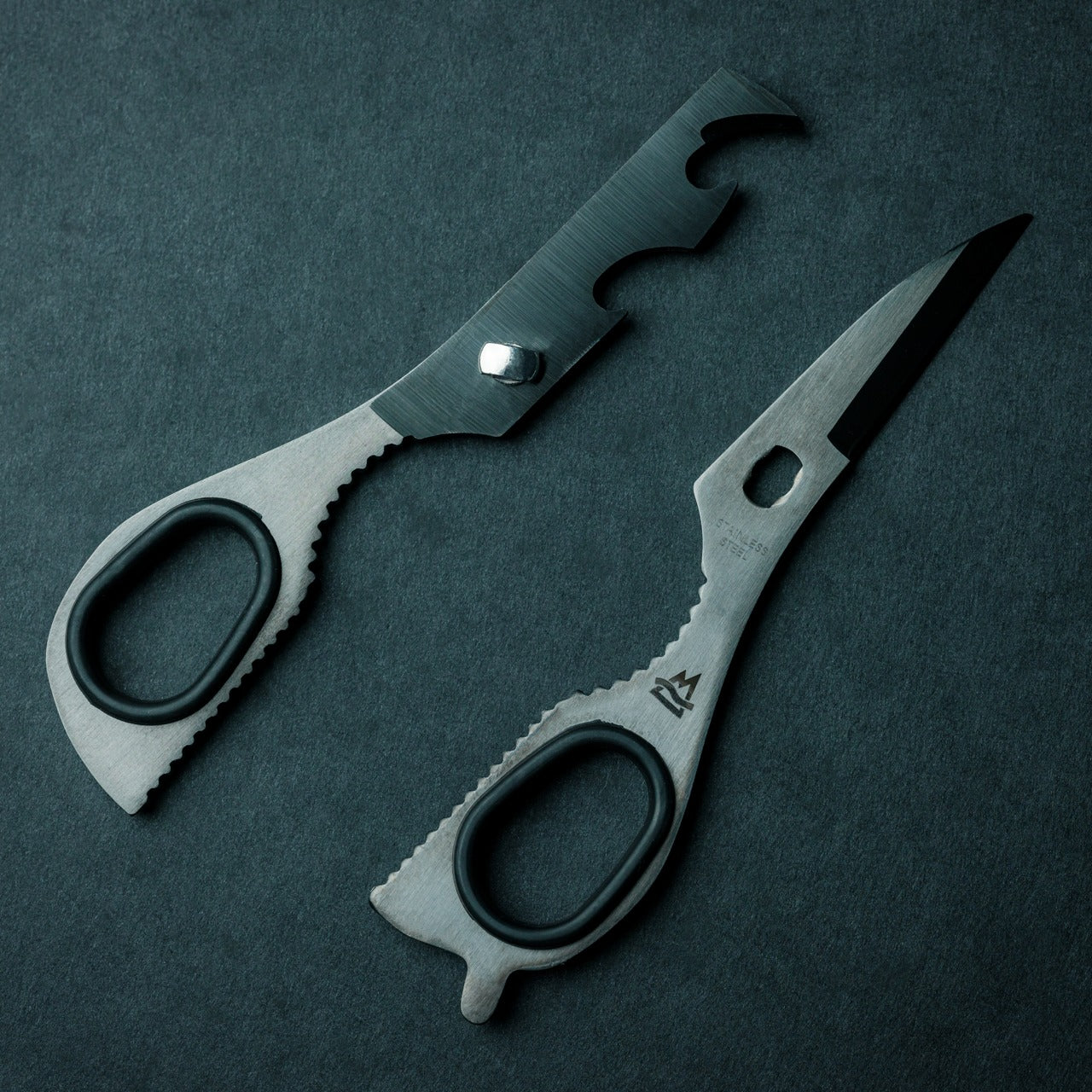
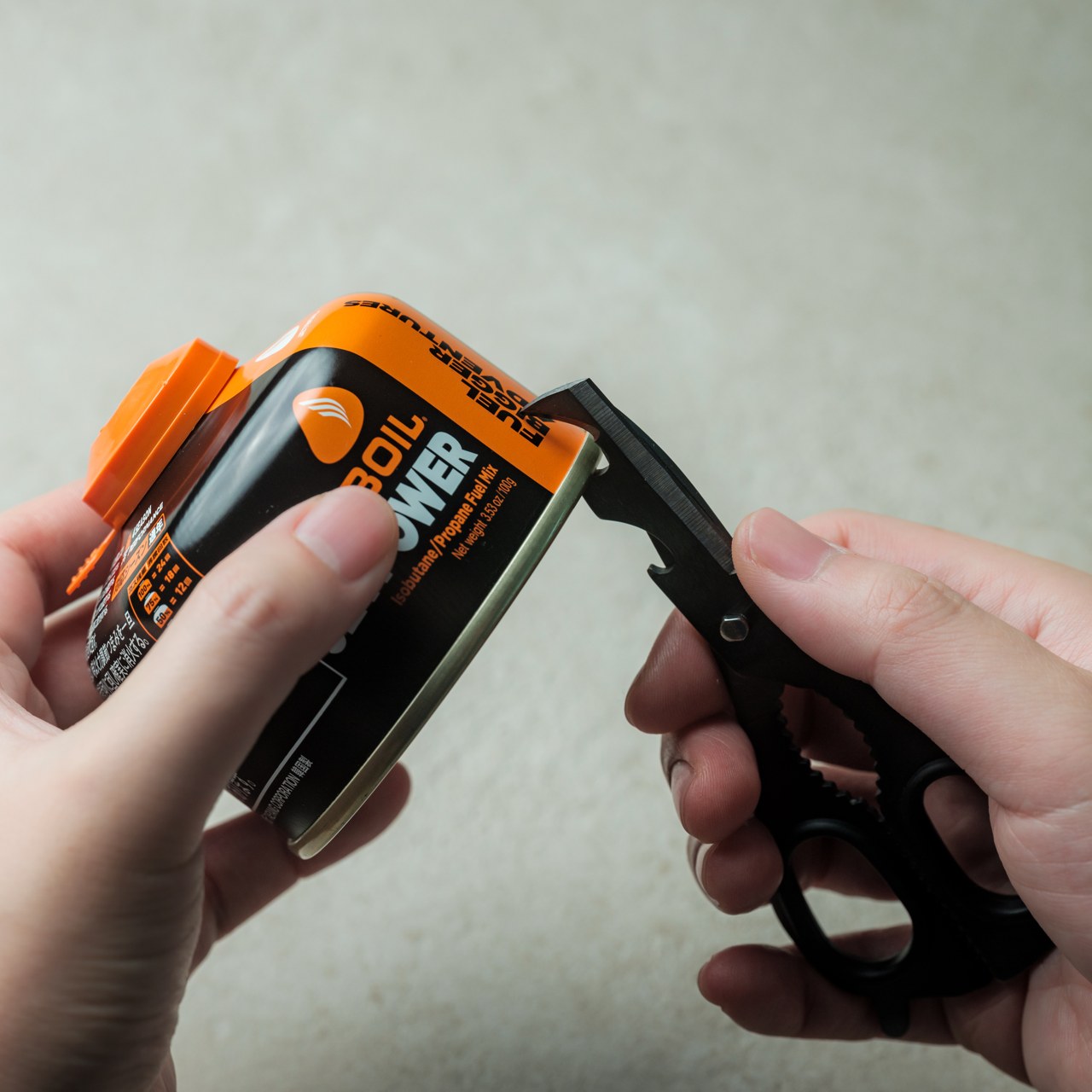
The instinct to dismiss a palm-sized pair of scissors is exactly what makes this carry piece a reliable surprise. At 13 centimeters, it disappears into a zipper pocket or bag compartment without registering as weight or bulk — but the eight integrated tools inside that frame cover a range of everyday situations that most dedicated items can’t individually match. Scissors, knife, lid opener, can opener, cap opener, bottle opener, shell splitter, and degasser. The oxidation film finish resists rust and gives the whole object a clean matte black profile that holds its look through daily contact and pocket friction without complaint.
Where compact multi-tools often make you feel the engineering compromises in your hand, these scissors stay intuitive throughout. The scissors work like scissors. The openers work without awkward repositioning or a three-step learning process. The geometry is uncomplicated, and the execution is clean, which matters more than mechanical cleverness when you’re opening a can at a campsite or dealing with packaging without a workspace. This is the kind of tool that earns its spot precisely by disappearing into the carry and only surfacing when it’s actually needed.
What We Like
- 13cm form factor fits cleanly into zipper pockets and bag compartments without displacing other carry items
- Eight functions without mechanical complexity keep the tool immediately usable under real-world time pressure
What We Dislike
- Compact size limits leverage, meaning heavier cutting tasks will push past what the scissors can comfortably handle
- First-time users need a short adjustment period to locate each function quickly without looking
5. Olight Baton 4 Premium Edition — The Flashlight That Figured Out Deployment
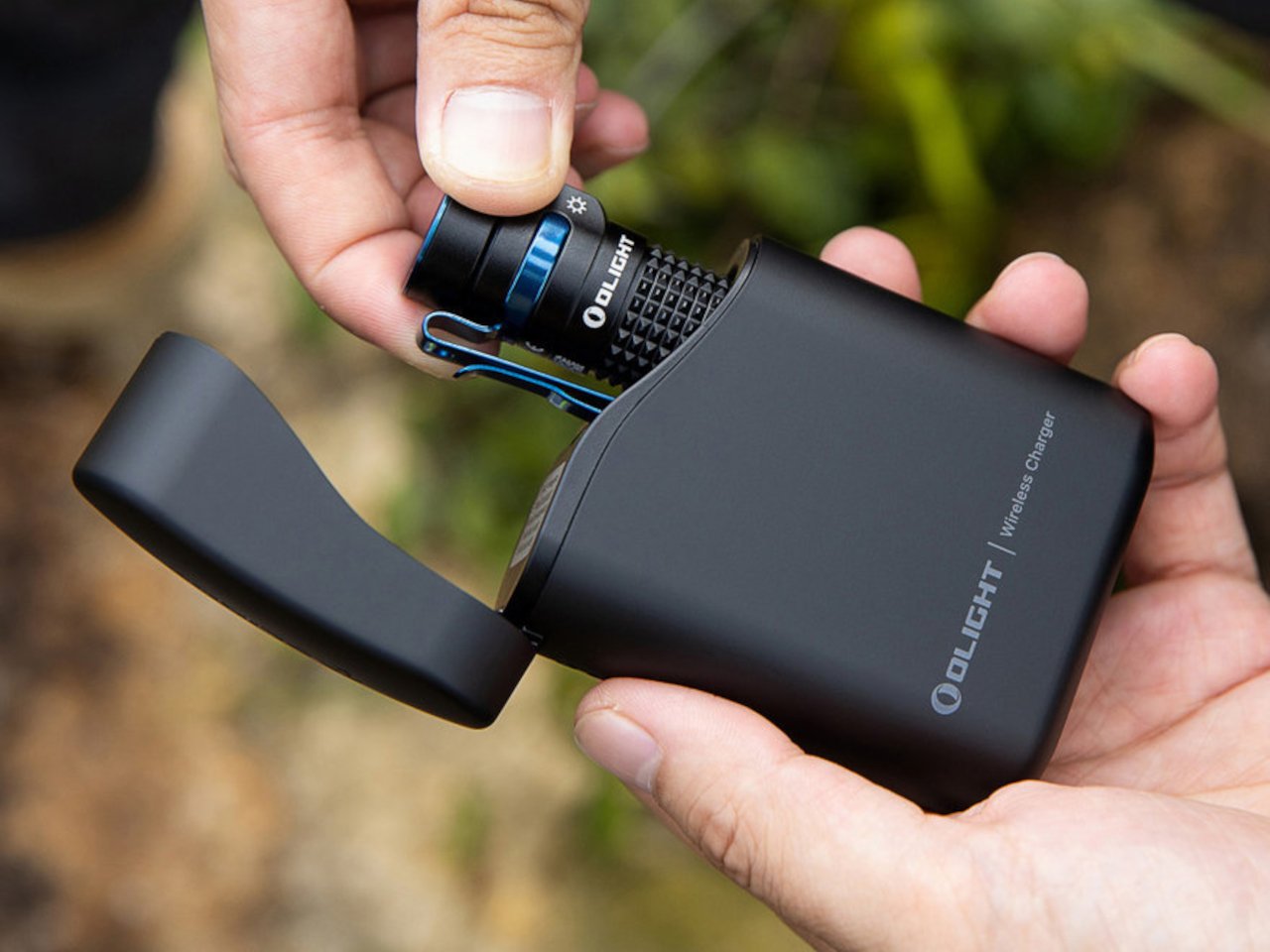
The 5,000mAh flip-top charging case is the real innovation here, and it changes how a flashlight behaves as an EDC item in a way that’s easy to underestimate until you use it in the dark. Flip the cover, press the side button, and 1,300 lumens activate while the light stays seated and secured inside the case. That one design decision removes the most persistent friction point in carry lighting — the fumble of finding, pulling, and orienting the flashlight when time actually matters. The case fits jacket pockets and pack hip belts without issue, keeping the light charged and immediately accessible across a full day of use.
The Baton 4 flashlight itself delivers 1,300 lumens at a 170-meter throw from a cylinder compact enough to stop registering as a presence after the first few carries. LED indicators display brightness level and remaining battery without guesswork, which becomes meaningful on longer backcountry trips where runtime management is part of staying prepared. One-handed case operation keeps the other hand free on technical terrain. The case charges other compatible Olight models, which adds genuine ecosystem value for anyone already carrying their hardware. For the output-to-size ratio it delivers, this is a difficult flashlight to argue against at any level of the carry conversation.
What We Like
- Flip-top case enables immediate one-handed light activation without removing the flashlight from its housing
- Case charges multiple compatible Olight models, turning one accessory into a multi-device carry solution
What We Dislike
- Premium pricing places it well above the entry-level EDC flashlight bracket, narrowing its practical audience
- The charging case adds volume that won’t suit ultra-minimalist or slim front-pocket carry configurations
The Best EDC Gear Doesn’t Ask for Attention — It Just Performs
What connects these five drops isn’t price point or category — it’s intentionality. Each one reflects a design process where the question wasn’t “what can we add?” but “what does this object actually owe the person carrying it?” That shift in thinking is what separates a tool worth carrying from one that looks convincing in product photography but quietly disappears from rotation after the first week. April’s strongest EDC offerings share that quality, and it shows.
The carry conversation has matured past the spec sheet arms race. Lumen counts, blade counts, and material callouts matter less than how an object behaves in the hand at the moment it’s needed. The MetMo earns its pivot. The RetroWave earns its seven roles. The Baton 4 earns its case. When gear is designed with that level of accountability, it doesn’t just fill pocket space — it justifies every square centimeter of it.