
For The Single Person Family
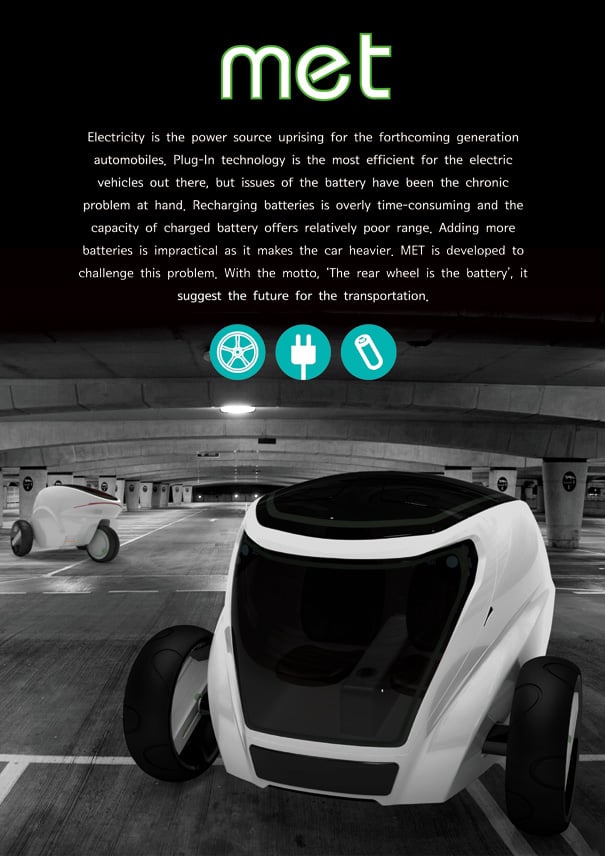
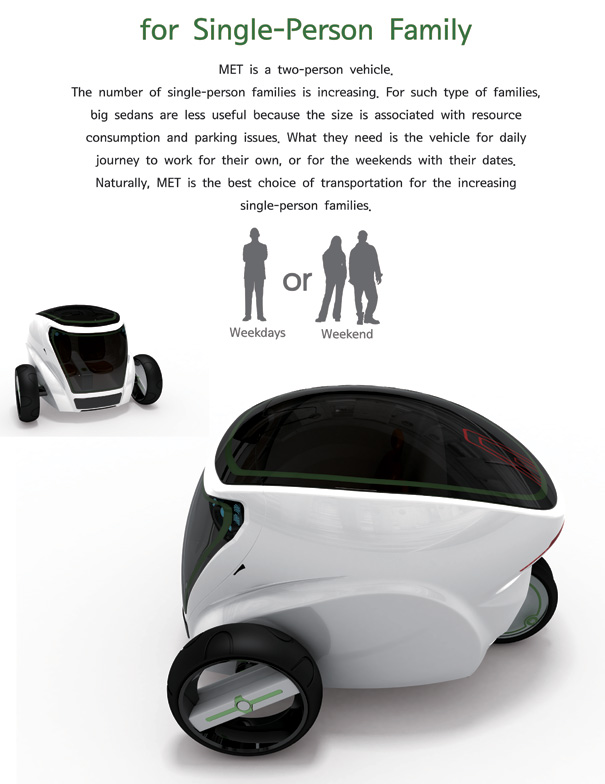
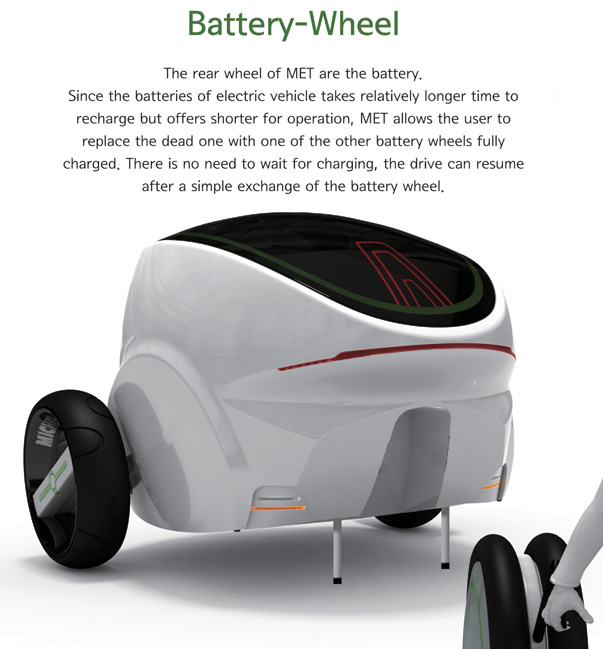
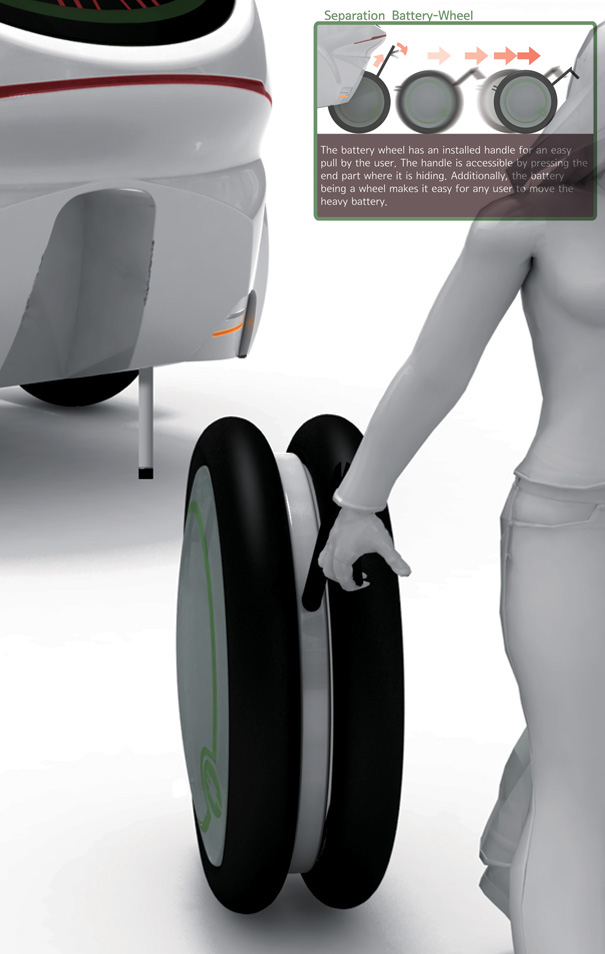
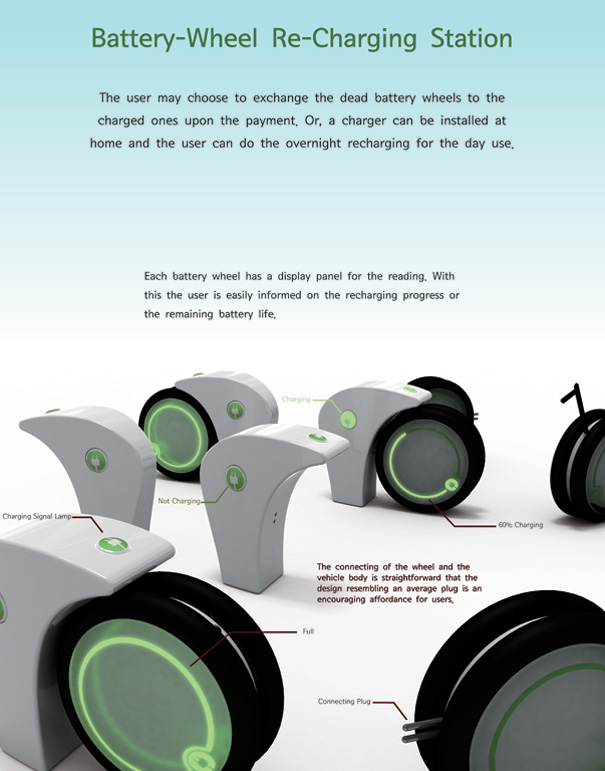
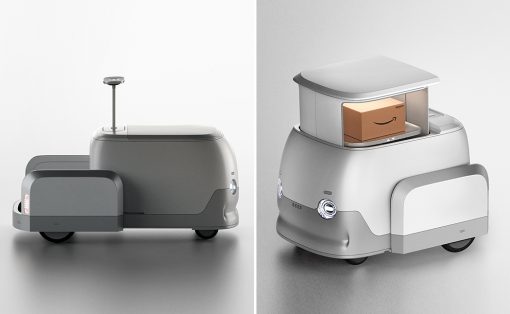
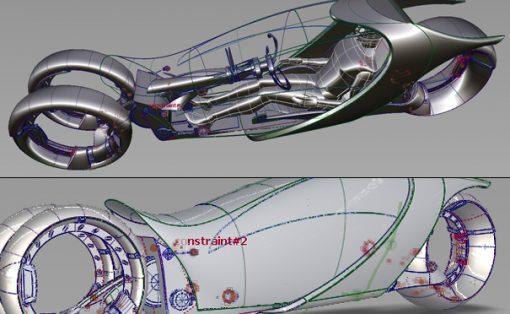
Meet MET, a two-person vehicle for the single person family of the future. The need for massive cars is dwindling so MET was designed to address the social constructs of future families to meet the needs and possibilities of an electric future. Instead of massive and heavy battery backs, the rear wheel is the battery. It can be swapped for a charged one from public stations or home charging units.
Render: Hae-Won Jo
Design: Kyu-Hyun Lee & Sol Lee



24 Comments »
edd says
I love the battery in the wheel.
. . . A Truly Great Design,
. . . . . . it's so obvious correct,
. . . . . . . . . "Why didn't I think of that?"
MIT's Copenhagen Wheel, put their batteries in the wheel,
. . . they also connect a "smart-phone" to the vehicle.
. . . (a marriage of Communication with Transportation)
Change the Motto to: "The Battery-Wheel, THAT's how we ROLL!"
Jim Baltaxe says
The battery in the wheel design might look and sound great but it is inherently and thoroughly a Bad Thing! It puts the concentrated and massive weight of the batteries in exactly the worst possible place, in direct contact with the ground, below the suspension. This will result in the car being very unstable and prone to losing steering control in any but the most ideal conditions. A wet or rough surface will cause the wheel to bounce around with potentially disastrous consequences.
The overall design is good apart from that however, and if it were reworked to put the battery in a slide-out compartment directly above and forward of the wheel it could be a practical and fun urban vehicle. It reminds me of the BMW Isetta reworked for the 21st century. Unfortunately that car would not meet most Western countries' safety standards and perhaps this one too will suffer the same fate.
edd says
The "battery in the wheel" is a Good thing,
. . . because a one passenger, 3 wheel vehicle's batteries, don't weigh that much, to begin with,
. . . provide a low center of gravity, stability and different safety standards.
Incorporating ultracapacitors require even less weight and volume of batteries.
. . . A similar size box of low-cost, high-power ultracapacitors will produce up to
. . . 10 times the electrical current – 1000 amperes over 100 amperes,
. . . They are absolutely maintenance-free, have over a million or more charge-discharge cycles,
. . . guarantee a quick, reliable start regardless of temperature, (even as low as -40°)
. . . reduce electrical stress and demands that shorten battery life,
. . . handle fast charging like regenerative braking systems and discharge like acceleration,
. . . and the efficiency gain over a battery pack is about 15% to 20%.
edd says
Virtually any design calling for a mixture of high and low power loads
. . . can take advantage of the benefits of ultracapacitors.
Battery Systems incorporating them realize lower:
. . . . . . warranty,
. . . . . . service costs,
. . . . . . volume of batteries required and
. . . . . . frequency of battery replacement.
A similar size box of low-cost, high-power ultracapacitors will produce up to
. . . 10 times the electrical current – 1000 amperes over 100 amperes,
. . . they are absolutely maintenance-free and
. . . the efficiency gain over a battery pack is about 15% to 20%.
Jim Baltaxe says
The battery in the wheel design might look and sound great but it is inherently and thoroughly a Bad Thing! It puts the concentrated and massive weight of the batteries in exactly the worst possible place, in direct contact with the ground, below the suspension. This will result in the car being very unstable and prone to losing steering control in any but the most ideal conditions. A wet or rough surface will cause the wheel to bounce around with potentially disastrous consequences.
The overall design is good apart from that however, and if it were reworked to put the battery in a slide-out compartment directly above and forward of the wheel it could be a practical and fun urban vehicle. It reminds me of the BMW Isetta reworked for the 21st century. Unfortunately that car would not meet most Western countries' safety standards and perhaps this one too will suffer the same fate.
Eddd222 says
I agree with Jim,
No matter how heavy/light the battery is, from a vehicle handling point of view it is always better to keep the unsprung mass as low as possible http://en.wikipedia.org/wiki/Unsprung_mass.
The designers actually mention:”Additionally, the battery being a wheel makes it easy for any user to move the heavy battery”
The wheel also needs to be strong enough, and house suspension, bearings. This also has weight.
@edd, I think you overestimate (current day) battery technology and underestimate a vehicles power consumption, even if you make it low weight and aerodynamic.
A lithium Ion battery pack of a Mitsubishi i MiEV weighs 200 kg and has a range of 160 km
Even a lithium Ion battery pack of segway weighs 10.3 kg!!!! and it only has a range of 39 km
high-power ultracapacitors can only provide current for a short time, seconds, maybe minutes.
And MIT's Copenhagen Wheel was an bike with a small eletric motor for assistance
edd says
One and two person vehicle with batteries.
. . . Check this out and get back to me about how it doesn't work.
. . . “http://www.youtube.com/user/ecocab”
Jesuan says
I also agree with Jim. But we are thinking about the cars we have today. When we think that this vehicle would be used only in city centers with a speed of 30-40 km/h we can think also in different solutions for the suspension and everything else.
But I don't see even a suspension there, not even a way to link this wheel to the car. I also don't see a steering wheel or mirrors or any other solution for that.
It's an incomplete project that needs more work in my opinion.
Yme says
its ok but,
the rear wheel is not so practical when it comes to roads with galobs and bumps. and what will happen when there is water on the road
Trackbacks