There is something quietly radical about looking at a fruit peel and refusing to see waste. Salak and lychee skins are usually treated as the most disposable part of the fruit, peeled off, discarded, and forgotten almost instantly. PEEL begins at that exact moment of dismissal. Instead of blending the skins down, disguising them, or forcing them to behave like leather, the project lets them remain visibly themselves.
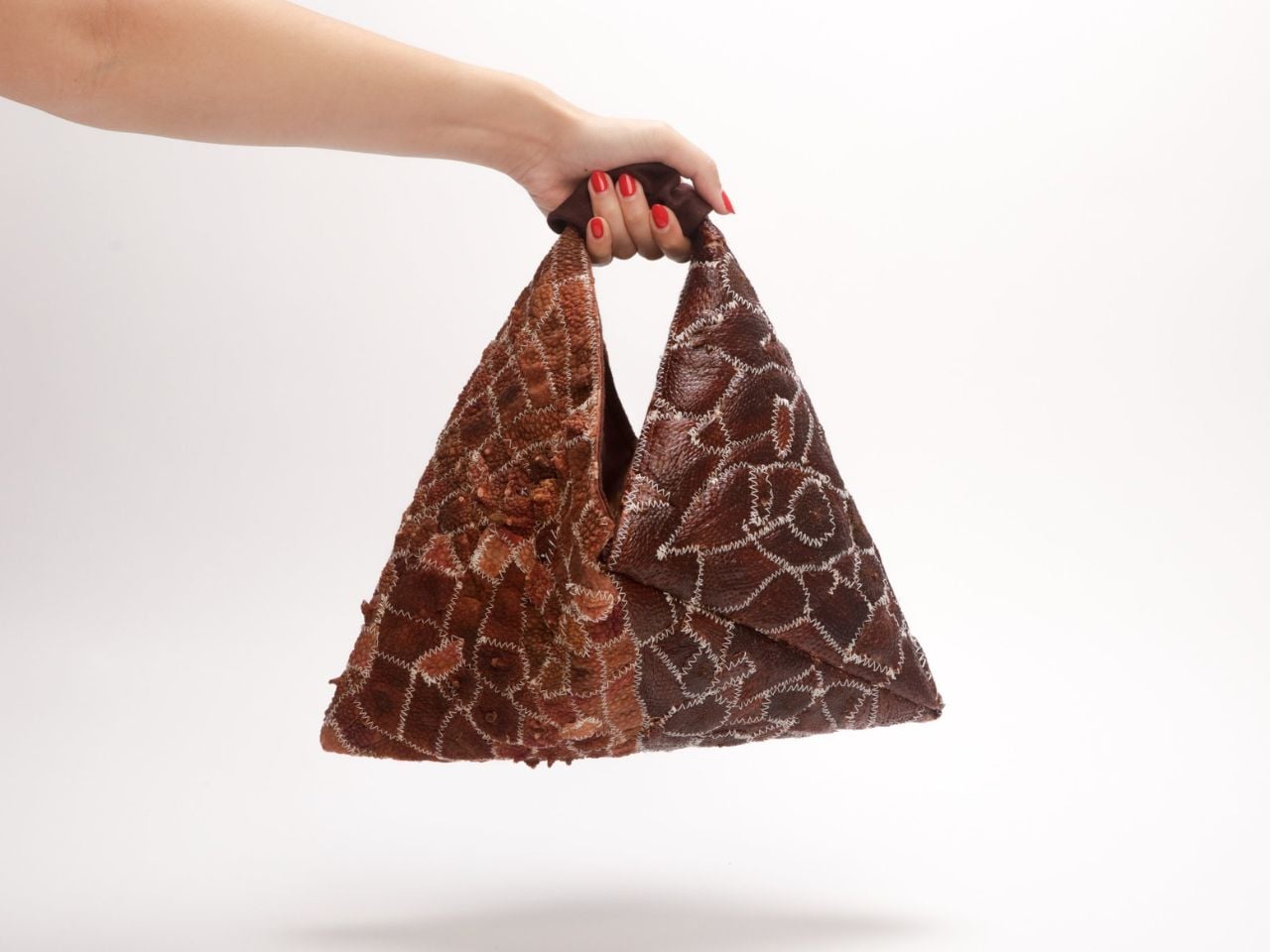
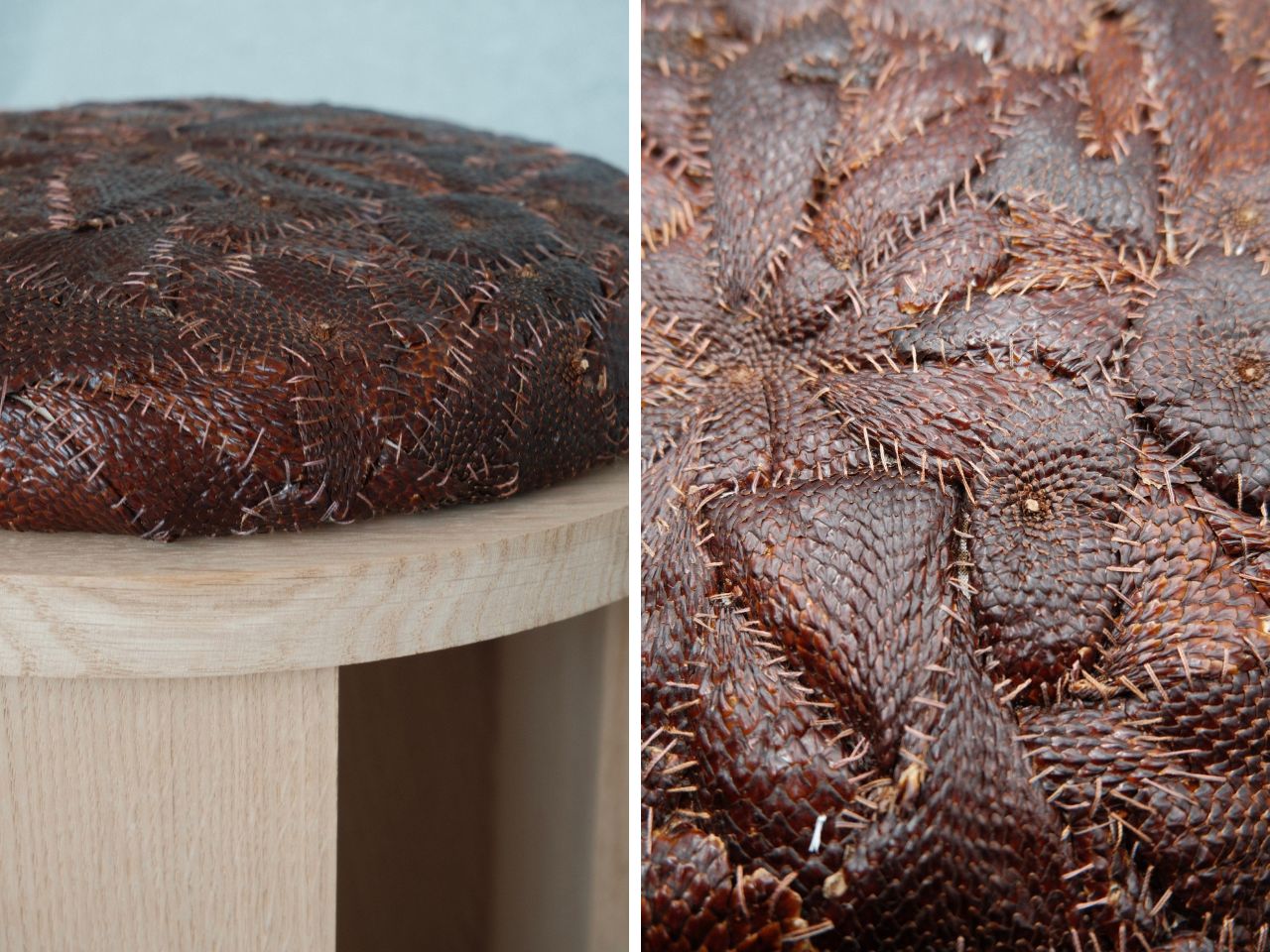
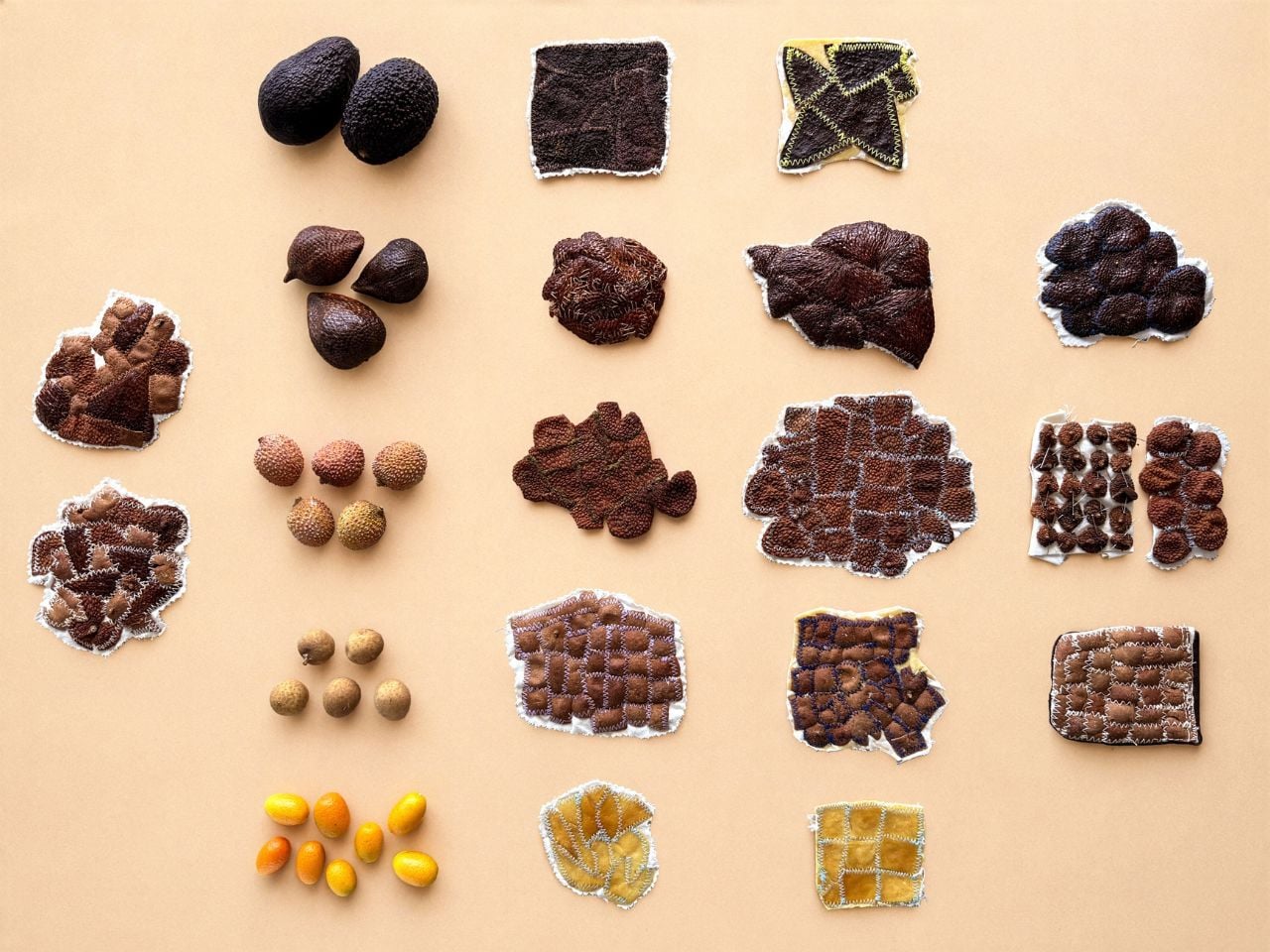
Developed by designer Anthony Guevara, PEEL transforms discarded salak and lychee skins into a durable, biodegradable textile made without adhesives, synthetic polymers, or toxic chemical treatments. The material offers a regenerative alternative to leather and petroleum-based vegan substitutes, with estimated CO₂ emissions up to 95% lower. What makes the work compelling is that it does not rely on the usual visual language of “sustainable design.” It is not trying to look clean, neutral, or overly polished. It carries the roughness, colour shifts, scale-like patterns, and irregular surfaces of the skins it comes from.
Designer: Nefeli Vitoraki
The project is deeply rooted in Indonesia, where salak and lychee are widely consumed, and their skins are discarded in large quantities every day. These fruits also have a short shelf life, which means their peels are consistently available through existing food systems. This matters because PEEL does not depend on growing a new crop or creating an additional supply chain for material production. It begins with what already exists, what is already abundant, and what is already being thrown away.
The process is careful rather than overly industrial. After the fruits are consumed, the skins are collected and dried through a controlled low-heat process. This step preserves the natural structure and pliability of each peel, which is essential for turning it into a textile. The skins are then treated with naturally derived materials to improve durability and water resistance. Once stable, they are stitched onto biodegradable backing structures such as cotton muslin or linen.
That stitching is important. Many plant-based leather alternatives are processed into uniform sheets, often requiring synthetic binders or coatings to hold everything together. In doing so, they erase the character of the original material. PEEL takes the opposite route. Each skin is treated and applied individually, so the final textile carries visible traces of the fruit’s form, colour, and texture. The result feels less like imitation leather and more like a material with its own identity.
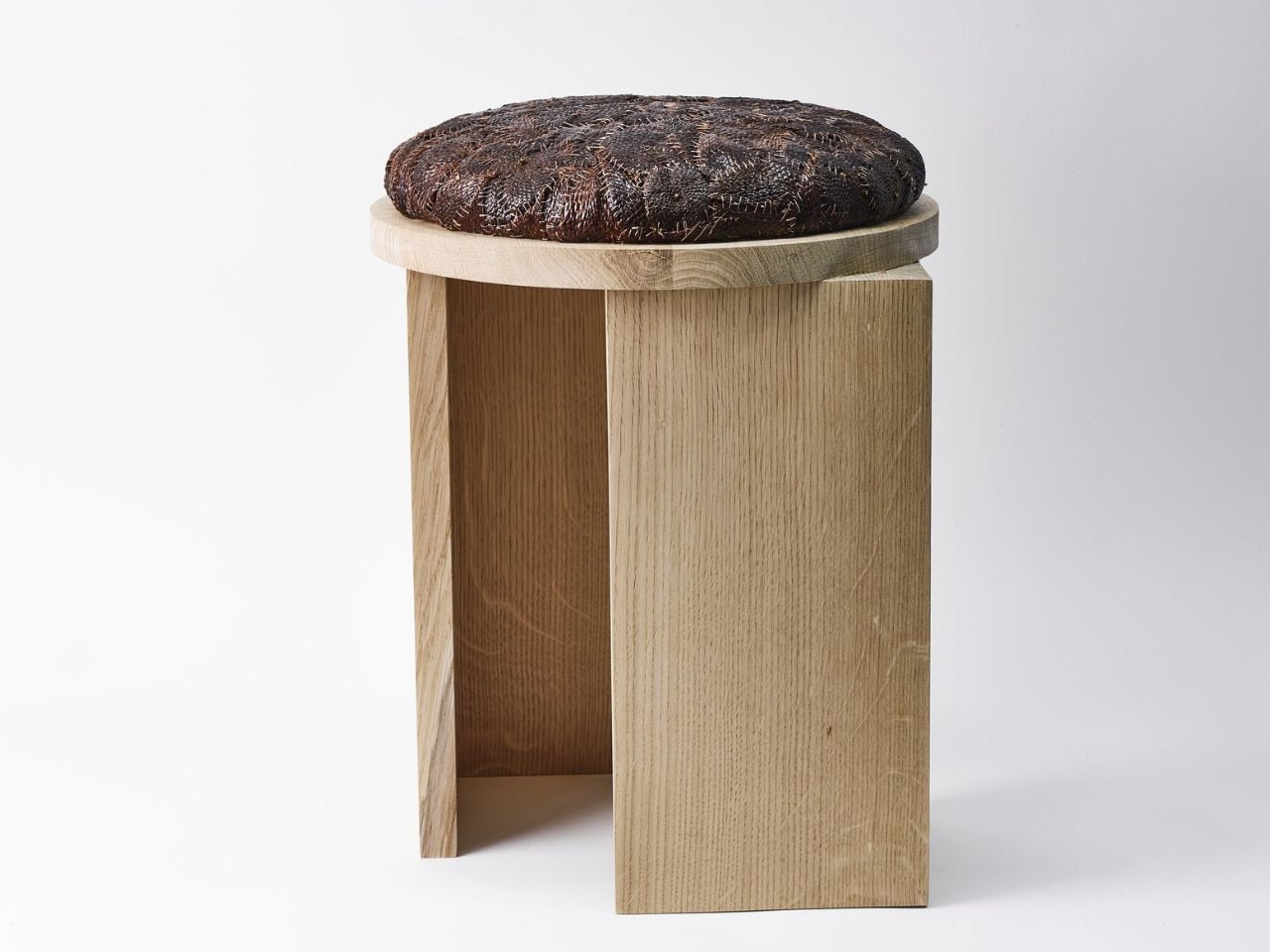
From a design perspective, honesty is one of the strongest parts of the project. Sustainable materials often get pushed into proving themselves by looking like something familiar. Mushroom leather has to look like leather. Cactus leather has to look like leather. Grape waste, apple waste, pineapple fibre, all of them are frequently judged by how convincingly they can replace an existing material. PEEL resists that pressure. It does not apologize for the fact that it used to be fruit skin. It builds its visual and tactile language from that origin.
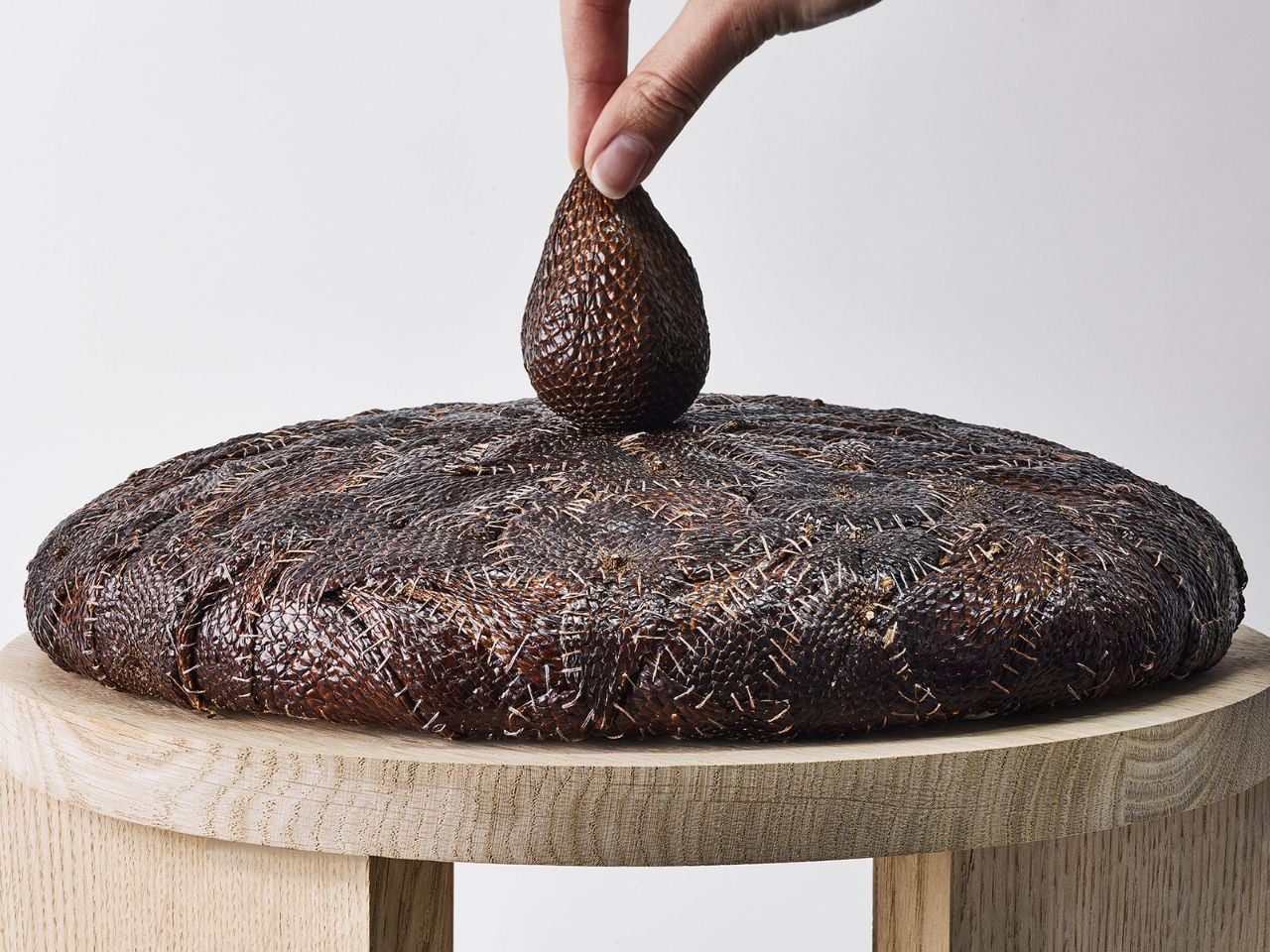
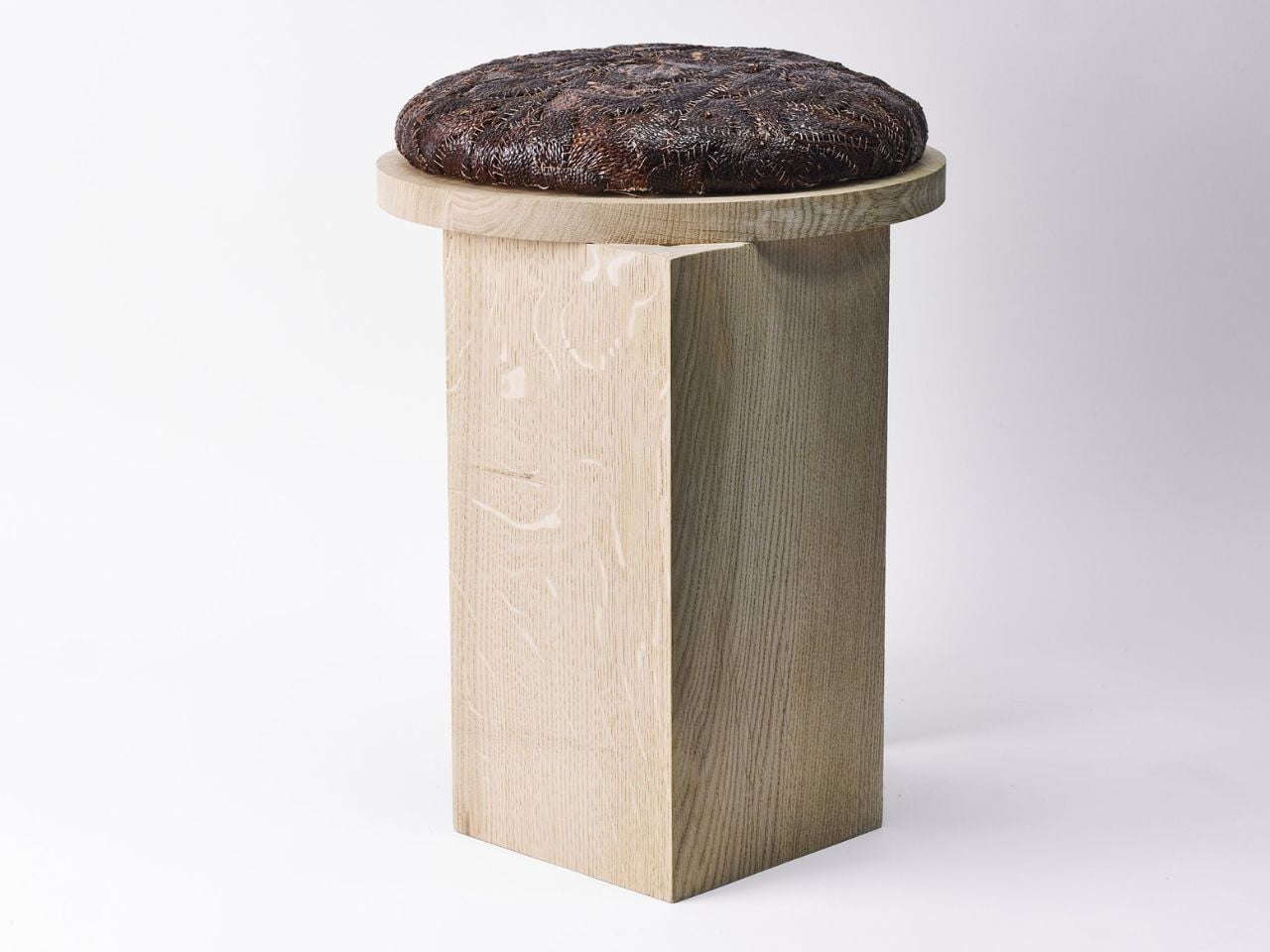
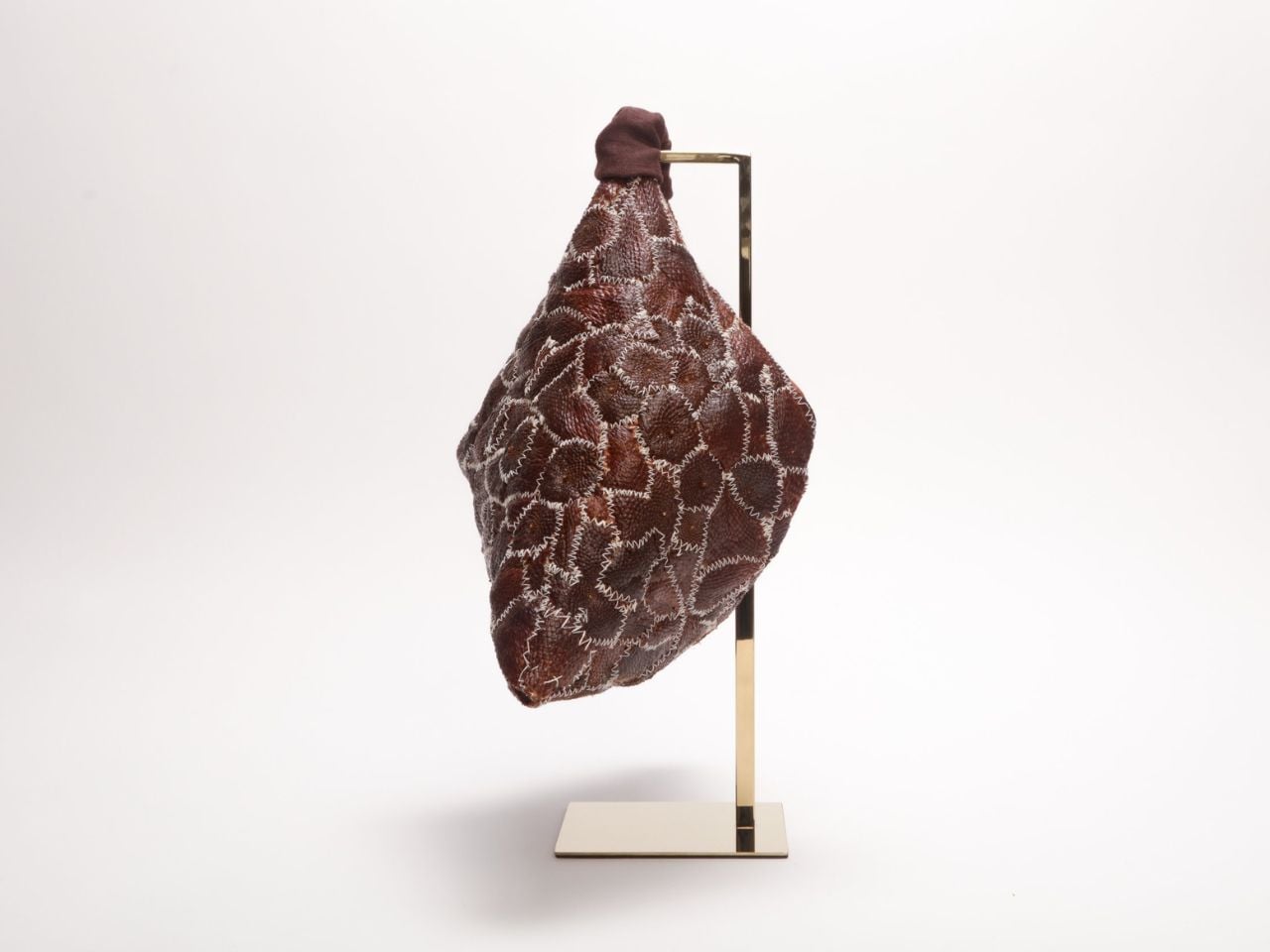
The development process also reveals the material’s stubbornness. PEEL began with salak alone, with no guarantee that the skins could become usable. Early experiments focused on drying methods because the peels were too brittle to stitch by machine. The first prototype, a stool, had to be hand-stitched throughout. More than fifty tests followed, adjusting combinations of naturally derived treatments until the material became flexible, durable, and workable. The second prototype, a bag, expanded the system to lychee and four other tropical fruit peels.
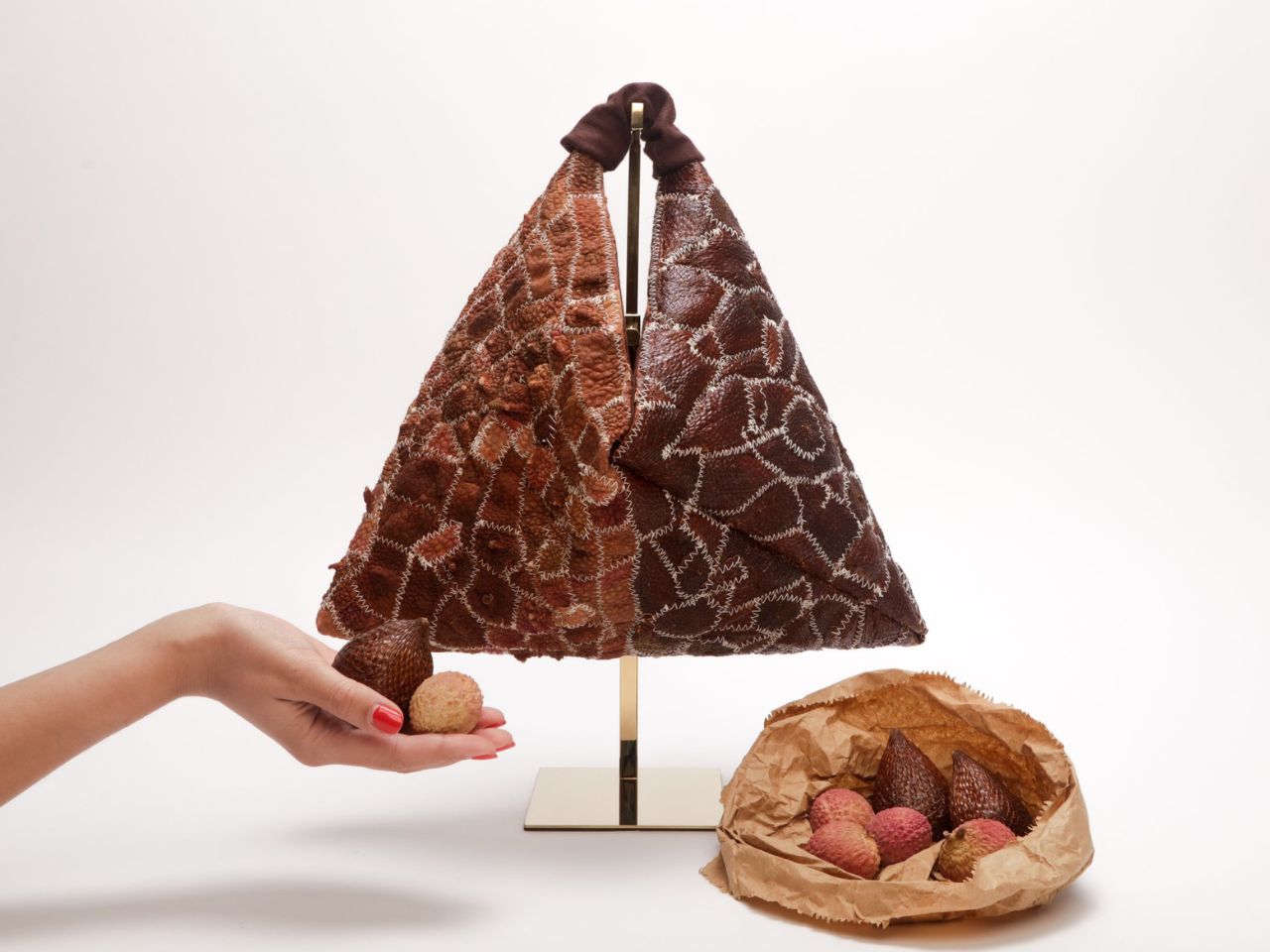
Home testing across abrasion, water, heat, humidity, and bend fatigue showed promising results across all six materials. Every peel demonstrated high heat and humidity resistance, and samples have remained stable for over a year. These early results suggest that the project is more than a beautiful material experiment. It has the potential to become a practical textile system, especially for applications where biodegradability, local sourcing, and distinctive surface quality are valuable.
The local production model makes the idea stronger. Since the skins can be sourced where the fruits are processed or consumed, PEEL imagines a closed regional loop: fruit is eaten, skins are collected, material is made, and products are produced within the same community. This keeps the material connected to the place. It also creates an opportunity for small local workshops in Indonesian fruit-growing regions, turning a low-value waste stream into a new economic resource.
The next step is bringing more rigour to the testing and supply chain. Guevara is working toward partnerships with Indonesian fruit processing factories where skins are currently discarded, creating a zero-cost raw material source. In parallel, collaboration with Imperial College London aims to formalise lab testing for tensile strength, abrasion resistance, and long-term durability.
PEEL is interesting because it does not frame sustainability as a finish, a label, or a moral claim attached to the end of a product. It begins with material behaviour. It asks what a peel can do before deciding what it should become. That shift feels important. The project is not just about replacing leather. It is about expanding the designer’s imagination around overlooked matter and treating waste as something with form, memory, and potential still left in it.
SHARE