Most architects talk about restraint. Casey Brown Architecture actually practices it — and with Permanent Camping III (PC3), the Sydney-based firm delivers its most resolved chapter yet in an ongoing series rooted in the idea that shelter, stripped bare, is its own form of luxury.
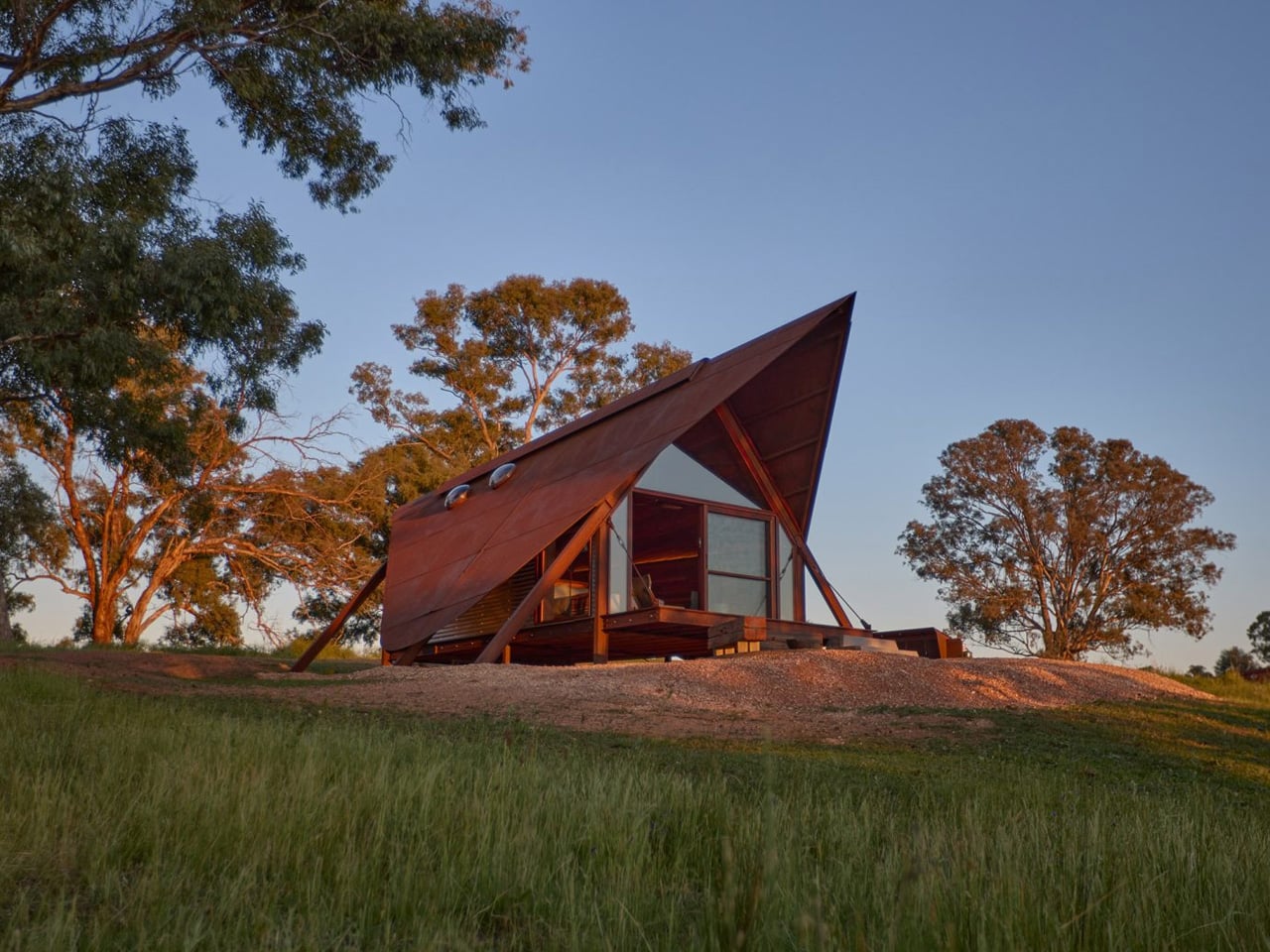
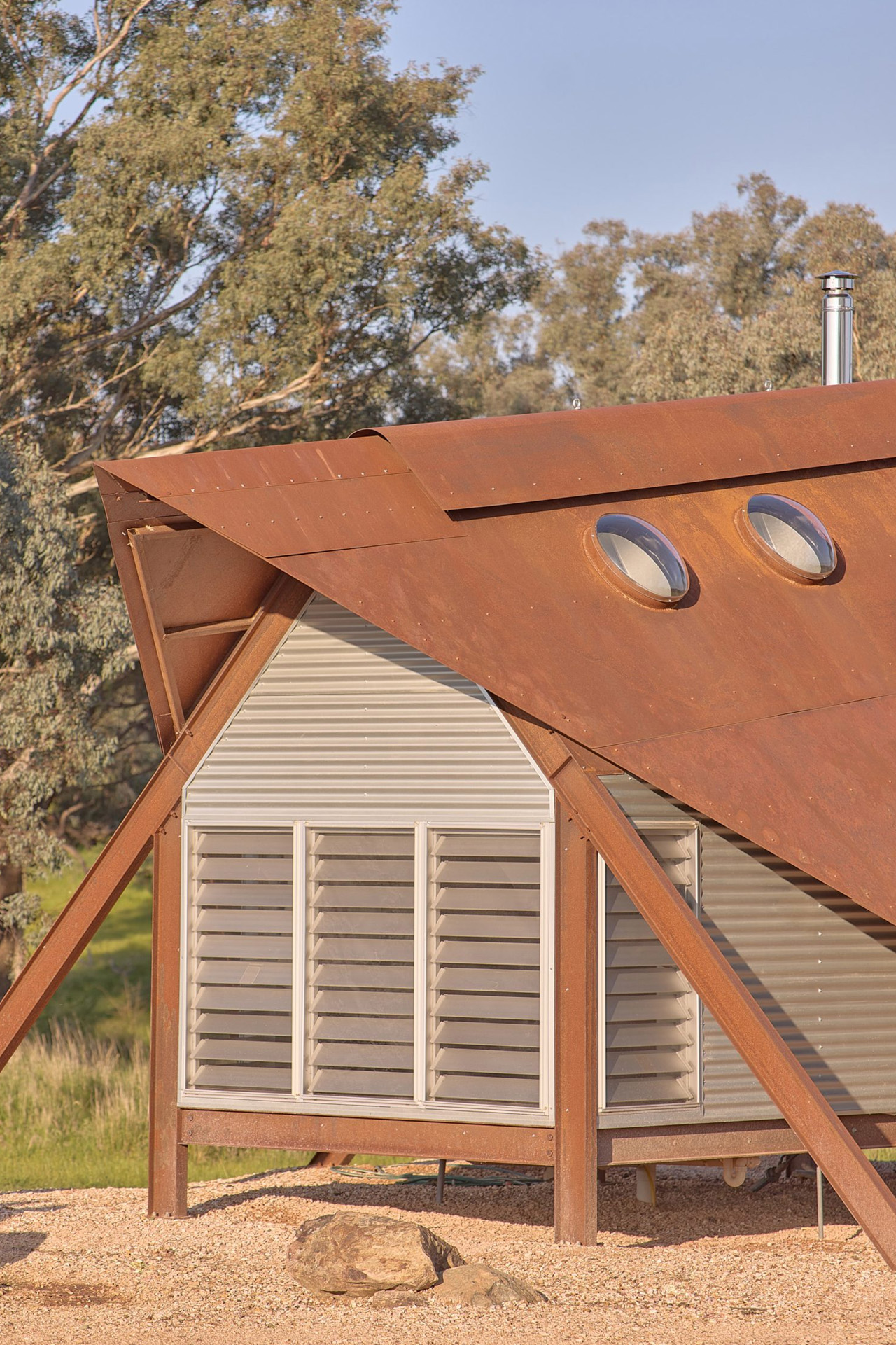
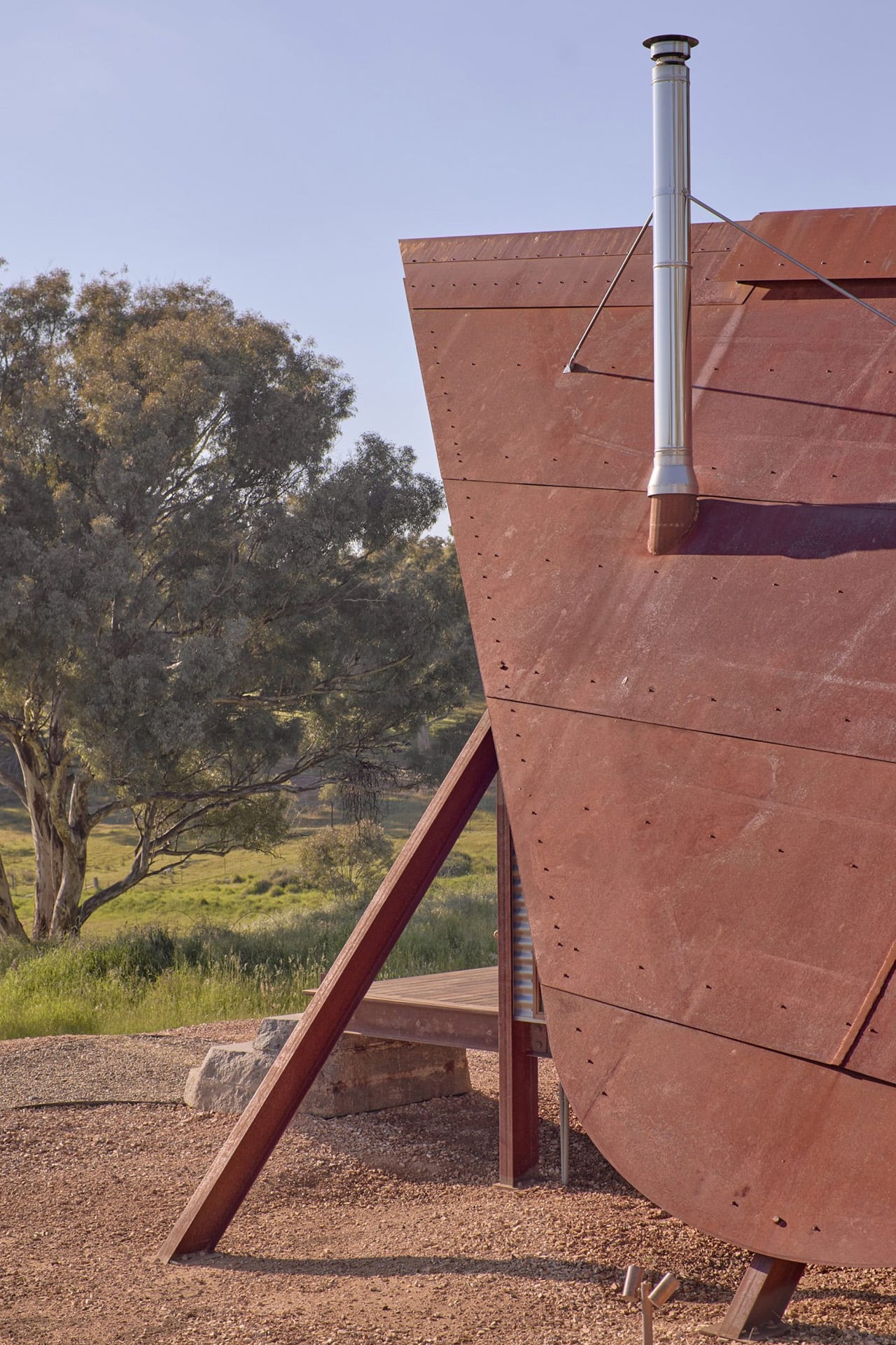
PC3 sits on a working sheep farm roughly ten minutes outside the NSW regional centre of Orange. It continues a lineage that began with PC1 in Mudgee and PC2 in Berry, yet stands as its own distinctive response to place, climate, and the evolving ethos of minimal living. Each iteration has pushed further into the question of what a dwelling truly needs to be — and PC3 answers with two sharply profiled A-frame steel cabins that rest lightly on the undulating terrain, their silhouette unmistakably reminiscent of a tent pitched against the open sky.
Designer: Casey Brown Architecture
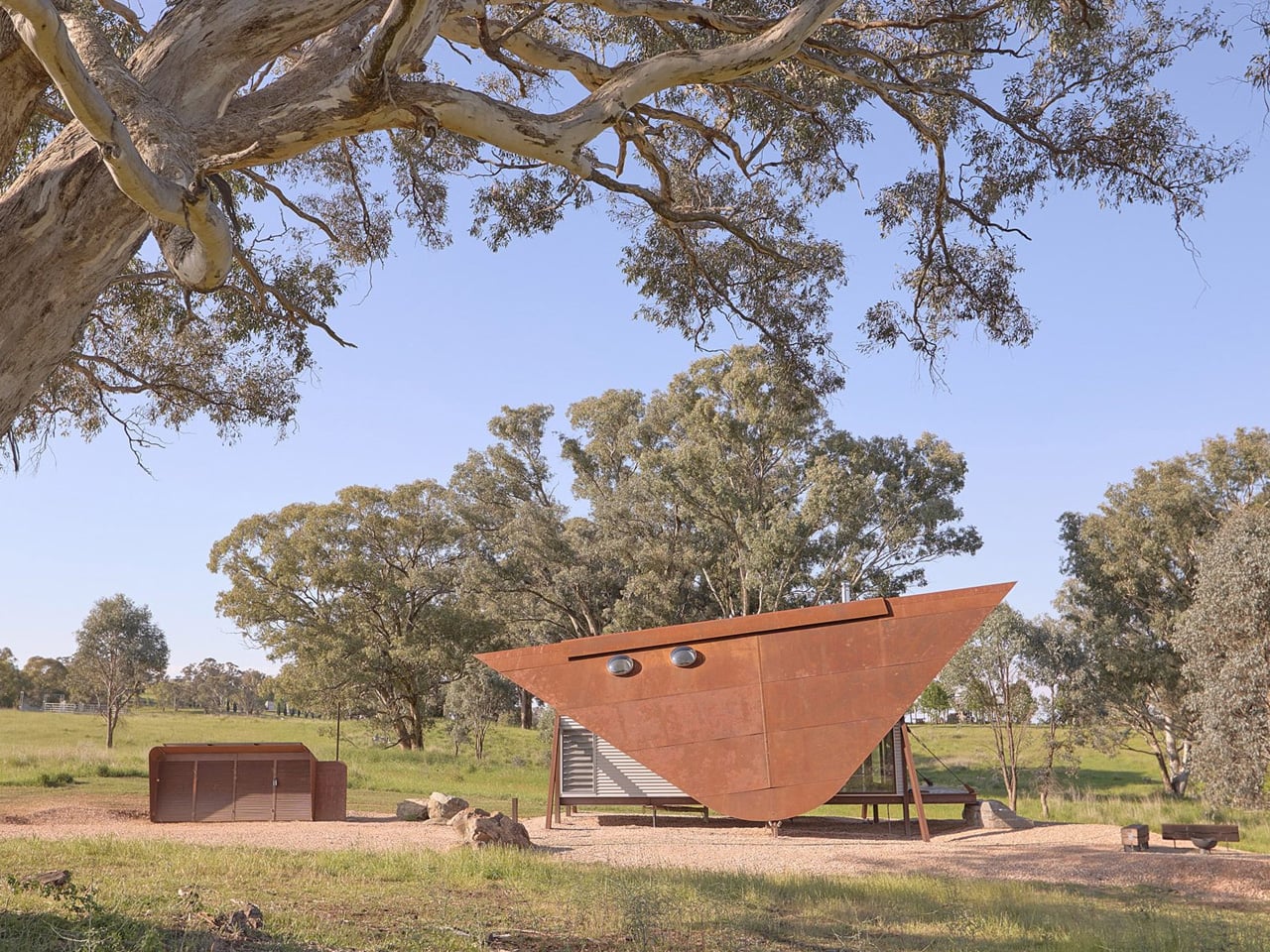
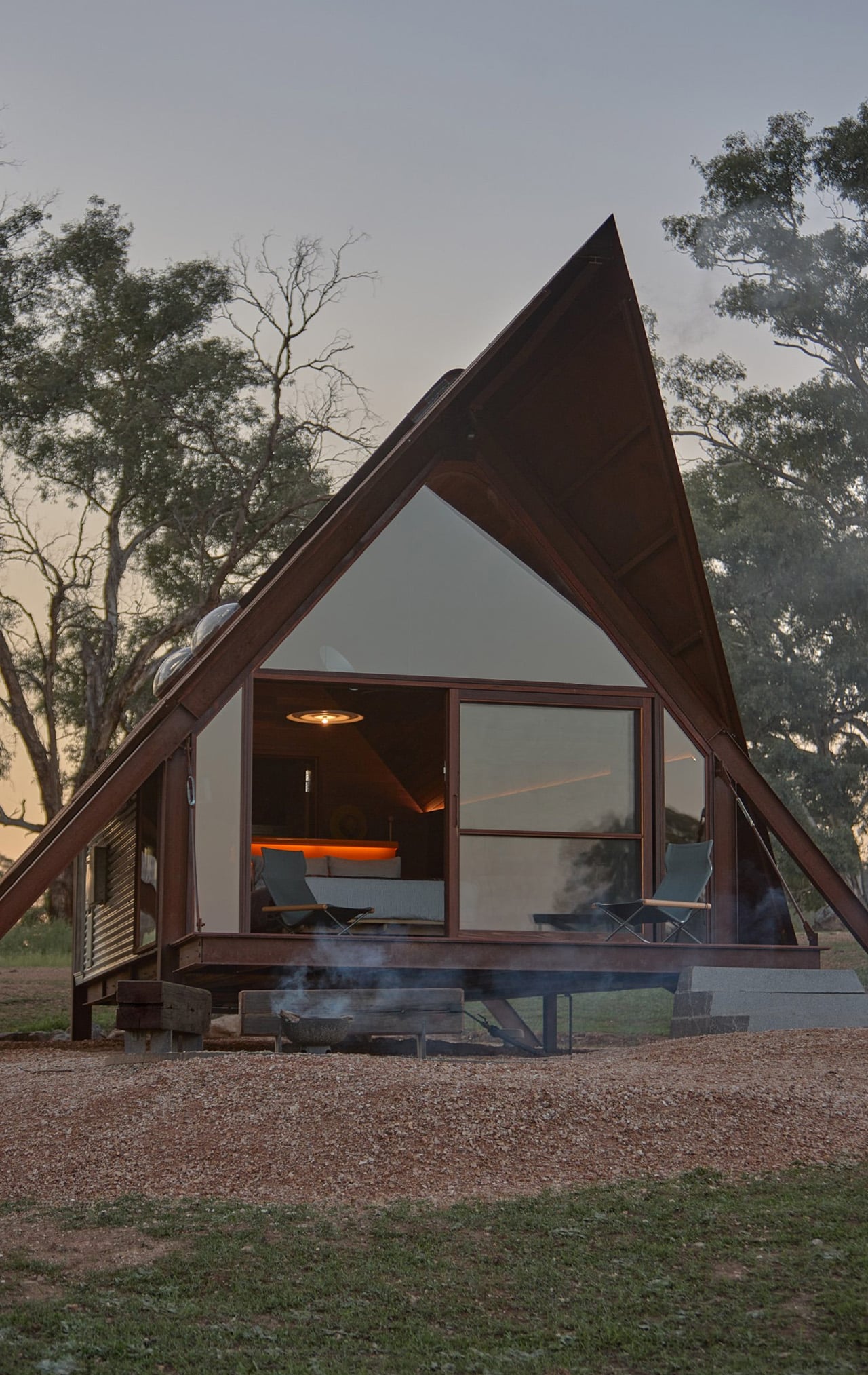
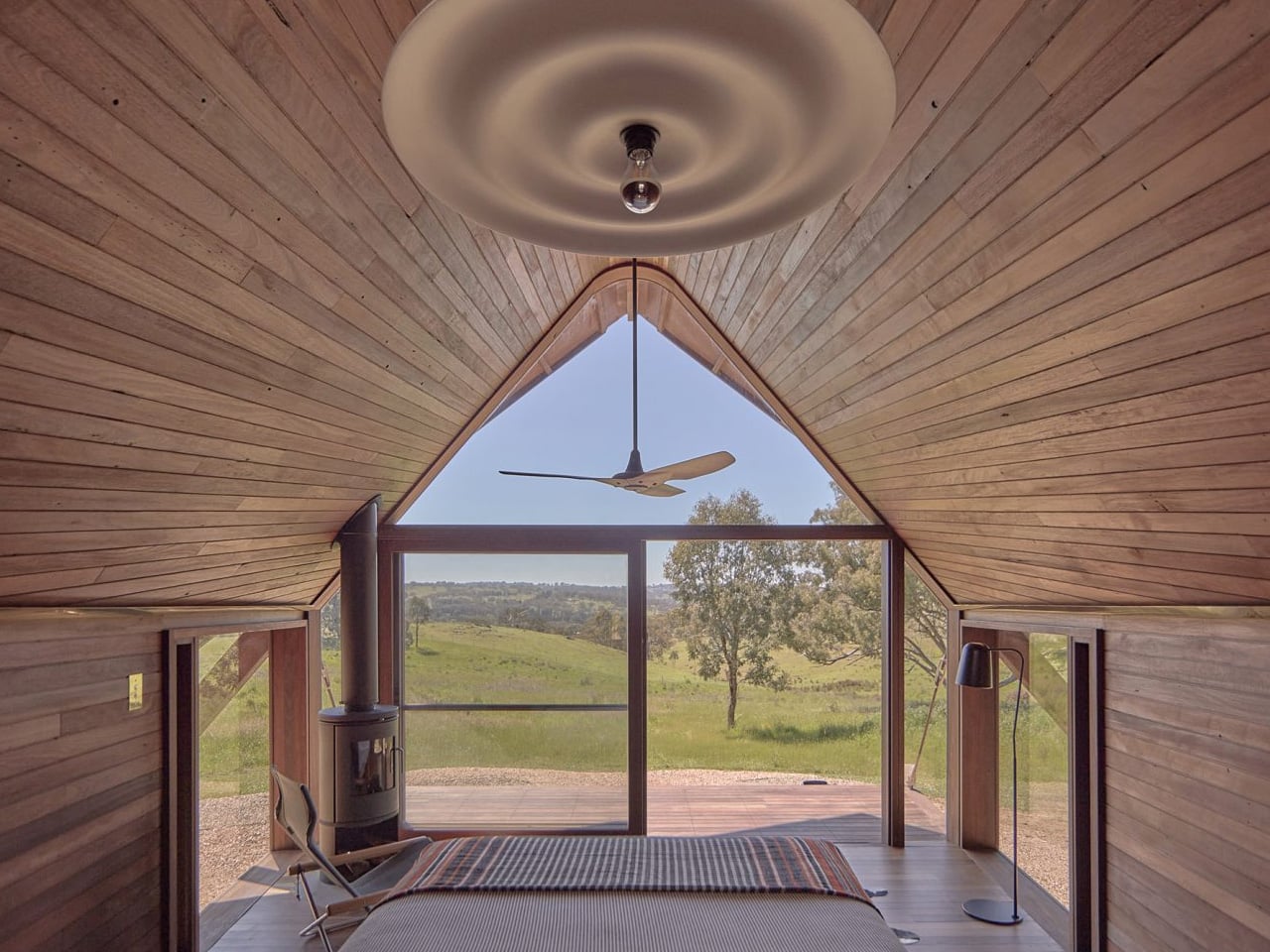
The form is both utilitarian and sculptural. Shaped by economy and climate, the cabins were designed specifically as short-stay boutique accommodation, built for reflection and direct engagement with the environment. From the outside, the structures read as hardworking — almost agricultural — with their angular steel profiles echoing the farm’s own no-fuss pragmatism. But step inside and the experience shifts entirely.
In contrast to the rustic exterior, the cabins are lined with warm boards of oiled recycled ironbark, bespoke brass lighting, and custom steel detailing — a considered interior palette that feels earned rather than decorative. It’s the tension between outside and inside, between roughness and warmth, that gives PC3 its emotional resonance. Casey Brown Architecture has always understood that the best retreats don’t shield you from the landscape — they frame it.
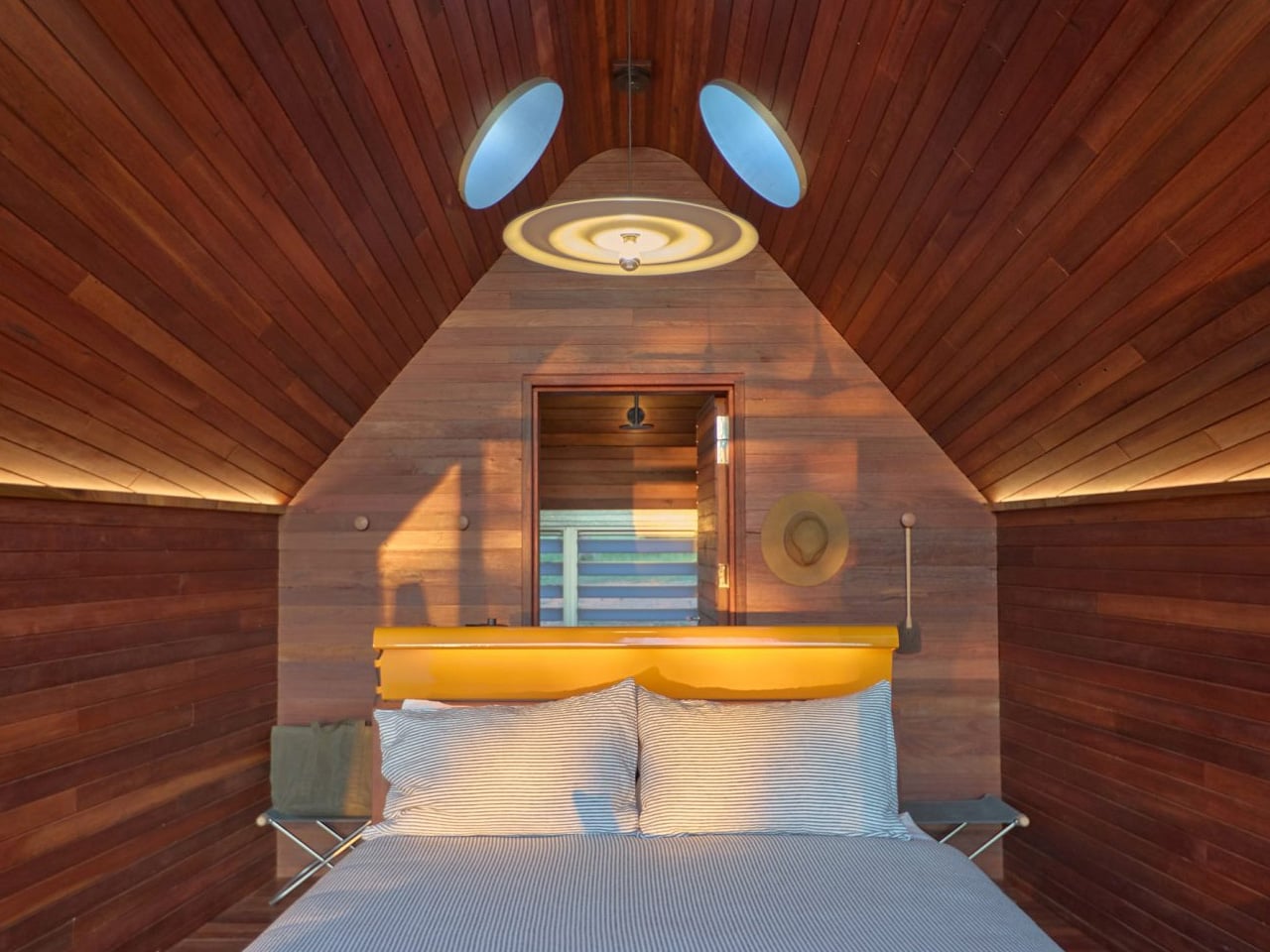
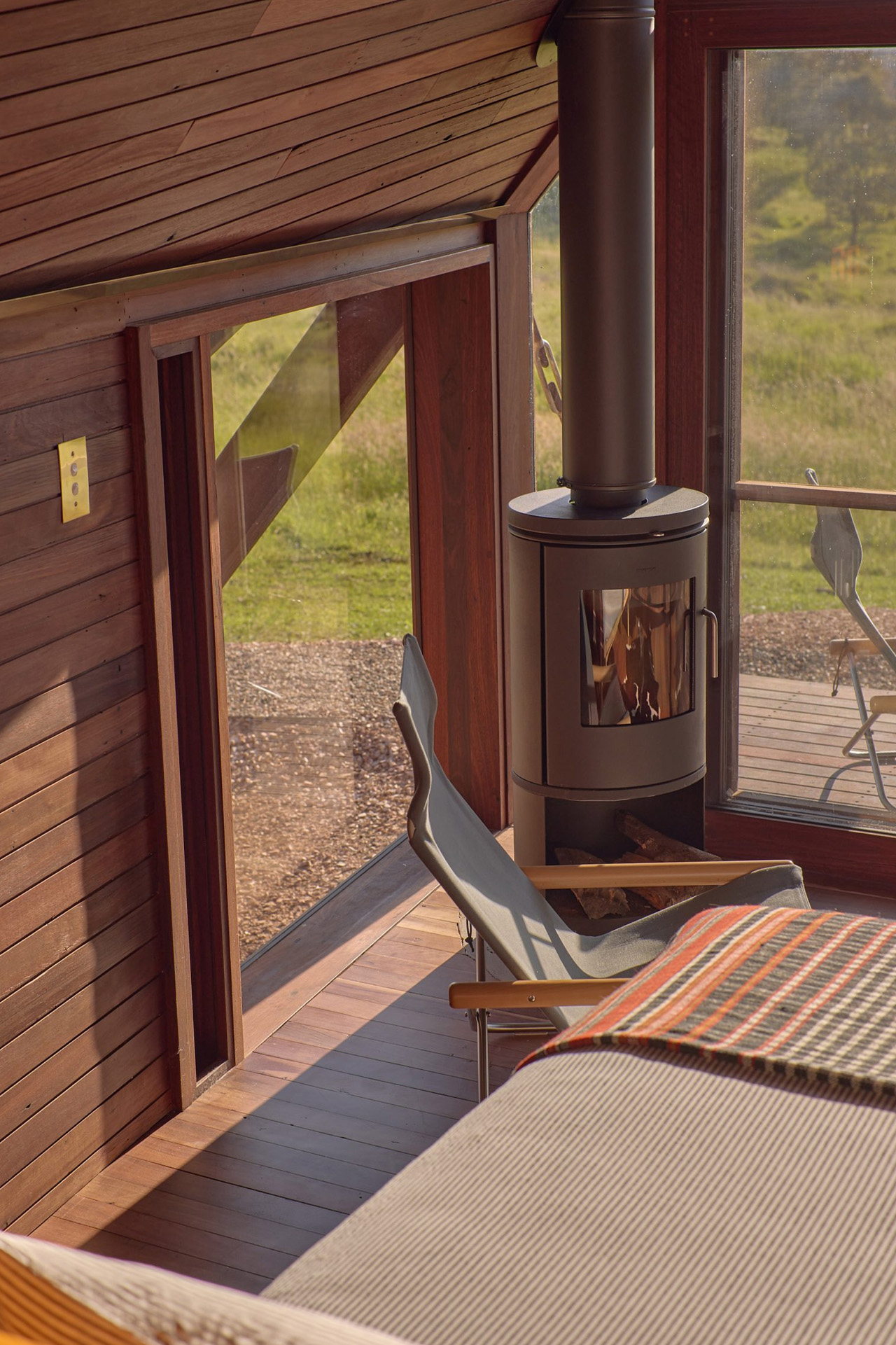
The project is described as a distilled version of habitation, providing only what is essential for comfort, with the two cabins designed to encourage reflection and allow direct engagement with the surroundings. That philosophy isn’t new to this practice, but PC3 refines it with a maturity that comes from having done this before — and asking harder questions each time.
What makes PC3 significant isn’t novelty. It’s conviction. In an era of maximalist rural retreats competing for attention, these two A-frames on an Orange sheep farm quietly insist that architecture doesn’t need to perform. It needs to be present — grounded, purposeful, and honest about the land it sits on. Casey Brown Architecture has spent decades making that argument. With PC3, they make it again, and more convincingly than ever.
SHARE